
Tulum doesn't have a gay district. It has a jungle road where the mezcal is smoky, the architecture has no straight lines, and neither does the crowd.
Tulum is the gay destination that doesn't look like one — and that's exactly why it works. There's no rainbow district, no circuit party infrastructure, no neon-lit strip of gay bars competing for your cover charge. What there is: a single jungle-canopied road along the Caribbean where the air smells like copal and wood smoke, the architecture refuses to use straight lines, and the crowd that shows up — at Gitano on a Thursday, at Papaya Playa Project under a full moon, at Azulik's treehouse villas where the absence of electricity is the whole point — self-selects so hard for open-mindedness that the inclusivity feels organic rather than performed. My Traven-Dex of 7.9 reflects a place that's genuinely excellent in ways that matter and honestly limited in ways you should know about.
The limitation is real and worth naming: my Pulse score of 4.5 tells you what the Carretera won't. There is no dedicated gay nightlife here. If you need a dance floor with a drag queen and a two-drink minimum, you're taking a colectivo 45 minutes north to Playa del Carmen's Quinta Avenida, and honestly, you should — plan for both and the Riviera Maya becomes a complete trip. But what Tulum does instead of traditional nightlife is something I've started to think might be better for a certain kind of traveler: jungle bars where the mezcal program runs 100 expressions deep, full-moon parties on the beach where glitter is the dress code, cenote swims at dawn that rearrange your nervous system, and a wellness culture that draws the gays who find traditional Pride events exhausting. If that sounds like you, you found your place.
The food alone justifies the trip. Hartwood — no gas, no refrigerator, no reservations, just a wood-fire kitchen and a chalkboard menu that changes nightly — has been earning New York Times features for fifteen years because the fish is that good. Arca runs an open-fire tasting menu in a jungle garden where the soundtrack is crickets and tree frogs and the smoke drifts through your table like incense. El Camello Jr. in the pueblo was serving fish tacos to locals before Tulum had a single boutique hotel, and the ceviche is still lime-forward and honest. And then there's Posada Margherita, where an Italian family has been making handmade pasta on the beach road for over a decade, and the cacio e pepe at sunset has no business being this good in the Mexican Caribbean.
The two-Tulum reality is something you'll feel immediately and should plan around. The Zona Hotelera operates in a bubble of international progressivism where same-sex couples are completely unremarkable — I gave it an 8.2 on Scene because the infrastructure, while unconventional, is genuinely there. El Pueblo, a few kilometers inland, is a working-class Mexican town where the vibe is more reserved and PDA calls for discretion. Both are worth your time. The pueblo is where you eat cheaply, drink sugarcane mojitos at Batey with the LGBTQ+ people who actually live here, and remember that Tulum is a real place and not just an aesthetic. The beach road is where you dissolve into salt water and mezcal and that specific golden light filtering through the jungle canopy that makes you wonder why you ever lived anywhere with walls.
The stuff your travel guide buries on page 47
As of 2026, same-sex marriage is legal throughout Mexico — including Quintana Roo — following a series of Supreme Court rulings and state-level legislative actions that unfolded over the past decade. Adoption rights for same-sex couples are recognized, and federal anti-discrimination law enforced by CNDH (the National Human Rights Commission) covers sexual orientation and gender identity. Mexico also enacted federal self-ID gender marker changes in 2021, and Quintana Roo recognizes these at the state level. On paper, the legal framework is strong — I gave it a 9.0 on Legal for a reason.
Now, the gap between law and life. Federal protections exist, but enforcement in tourist areas is inconsistent. The beach clubs on the Carretera operate in a bubble of international progressivism — staff are trained, clientele self-selects, and nobody blinks at two men sharing a sun bed. But smaller local businesses in Tulum Pueblo can be more conservative than the beach strip makes you expect. This isn't hostility — it's a working-class Mexican town where public affection of any kind is more reserved, and same-sex couples may draw curious looks rather than warm smiles. You won't feel unsafe. You might feel noticed.
The broader advocacy infrastructure is real and worth knowing about. Letra S is a Mexico-based LGBTQ+ health and advocacy organization that tracks rights violations and provides resources, and ILGA World maintains updated country profiles on Mexico's legal landscape. If you want to understand the full picture beyond what you'll experience poolside, those are your starting points.
PDA comfort breaks down by zone. In the Zona Hotelera — beach clubs like Papaya Playa Project, Ahau, and the Azulik complex — same-sex couples holding hands, kissing, existing visibly together is completely unremarkable. In Tulum Pueblo, hand-holding is generally fine; kissing is better saved for LGBTQ+-friendly spaces like Gitano. At cenotes and the archaeological zone, you're in mixed tourist territory — low-key affection won't draw problems, but these are family-heavy sites where reserved behavior fits the context regardless of who you're with.
Pro tip: Cash is still king in Tulum. ATMs in El Pueblo charge brutal fees and run out on weekends. Withdraw before you arrive — most beach clubs have minimum spends of 600–900 pesos per person, and the Zona Hotelera is not the place to discover your card isn't working.
What it actually feels like on the ground
Holding hands: Comfortable and unremarkable along the entire Zona Hotelera beach strip — Gitano, Vagalume, Papaya Playa Project, nobody clocks it twice. In Tulum Pueblo, you'll generally be fine, though you may get the occasional glance on Avenida Tulum. At cenotes, international tourist crowds dominate and low-key affection is broadly accepted. Read the room at the larger cenotes with domestic Mexican tour groups — not danger, just context.
Hotel check-in: Zero issues at any property in the Zona Hotelera. These are internationally staffed boutique resorts that welcome same-sex couples routinely. In Tulum Pueblo, budget guesthouses and hostels like Mayan Monkey are equally straightforward. I haven't encountered or heard of a single check-in problem in Tulum.
Getting around after dark: This is where I need your full attention. The road between El Pueblo and the beach has no lighting and no sidewalk — it's genuinely dangerous to walk at night, and this has nothing to do with being LGBTQ+ and everything to do with cars going 80 km/h in the dark. Always take a moto-taxi, Uber, or colectivo after sunset. Tulum Pueblo after midnight is a different calculation than the beach strip: stick to lit main streets and use Uber or InDriver rather than walking alone. The U.S. State Department rates Quintana Roo at Level 2 — Exercise Increased Caution — primarily due to organized crime, though tourist corridors are considered lower risk.
Beaches and beach clubs: The Zona Hotelera is genuinely safe and welcoming. PDA between same-sex couples is normalized at every major venue on the Carretera. The crowd is international, progressive, and came here specifically because of the vibe. You'll feel it immediately.
Trans travelers: Quintana Roo recognizes federal self-ID gender marker changes, so trans travelers face no legal barriers. Socially, the international resort areas are broadly accepting. Misgendering and casual ignorance remain possible in local-facing contexts outside the hotel zone — this is honest, not a warning. The staff at upscale properties are generally trained and responsive.
Verbal harassment: Rare in the Zona Hotelera — the environment self-polices. In El Pueblo, isolated comments are possible but uncommon. If you experience harassment or a rights violation, CONAPRED's complaint line (800-543-0033) is the federal channel, but in practice your hotel concierge is the fastest first call — the larger boutique properties on the strip have English-speaking staff and protocols for exactly this. Human Rights Watch maintains ongoing reporting on LGBTQ+ conditions in Mexico, and IMSS (Mexico's social security health system) operates clinics in the region if you need medical attention. For LGBTQ+-specific health and advocacy support, Letra S is the go-to Mexican organization.
Watch out for: Petty theft is the most common crime reported by tourists — don't leave valuables unattended at cenotes or on the beach. Use registered taxis or app-based services. And a less obvious one: the sun at these latitudes is brutal, and dehydration sneaks up fast when you're swimming cenotes and drinking mezcal. Hydrate aggressively.
The queer geography
La Zona Hotelera (The Beach Road)
The Carretera Tulum–Boca Paila is a single jungle-canopied road running south from the Tulum ruins along the Caribbean coast, and it's where the Tulum you came for actually lives. The architecture here is its own genre — open-air restaurants built from local hardwood and bejuco vine, boutique hotels perched on stilts above the tree canopy, everything bathed in that low golden light that filters through the jungle and makes you wonder why anyone builds walls. The air smells like salt and copal incense and whatever's on the wood fire at Hartwood.
This is where the scene concentrates, though "scene" is generous by traditional standards — there's no gay bar with a bouncer and a cover charge. What there is: a strip of beach clubs and jungle restaurants where the crowd self-selects for open-mindedness and the staff doesn't blink. Gitano is your anchor — the jungle bar everyone ends up at, the staff is warm to all couples, and the Thursday late-nights have been known to get genuinely dancey by Tulum standards, which means people are moving, glitter is involved, but tastefully. Vagalume and Casa Jaguar run electronic music programming that draws a mixed, progressive international crowd. Papaya Playa Project runs full-moon parties that are among the most queer-populated events in Tulum — tickets sell out fast, the dress code is "creative" (read: glitter strongly encouraged), and the beach at sunrise after dancing all night is legitimately one of the most beautiful things you'll ever see.
Quintana Roo's tourism board (SEDETUR) actively promotes the Riviera Maya to international travelers, and the Zona Hotelera reflects that investment — though you'll notice the infrastructure remains deliberately rustic. That's the aesthetic, and it works. Come for the cenotes and the food; stay because the energy on this road at sunset, with a mezcal in hand and the Caribbean turning pink behind the palms, is genuinely hard to leave.
Tulum Pueblo (El Pueblo)
A few kilometers inland from the beach strip, El Pueblo is where Tulum actually functions as a town — taquerías with plastic chairs on the sidewalk, hardware stores next to yoga studios, the kind of cultural collision that happens when a working-class Mexican community gets a bohemian international overlay. Avenida Tulum runs through the center, and the food here is where you eat on a real budget: El Camello Jr. has been serving fish tacos and coctelería since before Tulum had a single boutique hotel, and Burrito Amor is the backpacker institution that actually deserves its reputation.
Batey, the scruffy little rum bar on Avenida Tulum, is where the LGBTQ+ people who actually live and work in Tulum hang out — cheap drinks pressed from fresh sugarcane, live Cuban-influenced music on weekends, and a genuinely mixed local-expat-tourist crowd that feels nothing like the beach clubs up the strip. This is the Tulum that exists when the influencers go home. The pueblo is more traditional and more conservative than the Zona Hotelera — PDA here calls for a bit more discretion — but it's not hostile. It's just a real Mexican town doing real Mexican town things, and that contrast is actually part of what makes Tulum interesting rather than just pretty.
Aldea Zamá
Between the pueblo and the beach, Aldea Zamá is Tulum's modern residential development — think gated condo complexes, co-working spaces, and the kind of organic grocery stores where a smoothie costs more than a three-course comida corrida down the road. It's not charming in the way the beach strip is, and it's not authentic in the way the pueblo is, but it's where a growing number of digital nomads and long-stay travelers — many of them LGBTQ+ — have settled. Tulum Brewing Company operates here, pouring small-batch IPAs and lagers in a taproom that feels more Austin than Yucatán. If you're staying a week or more, this is the neighborhood that starts to feel like home rather than vacation.
Playa del Carmen (45 Minutes North)
I'll be direct: if you need a dedicated gay scene with actual gay bars, drag shows, and the energy of a proper night out, you're going to Playa. Quinta Avenida — the long pedestrian strip running through Playa del Carmen's center — is where the regional Pride community concentrates, with a cluster of gay bars and clubs that give you something Tulum simply doesn't have: infrastructure. The colectivo ride costs about 50 pesos and takes 45 minutes. Tulum is where you decompress and eat well; Playa is where you actually dance. Plan for both, and the Riviera Maya becomes a complete trip rather than a beautiful but quiet one.
The experiences worth rearranging your itinerary for
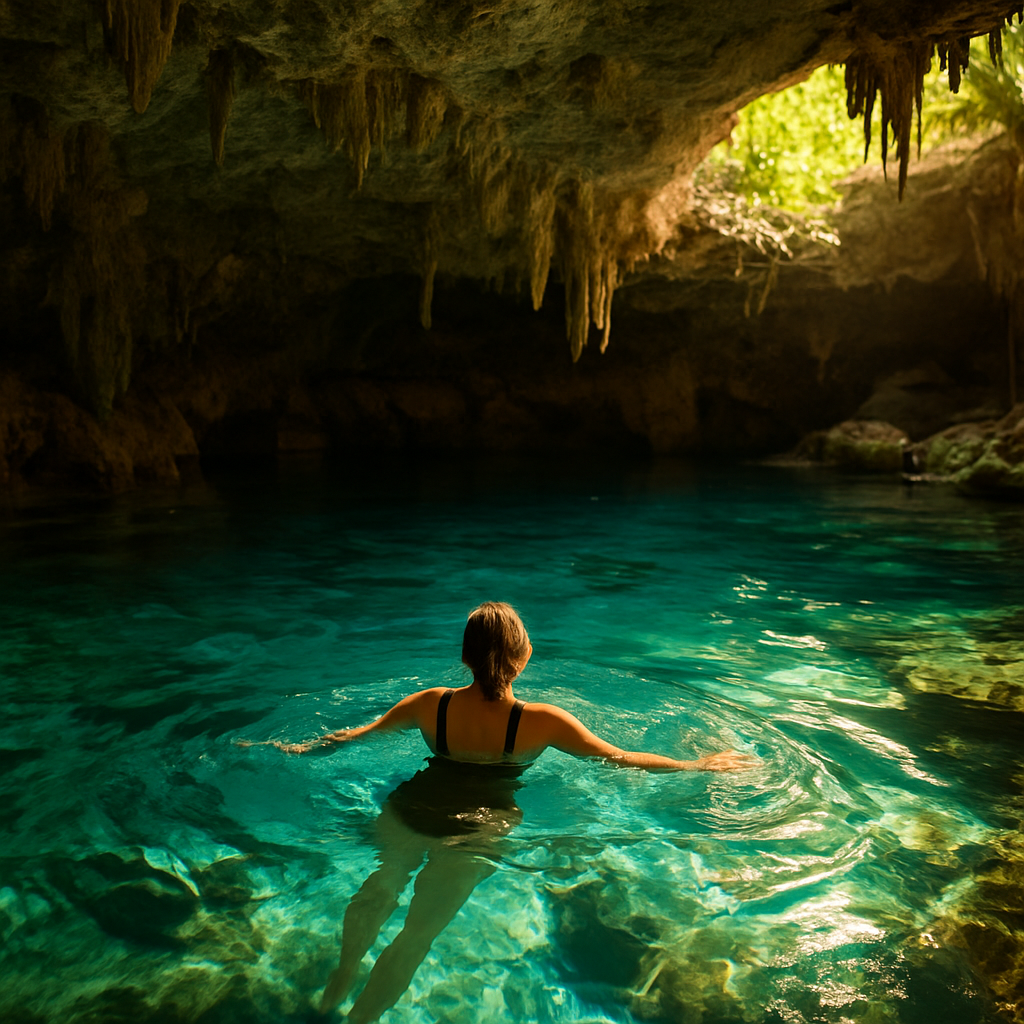
Gran Cenote Before the Crowds
Get there before 9am. I mean it. Before the tour buses, before the selfie sticks, when the light breaks through the cavern mouth at an angle that turns the water into liquid glass and the stalactites glow above you like a cathedral nobody built. The water is about 25°C year-round — cool enough to shock you awake, warm enough to stay for an hour. Bring a mask and snorkel; the formations underwater are as dramatic as the ones above. The cenote is 2.5 km from Tulum town center, so you can bike there and be back for breakfast. This is the single experience I'd protect if everything else on your itinerary fell apart.
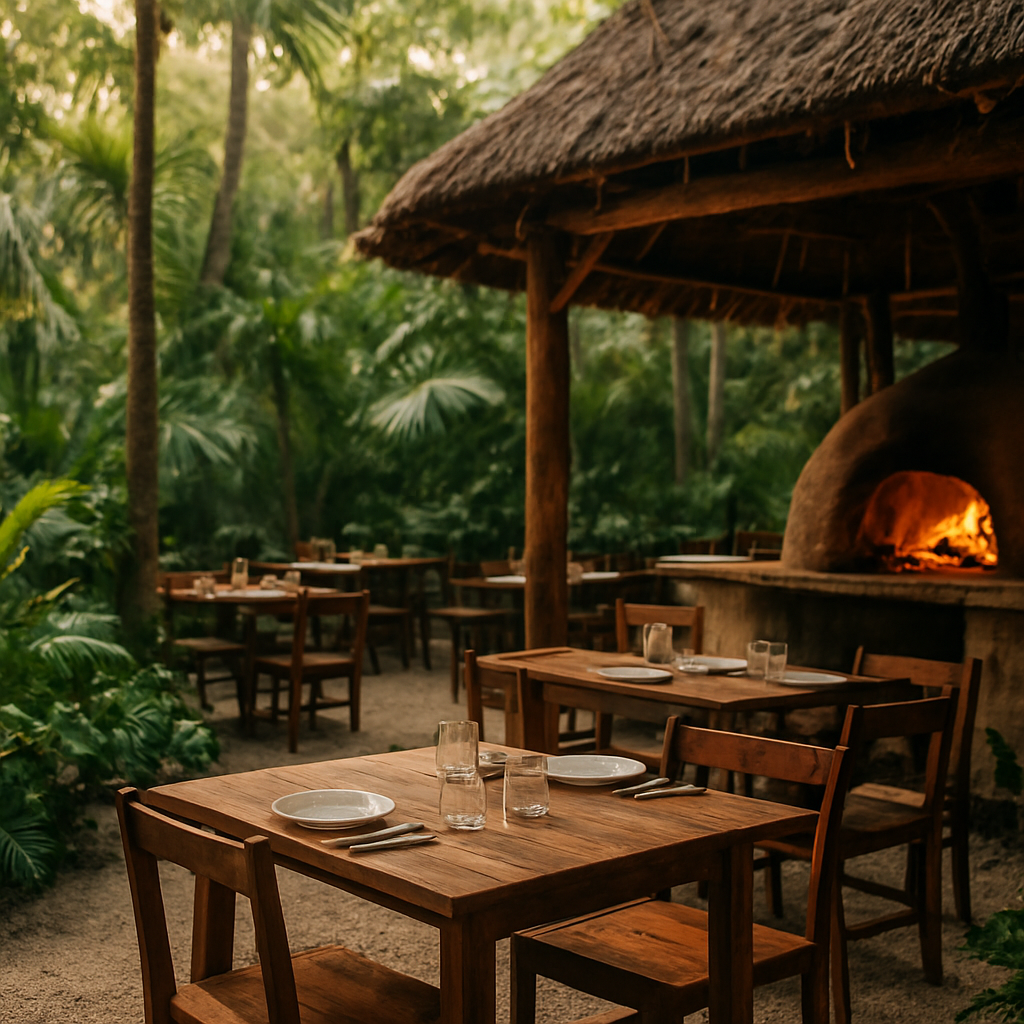
Dinner at Hartwood
No reservations. No gas line. No walk-in refrigerator. Just a wood-fire kitchen, a chalkboard menu that changes every night based on what the Yucatán Peninsula produced that day, and a line that forms before doors open at 6pm. Get your name on the list, order a mezcal at the bar, and wait — it's part of the experience. The fish, whatever fish they have that night, is the move. Everything tastes like smoke and salt and lime and the specific decision to cook without shortcuts. Eric Werner and Mya Henry opened this place in 2010, and the reason it's still earning New York Times features fifteen years later is that the food is simply that good.
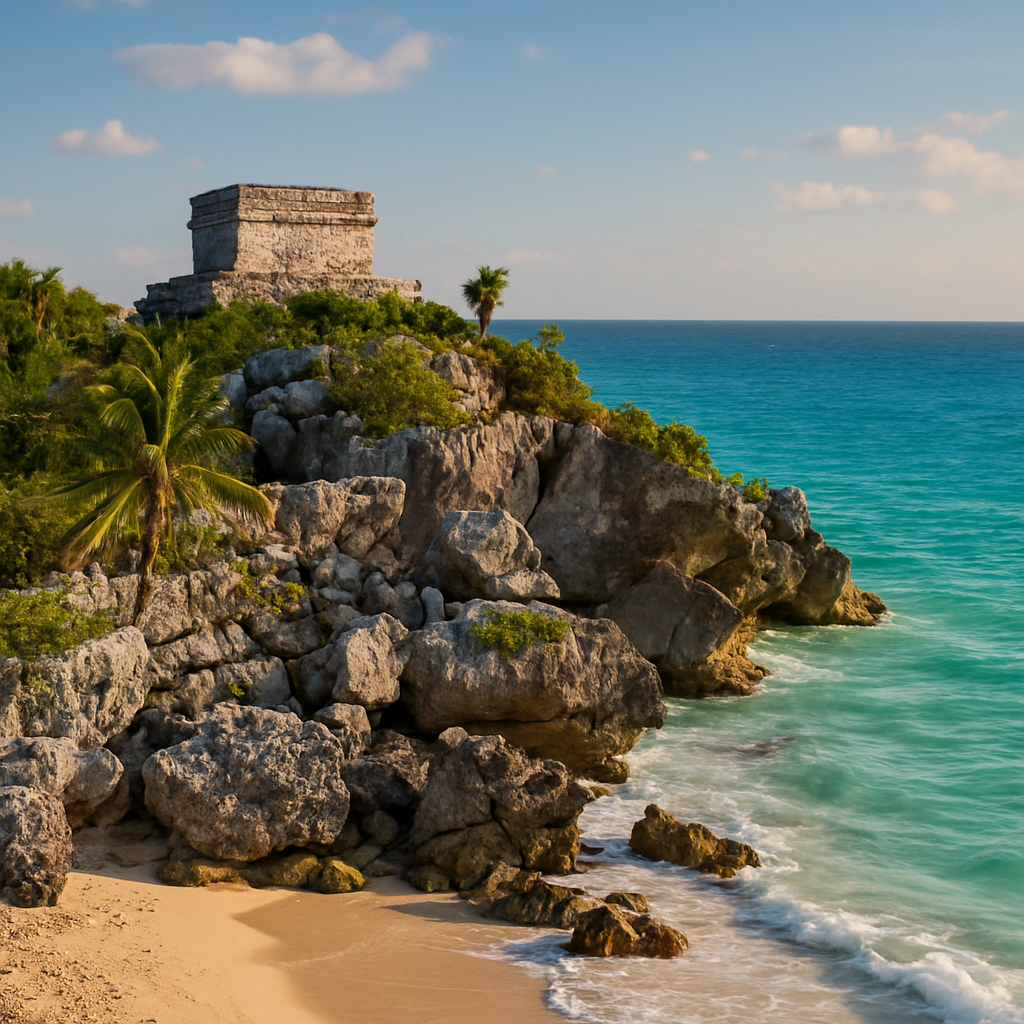
The Ruins on the Cliff
You've seen the photo — the grey-stone Maya temple perched on the cliff edge with the turquoise Caribbean below it. In person, it hits differently. The Zona Arqueológica de Tulum was a walled city from roughly 1200 to 1500 CE, and standing on that cliff with the wind coming off the water, you understand why they built here. Approximately 2 million visitors a year agree with you, so arrive early — gates open at 8am and the light is best before 10. The entry fee is about MXN 180 total (INAH fee plus state fee). After the ruins, the beach below the cliff is swimmable. Walk down, swim, look up at where you just were.

Sfer Ik — The Museum Without Straight Lines
Inside the Azulik complex on the beach road, Sfer Ik is a multi-level open-air museum constructed entirely from wood and natural vines — no nails, no screws, no conventional architecture. The building itself is the primary artwork: organic curves, cantilevered walkways, light filtering through vine walls in patterns that shift by the hour. It opened in 2018, it exhibits international artists including queer artists, and your phone won't capture it properly — the space is designed to be experienced physically, not photographed. If you're dining at Kin Toh upstairs, the museum is free to wander. Entry is about MXN 300 otherwise. Worth it.
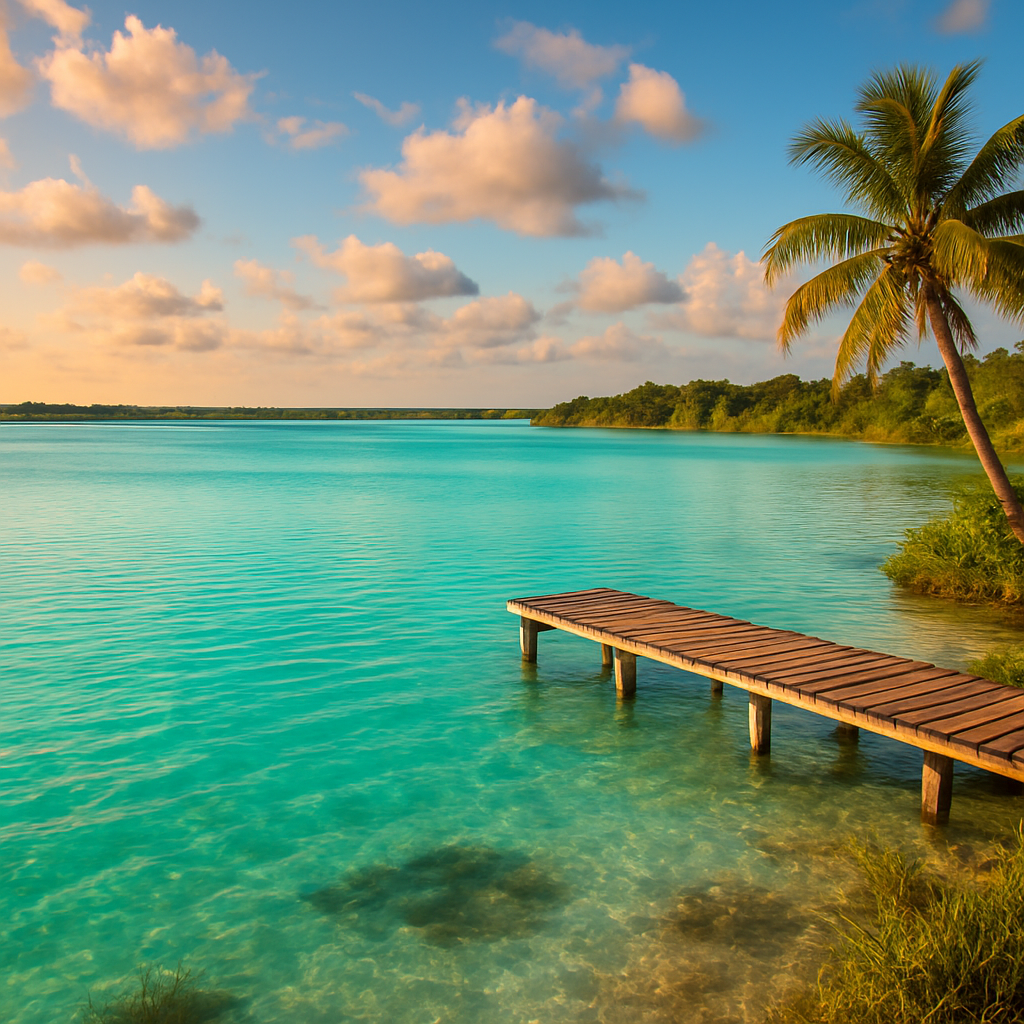
A Day at the Lagoon of Seven Colors
Bacalar is three hours south of Tulum, which sounds like a lot until you see the lagoon. Forty-two kilometers of freshwater that shifts from pale turquoise to deep indigo in visible bands — the color gradations are caused by varying depth and mineral content, and they're real, not filtered. Rent a kayak, book a sailboat, or just float. The town itself has an established expat community, a growing roster of independent guesthouses (several LGBTQ+-owned), and a pace that makes Tulum feel like Manhattan. Bring a towel, sunscreen, and enough cash for a waterfront lunch. Come back a different person.
The places I actually send people to
Advice that fits how you travel
Solo travel in Tulum has a particular rhythm that rewards flexibility. The hostel infrastructure is thin — Mayan Monkey in El Pueblo is essentially the only property in town with a real social structure built in — but the beach clubs and jungle bars on the Carretera create natural mixing environments where arriving alone is completely normal. The apps work (Grindr, Scruff, and Hornet all have active user bases in the hotel zone, thinner in the pueblo), and the wellness-retreat crowd means yoga classes and cenote tours come with a social structure pre-loaded. Nobody at Gitano on a Thursday night is questioning why you're at the bar by yourself. They're just wondering if you want another mezcal.
Budget-wise, solo travelers have real options here that couples sometimes don't. Dorm beds at Mayan Monkey start around MXN 500/night, and eating in the pueblo at El Camello Jr. or Burrito Amor lets you bank the savings for one properly spectacular dinner at Hartwood or a full-day cenote run. A bicycle rental — about MXN 150–200/day — gives you independence from colectivo schedules and lets you cover the stretch from town to the southern beach clubs on your own timeline without paying taxi rates every time. The math works in your favor as a solo traveler in a way it simply doesn't in most destinations at this latitude and price bracket.
One safety item that applies specifically to solo travelers: the road between El Pueblo and the beach has no lighting and no sidewalk, and it is genuinely dangerous to walk at night. This has nothing to do with being gay and everything to do with cars doing 80 km/h in the dark. Moto-taxis cover that stretch for about MXN 50–80 and are everywhere. Use them every time, without exception, after sunset. The beach clubs close late, the rides are cheap, and the alternative is not worth the math.
For same-sex couples, Tulum's Zona Hotelera is as close to frictionless as the Mexican Caribbean gets. Azulik is the romantic apex — treehouse villas on wooden stilts above the jungle and sea, no electricity by policy, the kind of place where the absence of Wi-Fi becomes the feature rather than the bug. The crowd that books it skews so heavily toward open-minded and welcoming that you'll feel it within an hour of checking in. Be Tulum delivers a similar emotional register at roughly half the price: adults-only, cenote-inspired pool, quiet southern stretch of beach, and suites built from local materials that feel more grown from the ground than constructed. For mid-range, Papaya Playa Project gives you social beach-club energy plus a room — and if your stay overlaps with the monthly Full Moon Party, that's a night you'll reference for years in the way couples reference a specific perfect night.
Date logistics are straightforward and genuinely excellent. Hartwood at sunset is the move — arrive at 6pm, order a mezcal at the bar while you wait for a table, and trust the fish. Kin Toh at Azulik, the cantilevered pod restaurant suspended above the jungle canopy, is the more theatrical option: the setting does most of the work, and it earns every peso of the price. For something lower-key, La Zebra's weekly salsa nights come with free dance instruction, which makes being equally bad at it together into the actual charm. Same-sex couples showing affection at any of these venues will not get a second look — the Carretera has an unspoken but real ethos of normalcy around all of it, and that comfort is genuine rather than performed.
Pro tip for couples: treat a cenote morning as sacred. Gran Cenote before 9am — before the tour buses — gives you that cathedral-lit water almost entirely to yourselves, and the intimacy of those underground formations hits differently when you're not surrounded by a group tour. If you want the full experience, book a private guided dive at Cenote Dos Ojos through your hotel for a morning when you have no other agenda. That hour in 82 km of mapped underwater cave system, just the two of you and a guide, is the kind of thing that recalibrates what the word "beautiful" means.
As of 2026, LGBTQ+ families have solid legal standing in Mexico — same-sex marriage is recognized nationally, adoption rights for same-sex couples are on the books in Quintana Roo, and federal anti-discrimination protections cover family structure. In practice, the Zona Hotelera properties are internationally staffed and won't blink at two dads or two moms checking in with children. The more traditional areas of El Pueblo may produce curious glances in certain contexts — nothing that rises to hostility, but the cultural reality on the ground is more conservative than the beach strip, and it's worth calibrating expectations accordingly. The cenotes, the ruins, the day trips: all of these are broad tourist environments where your family will move through without incident.
Tulum's natural assets are genuinely exceptional for families traveling with kids. Gran Cenote is the first call — the snorkeling sections are accessible to children who can swim, the water is about 25°C year-round, and the visual impact of stalactites and cathedral light through limestone stays with kids in a way a beach day doesn't. The Zona Arqueológica de Tulum is equally manageable: the ruins are compact, the cliff-top Caribbean view is immediately dramatic for children of any age, and the swimmable beach directly below the ruins turns a cultural morning into a full day. Cobá, 45 minutes northwest, offers a jungle archaeology experience — biking through unexcavated ruins, monkeys overhead — that older kids tend to love with a ferocity that surprises their parents.
Logistics in Tulum lean toward requiring a car rental for families — colectivos are fine for solo travelers and couples but become genuinely awkward with strollers, beach bags, and tired children. A compact car runs MXN 800–1,200/day and lets you move between the pueblo, cenotes, and beach on your own schedule without timing your afternoon around a minivan. Two important notes before booking: several of Tulum's highest-profile properties — including Azulik and Be Tulum — are strictly adults-only, so check the policy carefully before you book. And come with cash. ATMs in the pueblo charge brutal fees and run out on busy weekends, and a family day at the beach clubs with minimum spends can hit 3,500–4,000 pesos before lunch.
What Tulum actually costs
Flights, visas, and the first 30 minutes
There is no airport in Tulum. You fly into CUN — Cancún International Airport, approximately 130 km north, and then get yourself south. That transfer is part of the trip — budget the time, plan the logistics, and don't book a 7pm flight expecting to be on the beach by 9.
Cancún is one of the most connected airports in the Americas. Approximately 100 direct routes serve CUN from the US, Canada, Europe, and Latin America. Direct service from major US hubs (New York, Miami, Dallas, Los Angeles, Chicago) runs roughly 3–5 hours. From London, you're looking at approximately 10–11 hours direct. From Toronto or Montreal, around 4–5 hours. If you're coming from Australia or most of continental Europe, you'll likely connect through a US hub or Mexico City.
Visa requirements as of 2026: US, UK, EU, Canadian, and Australian passport holders typically do not need a visa to enter Mexico. You'll generally need to complete an FMM (Forma Migratoria Múltiple) tourist card — increasingly handled electronically before arrival — which allows stays of up to 180 days. Requirements can change; confirm current entry conditions with the Mexican Secretaría de Relaciones Exteriores before you travel.
Getting from CUN to Tulum:
- ADO Direct Bus — MXN 240–280 / approximately 2 hours. Air-conditioned, comfortable, drops you at Tulum's bus terminal. The right call if you're traveling solo or light on luggage.
- Colectivo (shared van) — MXN 180–220 / approximately 1h 45m. Cheapest option, but you may need to transfer at Playa del Carmen. Works fine, just factor in the potential stop.
- Private transfer — MXN 1,800–2,600 / approximately 1h 30m. Door-to-door, no transfers, ideal if you're arriving with luggage or as a group. Book in advance through your hotel or a registered operator — don't take unmarked cars outside arrivals.
- Car rental — MXN 700–1,400/day / approximately 1h 30m drive. The best move if you plan to explore cenotes and ruins independently. The drive south on MEX-307 is straightforward, but fuel up before you hit the Tulum stretch — stations are sparse on the hotel zone road.
Pro tip: If you're renting a car, confirm your insurance coverage carefully before leaving the lot. Mexican liability requirements differ from US/EU standards, and the upsell pressure at airport counters is real. Know what you're buying before they hand you the keys.
Traven's seasonal breakdown
The questions everyone asks
Is Tulum safe for same-sex couples?
Is there a gay bar in Tulum?
Do I need to speak Spanish?
How much should I budget per day?
How do I get from Cancún airport to Tulum?
When is the best time to visit?
Is Tulum good for LGBTQ+ families?
Screenshot this before you go
So should you actually go?
Go. Tulum earns it — not as a gay destination in any traditional sense, but as something that might be more interesting than that: a place where the inclusivity is ambient rather than branded, where the food is world-class, where the cenotes will genuinely change how you think about swimming, and where the crowd on the Carretera at sunset makes you feel like you're exactly where you're supposed to be. It's not perfect — the pueblo requires calibration, the dedicated nightlife is 45 minutes north, and the road between town and beach after dark is a non-negotiable safety concern that has nothing to do with being LGBTQ+ and everything to do with physics. But if you came looking for jungle bars and cenote swims and mezcal at sunset with your chosen family, honey, you found your people.
Sources & Resources
Official links we reference when compiling this guide. Last verified 2026-03-17.
- All Out — LGBTQ+ Rights Advocacy (Mexico campaigns)
- CNDH — Comisión Nacional de los Derechos Humanos
- Human Rights Watch — Mexico LGBTQ+ Reports
- ILGA World — International Lesbian, Gay, Bisexual, Trans and Intersex Association
- IMSS — Instituto Mexicano del Seguro Social (Health Services)
- Letra S — LGBTQ+ Health and Advocacy (Mexico)
- Pride Cancún — Regional Pride Organization
- Secretaría de Turismo de Quintana Roo (SEDETUR)