
Amsterdam didn't just open the door for us — it took the door off the hinges in 2001 and never looked back.
The light here is different. I don't mean that in some art-history-textbook way — I mean you'll step off the train at Centraal, walk south toward the canal ring, and the late-afternoon sun will hit the water at an angle that makes every gabled façade look like it's been retouched. Amsterdam does that to you. It makes everything look better than it should, including your own reflection in the window of a bruin café at 6pm with a jenever in your hand and nowhere to be.
This is the city that legalized same-sex marriage before most of the world had started the conversation. That history isn't abstract here — it's physical. You'll walk past the Homomonument at Westermarkt without realizing it at first, because it's integrated into the city like everything else. Three pink granite triangles, flush with the pavement. No spectacle. Just fact. That's Amsterdam's posture toward the gays: we're simply part of the infrastructure. My Traven-Dex score of 9.5 reflects a city where the legal framework is flawless — a perfect 10.0 on Legal — but more importantly, where the culture actually matches the law. That's rarer than you think.
The scene here has evolved. Reguliersdwarsstraat is still the main artery — bars shoulder to shoulder, terraces spilling into the street on any night the weather cooperates — but the energy has spread. Zeedijk holds the history, Spuistraat has the new-guard spots, and on Sunday nights a basement in Oud-West called De Trut has been running a volunteer-operated disco since 1984 with a no-phones policy that makes the whole room feel like a secret you earned. The city doesn't require you to seek out a gay neighborhood because the entire center behaves like one.
What surprised me most on my last visit was how the food scene has quietly become world-class without the attitude. A greenhouse restaurant in Oost growing its own produce. A Jordaan spot with three decades of customers' mothers' photos on the wall. Indonesian rijsttafel at 1am near Leidseplein. Amsterdam feeds you well, keeps your glass full, and never once makes you feel like a guest in someone else's city. You belong here. The city decided that a long time ago.
The stuff your travel guide buries on page 47
The Netherlands is about as legally airtight as it gets. Same-sex marriage has been legal here since 2001 — the first country in the world to do it — and full adoption rights followed. Discrimination protections are comprehensive, covering employment, housing, goods and services, and public accommodation. Gender recognition operates on a self-identification model: no medical requirements, no surgical prerequisites, no third-party authorization needed. That framework has been in place since 2014 and was further strengthened in 2023. For the full legal picture, ILGA-Europe and COC Nederland — the national LGBTQ+ rights organization, founded in 1946 — are the definitive sources.
The cultural reality matches the legal framework more closely than almost anywhere else on earth. I gave Amsterdam a 8.5 on Legal, and that score isn't a technicality — it reflects daily life. Same-sex couples hold hands on every street in every neighborhood without comment. The Homomonument is a civic landmark, not a protest site. Pink Point, the LGBTQ+ information kiosk beside the monument, operates as a community hub run by volunteers who actually live here — free event listings, local recommendations, and genuinely useful advice with no agenda.
PDA comfort is very high across the central city. On Reguliersdwarsstraat and around Rembrandtplein, same-sex affection is completely unremarkable — it's the default mode of the neighborhood. The canal ring is equally relaxed. The Jordaan and De Pijp are both highly comfortable. The one area worth a different read is Amsterdam Zuidoost (the Bijlmer), which has more conservative community demographics in parts — a perfectly fine area overall, but overt PDA may draw more attention there, particularly after dark. Worth knowing, not worth stressing about.
A few practical notes before you go. Bikes rule everything — the core gay circuit (Rembrandtplein, Reguliersdwarsstraat, Zeedijk, Warmoesstraat) is fifteen minutes by bicycle, and the Dutch regard doing it entirely on foot as mild eccentricity. Rent one; you'll cover the whole city in a single night. The older leather bars on Warmoesstraat — Web Amsterdam and The Cuckoo's Nest among them — still run largely cash-preferred, and the nearest ATM is a five-minute walk away. Come stocked or you'll be doing the shuffle mid-evening. Canal Pride weekend in late July books out a full year ahead; if Prinsengracht-adjacent hotels are gone, base yourself in De Pijp and tram in. For trans travelers, Transgender Netwerk Nederland is the central resource for support, healthcare navigation, and community connection. GGD Amsterdam provides sexual health and STI testing services that are accessible, well-funded, and completely judgment-free.
What it actually feels like on the ground
Holding hands (central city): Completely unremarkable. Anywhere on the Grachtengordel, in the Jordaan, De Pijp, or along Reguliersdwarsstraat, same-sex couples display affection without drawing a single glance. The Dutch have genuinely internalized this — you're not a novelty, you're just another couple on the canal.
Hotel check-in: A non-issue. Amsterdam's hospitality industry is sophisticated, international, and well-practiced with LGBTQ+ guests. Staff at any property from budget hostel to five-star canal hotel will check you in without hesitation regardless of who you're traveling with. Requests for a double bed or connecting rooms are handled without comment or raised eyebrows.
Taxis and ride-share: Use the official taxi ranks (especially outside Centraal Station) or the Uber app. Avoid unmarked cabs — not because of any LGBTQ+-specific risk, but because overcharging tourists is the real hazard here. Licensed drivers in Amsterdam are uniformly professional.
Beaches and public spaces: Vondelpark, Amsterdamse Bos, and the city's green spaces are relaxed and welcoming without qualification. Blijburg, the seasonal city beach on the IJmeer, skews young and alternative and is particularly welcoming. Same-sex couples picnic and sunbathe freely anywhere in the public parks without any concern.
Late night (after 2am): Rembrandtplein gets loud and tourist-heavy in the small hours, and the occasional drunken idiocy from stag-do groups is more annoying than threatening — by that point most of the actual local gay crowd has migrated deeper into the city anyway. Stay with your group and you'll be fine. The Warmoesstraat area brushes up against De Wallen (the Red Light District), which pulls a rowdy weekend crowd, but gay-specific hostility is genuinely rare; the Dutch have a very short fuse for that kind of behavior.
Trans travelers: Amsterdam is among Europe's most accommodating cities. Gender-neutral facilities are standard in many venues, trans-inclusive healthcare is accessible and well-resourced through Amsterdam UMC and GGD Amsterdam, and the visible trans community is active and well-connected. Isolated street harassment is not unknown but is genuinely uncommon in the central neighborhoods. Transgender Netwerk Nederland maintains current resources and community event listings.
Verbal harassment risk: Low across the central city. Amsterdam's cultural norms around public confrontation are strong — locals will intervene, and police take reports seriously. The Bijlmer (Zuidoost) has more conservative demographics in some sub-areas and merits slightly more situational awareness after dark. Everywhere else in the city: genuinely very low risk.
The queer geography
Reguliersdwarsstraat & Rembrandtplein
Walk south from Rembrandtplein and you'll hit Reguliersdwarsstraat — a narrow street that, on any warm evening, transforms into a single continuous sidewalk party. The architecture is classic Amsterdam: tall, thin canal houses with oversized windows leaking golden light. The restaurants and bars here lean casual, the terraces are aggressive about outdoor seating, and the energy is concentrated enough that you can bar-hop without ever calling a cab. This is Amsterdam's primary gay strip — NYX, Taboo Bar, and Arc all live here — and it's the most visibly LGBTQ+ block in the Netherlands. Just off Rembrandtplein, duck into Halve Maansteeg, a tiny alley that punches well above its weight: Montmartre does Dutch karaoke with a ferocity that borders on performance art, and several smaller bars cluster together like they're sharing body heat.
Zeedijk & Warmoesstraat
The Zeedijk curves from Centraal Station into the old city, past Buddhist temples, Indonesian restaurants, and the ornate facades of Amsterdam's original Chinatown. At number 63 sits Café 't Mandje, opened in 1927 by lesbian icon Bet van Beeren, still operating, still packed with leather jackets and photographs floor to ceiling. Order a beer, don't rush, and let the history settle. Around the corner, Warmoesstraat is Amsterdam's leather and fetish heartland — Club Church, The Cuckoo's Nest, and Web Amsterdam are all within stumbling distance of each other. The street brushes up against De Wallen, which pulls rowdy weekend stag-do crowds, but the bars themselves are self-contained worlds. Pro tip: the leather bars here still run largely cash-preferred, and the nearest ATM is a five-minute walk. Come stocked.
The Grachtengordel (Canal Ring)
The UNESCO-listed Grachtengordel — the concentric half-circles of Herengracht, Keizersgracht, and Prinsengracht — is the Amsterdam of postcards, and it earns every one of them. The canal houses lean at improbable angles, their gabled rooftops reflected in water that shifts from grey to green to gold depending on the hour. Walk the Prinsengracht past the Anne Frank House and you'll reach the Homomonument beside the Westerkerk — pink granite triangles at the water's edge, dedicated to LGBTQ+ people persecuted throughout history. Nearby, Pink Point operates as an information kiosk and community hub. The canal ring contains most of the city's major LGBTQ+ landmarks, but it also contains the best bookshops, the best cheese shops, and the best light in Northern Europe between 5 and 7 PM.
De Pijp
South of the canal ring, De Pijp feels like a different city: wider streets, more bikes than pedestrians (which in Amsterdam is saying something), and the sprawling Albert Cuyp Market where you can eat raw herring from a paper cone, buy vintage sunglasses, and pick up Surinamese roti all within fifty meters. The neighborhood draws a younger, more diverse crowd, and the café culture here leans organic-coffee-and-laptop rather than beer-and-terrace. Vegabond does excellent plant-based street food at prices that feel like a rounding error. The LGBTQ+ scene in De Pijp is less bar-centric and more community-oriented — the energy is residential and relaxed, and during Canal Pride week, it's the smart accommodation base if you didn't book a Prinsengracht hotel a year in advance.
Jordaan
The Jordaan was a working-class neighborhood until the artists moved in, and then the galleries, and then the real estate prices. What survived the gentrification is the bones: narrow streets that don't follow the canal grid, tiny bruin cafés with sand on the floor and jenever on draft, vintage shops wedged between Indonesian takeaways and independent bookstores. Saturday mornings at the Noordermarkt farmers' market are the platonic ideal of a European morning — fresh stroopwafels, organic produce, someone playing accordion badly. Saarein on Elandsstraat has anchored the lesbian scene here since 1978, and the residential streets between Prinsengracht and Lijnbaansgracht are as comfortable for same-sex couples as anywhere in the world. The Jordaan feels like a neighborhood that knows itself, which is probably why it's the part of Amsterdam that locals fight hardest to stay in.
The experiences worth rearranging your itinerary for
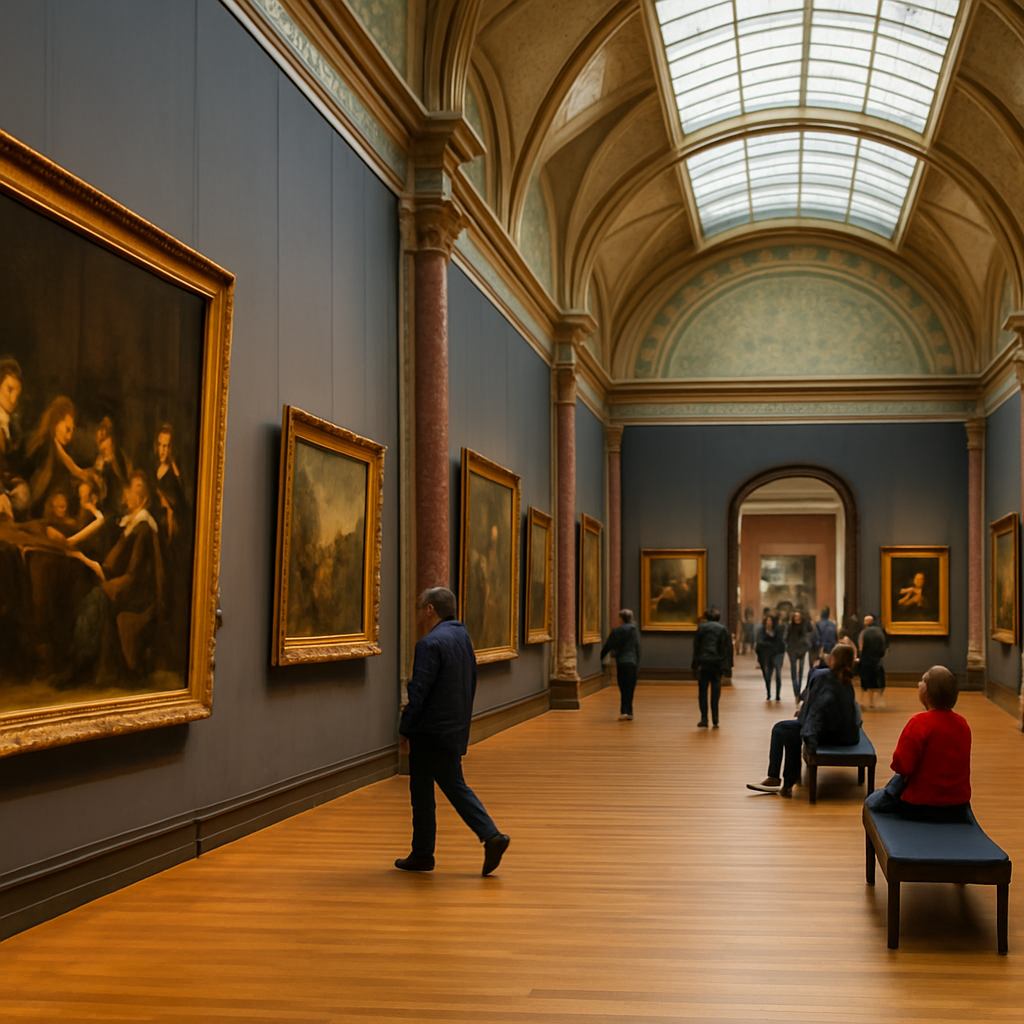
The Rijksmuseum & Museumplein
The Rijksmuseum alone justifies a full morning — Rembrandt's Night Watch in the renovated Gallery of Honour hits differently in person than any reproduction prepares you for. But the building itself is the thing: Pierre Cuypers' neo-Gothic cathedral of art, with natural light pouring through vaulted ceilings and a bicycle tunnel running through its center because this is Amsterdam and bikes stop for nothing. The surrounding Museumplein connects it to the Van Gogh Museum and the Stedelijk in a single walkable stretch. Go early on a weekday or buy timed tickets online — the afternoon queues in summer are brutal.
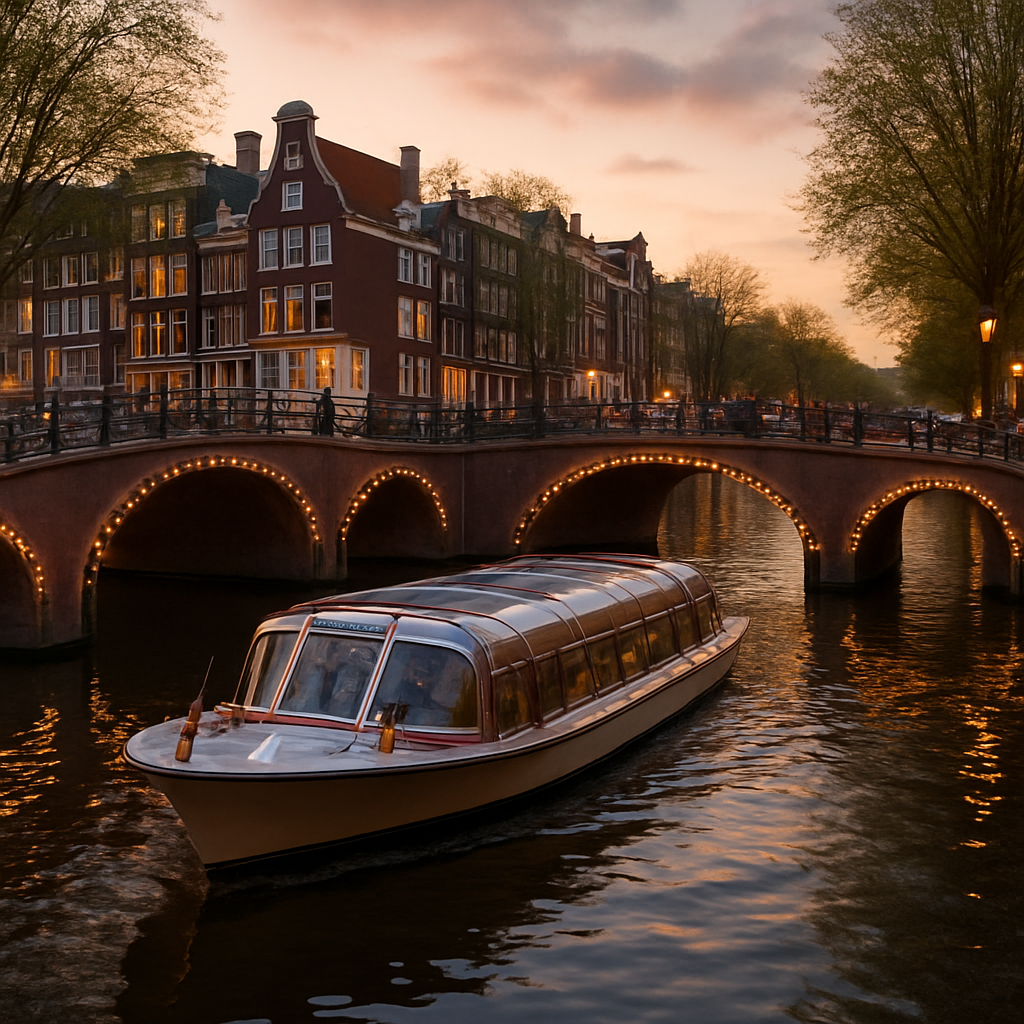
Canal Boat Tour at Dusk
Yes, it's touristy. Do it anyway. The canal ring from water level at dusk — when the gabled houses glow amber and the bridges light up in sequence — is one of the genuinely great urban experiences in Europe. Skip the large party boats and book a small open-top vessel (plenty of operators near Centraal or along Keizersgracht). Bring your own wine if the operator allows it. The perspective shift from street to water rearranges your entire sense of the city's geometry, and the quiet stretches between bridges feel almost impossibly peaceful for a capital city.
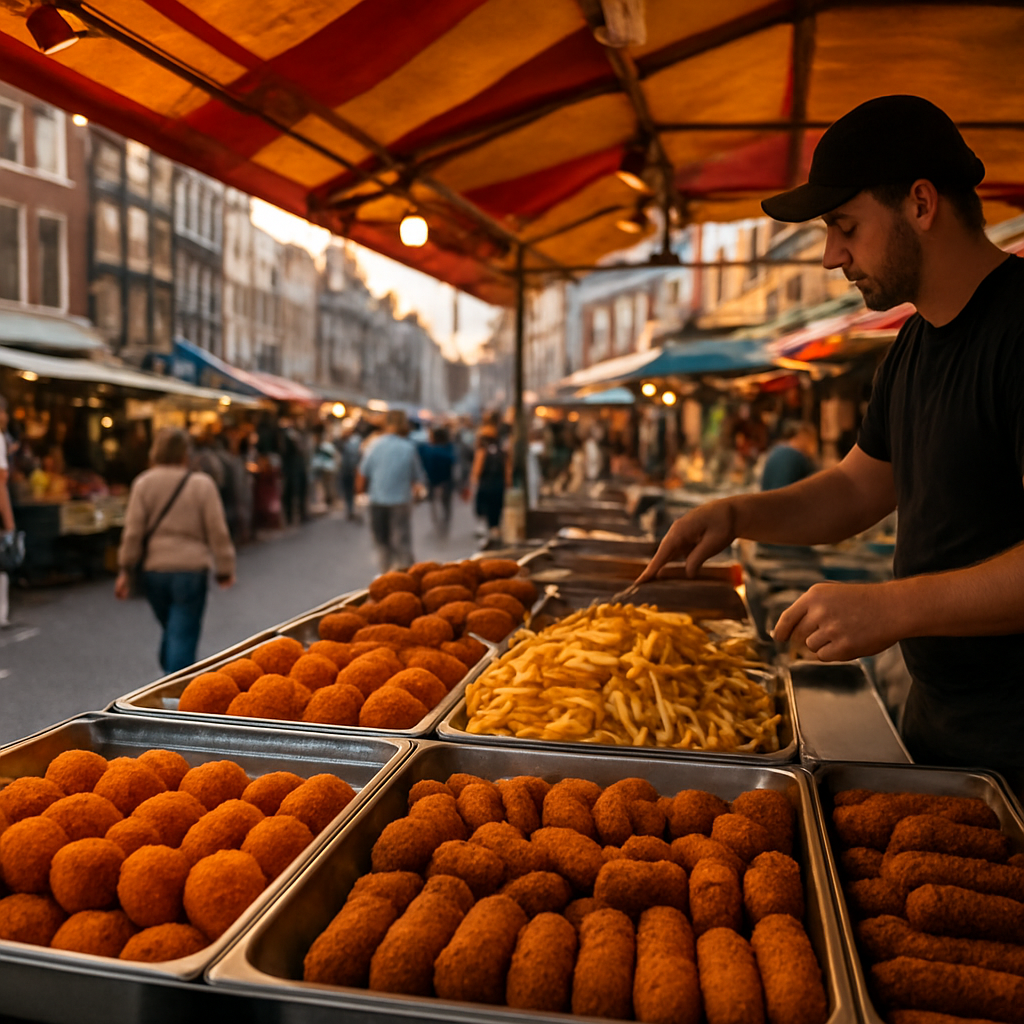
Albert Cuyp Market & De Pijp Street Food
The Albert Cuypmarkt runs six days a week through the heart of De Pijp and it's the best free entertainment in the city. Surinamese roti, raw herring with onion from a market stand, freshly made stroopwafels where you can watch the caramel spread — this is Amsterdam eating at street level. The surrounding blocks are packed with Indonesian, Turkish, and Moroccan restaurants that locals actually go to, not tourist-menu traps. Grab a patatje oorlog (fries with peanut sauce, mayo, and raw onion) and eat it standing up over a canal railing like the Dutch do. Budget roughly €8–€15 for a full and deeply satisfying lunch.
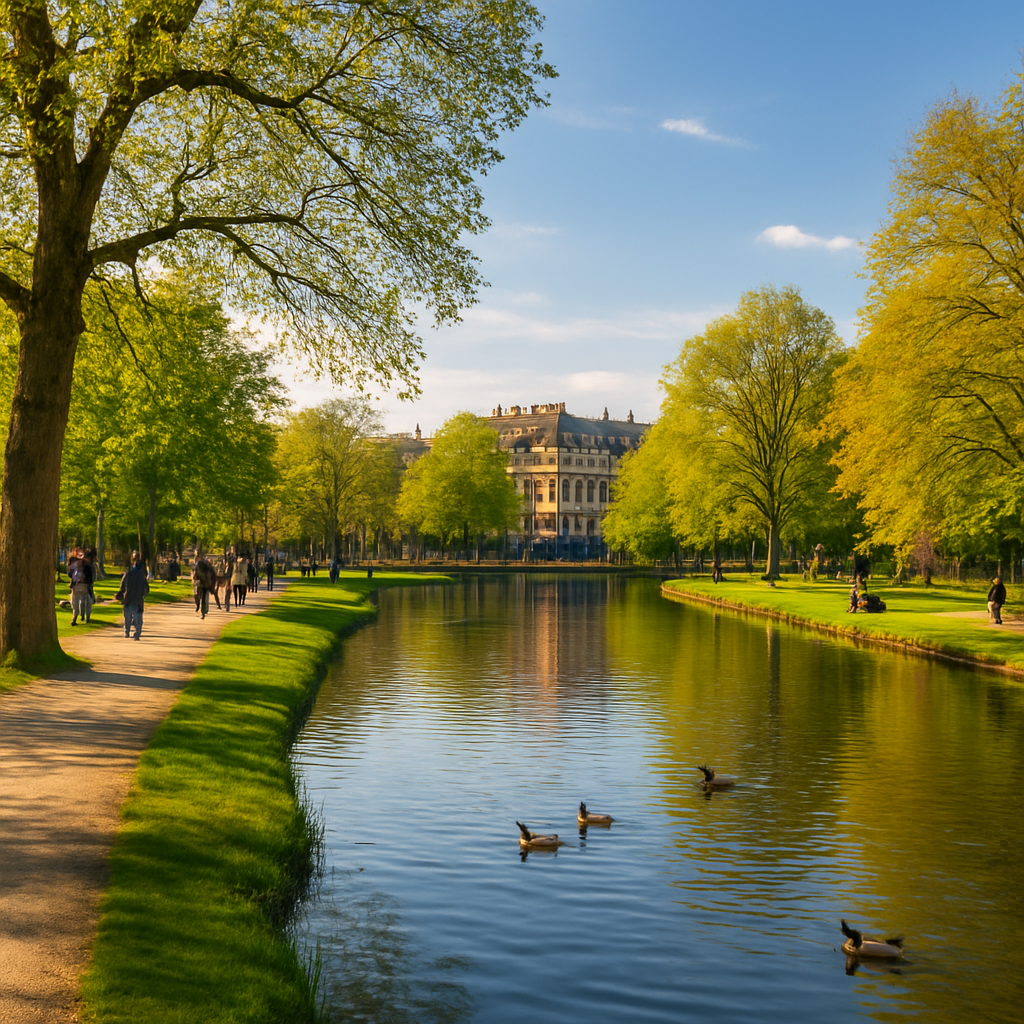
Vondelpark on a Sunday Afternoon
Amsterdam's central park is gloriously democratic on a sunny Sunday — families, joggers, impromptu guitar circles, people reading in the grass like they've nowhere else to be, which they don't. The park stretches long enough to feel like an actual escape from the city, with ponds, an open-air theater, and the Blauwe Theehuis (Blue Teahouse), a 1930s functionalist pavilion that serves drinks on a terrace surrounded by trees. It's free, it's beautiful, and it's the best place in Amsterdam to do absolutely nothing with great conviction.
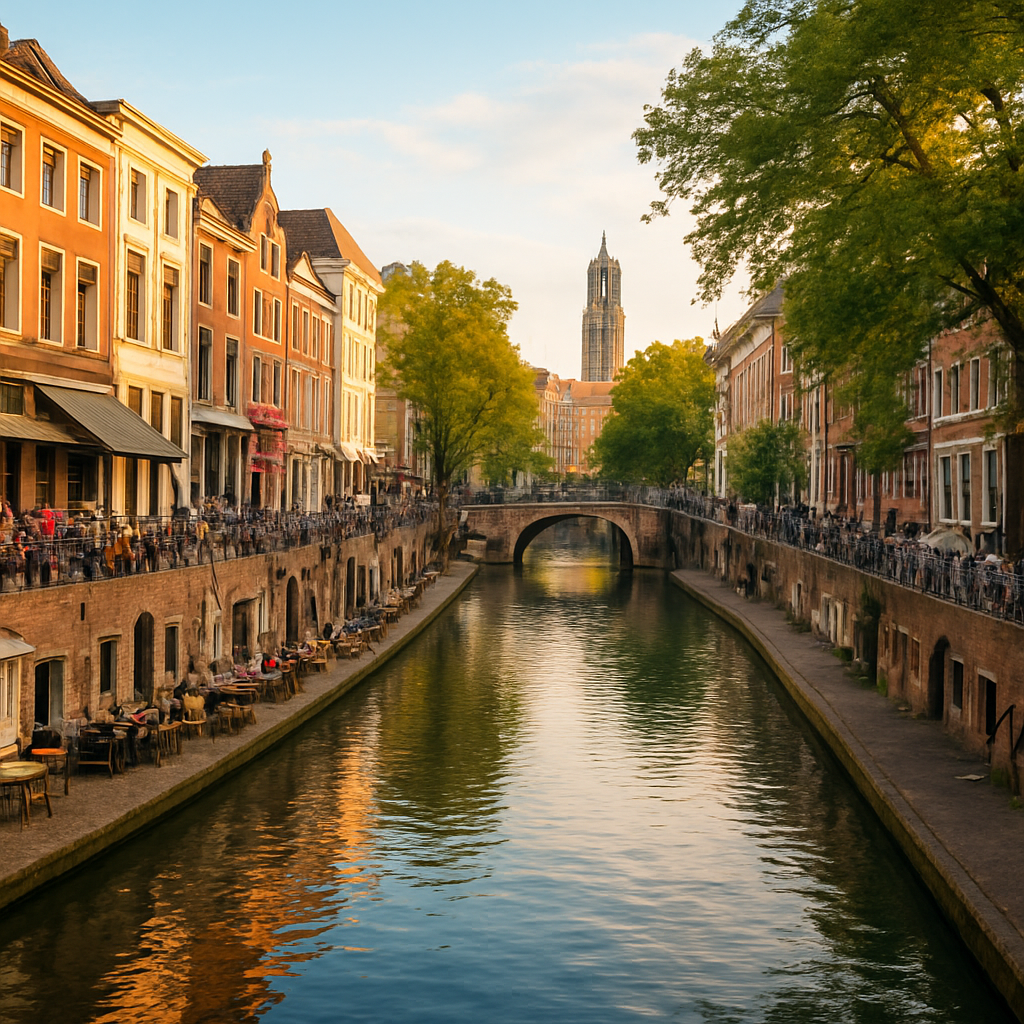
Day Trip to Utrecht
Twenty-seven minutes on a direct train from Centraal and you're in a city that feels like Amsterdam's sharper, quieter sibling. Utrecht's medieval canal-level wharves are unique in Europe — restaurants and cafés sit below street level along the Oudegracht, right at the water's edge, which makes the whole city feel like it's built on two floors. Climb the Dom Tower for a view that stretches to Amsterdam on a clear day, then eat unreasonably well at one of the independent restaurants that line the canal. It's walkable, uncrowded, and the return train runs until midnight. Budget approximately €10–€15 for the round trip.
The places I actually send people to
The Amsterdam dates worth planning around
Advice that fits how you travel
Amsterdam is one of the easiest cities in Europe to travel solo, and for gay men especially, the infrastructure practically holds your hand. The bar scene on Reguliersdwarsstraat is built for walk-ins — grab a seat at Prik or Arc, order a beer, and the bartender will have you talking to someone within fifteen minutes. The Dutch borrel tradition — after-work drinks from 5 to 8 PM — means the bars fill up early and the social energy starts long before midnight. Grindr dominates the app landscape, Scruff pulls more for the bear and leather crowd, and Feeld has a surprisingly solid user base if your interests run kinkier. But honestly? Don't sleep on just talking to people at the bar. It's still that kind of city.
Budget solo travelers can do Amsterdam for €75–€100 a day if you lean into hostels, street food from Albert Cuyp Market, and the fact that a bike rental (€10–€15/day) replaces every taxi you'd otherwise take. The core gay circuit — Rembrandtplein, Reguliersdwarsstraat, Zeedijk, Warmoesstraat — is fifteen minutes by bicycle, and the Dutch regard doing it on foot as mild eccentricity. Moderate budgets open up boutique hotels like Hotel V Nesplein and proper sit-down dinners.
Safety for solo travelers is excellent across the central neighborhoods. Late night around Rembrandtplein gets sloppy with tourist energy after 3 AM, but it's more annoying than threatening — and by then, most of the actual local crowd has migrated deeper into the city. The tram and night bus system runs reliably, and the density of the center means you're rarely more than a ten-minute walk from your bed. Amsterdam rewards spontaneity: say yes to the after-party, follow the local who knows the DJ, take the bike across the bridge you've never crossed. You'll be fine.
Honest answer: Amsterdam might be the most effortlessly romantic city in Europe for a same-sex couple, precisely because nothing is effortful about it. You'll hold hands on every bridge and nobody will glance up. You'll book the canal-view double room without a second thought. You'll sit on the steps of the Homomonument at sunset with the Westerkerk bells going off behind you and understand exactly why people keep coming back here for decades.
For date nights, the range is exceptional. Restaurant Bord'Eau is the full-theater option — Michelin-starred, Amstel-view, the kind of dinner you plan the rest of the trip around. For something more intimate and local, the brown cafés of the Jordaan, with their gezellig warmth and candlelit corners, do something that no five-star restaurant can quite replicate. A private electric boat rental on the canals at golden hour is the most romantic ninety minutes you'll spend in any city anywhere; the fact that it requires almost no advance planning makes it even better. Show up, get in the boat, point it at the Prinsengracht.
For accommodation, the Pulitzer Amsterdam is the full fantasy — 25 canal houses, an acclaimed restaurant, a private garden, and a location that puts you at the center of everything for Canal Pride weekend. For something more boutique and considerably more accessible, Hotel V Nesplein has the creative energy and inclusive atmosphere that makes staying in feel like part of the experience rather than just logistics. Either way, book early: summer rooms go well ahead of time in this city, and Canal Pride weekend in late July goes a full year out without exception.
Amsterdam is an unusually strong family destination, and LGBTQ+ families specifically will find both formal legal recognition and genuine cultural ease here. The Netherlands recognizes same-sex parental rights fully — adoption, co-parenting, and birth registration are all legally equivalent regardless of the parents' genders. You'll encounter no friction at hotels, family attractions, or restaurants presenting as an LGBTQ+ family; the city is accustomed to every configuration of people traveling together.
For activities, the NEMO Science Museum on the waterfront is specifically engineered to be excellent for children aged 6 and up — five floors of hands-on experiments and genuinely engaging exhibits that will occupy a solid half-day without anyone melting down. Artis Royal Zoo, one of the oldest zoos in Europe, is beautifully maintained and connects well with the Plantage neighborhood's canal scenery. The Keukenhof tulip gardens (mid-March to mid-May) are a spectacular family day trip requiring almost no planning: bus from Schiphol, turn up, be collectively overwhelmed by flowers. The NEMO rooftop alone, with its views over the harbor, is worth the entrance.
Practical logistics: Amsterdam's canal ring streets are cobblestoned and stroller navigation requires patience in the older neighborhoods — a carrier is often more practical than a pram for the central areas. The GVB tram network is excellent and child-friendly, with most major sites within 15 minutes of Centraal Station. Children under 4 ride free on public transport. Family menus are standard at mid-range and casual restaurants, and the Dutch are genuinely relaxed and welcoming around children in public spaces without the hovering anxiety you encounter in some cities.
What Amsterdam actually costs
Flights, visas, and the first 30 minutes
Amsterdam Airport Schiphol (AMS) is one of Europe's best-connected airports, with direct service from 300+ cities worldwide. It's also the rare major hub where getting from the terminal to the city centre is fast, cheap, and genuinely stress-free.
Major routes: London Heathrow (1h 15m) · New York JFK (7h 45m) · Toronto Pearson (7h 30m) · Berlin Brandenburg (1h 45m) · Dubai International (6h 30m) · Sydney Kingsford Smith (22h, typically via a connection)
Visa requirements: US, CA, AU: No visa required; 90 days within any 180-day period under Schengen rules. UK: No visa required post-Brexit; 90 days within any 180-day period. EU: Freedom of movement — no visa required.
Airport to city — your options:
Train (Intercity Direct) — €5–€6, 17–20 min: The right answer for almost everyone. Trains to Amsterdam Centraal run every 10–15 minutes. Buy tickets at NS machines in the terminal or load an OV-chipkaart. The whole thing is frictionless.
Bus (Connexxion 397) — €7–€9, 30–50 min: Runs to Leidseplein; useful only if you're staying in the western neighborhoods. Otherwise, take the train.
Taxi / Ride-share — €40–€55, 25–45 min: Fixed-fare taxis from official stands at Schiphol are legitimate and professional. Avoid unmarked cabs. Uber also operates from the airport without issue.
Private Transfer — €60–€80, 25–40 min: Pre-book online. Sensible option for late arrivals, large groups, or anyone traveling with a family and significant luggage.
Traven's seasonal breakdown
The questions everyone asks
Is Amsterdam really as gay-friendly as people say?
Is it safe to hold hands with my partner?
Do I need to speak Dutch?
How much should I budget per day?
When is the best time to visit for Pride?
Should I rent a bike?
What's the scene like for women and non-men?
Screenshot this before you go
So should you actually go?
Go. I don't need to qualify that. Amsterdam is one of the most complete destinations I score — the legal protections are airtight, the cultural acceptance is genuine and deep, the scene has both history and momentum, and the city itself is gorgeous, walkable, and endlessly interesting beyond anything queer-specific. It's expensive, yes. It rains, absolutely. The crowds in summer are real. But there's a reason this city has been the benchmark for decades: it earned it before anyone else even tried. Come for Canal Pride in August, a long weekend of museums and bitterballen in October, or a solo week of cycling and brown cafés in May — Amsterdam delivers. Every time.
Sources & Resources
Official links we reference when compiling this guide. Last verified 2026-03-15.
- COC Nederland — National LGBTQ+ Rights Organisation
- COC Amsterdam — Local Chapter
- Amsterdam Pride (Canal Pride)
- Pink Point — LGBTQ+ Visitor Information, Amsterdam
- Homomonument — Official Site
- Transgender Netwerk Nederland
- Schorer — LGBTQ+ Health & Mental Health Services
- GGD Amsterdam — Public Health Service (Sexual Health Clinics)
- Regenboog Groep — Community Support Amsterdam
- Blijf Groep — Domestic Violence Support (LGBTQ+ Inclusive)
- ILGA-Europe — EU LGBTQ+ Rights & Legal Resources