
Rotterdam doesn't do postcards. It hands you a working harbor, a Rem Koolhaas skyline, and a 3 a.m. kapsalon — and dares you to call it second city.
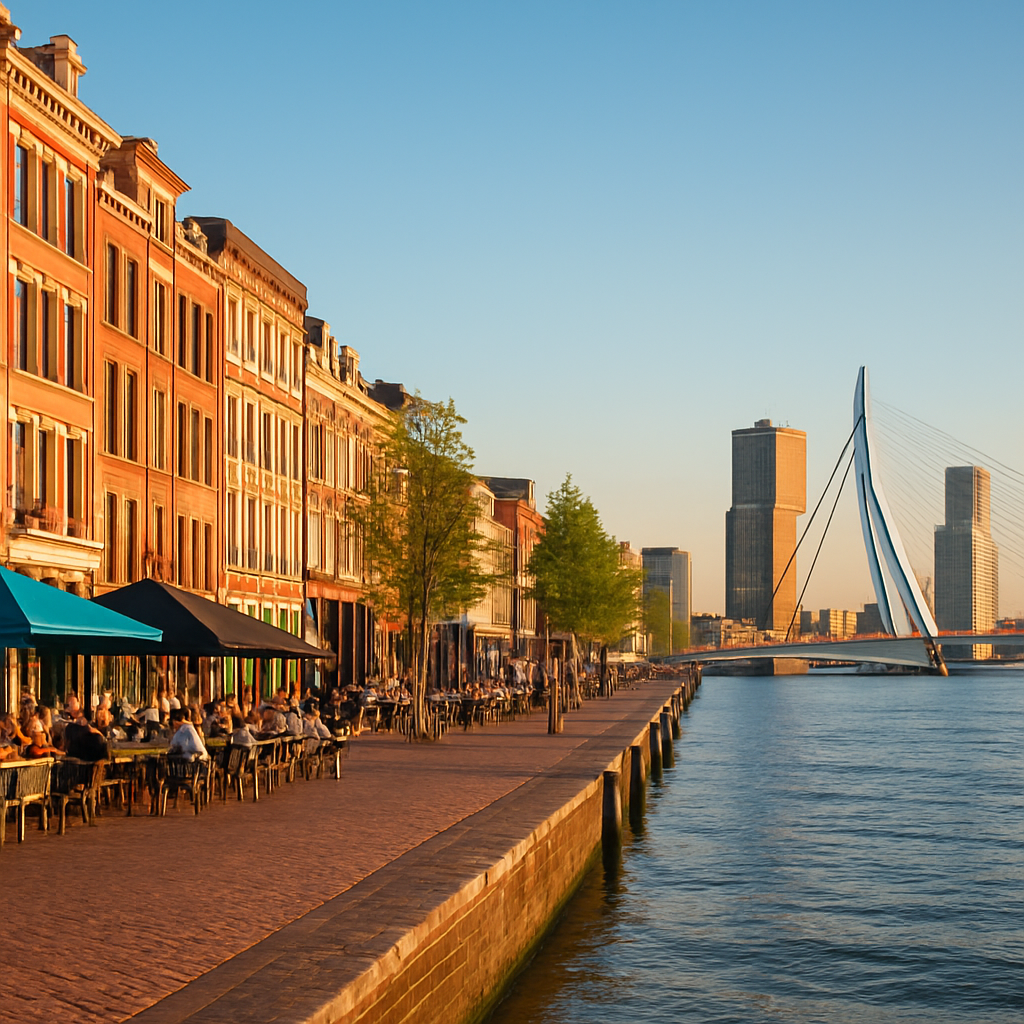
Rotterdam is the queer cousin who left Amsterdam's group chat to become an architect. The skyline does not match the rest of the country — no gabled rowhouses crowding the canal, no postcard you've already seen on a tea towel. Instead you get Rem Koolhaas's De Rotterdam tower on the south bank, the swan-neck arch of the Erasmusbrug, MVRDV's mirrored bowl at the Boijmans Depot reflecting the entire Museumpark back at itself, and a working harbor still full of cranes that move in the middle distance like the city's pulse.
The reason is brutal: the Luftwaffe flattened the medieval center in May 1940, and Rotterdam decided not to fake it. They rebuilt forward. That decision is why Witte de Withstraat exists as a few blocks of bars stacked end-to-end with terraces that fill at the first hint of sun, why the cluster of gay venues on Van Oldenbarneveltstraat — Café Strano, De Regenboog, the four-floor Gay Palace mothership on Schiedamse Vest — sits inside a city that doesn't perform heritage at you. There aren't enough tourists here yet for anyone to bother with the act.
The Dutch directness will hit you like a Maas River breeze. A bartender at De Witte Aap will tell you your outfit is 'a lot' and mean it as a compliment. Roll with it. Forget the idea of one single gay village — Rotterdam's queer life is a constellation: cocktails on Witte de With, late nights one street over, brunch with your situationship across the river at Hotel New York, a Sunday afternoon roti from Warung Mini at the Markthal. I gave it a 9.2 on Chill for a reason. Same-sex couples sharing a carafe on a Wilhelminakade terrace are part of the wallpaper.
There's a reason my Traven-Dex landed at 8.7. The legal frame is full equality, the food scene punches above its weight (two-Michelin-star rooms in two different neighborhoods, plus the most interesting Green Star kitchen in the country), and the Rotterdam Pride harbor parade in late September puts boats on the Nieuwe Maas instead of floats on streets. If you've done Amsterdam twice and you're ready to see what the Netherlands looks like when it stops auditioning, this is the trip.
The stuff your travel guide buries on page 47
The Netherlands wrote the playbook on this one. Same-sex marriage has been legal here since 2001 — the first country in the world to do it — and as of 2026, full adoption rights, comprehensive anti-discrimination protections, and self-ID for gender markers (the expert-statement requirement was finally scrapped in 2024) are all baked into law. Rotterdam doesn't ask you to translate your relationship for the paperwork. It just hands you the paperwork.
On the ground, it tracks. The Dutch are direct in a way that can read as blunt if you're not used to it — a bartender at De Witte Aap will tell you your outfit is 'a lot' and mean it as a compliment. Roll with it. PDA is a non-event in Witte de Withstraat, the Cool district, Kop van Zuid, and around the Erasmusbrug. Cross south into pockets of Charlois or Feijenoord and the room gets a little quieter — not hostile, just less performatively at-ease. Read the room.
Pro tip: the metro stops running around midnight on weekdays. RET night buses — the N-lines out of Centraal — are how you actually get home from Gay Palace at 4 a.m. Don't learn this the expensive way. PrEP is available through GGD Rotterdam-Rijnmond, and if you want to continue care while you're here, bring your prescription history. For trans travelers, Transgender Netwerk Nederland is the national resource — Rotterdam's COC chapter can connect you locally.
Entry is the boring part. EU citizens move freely. US, UK, Canadian, and Australian travelers typically get 90 days visa-free in Schengen, with ETIAS authorization required from 2026 — apply online before you fly. Government advisories carry no LGBTQ+-specific warnings. There aren't any to give.
What it actually feels like on the ground
Holding hands and PDA: On Witte de Withstraat, Nieuwe Binnenweg, the Cool district, and the Kop van Zuid waterfront, this is genuinely a non-event — nobody's looking. In Delfshaven and the historic center, you may catch the occasional second glance, but it's curiosity, not threat. South of the river in pockets of Charlois, Feijenoord, and IJsselmonde, the vibe shifts — more conservative, less visibly queer, and worth reading the room before a kiss on the corner.
Hotel check-in: Same-sex couples won't get a flicker at any of the central or waterfront properties. The Dutch hospitality industry has been doing this longer than most, and one bed for two men or two women is a non-question.
Taxis and rideshare: Bolt and Uber are widely used and generally cheaper than street taxis. No issues to report. Drivers here are paid, professional, and uninterested in your relationship.
Late night and getting home: Rotterdam is generally chill, but Zuidplein and the area immediately around Centraal late at night on weekends can get rowdy — not homophobic exactly, just drunk. Take a Bolt instead of walking through. The N-line night buses from Centraal cover most of the city until early morning.
Trans travelers: Self-ID is the law as of 2026, and the central districts — Stadsdriehoek, Cool, Witte de Withstraat, Kop van Zuid — are visibly welcoming. The outer south-bank neighborhoods can feel less inclusive, particularly after dark. Transgender Netwerk Nederland has resources and Rotterdam connections; Switchboard Nederland runs an anonymous helpline if you need to talk to someone.
If something happens: Ask for Roze in Blauw at the Politie — it's the LGBTQ+ liaison unit, and they actually take reports seriously. Hivvereniging can also help navigate health-related concerns. Pro tip: a reader wrote in to say COC Rotterdam walked them through a harassment report in English without making them feel like a complication. That's the city in miniature.
The queer geography
Witte de Withstraat & Cool
This is the spine of the city's nightlife and the unofficial center of gravity for everything queer-adjacent. Witte de Withstraat itself is a few blocks of bars stacked end-to-end, contemporary art at Kunstinstituut Melly, late-night shawarma, and terraces that fill at the first hint of sun. One street over, Van Oldenbarneveltstraat hosts the small, tight cluster of dedicated gay venues — Café Strano, De Regenboog, and the four-floor Gay Palace mothership on Schiedamse Vest. Go after 1 a.m. or you'll be dancing with the lighting tech. Heritage and orgs like IHLIA LGBTI Heritage document this corner of the city's queer history if you want the deeper read.
Kop van Zuid & Wilhelminapier
Cross the swan-shaped Erasmusbrug at golden hour and look back. That's the moment Rotterdam stops feeling like Amsterdam's understudy and starts feeling like itself. The south bank is where the city decided to be modern — Rem Koolhaas's De Rotterdam tower, the 1901 Holland America Line headquarters now operating as Hotel New York, brunch spots with skyline views, and the kind of waterfront walking that makes you forget you're in the Netherlands. The crowd skews creative and young, and same-sex couples lingering over wine on a Wilhelminakade terrace are part of the wallpaper.
Katendrecht
Once the city's red-light peninsula, now its most interesting neighborhood. Fenix Food Factory turned a warehouse into a food hall worth a Sunday. The streets are walkable, the architecture is a strange mix of working-port grit and new design, and the cafés have figured out coffee. There's no dedicated gay scene here, but the crowd at the wine bars and weekend brunches is exactly the demographic you'd expect — younger, queerer than the average Dutch suburb, and unbothered.
Delfshaven
The one neighborhood the WWII bombing didn't flatten. Gabled canal houses, craft beer bars, the historic harbor where the Pilgrims actually departed for America (Plymouth was a layover). It's quieter than the central strip — couples wandering, dogs, the smell of frites from a corner stand at dusk. The queer presence is under-the-radar but real: this is where the gays who don't want to live in the noise live. Pair it with a walk down Nieuwe Binnenweg, the long scruffy-cool shopping street that connects it back to the center.
Het Oude Westen & ZOHO
Two pockets of the city worth knowing. Het Oude Westen, just north of Witte de Withstraat, is diverse, working-class, and increasingly creative — many queer Rotterdammers actually live here. The Zomerhofkwartier (ZOHO) further north is the maker district: Bird for live jazz, Ballroom next door for cocktails and DJs, Worm for trans poetry nights and the avant-garde drag programming you won't find at a generic club. Switchboard Nederland and COC Rotterdam are the orgs that anchor the community side of all this — community centers, helplines, and a Pride presence that punches above its size.
The experiences worth rearranging your itinerary for
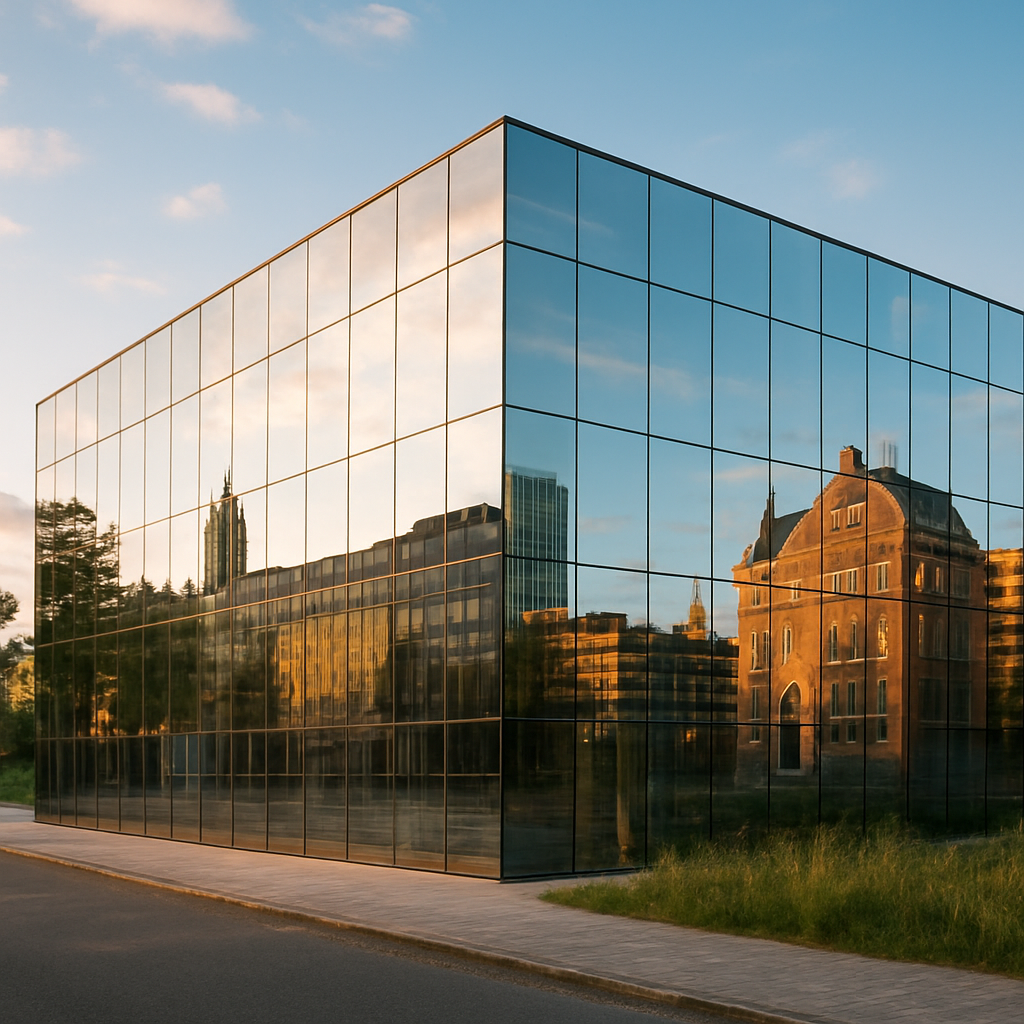
The Mirrored Bowl at Boijmans Depot
MVRDV's 2021 building is the first publicly accessible art depot in the world — approximately 151,000 artworks stored in climate-controlled glass-walled rooms you can walk past. The exterior is a mirrored bowl that reflects the entire Museumpark back at itself, and the rooftop forest with restaurant is the kicker nobody warns you about. Go for the architecture, stay for the storage racks of Picassos sitting two meters from your face.
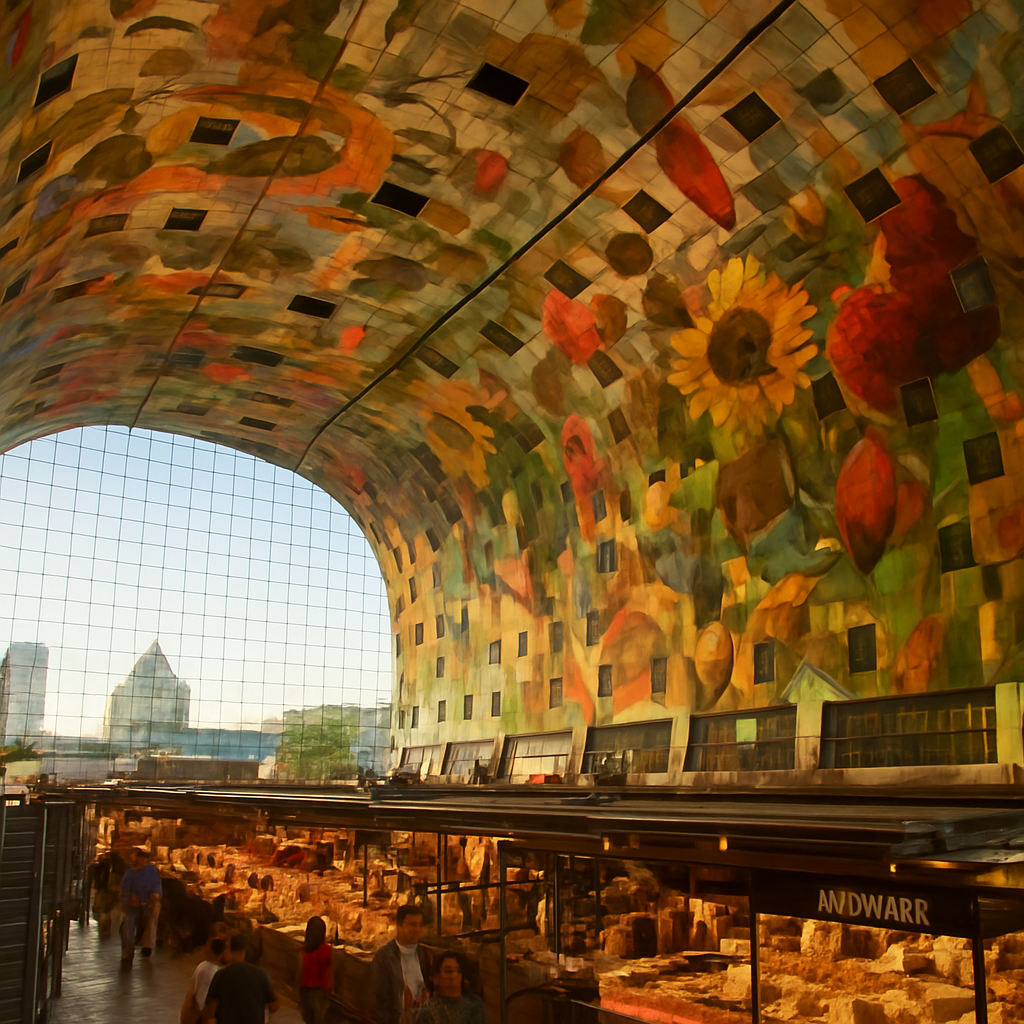
Surinamese Roti at Markthal, Then a Walk to Witte de Withstraat
Sunday afternoon at the Markthal: the MVRDV horseshoe with Arno Coenen's 40-meter Hoorn des Overvloeds ceiling overhead and a hundred food vendors below. Get the Surinamese roti from Warung Mini — Rotterdam has one of the great Surinamese food cultures in Europe — and walk it five minutes to the terraces on Witte de Withstraat. That's the entire itinerary. You don't need more.
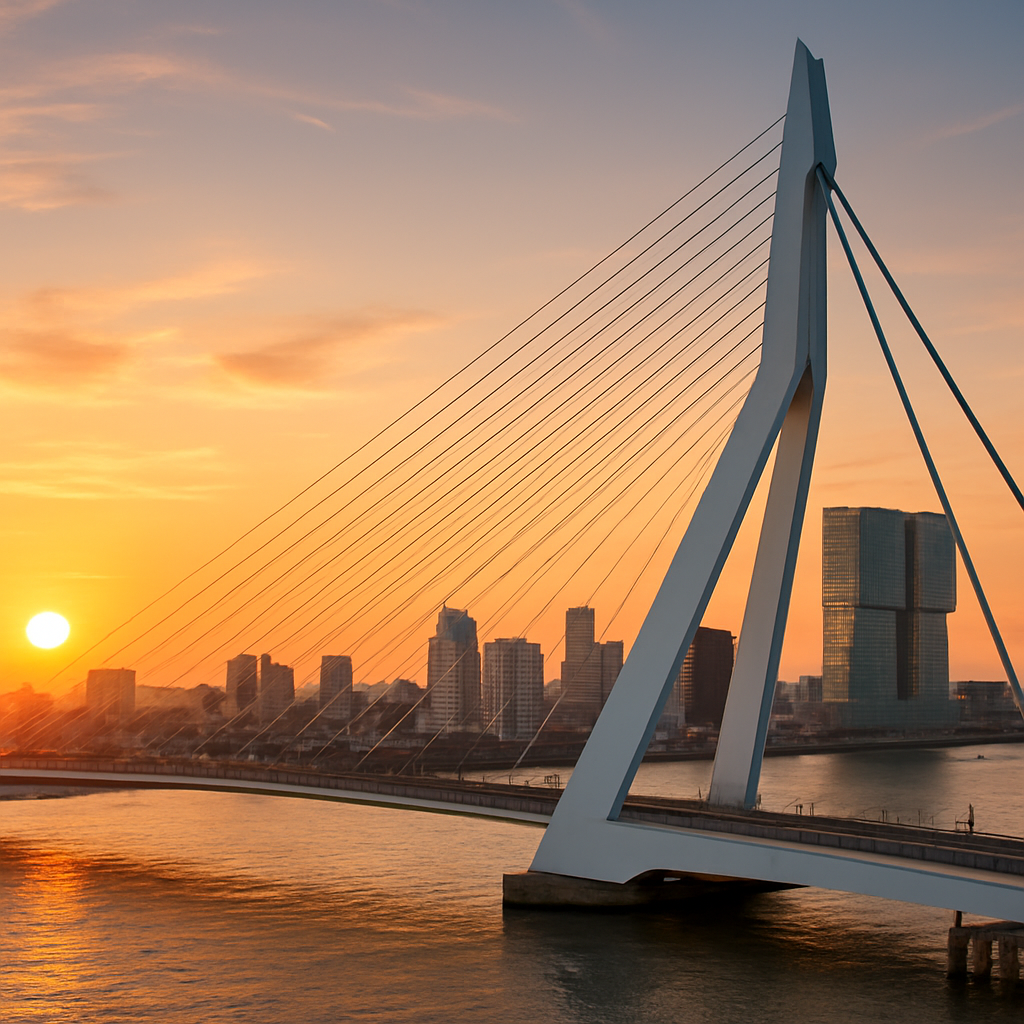
Cross the Erasmusbrug at Golden Hour
Take the waterbus across to Hotel New York at golden hour and look back at the skyline — the swan-shaped Erasmusbrug, Rem Koolhaas's De Rotterdam tower, the working harbor, the sun setting behind the cranes. This is the moment Rotterdam stops feeling like Amsterdam's understudy and starts feeling like itself. Order a glass of something at the Hotel New York Café terrace and stay for the second one.
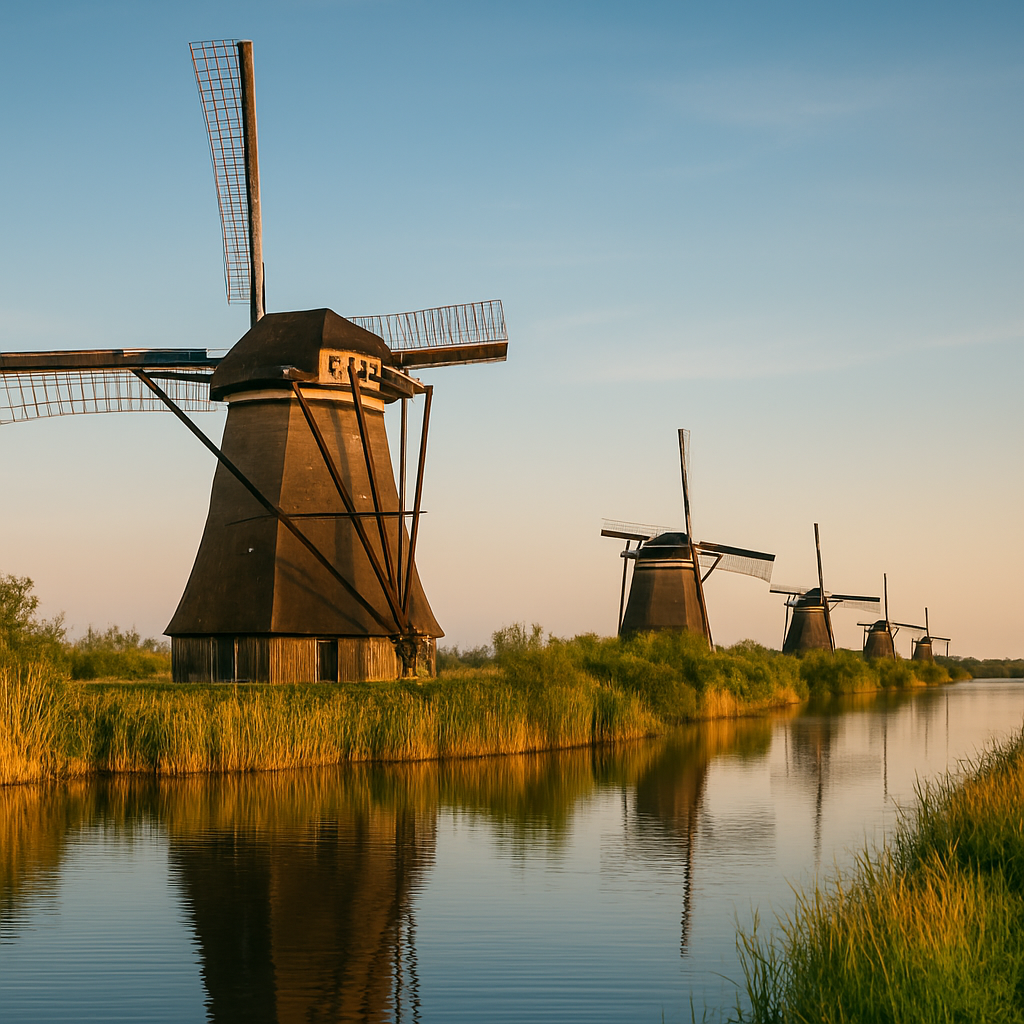
The Kinderdijk Windmills by Waterbus
Nineteen windmills built around 1740 to drain the polder, UNESCO-listed since 1997, and reached from central Rotterdam by waterbus in about 30 minutes. The boat ride across the Maas is half the experience — you arrive having already shifted into the slower, water-moving rhythm of the Dutch lowlands. Walk the dike, watch the sails turn, and skip the gift shop.
An Afternoon on Katendrecht
Once Rotterdam's red-light peninsula, now its most interesting neighborhood. Fenix Food Factory turned a 2014 warehouse conversion into a permanent food hall — independent vendors, in-house brewery, cheese maker, the works. Walk the surrounding streets afterward: working-port architecture next to new design, cafés that have figured out coffee, and the kind of waterfront that hasn't been polished into a postcard yet.
The places I actually send people to
Advice that fits how you travel
Rotterdam is one of the easier European cities to land in alone. The English fluency is near-universal, the city is compact enough to walk, and the Dutch directness means you don't have to decode anyone — if someone wants to talk to you at Café Strano, they'll say so. Start your nights on Witte de Withstraat, where the terraces and bar density mean you're never more than a stool away from a conversation, then drift one block over to Van Oldenbarneveltstraat for the late hours.
The apps work — Grindr, Scruff, the usual — but the population skews younger and more design-school than Amsterdam, so expect actual conversations rather than three-word transactions. Budget-wise, solo Rotterdam is forgiving: €85-115 a day covers a hostel dorm or budget hotel, tram rides on the OV-chipkaart app, and a real meal. Stretch to €170-240 for moderate comfort and you're staying somewhere like citizenM Rotterdam with the 24-hour canteen for the inevitable 4 a.m. hunger after Gay Palace.
For solo bases, I'd point you at citizenM for the central location and Stroom in the Lloydkwartier if you want apartment-style space and a quieter mornings. Pro tip: Picknick in Stadsdriehoek is the slow-morning solo brunch — bring a book, take a window seat, watch the city move.
This is a city built for same-sex couples who don't want to perform their relationship for the room. PDA on Witte de Withstraat, the Cool district, Kop van Zuid, and around the Erasmusbrug is a complete non-event — nobody's looking, and same-sex couples lingering over wine on a Wilhelminakade terrace are part of the wallpaper. Hotel check-in for two men or two women won't get a flicker at any of the central or waterfront properties.
The romantic playbook here is water-shaped. Take the waterbus across to Hotel New York at golden hour and look back at the skyline — that's the moment the city makes sense, and it's the cheapest first-date move I know. For dinner, Dertien on the Kralingse Plas is the Michelin-starred lake-view tasting menu that earns its anniversary status, and Las Palmas on the Wilhelminakade does the long lunch with a chilled bottle of Sancerre and a working harbor view.
For the stay, I'd send you to Pincoffs on Noordereiland — seventeen rooms in a restored 1879 customs house, family-owned, the kind of place where the owner remembers your name on day two. Mainport is the move if you want a long bath with a harbor view; many rooms come with their own sauna or Jacuzzi facing the water. Room Mate Bruno on the riverfront is gay-owned at the founder level and the rooftop at sunset is the closing scene.
The Netherlands fully recognizes LGBTQ+ families under the law as of 2026 — same-sex marriage since 2001, full joint and second-parent adoption, and birth certificates that don't make you explain yourselves. Rotterdam runs on that legal foundation in practice: schools, doctors, hotels, and the staff at the Markthal stroopwafel stand are not going to ask which one of you is the 'real' parent. Two moms, two dads, blended families — it's all just family here.
Logistically, the city is genuinely kid-friendly. Trams and the metro take strollers without drama, the Markthal is an easy lunch with a hundred food options under one ceiling and a 40-meter Arno Coenen artwork overhead to keep small humans staring upward. The Boijmans Depot rooftop forest, Diergaarde Blijdorp zoo, and the working harbor (kids love a working crane) round out the rainy-day rotation. The Erasmusbrug waterbus over to Kop van Zuid is a half-hour adventure disguised as transit.
For families, apartment-style rooms beat hotel doubles — Stroom in the Lloydkwartier has 19 lofts with kitchenettes that mean you can actually settle in for a few days. Budget-wise, plan on €220-310 a day for a family of four on the budget end, €420-600 moderate. Pro tip: Fenix Food Factory on Katendrecht is the Sunday afternoon move — multiple vendors means everyone gets what they want, and the waterfront walk afterward burns off the brewery's contribution to the visit.
What Rotterdam actually costs
Flights, visas, and the first 30 minutes
Airport: Rotterdam The Hague Airport (RTM) sits about 15 minutes from the city center and handles roughly 45 direct routes — mostly European city pairs and Mediterranean leisure destinations. For long-haul, most travelers fly into Amsterdam Schiphol (AMS) and connect via the Intercity Direct train, which runs to Rotterdam Centraal in about 26 minutes for €11.90.
Visas (as of 2026): EU citizens move freely with no visa required. Travelers from the US, UK, Canada, and Australia typically receive 90 days visa-free in the Schengen zone, but ETIAS authorization is now required as of 2026 — apply online before you fly. The application is straightforward and generally approved within minutes, though processing can occasionally take longer, so don't leave it to the airport.
From RTM to the city: Bus 33 (RET) runs every 10 minutes to Rotterdam Centraal in approximately 20-25 minutes for €4.50 — the no-brainer move if you're traveling light. A taxi from the official airport rank runs €25-35 fixed-rate and gets you door-to-door in 15-20 minutes. Uber and Bolt are widely available and typically cheaper at €20-30 for the same trip.
From AMS as alternate arrival: If you're flying long-haul into Schiphol, skip the cab quote — the Intercity Direct from AMS to Rotterdam Centraal is €11.90 and takes 26 minutes. It's one of the easiest airport-to-city transfers in Europe, and the Centraal station drops you within walking distance of Witte de Withstraat and the Kop van Zuid waterbus.
Traven's seasonal breakdown
The questions everyone asks
Do I need to speak Dutch?
Is it safe to hold hands?
How do I get from Schiphol to Rotterdam?
When is Rotterdam Pride?
Do I need ETIAS to enter?
How much should I budget per day?
Is Rotterdam better than Amsterdam for LGBTQ+ travelers?
Screenshot this before you go
So should you actually go?
Go. Rotterdam is the smartest second trip you can take to the Netherlands, and for a lot of LGBTQ+ travelers it should be the first. The legal foundation is as solid as it gets — same-sex marriage since 2001, full adoption rights, self-ID for gender markers as of 2026 — and that translates on the ground into a city where holding hands on Witte de Withstraat is genuinely a non-event. The architecture is some of the best in Europe, the food scene is doing things Amsterdam isn't, and the queer life here is a constellation rather than a village, which I happen to think is the more interesting model. Come in May through September if you can, give yourself four nights, take the waterbus at golden hour at least once, and don't show up at Gay Palace before 1 a.m. You'll leave wondering why nobody told you sooner.
Sources & Resources
Official links we reference when compiling this guide. Last verified 2026-05-04.