
Porto doesn't want to be Lisbon's little sibling anymore — and honestly, after a week in Bonfim, I'm not sure it ever was.
It's a Thursday around midnight on Rua do Almada and the steep cobblestones are wet from an afternoon rain that nobody remembers anymore. The door to a bar halfway up the hill is propped open, a Super Bock costs €1.50, and the bartender is arguing — lovingly, theatrically — with a regular about which tasca in Bonfim does the best bifana. You've been in Porto for four hours and you're already part of the conversation. This is how it works here. Porto doesn't perform for you. It just absorbs you, and by the third round you've forgotten you were ever a tourist.
Porto isn't Lisbon and it isn't trying to be — and I mean that as one of the highest compliments I can give a city. The LGBTQ+ scene here is intimate, neighborhood-scaled, and deeply social in that specifically Portuguese way where everyone eventually ends up at the same table by 3am. The bars along Rua do Almada don't get interesting until midnight, which means you have a full evening to eat your weight in francesinhas first. Consider that mandatory prep. Bonfim is where the community actually lives — not just visits on weekends — and the tascas around Rua de São Victor feed you absurdly well for under €12. There's a grounded authenticity to this city that you feel in your bones after about 48 hours, the kind of place where Maus Hábitos on Rua Passos Manuel can be a bar, a gallery, and a live music venue all at once, and nobody thinks that's unusual.
Portugal legalized same-sex marriage in 2010 and has built one of Europe's most comprehensive legal frameworks since — my Legal score of 10.0 reflects a country that genuinely put in the work. Porto wears that progress casually. Holding hands along the Ribeira at sunset gets you zero second glances from locals. Jardim de São Lázaro, the city's oldest public garden, has been an informal gathering spot for the community for decades, and on a sunny afternoon it's full of people reading and existing openly in a way that feels entirely unremarkable — which is, frankly, everything. There's a reason my Traven-Dex sits at 8.6: Porto delivers on the fundamentals with no pretension and no asterisks.
The food alone would justify the trip. The light alone — that specific golden Atlantic glow that turns the azulejo tile facades into something out of a painting around 7pm — would justify the trip. The fact that you can eat a Michelin-quality meal, drink vinho verde on a terrace overlooking the Douro, and close out the night dancing at Plano B until the sun comes up, all for roughly what a mediocre dinner costs in London? That's not a vacation. That's a lifestyle correction.
The stuff your travel guide buries on page 47
The legal picture: As of 2026, Portugal offers full marriage equality (since 2010), joint adoption rights for same-sex couples, comprehensive anti-discrimination protections covering employment, housing, and public services, and a self-ID gender recognition law (enacted 2018) that requires no medical gatekeeping. Criminalization of homosexuality was fully repealed in 1982. Portugal consistently ranks in the top five of ILGA-Europe's Rainbow Map. In plain terms: the legal framework here is about as good as it gets in Europe.
Cultural reality: The laws match the ground. Porto's younger population, large university community, and progressive neighborhood culture in Bonfim, Cedofeita, and the central Baixa create an environment where queer visibility is genuinely unremarkable in daily life. Older generations — particularly in outer suburban parishes and more traditional Catholic neighborhoods — may be less accustomed to visible LGBTQ+ couples, but hostility is exceptionally rare. Portugal's cultural default is polite warmth, and Porto runs on that more than most cities I cover.
The schedule: Porto runs on a completely different clock than most Western European cities. Dinner before 8pm is considered eccentric. Bars don't fill until after midnight. The clubs at Plano B are still going at 6am on Fridays. Do not fight this schedule — surrender to it on arrival or spend three nights wondering why nowhere feels alive.
Porto's gay area is not a compact district with a rainbow crosswalk. It's a loose, walkable constellation spread across Rua do Almada and spilling into Cedofeita and Bonfim. Map it before your first night out because the streets are steep, the alleys are narrow, and your GPS will have a small existential crisis somewhere around the Clérigos tower.
Resources: ILGA Portugal has a strong Porto presence and is the go-to resource for legal guidance, health referrals, or community connections — their website has English-language resources and they're genuinely responsive to international visitors reaching out before or during a trip. The rede ex aequo network supports LGBTQ+ youth specifically, and CheckpointLX provides LGBTQ+-focused sexual health services.
PDA comfort: You'll be entirely comfortable holding hands, kissing, and being visibly queer throughout Bonfim, the Ribeira waterfront, Cedofeita, and the Baixa commercial center. Foz do Douro and Matosinhos beach areas are broadly relaxed. Outer suburban neighborhoods and football stadium areas on match days warrant more awareness — not because of danger, but because the energy shifts more traditional. Read the room and you'll be fine.
What it actually feels like on the ground
Holding hands: Comfortable throughout central Porto, the Ribeira, Bonfim, Cedofeita, and the Baixa/Aliados commercial district. Porto's university population keeps the center progressive and the energy relaxed. Same-sex couples are a routine sight and draw no attention. The further you get from the student areas and bars, the more traditional the vibe can skew — particularly with the older generation in outer parishes — but hostility is genuinely rare.
Hotel check-in: No issues at any level of accommodation in Porto. Portugal's anti-discrimination protections are comprehensive, and Porto's hospitality industry is accustomed to same-sex couples. I've had zero reports of problems at any property from budget hostels to luxury hotels. Request a double bed at booking if it matters to you, as twin-bed defaults still exist at some older guesthouses.
Taxis and rideshares: Uber and Bolt work perfectly throughout Porto and drivers are entirely unbothered. Traditional taxi drivers are similarly professional. You'll have no issues traveling as a visibly queer couple or group at any hour, including late-night club pickups from Rua do Almada.
Beaches and public spaces: Matosinhos beach and Foz do Douro are relaxed and PDA is broadly accepted. These are not cruising beaches — they're family-friendly stretches where same-sex couples blend in without comment. Parque da Cidade, Porto's largest urban park, is similarly comfortable.
Late night: Porto's nightlife is safe by European standards, though the same common-sense rules apply: stick to well-lit streets, travel with your phone charged, and use Uber for the post-club return trip. The streets around Rua do Almada are well-populated until 4–5am on weekends. Some outer residential areas toward Campanhã run more conservative at night — read the room and trust your instincts.
Trans travelers: Portugal's 2018 self-ID law is among Europe's most progressive, requiring no medical gatekeeping. Legal protections are robust. Social awareness varies by neighborhood — central and bohemian districts (Bonfim, Cedofeita, Baixa) are affirming, while outer areas retain more traditional attitudes. ID documents reflecting your gender identity will be respected at hotels, airports, and official interactions.
Verbal harassment risk: Very low in central Porto. Occasional commentary is possible near football stadiums on match days (FC Porto and Boavista crowds can be boisterous). Outside those specific contexts, I've received no reports of verbal harassment in Porto's core neighborhoods. If something does go wrong, Portugal's anti-discrimination laws are among the strongest in the EU and Porto's PSP police has a dedicated hate crime unit. But the real first call should be ILGA Portugal, who can provide an advocate and navigate the system with you far more effectively than going it alone.
ILGA Europe provides authoritative information on LGBTQ+ legal rights, anti-discrimination protections, and safety standards in Portugal. ILGA Europe - LGBTQ+ Rights in Portugal.
The queer geography
Rua do Almada & Baixa
Rua do Almada is the central artery of Porto's queer nightlife — a long, steep street running from downtown toward Bonfim where the highest concentration of gay bars sits. Zoom Bar is the anchor: unpretentious, reliably busy on weekends, and the kind of place where the bartender remembers your order by the second round. Start here on your first night and let the crowd pull you toward wherever the party migrates next. Bar Crystal, Keops Porto, and Armazém 22 fill out the corridor — you can hit all of them on foot without crossing a major road. This isn't a manicured gay village; it's a loose cluster of bars in a dense, old-city grid where the energy builds as the night stretches past midnight.
Bonfim
Bonfim is where Porto's queer community actually lives. The neighborhood has gentrified thoughtfully over the past decade — queer-owned cafés and studios sit alongside the old tascas that feed the neighborhood for under €12. Moustache Porto anchors the LGBTQ+ nightlife presence here, and Casa Qui functions as the community's organizational hub — support groups, events, and local connections all flow through it. This isn't a tourist attraction; it's a real community space, which makes it worth a visit if you're spending more than a long weekend. The streets around Rua de São Victor are walkable, residential, and feel like the version of Porto that exists after the day-trippers leave.
Cedofeita
Cedofeita is Porto's bohemian arts district — independent bookshops on Rua de Miguel Bombarda, galleries, natural wine bars, and a concentration of reliably LGBTQ+-friendly establishments. Breyner 85 on Rua de Breyner hosts art exhibitions and music events in a space that draws the city's creative crowd. Tapabento pairs Portuguese small plates with natural wines in exactly the kind of low-key, welcoming room that makes you stay two hours longer than planned. The neighborhood has a younger, progressive residential base and a visible queer presence that feels organic rather than commercially produced. Café Candelabro, a bookshop-bar hybrid, is the kind of place where you'll find yourself reading for an hour and then in conversation with a stranger for two more.
Other neighborhoods worth knowing
Miragaia and the Passeio das Virtudes terrace garden are essential — on warm evenings, the Virtudes fills with locals including a visible queer contingent, everyone watching the Douro turn gold with a bottle of vinho verde. The surrounding streets have independent bars and alternative cultural spaces. Maus Hábitos, up on the fourth floor of a building on Rua Passos Manuel, is Porto's best LGBTQ+-friendly cultural space — part bar, part gallery, part live music venue, and fully wonderful in a way that's hard to describe until you're there at midnight watching something unexpected happen on a small stage. And Jardim de São Lázaro, Porto's oldest public garden, has been an informal queer gathering spot for decades — on a sunny afternoon it's full of locals reading, talking, and just existing openly.
Equaldex aggregates information about LGBTQ+ venues, community organizations, and local resources throughout Portugal. Equaldex - Portugal LGBTQ+ Community.
Purple Roofs maintains an international directory of LGBTQ+-friendly hotels, guesthouses, and accommodations with verified listings in Porto. Purple Roofs - LGBTQ+-Friendly Accommodations in Portugal.
The International LGBTQ+ Travel Association directory lists verified LGBTQ+-friendly hotels, tour operators, and travel services operating in Portugal. IGLTA Member Directory - Certified LGBTQ+ Travel Providers.
The experiences worth rearranging your itinerary for
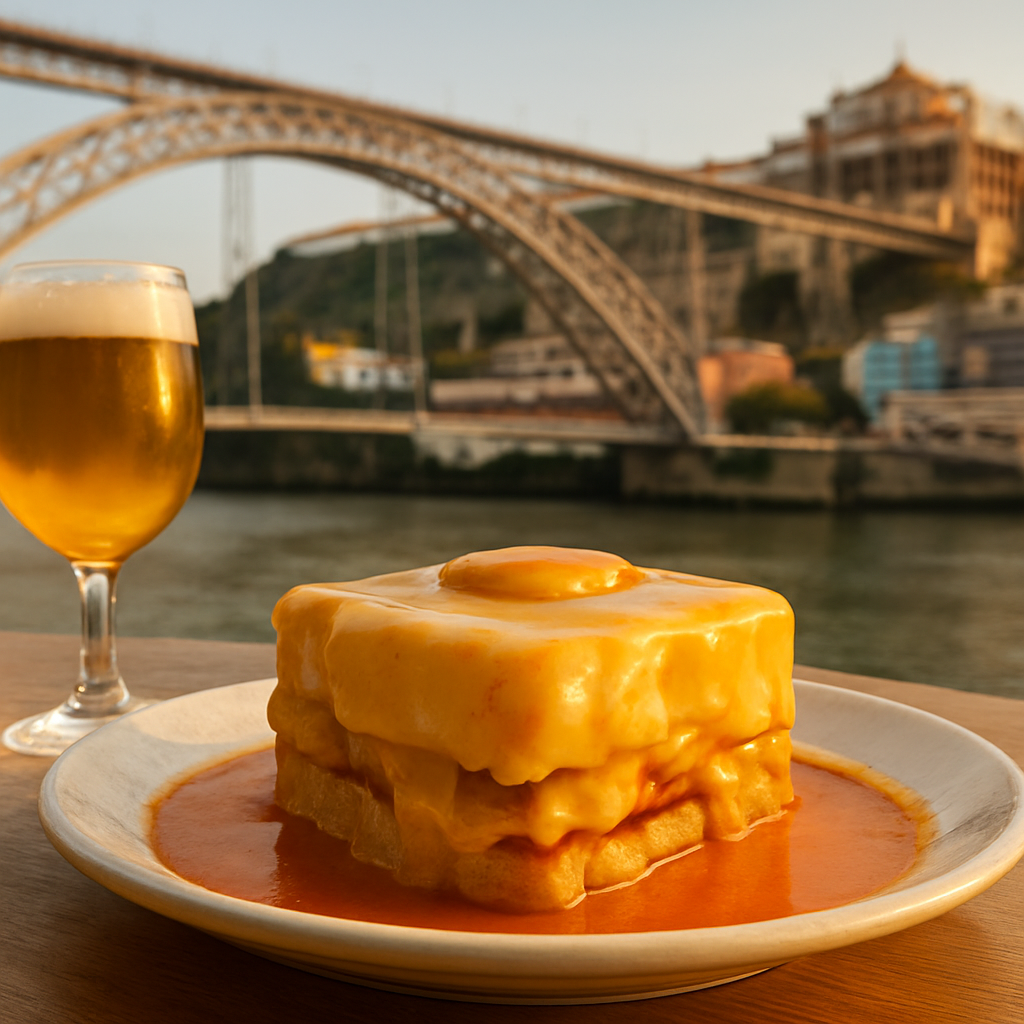
Eat a francesinha at Café Santiago — then question your life choices
Porto's signature dish is a multi-layered gut-bomb of cured meats, melted cheese, and spiced tomato-beer sauce, and Café Santiago on Rua de Passos Manuel has been the reference address since the mid-20th century. This isn't delicate cuisine. This is the sandwich that makes you understand why Porto invented port wine — you need something strong to recover. Go hungry, order it with a fried egg on top (the correct choice), and accept that you won't want dinner later. Budget about €10–€12 with a beer. The queue moves fast. Cash is preferred.

Serralves Museum and Park
Álvaro Siza Vieira designed this museum, and you'll feel it the moment you walk in — clean white volumes, natural light doing things that shouldn't be possible, and a relationship between the building and its 18-hectare park that makes you want to study architecture. The permanent collection and rotating exhibitions are Portugal's strongest contemporary art program, and the 1930s Art Deco villa on the grounds is worth the entry fee alone. Give yourself at least half a day. The park is a legitimate escape — old-growth trees, sculpture installations, and formal gardens where you'll lose your phone signal and not mind. Entry is approximately €20; the annual Serralves em Festa festival opens the whole thing for free.

Take the Douro Valley wine train
The train from São Bento station into the Douro Valley is one of the most beautiful rail journeys in Europe, and I don't use that kind of language lightly. The line follows the river east through terraced vineyards carved into schist hillsides — this is a UNESCO World Heritage Cultural Landscape and the world's oldest demarcated wine region (since 1756). You can do it as a day trip: catch a morning train, visit a quinta for a tasting, eat lunch overlooking the river, and be back in Porto by evening. Organized tours from Porto run €60–€120 and handle the logistics. If you'd rather go independent, the train ticket from São Bento to Pinhão costs around €15 each way, and several quintas are walkable from the station.
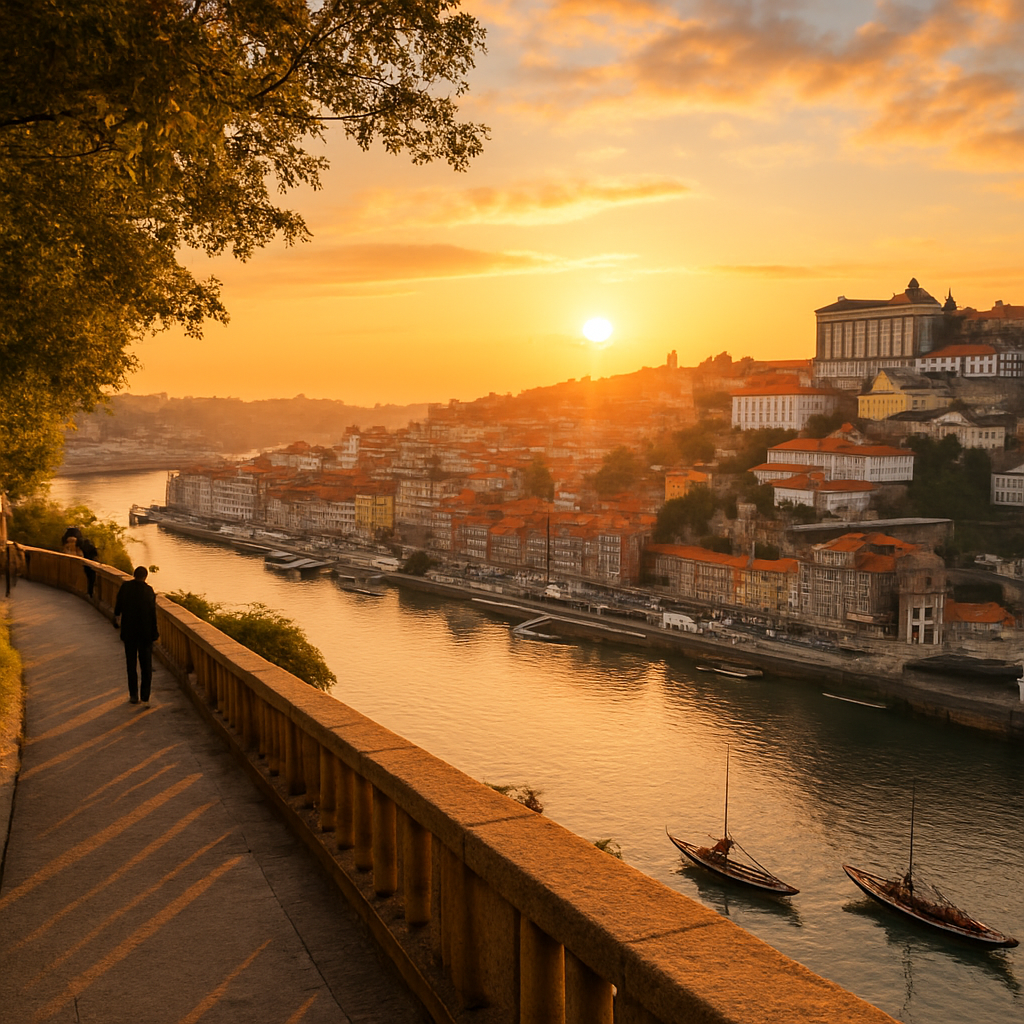
Sunset at Passeio das Virtudes
This public garden terrace in Miragaia overlooking the Douro is where Porto goes to exhale. On any warm evening the stone ledges and grass fill with locals — bottles of vinho verde, conversation, the occasional guitar — and the sunset over the river and Vila Nova de Gaia does something to the light that no Instagram filter has managed to replicate. It's free, it's beautiful, and it's the closest thing Porto has to a communal living room. The surrounding streets have independent bars if you want to stay after dark, and the walk back to the Baixa takes about fifteen minutes through old-city streets that feel genuinely timeless.
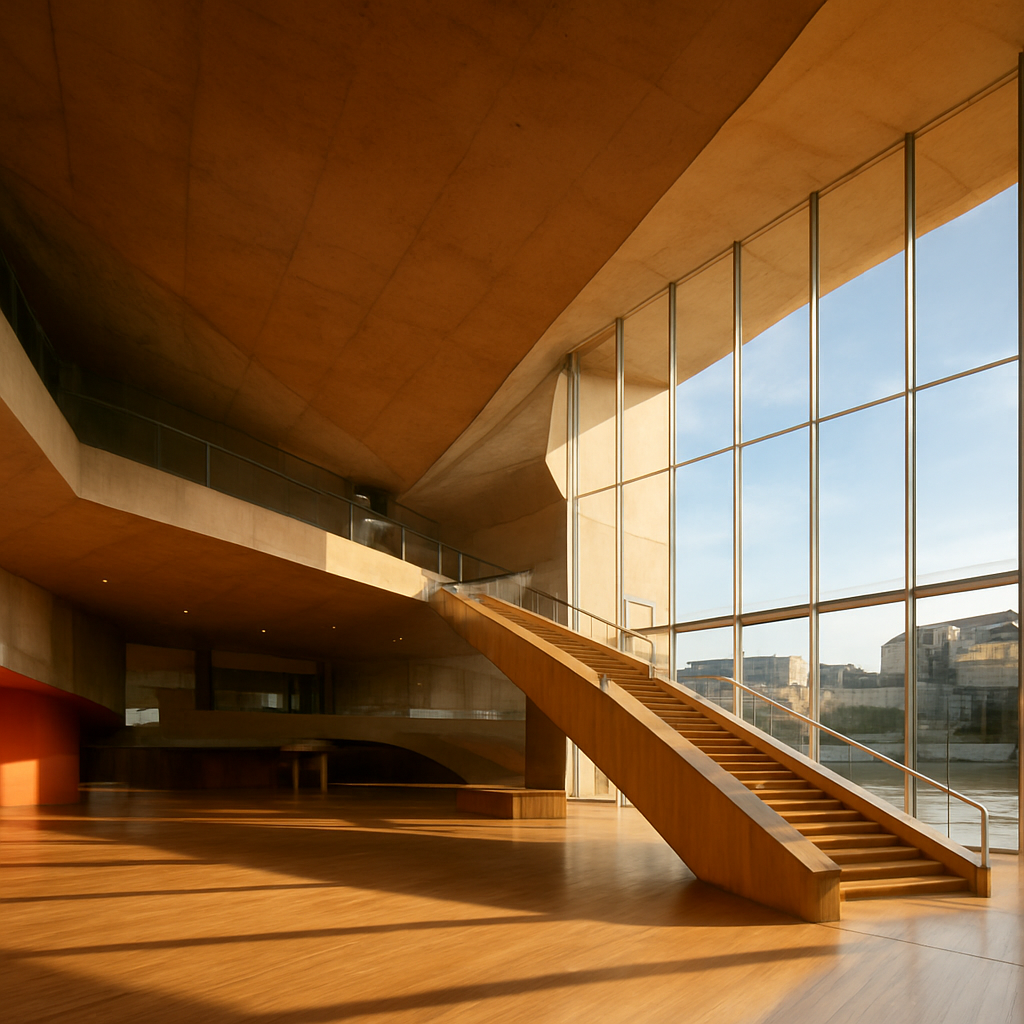
Casa da Música — Rem Koolhaas's concrete spaceship
Even if you don't attend a concert, the guided architectural tour of Casa da Música is worth an hour. Rem Koolhaas designed this building to look like a faceted concrete meteorite that landed in Boavista, and the interior is even stranger — a main auditorium with corrugated glass walls that let daylight flood a concert hall, which shouldn't work but absolutely does. The programming ranges from classical to electronic to jazz, and ticket prices start around €10 for many performances. Book the architecture tour in advance online — it sells out, and walking through the backstage spaces with a guide who clearly loves the building is one of those Porto experiences that sticks.
The places I actually send people to
Advice that fits how you travel
Porto is one of the easiest cities in Europe to travel solo, and I say that as someone who's done it multiple times. The scale helps — this is a walkable city where the center, the gay bars, the best restaurants, and the Douro waterfront are all within a 25-minute walk of each other. You won't spend half your trip on transit, and you won't feel isolated in a sprawling metropolis. The neighborhood energy in Bonfim and Cedofeita runs social and informal; it's genuinely easy to strike up conversations at tascas, wine bars, and cultural spaces. Porto rewards curiosity, and solo travelers get to follow it wherever it leads.
The apps work here. Grindr and Tinder have active Porto populations, and the local user base skews friendly and conversational rather than transactional — you'll get genuine restaurant recommendations alongside everything else. For meeting people offline, start at Zoom Bar on Rua do Almada — it's the kind of bar where solo visitors get absorbed into groups naturally, especially on weekends. Maus Hábitos on Rua Passos Manuel attracts the queer creative crowd for gallery openings and live music, and it's the sort of venue where standing alone at the bar feels intentional rather than awkward. Plano B's queer nights are worth checking Instagram for before you arrive — the music is adventurous and the crowd is a good mix of locals and travelers.
Budget-wise, solo Porto is remarkably affordable. A hostel dorm in Cedofeita runs €20–€35, a tasca lunch is under €12, a Super Bock draft is €1.50 at a neighborhood bar, and the metro day pass is €3–€5. You can eat and drink very well for €55–€75 a day if you skip the waterfront tourist traps and eat where the locals eat. Pro tip: the bifana — a simple pork sandwich on a crusty roll — is the essential late-night snack available at counters around Rua de Santa Catarina for a couple of euros. Essential fuel between bars.
Porto is built for couples, and I mean that architecturally as much as anything else. The city's hills force you together — you'll grab an arm on the steep calçada portuguesa cobblestones, stop to catch your breath at a miradouro with a view that stops conversation cold, and find yourselves standing there longer than you planned. That's Porto doing what Porto does.
PDA is completely comfortable throughout central Porto, the Ribeira waterfront, Bonfim, and Cedofeita. Holding hands along the Douro at golden hour costs nothing and draws zero attention. For an intentional date night, book a table at O Paparico in Bonfim — it's been feeding Porto well for over two decades, and a dinner there with a bottle of Douro red is the kind of meal you reconstruct from memory later. If the budget stretches, the tasting menu at Antiqvvm in Foz do Douro is Michelin-starred and worth every euro for a real occasion.
For where to sleep, The Yeatman across the river in Vila Nova de Gaia is the romantic benchmark — that panoramic view of Porto's skyline, the wine-themed rooms, the Michelin-starred restaurant. It's the splurge that earns it. If you'd rather be inside the city's neighborhood energy, Torel Palace Porto in Bonfim has a terraced garden and a boutique intimacy that feels genuinely Portuguese rather than hotel-generic. Either way: book the room with the Douro view. You'll know why when you wake up the first morning.
Portugal has full marriage equality, joint adoption rights, and self-ID gender recognition as of 2026 — one of Europe's most comprehensive legal frameworks for LGBTQ+ families. What that means practically is that your family structure is recognized here without institutional friction. Porto is a genuine option for LGBTQ+ families, not an aspirational one.
The activity list is strong. Serralves — Portugal's premier contemporary art museum set in an 18-hectare park with a stunning Art Deco villa — entertains kids and adults simultaneously, and the park alone is worth the entry fee on a sunny afternoon. Sea Life Porto keeps younger children occupied for a solid two hours. The beaches at Matosinhos, a quick metro ride from the center, are clean, calm, and the seafood restaurants on the strip afterward are some of the best-value meals in the city. Porto's historic tram lines are a reliable hit with kids who are unimpressed by everything else.
Practically: Porto's cobblestones are genuinely rough on strollers, so pack a carrier for younger ones or accept that you'll be lifting over kerbs constantly. The metro is efficient and inexpensive — a family day pass beats individual tickets every time, and strollers fold easily onto Line E from the airport. Most mid-range restaurants have straightforward kids' menus or will split a plate without complaint. The tascas around Bonfim feed the whole family for a fraction of what you'd pay in Lisbon, and Portuguese dining culture accommodates children naturally — long, unhurried meals are the norm here, which means nobody's giving you impatient looks when the kids need a second round of bread.
What Porto actually costs
Flights, visas, and the first 30 minutes
Airport: Porto is served by Francisco Sá Carneiro Airport (OPO), located approximately 11km northwest of the city center. The airport handles direct services from 100+ cities across Europe and North America.
Major direct routes: Lisbon (LIS) ~1h 05m · London Heathrow (LHR) ~2h 20m · Paris CDG ~2h 10m · Amsterdam (AMS) ~2h 35m · New York JFK ~7h 30m · Toronto (YYZ) ~8h 00m · Madrid (MAD) ~1h 20m
Visas (as of 2026): Portugal is a Schengen Area member. US, Canadian, and Australian citizens typically do not require a visa for stays of up to 90 days within any 180-day period. UK citizens generally receive 90 days visa-free under the post-Brexit bilateral arrangement. EU citizens have freedom of movement. Entry requirements can change — always check your government's current travel advisory before departure.
Airport to city center:
Metro (Line E – Violet): €2.00 · 35–40 min · The smartest option. Pick up an Andante card at the airport machines; runs directly to the Trindade hub in the city center. Runs until approximately 1am.
Uber / Bolt: €12–€20 · 20–30 min · Widely available curbside at arrivals; surge pricing is possible on Friday and Saturday nights. This is also your best bet for the return trip after a late club night.
Taxi: €20–€28 · 20–30 min · Fixed-zone tariff, metered, legitimate. More expensive than rideshare but fine if you have heavy luggage or prefer a traditional cab.
Aerobus: €6.00 · 30–45 min · Stops at key tourist areas in the city center; less frequent than the metro and slower in traffic, but useful if you're arriving with a lot of bags and a relaxed schedule.
Traven's seasonal breakdown
The questions everyone asks
Is Porto safe for LGBTQ+ travelers?
Do I need to speak Portuguese?
Where's the gay area in Porto?
How much should I budget per day?
Is it safe to hold hands in Porto?
When is Porto Pride?
What's a francesinha and do I have to eat one?
Screenshot this before you go
So should you actually go?
Go. Porto is one of those rare cities where the legal protections are rock-solid, the locals are genuinely unbothered by who you love, and the cost of living means you can actually enjoy yourself without doing math at every meal. The scene is smaller than Lisbon's or Barcelona's — but it's real, it's warm, and it runs on a human scale that makes you feel known rather than processed. The food is extraordinary, the wine is dangerously affordable, and the city itself is one of the most beautiful in Europe. Whether you come for a long weekend or stay for a month, Porto will make you feel like you belong here. I can't say that about many places.
Sources & Resources
Official links we reference when compiling this guide. Last verified 2026-03-15.
- ACM – Alto Comissariado para as Migrações (Anti-Discrimination Support)
- APF – Associação para o Planeamento da Família (Sexual Health)
- Câmara Municipal do Porto (Porto City Hall)
- CheckpointLX (LGBTQ+ Sexual Health Clinic, Portugal)
- ILGA Portugal
- Provedor de Justiça (Portuguese Ombudsman – discrimination complaints)
- rede ex aequo (LGBTQ+ Youth Network Portugal)
- ILGA Portugal – LGBTQ+ Support, Legal Aid & Community Services
- UMAR – União de Mulheres Alternativa e Resposta
- Visit Portugal (Official Tourism – LGBTQ+ travel resources)