
San Juan doesn't perform for you. It hands you a plastic cup of rum, points at the plaza, and trusts you to keep up.
It's a Thursday night at La Placita de Santurce, and the produce stalls shut down hours ago. What's here now is something else entirely — a few hundred people spilling out of bars and into the square, reggaetón competing with salsa from three different doorways, someone handing you a plastic cup of rum with limón before you've even decided where you're going. The crowd is mixed in every way a crowd can be mixed. Two guys dancing close near the corner. A group of women laughing so hard one of them is doubled over. Nobody performing acceptance — just living in it. This is the part of San Juan the brochure doesn't quite capture, and it's the part that made me fall for this city hard.
Here's what makes San Juan singular in the Caribbean: it carries full US legal protections — marriage, adoption, comprehensive anti-discrimination, self-ID gender marker changes, all of it — while feeling absolutely nothing like the US mainland. The architecture in Viejo San Juan is 500 years old and painted in colors that shouldn't work together but somehow do. The food swings from $4 mofongo at a lunch counter to a tasting menu at Marmalade on Calle de la Fortaleza that rivals anything in New York. The scene spreads across three neighborhoods — Condado's hotel-strip energy, Santurce's gritty arts-district pulse, Ocean Park's quiet residential beach life — and each one has a completely different personality. I gave it an 8.5 on Scene, and honestly, for a Caribbean island, that's remarkable.
The thing I keep coming back to is how effortless it feels. You're not navigating hostility. You're not code-switching. You're drinking a medalla at a dive bar in Old San Juan where the jukebox hasn't been updated since 1987 and nobody cares who you showed up with. You're eating a media noche at Kasalta on a Sunday morning with sand still on your feet from Ocean Park beach. There's a warmth here that isn't performed for tourists — it's just how Puerto Ricans move through the world. My Traven-Dex of 8.7 reflects a city that delivers on nearly every front: the destination itself is world-class, the legal framework is ironclad, and the culture has caught up to the law in most of the places you'll actually spend time.
Pro tip: don't make the mistake of staying exclusively in Condado. It's the gay hotel strip and it's convenient, but Santurce is where the creative energy lives — the street art, the food trucks at Lote 23, the bars where the locals actually go. And budget a day for El Yunque, the only tropical rainforest in the US National Forest system, about 45 minutes east. You'll be standing under a waterfall in the morning and back at La Placita with a cocktail by nightfall. That range — rainforest to dance floor in eight hours — is what San Juan does better than anywhere else in the Caribbean.
The stuff your travel guide buries on page 47
The legal picture: Puerto Rico is a U.S. territory, full stop. Marriage equality applies. Same-sex adoption is legal. Anti-discrimination protections are comprehensive — covering employment, housing, and public accommodations. Gender identity law allows self-ID, and Puerto Rico permits administrative changes to gender markers on birth certificates. U.S. federal ID rules apply for passports. There is no criminalization of same-sex conduct. My Legal score of 10.0 reflects the reality: on paper, this is as good as it gets anywhere in the Caribbean or Latin America.
The cultural reality: Laws and street-level comfort don't always match. Condado and Santurce are genuine queer comfort zones where same-sex couples are visible, normalized, and unremarkable. Condado is a bubble — calibrate your PDA accordingly as you venture further out. Old San Juan is broadly tolerant in the tourist-heavy areas, though on quieter residential lanes you may want to dial things back slightly. Once you leave metro San Juan for rural municipalities and the island interior, Catholic social conservatism is more present and public same-sex affection may draw attention. None of this is dangerous in a legal sense — you have full protection under U.S. law — but the social temperature changes.
Trans travelers: Puerto Rico's legal framework for trans people is among the broadest in the Caribbean. Gender marker changes are available through an administrative process, and federal ID rules apply to passports. Social acceptance is highest in Condado and Santurce; expect more conservative attitudes in non-urban settings and among older generations. Trans women of color face elevated safety risks here as they do across Latin America — Trans Puerto Rico is an active local resource for community connection and support.
PDA comfort by area: Condado's Ashford Avenue corridor — high. Same-sex couples are openly affectionate and it's unremarkable. Santurce and La Placita — high, particularly Thursday through Saturday evenings when the LGBTQ+ bar presence is strongest. Old San Juan — moderate; tourists create a generally tolerant baseline but residential streets away from the main drags warrant some awareness. Isla Verde hotel zone — moderate; resort properties are broadly accepting. Rural areas and the island interior — low to moderate; exercise discretion.
Pride: San Juan Pride runs in late June and is massive — among the largest in the Caribbean. It's increasingly politically charged: Coalición Orgullo Arcoíris and Puerto Rico Para Todes use it as an organizing moment, so expect speeches and mutual aid tables alongside the dancing. Cups in Santurce, one of the few dedicated lesbian bars in the entire Caribbean, is packed during Pride week — if you're a queer woman traveling here and you skip it, you've made a mistake.
What it actually feels like on the ground
Holding hands: In Condado and along the Ashford Avenue corridor, same-sex hand-holding is common and unremarkable — this is the queer comfort zone. Santurce around La Placita on weekend evenings is equally fine. In Old San Juan's tourist areas, you're unlikely to have issues but some visitors exercise light discretion on quiet residential blocks. Outside metro San Juan, pull back.
Hotel check-in: No issues. Puerto Rico operates under U.S. anti-discrimination law. Booking a king bed as a same-sex couple at any hotel on this list — or any chain property — is straightforward. Boutique guesthouses like Dreamcatcher in Ocean Park are explicitly welcoming. You won't be asked to justify your room configuration.
Taxis and rideshare: Uber works well in San Juan and is generally the better call over hailing random cabs, especially at 3am outside Krash. Have the app queued before you step out — Ashford Avenue post-midnight has the usual energy mix you'd expect from any major gay nightlife strip. Standard taxis from the airport use fixed rates to Condado and are reliable during daylight hours.
Beaches and public spaces: Ocean Park Beach near the end of McLeary Street has a well-established, unmistakably welcoming stretch. Condado Beach is resort-adjacent and broadly accepting. Same-sex PDA in beach and pool contexts within hotel properties is largely unremarked. Parque Sixto Escobar in Puerta de Tierra is a known local hangout — fine during the day, use standard urban awareness after dark.
Late night: Condado and Santurce's bar corridors are active and populated until very late, which creates safety in numbers. Standard rules apply: stay in well-lit, populated areas, use rideshare over walking long distances alone after 2am, and keep your phone and wallet secured. Old San Juan is also fine on the main tourist streets but thin out quickly once you're outside the core after midnight.
Trans travelers: Trans women of color face elevated risks in San Juan, as local advocacy groups have documented. Trans Puerto Rico tracks safety issues and provides community resources. In Condado and Santurce, trans visibility is accepted. Outside those zones, experiences vary. Iniciativa Comunitaria in Santurce offers LGBTQ+-competent health services including PrEP navigation and HIV testing with sliding-scale fees.
Verbal harassment: Rare in tourist zones. Occasional piropos (street comments) can happen anywhere in San Juan regardless of orientation — this is a broad cultural pattern, not specifically anti-LGBTQ+. Targeted homophobic or transphobic verbal harassment is uncommon in Condado and Santurce but not impossible in more conservative neighborhoods, particularly late at night.
The queer geography
Condado — The Rainbow Corridor
Ashford Avenue is the spine. Between Vendig and Magdalena streets, this is San Juan's primary LGBTQ+ hotel, nightlife, and social strip — rainbow flags, welcoming storefronts, and the highest concentration of openly gay foot traffic on the island. La Concha Renaissance Resort sits at its center, and the beach is a two-minute walk from any point along the avenue. This is where most visitors start, and for good reason: it's safe, visible, walkable, and unapologetically queer. The comparison to South Beach isn't wrong, but Condado is smaller, more personal, and you can get from one end to the other without a cab.
Santurce — The Real Thing
South of Condado, Santurce is grittier, younger, and more creatively charged. This is where the locals go — La Placita de Santurce on a Friday night is the most honest cross-section of the city's social life, an open-air plaza surrounded by bars where the LGBTQ+ community isn't cordoned off but woven into the crowd. Krash Klub anchors the dedicated gay nightlife here, Cups is one of the only lesbian bars in the entire Caribbean, and the Santurce es Ley mural corridor along Calle Cerra includes works celebrating Boricua queer identity. The Ciudadela arts complex draws a creative, queer-heavy crowd. If Condado is the resort version of queer San Juan, Santurce is the lived-in one.
Ocean Park — The Quiet Gay Beach
Ocean Park is a residential neighborhood east of Condado with a historically gay-friendly reputation, anchored by gay-owned guesthouses like Dreamcatcher and a stretch of beach near the end of McLeary Street that has been quietly, reliably queer for years. The vibe here is laid-back — no clubs, no velvet ropes, just soft sand, calm water, and piragua vendors. It's the recovery zone.
Other Neighborhoods Worth Knowing
Viejo San Juan — the colonial walled city — isn't explicitly gay but is deeply queer-welcoming. La Factoría on Calle San Sebastián fills with a creative, queer-heavy crowd on weekends, El Batey is the dive bar that everyone ends up at eventually, and the whole district has a bohemian, mixed energy that skews tolerant without making a production of it. Calle Loíza, running between Ocean Park and Santurce, has the highest density of LGBTQ+-owned cafes, vintage shops, and bookstores — it's the daytime neighborhood stroll that tells you something true about queer life here beyond the clubs. And Puerta de Tierra, between Old San Juan and Condado, has more local-focused, cruisier nightlife spots and Parque Sixto Escobar — a known community hangout. Iniciativa Comunitaria operates from Santurce and provides HIV testing, PrEP navigation, and LGBTQ+-competent health services if you need anything during your trip.
The experiences worth rearranging your itinerary for
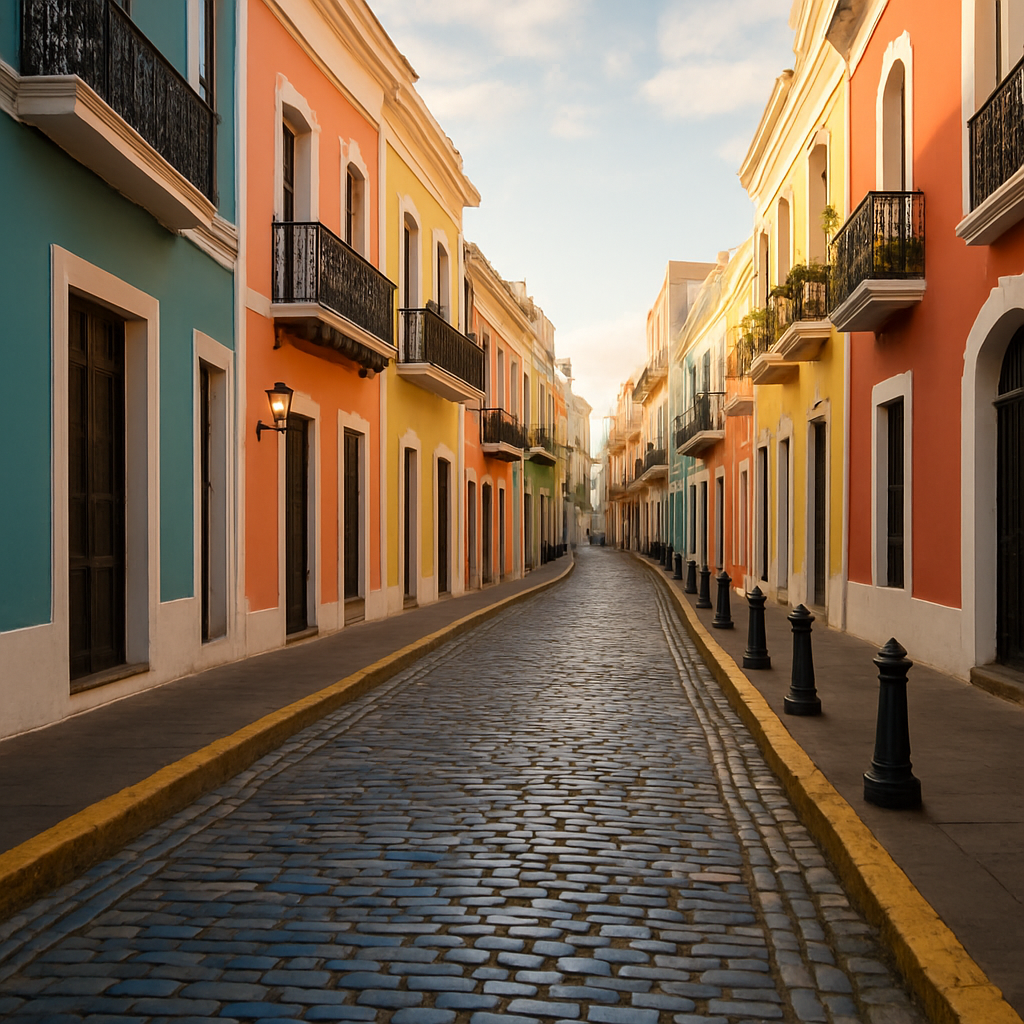
Old San Juan on Foot
The blue-cobblestoned streets of Viejo San Juan are one of the oldest European-established settlements in the Americas, and walking them doesn't feel like a museum — it feels like being inside a city that's been continuously alive since the 1500s. Start at El Morro fortress, wander down Calle Fortaleza, and let yourself get lost in the residential lanes where laundry hangs between pastel facades and the sound of someone's radio drifts down from a second-floor balcony. The architecture isn't preserved for tourists. People live in it.
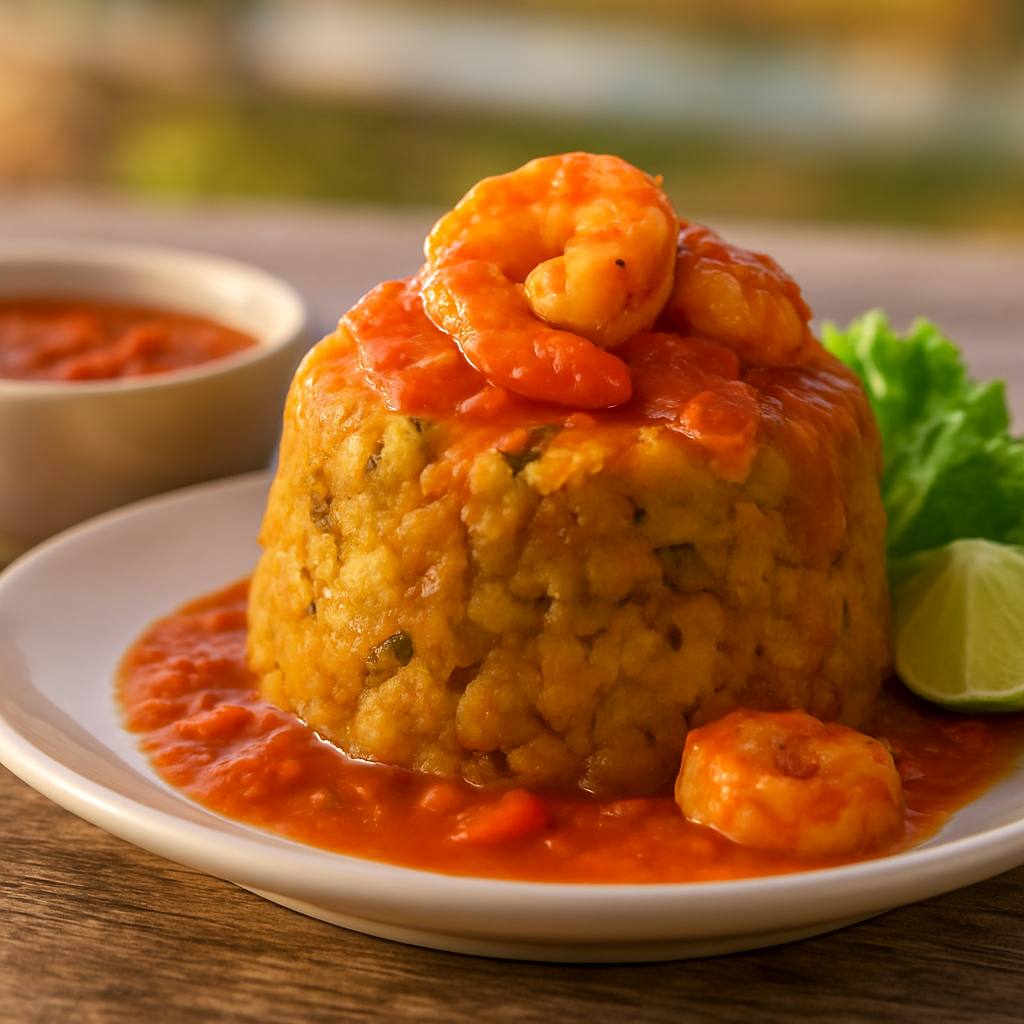
Mofongo at 3am (Or Anytime, Really)
Puerto Rico's signature dish — smashed green plantains pounded with garlic and chicharrón — is the kind of food that fixes things. The best versions are aggressively garlicky, served in a wooden pilón, and available at roadside spots and local fondas at hours when no respectable kitchen should be open. After a big night on Ashford, a late-night mofongo stop is practically a rite of passage. During the day, sit-down restaurants across Santurce and Old San Juan do elegant versions stuffed with shrimp or skirt steak, but the one you'll remember is the one you ate standing up at 3am.
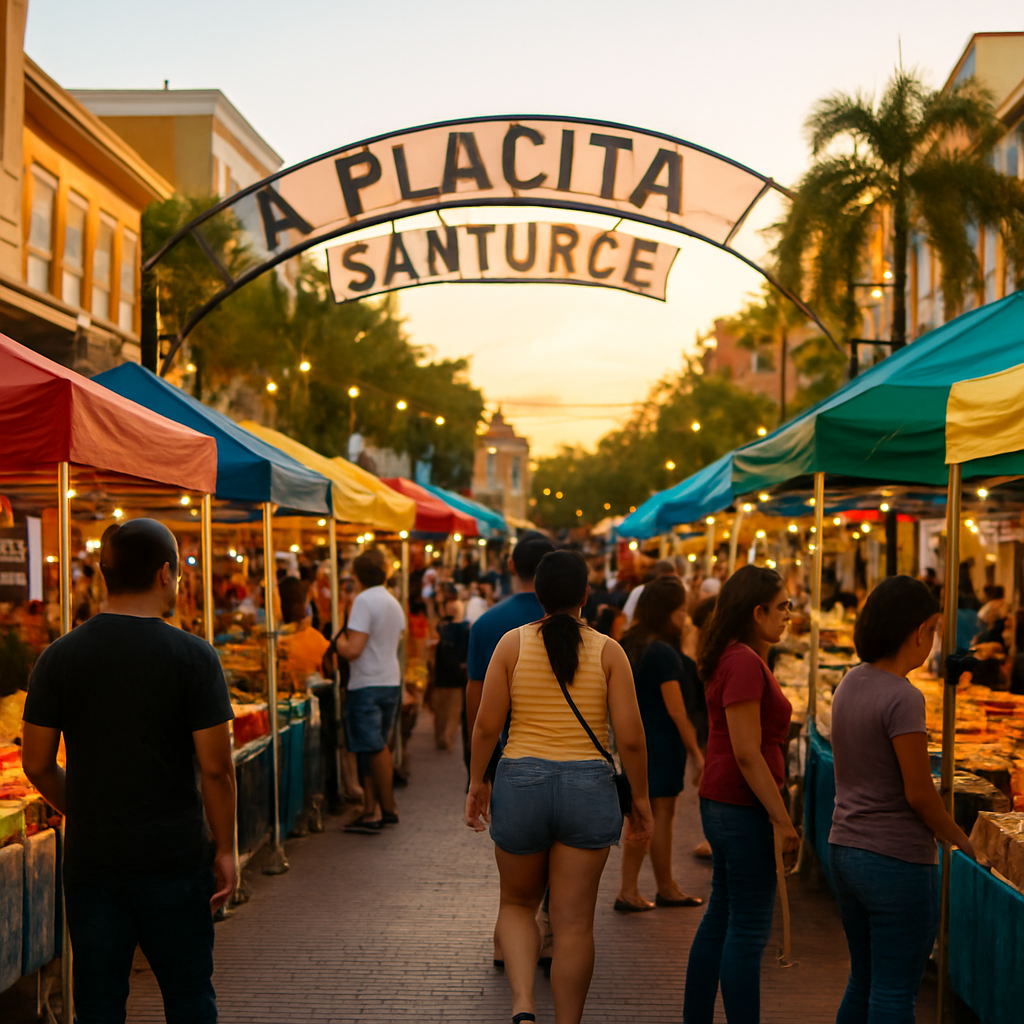
La Placita on a Friday Night
This isn't a bar. It's a public plaza with a century-old market at its center, surrounded by a dozen bars and restaurants that spill out onto the streets every Thursday and Friday night until the entire block becomes one enormous, sweating, rum-fueled social event. Grab a plastic cup of rum punch from any surrounding window, plant yourself in the square, and let the city happen to you. Three different sound systems competing from three different bars. Salsa, reggaeton, cumbia, all at once. It's the most alive any city square gets in the Caribbean.
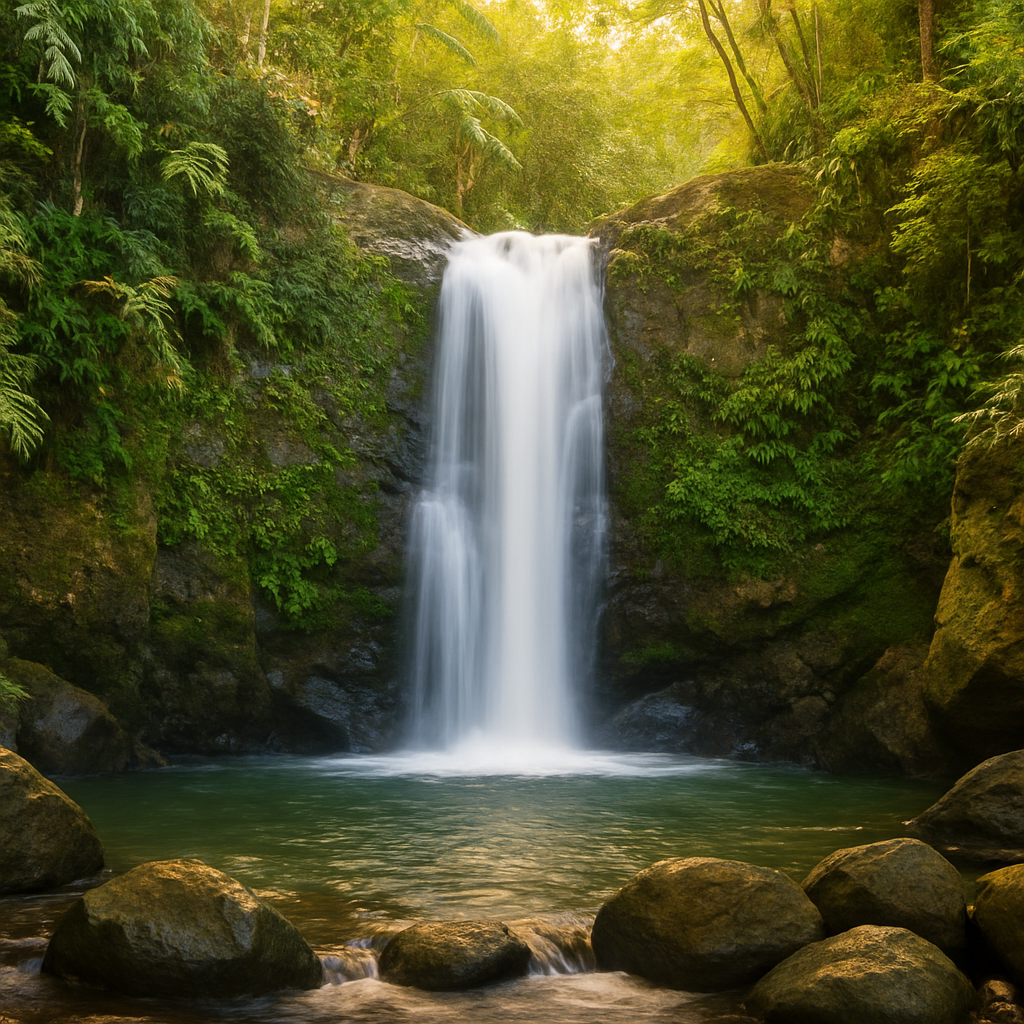
El Yunque National Forest
Under an hour's drive from San Juan, El Yunque is the only tropical rainforest in the U.S. National Forest system — 28,000 acres of waterfalls, natural swimming pools, and a canopy so dense the light comes through green. The forest was devastated by Hurricane Maria in 2017 and watching it grow back is quietly extraordinary. Book your timed-entry pass in advance through the USDA Forest Service site; they sell out during peak season. The La Mina Falls trail is the iconic hike, but even a short walk from the visitor center puts you in a different world than the one you left at the hotel.
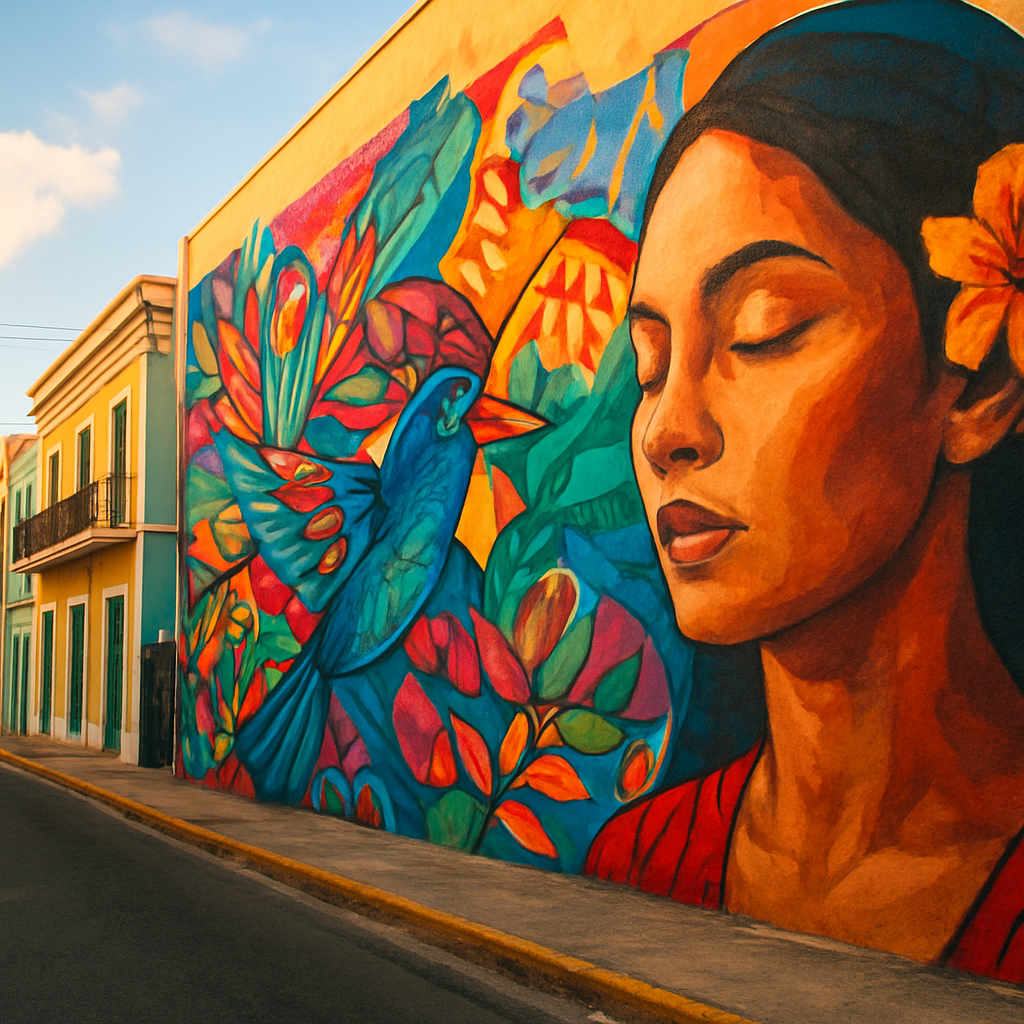
Santurce Street Art Walk
Since 2013, the Santurce es Ley festival has covered building facades across Santurce with large-scale murals by Puerto Rican and international artists, turning the neighborhood into a free open-air gallery. The corridor along Calle Cerra and surrounding blocks is walkable in an hour, and several murals explicitly celebrate Boricua queer identity. When you're done, the Museo de Arte de Puerto Rico is adjacent — air-conditioned, excellent, and a good excuse to sit down.
The places I actually send people to
Advice that fits how you travel
San Juan is one of the easier solo trips in the Caribbean, and a big part of that is logistics: if you're a U.S. citizen, you don't even need a passport. Your phone works. Your cards work. Uber works. The learning curve is essentially zero, which means you spend day one exploring instead of figuring things out. Budget-wise, solo travelers can do this city well — Dreamcatcher in Ocean Park starts at $95 a night with a social courtyard practically designed for meeting people, local fondas will feed you for under $15, and beaches are free. At a moderate level, figure $250–$320 a day with a proper Condado hotel and sit-down dinners.
App culture is alive and well. Grindr and Scruff have active user bases, and Condado and Santurce are where the density sits. But the best way to meet people here is showing up in person — La Placita on a Thursday night is basically a social accelerator. Buy a rum punch, stand in the plaza, and you will have a conversation within ten minutes. Krash Klub is the same: the crowd is mixed enough that solo visitors don't feel like outsiders. If you're invited to a house party in Santurce by someone you've met — go. The most interesting queer social life in San Juan increasingly happens at private rooftop gatherings and art-studio hangouts, especially among younger Boricua creatives.
Safety-wise, solo travelers should stick to Condado, Santurce, Old San Juan, and Ocean Park. These are well-lit, well-populated, and well-served by rideshare. Use Uber over walking long distances alone after 2am. Keep your phone and wallet secured in crowded nightlife areas — this is standard urban advice, not a warning. Calle Loíza is a great daytime solo stroll: LGBTQ+-owned cafes, bookstores, and vintage shops that feel neighborhood rather than tourist-facing.
Condado is your base of operations for romance. The stretch of Ashford Avenue between the sea and the lagoon is one of the few places in the Caribbean where two men or two women can hold hands, kiss over cocktails, and book a single king without a second thought — on the beach, at the bar, at check-in. For couples who want that mid-century glamour with a beachfront pool, La Concha Renaissance Resort sits right at the center of it all. If you want something more intimate and historic, Hotel El Convento in Viejo San Juan — a 17th-century Carmelite convent with a rooftop terrace — is one of those places that does the work for you. You don't have to try to have a romantic evening there. It just happens.
For dinner, make a reservation at Marmalade on Calle Fortaleza. Chef Peter Schintler has been running his prix-fixe room for over two decades, and a tasting menu here with a good bottle of wine is the kind of meal you'll still be talking about at the airport. Follow it with the back-bar mezcal room at La Factoría on Calle San Sebastián — the cocktails are legitimately world-class, the crowd skews creative and queer-welcoming, and the night tends to extend itself in the best possible way.
For a slower day, Ocean Park Beach near the end of McLeary Street is calm, beautiful, and unmistakably gay-friendly without feeling like a resort production. Rent two chairs, order piraguas from a passing vendor, and argue about whether to go to Santurce for dinner or eat tostones on the sand. Both answers are correct, and either way, you're winning.
Puerto Rico is a U.S. territory, which means same-sex marriage, adoption rights, and comprehensive anti-discrimination protections all apply — the same legal framework as home if you're flying from the mainland. Your family is recognized here without asterisks. U.S. citizen families also skip the passport entirely, which removes one logistical headache before you've even packed. Clear that hurdle and you're already ahead of most international family trips.
El Yunque National Forest is the obvious first call — the only tropical rainforest in the U.S. National Forest system, about 25 miles east of the city. Kids can wade in natural pools, spot Puerto Rican parrots, and genuinely exhaust themselves on well-marked trails. Book timed-entry passes in advance; they sell out during peak season. Old San Juan is equally remarkable for families: the blue-cobblestoned streets, the fortress walls of El Morro, and the sheer visual drama of the colonial city are the kind of things that make children curious in ways a museum rarely does. History is everywhere you step, and it's not roped off.
The Condado beach itself is calm enough for kids to swim safely, and the hotel infrastructure around Ashford Avenue is family-ready — stroller-friendly sidewalks, casual restaurants with children's menus, and resort pools that don't require a production to access. For families staying five nights or more, vacation rental apartments in Ocean Park or Condado are worth seriously considering. The kitchen access alone changes the budget math, and the extra space means bedtime doesn't end everyone's night at 8pm.
What San Juan actually costs
Flights, visas, and the first 30 minutes
Airport: Luis Muñoz Marín International Airport (SJU) is the busiest airport in the Caribbean and one of the best-connected hubs in the hemisphere. With 50+ nonstop U.S. cities served, there's a good chance you don't need a connection at all.
Major routes: New York JFK is 3h 30m. Miami MIA is 2h 40m — the shortest hop from the mainland and often the cheapest. Atlanta ATL runs about 3h 40m, Chicago ORD is 4h 30m, and Boston BOS is another 3h 30m option. From London LHR, plan on roughly 9h 30m with a connection, typically through a U.S. hub.
Visas: U.S. travelers need no passport or visa — Puerto Rico operates under domestic U.S. travel rules. UK, EU, Canadian, and Australian travelers follow the same entry requirements as the U.S. mainland: ESTA or a U.S. nonimmigrant visa applies. Same process, same rules.
Airport to city: A taxi to the Condado zone runs $15–$22 on fixed rates — about 15–20 minutes. Uber and Lyft are both operational at SJU: expect $12–$18, same travel time, with pickup at the designated rideshare zone outside baggage claim. If you're traveling light and feeling patient, the AMA public bus (C45) covers the Condado and Isla Verde route for $0.75 — cash only, no large luggage, and budget 45–60 minutes. Worth knowing, rarely recommended with bags.
Traven's seasonal breakdown
The questions everyone asks
Do I need a passport to visit Puerto Rico?
Is it safe to hold hands with my partner?
How much should I budget per day?
Do I need to speak Spanish?
When is the best time to visit?
Is the queer scene mostly in one area?
Should I rent a car?
Screenshot this before you go
So should you actually go?
Go. San Juan is one of the best LGBTQ+ destinations in the Caribbean and it's not particularly close. Full US legal protections, a real and layered gay scene across multiple neighborhoods, food that punches absurdly above its weight class, and a cultural warmth that makes you feel like a guest rather than a tourist. If you're a US citizen, you don't even need a passport — this is domestic travel with international flavor. The hurricane season caveat is real (skip August and September), and rural Puerto Rico is more conservative than San Juan, but within the city itself, you'll find a place that's genuinely easy to be yourself. For Caribbean sun, Caribbean water, and the freedom to hold someone's hand on the beach without a second thought, this is the answer.
Sources & Resources
Official links we reference when compiling this guide. Last verified 2026-03-15.
- ACLU de Puerto Rico
- ACLU de Puerto Rico
- Centro Comunitario LGBTT de Puerto Rico
- Coalición Orgullo Arcoíris de Puerto Rico
- Human Rights Campaign - Puerto Rico
- Iniciativa Comunitaria (HIV/LGBTQ+ Health Services)
- Iniciativa Comunitaria (HIV/LGBTQ+ Health Services)
- Proyecto Matria (LGBTQ+ women & trans health)
- Proyecto Matria (LGBTQ+ women & trans health)
- Puerto Rico AIDS Foundation
- Puerto Rico AIDS Foundation
- Puerto Rico Community Foundation
- Puerto Rico Community Foundation
- Puerto Rico Department of Health – HIV/STI Services
- Puerto Rico Department of Health – HIV/STI Services
- Puerto Rico Para Todes
- Puerto Rico Para Todes
- Trans Puerto Rico
- Trans Puerto Rico