
St. Barts doesn't have a scene because the whole island already operates at the baseline frequency of mildly fabulous — the island found you a long time ago and invited you to lunch.
St. Barts is the rare Caribbean destination where the gays don't need a dedicated district because the entire island operates at the baseline frequency of mildly fabulous. There's no closet here, no gay bar, no village — and that's not a failure of infrastructure, it's a feature of the island's DNA. The clientele skews wealthy, stylish, and aggressively international, three qualities that tend to correlate with a complete disinterest in who's holding whose hand. You don't come here to find a scene. You come here because the scene found you a long time ago and invited you to lunch.
What makes it work is the French legal framework — full mariage pour tous, PACS, adoption, self-ID, all the structural protections that as of 2026 still feel like a rumor elsewhere in the Caribbean — layered over 25 square kilometers of dry scrub, superyachts, and beaches that don't photograph honestly. It earned my Traven-Dex of 8.6 because the legal side is a flat 10 and the destination itself is a 9.2, which is what happens when an island this small executes this specifically. Start an evening with a ti punch at Le Select, where yachties and locals have been drinking at the same plastic tables since 1949, and the whole hierarchy dissolves in about twenty minutes.
The contradiction worth naming: the Pulse score is a 4.5, and that's accurate. There is no critical mass of visible LGBTQ+ nightlife on this island outside of Carole Gruson's Le Ti St Barth in Pointe Milou on a themed costume night — drag, table dancing, celebrities, chaos, and a reminder that the island's one unambiguously gay room is also one of its best. Everything else is just permissive by default. Saline Beach after a 5-minute walk from the parking lot is the unofficial queer gathering point; Nikki Beach on a Sunday pulls the fashion-forward Sunday brunch crowd; Gustavia harbor at golden hour does the heavy lifting on its own.
If you want Ibiza, go to Ibiza. If you want a place where two men can hold hands on the terrace at Le Gaïac with the Atlantic dropping away underneath and the only thing anyone is judging is the bottle you ordered, this is the island. Small, expensive, structurally protected, and stylish in the way that can't be manufactured — St. Barts isn't the Caribbean's gayest destination, but it might be its most quietly civilized.
The stuff your travel guide buries on page 47
St. Barts is a French collectivité, which is a useful word to know because it's the reason this 25-square-kilometer rock has the most progressive LGBTQ+ legal framework in the Caribbean. As of 2026, full French national law applies here — meaning mariage pour tous (same-sex marriage, legal in France since 2013), the PACS civil partnership, joint adoption, and comprehensive anti-discrimination protections are all structural, not aspirational. Gender self-identification has been available administratively since 2017. You can read the official legal framework on Service-Public.fr if you want the paperwork view.
The on-the-ground reality matches the paperwork, which is rarer than you'd think. The island's permanent population is around 10,000 and the visiting clientele skews wealthy, stylish, and aggressively international — three qualities that tend to correlate with not caring who's holding whose hand. There are no dedicated gay bars on the island, but there's also no closet. What there is: Le Select in Gustavia, open since 1949, where yachties, French expats, and jet-setters mix without anyone checking who you're kissing.
Public affection is a non-issue in Gustavia, at the resort beaches, and anywhere on the Saint-Jean strip — the tone is unambiguously permissive and same-sex couples are unremarkable. The more residential villages like Lorient and Colombier are quieter by temperament, not hostile. Read the room the way you would in any neighborhood that's more home than holiday.
Pro tip: if you need legal support or want to report discrimination, the relevant contacts are French national — SOS Homophobie operates a helpline fully reachable from the island, and DILCRAH, the French government agency that handles anti-LGBTQ+ hate crime, takes official complaints. That's a structural difference from most of the Caribbean, where colonial-era statutes still complicate things.
What it actually feels like on the ground
St. Barts has one of the lowest crime rates in the Caribbean, and there is no documented pattern of anti-LGBTQ+ harassment or violence on the island as of 2026. The prosperity, the small scale, and the French legal structure combine into an unusually safe environment by regional comparison — but 'safe' still means scenario-specific, so here's the breakdown.
Holding hands: Unremarkable in Gustavia harbor, on the Saint-Jean strip, at every major hotel, and on the main tourist beaches. Nobody is registering you. In the residential interior villages — Lorient, Colombier, Grand Fond — the atmosphere is quieter and less visibly LGBTQ+, not hostile but more muted; I wouldn't call it a problem, but it's a different temperature than the coast.
Hotel check-in: A complete non-event. Cheval Blanc, Eden Rock, Le Sereno, Guanahani — these properties have hosted every configuration of couple and family imaginable, and the staff training reflects it. Same-sex couples book the king bed without a raised eyebrow.
Taxis and transport: Taxis are limited and expensive; most visitors rent a small 4x4 or scooter, which I strongly recommend. The roads are narrow and hilly but the driving culture is relaxed. No documented issues for LGBTQ+ passengers in either context.
Beaches: Saline Beach and Gouverneur Beach on the south side have long operated as de facto clothing-optional spaces — not officially designated, but the self-selecting crowd that walks that far is the crowd you want. Same-sex affection is completely normalized on both. St. Jean Beach and the Grand Cul de Sac resort zone are equally at ease.
Late night: The island essentially winds down by 1am outside of Le Ti St Barth in Pointe Milou and a handful of Gustavia spots. Walking Gustavia after dark is safe. Driving the island's winding roads after drinking is the real risk here, not anyone bothering you.
Trans travelers: Full French legal protections apply, including administrative gender self-identification. Day-to-day experiences are reported positive across the resort and beach environments. The honest caveat: the island's remoteness means any specialized medical needs should be arranged in advance on the French mainland, because infrastructure here is limited. Inter-LGBT is a useful national federation for trans travelers seeking France-wide guidance before arrival.
Verbal harassment: Genuinely rare and not a documented pattern. If something does happen, the Gendarmerie here operates under French national law and a complaint is a real, enforceable option — DILCRAH handles official anti-LGBTQ+ hate crime reporting and is fully reachable from the island. That's a meaningful structural difference from most Caribbean destinations.
Weather: The one legitimate safety concern. Hurricane season runs June–November with late August and September carrying the highest risk; several venues close entirely during that window. Monitor forecasts closely if you're booking outside high season.
The queer geography
St. Barts doesn't have a gay neighborhood because it doesn't have neighborhoods the way a city does. What it has is a handful of villages and bays, each with its own personality — and the LGBTQ+ presence, such as it is, threads through the whole island rather than clustering in one district. Here's where to actually spend your time.
Gustavia
The capital wraps a small natural harbor in pastel stone buildings, iron balconies, and red-tiled roofs that betray the Swedish colonial century (1784–1878, for the history buffs). This is the island's social engine — Le Carré d'Or, the 'Golden Square,' packs Hermès, Cartier, and a surprising number of independent galleries into a few walkable blocks, and the harbor itself is a rotating parade of superyachts that anchors the evening ritual. Start with a ti punch at Le Select, the open-air institution running since 1949 that functions as the island's great equalizer — locals, yachties, and arrivals all drink at the same plastic tables. Work your way to Bonito or Wall House Restaurant for dinner, and wander Shell Beach for sunset. The social mix is cosmopolitan enough that same-sex couples move through it as unremarkably as anyone. Tourism info at the official Saint-Barth Tourism Office.
Saint-Jean
The island's second hub stretches along a curved turquoise bay north of Gustavia, anchored by the airport runway that famously drops planes over the beach road. The strip is a lineup of boutiques, beach bars, and hotels — Eden Rock rising off its volcanic promontory, Tom Beach Hotel's La Plage pumping a day-into-evening soundtrack, and Nikki Beach running the island's most public Sunday brunch. Nikki is the de facto daytime gathering spot for fashion-forward visitors, and a reliable cohort of LGBTQ+ vacationers shows up for it — the rosé pricing requires a moment of silent acceptance, but attending once is part of the ritual.
Saline & Grand Fond (the south side)
Drive over the island's spine and the landscape shifts — dry scrub, goat trails, cliffs dropping into impossibly blue water. Saline Beach is the prize: a 5–10 minute walk from the nearest parking, no commercial development, clothing-optional in practice, and the unofficial answer to 'where do queer travelers actually congregate.' It's not a scene so much as a vibe, but it's a very good vibe. Pair it with lunch at Le Grain de Sel in Grand Fond, one of the few genuinely local bistros on the island, for Creole-inflected French cooking at a price that won't require accounting. The France.fr travel resource has the broader national context on why this coast operates under the same legal framework as Paris.
Pointe Milou
A rocky headland on the northeast coast with panoramic Atlantic views and, more importantly, Le Ti St Barth — Carole Gruson's cabaret-and-dinner institution running since the mid-1990s. Weekly themed costume parties during the December–April high season have made it the most explicitly LGBTQ+-welcoming venue on the island, documented in Out Traveler, Passport Magazine, and every serious queer Caribbean guide. Drag performances, table dancing, celebrities, chaos — it's the one night that feels unambiguously gay on an island that otherwise just feels generally permissive. Book ahead; it sells out.
Lorient & Colombier
The authentically local villages. Lorient on the north coast has the island's best bakery, a post office, a small Catholic church, and the kind of quiet residential rhythm that's disappearing everywhere else in the Caribbean. Colombier sits at the northwest tip and is best known for the hike down to Anse de Colombier — 20 minutes through dry scrub to a crowd-filtered beach with no road access, no facilities, and offshore snorkeling that rewards the effort. The effort alone sieves out the people you'd rather avoid. Watch out for: these villages are quieter and less internationally-oriented than the resort zones, so read the room the way you would anywhere more neighborhood than nightlife. It's not hostile, just a different frequency. The French national framework still applies — see Inter-LGBT for the broader context of protections that hold here.
The experiences worth rearranging your itinerary for
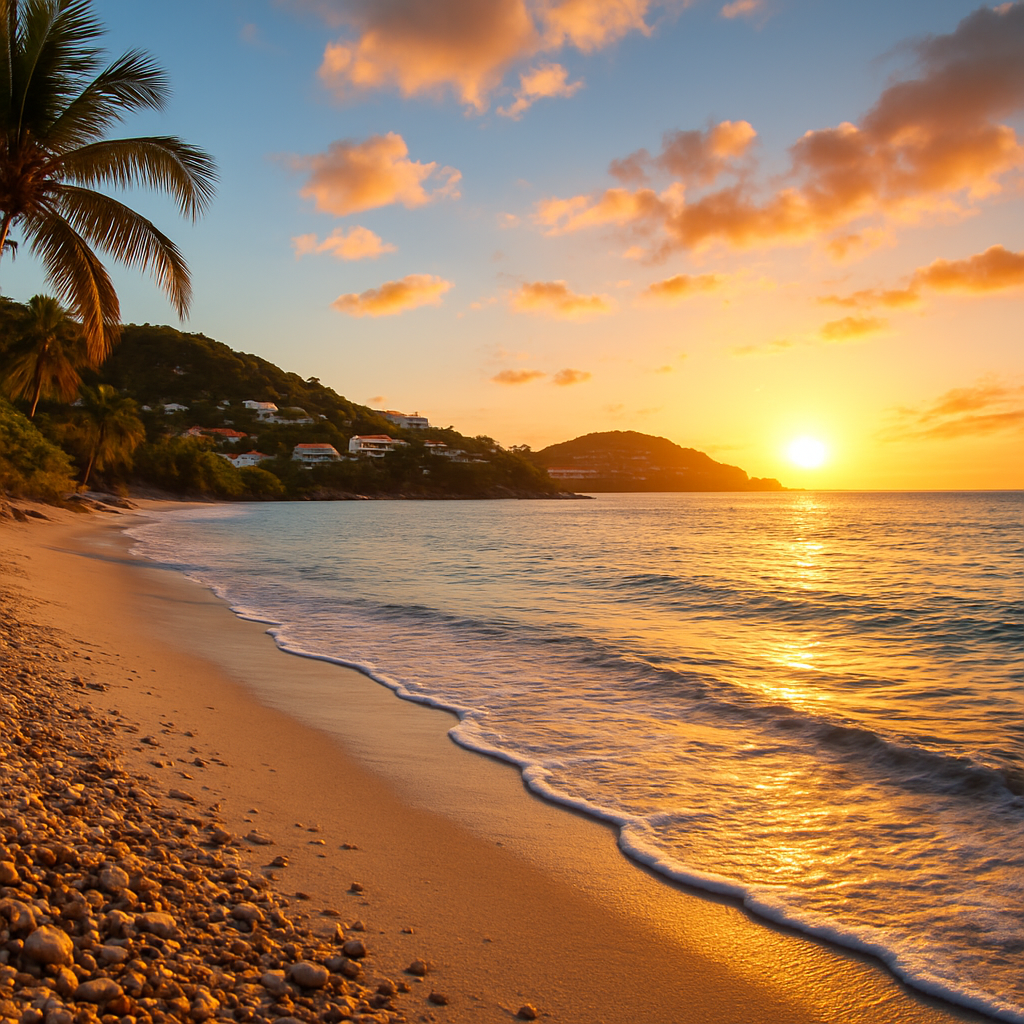
Sunset at Shell Beach with a cocktail from Do Brazil
Walk down from Gustavia harbor to Shell Beach — the pebble-and-shell stretch that crunches satisfyingly underfoot — and grab something cold from Do Brazil. The light on the harbor at golden hour is honestly obscene, the most glamorous residents drift down in their linen, and it somehow never feels exclusive. It's the most unpretentious moment on an otherwise intensely curated island.
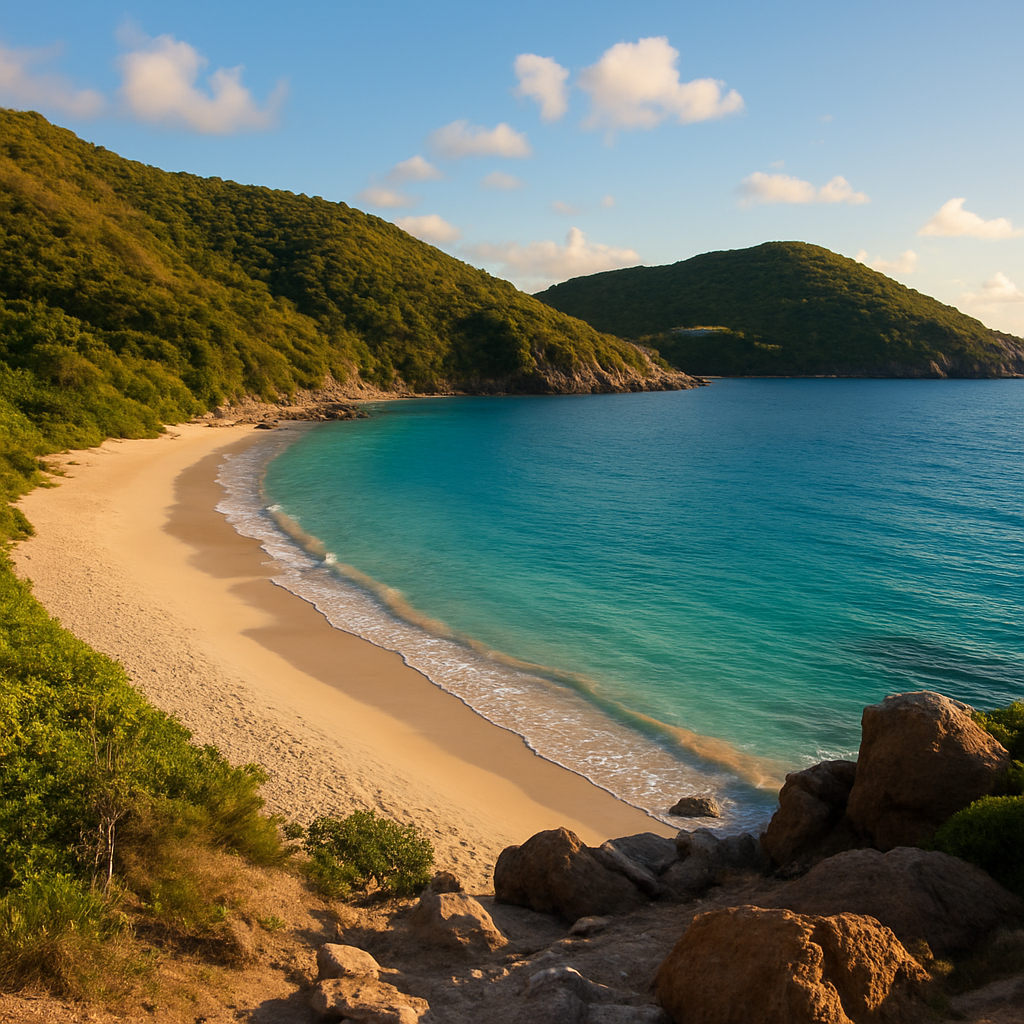
The hike down to Colombier Beach
Twenty minutes of dry scrub and goat-trail switchbacks from the Flamands trailhead, and you arrive at one of the most beautiful crowd-filtered beaches in the Caribbean. No road, no bar, no chairs — just offshore reef for snorkeling and the kind of stillness that costs real money to access elsewhere. The effort is the bouncer.
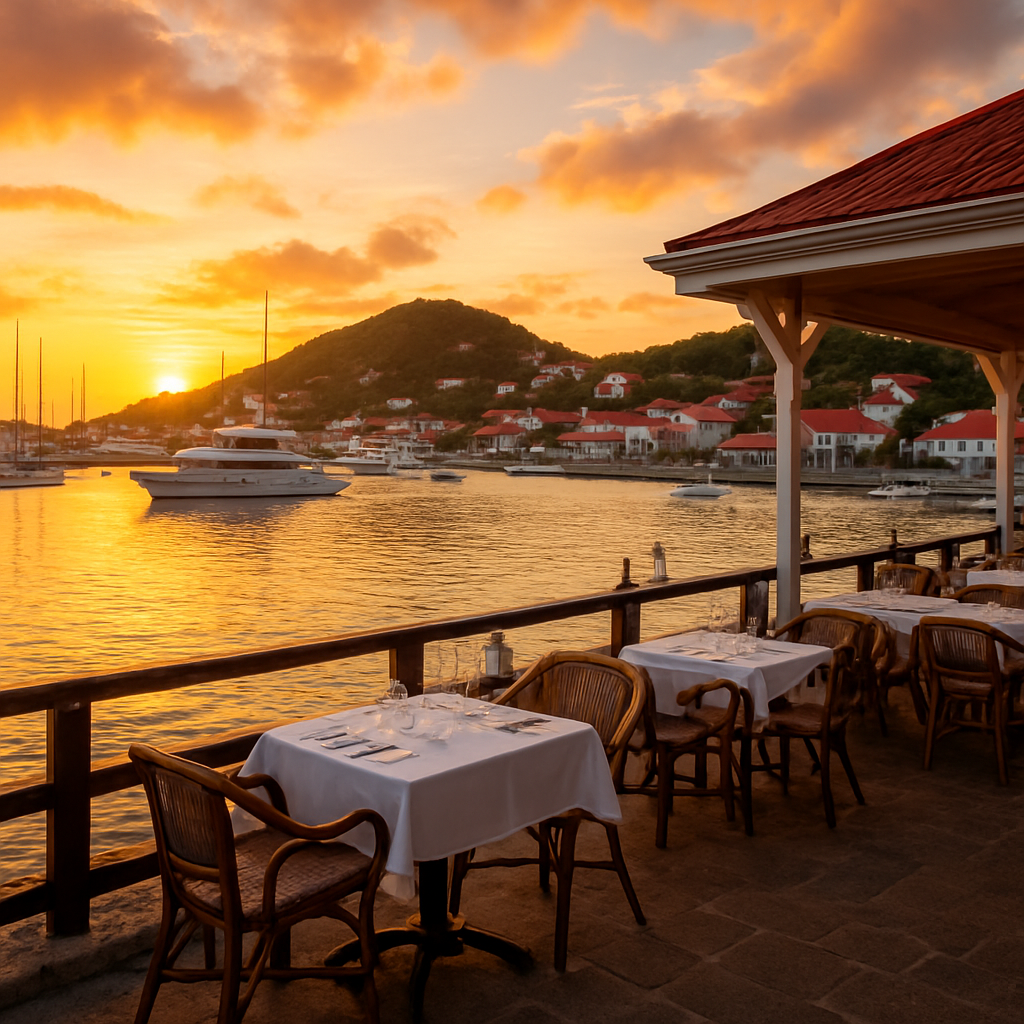
Dinner at Wall House Restaurant in Gustavia
One of the island's great old-money dining rooms on the Gustavia harbor, serving bouillabaisse and classic French cooking from a terrace overlooking the superyachts. It's French-run, quietly exacting, and the staff treats every table the same way — which on this island means welcoming to everyone without theatrics. Order the bouillabaisse; it's the correct move.
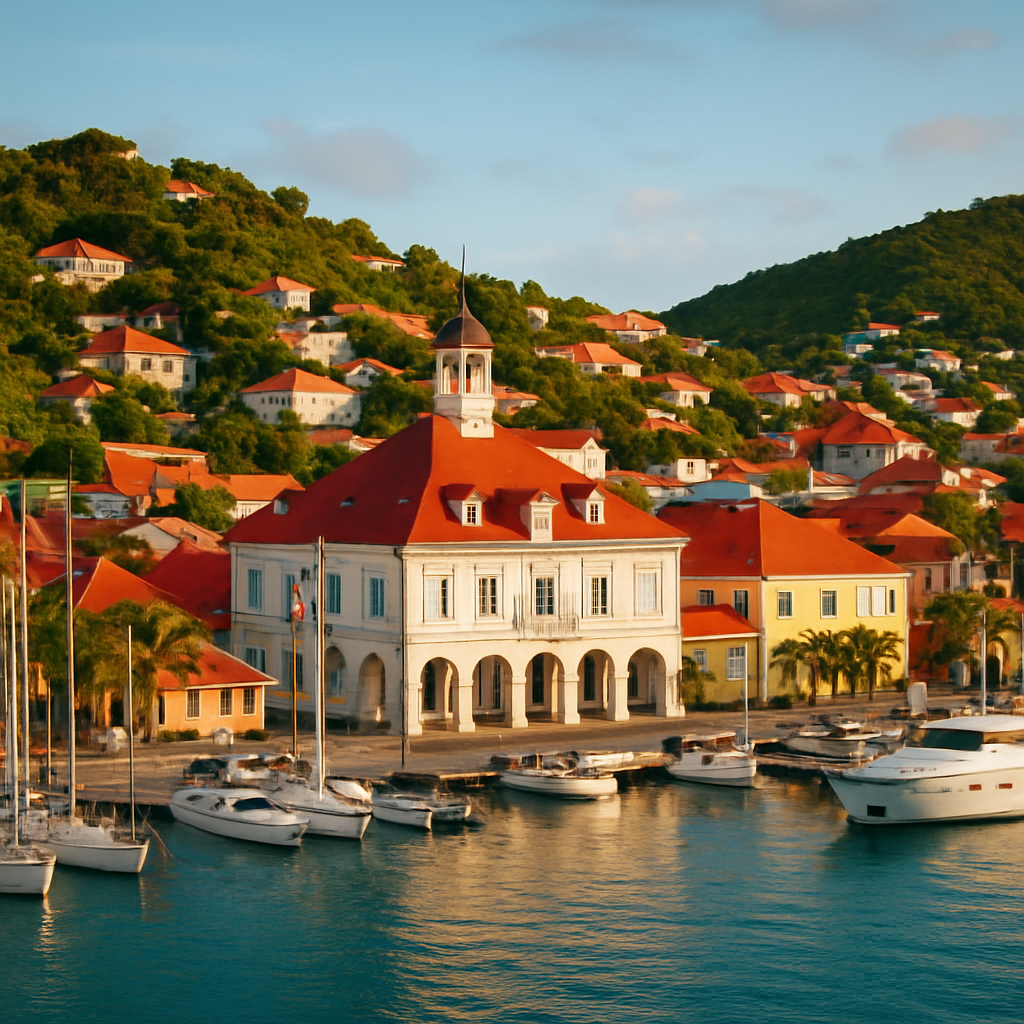
A wander through Gustavia and Le Carré d'Or
The capital's pastel stone buildings, iron balconies, and red-tiled roofs are the legacy of a Swedish colonial century most visitors don't realize happened. Le Carré d'Or — the 'Golden Square' — stacks Hermès, Cartier, and a surprising number of independent galleries into a few walkable blocks. Work it into a late-afternoon loop that ends with a ti punch at Le Select.
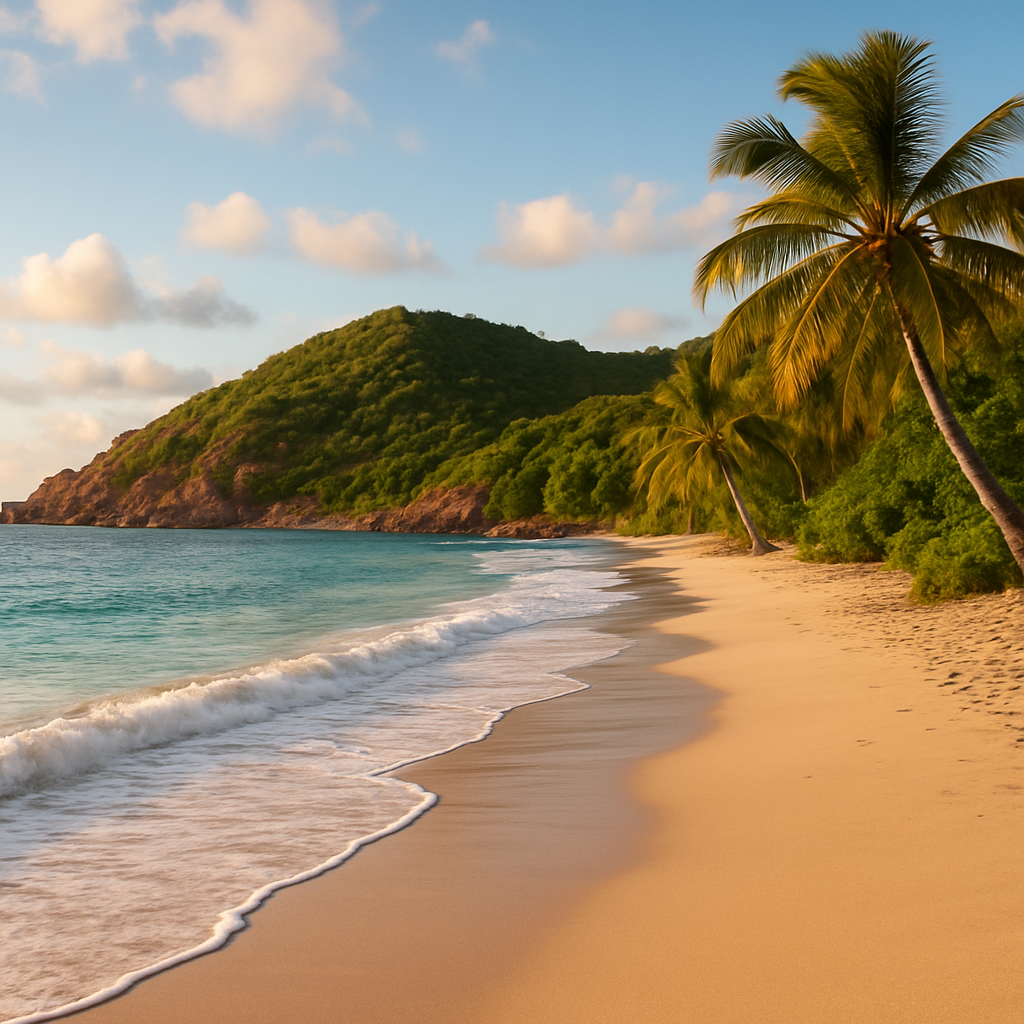
An afternoon at Saline Beach
Park at the end of the road at Grand Saline, walk five minutes over the dune, and arrive at a 500-meter stretch of undeveloped coastline with no bars, no chairs, no development — just water in a blue that doesn't photograph honestly. The crowd is naturally self-selected, the clothing-optional section is the unofficial LGBTQ+ gathering point, and lunch afterward at Le Grain de Sel closes the loop perfectly.
The places I actually send people to
Advice that fits how you travel
St. Barts rewards solo travel differently than most Caribbean islands — because it's small, because the social scene concentrates in predictable places, and because the caliber of stranger you'll encounter here trends toward interesting. Gustavia is the natural anchor: start most evenings at Le Select or Bar de l'Oubli, and the island's small-world dynamic takes care of the rest. You'll run into the same people at the harbor bar, then at Nikki Beach the next day, then again on the hike to Colombier. The repeat-encounter culture makes connections easy without requiring effort.
The apps work, though with caveats: the permanent population is roughly 10,000, so your radius during low season will extend to Saint-Martin quickly. High season (December–April) fills the grid considerably with international arrivals. Le Ti St Barth in Pointe Milou on a themed costume night is the closest thing to a gay bar this island produces, and solo travelers who show up dressed for the occasion will not lack for conversation. If you want more critical mass, the Voyager ferry to Saint-Martin is the move — Orient Beach and the Sandy Ground strip in Marigot deliver a fuller social picture without being far.
Budget solo travel here is genuinely hard — this island doesn't pretend otherwise. La Normandie in Lorient is the honest budget option at around €90/night; Les Ilets de la Plage on St. Jean Beach with a kitchenette is the smarter long-stay play. Street-level savings exist: Le Grain de Sel near the south coast delivers real French bistro cooking at prices that won't require you to rethink your life, and the beaches — Saline, Colombier, Gouverneur — are free and among the best in the Caribbean. Solo here is absolutely manageable if you're strategic; it's just not cheap, and going in clear-eyed about that is half the battle.
St. Barts is one of those rare places where the romantic infrastructure is genuinely earned. Same-sex couples move through this island without friction — Gustavia harbor at golden hour, the terrace at Le Gaïac above the Atlantic, the private beach at Cheval Blanc — these experiences work because the backdrop is extraordinary and nobody around you is remotely interested in your relationship. You don't have to negotiate the space. You can just be in it.
For date architecture: start with a late afternoon on Shell Beach, cocktails from Do Brazil, the light doing everything it promises. Dinner at Wall House Restaurant on the harbor is the move for occasion nights — French-run, quietly elegant, order the bouillabaisse and don't overthink it. Le Ti St Barth in Pointe Milou is the opposite register entirely — drag, themed nights, table dancing, the island's most unapologetically fabulous room — and doing both in the same trip is the full St. Barts experience. PDA is unremarkable throughout Gustavia, at every major hotel, and across the resort beaches; the tone is cosmopolitan and thoroughly indifferent to who you are, which is exactly what you want.
For where you sleep: Hotel Le Toiny's pool villas at Anse de Toiny on the southeastern coast give you private-pool seclusion and the island's most lauded dinner at Le Gaïac steps away — come here to disappear. Le Sereno on Grand Cul de Sac is the design-forward answer if you want Christian Liaigre's linen-and-teak aesthetic with the lagoon at your doorstep. And build at least one day around chartering a boat to Île Fourchue — uninhabited island, clear water, private anchorage, no interference — then return to Gustavia for dinner. That specific sequence is a St. Barts thing that doesn't replicate anywhere else. Book the charter early; good skippers fill up in high season.
LGBTQ+ families are not a novelty on St. Barts. As of 2026, full French national law applies here — same-sex adoption is legal, mariage pour tous is the law of the land, and two-parent LGBTQ+ families are recognized exactly as any other family structure would be. The properties at the upper end of the market — Cheval Blanc, Guanahani, Le Sereno — have hosted every family configuration imaginable and staff accordingly. There's no moment at check-in where you'll need to explain your family structure. For context on the broader French legal framework around LGBTQ+ parenthood, APGL — the French association for LGBTQ+ parents — is a solid pre-trip resource.
Kid-friendly logistics: the beaches are the primary activity and most are straightforward for families. Grand Cul de Sac is the best call with younger children — sheltered, shallow, calm water, with Hotel Guanahani's facilities nearby. St. Jean Beach is active and accessible, with La Plage at Tom Beach serving food and drinks steps from the sand. Saline and Colombier are worth doing with kids old enough to manage the walk; the payoff is real and the crowd self-selects for exactly the relaxed atmosphere families want. In Gustavia, the Musée Territorial de Saint-Barthélemy in the restored Wall House building is compact and genuinely interesting — a legitimate cultural stop that covers Arawak settlement through the Swedish colonial period and earns its place on the itinerary.
The honest practical note: this is not a budget-friendly family destination. Moderate family budgets run approximately €1,250–2,210/day all-in, and the infrastructure is priced accordingly. Car seats and kids' menus are available at the better properties but worth confirming at booking — smaller guesthouses don't always stock them. The Voyager ferry to Saint-Martin opens up more kid-focused activity options, and a day trip to Orient Beach on the French side handles families with ease. Build extra flexibility into your schedule; the island's hilly roads and limited public services reward travelers who aren't rushing anywhere in particular.
What St. Barts actually costs
Flights, visas, and the first 30 minutes
The Airport
Getting to St. Barts starts with accepting a fundamental truth: you are not landing a jet here. Aéroport de Saint-Barthélemy (SBH), situated in Saint-Jean, has a 650-meter runway that ends approximately where good sense begins — planes clear a hilltop, drop steeply, and stop just short of the beach road. It is genuinely spectacular the first time, and the reason every arrival is on a small propeller aircraft. There are approximately 8 scheduled regional connections; no transatlantic or long-haul service operates here directly.
Getting Here
The standard routing is through Princess Juliana International Airport (SXM) on Sint Maarten, which receives wide-body service from major North American and European gateways. Regional carriers — primarily Winair and Air Antilles — operate short connecting hops from SXM to SBH in roughly 10–15 minutes. The French-side airport at Saint-Martin/Grand Case (SFG) and Pointe-à-Pitre, Guadeloupe (PTP) are additional connection points for travelers arriving via Air France or Caribbean regional networks. Check current schedules directly with carriers, as St. Barts connections can shift seasonally.
The Voyager ferry service between Saint-Martin (Marigot or Oyster Pond) and Gustavia is a legitimate alternative to flying — crossing time runs approximately 45–60 minutes depending on sea conditions, and if you're already on Saint-Martin, it's often the smarter call. It's also how I'd approach the Orient Beach day trip.
Visas
As of 2026, St. Barts follows French overseas territory entry rules. US, UK, Canadian, and Australian passport holders typically don't need a visa for stays of up to 90 days. EU citizens generally have no entry restrictions. Confirm your specific situation before travel — check with your airline or consult the Collectivité de Saint-Barthélemy, the island's official government body, for current requirements.
Airport to Town
The airport sits in Saint-Jean; Gustavia is about 5 km south. A taxi runs €10–25 and takes 5–15 minutes — fine for arrival day. Beyond that, a rental car is essentially mandatory: the island has no meaningful public transit, and getting to Saline Beach, Colombier, and Gouverneur on your own schedule is non-negotiable. Rental cars run €60–100/day, scooters and ATVs €40–70/day. Pro tip: book your rental before you land. High season (December–April) inventory disappears fast, and showing up without a reservation at SBH in January is a bad plan.
Traven's seasonal breakdown
The questions everyone asks
Is St. Barts actually safe for same-sex couples?
Are there any gay bars on the island?
Do I need to speak French?
How much should I budget per day?
Do I need a visa?
What's the best clothing-optional beach for LGBTQ+ travelers?
When should I avoid going?
Screenshot this before you go
So should you actually go?
Go, if the budget allows. St. Barts is one of the most structurally safe and genuinely permissive destinations in the Caribbean for LGBTQ+ travelers — full French legal protections, an international clientele that treats same-sex couples as thoroughly unremarkable, and a physical environment that delivers on every image you've seen. The caveat worth saying out loud: this isn't a nightlife destination, and it isn't cheap. If you want a visible scene and a dance floor, take the ferry to Saint-Martin or spend the money on Mykonos instead. But if you want a week of beaches that earn their reputation, dinners that justify the flight, and the quiet dignity of being somewhere that was never going to care about your relationship in the first place — this is the island. Book your rental car before you land, skip August and September, and don't miss Le Ti St Barth on a themed night.
Sources & Resources
Official links we reference when compiling this guide. Last verified 2026-04-14.
- APGL – Association des Parents et Amis de Gays et Lesbiennes
- Collectivité de Saint-Barthélemy (Official Government)
- DILCRAH – French Gov Agency Against LGBT Hate Crime
- France.fr – LGBTQ+ Travel in France (Atout France)
- Inter-LGBT (France — National Federation)
- Saint-Barth Tourism Office (Official)
- Service-Public.fr – PACS and Same-Sex Marriage Legal Information
- SOS Homophobie (France — National Helpline & Legal Resources)