
Barcelona doesn't audition for your approval — it's too busy living to care whether you showed up, and that's exactly why you should.
It's a Thursday around 10pm on Carrer del Consell de Cent, and the sidewalk tables are full. Not in a rush-to-get-somewhere way — in a we-might-be-here-until-2am way. A couple shares a bottle of cava two tables over, a group of friends argues about where to eat next, someone's dog is asleep under a chair. The air smells like grilled peppers and jasmine from somebody's balcony. Nobody's performing anything. Nobody's waving a flag. This is just what a Tuesday-through-Sunday looks like in the Gayxample, and it might be the most effortlessly gay neighborhood I've ever walked through.
Barcelona earns its reputation the old-fashioned way: by being genuinely, structurally good at this. Spain legalized same-sex marriage in 2005 — over a decade before some countries that like to lecture about progress — and Barcelona took that legal foundation and built an entire ecosystem on top of it. The scene isn't a single strip or a weekend-only affair. It's woven into the residential fabric of the Eixample, it spills into Sant Antoni and El Raval, it stretches to the sand at Mar Bella. I gave it a 9.6 on Destination because the city underneath the gay infrastructure is world-class — the Gaudí buildings genuinely stop you mid-sentence, the food ranges from a €12 menú del día that'll ruin your diet to Michelin-starred temples of Catalan cooking, and the Mediterranean light at golden hour does something to this city's architecture that no filter can replicate.
What surprised me most on my last visit wasn't the nightlife — though walking Consell de Cent at midnight on a Saturday is still one of Europe's great gay experiences. It was the daytime ease. Two men holding hands in Gràcia getting a nod from the grandmother at the fruit stand. A lesbian couple with a toddler at the playground in Parc de la Ciutadella, completely unremarkable to everyone around them. A trans woman ordering vermut at a bar in Poble Sec and chatting with the bartender about the Barça match. This city doesn't perform acceptance — it just lives it, and my Traven-Dex of 9.5 reflects that rare combination of legal perfection, social comfort, and a destination so good you'd come here even if you were straight.
The only honest knock is that Barcelona knows it's beautiful — prices have climbed, tourist density in the Gothic Quarter can test your patience in July, and the pickpocket situation on La Rambla is real. But those are Barcelona problems, not gay-in-Barcelona problems. And honestly, any city where I can eat pa amb tomàquet at midnight, swim in the Mediterranean at noon, and walk through a Gaudí building that makes me feel like I'm inside a living organism — I'll deal with the crowds.
The stuff your travel guide buries on page 47
The legal landscape: As of 2026, Spain offers full legal equality for LGBTQ+ people. Same-sex marriage has been legal since 2005 — Spain was the third country in the world. Same-sex adoption is fully legal. Comprehensive anti-discrimination protections cover employment, housing, and public services at both national and regional levels. Catalonia's own 2014 equality law adds an additional layer of regional protection. Spain's 2023 Ley Trans allows self-determined gender recognition from age 16 without medical requirements, making it one of Europe's most progressive frameworks for trans people. Criminalization of homosexuality: none, and hasn't been since 1979.
What the laws mean on the ground: This isn't a case where progressive laws mask conservative culture — Barcelona's social reality largely matches its legal framework. The city government actively promotes LGBTQ+ inclusion, funds community organizations, and maintains an LGBTI office that handles discrimination complaints. BCN Checkpoint on Carrer del Comte Borrell offers free, fast, anonymous HIV and STI testing with English-speaking staff — no bureaucracy, no judgment, results often same-day. It's been a cornerstone of the city's harm-reduction culture for years and is genuinely excellent.
Cultural note: Catalan independence politics and LGBTQ+ identity intersect here in ways that can catch visitors off guard. Many local LGBTQ+ activists are also fervent independentistes, and bringing up Madrid's Orgullo as superior in certain circles is a fast way to end a conversation. You don't need to take sides — just be aware that the political landscape has layers.
PDA comfort: In Gayxample, Barceloneta, and Mar Bella beach, same-sex PDA is completely unremarkable — you'll see couples of all configurations holding hands and kissing without a second glance. The Gothic Quarter, El Born, Poblenou, and Gràcia are all high-comfort zones. In outer residential neighborhoods like Nou Barris or Sant Andreu, PDA is generally tolerated but less common — incidents are rare but not unheard of, so exercise normal awareness.
Nightlife timing: Barcelona clubs don't get moving until 2am. If you show up to Arena Madre at midnight, you'll be essentially alone with bar staff who will be lovely but will quietly pity you. Pre-game at Punto BCN on Carrer de Muntaner, which stays warm and social until the clubs open properly.
What it actually feels like on the ground
Holding hands: Completely natural in Gayxample, Barceloneta, El Born, Gràcia, and most of central Barcelona. You're more likely to receive approving nods than hostility. In outer residential neighborhoods like Nou Barris or Sant Andreu, read the room — it's generally fine, but the energy is more traditional working-class and PDA of any kind is less common.
Hotel check-in: A complete non-issue across the board. Two men, two women, a same-sex couple with kids — staff at every price point handle it without blinking. Spain's hospitality sector has been trained on LGBTQ+ inclusion for years, and Barcelona in particular has an entire association of LGBTQ+ businesses (ACEGAL) that sets the standard.
Taxis and rideshares: No concerns. Cabify and Uber operate normally; drivers are professional. Late-night pickups from Gayxample bars happen hundreds of times a night — this is routine, not risky.
Beaches and public spaces: Platja de Mar Bella has a designated nudist and LGBTQ+ section that's been operating for decades — PDA is celebrated, not just tolerated. Barceloneta beach is family-oriented and broadly accepting. Parks and public squares throughout the city center are comfortable for same-sex couples.
Late night: Gayxample itself is as safe as it gets after dark — the streets are well-lit and populated until the early morning hours. The calculus changes on the Metro late at night, particularly on lines heading toward the airport or outer barrios, where it's worth reading the room. Pickpocketing is a far more realistic threat than homophobia — the stretch of Las Ramblas and the Gothic Quarter are notorious, and getting your phone lifted while distracted at a club is a genuine rite of passage. Front pockets and money belts aren't paranoid here, they're just correct.
Trans travelers: Spain's 2023 Ley Trans is among Europe's most progressive. Barcelona's health services and social culture are broadly trans-affirming. Presentation policing is essentially nonexistent in central Barcelona. Some bureaucratic inconsistency persists between national and regional systems, but for travelers rather than residents, this rarely surfaces.
Verbal harassment: Rare in central Barcelona. Not impossible — isolated incidents get reported, typically late at night in peripheral areas or on public transport. If something does happen, the Mossos d'Esquadra (Catalan regional police) are generally considered more responsive to LGBTQ+ concerns than the Policía Nacional. Casal Lambda can also provide support and translation assistance for navigating any incident.
The queer geography
Eixample Esquerra — Gayxample
The grid system Ildefons Cerdà designed in the 1860s gives Eixample its distinctive octagonal blocks and wide, airy intersections — and in the left-hand section, Eixample Esquerra, that geometry became the scaffolding for one of Europe's most concentrated gay neighborhoods. The architecture here is gorgeous late-modernist and noucentisme facades, wrought-iron balconies dripping with laundry, pharmacies with rainbow stickers next to century-old bakeries. Walk Carrer d'Aribau for coffee, then cut over to Consell de Cent between Muntaner and Casanova — that's the strip. Punto BCN is your warm-up bar, Plata Bar pours some of the neighborhood's best gin tonics, and the Arena complex (Madre, Classic, VIP) is the late-night anchor. During the day, it's remarkably residential and calm. You'll see the Catalan spelling — gai — on storefronts throughout.
El Raval
West of the Gothic Quarter, El Raval is Barcelona's most multicultural neighborhood — North African grocers next to Filipino restaurants next to avant-garde galleries housed in a converted convent. The architecture ranges from medieval to brutalist, and the streets smell like cumin and fresh bread and, occasionally, something less poetic. The contemporary art museum MACBA anchors the upper end, its plaza permanently occupied by skateboarders. For food, the Mercat de la Boqueria sits at the Rambla border, but the better move is eating at the smaller places on Carrer de Joaquín Costa. El Cangrejo on Carrer de Montserrat is the real deal — a kitschy, slightly chaotic bar that's been a gay institution since before Gayxample existed, beloved by older locals and drag performers. The vibe here is grittier and more alternative than the polished Gayxample circuit, and that's precisely the point.
Gràcia
Gràcia was its own village until Barcelona swallowed it in the late 1800s, and it still behaves like one. The streets are narrow and shaded, the plazas — Plaça del Sol, Plaça de la Vila de Gràcia — fill with people drinking cañas at sunset, and the independent shops resist the chain-store creep that's hit other neighborhoods. The Festa Major de Gràcia in August transforms entire streets into competitive art installations. Food here is excellent and unpretentious: La Pepita on Carrer de Còrsega does creative pintxos that justify any queue. LGBTQ+ families are particularly visible in Gràcia — the progressive, bohemian residential character means same-sex couples with kids move through here without a second glance from anyone.
El Born
Narrow medieval lanes open suddenly onto the iron-and-glass skeleton of the old Mercat del Born, now an archaeological site and cultural center. El Born is where Barcelona's Gothic bones meet its contemporary creative class — the Picasso Museum is here, and so are the natural wine bars and concept stores along Carrer del Rec. Architecture buffs will lose time staring up at the Basílica de Santa Maria del Mar, the 14th-century church that inspired the novel Cathedral of the Sea. The neighborhood draws a mixed crowd for daytime coffee and evening drinks — slightly bougie, reliably good-looking, and entirely unfazed by who's holding whose hand. It's less scene-specific than Gayxample but effortlessly welcoming.
Barceloneta & Mar Bella Beach
Barceloneta is Barcelona's old fishing quarter, and despite the tourism pressure, traces of that identity survive: narrow balconied streets, the smell of fried fish from the chiringuitos, elderly women chatting from opposite windows. The beach stretching northeast reaches Platja de Mar Bella, which has a designated nudist and LGBTQ+ section that's been a social institution for decades — bring a towel, sunscreen, and no expectations of personal space in August. The walk along the waterfront promenade from the W Hotel to Mar Bella is one of the great Mediterranean strolls, and the xiringuitos serve surprisingly decent seafood if you pick the right ones.
FELGTB, Spain's national LGBTQ+ federation, connects visitors with local Barcelona chapters, upcoming pride events, and community resources. FELGTB – Spain's National LGBTQ+ Federation.
Visit Barcelona, the city's official tourism organization, curates guides to LGBTQ+-friendly neighborhoods, venues, and annual pride celebrations. Visit Barcelona – Official Tourism Guide.
Barcelona's city council website provides official listings of LGBTQ+ community organizations, cultural centers, and local events throughout the year. Barcelona City Council – Official City Information.
The experiences worth rearranging your itinerary for
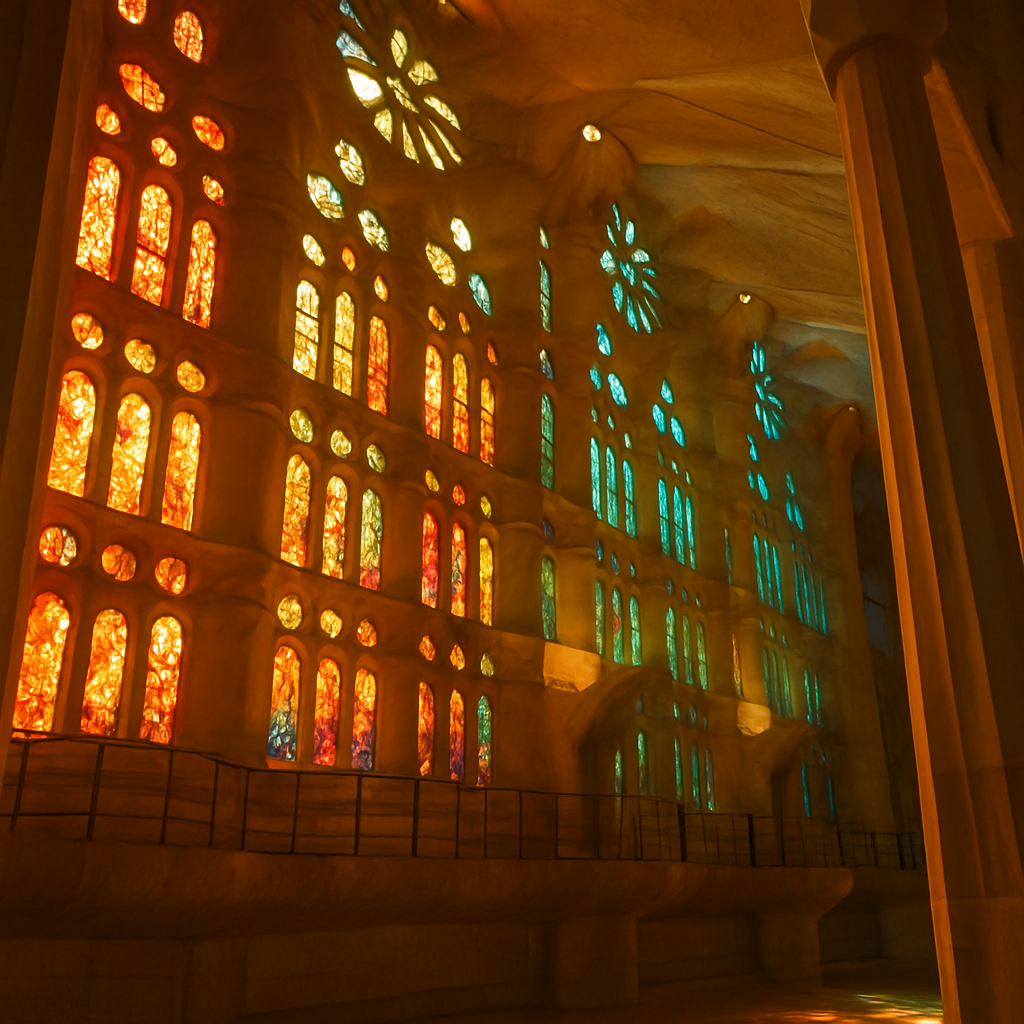
Sagrada Família — Inside, Not Just Outside
Everyone photographs the exterior, and they should — those towers against a blue Catalan sky are absurd in the best way. But the real experience is stepping inside. The columns branch like a stone forest, and the stained glass throws impossible color across every surface — east-facing windows in cool blues and greens, west-facing in warm reds and oranges. Gaudí designed it so the light tells you the time of day. Book the earliest morning slot you can get (they sell out weeks ahead), and go to the Nativity façade tower for the view. Budget €26–€36 depending on tower access. This is one of the few tourist attractions on earth that exceeds the hype.
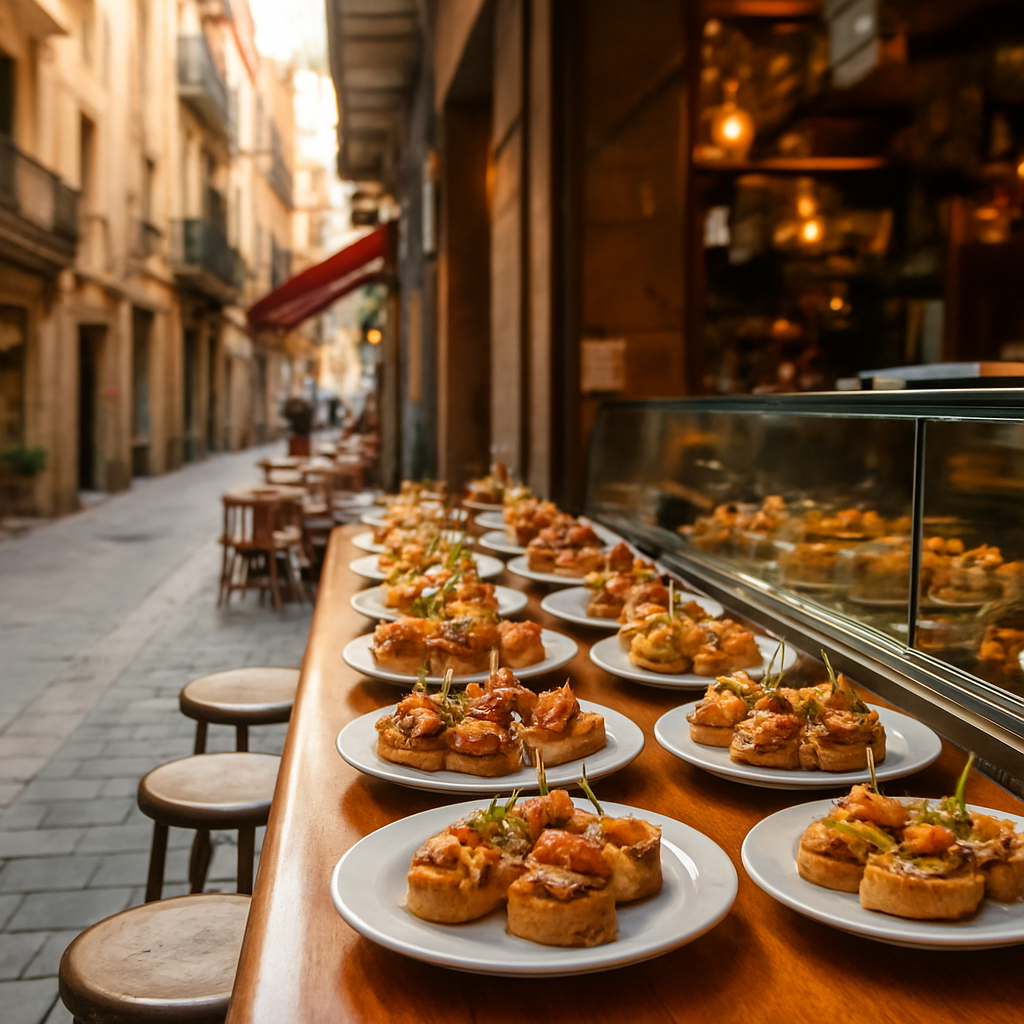
La Boqueria Market — Eat Your Way Through
Skip the smoothie stands at the entrance — those are for the tour groups. Walk deeper into Mercat de la Boqueria on La Rambla and find the counters where the old men are eating. Order a paper cone of fried baby squid, a plate of jamón ibérico sliced so thin you can read through it, and whatever seasonal fruit the vendor is proudest of. The market has been here since the 13th century and it smells like salt cod and stone fruit and possibility. Go before 11am or after 3pm — the midday crush is punishing. Pro tip: the bars at the back (Pinotxo is the famous one, El Quim is arguably better) serve some of the best quick meals in the city.
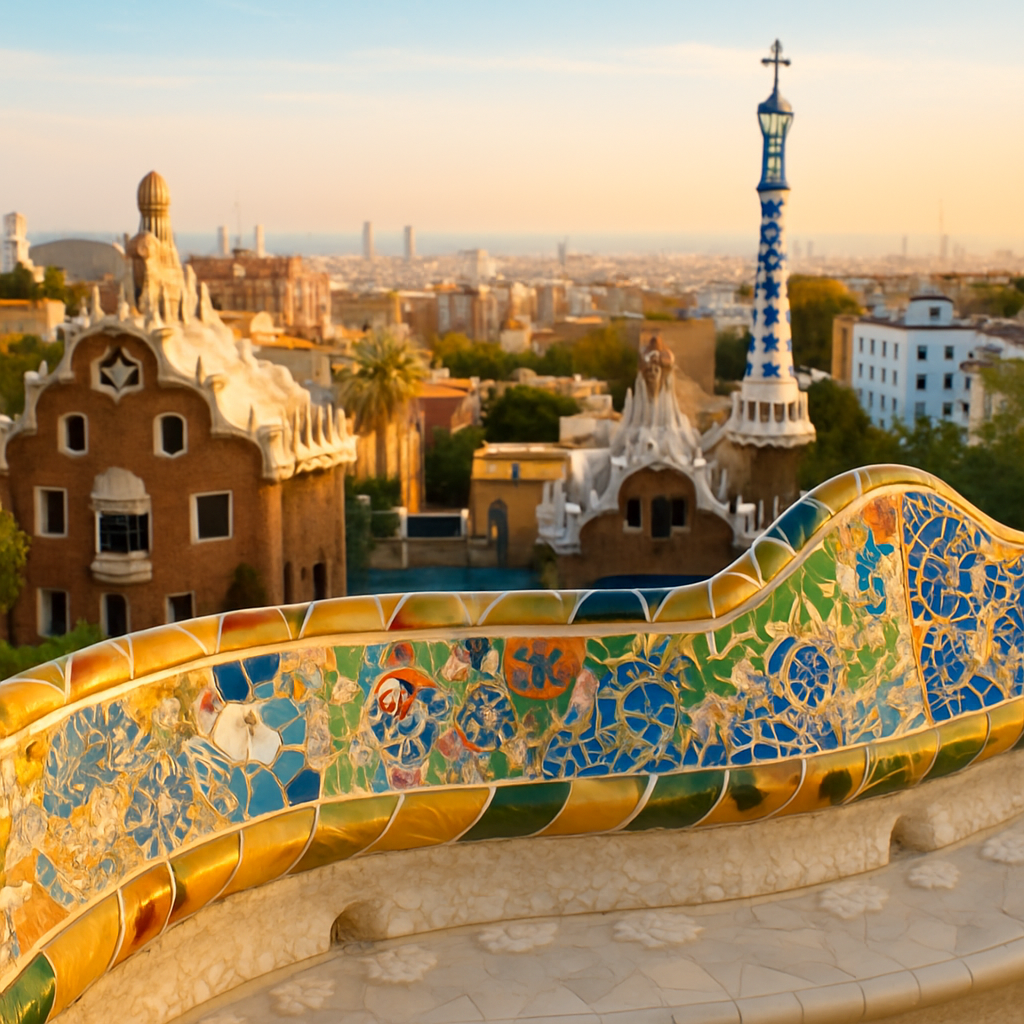
Park Güell at Sunrise
Gaudí's mosaic-covered park above the Gràcia neighborhood is gorgeous but mobbed by midday. The ticketed monumental zone opens early — be there when the gates open and you'll have the serpentine bench, the mosaic salamander, and the views of Barcelona spreading to the sea practically to yourself. The walk up from Lesseps metro is steep; take the escalators on Carrer de Mühlberg to save your knees. The free zone outside the monumental area has trails through Mediterranean scrubland with city views that cost nothing. Budget €10 for entry.
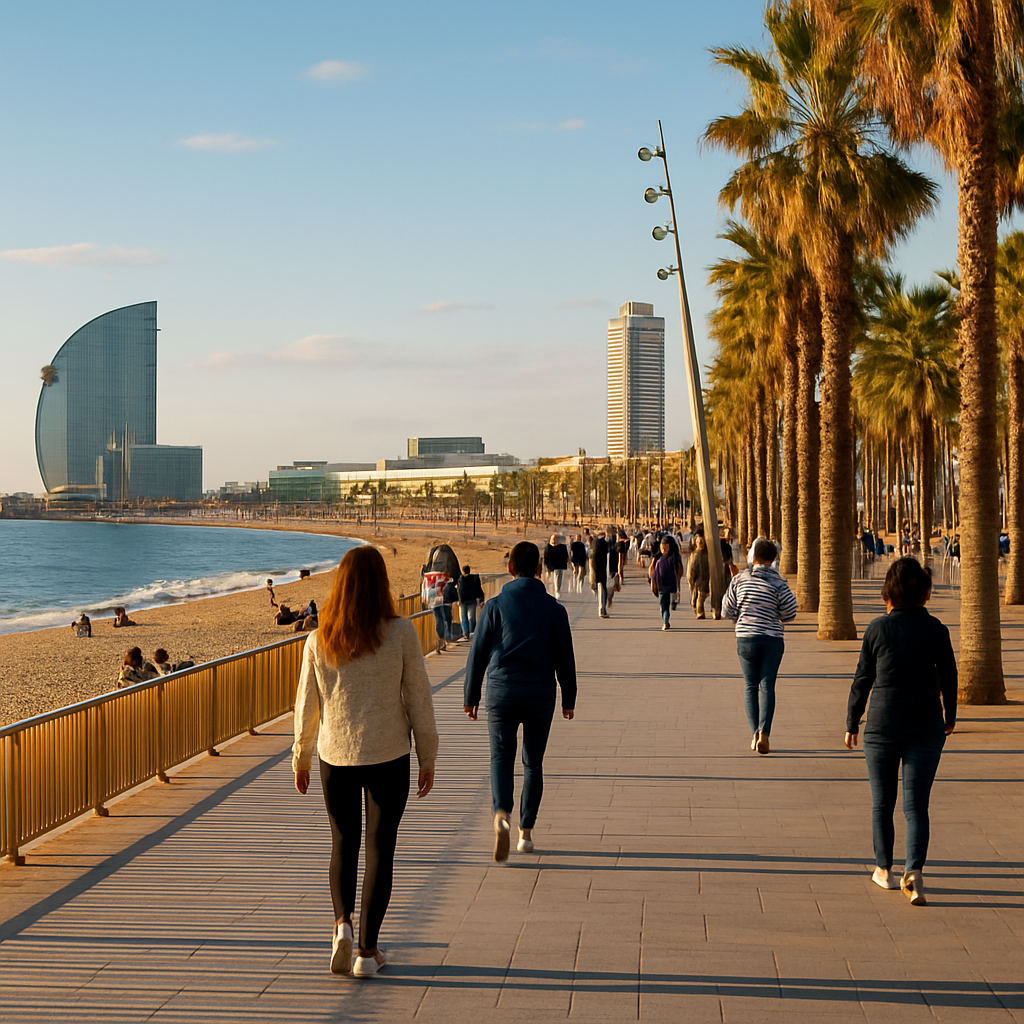
Barceloneta to Poblenou Coastal Walk
Start at the W Hotel sail-shaped tower and walk northeast along the waterfront. You'll pass the old fishermen's quarter of Barceloneta — narrow streets, laundry on balconies, the smell of frying fish — then hit the wide passeig marítim boardwalk that runs along the beach. The walk takes about 45 minutes at a leisurely pace and deposits you in Poblenou, a former industrial district now filled with converted warehouse restaurants and design studios. Stop for lunch at one of the rice restaurants along Passeig de Joan de Borbó — the paella is tourist-priced but the setting, with boats bobbing in the old port, earns it.
Gothic Quarter After Dark
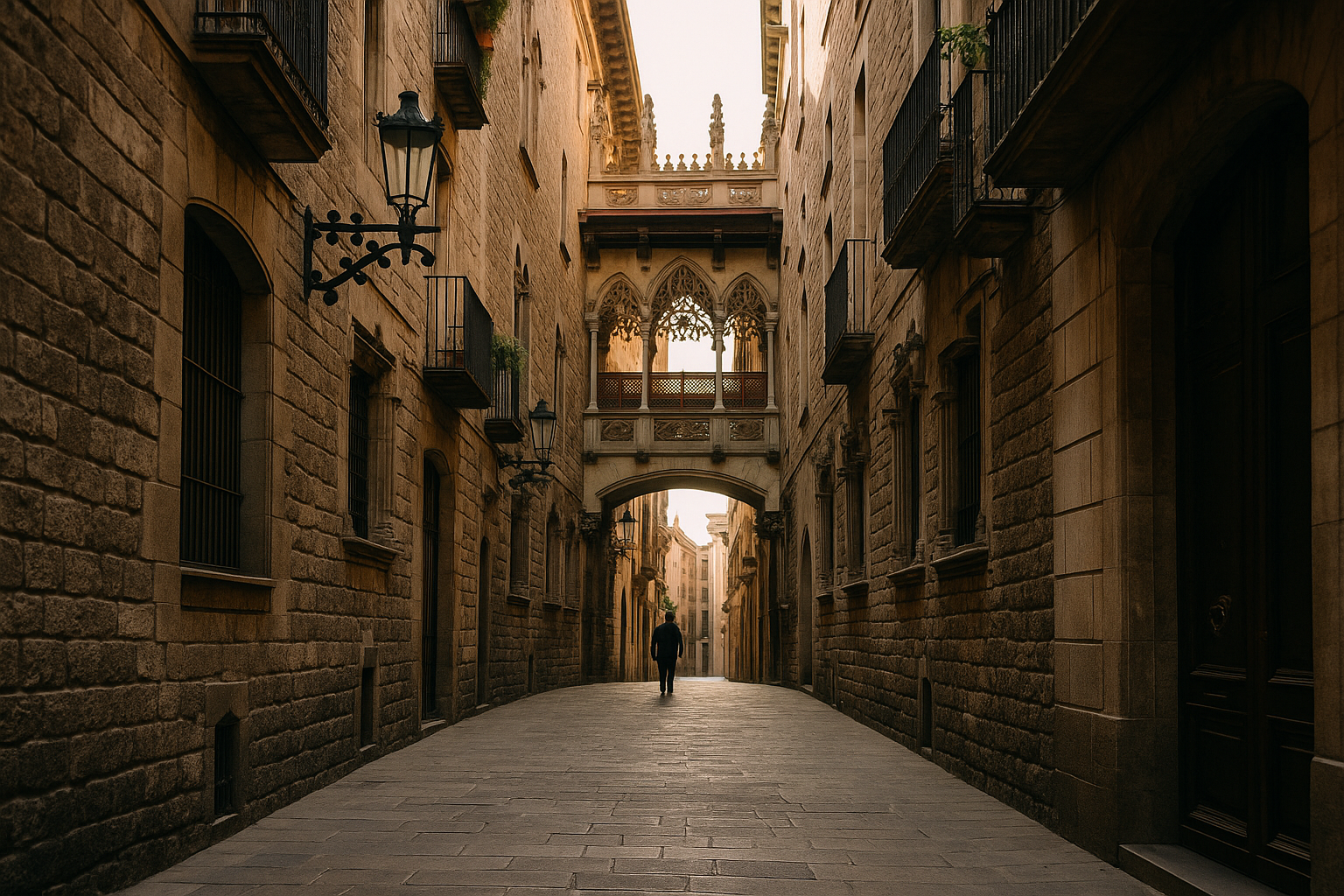
The Barri Gòtic is a tourist scrum during the day, but after 9pm it transforms. The Roman walls glow under streetlights, the cathedral square empties out, and the narrow medieval lanes feel like a film set. Walk from Plaça del Rei — one of the most atmospheric squares in Europe — through to Plaça Reial, where Gaudí's first public commission (the lampposts) frames a colonnade full of restaurants and live music. Grab a gin and tonic at one of the terrace bars and watch the square do its thing. Keep your phone in your front pocket — this is prime pickpocket territory after dark.
The places I actually send people to
Advice that fits how you travel
Barcelona is one of the best solo travel cities in Europe, full stop. The gay scene is built for meeting people — Punto BCN on a weeknight is warm and social enough that you'll be in a conversation within ten minutes, and the apps (Grindr, Scruff, Wapo) are extremely active here with a mix of locals and travelers. The vermut culture gives you a built-in daytime social ritual: grab a stool at a Gayxample bar around noon on Sunday and you're part of the neighborhood. Budget-wise, solo travelers can live well for €65–€85/day on the low end, and a T-Casual metro card covers you for ten rides at around €5.
For solo nightlife, the trick is pacing. Clubs don't move until 2am — if you show up to Arena Madre at midnight, you'll be essentially alone with the bar staff, who will be lovely but will quietly pity you. Start at Plata Bar or Punto BCN around 11pm, let the energy build, then migrate to the clubs after 1:30. The Gayxample grid is compact enough that you're never more than a five-minute walk from the next spot, and the streets between bars are well-lit and busy.
Safety for solo travelers is mostly a pickpocketing story, not a homophobia story. Front pockets, phone awareness on the Metro, and don't leave your drink or bag unattended at clubs. If you want to meet actual Barcelonans rather than cycling through the same tourist crowd, check Casal Lambda's event calendar — their film screenings, panels, and social nights are open to visitors and are the fastest way to connect with the local community.
Barcelona is one of those rare cities where romance doesn't require any special effort on your part — the city does the work. Walk Passeig de Gràcia at golden hour, find a table at a wine bar in El Born, and let the evening take shape. Same-sex couples move through virtually every neighborhood here without a second glance, and the city's warmth toward affection in general means you'll never feel like you're performing visibility.
For a proper date night, skip the obvious tourist-trap restaurants along Las Ramblas and head to Gràcia instead — the streets around Carrer de Còrsega have exactly the kind of neighborhood restaurants where the pasta is made that morning and the wine list is serious but the atmosphere isn't. If you're splashing out, the dining at Hotel Arts Barcelona is genuinely world-class. For something more low-key and genuinely local, do a Sunday vermut crawl through Gayxample starting around noon — unhurried, sociable, and romantic in a way that a candlelit dinner rarely is.
The most memorable couples experience in Barcelona might be the simplest: rent bikes, ride along the seafront from Barceloneta to Platja de Mar Bella, find a spot on the sand, and do absolutely nothing for two hours. Barcelona rewards that kind of surrender. The city budget for couples runs €250–€340/day at a comfortable moderate level, though you'll find it very easy to spend more if you let yourself.
As of 2026, Spain has some of the most comprehensive legal protections for LGBTQ+ families in Europe — same-sex adoption is fully legal, and both parents on a same-sex couple's registry are recognized equally under Spanish law. In practical terms, Barcelona treats LGBTQ+ families with the same matter-of-fact normality it extends to everyone else. You'll see LGBTQ+ families in Gràcia, at Parc de la Ciutadella, and at the Aquàrium without anyone making it a moment.
Kid logistics in Barcelona are genuinely manageable. The metro runs strollers without issue (though the older Gothic Quarter streets are cobblestoned and narrow — a compact stroller or carrier is smarter than a wide travel system). Children under 4 ride the metro free. The Parc de la Ciutadella has a boating lake, wide paths, and a zoo adjacent — it's an easy half-day that costs almost nothing. The Sagrada Família is worth doing with older kids who can handle the scale; the tower access is genuinely awe-inspiring for children and adults alike, though book tickets months in advance.
Restaurants across the city accommodate children easily — menus del día almost always include simpler options, and Barcelona's café culture means you're rarely rushed. The beach at Barceloneta is family-central in summer, with calm water and a promenade of food vendors. A moderate family budget runs €350–€470/day including accommodation, activities, and a mix of eating out and self-catering. Renting an apartment rather than a hotel room makes a meaningful practical difference with kids in tow.
What Barcelona actually costs
Flights, visas, and the first 30 minutes
Airport: Barcelona–El Prat Josep Tarradellas Airport (BCN) is one of Europe's busiest hubs, with direct service from 200+ cities. From London Heathrow, you're looking at approximately 2h 15m. From New York JFK, approximately 8h 30m. Paris CDG is a short 1h 50m hop, Amsterdam AMS around 2h 10m, Toronto YYZ approximately 9h, and Sydney around 24h via a connecting hub.
Visa requirements (as of 2026): US, Canadian, and Australian passport holders typically do not need a visa for stays up to 90 days within the Schengen Area, but should be aware that the ETIAS travel authorization system is expected to launch mid-2026 — check your government's travel advisory before you book. UK passport holders generally don't need a visa either, but your passport must be valid for at least 3 months beyond your planned departure date — a post-Brexit quirk that still catches people out. EU citizens have freedom of movement with no restrictions. Always verify current entry requirements with your government's official advisory before travel.
Airport to city: The Aerobus (A1/A2) is the easiest option — €6.75 one-way, running to Plaça de Catalunya in 35–40 minutes with frequent departures. The Metro L9 Sud costs €5.15 (with airport supplement) and takes 40–55 minutes, requiring a transfer for central stops. Renfe train R2 Nord is the cheapest at €4.60, reaching Passeig de Gràcia or Sants in 25–30 minutes, but requires a walk or shuttle to Terminal 2. Taxis and rideshares (Cabify, Uber) run €30–€45 and take 20–35 minutes in normal traffic — worth it if you're arriving with luggage or late at night.
Traven's seasonal breakdown
The questions everyone asks
Is it safe to hold hands in Barcelona?
Do I need to speak Spanish or Catalan?
How much should I budget per day?
When do the clubs actually get going?
Is Barcelona safe for trans travelers?
What's the best neighborhood to stay in?
Do I need ETIAS to visit Spain?
Screenshot this before you go
So should you actually go?
Go. I say that with no qualification, no caveat, no "but first consider." Barcelona is one of the best cities in the world for queer travelers — a place where full legal equality, deep social acceptance, a thriving and diverse scene, and a genuinely spectacular destination converge into something that very few cities on earth can match. The architecture, the food, the beaches, the nightlife, or just the feeling of walking down the street holding someone's hand without a single thought about it — this city delivers. The prices have gone up, the tourist crowds are real, and you should guard your phone on the metro. But those are small prices for a city that makes you feel this free.
Sources & Resources
Official links we reference when compiling this guide. Last verified 2026-03-16.
- ACATHI — LGBTQ+ Refugees & Asylum Seekers Support
- ACEGAL — Association of LGBTQ+ Businesses of Catalonia
- Ajuntament de Barcelona — Oficina per la No Discriminació
- Barcelona Turisme — Official LGBTQ+ Travel Guide
- BCN Checkpoint — Free STI/HIV Testing & Sexual Health
- Casal Lambda — LGBTQ+ Community Center Barcelona
- Centre LGTBI de Barcelona
- Chrysallis — Families of Trans Minors (Spain)
- FELGTBI+ — Spanish Federation of LGBTI+ Organizations
- Front d'Alliberament Gai de Catalunya (FAGC)
- Observatori Contra la LGBTIfobia
- Pride Barcelona — Official Pride Organization
- Stop Sida — HIV/AIDS Prevention Organization