
Donostia doesn't sell you a scene. It hands you a txakoli at 9pm, points you toward the Parte Vieja, and trusts you to figure out the rest.
Donostia is the small, coastal, food-mad version of Spain that the gays have quietly claimed without ever needing to build a Chueca to do it. There's no gay village here — there's a sensibility, threaded through the Parte Vieja after 10pm, baked into the surf-and-art-school crowd in Gros, and humming in the cooperative club nights at Dabadaba in Egia. The city earns its 9.4 on Destination without breaking a sweat, and once you've spent 48 hours here you stop looking for a district and lean into the txikiteo instead.
What surprised me the most isn't the food, which everyone has already told you about. It's how completely the city dissolves the line between scene and not-scene. You'll find more pintxo bars flying small rainbow flags than you will in actual scene cities, and nobody is trying to sell you anything by doing it. Bar Bergara in Gros at 9pm is the unofficial start line — order a txakoli, eat standing up, move on. By the third bar you've talked to two locals, a Basque grandmother, and a Madrid couple who flew up for the weekend.
Walk the Paseo de La Concha at sunset and you'll see the equation: a shell-shaped bay framed by white wrought-iron railings designed when Queen Maria Cristina turned this town into the summer court of Madrid, with Monte Igueldo holding the western end like a clasp. Same-sex couples hold hands across the entire length of it without anyone breaking stride. That's not because the city is performing acceptance — it's because, somewhere along the way, the Basque Country decided this part of public life wasn't worth a conversation. My 8.7 on Chill is the closest thing I have to a number for that.
Time it for the Zinemaldia in late September if you can. The film festival programs the Sebastiane Award for the year's best LGBTQ+-themed film, the Hotel María Cristina bar functions as the international industry's living room for ten days, and the whole city tips into its most cosmopolitan, most quietly queer week of the calendar. Pride here — Harrotasun Eguna, anchored by a late-June march from the Boulevard to Plaza de la Constitución — is smaller and warmer than Bilbao or Madrid. Both are reasons to come. Neither is really the point. The point is that Donostia is one of the most beautiful small cities in Europe and the gays figured that out a long time ago.
The stuff your travel guide buries on page 47
Spain is one of the easiest legal landscapes in the world for LGBTQ+ travelers, and the Basque Country goes a step further. As of 2026, same-sex marriage and joint adoption have been legal nationally since 2005, anti-discrimination protections are comprehensive across employment, housing, and services, and Spain's 2023 Trans Law guarantees self-ID for residents without medical gatekeeping. The Basque autonomous government layers its own equality framework on top, administered through Berdindu, the Basque Government's LGBTI+ service, and complaints can be filed with the Ararteko, the Basque Ombudsman.
On the ground, the law and the culture match. Donostia consistently ranks at the top of Basque municipalities for LGBTQ+ acceptance, and the city's main community organization, Gehitu, has run a drop-in on Calle Reina Regente for decades — film nights, Euskera language exchanges, a monthly social. If you want to plug into local queer life beyond the bar, that's your first stop. FELGTBI+, the Spanish national federation, is the umbrella for advocacy at the national level.
A few cultural notes worth knowing. Basques are warm but not effusive on first meeting — don't read reserved as unfriendly. By the third txakoli at the same bar, you'll be invited to someone's caserío for Sunday lunch. And almost nothing serious starts before 10:30pm — dinner at 8 generally marks you as a tourist. Use the early evening for a swim at Zurriola, a nap, and a slow shower. The night is long here.
PDA comfort, by area: Holding hands and casual affection are essentially unremarkable in Parte Vieja, Gros, and Centro — these are dense, young, cosmopolitan zones. La Concha and Ondarreta beaches are family-heavy but PDA-friendly; topless and cruising aren't the vibe there. In the residential hill neighborhoods and the surrounding Basque villages on day trips, couples report no issues but expect a few more looks — traditional Catholic-Basque culture is more conservative aesthetically than legally.
What it actually feels like on the ground
Day-to-day, this is one of the lowest-friction cities in Europe for LGBTQ+ travelers. But specifics matter, so here's the scenario-by-scenario read.
Holding hands and PDA: A genuine non-event in Parte Vieja and along the Concha promenade. Same-sex couples walk the Paseo at sunset without anyone breaking stride. In Gros and around Zurriola beach, it's even more relaxed — the surf-leaning, art-school crowd doesn't register it at all.
Hotel check-in: Same-sex couples requesting one bed have zero issues across price points, from Pensión Aida in Gros to the Maria Cristina downtown. Spanish hospitality is broadly inclusive and the city's hotels follow suit.
Taxis and late night: Donostia taxis are metered, regulated, and a non-issue. After 1am, taxis cluster on the Boulevard and outside Bataplán. The whole city is walkable — Parte Vieja to Gros is a 10-minute stroll across the Zurriola bridge.
Beaches: La Concha is family-coded but completely fine for same-sex couples. Zurriola in Gros is the closest thing to a soft queer strip of sand — towels cluster on the Gros side near the river mouth, and nobody bats an eye at same-sex couples sharing sunscreen.
Trans travelers: Spain's self-ID law applies in the Basque Country, and Donostia has visible trans organizing through Gehitu and Naizen, the Basque trans families association. Gender-neutral facilities are common in newer venues. Tourist zones report almost no harassment, and the public health system, Osakidetza, covers gender-affirming care for residents — useful to know if a travel-medical question comes up.
Festival crowds: Pro tip: the one week of the year to be slightly more situationally aware is Semana Grande in August, when the city quadruples in population and drunk crowds cluster on La Concha for the fireworks. Not hostile — just sloppy. Stick to Gros after midnight that week.
If something happens: Reports go to the Ertzaintza, the Basque police, which has a dedicated hate-crime protocol you can invoke at any station. Save the number for Aldarte, the regional LGTBI+ attention centre before you go out — they'll walk you through filing a report in English if needed.
The queer geography
Donostia is small. You can walk the entire central city in 40 minutes, and the neighborhoods that matter to LGBTQ+ travelers are stacked along a single curve of coastline. Here's how to read them.
Parte Vieja (Old Town)
The medieval old quarter at the foot of Monte Urgull, rebuilt after a fire in 1813 and now packed with the densest concentration of pintxos bars in the world. Narrow stone streets, balconies hung with laundry, the smell of grilled txuleta drifting out of Bar Nestor at 1pm, and a constant low roar of conversation that crescendos around 9pm and doesn't stop until 2am. The Plaza de la Constitución, the old bullring-turned-square, anchors the whole thing — numbered balconies still visible, café tables spilling across the stones.
This is also where the city's queer-ish nightlife clusters. Komplot is the closest thing to a dedicated gay bar — small, loyal, occasional drag, irregular programming (check their Instagram). Bar Ttun-Ttun reads gay-friendly mixed. Pride here, called Harrotasun Eguna, anchors itself on a march from the Boulevard to Plaza de la Constitución each June. Coordinate community plans through Gehitu, the Basque LGBTQ+ association headquartered here.
Gros
Across the Urumea river, sitting behind Zurriola beach — the Atlantic-facing surf beach that's the youngest, loosest stretch of sand in the city. Gros is where wetsuits hang off balconies, third-wave coffee shops outnumber tortilla bars, and the morning crowd is split between surfers, students, and people walking dogs along the seawall. Bar Bergara on General Artetxe is the unofficial start line of any Gros txikiteo — order a txakoli, eat at the bar standing up, move on.
This is the city's progressive, art-school district and the most reliably queer-leaning part of town outside the Parte Vieja bars. Towels cluster on the Gros side of Zurriola without comment. The Kursaal cubes — Rafael Moneo's translucent glass concert halls perched right on the sand — host the September film festival's main screenings, and the rooftop walks here are some of the best in the city.
Egia
One hill east of the train station, Egia is what Gros was a decade ago — slightly grittier, working-class roots, and the city's true alternative-cultural pocket. The big draw is Tabakalera, the old tobacco factory turned international contemporary culture centre. It programs more interesting queer cinema, talks, and exhibitions than anywhere else in town, and the rooftop bar is one of the few summer spots that stays mellow on a Saturday night.
Nightlife here means Dabadaba, the cooperative live-music club where the queer art-school crowd actually hangs out — Tuesday DJ sets are where I've met more interesting locals than at any official gay bar in the city. Le Bukowski handles the indie concert programming. Loop in Donostia City Council's Equality Department for civic LGBTQ+ programming calendars, much of which lands in Tabakalera's schedule.
Centro & the Romantic Quarter
The Belle Époque grid between the Old Town and the river, built when Queen Maria Cristina turned Donostia into the summer court of Madrid in the late 1800s. Wide boulevards, wrought-iron balconies, the Maria Cristina hotel sitting like a wedding cake on the Urumea, and the white railings of the Concha promenade curving along the bay. This is shopping, cinemas, and grown-up cocktails — the Zinemaldia in late September takes over the Hotel María Cristina bar like it's the industry's living room, and the city gets its most cosmopolitan-queer week of the year.
It's not a scene neighborhood. It's where you stay if you want quiet luxury and a 10-minute walk to everything else. Spain's Ministry of Equality LGTBI+ resources are worth bookmarking for any cross-regional legal questions while you're in town.
The experiences worth rearranging your itinerary for
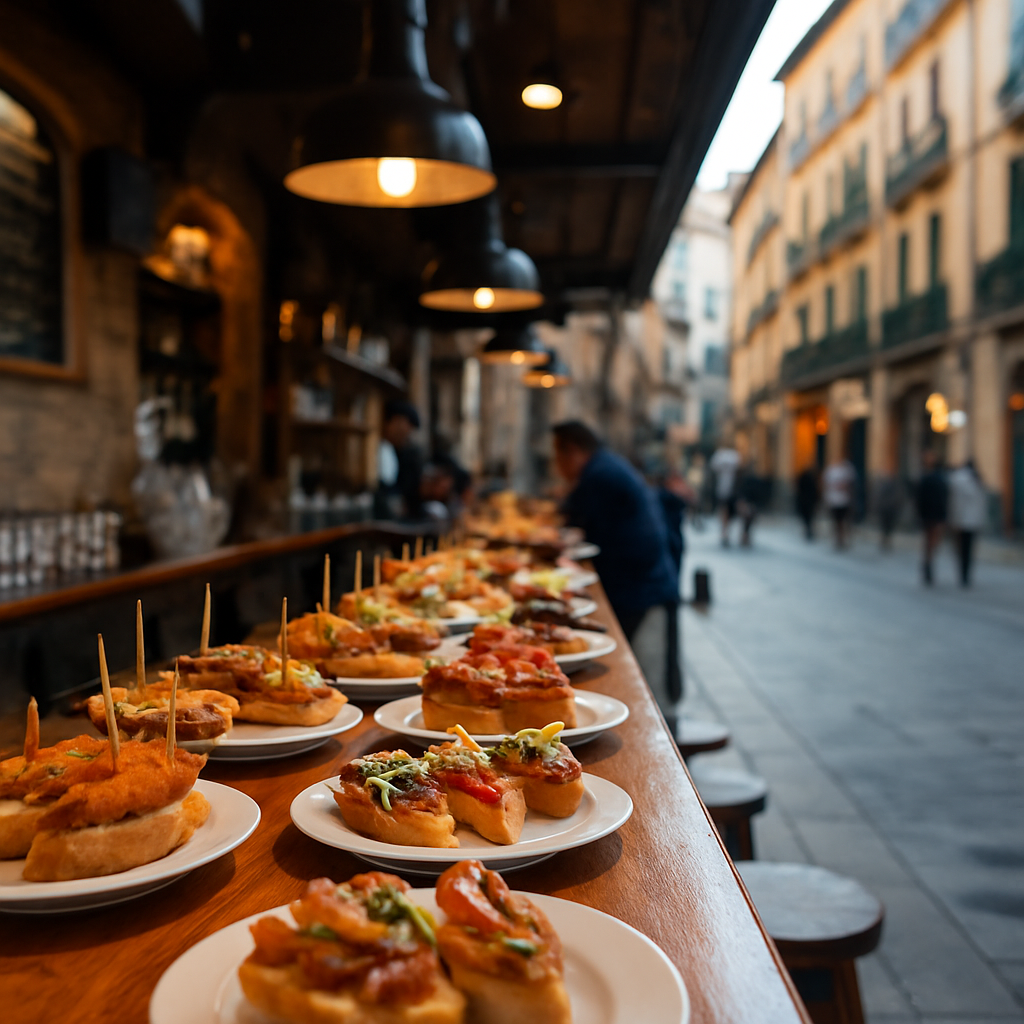
A Proper Pintxo Crawl Through the Parte Vieja
The Parte Vieja holds the densest pack of pintxo bars in the world, and the only way to do it right is the local txikiteo — one drink, one pintxo, then move. Start at Bar Nestor at midday for the txuleta-and-tortilla institution, work through La Cuchara de San Telmo for the veal cheek, Borda Berri for the Idiazabal orzo, and Ganbara for the mushroom-and-egg-yolk pintxo that you'll be thinking about a year later.
Pro tip: stand at the bar, don't sit. Sitting can double your bill and instantly mark you as a tourist. Locals lean, eat, pay, and walk to the next place. By your fourth stop you'll understand why this city is a UNESCO Creative City of Gastronomy and why nobody here cares much about Michelin stars.
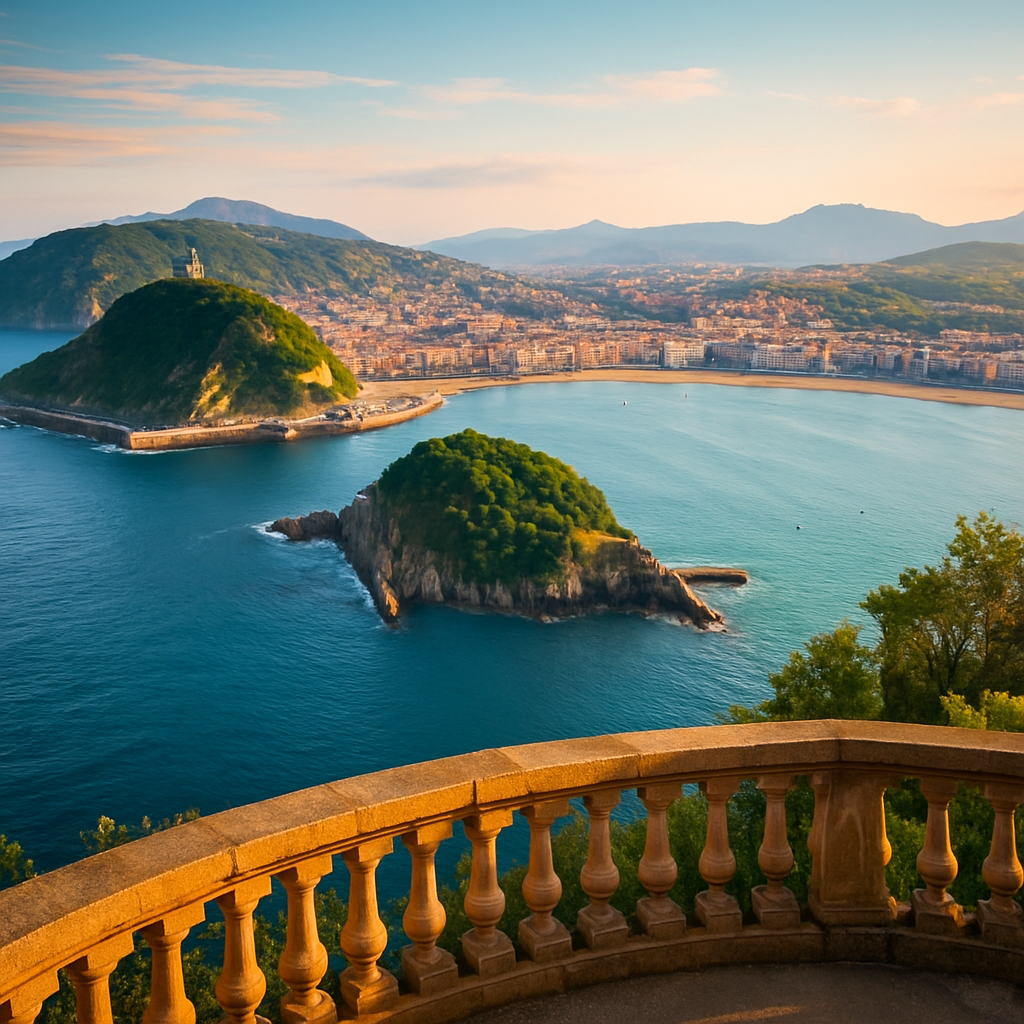
The 1912 Funicular Up Monte Igueldo at Sunset
The funicular up Monte Igueldo has been running since 1912 — one of the oldest still operating in Spain — and it climbs to a tiny, slightly absurd early-20th-century amusement park perched above the western end of the bay. The view of the crescent of La Concha from up here is the photograph the city has been selling for a century, and it earns it every time.
Time it for golden hour, walk the path along the ridge, then come down for a martini at the bar at Hotel María Cristina. It's roughly the cost of two pintxos and a coffee back home, and it's the most cinematic evening in town.
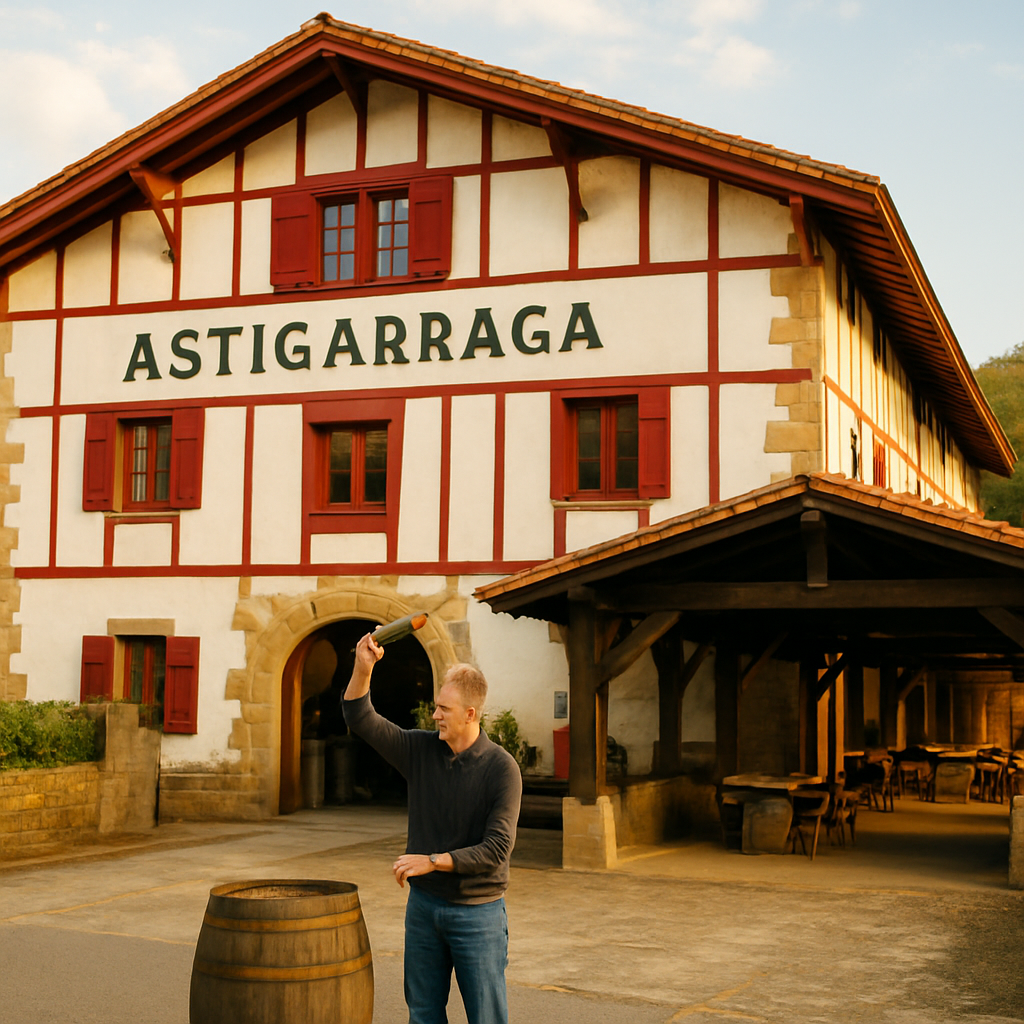
Txotx Season at a Sidrería in Astigarraga
Twenty minutes outside the city, the cider-producing village of Astigarraga opens its sidrerías between January and April for txotx — the ritual of catching a stream of sidra straight from the barrel into your glass while the cider-master shouts the word. Petritegi and Zapiain are the two most reliable spots, both serving the traditional menu of cod omelette, txuleta, and Idiazabal cheese with quince.
The bus from Donostia is €1.85. The food is good, the cider is great, and the queue at the barrel is the easiest icebreaker in the Basque Country. No scene, no pretense, just one of the better dinners you'll have all year.
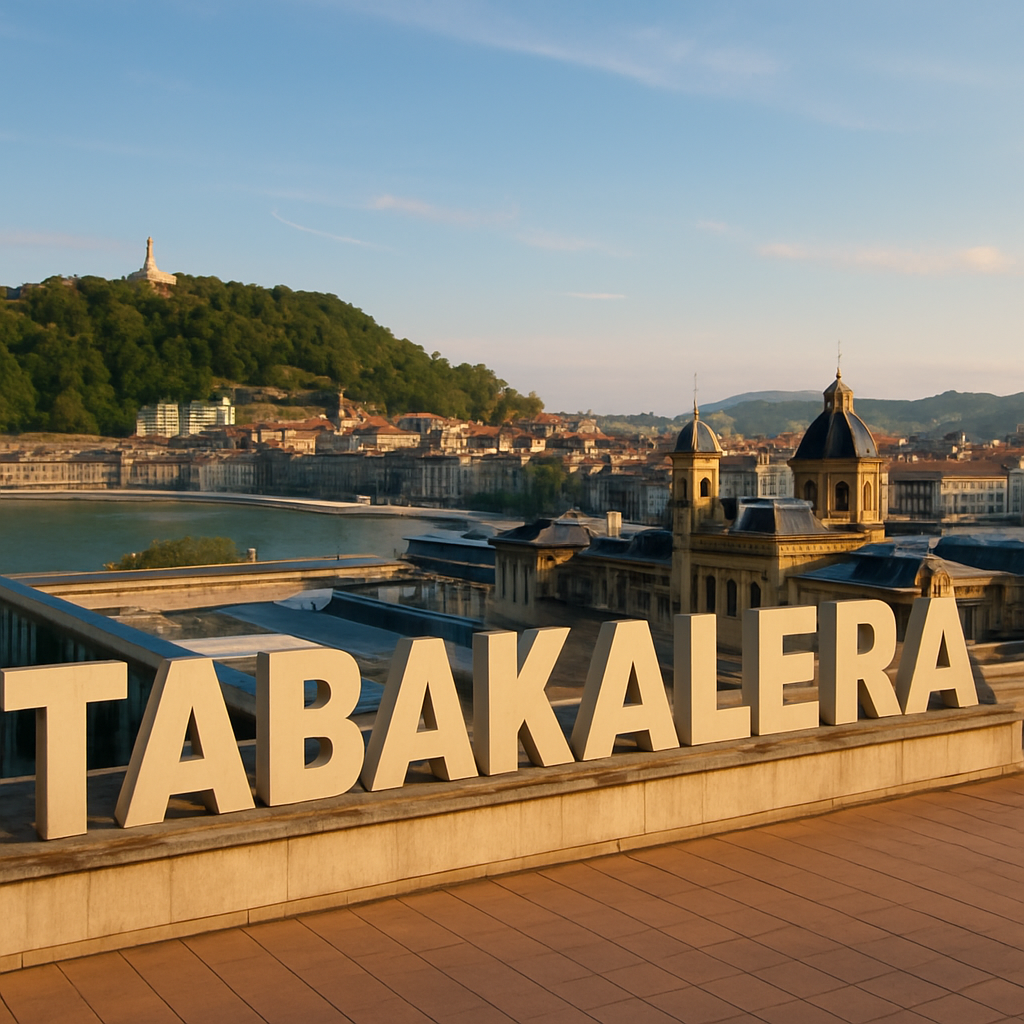
Tabakalera, the Old Tobacco Factory Turned Culture Centre
One hill east of the train station in Egia, the old tobacco factory has been reborn as Tabakalera, an international contemporary culture centre programming film, exhibitions, residencies, and talks. The cinema runs the most interesting queer-leaning programming in the city, and the rooftop bar is one of the few summer spots that stays mellow on a Saturday night.
Walk up at dusk, grab a drink on the rooftop, and look down at the bay and Monte Urgull lit up below. This is where the city's contemporary cultural energy actually lives, and you'll see more locals here than in any guidebook hotspot.
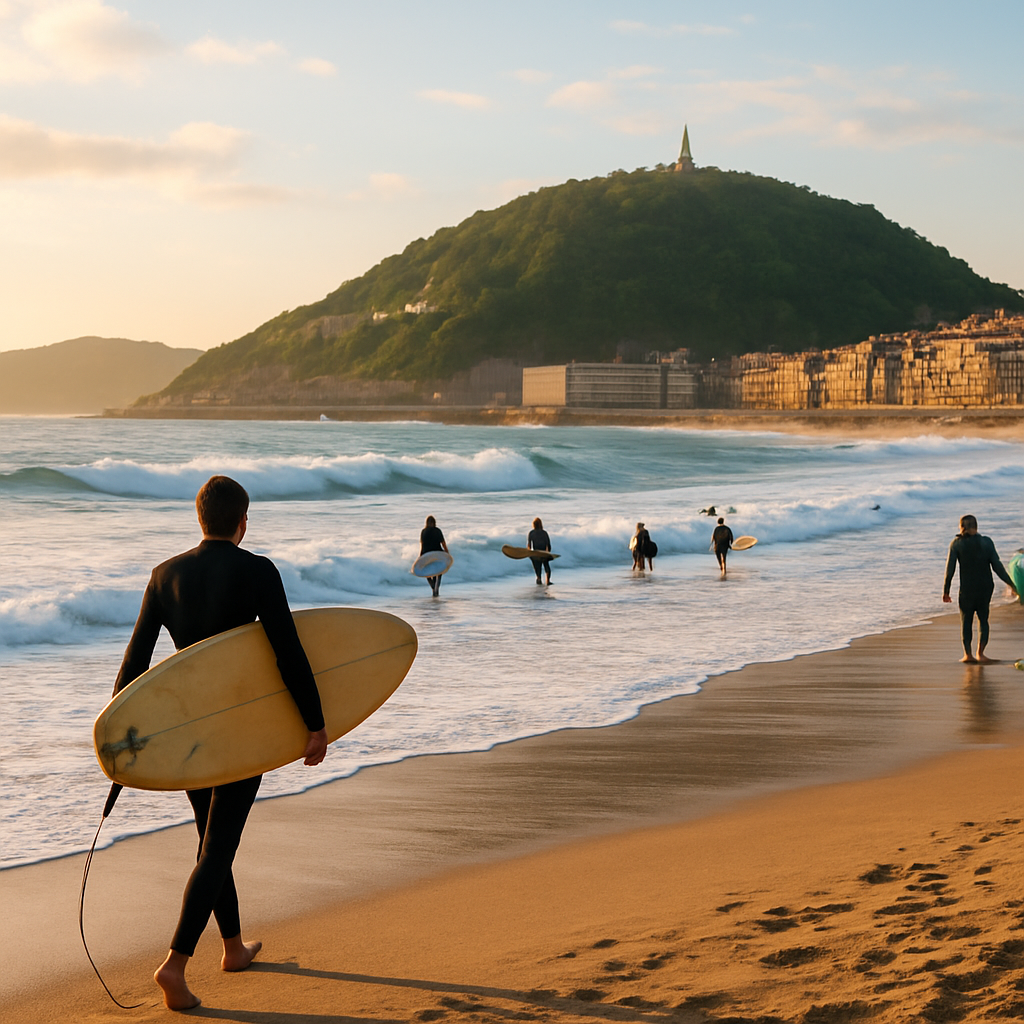
A Morning at Zurriola Beach in Gros
Cross the Zurriola bridge from the Old Town into Gros and you land on the Atlantic-facing surf beach that is the youngest, loosest stretch of sand in the city. Wetsuits hang off the seawall, surf schools run morning lessons for €40, and the Kursaal cubes — Rafael Moneo's translucent glass concert halls — perch right on the sand at the western end.
Take a lesson, swim a few sets, then walk three blocks inland for breakfast at any of the cafés along General Artetxe. The Gros morning is one of the great quiet pleasures of Donostia — slow, salt-stained, and very much not on the cruise-ship itinerary.
The places I actually send people to
Advice that fits how you travel
Solo travel here is almost embarrassingly easy. Donostia is small enough to walk end-to-end in 40 minutes, safe enough that you can wander Parte Vieja at 1am without giving it a second thought, and structured around txikiteo — the local ritual of one drink, one pintxo, then move — which is the single most solo-friendly social format ever invented. Stand at the bar at Bar Bergara in Gros, order a txakoli, and within twenty minutes someone is going to ask where you're from.
For meeting people, the apps work fine but the scene is genuinely small — Grindr in Donostia reads more like a regional crawl than a city grid. Better strategy: Dabadaba in Egia on a Tuesday DJ night, the rooftop at Tabakalera any weekend, or Komplot when they actually have programming (check Instagram). The art-school crowd in Gros and Egia is the easiest in for solo travelers who don't want to perform in a club.
Budget-wise, this is the rare food capital that's actually kind to a solo wallet. A proper pintxo crawl runs €30–€40 and feeds you better than a €200 tasting menu in most cities. Stay at Pensión Aida in Gros — five minutes from Zurriola, run by people who've been doing this forever, and the location does more for your trip than any €400 suite in Centro. Pro tip: learn three Euskera words — kaixo, eskerrik asko, agur — and watch bartenders soften by a full degree.
Donostia might be the most romantic small city in Europe, and I don't say that lightly. Same-sex couples can hold hands on the Paseo de La Concha at sunset, share a towel on Zurriola on a Sunday afternoon, and check into any hotel in town with one bed and zero questions. The PDA comfort here is essentially total in Parte Vieja, Gros, and Centro — the only places to dial it back slightly are the residential hill neighborhoods and the surrounding villages on day trips, where you'll get curious looks rather than hostility.
For the cinematic version of this city, the move is: late afternoon swim at La Concha, sunset walk up the 1912 funicular at Monte Igueldo, then a martini at the Hotel María Cristina bar — which during the September Zinemaldia functions as the international film industry's living room. Stay at the Maria Cristina if you want the wedding-cake Belle Époque fantasy, Villa Soro for the restored 1898 mansion with a garden, or Akelarre Hotel if you want to take the elevator down to a three-Michelin-star dinner without ever calling a taxi.
For the meal of the trip: Arzak for the pilgrimage (three stars since 1989, family-run since 1897), Mugaritz for the experimental narrative tasting menu in nearby Errenteria, or Kokotxa for the easiest one-star to actually book. If you want the romance without the four-figure check, do an upstairs dinner at Casa Urola after a pintxo crawl through Calbetón — the city's two best evenings, back to back, for under €200 a couple.
LGBTQ+ families are fully recognized under Spanish law — joint adoption has been legal since 2005, and the Basque Country layers its own equality framework on top through Berdindu. As of 2026, Spain's 2023 Trans Law also guarantees self-ID for residents, meaning trans parents and trans kids generally encounter one of the most affirming legal environments in Europe. On the ground, two-mom and two-dad families at La Concha or pushing strollers up the Paseo are unremarkable — Donostia is a family city by default, and the LGBTQ+ layer doesn't read as separate.
The logistics work in your favor. La Concha is the platonic family beach — shallow, sheltered, lifeguarded, with the white wrought-iron railings of the promenade running its full length. The 1912 Monte Igueldo funicular goes up to a tiny early-20th-century amusement park that kids genuinely love. The Aquarium Donostia is right at the foot of Monte Urgull, and the San Telmo Museoa in the Parte Vieja is the right way to introduce older kids to what Basqueness actually is. Surf lessons at Zurriola run around €40 and the surf schools are used to kids.
Practical notes: most restaurants in Parte Vieja welcome kids until about 9:30pm, after which it gets distinctly more adult — plan accordingly because dinner here typically starts at 10pm. For accommodation, a two-bedroom apartment in Centro or Gros runs €180–€280 in moderate season and gives you the kitchen and laundry you'll want with kids. Day trip to Hondarribia on the E21 bus — 30 minutes, painted balconies, easy walking, a 10th-century castle the kids can climb around. The whole region is built for slow family days.
What Donostia / San Sebastián actually costs
Flights, visas, and the first 30 minutes
Airport: San Sebastián Airport (EAS) sits in Hondarribia, about 20 km east of the city on the French border. It's a small regional field — currently around five direct routes, mostly Madrid, Barcelona, and seasonal connections. For more options, fly into Bilbao (BIO), an hour west, which has wider European service and a direct coach to the Donostia bus station.
Visas (as of 2026): US, UK, Canadian, and Australian passport holders typically enter visa-free for up to 90 days within any 180-day Schengen period, and ETIAS authorization is generally required starting in 2026 — apply online before you fly. EU passport holders have freedom of movement and no entry formalities.
Airport to city: From EAS, the E21/E27 Lurraldebus runs to the city center roughly every 30–60 minutes for €2.55–€2.75 (35–45 min). A metered taxi runs €35–€45 with luggage and night supplements (20–25 min). Private transfers, useful for families or late arrivals, are €55–€80 pre-booked. From Bilbao (BIO), the direct PESA coach is €17.10 and gets you to the San Sebastián bus station in about 1 hour 15 minutes — often the easier total journey if you're coming long-haul.
Pro tip: Skip the rental car unless you're doing serious regional touring. Old Town parking is limited and expensive (€40–€90/day), and central Donostia is genuinely walkable end-to-end in 40 minutes.
Traven's seasonal breakdown
The questions everyone asks
How safe is Donostia for same-sex couples?
Do I need to speak Spanish or Basque?
Is there a gay neighborhood or scene?
When should I go?
How much should I budget per day?
Do I need a visa?
Is it really better than Bilbao for a first trip?
Screenshot this before you go
So should you actually go?
Go. Donostia earns my Traven-Dex of 8.8 the way it earns everything else here — quietly, without performance, by being exactly itself. As of 2026 it's one of the safest, most legally protected, and most beautiful small cities in Europe, with a food culture that punches above any city ten times its size and a queer sensibility that doesn't need a flag to announce itself. Come for a long weekend, stay for a week, and don't waste your time looking for a Chueca — lean into the txikiteo, learn three words of Euskera, and let the city do what it does. LGBTQ+ travelers should book it.
Sources & Resources
Official links we reference when compiling this guide. Last verified 2026-05-19.
- Aldarte — LGTBI+ Attention Centre (Basque Country)
- Ararteko — Basque Ombudsman (discrimination complaints)
- Berdindu — Basque Government LGBTI+ Service
- Donostia City Council — Equality Department (Berdintasuna)
- Ertzaintza — Basque Police hate-crime reporting
- FELGTBI+ (Spanish national LGBTQ+ federation)
- Gehitu — Asociación de Gays, Lesbianas, Trans y Bisexuales del País Vasco
- Naizen — Asociación de Familias de Menores Trans
- Osakidetza — Basque Health Service
- Spain Ministry of Equality — LGTBI+ resources