
Gran Canaria stopped auditioning for Europe sometime around 1985. Now it just hands you a copper-lit dune at sunset and a cabaret at 11pm and lets you sort out the rest.
Gran Canaria is the island that stopped explaining itself to the rest of Europe sometime around 1985. Walk down Avenida de Tirajana on a Thursday in October and you'll see a Dutch couple in their seventies holding hands like teenagers, three Germans arguing about whether Eiffel or Construction has the better terrace, and a Spanish bartender who's seen all of it before. The south coast wasn't built around the gay scene — the gay scene built the south coast, and the rest of the island figured out how to host it.
What surprises first-timers is the geography. The Yumbo Centrum is the engine room — a 1982 open-air commercial complex that turned, by the early '90s, into one of Europe's largest concentrated gay nightlife districts. But twenty minutes in any direction, you're somewhere completely different: the 400-hectare Maspalomas Dunes, a Special Nature Reserve that feels lifted out of the Sahara; the bougainvillea canals of Puerto de Mogán forty minutes west; the volcanic monolith of Roque Nublo at 1,813 meters in the central highlands; the UNESCO-protected colonial old town of Vegueta up in Las Palmas. You can spend a week here without seeing the same coastline twice.
The cultural register is the part nobody describes well. This is not Mykonos. It's not Sitges. It's a working Spanish island with a year-round LGBTQ+ tourism economy that's been running long enough to have institutional memory — bartenders who remember Maspalomas Pride 2003, hoteliers whose parents ran the same property, drag performers who've held the same Sunday night slot for fifteen years. The energy is less "circuit weekend" and more "extended family reunion that happens to involve cabaret." I gave it a 9.0 on Scene because no single venue in Europe packs this much gay nightlife into one footprint, and a 9.7 on Pulse because the volume of Pride and Winter Pride and Bear Carnival and Carnival drag galas means there's almost always something happening.
There's a reason my Traven-Dex landed at 9.5 here, and it's not just the legal framework or the dunes or the Drag World Cup at Winter Pride. It's that Gran Canaria has done the unsexy work of becoming a place where the question of whether you'll feel welcome simply isn't a question anymore. Show up. The island figured itself out a long time ago.
The stuff your travel guide buries on page 47
Spain is one of the most legally settled countries on earth for LGBTQ+ people, and the Canary Islands sit comfortably inside that framework. Marriage equality has been law since 2005, joint adoption is fully legal, and the 2023 Trans Law guarantees self-ID from age 16 with conversion therapy banned nationally — as of 2026, all of that holds. The Canary Islands' regional 2014 trans law layers on additional healthcare access and anti-discrimination protections specific to the archipelago, which is why trans travelers report Gran Canaria as one of the easier European destinations to navigate. For the legal baseline, the FELGTBI+ Federation is the authoritative national resource.
What matters more than the paper is the culture on the ground. Gran Canaria has been a gay travel destination since the 1980s, and the south coast — Playa del Inglés, Maspalomas, Meloneras — was essentially built around that fact. Local police, hoteliers, and bar staff treat same-sex couples as a normal Tuesday. Las Palmas, the cosmopolitan capital up north, is just as relaxed in its central districts. Spain's national anti-discrimination protections are comprehensive in employment, housing, healthcare, and goods and services.
PDA is essentially a non-issue across the tourist core. Hand-holding, kissing, and arm-around-the-shoulder are standard at the Yumbo, on the dunes, along the Playa del Inglés boardwalk, and in central Las Palmas. The mountain villages — Tejeda, Artenara, Agüimes — are still warm and welcoming, but they're conservative Catholic towns; restraint blends in better than overt affection. Same for inland working towns like Telde and Gáldar, where there's no hostility, just a different rhythm. For trip-planning specifics tied to Gran Canaria itself, the Maspalomas Tourism Board publishes the Pride and Winter Pride calendars and venue listings.
Pro tip: the colored flags on the dunes between markers 7 and 8 are a real signaling system, not decoration. Rainbow flags mark the gay zone. Learn it before you wander.
What it actually feels like on the ground
Holding hands and PDA: A non-event in Playa del Inglés, Maspalomas, Meloneras, and central Las Palmas (Triana, Vegueta, Las Canteras promenade). In Puerto de Mogán and Puerto Rico — family resort towns with mixed European tourist crowds — same-sex couples are common but the vibe is more discreet than demonstrative. In rural mountain villages, dial it back to hand-holding and you'll be fine.
Hotel check-in: Easy everywhere. The gay men-only resorts (Birdcage, Pasión Tropical, Vista Bonita, Ritual) and Axel Beach are explicitly built for the clientele. Mainstream four- and five-stars like Lopesan, Bohemia Suites, and Seaside Palm Beach have hosted same-sex couples for decades and won't blink at a king bed.
Taxis: Official metered taxis are the rule. Drivers are professional, fares from the airport run €30–€60 depending on destination, and there's no awkwardness about same-sex couples in the back seat. Surcharges apply at night and on holidays — that's standard, not a scam.
The dunes and beaches: The gay and nudist zones between markers 7 and 8 in the Maspalomas Dunes are well-established and well-marked. The standard beach-safety rules apply: the dunes are vast, hot, and easy to get disoriented in. Carry water, watch the tide on the beach side, and don't leave valuables anywhere. Petty theft warnings for the resort strip are real — typical resort precautions, not a special LGBTQ+ concern.
Late night around the Yumbo: The Yumbo Centrum is one of the safer late-night LGBTQ+ districts in Europe, full stop. Security is visible, the bar staff know everyone, and the area is well-policed. Watch for opportunistic pickpockets in the busy plaza, especially during Pride weeks. The walk back to the surrounding bungalow resorts is short and well-lit.
Trans travelers: Spain's self-ID framework and the Canaries' regional trans protections make this one of the most relaxed European destinations for trans visitors. Maspalomas and Las Palmas both have visible trans nightlife and inclusive medical access. For health resources and country-specific guidance, the COGAM network and the FELGTBI+ Federation both maintain support directories.
Verbal harassment: Rare in the tourist core. The occasional drunk hen-party comment exists everywhere on earth and Gran Canaria is no exception, but it almost never escalates. If something does feel off, hotel staff and Yumbo security are the right first call.
The queer geography
Playa del Inglés & the Yumbo Centrum
This is the engine room of gay Gran Canaria. The Yumbo Centrum is a 1982 open-air commercial complex that, by the early '90s, had transformed into one of Europe's largest concentrated gay nightlife districts. By day it's a slightly sleepy plaza of shops and cafés; after dark, the upper terraces light up with dozens of bars, drag stages, and clubs running until sunrise. Construction, Mykonos, Sparkles, and Wunderbar are the long-runners — there's a reason I gave this city a 9.0 on Scene. The streets surrounding the Yumbo are dense with gay men-only bungalow resorts and the Avenida de Tirajana restaurant strip. It's not subtle and it's not trying to be. Pro tip: the show bars start their drag programs around 11pm; arrive earlier and you'll think the place is dead. For festival timing and venue info, the Maspalomas Pride site is the authority.
Maspalomas & the Dunes
The Maspalomas Dunes are 400 hectares of shifting Saharan-feeling sand backed by a palm oasis and a 19th-century lighthouse. It's a Special Nature Reserve, not a beach resort cliché — walk thirty minutes in and you'll forget the hotels exist. The unofficial gay zone runs between beach markers 7 and 8, marked by rainbow flags, and has been the gathering point for the European gay beach scene for decades. The Meloneras boardwalk west of the dunes is where the upmarket hotels cluster, with proper restaurants and a long sea-promenade walk that's a sunset ritual. For Winter Pride logistics in November, the Winter Pride Maspalomas site has the schedule.
Triana & Vegueta, Las Palmas
Forty-five minutes north on the Global 60 bus is the actual city — Spain's ninth-largest, a working capital with a UNESCO-protected colonial old town. Vegueta is the historic heart: cobbled streets, the 15th-century Santa Ana cathedral, the Casa de Colón museum where Columbus reportedly stopped in 1492, carved Canarian balconies on every block. Triana, just north, is the 19th-century shopping and café district with art nouveau facades and the city's main pedestrian artery. Las Palmas hosts its own Pride each June and has a small, visible LGBTQ+ scene clustered around Tubos near Las Canteras beach. This is the city to stay in if you want a proper Spanish urban experience with great food, museums, and a 3km city beach — not a resort. The Las Palmas Tourism office covers the cultural calendar.
Playa de las Canteras
The capital's beach — three kilometers of Atlantic shoreline running the length of the western edge of Las Palmas, sheltered by a natural reef called La Barra. Locals swim here year-round. The promenade is lined with seafood restaurants — La Marinera is built into the rock at La Puntilla and serves the freshest fish on the island with the best view. The northern end near the Auditorio Alfredo Kraus is the gay-friendly stretch; the whole beach is comfortable for same-sex couples but the local crowd skews here.
Puerto de Mogán
Forty minutes west of Maspalomas is what locals nicknamed Little Venice — a fishing harbor reworked with bougainvillea-draped canals, whitewashed houses, and a Friday market that pulls the entire south coast. The seafood is excellent and the Michelin-starred Los Guayres at Cordial Mogán Playa is the destination meal on this side of the island. It's a quieter, more domestic-feeling alternative if Maspalomas energy isn't what you came for — you can be discreet here without feeling closeted.
The experiences worth rearranging your itinerary for
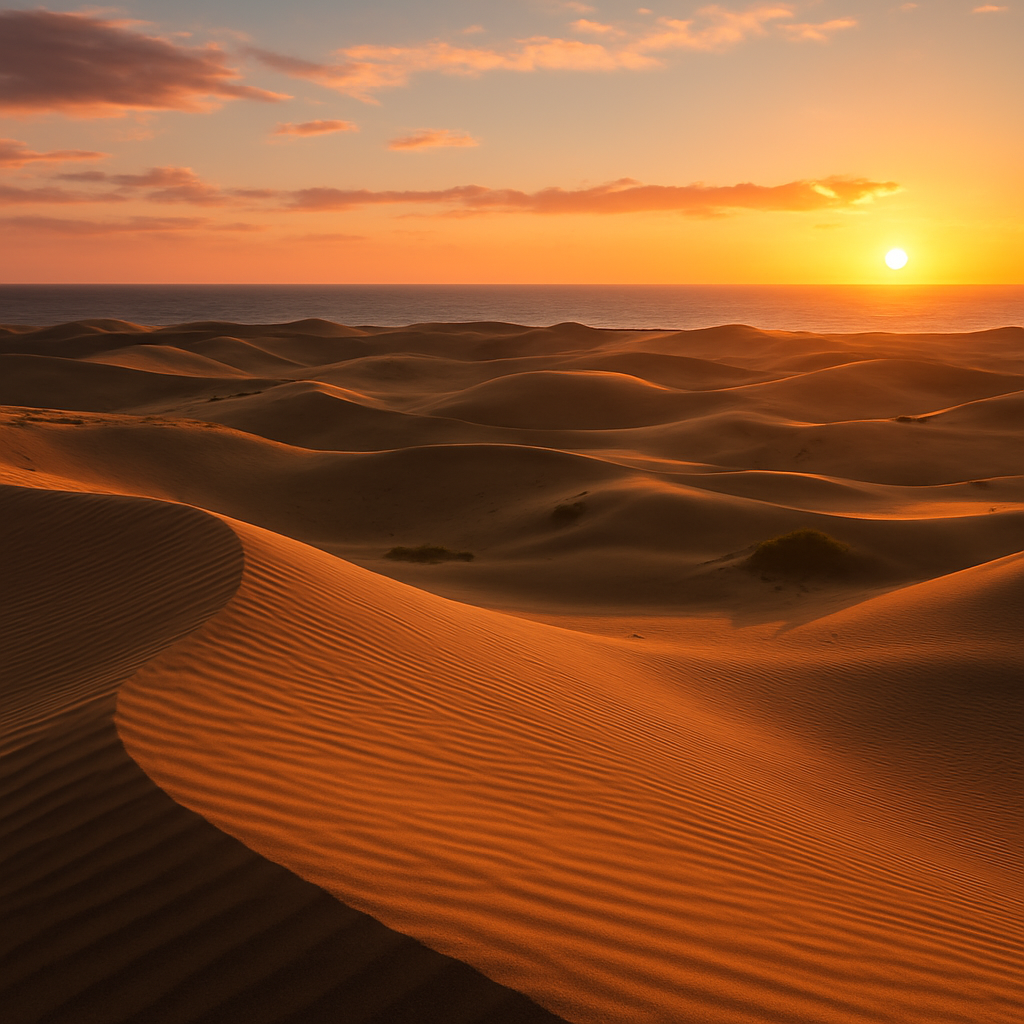
Walk the Maspalomas Dunes at Sunset
Four hundred hectares of shifting sand between Playa del Inglés and the 19th-century Maspalomas lighthouse, and almost nobody walks more than a few minutes in. Go at golden hour — the light turns the dunes copper, the Atlantic hits the western edge of the reserve, and the palm oasis behind you goes black against the sky. Carry water, wear something you don't mind sand-blasting, and start from the lighthouse end if you want the cinematic finish.
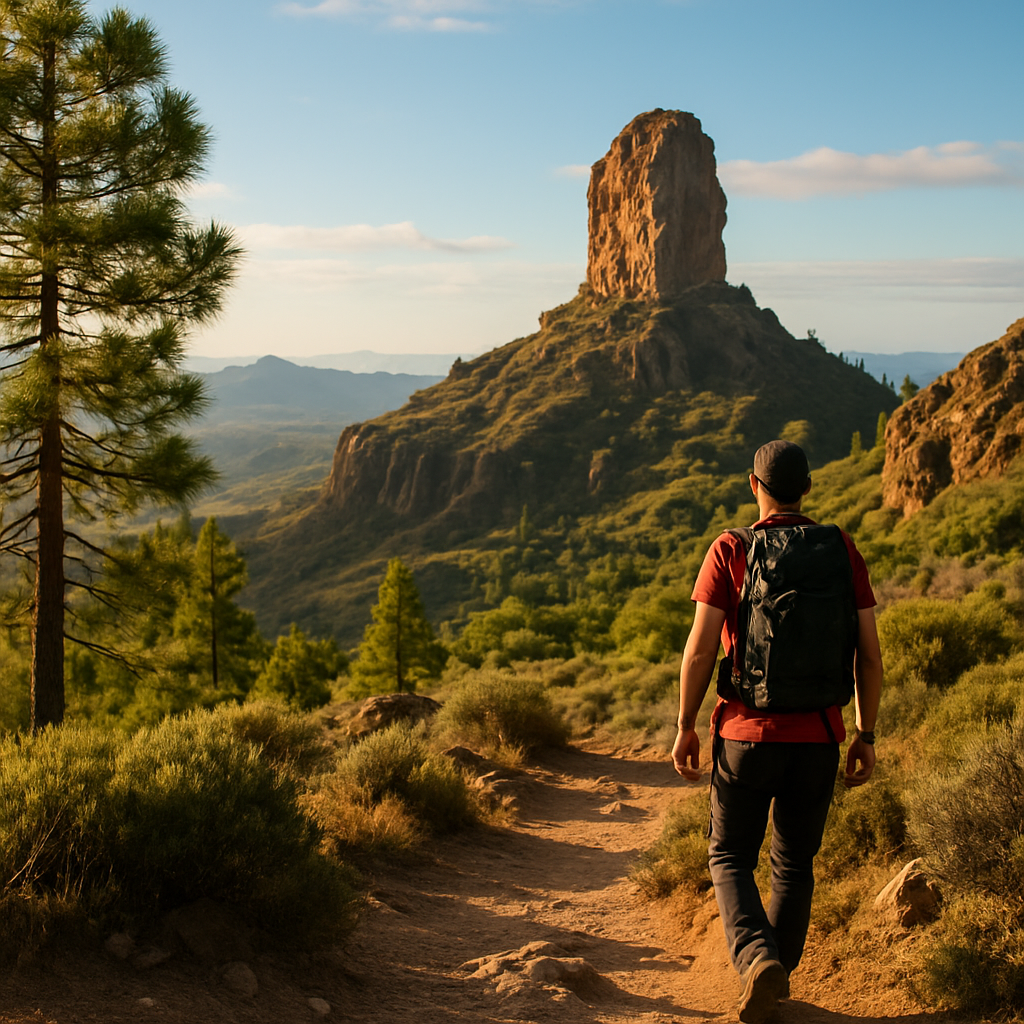
Hike to Roque Nublo
An 80-meter volcanic monolith at 1,813 meters in the central highlands, sacred to the indigenous Canarii long before Spain showed up. The trail from La Goleta is short — about 1.5km each way — but it climbs, and the air thins enough to feel it. On a clear day, you can see Teide rising out of the Atlantic from the top of Tenerife. It's the single best view in the archipelago.
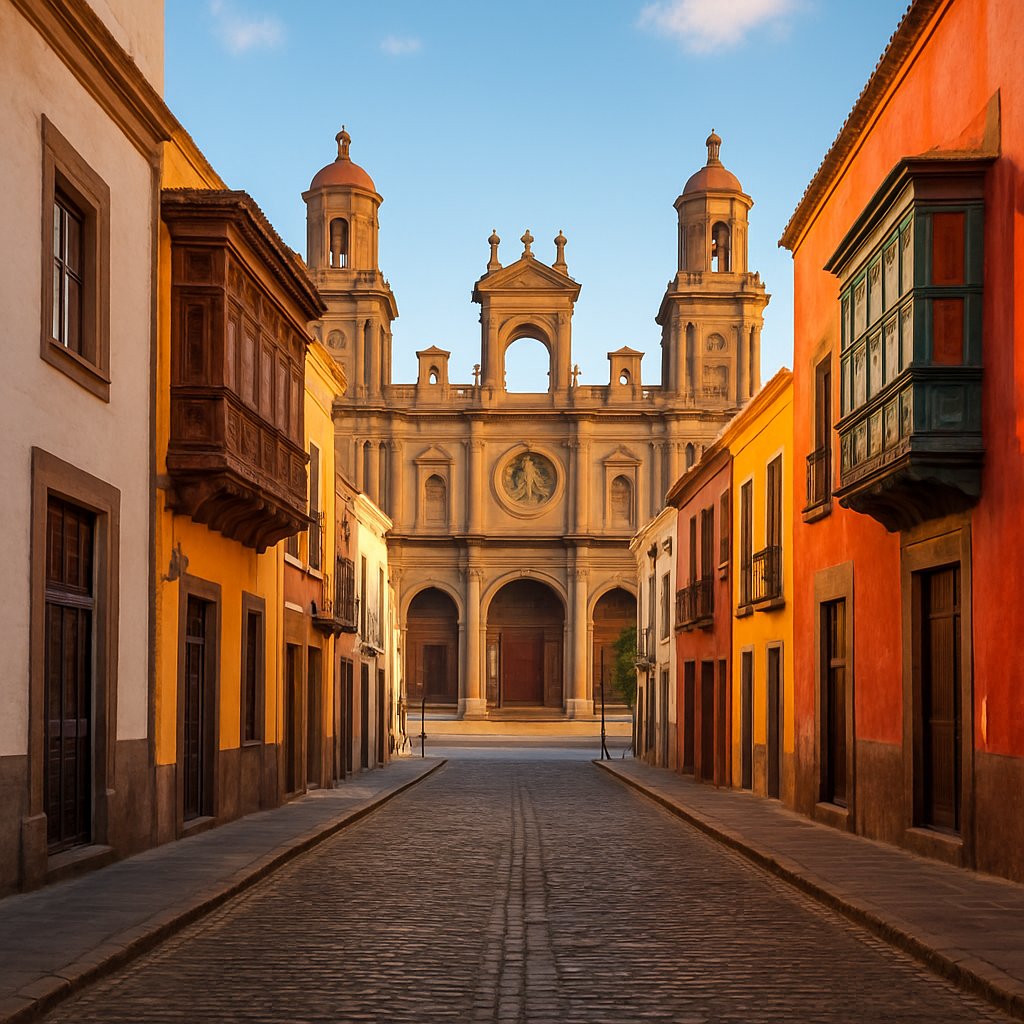
Wander Vegueta in Las Palmas
The UNESCO-protected colonial heart of the capital — cobbled streets, the 15th-century Santa Ana cathedral, carved Canarian wooden balconies on every corner. Casa de Colón is the anchor museum, set in the former governors' residence where Columbus reportedly stopped in 1492. Stop in at one of the wine bars in the side streets afterward; the neighborhood goes from sleepy to social around 9pm.
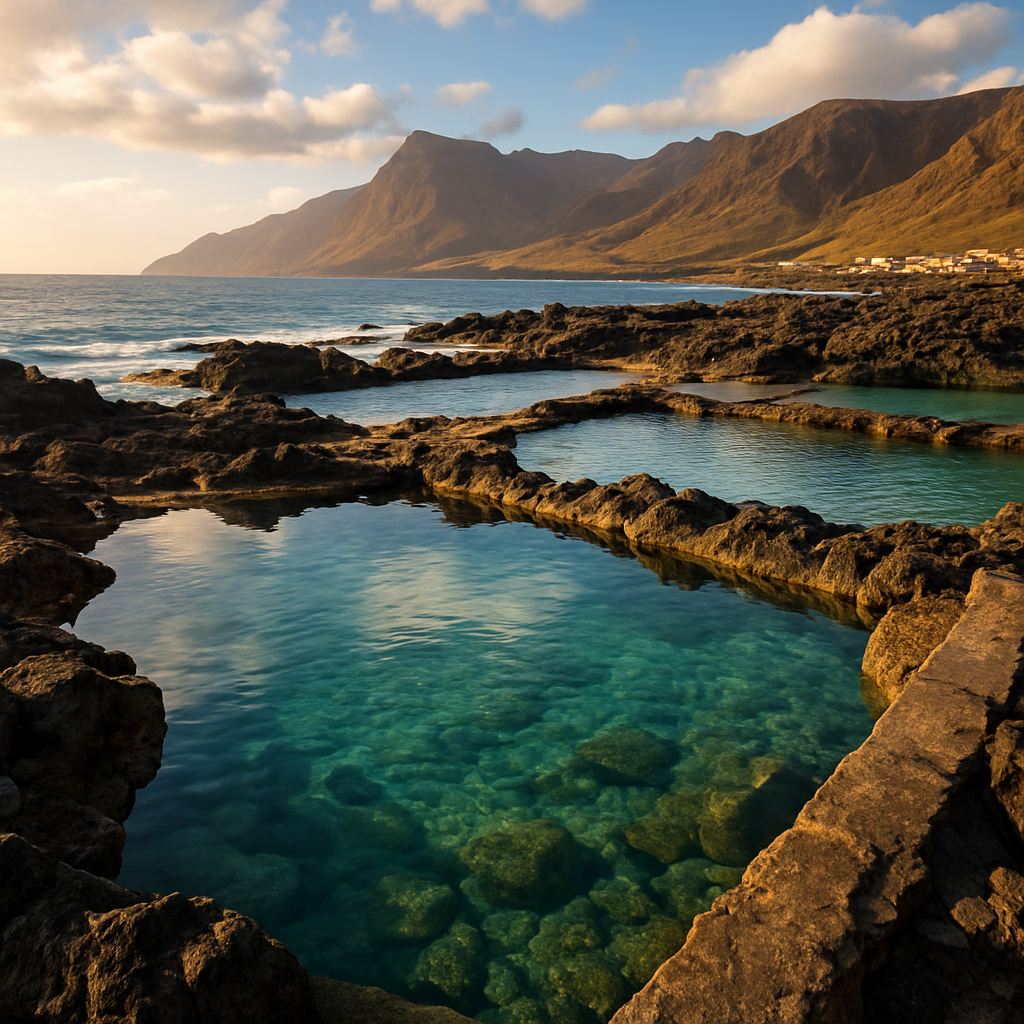
Swim Las Salinas, Drink Agaete Valley Coffee
The northwest coast village of Agaete has the island's best natural seawater pools — Las Salinas, carved into the volcanic rock, refilled by every Atlantic surge. Above the town, the Agaete Valley grows the only commercially produced coffee in Europe, and you can tour the plantations and taste it where it's grown. Combine the two and lunch at the harbor in Puerto de las Nieves on whatever the boats brought in.
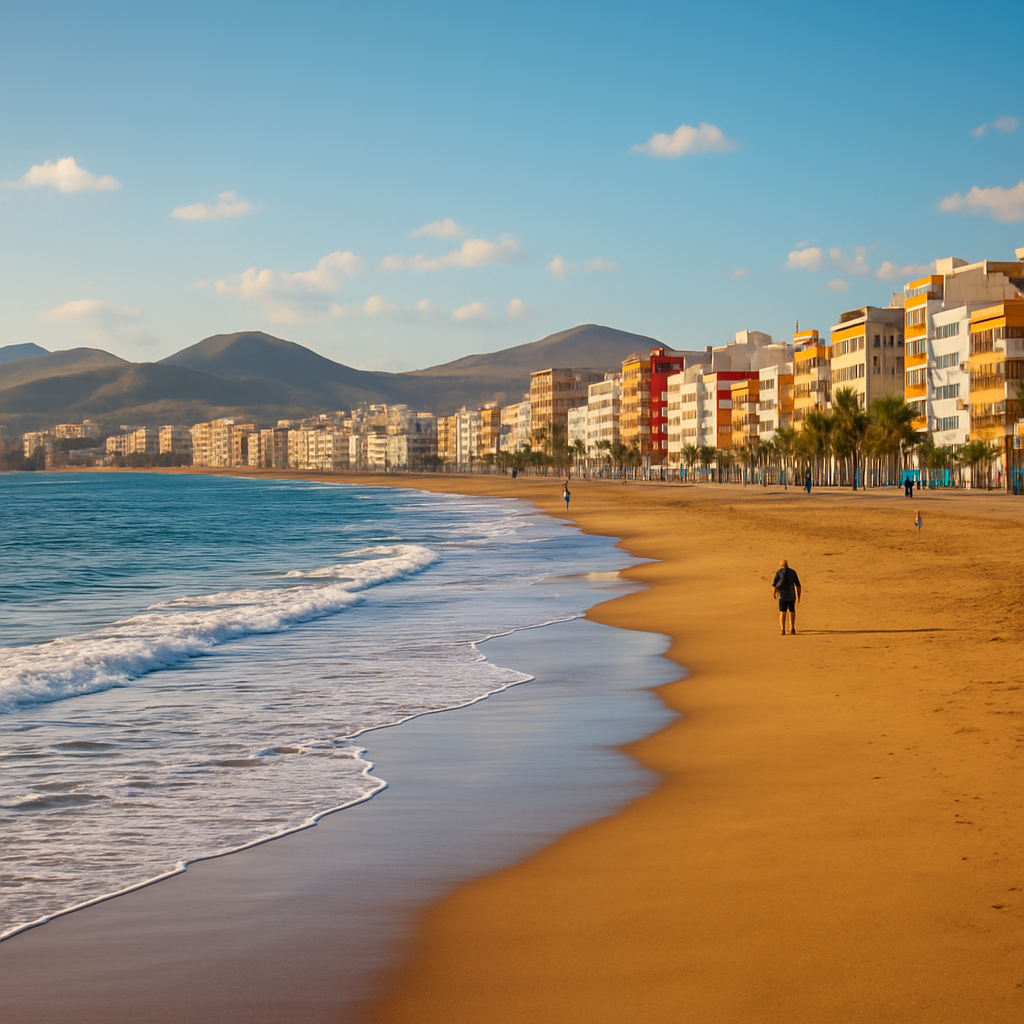
Spend a Day on Playa de las Canteras
Three kilometers of Atlantic beach running the length of western Las Palmas, sheltered by a natural reef called La Barra that keeps the water swimmable year-round. Locals actually use this beach — for morning swims, for sunset walks, for full-day Sundays with kids and dogs. La Marinera at La Puntilla, built into the rock at the end of the beach, is where you eat fish at the end of it.
The places I actually send people to
Advice that fits how you travel
Solo travel in Gran Canaria is essentially a solved problem — the south coast was built for it. Base yourself in Playa del Inglés within walking distance of the Yumbo Centrum, and you'll have dozens of bars, drag stages, and after-hours rooms inside a ten-minute radius. The crowd is multinational and rotates constantly, which means making friends at the bar is the default outcome, not the lucky one. The apps run hot here — Grindr in particular is denser around the Yumbo than almost anywhere in Europe outside a Pride weekend, and that holds true year-round.
For a more local experience, take the Global 60 north to Las Palmas for a few days. The capital has a working scene clustered near Playa de las Canteras — Tubos is the bar that anchors it — and the city itself is a proper Spanish urban experience with great food, museums, and a 3km beach where locals actually swim. Solo budget travelers do well here: the menú del día runs €12–€18, the buses are cheap and frequent, and a hostel dorm is €30–€55 a night.
Pro tip: don't sleep on the off-Pride weeks. May and November are the headline events, but March's Carnival drag gala and October's Bear Carnival pull a focused crowd that's easier to actually meet than the 100,000-person scrum of main Pride. Solo travelers consistently tell me those mid-tier weeks are when Maspalomas is at its best — busy enough to be social, calm enough to actually hear someone across the table.
Same-sex couples can do whatever same-sex couples want to do here, and that's not an exaggeration. Hand-holding, kissing, an arm around the shoulder on the boardwalk — it's a non-event in Playa del Inglés, on the Maspalomas Dunes (especially between markers 7 and 8), along the Meloneras promenade, and in central Las Palmas. Hotels don't blink at king beds. The legal framework is full equality as of 2026 — marriage, adoption, anti-discrimination protections — and the cultural reality on the ground matches the law.
For romance, the playbook splits two ways. If you want the scene, base in Playa del Inglés or Meloneras and book somewhere like Bohemia Suites & Spa for the rooftop infinity pool and the design-hotel polish, or Seaside Palm Beach if you want the 1970s Alberto Pinto bones and a quieter palm-oasis setting. If you want romance without the Yumbo on your doorstep, drive forty minutes west to Puerto de Mogán — the bougainvillea-canal village locals call Little Venice — and book the destination meal at the Michelin-starred Los Guayres inside Cordial Mogán Playa. The drive back along the south coast at dusk is the kind of thing you'll talk about later.
Don't miss the dunes at sunset together — start from the lighthouse end, walk thirty minutes in, and you'll be alone in 400 hectares of copper sand with the Atlantic in the distance. Then dinner on the Meloneras boardwalk, then a slow walk through the palm grove. That's the Gran Canaria couples day, and it's hard to beat.
LGBTQ+ families have full legal recognition here as of 2026 — joint adoption, marriage, parental rights, the works. Spain's framework is among the most settled on earth, and the Canary Islands' 2014 regional protections layer additional anti-discrimination coverage on top. Two-mom and two-dad families travel the south coast routinely, and the resort staff at the big mainstream properties — Lopesan Costa Meloneras, Cordial Mogán Playa, the Seaside group — have been hosting them for years without commentary or fuss.
For a family base, I'd point most travelers toward Meloneras or Puerto de Mogán rather than the heart of Playa del Inglés. Lopesan Costa Meloneras has the multiple-pool, kids'-club, breakfast-buffet machine you actually want with kids, and it's still a fifteen-minute walk to the dunes. Cordial Mogán Playa in Puerto de Mogán is built in Canarian village style with botanical gardens and an on-site archaeological park that older kids genuinely engage with. Both are stroller-friendly, both have proper kids' menus, and both are a short drive from the standard family-day stops — Palmitos Park, Sioux City, Aqualand.
Pro tip: skip July and August unless you're locked into European school holidays. The crowds are heavy, calima dust events are possible, and the heat is the kind that makes a four-year-old miserable. Aim for late September through April instead — the sea is still warm, the resorts are calmer, and the prices are noticeably better. PDA-wise, the family resort towns lean a little more discreet than overt; that's not hostility, just a different rhythm than the Yumbo zone, and it's the same rhythm any family on holiday tends to settle into anyway.
What Gran Canaria actually costs
Flights, visas, and the first 30 minutes
Airport: Gran Canaria Airport (LPA), about 18km south of Las Palmas and 25km north of Maspalomas. As of 2026, it handles roughly 150 direct routes — the densest Northern European connectivity of any Canary Island, with year-round nonstops from London, Manchester, Dublin, Amsterdam, Frankfurt, Munich, Berlin, Madrid, Barcelona, Brussels, Stockholm, and Oslo. From the US, there's no nonstop — you'll typically connect through Madrid, London, or Frankfurt.
Visa requirements (as of 2026): US, UK, Canadian, and Australian travelers can typically enter visa-free for up to 90 days within any rolling 180-day Schengen period. ETIAS authorization is generally required from 2026 for visa-exempt visitors — apply online before you fly. EU citizens have full freedom of movement and need no advance authorization.
Airport to city: The Global 60 bus runs to Las Palmas every 20-30 minutes for €3.40, taking 30-40 minutes; the Global 66 runs direct to Maspalomas for €6.80 in about 55 minutes. Pay cash or contactless onboard. Official metered taxis at the rank cost €30-€40 to Las Palmas or €45-€60 to Maspalomas, with night and holiday surcharges. A pre-booked private transfer runs €25-€70 and drops directly at hotels. Pro tip: if you're staying more than three nights and want to see the island beyond your resort, a rental car (€25-€55/day from Cicar, Plus Car, or Hertz at the airport) is the move — the public transport works for trunk routes but the mountain villages and the northwest coast really need a car.
Traven's seasonal breakdown
The questions everyone asks
Do I need to speak Spanish to get by?
Should I stay in Maspalomas/Playa del Inglés or in Las Palmas?
Is it safe to hold hands with my partner in public?
Do I need a car?
When is Pride and is it worth planning around?
What's the deal with the colored flags on the dunes?
Is the tap water safe to drink?
Screenshot this before you go
So should you actually go?
Go. Gran Canaria is one of the most settled, most experienced, most year-round-friendly LGBTQ+ destinations in Europe, with a legal framework at full equality as of 2026 and a south coast built around the scene since the 1980s. First-timers should base in Playa del Inglés near the Yumbo for the headline experience; second-timers should split the trip with Las Palmas for a real Spanish city, day trips to Roque Nublo and Agaete, and a Mogán meal at Los Guayres. May Pride and November Winter Pride are the marquee weeks, but my honest pick is October — 26°C, lower prices, Bear Carnival, and the dunes at their best. Whatever week you pick, you'll find LGBTQ+ travelers at every age, every budget, and every register of taste already there. Book the flight.