
The straight people are guests here. Lovely guests — but guests.
Ibiza isn't a destination with a gay scene — it's a gay destination that happens to also let straight people in. That distinction matters. The island has been operating on this frequency since the 1960s, when bohemians and artists washed ashore and built a culture of radical openness that predates every legal protection Spain eventually codified. Walk Carrer de la Verge on a July night — the narrow pedestrian street in Sa Penya where a dozen gay bars bleed into one continuous, cocktail-fueled promenade — and you'll feel it immediately. This isn't tolerance. It's ownership. The gays didn't find a corner of Ibiza and make it theirs. They helped build the island's identity, and the island knows it.
I gave it a 9.8 on Scene, and honestly, I had to talk myself out of higher. Where else do you get a cave nightclub carved into UNESCO World Heritage fortress walls (Anfora, operating since the '70s), a two-kilometer naturist gay beach within a UNESCO Biosphere Reserve (Es Cavallet), superclubs that treat LGBTQ+ nights as flagship programming rather than filler, and a post-club croissant ritual at a bakery near the port that's been absorbing long nights since the 1980s — all on an island you can drive across in forty minutes? The density is absurd. The quality is earned. Pikes Hotel, where Freddie Mercury threw his 41st birthday party in 1987 with reportedly 700 guests, still operates on that same frequency of joyful excess. Amnesia hosted La Troya Asesina — one of the most important gay party residencies in European nightlife history — and the terrace at sunrise still delivers. This is a place where the history isn't museum-piece nostalgia; it's active, living, playing at high volume.
The thing that surprised me most is how well Ibiza works when you step away from the bass. The southern tip of the island — Ses Salines Natural Park, the salt flats, flamingos against a pink sky at dusk — is legitimately beautiful in a way that has nothing to do with club culture. Dalt Vila's ramparts at sunset, with the whole port spread below you and the smell of grilled fish rising from Sa Penya, is the most romantic free experience I've had in the Mediterranean. Drive north to Sant Joan de Labritja and eat organic lunch at Giri Café in a quiet village square, and you'll wonder if you're on the same island. You are. That's the point. Ibiza contains all of this simultaneously — the 4am terrace at Amnesia and the Tuesday afternoon flamingos — and doesn't ask you to choose.
There's a reason my Traven-Dex score sits at 9.3. The legal framework is perfect — a 10.0, because Spain has had marriage equality since 2005 and the 2023 Trans Law is among Europe's most progressive. The cultural reality matches it and then some. The only thing keeping this from a higher overall is that the island runs hard on temporada logic: outside May through October, half of what makes it extraordinary simply shuts down. If you come in February, you'll find a quiet fishing island with great legal protections and closed shutters where Anfora used to be pulsing. Come in season, though, and there is genuinely nowhere else like it. Not in Europe. Not anywhere.
The stuff your travel guide buries on page 47
Spain is one of the easiest countries in the world to visit as an LGBTQ+ traveler, and the legal framework backs that up completely. As of 2026, same-sex marriage has been legal since 2005 — Spain was the third country in the world to legalize it. Joint adoption is fully legal. Comprehensive anti-discrimination protections cover employment, housing, and public services. The 2023 Trans Law introduced legal gender self-identification without medical requirements, making Spain one of Europe's most progressive countries for trans travelers. Criminalization? Never been a factor in democratic Spain. According to ILGA-Europe, Spain consistently ranks in the top ten on their Rainbow Map of European LGBTQ+ rights.
The cultural reality matches the legal picture — and on Ibiza, it exceeds it. This island has been attracting gay travelers since the 1960s, when bohemians and artists landed on its shores and never really left. The LGBTQ+ community here isn't tolerated; it's woven into the island's identity. FELGTBI+, Spain's national LGBTQ+ federation, provides resources and advocacy across all regions, but honestly, Ibiza is about as far from needing an advocacy intervention as you can get.
One thing to understand: Ibiza runs on temporada — the season, roughly May through October. Outside those months, most gay-specific venues in Sa Penya pull down the shutters. If you're visiting off-season, call ahead before building your itinerary around any specific bar or club. The legal protections don't hibernate, but the scene absolutely does.
PDA comfort is essentially a non-issue in the tourist zones. Same-sex couples hold hands freely throughout Ibiza Town, along the port, at Es Cavallet beach (where it would be stranger not to), and inside every major club on the island. The interior villages — Sant Joan, the countryside around Santa Eulària — are more traditional. You won't face hostility, but you'll notice lower visibility. Discreet is fine; expressive might draw a curious glance from an elderly farmer. That's about the ceiling of what you're dealing with here.
The circuit-party crowd and the chill-beach crowd largely coexist without friction, but they are genuinely different scenes. Es Cavallet by day and Amnesia at 4am are both very Ibiza and both very LGBTQ+ — they just don't necessarily overlap in the middle. Plan accordingly.
What it actually feels like on the ground
Holding hands / PDA: In Ibiza Town — the port, La Marina, Sa Penya, Dalt Vila — same-sex PDA draws zero attention. This is one of the most visibly gay places in the Mediterranean, full stop. At Es Cavallet beach, same-sex affection is the norm, not the exception. The major clubs — Pacha, Amnesia, Hï, DC-10 — are explicitly welcoming; dedicated LGBTQ+ nights are core programming, not token gestures. In the interior villages and rural areas, you're legally protected everywhere, but the vibe is quieter. Nobody's going to confront you; they just might not have seen it as often.
Hotel check-in: No issues anywhere on the island. Same-sex couples sharing a double bed is completely unremarkable to Ibizan hospitality staff. The Axel Hotel in Ibiza Town literally built its brand around LGBTQ+ travelers, but you won't need a gay-specific hotel to feel comfortable — this island has been hosting gay visitors for sixty years.
Taxis and transport: Taxi drivers on Ibiza are used to ferrying every conceivable combination of people at every conceivable hour. No reports of discrimination. Pro tip: download the taxi app or get your hotel to pre-book for peak-season weekend nights — the issue isn't homophobia, it's availability when 10,000 people leave clubs simultaneously at 6am.
Beaches and public spaces: Es Cavallet is the designated gay and naturist beach — the northern section near Chiringay is where the community gathers. Ses Salines beach also has a strong LGBTQ+ visitor presence. Playa d'en Bossa is a diverse international beach strip where nobody's paying attention to who you're with. All public beaches on the island are safe for same-sex couples.
Late night: The one area to keep your wits about is the Sunset Strip in San Antonio late at night — it's chaotic and heavily intoxicated, and while not specifically anti-LGBTQ+, the very drunk British contingent can make it feel less comfortable than the rest of the island. Ibiza Town is a better base for LGBTQ+ travelers. Standard nightlife safety applies everywhere: watch your drink, travel with your phone charged, and know your route home.
Harm reduction: This matters on an island famous for its party culture. Ibiza's clubs and some community organizations offer drug-checking services during peak season. If you're going deep into afterhours culture at DC-10 or similar venues, knowing what's in what you're taking is simply good sense. IB-Salut, the Balearic Islands Health Service, operates clinics on the island. For sexual health resources, Spain's Ministry of Health maintains information on testing and PrEP access — both are available on-island during the season.
Trans travelers: Spain's 2023 Trans Law provides legal gender self-identification, and Ibiza's performance-art-infused club culture is broadly trans-affirming. Trans travelers report strong comfort throughout the main tourist zones. At clubs and venues, gender presentation is celebrated rather than policed. For ID checks at airports or hotels, having documents that match your presentation simplifies things, but Spanish law is firmly on your side.
Verbal harassment risk: Extremely low in LGBTQ+ zones and tourist areas. The most likely source of any friction isn't locals — it's other tourists, and even that is rare. Ibiza attracts people who came here to let loose, not to judge. The island's DNA is freedom, and that's not just marketing.
The queer geography
Sa Penya & La Marina — Ibiza Town
This is where it starts. Sa Penya is a labyrinth of narrow medieval alleys that tumble down from the fortress walls of Dalt Vila to the harbor — whitewashed buildings stacked on top of each other, laundry strung between balconies, the smell of salt and grilled fish drifting up from the port. The architecture is the kind of beautiful chaos that happens when people have been building on top of each other for centuries. Walk Carrer de la Verge (Calle de la Virgen) after dark and the street transforms: terrace tables fill the pedestrian lane, cocktails materialize, and the energy of a dozen small bars bleeds into one continuous promenade. This has been Ibiza's gay social strip since the 1970s. Angelo's Bar is where the night begins — reliably packed with a mixed international crowd, the unofficial living room of LGBTQ+ Ibiza Town. Further in, Anfora is carved into a cave beneath the old city walls, with low ceilings and bass that's been reverberating since the '70s — it's the essential gay Ibiza experience. Bar Zuka occupies a terrace that's perfect for the hours between dinner and wherever the night takes you. The Ajuntament d'Eivissa has invested in preserving this area's character, and it shows — Sa Penya hasn't been gentrified into oblivion the way some European gay districts have.
Dalt Vila — The Walled City
Walk through the Portal de ses Taules and you're inside a UNESCO World Heritage Site that doubles as one of the most atmospheric places to spend an evening in the Mediterranean. The 16th-century fortifications enclose cobblestone streets that climb steeply past the Cathedral of Ibiza, terraced restaurants with harbor views, and El Corsario — a tiny boutique hotel that's been hosting bohemian and LGBTQ+ visitors since the 1960s. The views from the ramparts at sunset, with the whole port spread below you and Sa Penya glittering at the foot of the walls, are the single most romantic free experience on the island. Bring a glass of hierbas ibicencas. The lower streets of Dalt Vila connect directly to the gay bars below, which means you can go from medieval castle to dance floor in about four minutes.
Es Cavallet & Ses Salines — Southern Beaches
The southern tip of the island is where Ibiza earns its nature credentials. Ses Salines Natural Park is a UNESCO Biosphere Reserve — protected salt flats where migratory flamingos settle, backed by approximately 1.5 kilometers of beach with scattered chiringuitos. Walk ten minutes south along the coast path and you reach Es Cavallet, a two-kilometer naturist beach that has functioned as one of Europe's most established gay beach destinations since at least the 1970s. The northern section near the chiringuito is where the community gathers — the afternoon DJ set carries across the dunes like a calling card. Chiringay has been the primary food and drink operation serving this stretch for over two decades. Arrive before 2pm if you want a spot that isn't on someone else's towel. Access from the car park requires a 10-15 minute walk on a sand path, which keeps the atmosphere unhurried and separate from the rest of the island. Check Ibiza's official tourism portal for seasonal access and natural park guidelines.
Sant Antoni de Portmany — West Coast
Sant Antoni has a split personality and you should know both sides. The Sunset Strip — anchored by Café del Mar (opened 1980) and Café Mambo — is where the island's most famous ritual plays out nightly: hundreds of people facing west with drinks in hand as the sun drops into the Mediterranean, soundtracked by a DJ who understands that the moment doesn't need much help. The compilation albums alone have sold millions. The crowd here is diverse and international, with a strong LGBTQ+ contingent who've been coming for decades. Es Paradis, with its retractable pyramid glass roof and legendary Water Party, has hosted dedicated gay nights since the '70s. North of town, Hostal La Torre perches on the cliffs at Cap Negret — a sunset bar and small hotel that's drawn bohemian and gay clientele since it opened. The flip side: late-night San Antonio around the West End bar strip gets chaotic and very drunk. It's not hostile, just messy. For LGBTQ+ travelers, Ibiza Town is the stronger base — but Sant Antoni's sunset is non-negotiable.
Santa Eulària des Riu — East Coast
If the rest of Ibiza is the party, Santa Eulària is the morning after — in the best possible way. This is Ibiza's third-largest town, set on the island's only river (the only river in the Balearic Islands, for that matter), with a seafront promenade lined with restaurants that don't charge club prices. The 16th-century Puig de Missa church complex sits on a hilltop above town — climb up for the views and stay for the quiet. The Aguas de Ibiza Grand Luxe Hotel sits on the marina and offers a thalassotherapy spa that's exactly what you need after three days of temporada intensity. Santa Eulària has a notably calmer character than Ibiza Town or Sant Antoni, with a small but established LGBTQ+ social scene that skews toward returning visitors and longer-stay residents. It's the Ibiza that exists year-round, not just between May and October.
The experiences worth rearranging your itinerary for
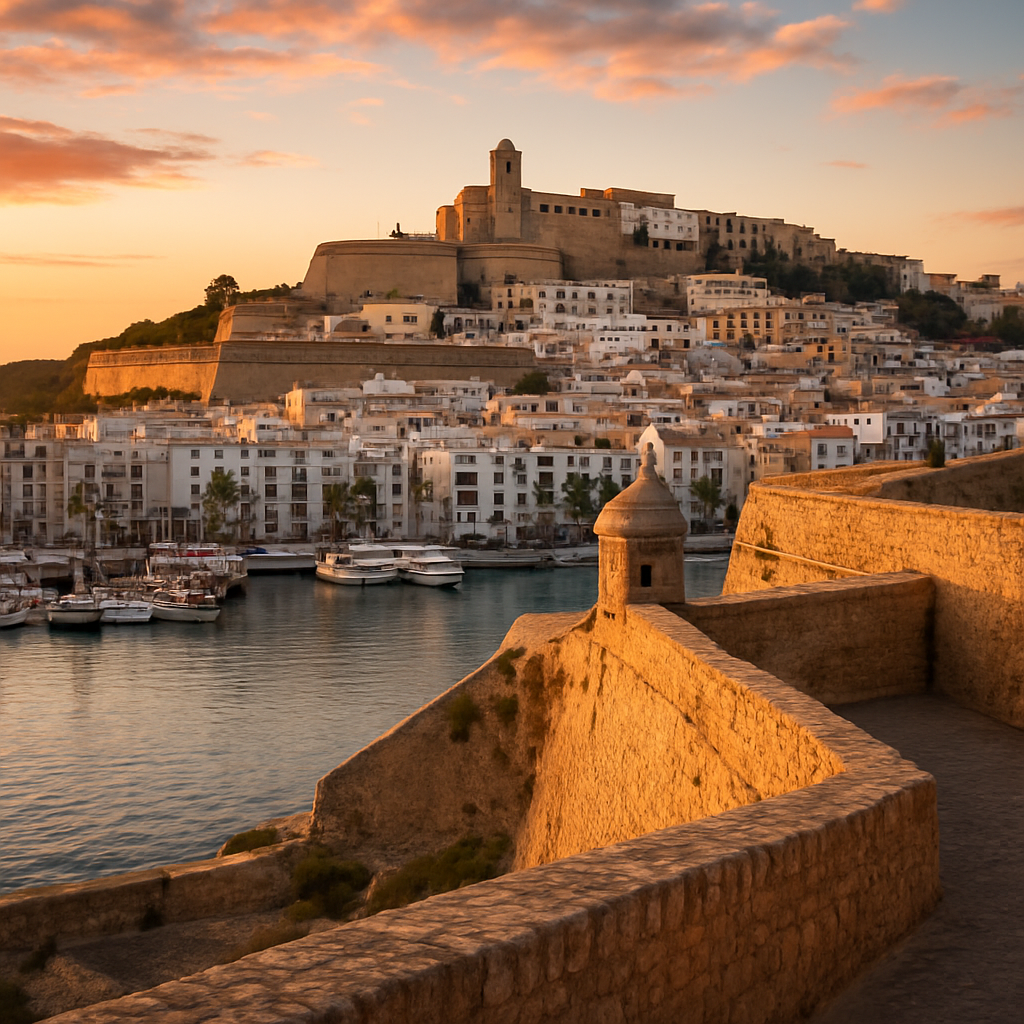
Sunset from the Dalt Vila Ramparts
Climb through the Portal de ses Taules and up the cobblestone streets of Ibiza's UNESCO-listed fortress city until you reach the ramparts at the top. From here, the entire harbor spreads out below — fishing boats, superyachts, the port promenade filling with the evening crowd, and the Mediterranean stretching west toward the mainland. Bring a glass of hierbas ibicencas, the island's herbal liqueur made from wild rosemary and thyme, served ice-cold. The light turns the old stone walls gold, then amber, then something that doesn't have a name. It's free, it's spectacular, and it makes you understand why people have been building on this hill since the Phoenicians.
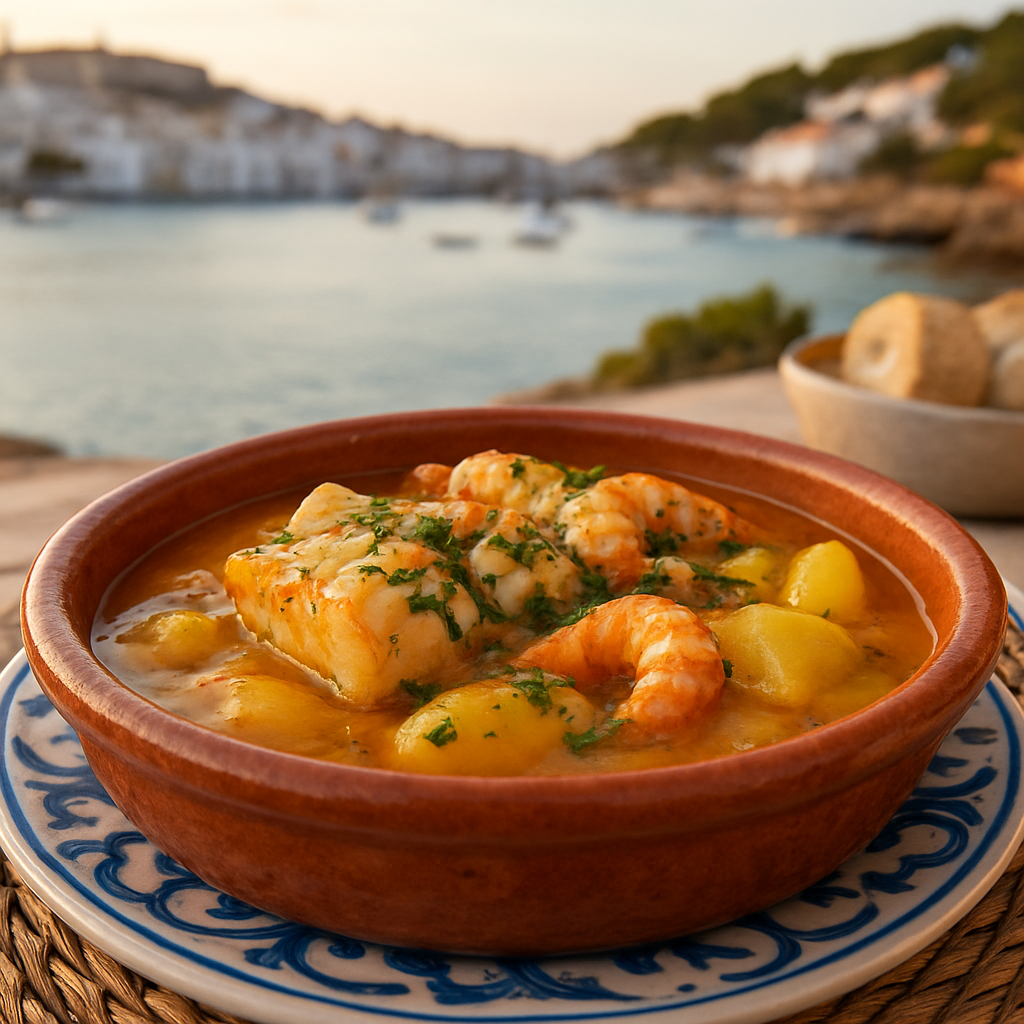
Bullit de Peix — Ibiza's Soul in a Bowl
Before you go full temporada mode, sit down at a traditional restaurant and eat the dish this island was built on. Bullit de peix is a two-course affair: first the saffron-rich fish stew, chunky with whatever the boats brought in that morning, served with potatoes. Then the rice, cooked in the same broth, arrives as the second act. It's the meal fishermen ate, and it tastes like the Mediterranean before the DJs arrived. Pair it with a sofrit pagès — a hearty inland meat-and-potato stew — if you want the full education. You'll need the calories anyway.
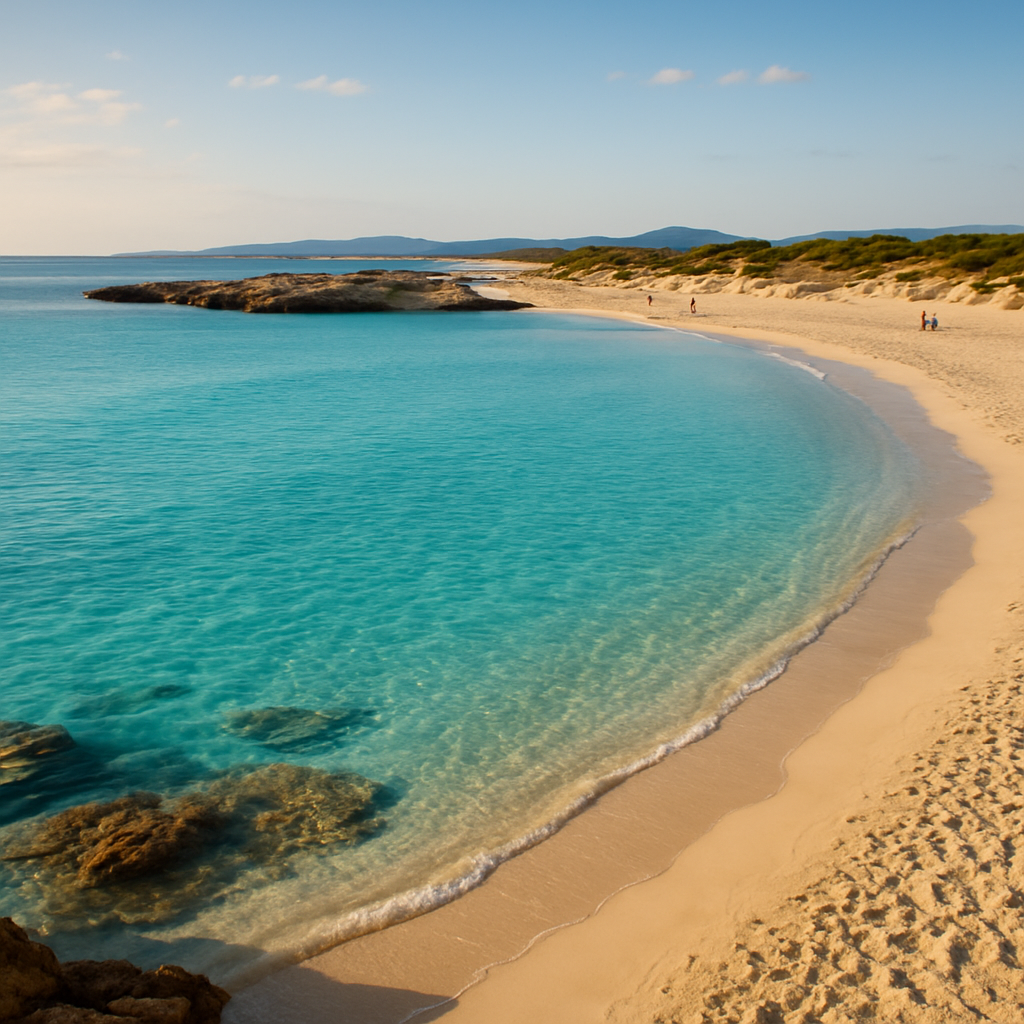
Ferry to Formentera and Ses Illetes Beach
Catch the high-speed ferry from Ibiza Town's port — 30-40 minutes across water so clear you can see the seabed — and land on an island that feels like it's operating in a different century. Formentera has no commercial airport, strict vehicle limits, and beaches that would be ruined if either of those things changed. Rent a bicycle at La Savina port and ride north to Platja de Ses Illetes, a spit of white sand consistently rated among Europe's finest. The water is Caribbean-turquoise and the crowd is sparse enough that you can actually hear the waves. Budget approximately €20 for the return ferry and bring cash for the beach bar. Come back on the evening boat sunburned and slightly amazed.
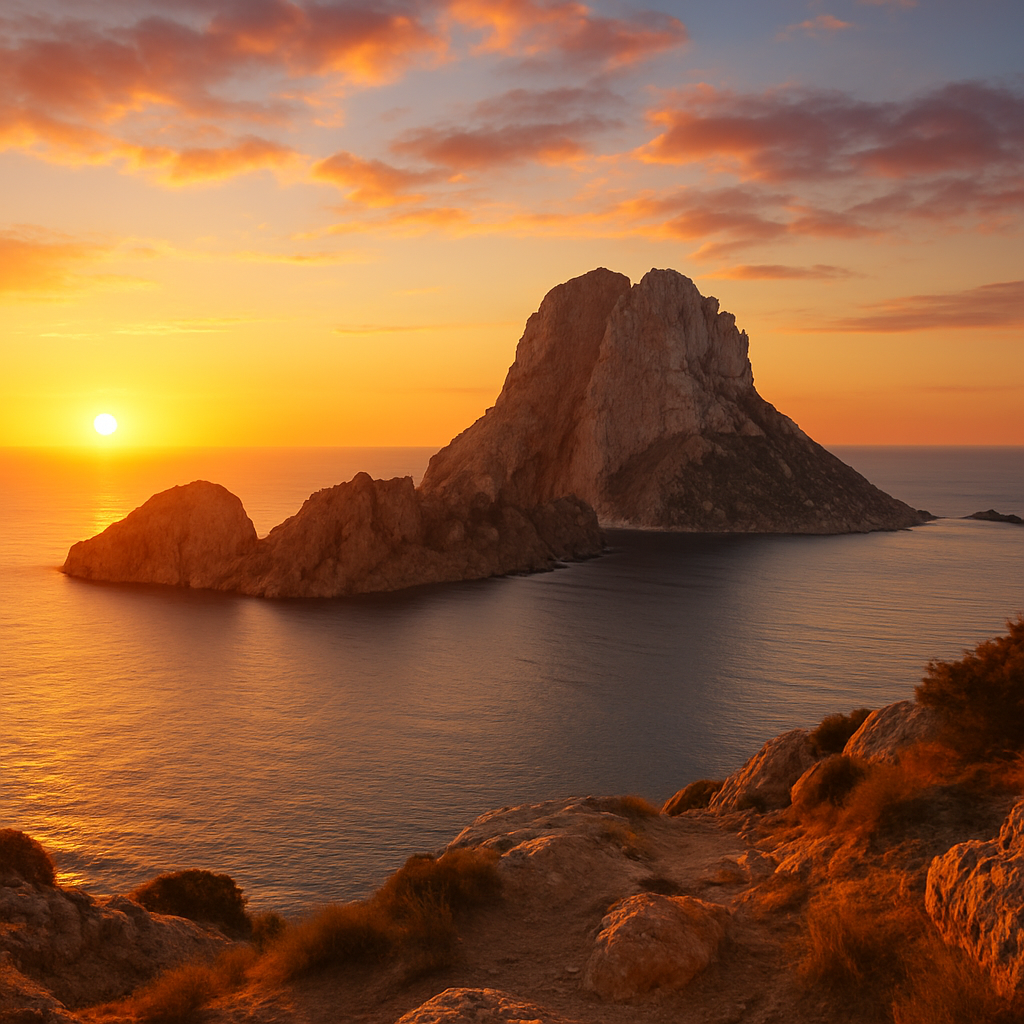
Es Vedrà from Cala d'Hort
Drive to the island's southwest corner and park at Cala d'Hort, a small beach with a view that stops you mid-sentence. Es Vedrà rises 382 meters straight out of the sea — an uninhabited limestone monolith associated with the Phoenician goddess Tanit, protected as a natural reserve, and genuinely mystical in a way that doesn't require you to believe in anything except geology. The rock dominates the horizon, shifts color with the light, and attracts every photographer on the island for good reason. Boat excursions to circumnavigate it depart from nearby harbors. Late afternoon is the best time — the light goes orange and the scale of the thing becomes almost absurd.
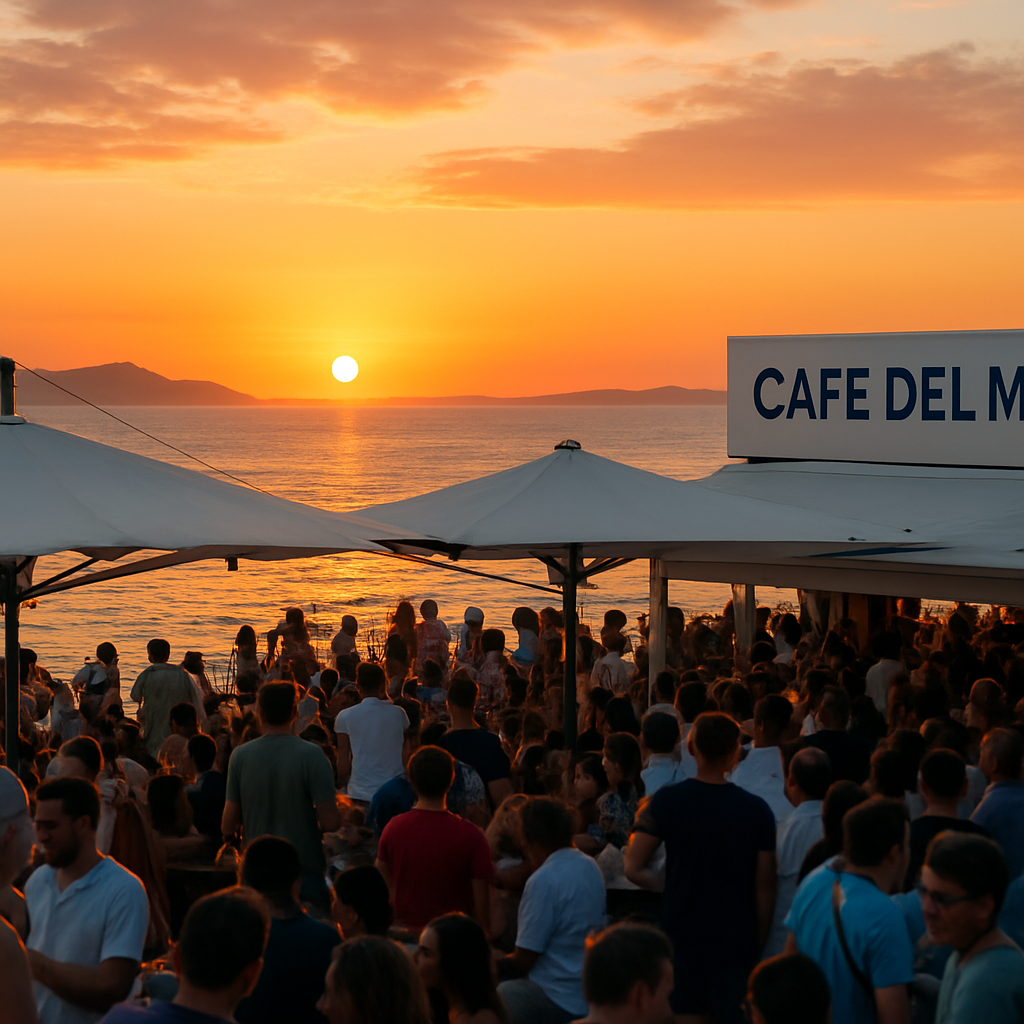
The Sunset Ritual at Café del Mar
There's a reason Café del Mar has released over 25 compilation albums since 1994 — the sunset from the Sunset Strip in Sant Antoni isn't just a view, it's a ceremony. Arrive by early evening, claim a spot at Café del Mar (opened 1980) or neighboring Café Mambo, and watch hundreds of people face west as a DJ provides the soundtrack to the sky catching fire. The music is deliberately understated — Balearic beats, ambient textures, nothing that competes with what the sun is doing. When the last sliver disappears below the horizon and the whole strip erupts in applause, you'll understand why people keep coming back. Drink prices are steep. The moment is worth it.
The places I actually send people to
Advice that fits how you travel
Solo on Ibiza is one of the strongest solo travel propositions in Europe, and I mean that structurally. The apps — Grindr, Scruff, Hornet — run at full capacity from May through September, with the density of gay men on a small island collapsing the usual anonymity of online scrolling into something that actually leads somewhere. But the best way to meet people here isn't your phone. It's showing up at Angelo's Bar on Carrer de la Verge around 11pm and letting the night assemble itself around you. There's a rhythm to how the crowd builds on that pedestrian strip — international, warm, not particularly interested in why you came alone — and by midnight you've exchanged numbers with people from four countries who all want to go to the same place anyway.
The budget math works firmly in your favor as a solo traveler. Base yourself at Hostal Parque on Plaza del Parque — from €55/night, central, walkable to everything — and spend what you saved on the one night at Pacha that will cost you real money but earn it back in full. Es Cavallet beach is free. Dalt Vila is free. The evening promenade along Carrer de la Verge costs exactly the price of one drink. Eat tapas at Bar San Juan, which has been serving Sa Penya since 1974 for well under €20 a head. A moderate solo budget runs roughly €175/day; a disciplined one gets you everything that matters for significantly less if you pick your one big-night splurge and own it.
Safety in the tourist zones is a genuine non-issue. Ibiza Town is compact, well-lit, and operates as a de facto LGBTQ+ safe space from the port to the fortress walls. If you're planning to go deep into afterhours culture — Circoloco at DC-10 on Monday mornings, or the long sessions at Amnesia — go with someone you met earlier in the evening rather than alone, not for any safety reason specifically, but because those experiences are better shared and the communal, slightly-demolished energy of 8am on a club terrace is genuinely one of the things Ibiza does better than anywhere else on earth. Charge your phone. Know your route home. That's the full list.
For same-sex couples, Ibiza operates at a frequency of freedom that's worth naming plainly: you will not do any calculation here. No scanning the room before you reach for each other's hand. No deciding whether to hold back. The PDA comfort runs from Ibiza Town's port through Dalt Vila's cobblestone alleys to the sand at Es Cavallet and straight into every major club on the island — and at Es Cavallet specifically, same-sex affection isn't just unremarkable, it's the norm. My chill score of 9.5 reflects exactly that quality: the ease of just existing somewhere as a couple, fully and without editing yourself. It's the thing you don't appreciate until you've been somewhere it doesn't apply.
The romance-specific experiences here are concentrated but excellent. The sunset from the Dalt Vila ramparts is the single best free date on the island — climb through the Portal de ses Taules, find a spot on the old city walls, pour a glass of hierbas ibicencas, and watch the harbor go gold below you while Sa Penya's lights begin to flicker on at the foot of the fortress. For dinner, La Brasa's enclosed garden courtyard in Ibiza Town has been setting the scene for evenings like this since 1977 — fig trees overhead, candlelight, Ibizan cuisine that doesn't try too hard. For something theatrical, Lío on the port promenade combines a fixed dinner service with drag acts and burlesque that work perfectly as the prelude to a proper night out. At the top of the accommodation register, 7Pines Resort on the western cliffs has suites with Es Vedrà views that are genuinely among the most romantic hotel rooms in the Balearics — adults-only, cliff-edge pools, the sea below you at sunrise. Worth the price if you're celebrating something.
Take the ferry to Formentera for at least one day. It's 30-40 minutes from Ibiza Town's port and delivers you onto an island that operates at a completely different pace — no airport, strict vehicle limits, and Platja de Ses Illetes on the northern spit consistently rated among Europe's finest beaches. Rent bikes from the La Savina ferry port, ride north, arrive at turquoise water and white sand and make no further plans. You'll be referencing this day in January when the sky is grey and it's hard to believe you were ever somewhere that looked like that.
Spain's legal framework for LGBTQ+ families is, as of 2026, among the most comprehensive in Europe. Same-sex marriage has been legal since 2005, joint adoption is fully legal, and LGBTQ+ family structures are recognized throughout the Spanish system without qualification. The Govern de les Illes Balears has made inclusive tourism a stated priority, and on the ground in Ibiza that filters into something practical: LGBTQ+ families are treated like any other family. Neither specially nor poorly — just families on an island that's been hosting international visitors of every configuration for sixty years and stopped being surprised by any of them.
The kid-friendly content is better than the island's reputation suggests. Ses Salines Natural Park is genuinely outstanding for children — protected coastline, salt flats with migratory flamingos, and the kind of scale that makes kids feel they've discovered something real. Es Cavallet beach is naturist in sections but completely appropriate for families at the northern end near the chiringuito; the water is calm and shallow. Formentera is the standout day trip — a 30-40 minute ferry to a car-light island with the safest swimming water in the Balearics and beaches that require no logistics beyond sunscreen and a return ticket. Dalt Vila works well with older children: walking the UNESCO fortress walls, finding the 13th-century cathedral, eating gelato at the top while the harbor spreads below is a solid and memorable half-day. For budget planning, a moderate family daily spend runs approximately €390; the budget tier can cover the basics for around €160/day if you're strategic about it.
Practical logistics: strollers handle Ibiza Town's newer streets and the port promenade without issue, but the medieval alleys of Sa Penya and Dalt Vila's cobblestones will work you — a carrier or compact stroller manages this better than a full pram. Restaurants in Ibiza Town are generally family-friendly, the dining culture of long outdoor terraces and unhurried service actually suits families well once you lean into it rather than fighting it. For LGBTQ+ families specifically, Santa Eulària des Riu on the east coast is the strongest base — calmer than Ibiza Town, a proper seafront promenade, restaurants that don't run club pricing, and the Aguas de Ibiza Grand Luxe Hotel on the marina if you want space and a thalassotherapy spa waiting for you once the kids are down.
What Ibiza actually costs
Flights, visas, and the first 30 minutes
Airport: Ibiza Airport (IBZ) is one of Spain's busiest summer airports, handling approximately 100 direct routes during peak season from across Europe and beyond. It sits about 7 kilometers southwest of Ibiza Town, which means you're close to everything the moment you land.
Getting there: Direct flights connect IBZ to London, Amsterdam, Berlin, Madrid, Barcelona, Paris, Rome, and dozens of other European cities during temporada. Transatlantic travelers typically connect through Madrid (MAD) or Barcelona (BCN), both of which have frequent onward service to Ibiza. Off-season connections thin out considerably — if you're visiting between November and March, route options are limited and some carriers suspend service entirely.
Visas: As of 2026, most visitors won't need one. US, Canadian, Australian, and UK passport holders typically enter Spain visa-free under Schengen rules for up to 90 days in any 180-day period. EU citizens enjoy freedom of movement with no time restriction. Note that UK travelers are now subject to post-Brexit Schengen visitor rules rather than the pre-2021 arrangements — the 90-day limit applies. Entry requirements can change; check with your country's foreign affairs department before traveling.
Airport to Ibiza Town:
- Bus (Line 10): The most affordable option at €4, running to Ibiza Town (Eivissa) in approximately 30 minutes. Useful during daylight hours, but service is infrequent late at night — if you're landing after midnight, this probably isn't your ride.
- Taxi: Fixed-zone fares apply, running €25–35 to Ibiza Town in about 15 minutes. Widely available at the terminal exit and the fastest stress-free option after a long travel day.
- Car Rental: At €40–90 per day, renting makes the most sense if you're planning to explore inland Ibiza, reach remote beaches, or get between the island's spread-out clubs without depending on taxis at 3am. Rental desks are at the terminal. Pro tip: book well in advance for July and August — cars sell out and prices spike aggressively during peak season.
Traven's seasonal breakdown
The questions everyone asks
Is Ibiza safe for same-sex couples?
When is the best time to visit for the LGBTQ+ scene?
Do I need a car on Ibiza?
How much should I budget per day?
Do I need to speak Spanish?
What's the deal with Es Cavallet beach?
Is Ibiza just about clubbing?
Screenshot this before you go
So should you actually go?
Go. Ibiza earns every bit of its reputation and then delivers things the reputation doesn't mention — a UNESCO fortress city above a medieval gay district, flamingos in a biosphere reserve ten minutes from one of Europe's greatest gay beaches, traditional Ibizan cooking that reminds you the island had a soul long before the superclubs arrived. Same-sex couples will feel freer here than in almost any destination I cover. Solo travelers will find a scene that absorbs you on the first night. LGBTQ+ families have Santa Eulària and Formentera waiting with calm water and zero drama. The only caveat is timing — come between May and October, when the island is fully alive, and you'll understand why the gays have been coming here for sixty years and show no sign of stopping. Honey, this one's the real thing.
Sources & Resources
Official links we reference when compiling this guide. Last verified 2026-03-17.
- ACATHI — Support for LGBTQ+ Migrants and Refugees in Spain
- Ajuntament d'Eivissa — Ibiza Town City Council
- FELGTBI+ — Spanish State Federation of Lesbians, Gays, Trans and Bisexuals
- Govern de les Illes Balears — Official Balearic Islands Government
- IB-Salut — Balearic Islands Health Service
- Ibiza.travel — Official Tourism Portal of Ibiza
- ILGA-Europe — European LGBTQ+ Rights Organisation
- Ministerio de Sanidad España — Sexual Health & HIV Resources