Madrid doesn't have a gay scene — it has a gay civilization, and it's been running since Franco's body was barely cold.
The first thing you notice about Chueca on a Saturday afternoon is that nobody is performing anything. Plaza de Chueca isn't a designated queer zone cordoned off from the real city — it's a full-spectrum public square where drag queens eat churros next to old men playing cards while twenty-somethings argue about politics at a volume that would get you escorted out of a London café. The terrazas are full by 1pm. The vermouth is flowing from a tap at Taberna de Ángel Sierra on the corner — a bar that's been there since 1917 and has watched every wave of this city's reinvention, including the post-Franco explosion that made all of this possible. The wine costs almost nothing. The tiles are original. Somehow it still feels current.
There's a reason my Traven-Dex sits at 9.1 for this city. Madrid earned a perfect 10 on Scene — walk Calle Pelayo or Calle de la Libertad (yes, Freedom Street, almost too on the nose) on any night of the week and count the rainbow flags at every door. But the number that matters more is the one you can't score: the way queerness here isn't an event or a district or a Thursday night, it's just the texture of the city. La Movida Madrileña — the electric countercultural explosion of the late '70s and '80s, fueled by Almodóvar and a generation refusing to stay closeted one more day — didn't just create a scene. It rewired the culture. You feel it in the way a taxi driver doesn't register your partner's hand on your knee. You feel it in the way Librería Berkana on Calle de Hortaleza has been selling queer literature since 1993 and is still the cultural spine of the neighborhood, even as rents try to eat everything around it.
Locals will tell you the 'real' Chueca is gentrifying out from under itself — a few legacy bars have become sushi restaurants, and there's truth in the concern. But walk into Café Acuarela, open since 1986, candlelit and Baroque and exclusively queer, and tell me this neighborhood has lost its soul. Walk into Escape Club at 3am on a Saturday and feel the floor shake and tell me the energy has gone somewhere else. It hasn't. Madrid just absorbed it into everything.
This is a city that stays up until the metro starts running again, eats dinner at 10pm without irony, and treats queerness with the most devastating weapon in any culture's arsenal: total normalcy. Order the vermut. Sit on the plaza. Watch this city be itself. You won't want to leave.
The stuff your travel guide buries on page 47
The legal picture is as good as it gets. Spain legalized same-sex marriage and full adoption rights in 2005 — over two decades ago. Comprehensive anti-discrimination protections cover employment, housing, and public services. The 2023 Ley Trans allows self-determined gender recognition from age 16 without medical gatekeeping, making Spain one of the most progressive countries in the world for trans rights. This isn't aspirational legislation collecting dust — Madrid's health and administrative services are genuinely equipped to honor it. For the full legal framework, Spain's Ministry of Equality maintains updated LGTBI resources.
The cultural reality matches the law. This is not a city where legal protections exist in tension with street-level attitudes. Central Madrid — Chueca, Gran Vía, Sol, Malasaña, Retiro — is genuinely, casually accepting of same-sex couples and gender-nonconforming people in a way that doesn't require explanation or adjustment. PDA in Chueca is completely normalized at all hours. On Gran Vía and around Sol, same-sex couples holding hands or kissing attract approximately zero attention. Malasaña's bohemian crowd treats queer presence as completely unremarkable. In the upscale Salamanca district, the demographic skews more conservative, but discreet affection is entirely comfortable. The only places where you might get an occasional stare are outer suburban commuter areas — and even there, the worst case is a look, not a confrontation.
The schedule. Madrid genuinely doesn't start until midnight. If you walk into Why Not? on Calle de las Infantas at 11pm you will be dancing completely alone, and not in a liberating way. Do as locals do: terraza drinks at 10, bars at midnight, club at 2am — and plan for the metro to be running again by the time you leave. This isn't a suggestion; it's how the entire city functions.
A resource worth knowing: Stop into COGAM at Calle de las Infantas 40, even if you don't need anything specific. It's a real community center with support groups, events, and a noticeboard that reflects what's actually happening in Madrid's queer scene far more accurately than any travel app. The staff are genuinely helpful for navigating anything from health services to legal questions to finding the right party.
What it actually feels like on the ground
Holding hands: In Chueca, Malasaña, Gran Vía, Sol, and the Paseo del Prado corridor — completely fine at all hours. Same-sex PDA draws approximately zero attention in central Madrid. In Salamanca and Retiro, low-key affection is comfortable; you might dial back slightly in outer suburban barrios late at night, though the worst realistic outcome is a stare.
Hotel check-in: No issues whatsoever. Madrid hotels are entirely accustomed to same-sex couples requesting double beds, and front desk staff at any property worth staying at won't register it as notable. If you're booking a budget guesthouse via an app, the same applies — this city has been hosting queer travelers at scale for decades.
Taxis and rideshares: Completely safe. Madrid taxi drivers are professional and uninterested in your personal life. Cabify and Uber are both widely available and reliable. Pro tip: get a rideshare home at 4am if you've wandered far from center — not because you must, but because it's sensible and cheap.
Beaches and public spaces: Madrid is landlocked, but Parque del Retiro and Casa de Campo are major public gathering spaces. The Retiro is family-friendly and entirely safe for all couples. Casa de Campo has a historic cruising area — it's well-known locally and generally unbothered by police, but it's not a daytime park experience.
Late night: Chueca itself is genuinely, unremarkably safe after dark. The calculus shifts slightly in outer barrios late at night; incidents are rare but not unheard of south of the center. The one thing locals consistently flag is petty theft around Arena Club and the Gran Vía corridor when crowds spill out around closing time. Keep your phone in your front pocket, leave your cards somewhere sensible, and be aware that the crowd surge outside clubs at 6am is exactly when pickpockets go to work. This is a theft warning, not a safety warning — the distinction matters.
Trans travelers: Spain's Ley Trans provides genuine legal backing — self-determined gender recognition, strong anti-discrimination frameworks, and a city health infrastructure that takes it seriously. Trans visitors consistently report Madrid as broadly welcoming, with gender-neutral facilities increasingly standard in LGBTQ+ venues and general awareness high among service workers. For any health needs, Centro Sanitario Sandoval in Chamberí offers free, confidential, LGBTQ+-competent testing and care — no judgment, no bureaucracy, minimal wait if you go early in the week.
Verbal harassment risk: Extremely low in central Madrid. I won't tell you it's zero — no honest guide can — but the cultural consensus in this city is firmly and actively on your side. Spain polls consistently as one of the most LGBTQ+-accepting countries on Earth, and Madrid is its most progressive city. You will feel that in your body within an hour of arriving.
The queer geography
Chueca
This is the center of gravity and it's not subtle about it. Chueca has been Madrid's queer heartland since the post-Franco Movida explosion of the 1980s, and it remains one of the most openly, unapologetically queer urban neighborhoods anywhere on the planet. Plaza de Chueca is the anchor — the unofficial living room where everyone meets, eats, argues, and starts the night. The two main nightlife corridors are Calle Pelayo (running from Gran Vía into the neighborhood, lined with bars, rainbow flags, and purpose at every door) and Calle de la Libertad — Freedom Street — packed with gay bars, terrazas, and the kind of sidewalk energy that makes Madrid feel uniquely alive. Librería Berkana on Calle de Hortaleza has been selling queer literature since 1993 and remains the cultural spine. Mercado de San Antón on Calle de Augusto Figueroa has a rooftop bar that's the correct start to any Saturday — the daytime queer culture concentrates here, with independent shops, cafés, and the kind of neighborhood drift that rewards anyone not in a hurry.
For lesbian nightlife, Medea Bar on Calle de la Cabeza is the institution — unpretentious entrance, proper dance floor, and a crowd that actually dances Thursday through Saturday. Don't be put off by the low-key exterior; the energy inside is exactly what the unassuming door is designed to filter for. The bear and leather crowd orbits LL Bar and the Bearmotion parties listed on COGAM's events calendar — this scene is genuinely welcoming to visitors. Show up, introduce yourself, and expect to leave with a WhatsApp group invite that will fill your entire remaining trip.
Malasaña
Immediately west of Chueca, Malasaña is the bohemian, alt-punk sibling that younger queer locals increasingly prefer when Chueca's commercial polish feels like too much. The streets around Plaza del Dos de Mayo are dense with independent bars, vintage shops, and the particular Madrileño energy of people who are doing something creative and don't need you to know what it is. Café Belén on Calle de Belén straddles the Chueca-Malasaña border and functions as a neighborhood bar, queer institution, and excellent cocktail spot simultaneously — claim a corner and give yourself two hours. El Junco Jazz Club pulls a mixed, queer-friendly crowd for late-night live music when you want something other than dance floors.
Lavapiés
Lavapiés, south of center, hosts a distinct, intersectional queer scene — more activist, more politically radical, less mainstream than Chueca. Community spaces here are rooted in anti-gentrification politics and attract a crowd that cares more about mutual aid than brunch aesthetics. It's a different energy entirely, and it's worth the walk. Exercise normal situational awareness after midnight — the neighborhood is diverse and generally accepting, but slightly more variable than Chueca at late hours.
Salamanca & Retiro
The upscale eastern districts offer a different Madrid — designer shopping on Calle de Serrano, Hotel Bless for luxury that doesn't apologize for itself, and Parque del Retiro for the kind of walking-and-talking that relationships run on. The demographic skews more conservative but PDA is comfortable; discreet affection is entirely fine and nobody's monitoring you.
The experiences worth rearranging your itinerary for
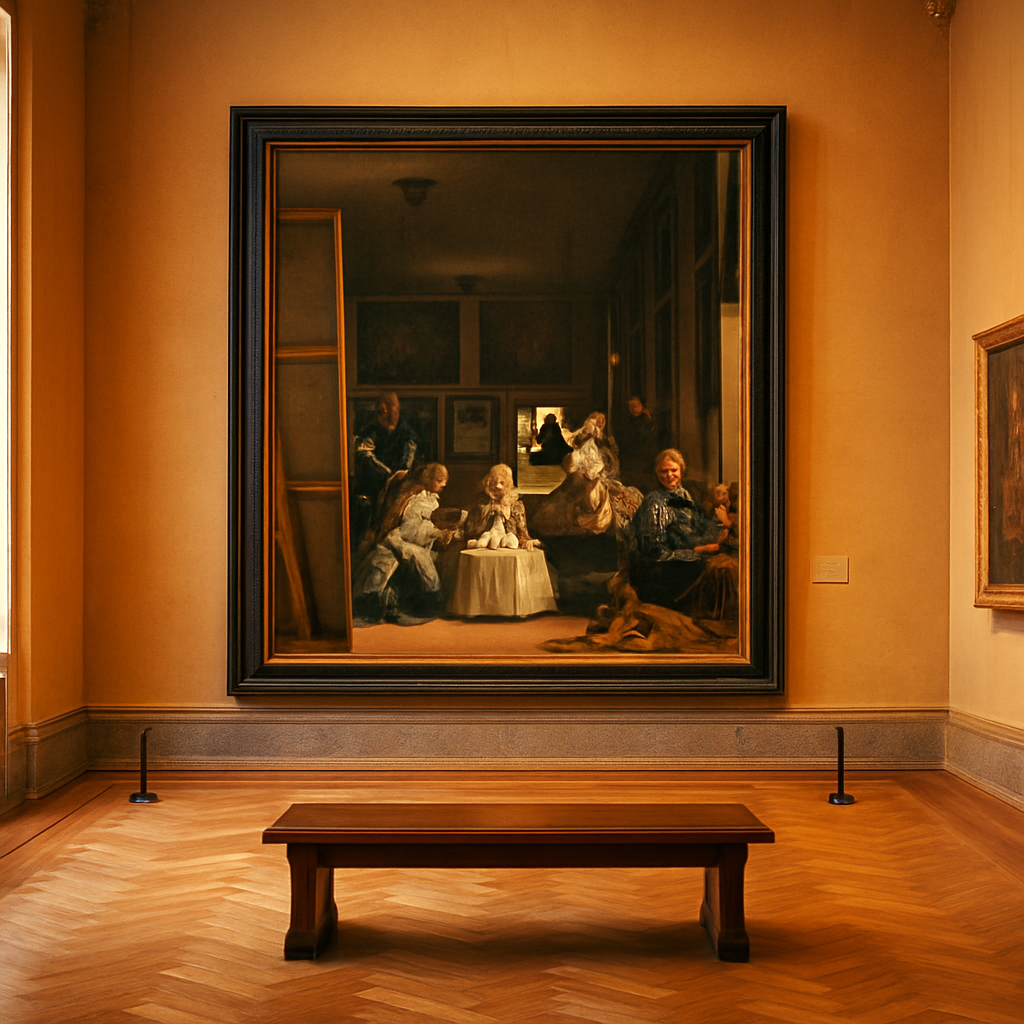
The Prado After Hours
The Museo Nacional del Prado is free Tuesday through Saturday from 6pm to 8pm, and I can think of few better uses of a Madrid evening than walking through 128 rooms of Velázquez, Goya, and El Bosco while the light outside goes golden and the crowds thin to something manageable. The Las Meninas room alone justifies the entire museum's existence. Budget two hours minimum, come back a second time if your trip allows, and time your exit to walk south along the Paseo del Prado as the streetlights come on — one of the great walks in European cities.
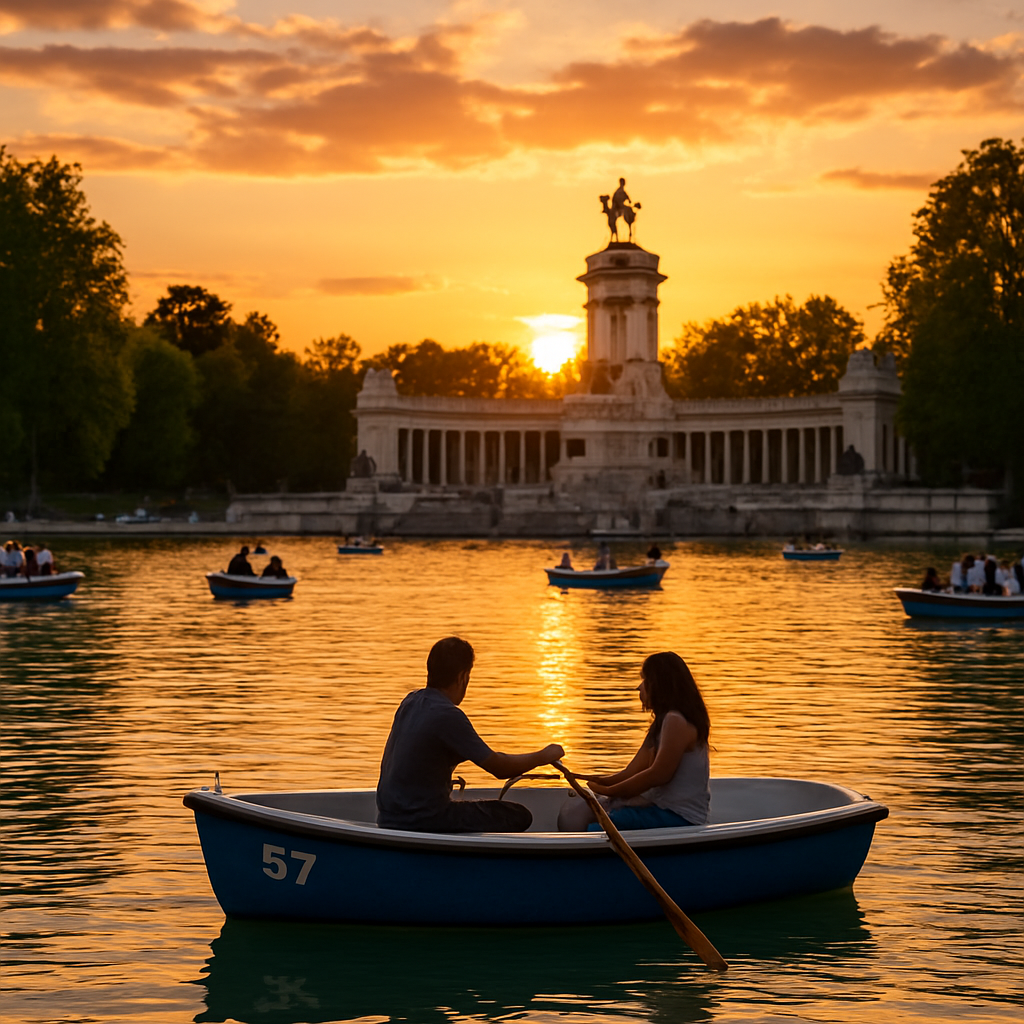
Retiro Park at Sunset
Parque del Retiro is 125 hectares of manicured green in the center of a capital city, and at sunset the light on the lake near the Monumento a Alfonso XII becomes genuinely cinematic. Rent a rowing boat (€6 for 45 minutes), drift past buskers and families, and let the city noise disappear behind the tree line. The Palacio de Cristal — an all-glass exhibition space from 1887 — catches the late light in a way that will make you stop walking. This isn't a park you visit once; it's a park you keep returning to at different hours to see what the light does.
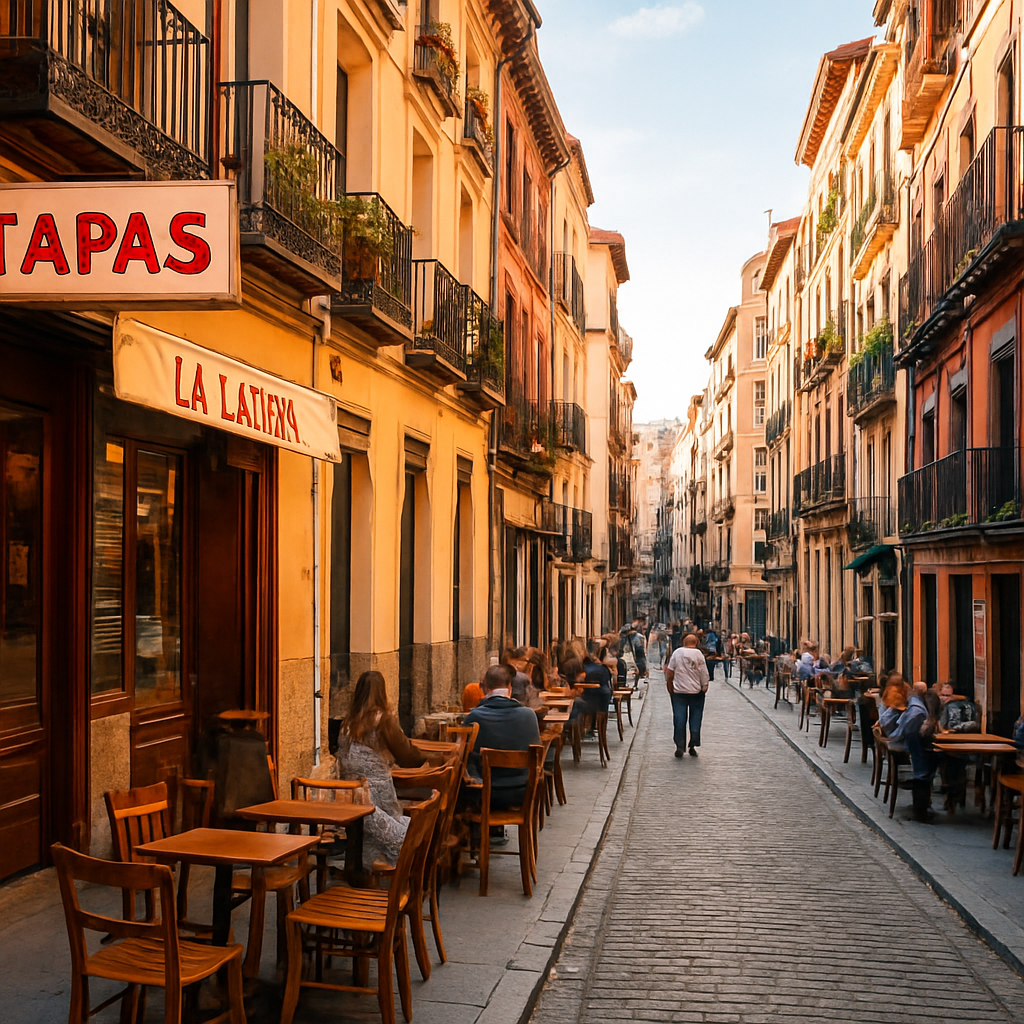
Tapas Crawl from Sol to La Latina
Sunday's El Rastro flea market in La Latina is the excuse, but the real event is the tapas crawl that follows — starting at Puerta del Sol and working south through narrow streets where bars have been pouring cañas and plating croquetas since before you were born. The density of good tapas bars on Calle de la Cava Baja is absurd — every third door is worth entering. Order the tortilla wherever it looks thick enough, a plate of jamón ibérico wherever the leg is on the counter, and keep moving. Budget €20–€30 for a full afternoon that will constitute the best meal of your trip.
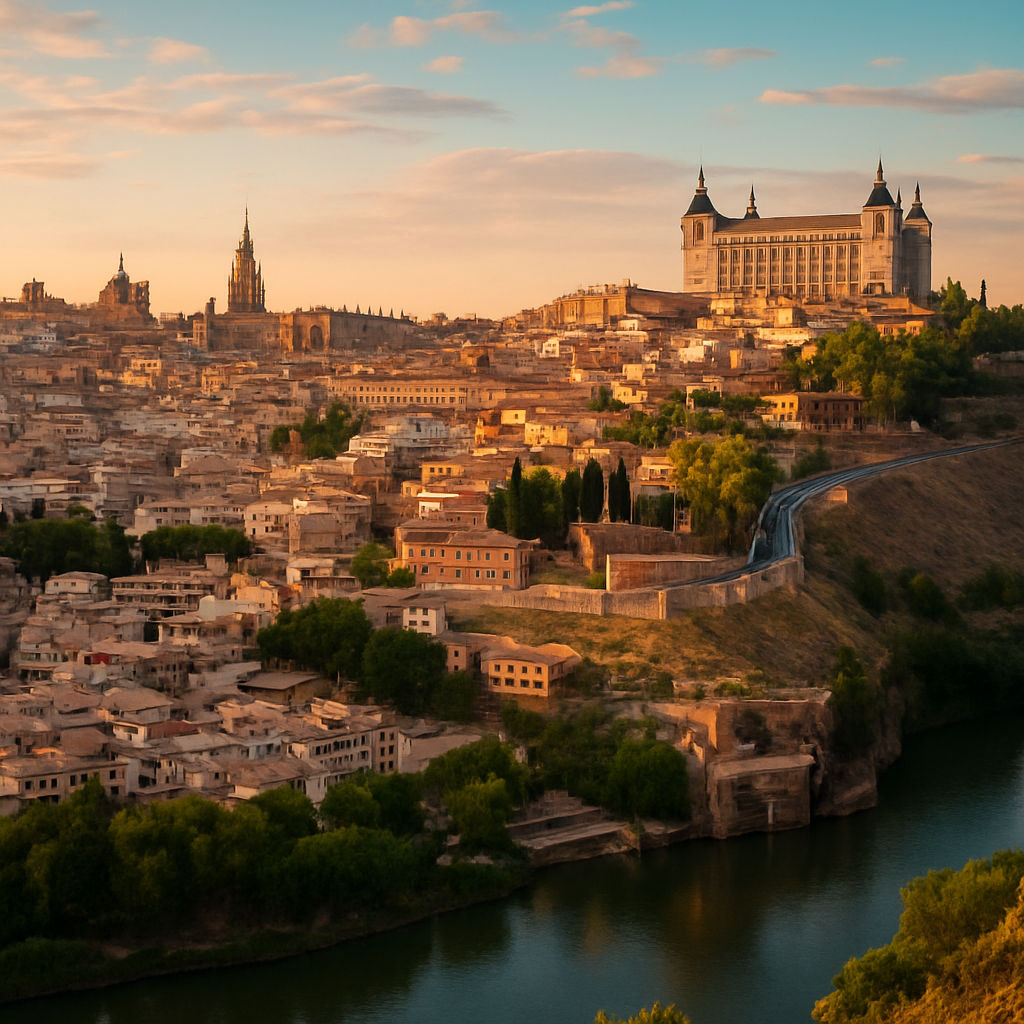
Toledo Day Trip by High-Speed Train
The Renfe high-speed train from Atocha deposits you in Toledo in 30 minutes for €10–€15 return, and what you find there is a UNESCO World Heritage city perched on a granite hill above the Tagus River with medieval Christian, Jewish, and Moorish architecture in a density that doesn't feel real until you're standing in it. The cathedral alone could consume half a day. The light over the river valley in late afternoon makes photographers lose their composure. Go on a weekday if you can — the energy is better when it's not competing with weekend tour groups.
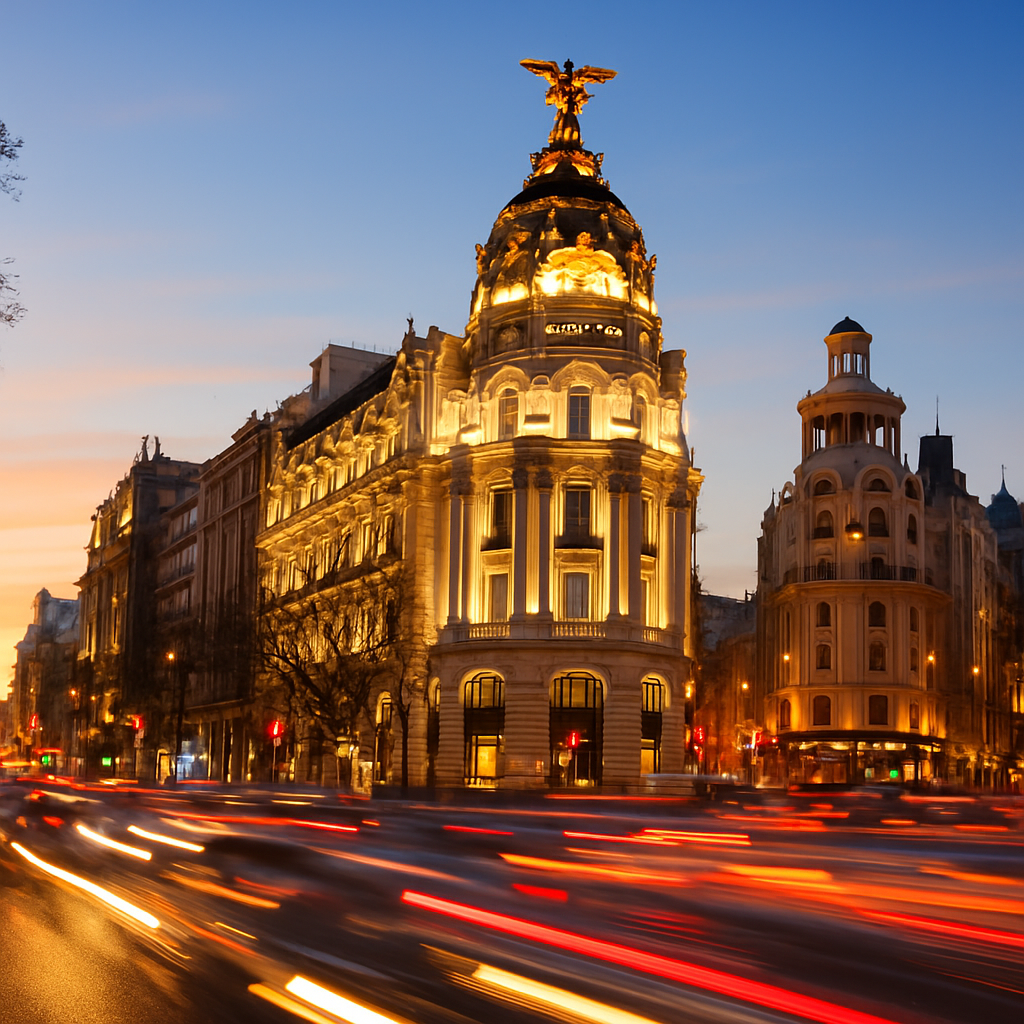
Gran Vía at Night
Gran Vía after dark is Madrid's answer to Broadway — not because of the theatre marquees (though those exist), but because of the sheer density of human energy moving through one of Europe's great city boulevards. The Schweppes and Metrópolis Building signs light up in a way that makes the 1920s architecture feel like a film set. Walk it from Plaza de España to Calle de Alcalá, stop at one of the rooftop bars for a drink with a view, and understand why Madrileños call this their Broadway. In December, the Christmas lights turn the entire stretch into something almost unreasonably beautiful.
The places I actually send people to
Advice that fits how you travel
Madrid is one of the easiest cities in the world to do alone, and the queer infrastructure makes it even easier. The terraza culture means you're never actually eating solo in a depressing way — sit at any café table in Chueca, order a vermut, and the neighborhood will come to you. App culture is active and functional (Grindr, Scruff, Wapo are all widely used), but honest advice? You'll meet people faster by being physically present in the neighborhood. Café Acuarela early evening, Boyberry Café for a midday coffee, the rooftop at Mercado de San Antón at 1pm — these are the places where conversations start without needing an icebreaker.
Budget solo travel in Madrid is genuinely viable. Hostel dorms run €25–€35 a night, the menú del día (a fixed lunch menu offered at almost every neighborhood restaurant) gives you three courses and a drink for €12–€15, the Prado is free after 6pm, and the metro runs on a flat-rate card that won't break €8 in a day. You can do a full, excellent day in Madrid for €65–€85 if you're thoughtful about it. That's hard to match in most European capitals.
Safety solo is straightforward. Chueca is safe at all hours. The metro is reliable and safe late-night. The only real concern is petty theft — phone in your front pocket, don't flash valuables in crowded areas around Sol or Gran Vía, and be alert when leaving clubs at closing time. That applies to every solo traveler in Madrid, not specifically to you. Check Shangay.com before you land for the current events calendar, and pop into Arcópoli's event listings — their film screenings, community dinners, and activist debates are how younger LGBTQ+ Madrileños actually socialize outside the bar circuit, and they're genuinely open to visitors.
Madrid is one of the best cities on Earth to be a queer couple in public, and I don't say that casually. You can hold hands from Chueca to the Paseo del Prado to Parque del Retiro without once adjusting your behavior for the room. That kind of unremarkable, unceremonious acceptance — not celebrated, just completely normal — is rarer than it should be, and Madrid has it in abundance across nearly every neighborhood in the center.
For a proper date, start at the terraza at Lateral across from the Prado for a long, unhurried lunch — croquetas, a glass of house white, the kind of afternoon that stretches. Then wander through the Retiro toward sunset, when the light on the lake turns embarrassingly cinematic. Dinner in Malasaña or back in Chueca, then whatever the night becomes. Room Mate Óscar is the obvious mid-range choice for couples who want to sleep in the center of things; Hotel Bless in Salamanca is the splurge that earns its rate, especially during Pride week when the rooftop events are genuinely spectacular.
The most romantic low-key move in Madrid? An early evening vermut at Taberna de Ángel Sierra on Plaza de Chueca — original 1917 tiles, wine from a tap, the neighborhood moving through its completely queer normal life around you. It costs almost nothing and it's the kind of moment you'll still be talking about six months later.
Madrid is one of Europe's most genuinely welcoming cities for LGBTQ+ families, and that's not just a legal claim. Spain has had full marriage equality and adoption rights since 2005, and La Ley Trans reinforced protections for trans parents and children in 2023 with self-ID provisions that are actually enforced, not just written down. At the Prado, under-18s enter free. On the metro, under-5s travel free. These details add up, and they signal a city infrastructure that has thought about families — all families — in a meaningful way.
Parque del Retiro is your base camp: rowing boats on the lake, weekend puppet shows, wide paths with excellent sight lines, and a density of ice cream vendors that children find morally correct. The Prado is manageable with older kids if you focus on the Goya rooms and let them react to the darker paintings in their own way — they will be captivated, I promise. For younger children, the Madrid Aquarium and the zoo complex in Casa de Campo give you a full day with minimal logistics stress.
Practically: central Madrid's wide pavements handle strollers reasonably well, and the metro is step-free at most central stations (check the RENFE accessibility map before committing to a route with a buggy). Kid menus are standard at almost every sit-down restaurant. In Chueca specifically, the café culture is completely family-normal — nobody will look twice at two mums with a toddler at Diurno on a Sunday morning, because there's genuinely nothing to look at. That's the whole point.
What Madrid actually costs
Flights, visas, and the first 30 minutes
Airport: Adolfo Suárez Madrid–Barajas Airport (MAD) is one of Europe's best-connected hubs, with direct services from 180+ cities. It sits 12 km northeast of the city center and is well-served by multiple fast, affordable transport options into town.
Key Direct Routes: London Heathrow (2h 20m) · New York JFK (8h 30m) · Paris CDG (2h 10m) · Toronto Pearson (9h 00m) · Amsterdam Schiphol (2h 30m) · Berlin Brandenburg (3h 00m) · Sydney via hub (24h+).
Visa Requirements: US, Canada, Australia: No visa required for stays up to 90 days under the Schengen agreement. ETIAS authorization will be required — check the official ETIAS site before you travel. UK: No visa for stays up to 90 days post-Brexit; your passport must be valid for at least 6 months beyond your stay date. EU: No visa required; an EU ID card or passport is accepted under free movement rules.
Getting to the City Centre:
Metro Line 8 — €5 flat rate (including the airport supplement); 25–35 minutes to Nuevos Ministerios, where you interchange to Lines 6 or 10 for the city center. Easiest option with a manageable bag and the one I use first.
Express Bus (Exprés Aeropuerto) — €5; 30–40 minutes to Atocha and Cibeles. Runs 24 hours and is genuinely luggage-friendly — my preferred option for late-night arrivals when you don't want to navigate metro interchanges half-asleep.
Renfe Cercanías C-1 — €2.60; 30 minutes to Atocha. The most economical option, connecting Terminal 4 to both Atocha and Chamartín. If your hotel is near either terminus, this is the smart play every time.
Taxi / Rideshare — €30–€35 official flat rate to central Madrid; 20–40 minutes depending on traffic. Cabify and Uber are both widely available and reliable. Worth it for groups of three splitting the cost, or when you're arriving with two full suitcases and the will to live.
Traven's seasonal breakdown
The questions everyone asks
Do I need to speak Spanish?
Is it safe to hold hands in Madrid?
How much should I budget per day?
When is Madrid Pride?
Is Madrid safe for trans travelers?
What time do bars and clubs close?
Is the tap water safe to drink?
Screenshot this before you go
So should you actually go?
Go. I mean that with no qualification. Madrid is one of the most complete LGBTQ+ travel destinations on Earth — a city where the legal framework is airtight, the cultural acceptance is genuine and decades deep, the scene is world-class from afternoon vermouth to 6am dance floors, and the non-queer attractions (the Prado alone, honey) would justify the trip even if none of the rest existed. My Traven-Dex of 9.1 reflects a city that has earned its place at the very top of the list. Whether you're coming for Pride, for the art, for the food, for the nightlife, or just to exist somewhere that treats your identity as the most boring thing about you — Madrid delivers, every single time.
Sources & Resources
Official links we reference when compiling this guide. Last verified 2026-03-06.
- COGAM – Colectivo LGTB+ de Madrid
- FELGTBI+ – Federación Estatal de Lesbianas, Gais, Trans, Bisexuales e Intersexuales
- Arcópoli – Asociación LGTB+ de Madrid
- MADO – Madrid Orgullo (Official Pride Organization)
- Fundación 26 de Diciembre – LGBTQ+ Elderly Support
- Chrysallis – Asociación de Familias de Menores Trans
- Ministerio de Igualdad – LGTBI Resources (Spain)
- Ayuntamiento de Madrid – Igualdad y Diversidad LGTBI+
- Shangay – Madrid LGBTQ+ Events, News & Scene Guide
- Centro Sanitario Sandoval – Free Sexual Health & HIV/STI Testing Madrid