
Marbella doesn't ask where you're from — it hands you a cold manzanilla under an orange tree and lets the evening decide.
It's a Thursday in late June and you're standing at the rail of a terrace bar somewhere in the Casco Antiguo, holding a glass of cold manzanilla that cost less than a parking meter in Manhattan, watching the foot traffic weave through whitewashed streets so narrow two people can barely pass without touching shoulders. A couple — two men, mid-thirties, clearly on vacation — walks by holding hands with the practiced ease of people who forgot they were doing something notable. Nobody notices. Nobody cares. A woman at the next table is arguing passionately about whether the gambas al ajillo here are better than in Málaga. The orange trees in Plaza de los Naranjos are doing their thing overhead. And you realize this is what an 8.6 on my Traven-Dex actually feels like on the ground — not performance, not a flag on a building, just a place where everything works and nobody's keeping score.
Marbella isn't Torremolinos. If you want a dense, purpose-built gay district with neon signs and a drag show on every corner, take the Portillo bus 45 minutes east to La Nogalera — genuinely one of the great gay streets of Europe, and I mean that. What Marbella offers instead is arguably more seductive: an effortlessly integrated presence woven into one of the most glamorous resort towns on the Mediterranean. The vibe is less rainbow flags, more Hermès scarves and discretion entirely optional. Puerto Banús Marina operates on its own frequency — the improbable cocktail of international jet-setters and trust-fund holidaymakers creates a pocket where everyone is too tan and too glamorous to be judgmental, and that energy works spectacularly in your favor. I gave it an 8.5 on Scene, and that score reflects the full picture: the marina pool parties, the Old Town bar strip, the beach culture at Playa de Cabopino, and the 45-minute bus ride to the biggest dedicated gay scene in southern Spain.
The food alone would justify the trip. Skina — two Michelin stars, 14 seats, tucked into the Old Town — is the most intimate fine-dining room on the Costa del Sol. Dani García, Marbella-born, voluntarily closed a three-star restaurant and rebuilt as a brasserie on the Golden Mile because he wanted to cook food people could actually eat on a Tuesday. Bar Altamirano on Plaza Altamirano has been serving fritura malagueña at prices that make you laugh after a night at the marina. And the Starlite Festival stages international headliners in a natural quarry amphitheater carved into the hills above town — stone walls, open sky, warm Andalusian night — which is the kind of venue that makes indoor concerts feel like a compromise.
Here's what you should know going in: the scene is heavily seasonal. June through September, the population triples, the bars stay open until sunrise, and the energy is extraordinary. Visit in January and you'll find a quiet, mild, genuinely pleasant town — but half the venues will be shuttered and the social infrastructure drops to a fraction of peak. Plan accordingly, call ahead in the off-season, and understand that Marbella is a place where glamour has a schedule. When it's on, honey, it's really on.
The stuff your travel guide buries on page 47
Spain legalized same-sex marriage in 2005 — the third country in the world to do so — and as of 2026, same-sex couples enjoy full legal equality. Marriage, joint adoption, comprehensive anti-discrimination protections covering employment, housing, and public services: it's all there, enforced at the national level by the Ministerio de Igualdad (Ministry of Equality). Spain consistently ranks among the top performers on the ILGA-Europe Rainbow Map, and no major government has issued an LGBTQ+-specific travel advisory for the country.
Spain's 2023 Ley Trans permits gender self-identification without medical diagnosis or judicial approval — one of the most progressive frameworks in Europe. Trans travelers can expect legal recognition of their identity throughout the country. The FELGTBI+, Spain's national LGBTQ+ federation, provides resources and guidance on rights for anyone visiting.
Now, the ground-level truth. The legal framework is ironclad, and public attitudes in tourist-facing Marbella are overwhelmingly relaxed. But this is a resort town that draws a conservative moneyed crowd alongside the progressives — reading the room in certain upscale hotel lobbies and private members' clubs remains worthwhile, especially away from the Casco Antiguo and Puerto Banús. Nobody's going to challenge your right to exist. It's more about social register than safety.
Marbella's gay nightlife is heavily seasonal, peaking June through September when the population triples and bars stay open until sunrise. Outside of summer, many venues close entirely or slash hours — if you're visiting in winter, adjust expectations and always call ahead before you show up to a shuttered door.
PDA comfort is high across the tourist core. Puerto Banús, the Old Town, the beach promenades, and La Milla de Oro (the Golden Mile) are all spaces where same-sex couples hold hands without drawing a second glance. Avenida Ricardo Soriano and the town centre are a step more local and slightly less cosmopolitan, but still comfortable. The shift happens in residential neighborhoods further inland, where the energy turns more traditionally Andalusian — nobody's going to confront you, but the effortless ease you feel at the marina won't follow you into every quiet side street.
Pro tip: the word ambiental is your quiet signal here. Ask a local whether a bar or beach club is ambiental and you're immediately understood — it's Spanish shorthand for gay-friendly, and in most of the Old Town, the answer comes back with a warm yes.
What it actually feels like on the ground
Holding Hands
Same-sex couples walking hand-in-hand along Avenida del Mar or through the Puerto Banús Marina promenade rarely encounter anything beyond total indifference. The tourist core — Old Town, Golden Mile, beachfront — operates in a bubble of international cosmopolitanism where nobody keeps score. The calculus shifts the further you move inland into residential neighborhoods, where the social atmosphere turns more traditional. Not hostile — just a different frequency.
Hotel Check-In
No issues at any level of accommodation. Spain's anti-discrimination law covers lodging, and Marbella's hotels — from the five-star beachfront resorts to the budget hostales — are accustomed to same-sex couples. You won't get a raised eyebrow. If you book a double, you'll get a double.
Taxis & Transport
Taxis are professional and uneventful. Ride-hailing apps (Uber, Cabify) operate in the Marbella area, and there are no issues with same-sex couples in any transport situation. The Portillo/Avanza bus between Marbella and Torremolinos is a well-worn route for travelers heading to La Nogalera — nobody bats an eye.
Beaches & Public Spaces
Playa de la Bajadilla, just east of the port, has functioned as an informal gay gathering beach for decades — no signs mark the spot, but the regulars know. Playa de Cabopino, about 12 km east of town, is the longer-established semi-nudist beach with a dedicated LGBTQ+ section in the dune area. PDA is completely normal at both. The main public beaches along the Paseo Marítimo are cosmopolitan and comfortable for all couples.
Late Night
The Casco Antiguo after midnight is essentially a judgment-free zone — the whole town is in party mode, nobody is monitoring anyone else's business, and same-sex couples blend seamlessly into the festive crowd. Puerto Banús late at night runs on its own currency of glamour and excess; your sexuality is the least interesting thing about you there. Standard late-night awareness applies: stick to lit, populated areas, don't leave drinks unattended, share your location with a friend. Pro tip: if you're moving between the Old Town and Puerto Banús after dark, grab a taxi — the Golden Mile road between them is long and not consistently lit for pedestrians.
Trans Travelers
Spain's Ley Trans (2023) provides gender self-identification without medical requirements, making it one of the strongest legal frameworks for trans rights in Europe. In practice, Marbella's tourism-driven environment means trans visitors are broadly welcomed — particularly in Puerto Banús, the Old Town, and resort areas along the Golden Mile. If you need healthcare access during your stay, the Servicio Andaluz de Salud operates public health facilities across the Costa del Sol with no legal barriers based on gender identity.
Verbal Harassment
Rare in tourist zones. I've seen no credible pattern of targeted harassment against travelers in Marbella's main areas — the isolated incident is more likely fueled by late-night alcohol than ideology. Spain's hate crime legislation is robust and actively enforced. If you need LGBTQ+-specific support, regional organizations including Colega LGTB+ Andalucía and Fundación Triángulo provide advocacy and assistance. For emergencies, Cruz Roja Española operates support services throughout the region, and local police are generally professional and responsive.
The queer geography
Casco Antiguo (Old Town)
Marbella's Old Town is a knot of narrow, whitewashed streets threaded with bougainvillea, the kind of place where you turn a corner and find a 16th-century church facade staring you down across a plaza the size of a living room. Plaza de los Naranjos anchors the whole thing — a 15th-century square shaded by the orange trees that give it its name, ringed by terrace restaurants where a cold manzanilla and a plate of boquerones costs what a single cocktail goes for at the marina. The streets radiating outward are tight enough to feel intimate, lined with tapas bars, boutique shops, and the Museo del Grabado Español Contemporáneo — a printmaking museum with Miró and Dalí in the permanent collection, housed in a restored 16th-century hospital for a €3 admission.
The bar strip threading through the Old Town around Avenida del Mar is your best hunting ground for gay nightlife — the scene is small but genuinely lively, and any bartender will cheerfully point you toward wherever the action has migrated that particular week. Marbella Pride events have historically staged through these streets, and broader community resources are available through organizations like COGAM, one of Spain's largest LGBTQ+ advocacy groups. Just east of the port, Playa de la Bajadilla serves as an informal gay gathering beach — no signs, but locals have been meeting there for decades. Arrive before noon in summer if you want a decent patch of sand.
Puerto Banús
There's no way to adequately prepare you for Puerto Banús. You walk along the marina promenade and the yachts get progressively more obscene until you've lost all sense of scale — that's not a boat, it's a floating apartment building with a helipad. The air smells like salt water and expensive sunscreen. Ferraris idle at traffic lights like they're waiting for a valet who forgot about them. Restaurants and bars lining the port serve everything from omakase to paella at prices that require recalibrating what money means.
Here's the thing about Puerto Banús Marina — the improbable cocktail of international jet-setters, celebrities, and trust-fund holidaymakers creates a pocket of "everyone is too glamorous to be judgmental" energy that tends to work in your favor. Ocean Club Marbella runs pool parties with international DJs to a crowd of ~800 that skews diverse and doesn't care who you're kissing. La Sala operates a three-floor bar-restaurant-club drawing a visibly mixed international crowd all summer. Same-sex couples are part of the scenery here, not an exception to it.
La Milla de Oro (Golden Mile)
The Golden Mile is the roughly four-kilometer stretch of beachfront road connecting central Marbella to Puerto Banús, and it reads like a catalog of what happens when money meets Mediterranean sunlight. Marbella Club Hotel, opened in 1954 by Prince Alfonso von Hohenlohe, is where the whole luxury mythology began — its terrace bar is open to non-guests, and a drink there at sunset feels like trespassing in someone else's very expensive life. Next door, Hotel Puente Romano sprawls across 100,000 square meters of Andalusian village-style grounds built around an actual first-century Roman bridge, with Nobu and a Six Senses spa tucked inside.
Olivia Valere, Marbella's legendary super-club built to look like a Moorish palace, has always drawn a sexually diverse crowd that dresses like it means it. It isn't a gay club in any formal sense, but on any given Saturday in August you'll find a very fabulous contingent doing very fabulous things on that dance floor. The Junta de Andalucía regional government maintains tourism resources covering cultural events and festivals across the Costa del Sol season.
Nueva Andalucía
Behind Puerto Banús, Nueva Andalucía is where the nightlife that can't justify marina real estate finds a home. The neighborhood is largely residential — villa developments, golf courses, expat coffee shops — but it also hosts Suite Marbella, one of the few venues in the area with recurring LGBTQ+-themed nights and drag performances on a rotating weekend schedule. Capacity around 500, and the programming shifts weekly, so check local Instagram accounts before you go. This is where you head when you want to dance with your people rather than alongside them.
The experiences worth rearranging your itinerary for
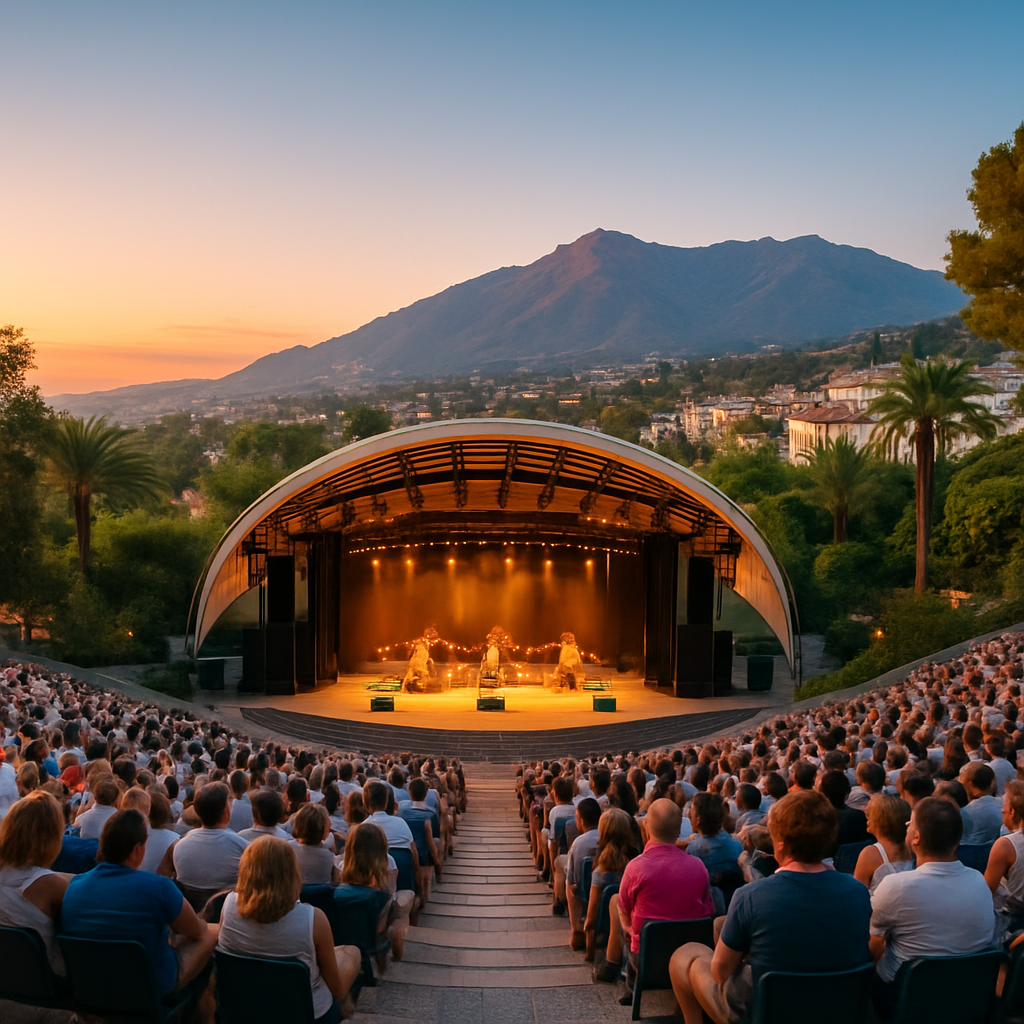
Starlite Festival in the Quarry Amphitheater
Each summer, the hills above Marbella host something improbable: a major international concert series staged in a natural quarry amphitheater carved into the rock. Starlite Festival books headliners that range from flamenco legends to global pop acts, and the setting — open sky, stone walls, warm Andalusian night air — makes every performance feel like a private event even when thousands are watching. The crowd is a cocktail of minor royals, international influencers, and regular humans who all dressed like they meant it.
Tickets go fast for the marquee nights, so book early if you're visiting between June and August. The quarry is a short drive above the town center, and the post-concert energy — everyone spilling back into Marbella's Old Town bars — is half the experience. This is one of those events where the venue elevates everything that happens inside it.
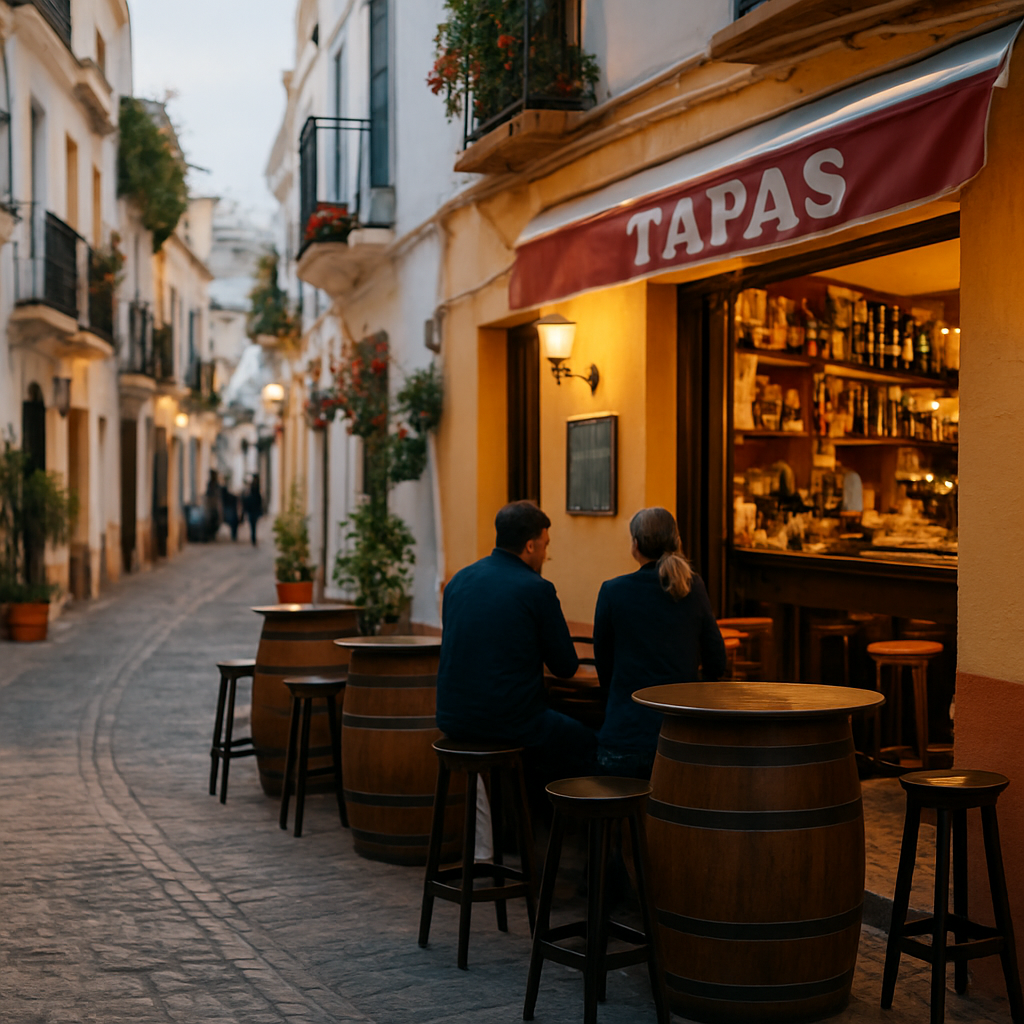
Evening Tapas Crawl Through the Old Town
The best meal in Marbella isn't at a single restaurant — it's the unstructured crawl through the Casco Antiguo's tapas bars as the evening cools and the streets fill. Start at Plaza de los Naranjos with a cold manzanilla under the orange trees, then let the narrow pedestrian streets pull you from bar to bar. A plate of boquerones en vinagre here, some gambas al ajillo there, a croqueta that costs €1.50 and has more soul than any €40 entrée on the Golden Mile.
The rhythm is the point: stand at the bar, order a small plate and a drink, talk to whoever's next to you, then move on. By the third stop you'll have spent €20 and eaten better than most sit-down dinners in town. The Old Town bars start filling around 9pm and don't empty until well past midnight — this is Andalusia, so dinner at 10pm is early and nobody's rushing you.
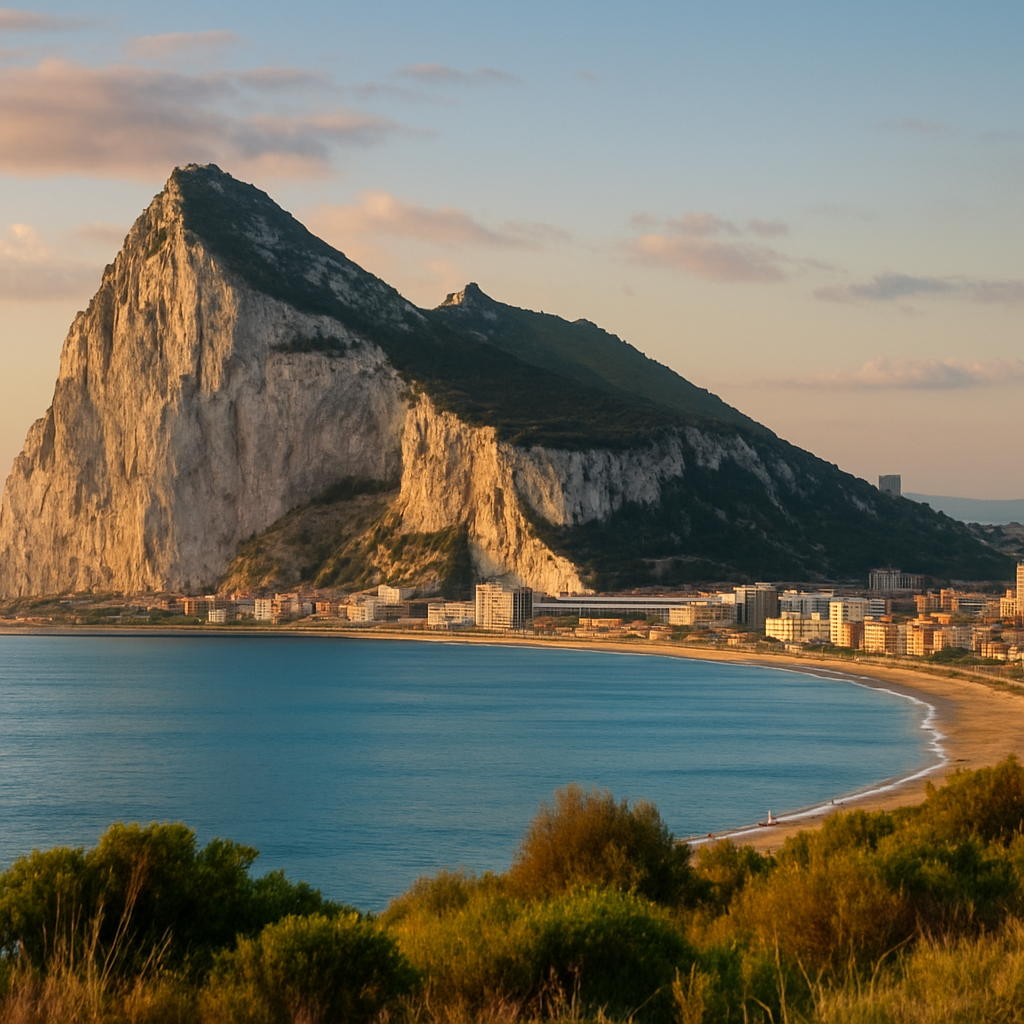
Day Trip to the Rock of Gibraltar
Approximately 80 kilometers west of Marbella, the Rock of Gibraltar rises from the sea like a geological argument that geography is stranger than fiction. Take the cable car to the top for views across the Strait to North Africa — on a clear day, Morocco looks close enough to swim to. The Upper Rock Nature Reserve is home to Barbary macaques who will steal your sandwich with zero remorse and maximum eye contact. It's one of the more surreal day trips you can make from a Spanish beach town.
Access is via La Línea de la Concepción on the Spanish side, and you'll cross into a British Overseas Territory where the currency switches to pounds, the pubs serve fish and chips, and the street signs are in English. Budget about 90 minutes for the drive each way. The town center has a compact but walkable Main Street, and the whole excursion — Rock, macaques, pub lunch, back to Marbella by sunset — is one of those perfectly strange days you'll talk about for years.
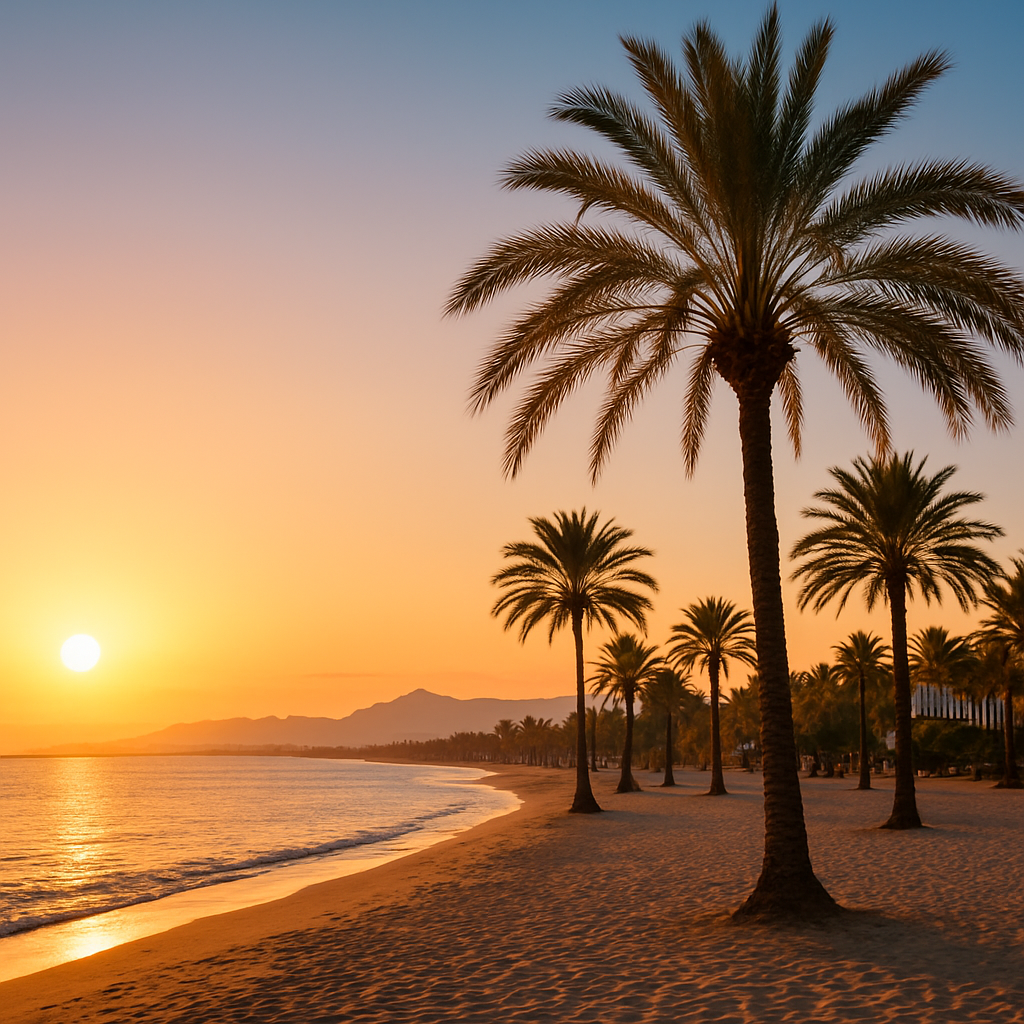
Golden Mile Sunset Walk
The four-kilometer stretch of La Milla de Oro connecting central Marbella to Puerto Banús is best experienced on foot at the end of the day, when the Mediterranean light turns everything the color of expensive rosé. Walk past the gates of the Marbella Club Hotel — the property that invented the whole concept of Golden Mile luxury in 1954 — and the grounds of Puente Romano, where a first-century Roman bridge sits in a garden surrounded by a hundred thousand square meters of resort. The road is lined with five-star properties, beach clubs, and the kind of architecture that happens when money meets Mediterranean aspiration.
You don't need to spend anything — the walk itself is the experience. The light at this hour makes the white buildings glow, the palm trees throw long shadows across the road, and the sea is right there the entire time. Finish at Puerto Banús as the marina lights come on and the yachts start glittering, then pick a terrace for a drink. It's cinematic, and it's free.
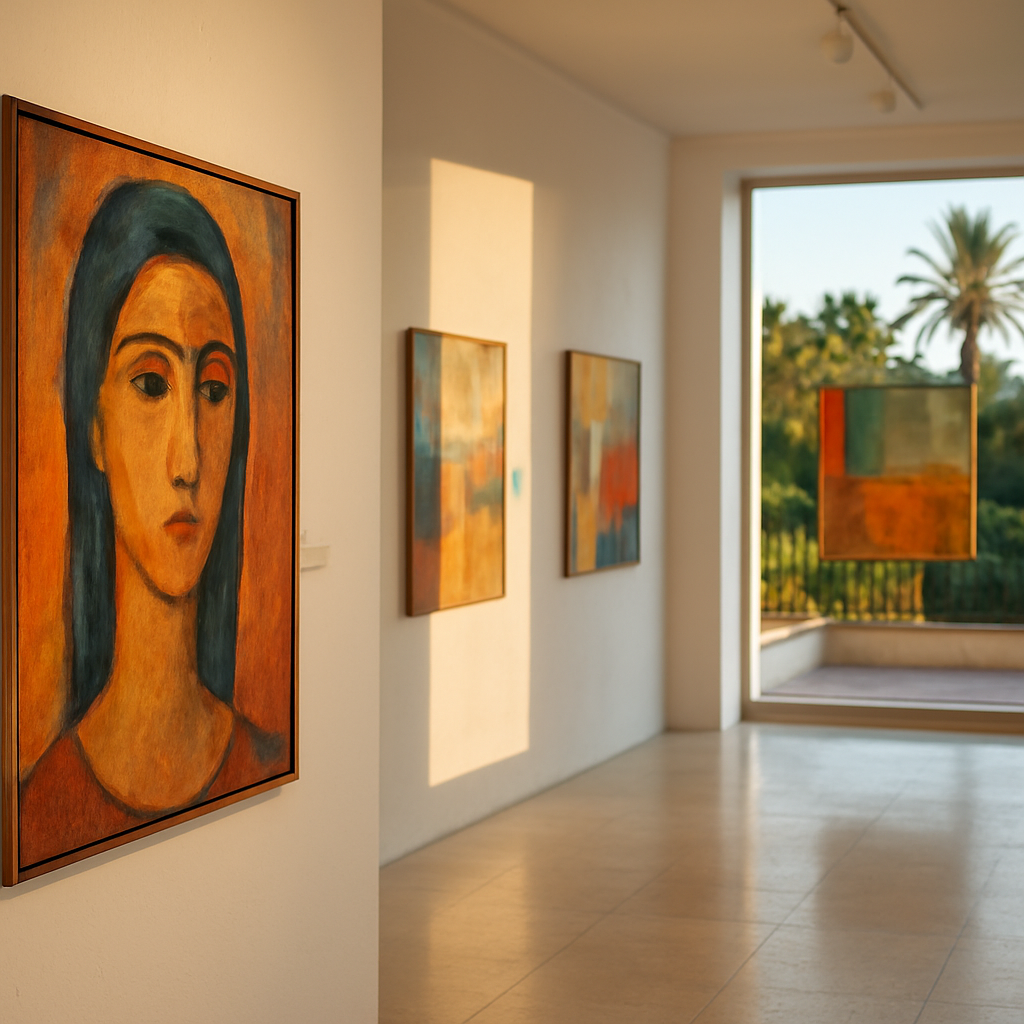
Dalí and Miró Prints for Three Euros
The Museo del Grabado Español Contemporáneo is the kind of place that makes you wonder what you've been doing paying €25 at museums in bigger cities. Three euros gets you into a restored 16th-century hospital building in the Old Town, where the permanent collection includes prints and engravings by Joan Miró, Salvador Dalí, Antoni Tàpies, and Eduardo Chillida — names that usually require airport-adjacent museums and hour-long queues. Here, you'll likely have entire rooms to yourself.
Founded in 1992, it's one of Spain's principal dedicated printmaking collections, and the building itself is half the experience — thick stone walls, cool even in August, with the kind of quiet that doesn't exist outside in the Casco Antiguo. You'll be in and out in 45 minutes, and you'll leave thinking about the Miró longer than anything you saw on the marina. It's the most underrated cultural stop in Marbella.
The places I actually send people to
Advice that fits how you travel
Marbella solo is a genuinely good time — provided you understand what you're working with. This isn't a city with a concentrated gay district that delivers a social scene the moment you land. What it has instead is a cosmopolitan resort environment where the apps run fine, the beach culture creates natural points of contact, and the right bar at the right hour puts you in a room of interesting people from every corner of the world. Playa de la Bajadilla, east of the port, is the informal gay gathering spot in Marbella proper — no signs mark it, but regulars have been meeting there for decades. Arrive before noon in summer and you'll know everyone around your patch of sand within an hour.
For actual dedicated gay nightlife, the most efficient move you can make is the Portillo/Avanza bus to Torremolinos — roughly €5 each way, 45 minutes, and it deposits you in La Nogalera, one of Spain's great gay streets. You can meet more people in a single night there than in a full week of app browsing in Marbella. Back in town, Suite Marbella in Nueva Andalucía runs LGBTQ+-themed club nights and drag performances on a rotating weekend schedule — check local Instagram before heading over because the programming shifts week to week. The pool parties at Ocean Club Marbella in Puerto Banús draw a crowd diverse enough that solo gay travelers blend right in, and the international DJ lineup is genuinely strong.
Budget strategy matters here. Marbella is expensive by Spanish standards and Puerto Banús is in a category entirely its own — a round of drinks at the marina costs roughly three times what you'd pay in Torremolinos, so decide upfront whether you are optimizing for spectacle or scene. The smartest solo play is to base yourself in the Casco Antiguo — Hostal El Castillo starts at €45/night and puts you walking distance from everything — then budget one deliberate evening at Puerto Banús rather than every night. Moderate solo spend runs €165–265/day; budget travelers can manage €70–110/day with some discipline. For real-time nightlife intelligence, local Instagram accounts and Spanish-language Facebook groups are more current than any app — the hot party this week may be at an entirely different venue next week.
Marbella is built for couples. Same-sex couples hold hands along the Puerto Banús Marina promenade without drawing a second glance; the same goes for the terrace restaurants around Plaza de los Naranjos, the beach clubs along La Milla de Oro, and the promenades fronting the main town beaches. You'll find the most effortless ease in Puerto Banús, the Old Town, and the Golden Mile — the tourist core operates with a cosmopolitan indifference to who's kissing whom. The shift happens when you move into residential neighborhoods further inland, where the social atmosphere turns more traditionally Andalusian. Not hostile — just a different frequency, and entirely manageable.
The date infrastructure here earns its keep. Walk the Golden Mile at sunset — four kilometers from the town center to Puerto Banús, with the Mediterranean on one side and the most improbable parade of luxury properties on the other, and it costs nothing. For dinner, book Skina in the Old Town well in advance: two Michelin stars, 14 seats, tasting menu only, and the most intimate fine-dining room on the Costa del Sol. When the budget allows for something more relaxed, Nobu at Puente Romano delivers the full Japanese-Peruvian treatment inside a resort where a first-century Roman bridge sits in the garden. Cap the evening with a drink on the open terrace at Marbella Club Hotel — non-guests welcome — before the late night begins.
For accommodation, La Morada Más Hermosa and The Town House are both boutique properties in the Old Town that appear consistently in LGBTQ+-friendly Costa del Sol guides; the six-to-nine-room scale means the welcome is personal rather than transactional. If the occasion calls for something grander, Puente Romano Beach Resort and Marbella Club Hotel are both cited in international LGBTQ+ luxury travel coverage as naturally inclusive environments. Moderate couples should plan on €280–420/day; the luxury ceiling is real and starts around €840. One non-negotiable: spend a morning at Playa de Cabopino, 12 kilometers east of town — semi-nudist, set within a coastal natural park, and the established LGBTQ+ beach on this stretch of coast for decades. Two people, warm Mediterranean water, sand dunes, and no particular agenda. That's what Marbella is actually for.
LGBTQ+ families are on solid legal ground throughout Spain — as of 2026, same-sex couples have full marriage equality, joint adoption rights, and comprehensive anti-discrimination protections covering housing, employment, and public services at the national level. Spain's Ley Trans (2023) provides gender self-identification without medical requirements, meaning trans parents and gender-diverse family members carry full legal recognition across the country. In Marbella specifically, the city's tourism-driven orientation means families in every configuration are part of the normal fabric of resort life rather than an exception to it. Nobody's keeping score at the hotel pool.
Marbella is genuinely functional as a family destination. The Casco Antiguo is compact, largely pedestrianized, and easy to navigate with children — the €3 Museo del Grabado Español Contemporáneo, with Miró and Dalí in the permanent collection, is the rare cultural stop that doesn't require an hour-long queue or a steep ticket price. The beaches along the Paseo Marítimo are wide and clean, serviced by chiringuitos where kid menus are standard and nobody minds a table with children at 8pm. The cobblestone streets in the Old Town are manageable but stroller-unfriendly in places — a carrier or compact folding stroller handles the terrain better than a full pram. The Gibraltar day trip is a reliable hit with older kids: cable car to the top of the Rock, Barbary macaques stealing snacks with zero remorse, and a genuinely strange afternoon in a pocket of Britain at the southern tip of Spain.
Budget planning: moderate LGBTQ+ families can expect €410–615/day including accommodation, activities, and meals; the family budget tier runs €185–285/day if you stay away from the marina, eat at Old Town tapas bars where children share small plates rather than prix-fixe menus, and keep beach days free. The Portillo/Avanza bus to Torremolinos is roughly €5 per person each way and easy with older children — it opens up a longer, more casual stretch of beachfront and more affordable waterfront dining than Puerto Banús can offer at family-friendly prices. Hotels across Marbella are accustomed to international families in every configuration. You won't encounter administrative friction at check-in, no strange looks at breakfast, and no logistical obstacles for two-parent families with different surnames. The welcome here is matter-of-fact, which is exactly what you want when you're traveling with kids.
What Marbella actually costs
Flights, visas, and the first 30 minutes
Marbella doesn't have its own airport — you fly into Málaga-Costa del Sol Airport (AGP), roughly 50 kilometers up the coast. It's one of Europe's most connected regional airports, with over 100 direct routes in peak season from the UK, Germany, the Netherlands, Scandinavia, and most major European hubs. From Madrid or Barcelona, the flight is under an hour; Renfe trains cover Málaga city too if you want to arrive by rail and connect from there.
From AGP to Marbella: The Bus (Portillo/ALSA) is your cheapest move — €3–6, running roughly hourly to Marbella bus station in 50–70 minutes. A fixed-rate taxi from the arrivals hall costs €70–90 and takes 45–60 minutes (the rate is fixed, so just get in — no negotiation needed). Pre-booked shared shuttles split the difference at €15–25 per person over 60–75 minutes — book online before you land, not at the airport. Car rental runs €30–60/day from terminal agencies; take the AP-7 and expect a 50-minute drive with a toll at the end.
Visa requirements (as of 2026): EU nationals — no visa required; freedom of movement applies throughout Spain. UK nationals — typically visa-free for up to 90 days in any 180-day period; no ETIAS authorization required for UK travelers. US, Canadian, and Australian nationals — generally visa-free for up to 90 days within the Schengen Area; ETIAS electronic travel authorization is required — confirm your status before departure. All travelers should verify current entry requirements with their government's official travel guidance before booking.
Pro tip: if you're planning a day trip to Gibraltar during your stay, bring your passport regardless of nationality — you're crossing into a British Overseas Territory, and that border requires valid ID even for EU citizens. Don't learn this lesson in the car on the way there.
Traven's seasonal breakdown
The questions everyone asks
Is Marbella safe for same-sex couples?
Is there a gay neighborhood in Marbella?
How much should I budget per day?
Do I need to speak Spanish?
When is Marbella Gay Pride?
How do I get from Málaga Airport to Marbella?
Is there a gay beach in Marbella?
Screenshot this before you go
So should you actually go?
Marbella earns it. A perfect 10.0 on legal protections, a resort environment where same-sex couples are part of the scenery rather than an exception to it, two Michelin-starred restaurants in the Old Town, a Golden Mile that has to be seen to be believed, and the entire LGBTQ+ infrastructure of Torremolinos a 45-minute bus ride away. It's not a city with a dedicated gay neighborhood — it's a city where the gay presence is integrated into something broader and, for many travelers, more appealing: glamour that doesn't require you to code-switch, beaches where nobody cares who you're kissing, and a legal framework that's been ironclad since 2005. The seasonal caveat is real — come between June and September for the full experience, and adjust expectations if you're visiting in winter. But if you want Mediterranean sun, serious food, world-class people-watching, and the confidence of knowing that Spain's laws and Marbella's cosmopolitan culture have your back completely, this is your destination. Go.
Sources & Resources
Official links we reference when compiling this guide. Last verified 2026-04-13.
- COGAM — Madrid LGBTQ+ Community Organization (national resource)
- Cruz Roja Española — Emergency & Support Services
- FELGTBI+ — Spanish LGBTQ+ State Federation
- Fundación Triángulo — LGBTQ+ Rights & Support (Spain)
- ILGA-Europe — LGBTQ+ Rights Across Europe
- Junta de Andalucía — Andalusia Regional Government
- Ministerio de Igualdad — Spanish Ministry of Equality
- Servicio Andaluz de Salud — Andalusia Health Service