
Maspalomas doesn't pick between the German retirees doing tai chi on the dunes and the drag queen lip-syncing Rocío Jurado at 1 am. It serves you both, in the same afternoon, and dares you to call it a contradiction.
Maspalomas is the only place on earth where you can spend the morning watching German retirees do nude tai chi on the dunes and the evening watching a drag queen lip-sync Rocío Jurado on a Yumbo balcony. Lean into the whiplash — it's the whole point. This is a resort municipality that was purpose-built in the 1960s for northern European package tourism, then quietly became one of the largest LGBTQ+ destinations on the planet, and somewhere along the way decided not to bother choosing between the two.
The geography does a lot of the work. Four hundred hectares of protected dunes between Playa del Inglés and the Faro de Maspalomas, an 1890 lighthouse anchoring the western promenade, and behind it the Yumbo Centrum — a three-tiered open-air commercial center that looks like a sleepy 1982 shopping mall by day and turns into the densest concentration of gay bars, drag stages, and cabaret venues anywhere in the Atlantic by 1 am. You can walk from the colored umbrellas at Kiosko 7 to a clothing-optional pool deck to a leather bar without ever needing a cab. That kind of compression doesn't exist anywhere else.
What surprised me, after years of hearing this place described as a circuit playground, is how unforced it all feels. There's no performance of acceptance, no rainbow-painted curb declaring intent — Spain settled this in 2005, the Canaries vote left of the mainland average, and the resort has been actively building for LGBTQ+ tourism since the 1980s. The texture of the place is what 40 years of being normal looks like. Same-sex couples checking in is a non-event. Hand-holding on the promenade is unremarkable. The local council co-sponsors Pride. You stop noticing after a day, which is the actual point.
There's a reason my Traven-Dex landed at 9.3. The 9.7 on Chill isn't an accident — this is one of the easiest, most welcoming gay destinations in Europe, with the kind of infrastructure (men-only bungalows, dedicated Pride weeks in both May and November, a beach section that's been gay for forty years) that you genuinely cannot replicate. Eat early at one of the Italian places that have been here since the 70s, nap, and come back when the drag at Sparkles is actually starting. That's the rhythm. Find it and you'll understand why people book the same week every year for a decade.
The stuff your travel guide buries on page 47
Here's the thing about Spain that still doesn't get enough credit: as of 2026, this country has been on the right side of the equation for over twenty years. Same-sex marriage was legalized in 2005, adoption rights came with it, and the 2023 Ley Trans made self-ID legal from age 16. Comprehensive anti-discrimination protections cover sexual orientation and gender identity. There's no asterisk. There's no fine print. There's nothing to memorize before you fly. That's why I gave it a flat 10 on Legal.
The Canary Islands sit politically left of the Spanish mainland average, and the resort municipality of San Bartolomé de Tirajana — which contains Maspalomas, Playa del Inglés, and San Agustín — has been actively courting LGBTQ+ tourism since the 1980s. The local council co-sponsors Pride. Police presence is supportive, not surveillance. For practical recourse, FELGTBI+ is the national federation, and Gamá Colectivo LGBT+ Canarias in Las Palmas handles island-specific advocacy and free English-language legal advice.
Pro tip: most of the LGBTQ+ infrastructure is technically in Playa del Inglés, not Maspalomas proper — the two resort towns blur into one another along the coast, but cab drivers price them differently. Say Yumbo and you'll get there for under €10 from most hotels in the triangle.
Entry is typically straightforward. EU citizens need nothing. US, UK, Canadian, and Australian travelers generally enter visa-free for up to 90 days under Schengen rules, with the local tourism board noting ETIAS pre-authorization is required from 2026 — apply online before you fly. PDA on the promenade between the Faro de Maspalomas and Anexo II is unremarkable; nobody is looking, and the sunset is the actual reason you came.
What it actually feels like on the ground
Holding hands and PDA: Around Yumbo Centrum, along the Playa del Inglés boardwalk, and on the dunes near Beach Posts 7 and 8, hand-holding and kissing are completely unremarkable — this is one of the most concentrated LGBTQ+ tourist zones in Europe. Up in the inland mountain villages like Tejeda and Teror, the culture is rural Catholic and more reserved; you won't encounter hostility, but discretion reads as polite rather than fearful.
Hotel check-in: Across Playa del Inglés, Meloneras, and San Agustín, same-sex couples checking in is a non-event. The men-only resorts (Birdcage, Club Torso, Vista Bonita, Ritual) exist specifically because the demand has been there for decades. King beds, joint reservations, no second-guessing.
The dunes after dark: The Dunas de Maspalomas are a protected nature reserve, and rangers do patrol the cruising areas in the dune valleys. The bigger practical risk is pickpocketing — leave your watch and wallet in the hotel safe and bring only what you need. A reader wrote in to flag that the lower-tier Yumbo carparks get sketchy after 4 am; if you're walking home late, take Avenida de Tirajana where the streetlights are, not through the back of the center.
Trans travelers: Gran Canaria's resort zones are among the most trans-welcoming beach destinations in Europe, with visible trans presence at both May Pride and Winter Pride. Public healthcare via Servicio Canario de la Salud covers gender-affirming care for residents; tourists generally report comfortable experiences at gendered facilities throughout the south coast. ID checks at clubs and rental desks have been observationally low-friction since the 2023 Ley Trans.
If something happens: Gamá Colectivo in Las Palmas handles LGBTQ+ incident reports and offers free English-language support. The Policía Nacional runs a dedicated LGBTI hate-crime portal. For sexual health resources during Pride weeks, Amigos Contra el SIDA Las Palmas runs testing and outreach across the island.
Taxis and late-night transit: Resort-zone taxis are metered, regulated, and overwhelmingly fine. Global Bus 30 runs to Las Palmas every 20 minutes if you're avoiding the fare, and the seafront promenade connecting Playa del Inglés, Maspalomas, and San Agustín is well-lit and well-trafficked until quite late.
The queer geography
Playa del Inglés
This is the neon engine of the south coast — built fast in the 1960s and 70s for northern European package tourism, and it never really stopped. The architecture is unapologetic late-modernist resort grid: low-slung apartment bungalows, palm-lined avenues, sun-bleached concrete that softens at golden hour. The seafront promenade runs unbroken to Maspalomas, and the back streets fill with German bakeries, Italian trattorias that have been here since the 70s, and the Canarian guachinches serving papas arrugadas with mojo picón. The Yumbo Centrum, opened in 1982, is the gravitational center of the LGBTQ+ scene — three open-air tiers that look like a sleepy shopping mall by day and become the largest concentration of gay bars, drag stages, and cabaret venues anywhere in the Atlantic after 11 pm. Maspalomas Pride in May and Winter Pride in November both stage their main events here.
Maspalomas Dunes & Faro
Four hundred hectares of protected sand between Playa del Inglés and the Faro de Maspalomas, the 55-meter lighthouse designed by Juan León y Castillo in 1890 that still anchors the western promenade. Walk the dunes barefoot at sunset and the sand turns pink underfoot — it takes about 40 minutes to cross from the lighthouse to the chiringuitos at Anexo II, and you'll arrive exactly when the first cocktail special starts. The stretch between Beach Posts 7 and 8 — locally just Kiosko 7 — has been an internationally recognized gay nude beach for decades, marked by colored umbrellas and a higher density of speedos. Behind the dunes sits Charco de Maspalomas, a brackish lagoon that's a serious bird-watching site if you can pull yourself away.
Meloneras
The newer, upscale strip west of the lighthouse — built mostly in the early 2000s by the Canarian Lopesan group, and where the five-star resorts cluster. The seafront promenade here is wider, the architecture more confident, the restaurants more interested in tasting menus than schnitzel. It's where you go for the long, slow lunch with a wine list, the spa afternoon, the dinner that takes three hours. The crowd is mixed but consistently welcoming, and the Gran Canaria tourism board has been pushing Meloneras hard as the higher-end LGBTQ+ base. Watch out for: the walk from Meloneras back to the Yumbo is longer than it looks on Google — about 35 minutes — and there's not a lot of taxi flagging once you're past the lighthouse, so book one in advance.
San Agustín
Just east of Playa del Inglés and quieter by design — a slightly older resort town where second-home owners and longer-stay couples tend to base themselves. The beach is calmer, the buildings lower, the restaurants more locals-and-regulars than package crowds. A 10-minute taxi to the Yumbo if you want the scene, a 10-minute walk to the dunes if you want the sand. The cheapest reliable Pride-week accommodation on the south coast tends to land here.
Las Palmas (Triana & Vegueta)
The capital sits 50km north — a real, year-round Spanish city of 380,000 with a UNESCO-recognized colonial quarter at Vegueta, the 3km urban beach at Playa de Las Canteras, and the 1478-era cathedral plaza where Columbus stopped on his way west. The Triana district just north of the old town has the gay bars, the queer-friendly cafés, and the bookshops you actually want to spend an afternoon in. Las Palmas Carnival in February stages one of Spain's most famous Drag Queen Galas — a televised, take-it-seriously affair that has launched careers. The Global 30 bus runs every 20 minutes from Playa del Inglés and gets you there for under €7.
The experiences worth rearranging your itinerary for
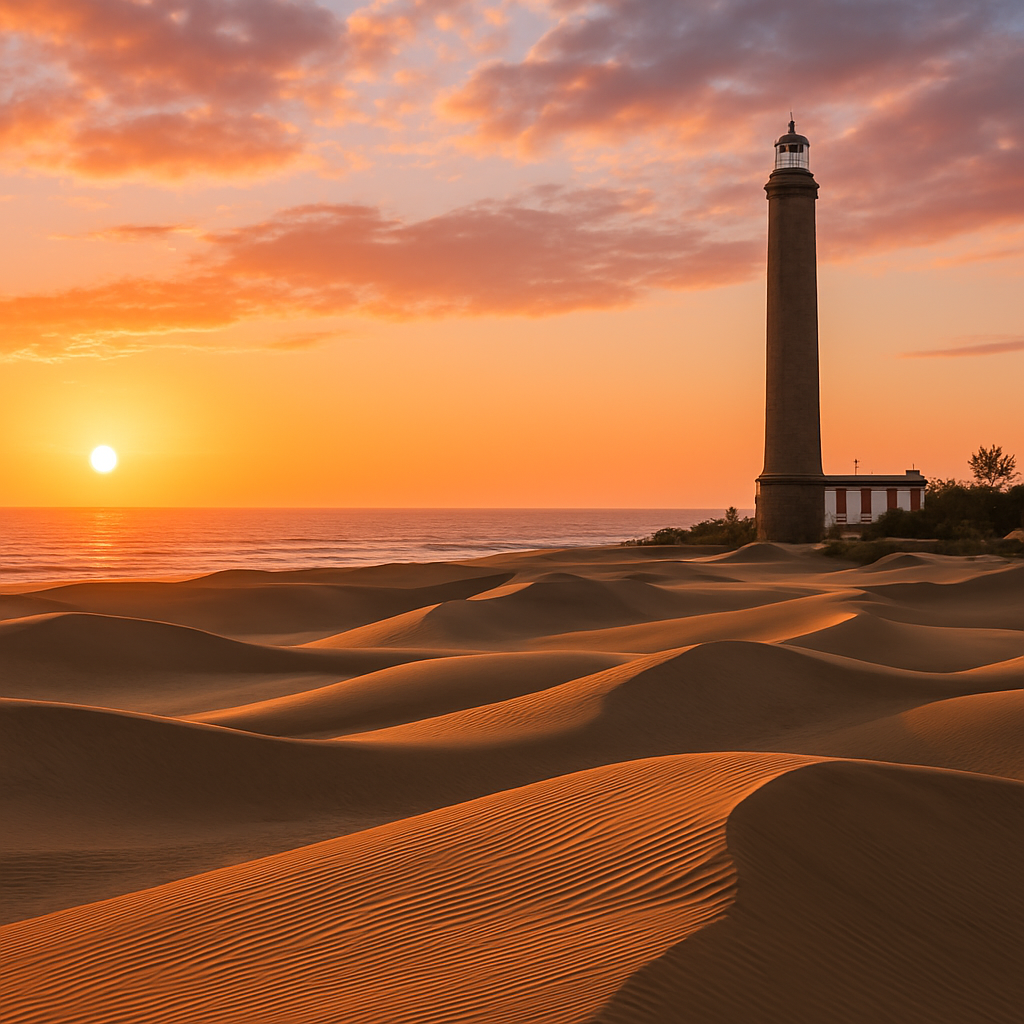
Sunset Walk Across the Dunes to the Faro
Start at the Anexo II end of Playa del Inglés around 5:30, take your shoes off, and walk west across the dunes toward the lighthouse. It's about 40 minutes barefoot, the sand turns genuinely pink as the light drops, and you arrive at the Faro de Maspalomas exactly when the first cocktail special starts at the promenade chiringuitos. The 55-meter lighthouse has been anchoring this view since 1890 — Juan León y Castillo's design, declared an Asset of Cultural Interest, and it still does the job.
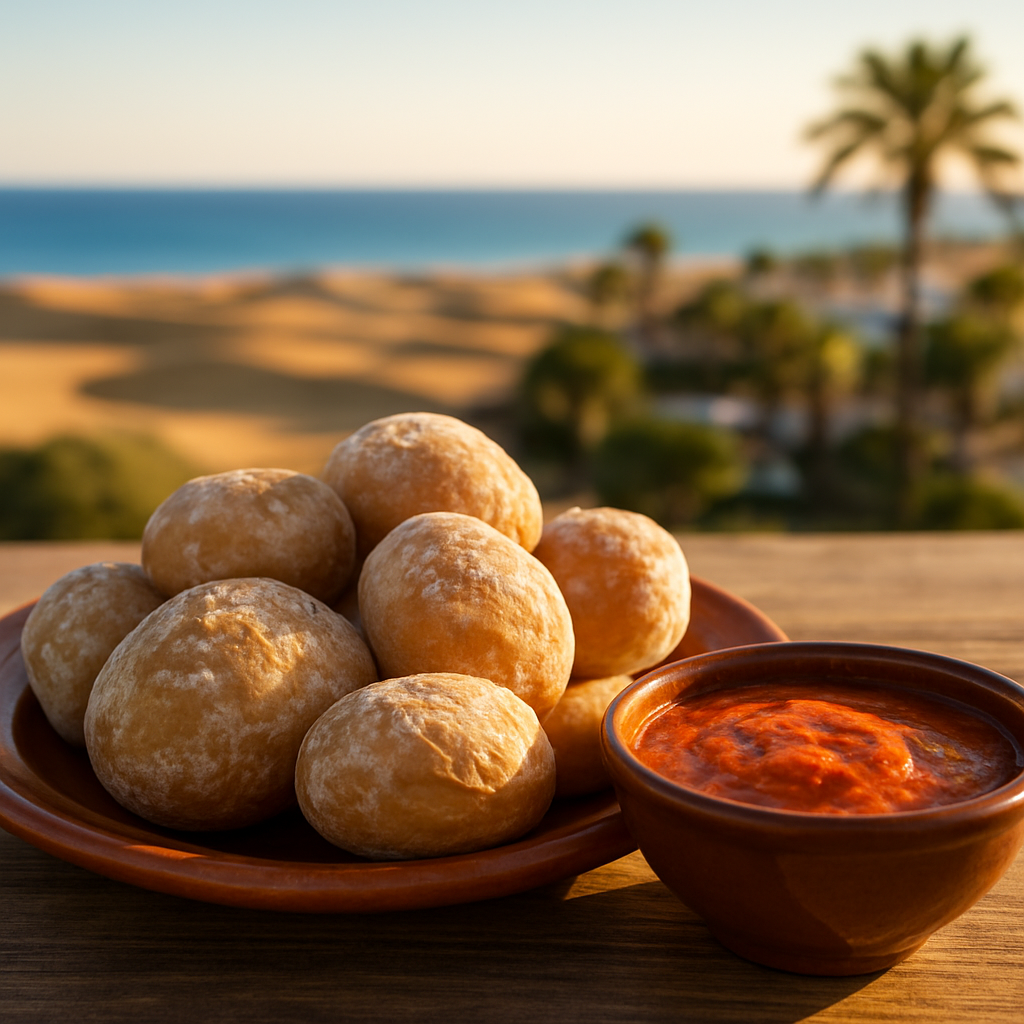
Papas Arrugadas at a Fataga Guachinche
Rent a car for the morning and drive 25 minutes inland to the hill village of Fataga, where the guachinches — the unmarked, family-run Canarian dining rooms that pour their own wine — serve papas arrugadas with mojo picón the way the rest of the island measures itself against. Order the goat, drink the house red, and remember that the Canaries are not the Mediterranean and the cuisine knows it.

Hike to Roque Nublo
An hour's drive into the central mountains gets you to the La Goleta parking area, and from there it's a 1.5km trail up to Roque Nublo — an 80-meter volcanic monolith standing at 1,813 meters of elevation, declared a Natural Monument in 1987 and held as a sacred site by the indigenous Canarii. The hike is short and the payoff is enormous: a 360° view across the island's interior that makes the resort coast feel like a different country.
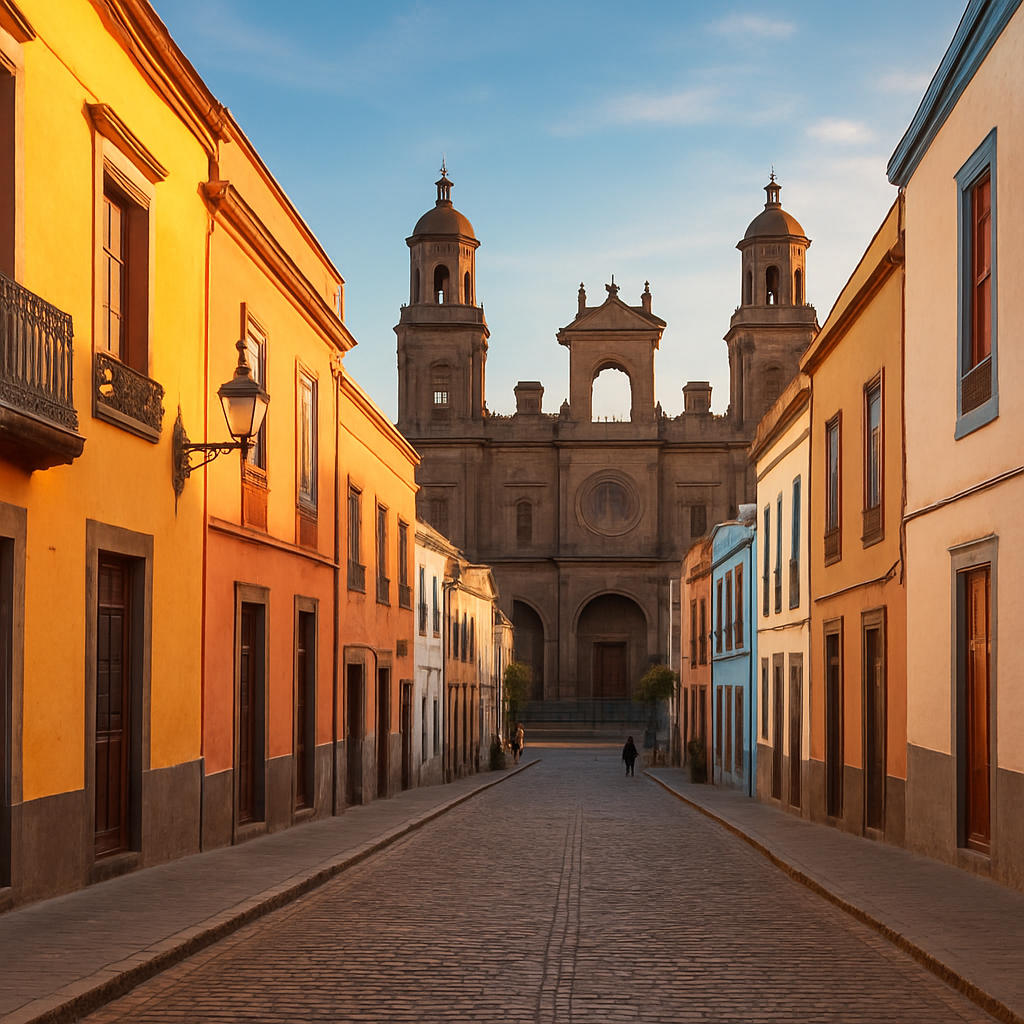
A Day in Vegueta, Las Palmas
Take the Global 30 bus 50km north — runs every 20 minutes, under €7 — to the capital and spend a full day in the UNESCO-recognized Vegueta quarter. The 1478-era cathedral plaza, the Casa de Colón where Columbus stopped on his way west, the cobbled lanes lined with old colonial townhouses, and the long lunch at one of the tapas bars on Calle Mendizábal. Walk it off afterwards along the 3km urban beach at Playa de Las Canteras.
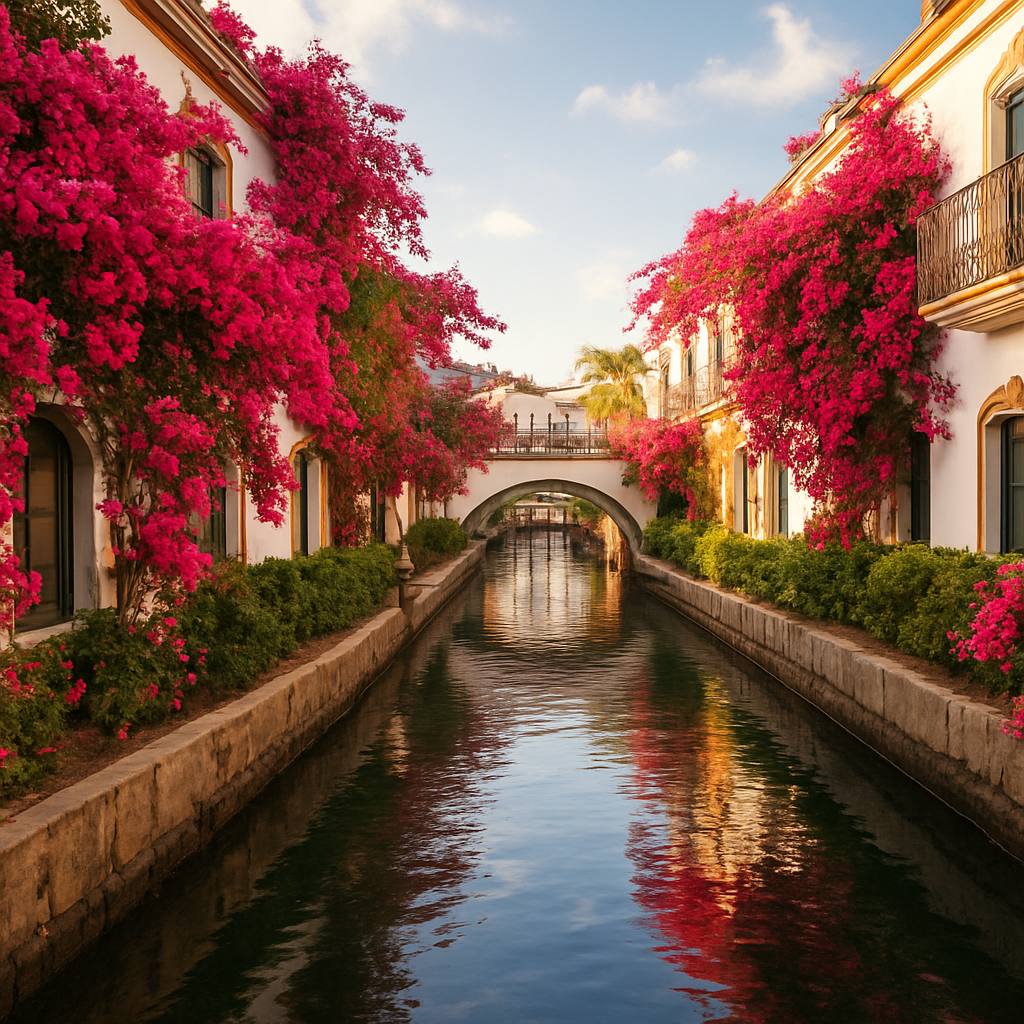
Lunch at Puerto de Mogán
35km west along the coast, the fishing village of Puerto de Mogán is laced with small canals that earned it the 'Little Venice of the Canaries' nickname — whitewashed houses draped in bougainvillea, a Friday market that's worth timing the trip around, and a calm swimming beach where the water actually invites you in. Eat fresh fish at the marina, take the boat back to Maspalomas instead of driving, and let the day end on the water.
The places I actually send people to
The Maspalomas dates worth planning around
Advice that fits how you travel
Maspalomas is one of the easiest solo trips in the gay world, and I've sent more first-time solo travelers here than to any other destination. The infrastructure is built for you — men-only resorts like Birdcage, Club Torso, and Ritual are essentially social clubs with bedrooms attached, where the pool deck does the work of breaking the ice before you've finished your second coffee. You'll have plans for dinner by 2 pm without trying.
The apps run hot here, especially during Pride weeks and Bear Carnival in February, but you barely need them — the Yumbo Centrum is a self-organizing social map. Start at Mykonos on the upper terrace around 10 pm for the people-watching, drift to Tubos for karaoke and the warm-up crowd, and by 1 am the room has chosen for you. Solo budget runs around €85-115/day on the budget tier and €165-230/day moderate, which makes a week-long trip genuinely affordable next to most European gay destinations.
Pro tip: the men-only bungalow resorts cluster within a 10-minute walk of the Yumbo, so you can stagger home at any hour without committing to a cab. As of 2026, the resort zone is observationally one of the safest concentrated LGBTQ+ tourist areas in Europe — petty theft around the Yumbo carparks after 4 am is the only real watch-out, so leave the watch in the hotel safe.
This is where Maspalomas earns the 9.7 on Chill. Same-sex couples can hold hands from the moment you land at LPA to the moment you board the return — through hotel check-in, along the seafront promenade, across the dunes at sunset, into any restaurant in town. As of 2026, Spain has had marriage equality for over twenty years and the resort municipality has been actively building for LGBTQ+ tourism since the 1980s, which means none of this is performative. It's just the texture of the place.
For romance, my picks split into two registers. The Yumbo-adjacent couples' play: book Bohemia Suites & Spa, take the rooftop tasting menu at 360° on your first night with the dunes framed through glass, and walk the eight minutes to the scene afterwards. The Meloneras play: Lopesan Costa Meloneras for the pool complex and the long slow lunches, Las Rías for the proper Galician seafood dinner, and the 40-minute barefoot walk across the dunes from Anexo II to the Faro de Maspalomas at sunset — the sand genuinely turns pink, and the cliché earns itself. Couples generally budget €270-360/day moderate, €560-950 if you're doing the five-star spa version.
The romance move I send every couple on at least once: rent a car for half a day and drive 25 minutes inland to a guachinche in Fataga for papas arrugadas with mojo picón and the house red. It's the meal that reminds you you're not actually in a resort — you're on a real island, in a real country, with a real cuisine, and you got to share it with the person across the table.
LGBTQ+ families have full legal recognition in Spain — as of 2026, marriage, joint adoption, and parental rights have been settled law for over two decades, and the 2023 Ley Trans covers gender identity from age 16. Practically, this means hotel check-in with two dads or two moms and the kids generates exactly zero friction across Playa del Inglés, Meloneras, and San Agustín. The Lopesan and Seaside resort groups are the operators most experienced with family bookings, and they handle it the same way they'd handle any family — competently, without comment.
San Agustín is the family base I'd recommend over the Yumbo-adjacent resorts. The beach is calmer, the buildings lower, the restaurants more locals-and-regulars than late-night package crowds, and it's a 10-minute taxi to the gay scene if the grownups want a night out. Kids will go feral for the dunes — there's a kid-friendly stretch east of Beach Post 4, well clear of the gay nude section, with shallow water and beach kiosks serving the obvious things. Family moderate budget runs €420-580/day; the Lopesan flagship at the top of the range, the San Agustín apartment-style properties at the lower.
For day trips that actually work with kids: Puerto de Mogán's canals and Friday market are made for it (take the boat back to Maspalomas, not the road), and the lighthouse promenade at the Faro de Maspalomas at sunset is a 20-minute walk that even small legs will manage. Skip Roque Nublo unless your kids hike — it's a real 1.5km mountain trail at 1,813 meters, beautiful but not casual.
What Maspalomas actually costs
Flights, visas, and the first 30 minutes
Airport: Gran Canaria Airport (LPA), known locally as Aeropuerto de Gran Canaria, sits about 25 km north of Maspalomas on the GC-1 motorway. It's one of Spain's busiest holiday airports, with approximately 120 direct routes — heavy on northern Europe (London, Manchester, Dublin, Amsterdam, Frankfurt, Munich, Hamburg, Stockholm, Oslo, Copenhagen, Helsinki) plus year-round mainland Spanish hubs (Madrid 2h45, Barcelona 3h). Flight times typically run 4-5 hours from the UK and Ireland, 4-5 hours from continental hubs, and 8-9 hours via mainland Spain from North America.
Visas: As of 2026, EU citizens generally need no visa or passport — just a national ID card. US, UK, Canadian, and Australian travelers typically enter visa-free for up to 90 days under Schengen rules, with ETIAS pre-authorization required from 2026 — apply online before you fly. The Canary Islands are part of Schengen, so the same rules apply as for the mainland.
Airport to Maspalomas: The fastest reliable option is a taxi at €38-45 fixed-rate (25-30 minutes), with supplements for luggage and night travel. The Global Bus 66 runs direct from the airport to the Faro de Maspalomas for €4.05, roughly every 30 minutes (35-45 minutes). Pre-booked shuttles run €10-18 door-to-door (30-45 minutes) and are popular with Pride and circuit visitors. Rental cars from on-site agencies run €25-50/day if you want flexibility for inland day trips. Skip the car entirely if you're staying inside the Playa del Inglés / Maspalomas / San Agustín triangle — the seafront promenade connects all three and Yumbo parking is a blood sport.
Pro tip: tell your cab driver Yumbo rather than your hotel name — every driver knows the Yumbo, and most of the LGBTQ+ resorts are within a short walk of it.
Traven's seasonal breakdown
The questions everyone asks
Is Maspalomas safe for same-sex couples?
Maspalomas or Playa del Inglés — where should I actually stay?
When's the best time to go?
Do I need a car?
How gay is the beach, really?
Do I need to speak Spanish?
How much should I budget per day?
Screenshot this before you go
So should you actually go?
Go. If you're an LGBTQ+ traveler who hasn't done Maspalomas yet, this should be at the top of the list — the combination of full legal equality, a 40-year-old gay beach, two annual Prides, the densest LGBTQ+ nightlife complex in the Atlantic, and weather that's swimmable in February is not something you'll find anywhere else on the map. First-timers, book Playa del Inglés near the Yumbo. Couples, split your stay between Meloneras and the dunes-adjacent five-stars. Families, base in San Agustín and day-trip to the rest. Whichever version you pick, give it at least five nights — the rhythm of this place doesn't reveal itself in a long weekend, and the trip you'll remember is the one where you finally stopped checking your watch.
Sources & Resources
Official links we reference when compiling this guide. Last verified 2026-05-19.
- Amigos Contra el SIDA Las Palmas
- Ayuntamiento de San Bartolomé de Tirajana
- Bear Carnival Gran Canaria
- FELGTBI+ (Spanish LGBTQ+ Federation)
- Gáldar Diversa - Gran Canaria LGBT+
- Gamá Colectivo LGBT+ Canarias
- Maspalomas Pride
- Patronato de Turismo de Gran Canaria
- Servicio Canario de la Salud
- Winter Pride Maspalomas