
Seville doesn't run on your clock. Dinner starts at ten, the Alameda fills at midnight, and the city dares you to keep up.
It's a Thursday at 11pm on the Alameda de Hércules and nobody's in a hurry. The wide promenade is thick with people — couples sharing montaditos at the veladores, a group of women laughing over a pitcher of rebujito, someone's abuela walking a terrier past a drag queen adjusting her lashes before a set at Bar Maquillaje. This is Seville's gay district, except it doesn't feel like one. It feels like a neighborhood that happens to be spectacularly, casually queer — and that's exactly why it works better than most purpose-built gay villages I've seen anywhere in Europe.
Seville doesn't have Chueca's commercial polish or Barcelona's international sheen. What it has is deeper and harder to manufacture: a queer culture so embedded in the city's social fabric that it doesn't need a branded identity to exist. The Alameda crowd has been here since before the term "gay district" meant anything — through Franco, through the transition, through Andalucía's recent conservative political shifts — and it shows zero interest in going anywhere. I gave this city a 9.4 on Destination because the bones are extraordinary: the Alcázar, the cathedral, Casa de Pilatos, the flamenco tradition that runs through everything like a bass line. But the reason my overall Traven-Dex lands at 8.8 is the complete package — world-class culture, strong legal protections, and a gay scene that's genuine rather than performative.
Here's what you need to understand about Seville's rhythm: the real scene doesn't start until 1am. Dinner at 10pm is normal. Tertulia — that beautiful Spanish tradition of sitting around talking about everything and nothing — stretches until midnight at the Alameda terraces. Then you drift toward Calle Trajano, where bars like Arena and El Garage Club are just warming up. If you show up at a Seville gay bar at 10pm expecting action, you'll be drinking alone with a very patient bartender. Build your night backward from 3am and suddenly the whole city makes sense.
And the heat — I need to warn you about the heat. Summer in Seville isn't a figure of speech. It's 40°C at 4pm and still above 30°C at midnight, and the only rational response is to do what the locals do: hide indoors until sunset, then live outside until dawn. The veladores with their misting fans become your living room. The cold salmorejo becomes your religion. Come in spring or October if you want to be comfortable. Come in summer if you want to understand why Sevillanos are the way they are — tough, nocturnal, and completely uninterested in anyone else's schedule.
The stuff your travel guide buries on page 47
The legal picture: As of 2026, Spain has some of the strongest LGBTQ+ protections on the planet. Same-sex marriage has been legal since 2005 — over two decades. Joint adoption is fully legal. Comprehensive anti-discrimination protections cover employment, housing, and public services. Spain's 2023 Ley Trans enables self-ID gender marker changes from age 16, making it one of Europe's most progressive legal environments for trans people. My Legal score is a perfect 10.0, and it's earned. For detailed national resources, the FELGTBI+ federation and the Ministerio de Igualdad are the official starting points. In Andalusia specifically, the Junta de Andalucía's LGTBI office and the Federación Arcoíris de Andalucía provide regional support.
Cultural reality: Spain's legal protections are backed by genuine social acceptance in urban areas — Seville's Alameda de Hércules is an exceptionally safe and welcoming zone where queer life is completely normalised. That said, Seville is a regional capital with conservative pockets outside the city centre. The Macarena barrio has a more traditional character, and the outer residential neighborhoods are where you'll find the most socially conservative demographics. None of this translates to danger — it translates to visibility. You'll notice you're the only same-sex couple in the room sometimes. Nobody is going to say anything about it.
Semana Santa note: Holy Week is genuinely extraordinary to witness, but it fills the city with enormous crowds and a deeply Catholic, traditional atmosphere. LGBTQ+ travelers are fine — Sevillanos are hosts first — but read the room during processions and near active religious sites. Save the overt PDA for the Alameda. Near churches and during Semana Santa routes, modest comportment is culturally respectful for all visitors regardless of orientation.
PDA comfort: On the Alameda de Hércules, same-sex PDA is entirely normalised — day and night. The Centro Histórico and Santa Cruz are tourist-heavy and cosmopolitan; holding hands and casual affection attract little attention. Triana is a working-class neighborhood where casual PDA is generally unproblematic but slightly more visible. Nervión and the commercial districts are modern and diverse — no practical concerns. The outer residential barrios are safe but more socially conservative; PDA is less common and more noticed.
Heat warning: This is practical, not metaphorical. Summer nights regularly sit above 30°C at midnight, and the bar terraces on the Alameda are where survival strategy and social life merge. Most venues have outdoor seating and misting fans. Pace yourself on the rebujito.
What it actually feels like on the ground
Holding hands: Completely comfortable on the Alameda de Hércules, in Santa Cruz, El Arenal, and the Centro Histórico. In Triana, you'll be fine — it's a warm neighborhood with older residents who aren't going to make a scene, though you may draw the occasional glance from someone's abuelo. In outer residential barrios, same-sex hand-holding is safe but less common; you're more visible, not more at risk.
Hotel check-in: No issues anywhere. Spain's legal framework means same-sex couples are handled identically at reception. Boutique hotels in Santa Cruz, chain properties in Nervión, hostels everywhere — you'll be processed normally. I've never heard a report suggesting otherwise.
Taxis and rideshares: Uber and Cabify both operate in Seville. Taxis are regulated and professional. No concerns about driver behavior toward same-sex couples. Pro tip: expect surge pricing on rideshares during Feria and Semana Santa periods.
Public spaces and parks: Parque de María Luisa and the Guadalquivir riverfront are family-oriented daytime spaces where same-sex couples blend in completely. The Alameda itself functions as a public park during the day. No reported issues.
Late night: The Alameda de Hércules and Calle Trajano are as safe as any central neighborhood gets — well-lit, populated, with plenty of people around late into the night. Isolated streets in the Macarena barrio further north get quieter after 2am; stay on main routes. Like everywhere in Seville's tourist zones, pickpocketing is more of a concern than any targeted anti-LGBTQ+ harassment — keep your phone in your front pocket during busy Alameda nights and don't leave bags on chair backs at veladores.
Trans travelers: Spain's Ley Trans (2023) provides self-ID gender recognition, making the legal environment among Europe's most progressive. In Seville, trans travelers will find the Alameda area and welcoming venues genuinely accepting. Traditional Andalusian social culture can be less fluid in daily interactions — stares are possible in non-tourist neighborhoods, but hostility is very rare. Gendered facilities follow your presentation without incident in the city centre.
Verbal harassment: Rare in the city centre and functionally nonexistent in the Alameda corridor. The most likely discomfort comes from older men in traditional neighborhood bars making comments you may or may not understand — and even that is uncommon. If you need health services, the Hospital Universitario Virgen del Rocío has an established sexual health unit and trans health pathway — ask at reception for the Unidad de Género. Cruz Roja Sevilla also runs community health outreach with LGBTQ+-aware staff.
The queer geography
Alameda de Hércules
This is it — the center of gravity. Built in 1574, widely cited as the oldest public promenade in Europe, and since at least the 1980s the undisputed social hub of Seville's LGBTQ+ community. It's a wide, tree-shaded boulevard in the Macarena district, lined on both sides with bars, cafés, and veladores that spill out across the pedestrian space. During the day, it's a neighborhood park — dog walkers, families, elderly couples. After dark, the queer crowd takes over the terraces, and by midnight the energy tilts decisively toward the scene. Orgullo Sevilla (Pride) is anchored here every late June. Bar Maquillaje on the promenade is the institution — it's been there forever, has outdoor seating that fills up early, and serves as the informal town square for Seville's older queer community. Go there first to get your bearings before the night picks up.
The nightlife proper concentrates on Calle Trajano, the side street off the Alameda that holds the densest run of LGBTQ+ bars and clubs in the city. Arena Sevilla is the anchor gay club — two floors, reliably busy on Fridays and Saturdays, and the place where everything eventually converges after the bar terraces wind down around 3am. It skews male but gets a mixed crowd on weekend nights. El Garage Club, Dreams Disco, Ohm Bar — the strip is walkable and concentrated enough that you can work through it in a single evening without ever needing a taxi.
Alfalfa
The Plaza del Alfalfa and its surrounding streets function as a complementary LGBTQ+-friendly zone that's distinct from the Alameda but connected to it. The Alfalfa neighborhood sits between the historic centre and the Alameda corridor — it's more daytime-oriented, with the plaza serving as an informal gathering point for a diverse crowd that includes a significant LGBTQ+ presence. Bar Alfalfa on the plaza is the reference point. This is where you'll find yourself on a Sunday afternoon when the Alameda hasn't woken up yet.
Other Neighborhoods Worth Knowing
Triana across the Guadalquivir is the traditional flamenco neighborhood — it's gentrifying fast, and some LGBTQ+ bar-hoppers now make the bridge crossing for a less circuit-driven alternative nightlife scene. The energy is rawer and more local. El Arenal sits between the historic centre and the Triana bridge, within walking distance of the Alameda corridor — it's where you'll find La Brunilda Tapas and several strong restaurant options that serve as the natural dinner stop before a night on the Alameda. The Casco Antiguo surrounding the Cathedral and Alcázar is beautiful to wander by day, though the actual queer nightlife concentrates further north toward the promenade.
For daytime community life and local resources beyond the nightlife circuit, the Federación Arcoíris de Andalucía has Seville-area programming and is the best starting point for connecting with local LGBTQ+ organizations, events, and support services.
The experiences worth rearranging your itinerary for
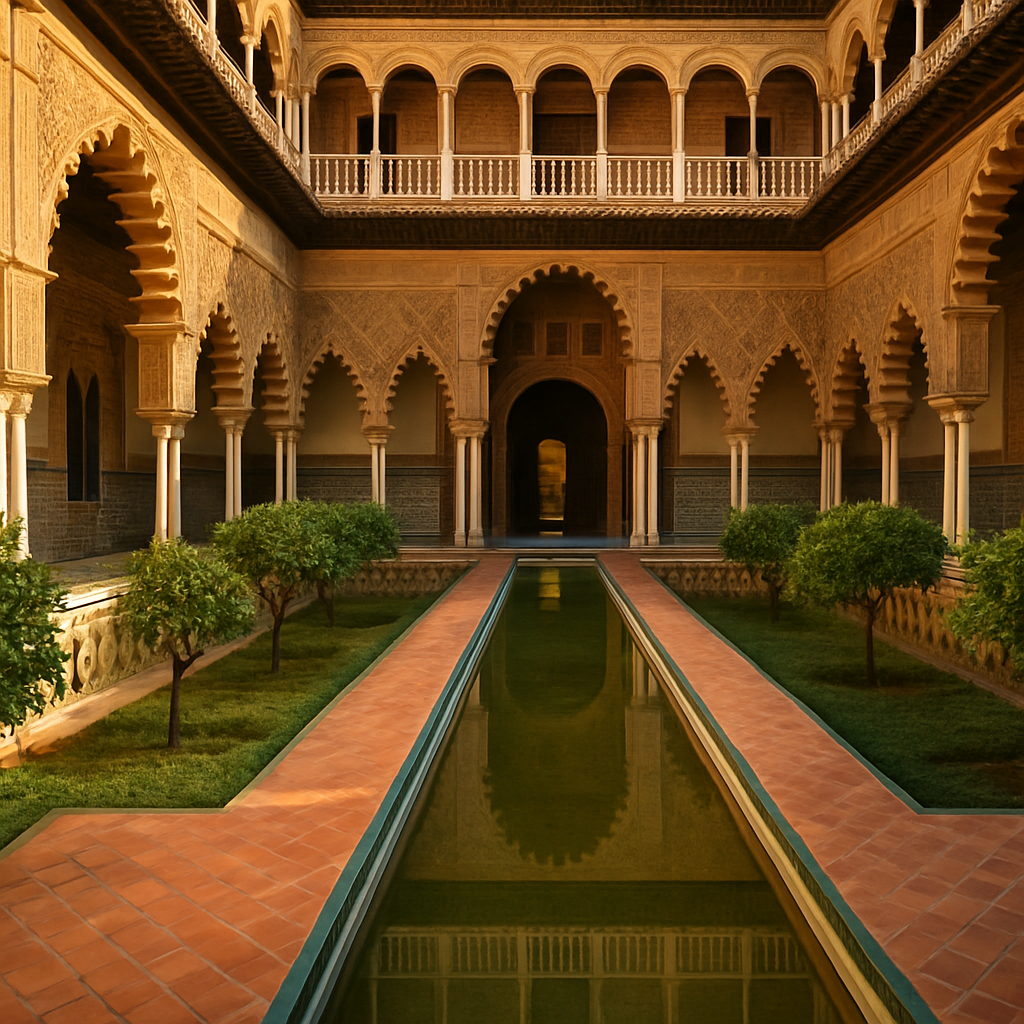
The Alcázar at Opening Time
The Royal Alcázar is one of the most beautiful buildings in Europe — Mudéjar tilework, impossible courtyards, gardens that go on longer than you expect. Everyone tells you to book in advance, and they're right, but here's the actual move: buy the first time slot of the day. By 10:30am the courtyards are shoulder-to-shoulder tour groups. At opening, you get ten minutes of near-silence in the Hall of Ambassadors that will rearrange your understanding of what a building can do to a person. The gardens alone are worth the ticket — labyrinthine, shaded, and genuinely cool even in shoulder-season heat.
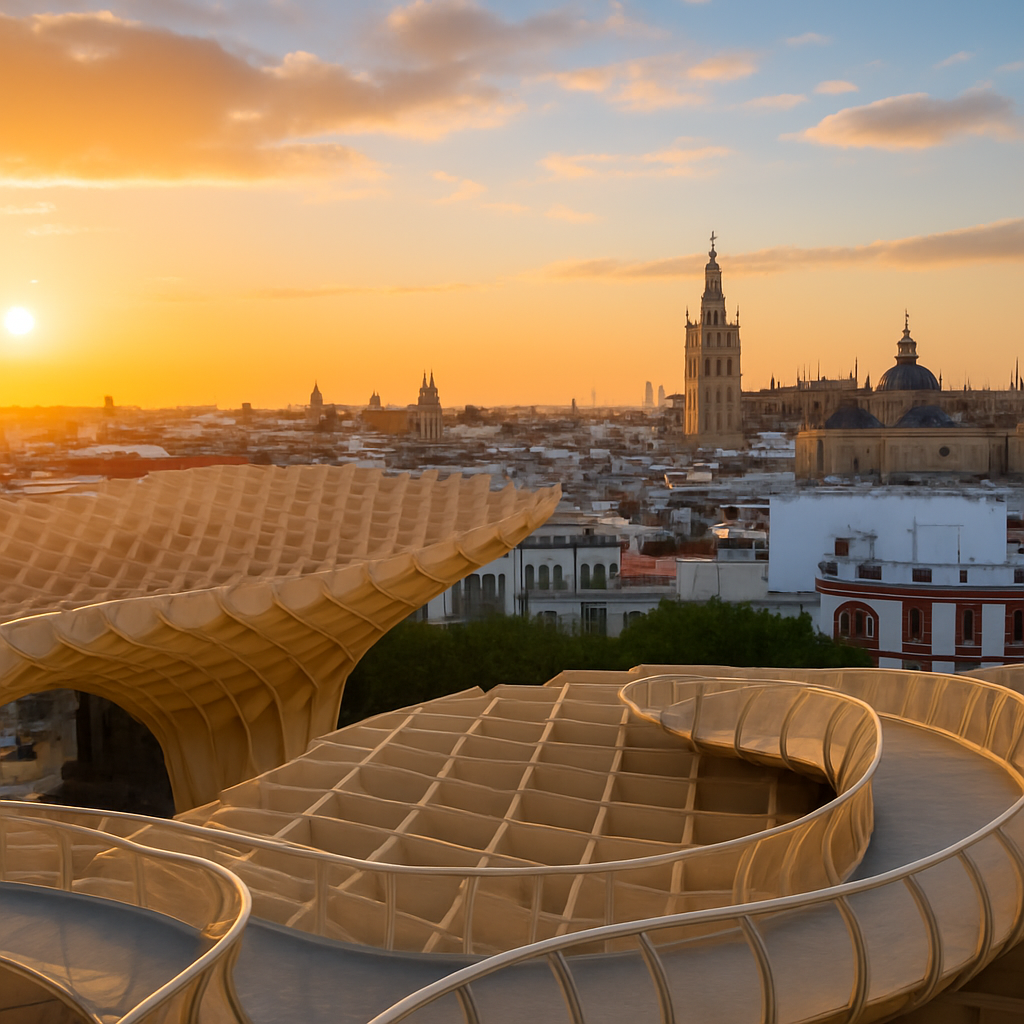
Las Setas at Golden Hour
The Metropol Parasol — everyone calls it Las Setas (the mushrooms) — is a massive wooden lattice structure hovering above the Mercado de la Encarnación. Walk up to the top-level walkway around 7pm, order a drink at the bar, and watch the entire old city go pink and gold. It's a ten-minute walk from the Alameda and completely worth it. Below, the market itself is a solid food stop — grab a plate of jamón and a glass of manzanilla before you ascend. The archaeological museum in the basement, with Roman and Moorish ruins exposed below ground, is a bonus most people skip.
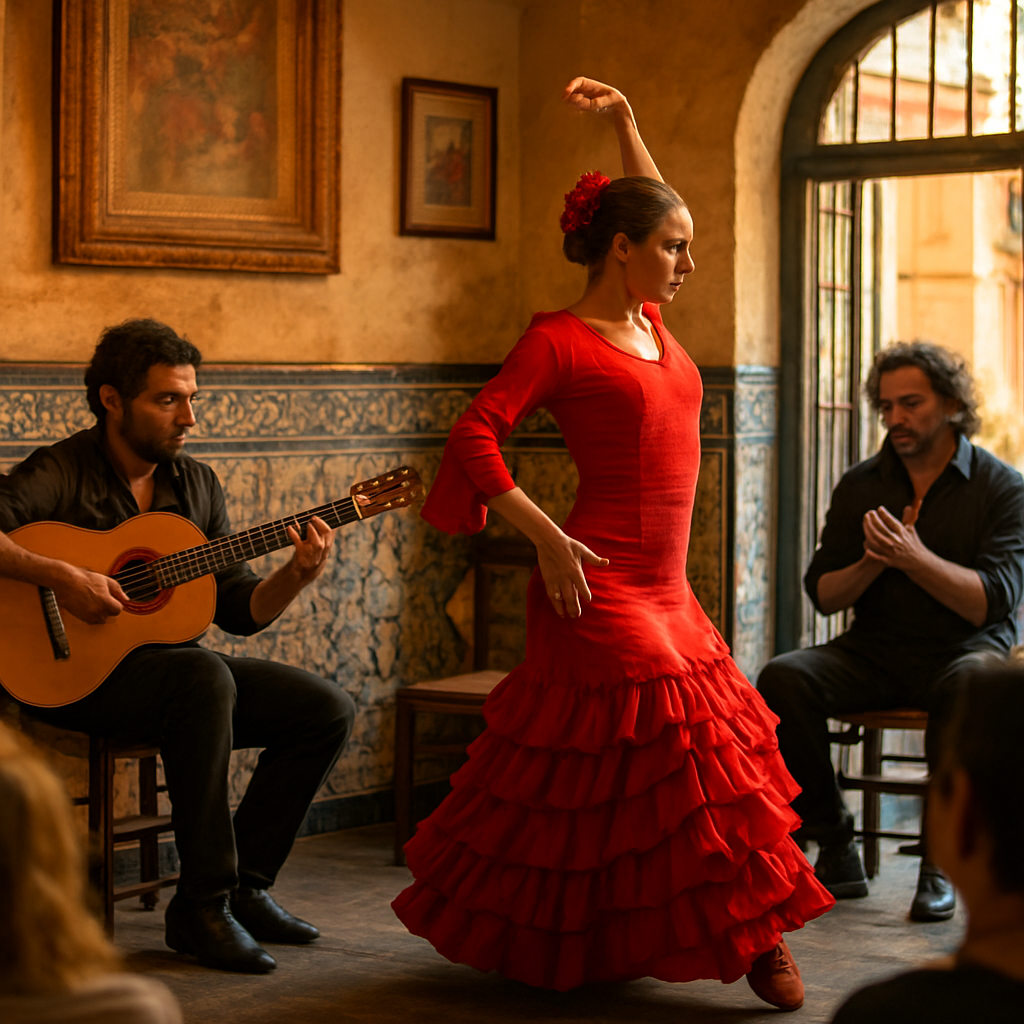
Flamenco That Actually Means Something
Skip the tourist-trap tablaos that charge €45 for a glass of sangria and a performance aimed at cruise ship passengers. Instead, head to La Carbonería in Santa Cruz — a former 19th-century coal storage building that's offered free nightly flamenco for decades, no reservation required. The quality varies because it's real — some nights a performer will stop your breathing and some nights it's a younger artist still finding their voice. That variance is the point. If you want the full museum experience, the Museo del Baile Flamenco in Santa Cruz has live evening courtyard performances that are consistently excellent. Flamenco has a deeply documented connection to LGBTQ+ artists — particularly gay cantaores who found degrees of acceptance within the art form during decades of Francoist repression.
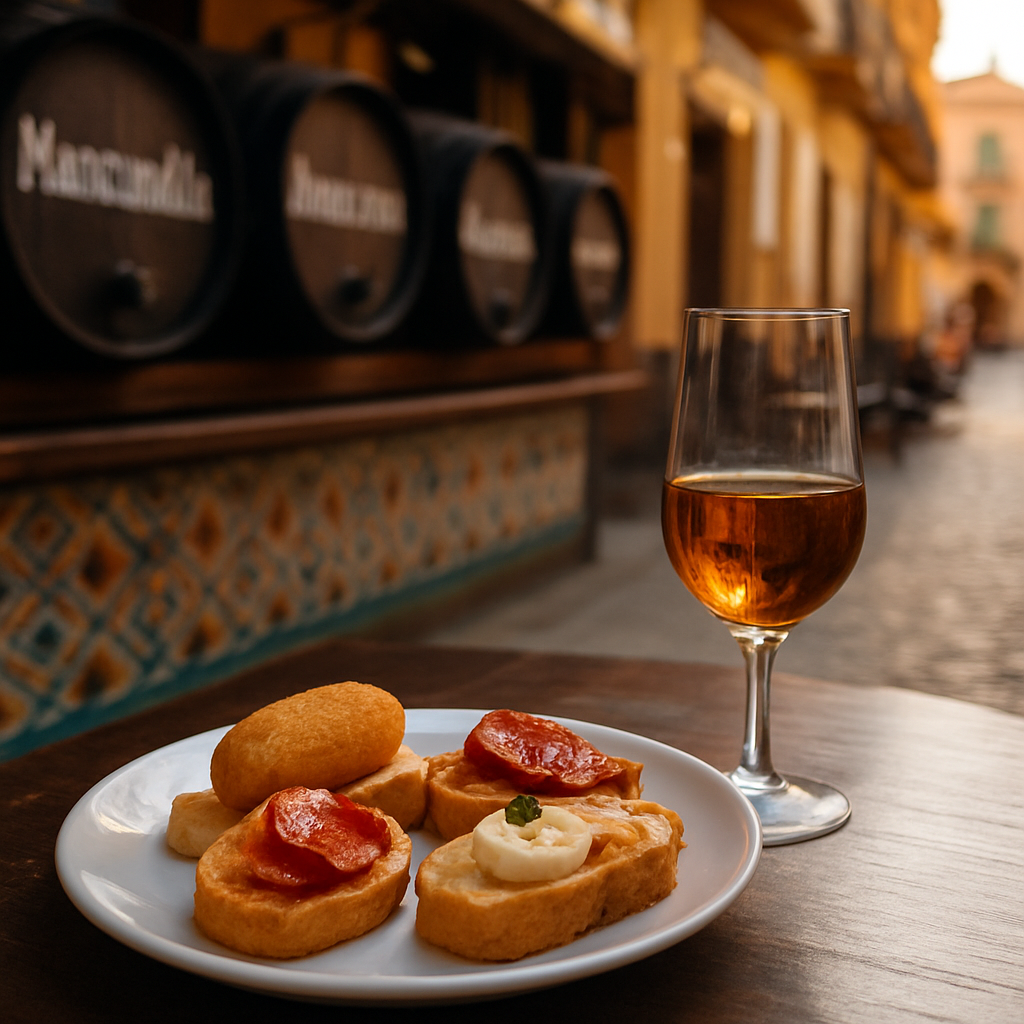
The Tapas Crawl You'll Actually Remember
Seville invented the tapa, and the best way to experience it is not at any single restaurant but across four or five in a single evening. Start at El Rinconcillo on Calle Gerona — founded in 1670, tabs still tallied in chalk on wooden barrels, order the espinacas con garbanzos and a fino sherry. Walk to Bodega Santa Cruz (locals call it Las Columnas) for standing-room pescaíto and more fino. Then cross to Eslava for its award-winning modern interpretations — the slow-cooked egg with truffle mushroom is the dish that won Seville's tapas competition multiple times. End wherever the night takes you. Budget around €25–35 for a full crawl including wine. Order the salmorejo everywhere — Seville's thicker, richer cousin to gazpacho, topped with jamón and boiled egg.
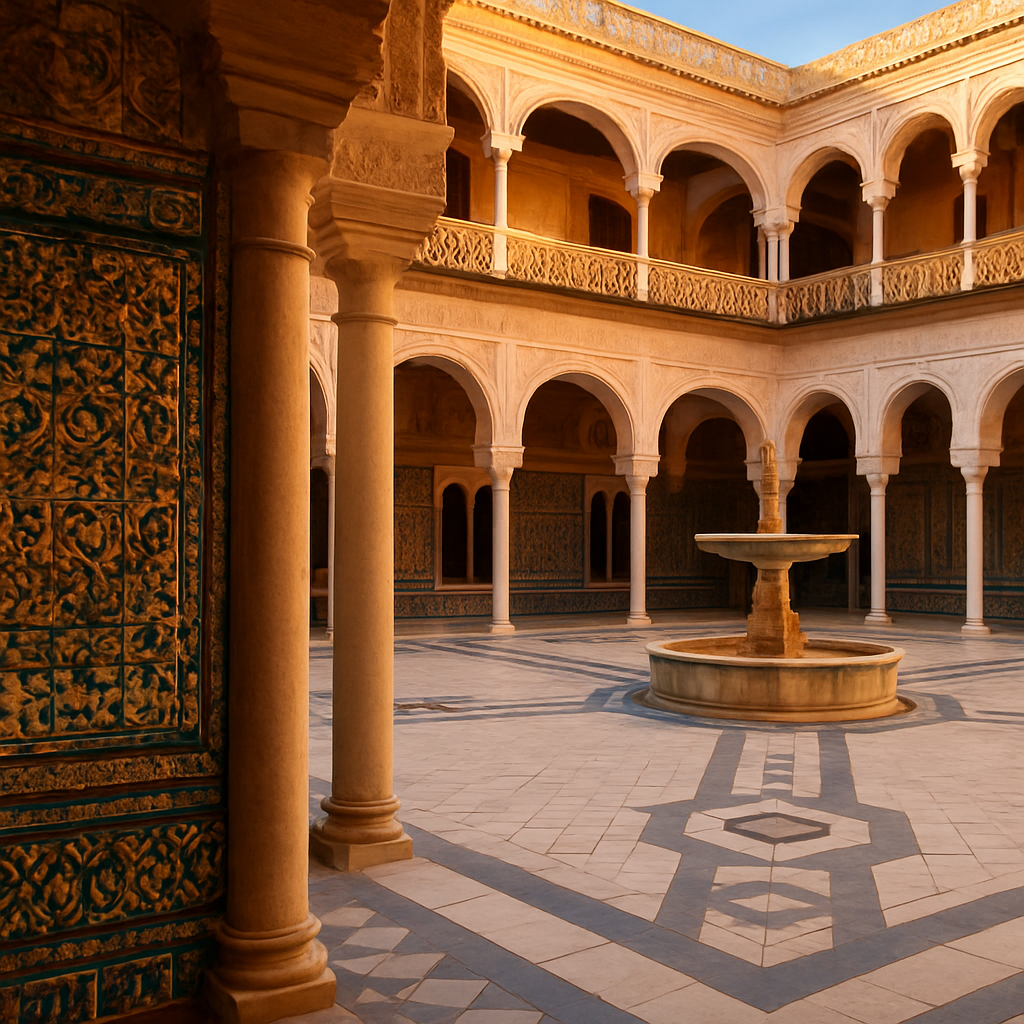
Casa de Pilatos and the Streets Around It
Casa de Pilatos is a 16th-century Andalusian palace that most visitors skip because the Alcázar exists. Their loss. The ground-floor courtyard — all Mudéjar tile, Roman sculpture, and absolute silence — is one of the most beautiful rooms in Seville, and you'll likely have it nearly to yourself. The surrounding streets between here and Plaza del Alfalfa are some of the best aimless-wandering territory in the city: narrow, lived-in, full of neighborhood bars with no English menus and cold beer at €1.50. This is the Seville that existed before the tourist infrastructure, and it's ten minutes from everything.
The places I actually send people to
Advice that fits how you travel
Seville is one of the best solo destinations in southern Europe, and the reason is structural: Spanish social culture is built around shared public space, late nights, and talking to strangers. You will not feel alone here unless you actively try. The Alameda de Hércules operates like a living room — sit at any velador with a beer and within an hour someone will talk to you. The terrace culture means solo travelers aren't isolated at a table for one; you're at a communal outdoor space where conversations happen naturally.
App culture is active — Grindr and Wapo both have solid user bases in Seville, and the Alameda bars function as natural meeting points for people who connected online first. The pre-club circuit is practically designed for solo exploration: start at Tik Tak or Godzilla on the Alameda for affordable early-evening drinks, let the crowd build, and follow the energy toward Calle Trajano after midnight. The fact that nobody goes out before 11pm means you have long, unhurried evenings — there's no FOMO about missing a 7pm happy hour. A few words of Spanish go further than you'd expect; Seville is not as anglophone as Barcelona or Madrid's tourist core, and even basic effort gets you warmer service and actual conversation.
Budget solo travelers will find Seville remarkably affordable — a hostel dorm at Oasis Backpackers' runs from €18/night and has a rooftop pool, the menú del día at most local restaurants gives you a multi-course lunch with a drink for €12–15, and walking covers nearly everything in the old city. Stay within walking distance of the Alameda — Macarena, El Centro, or Triana all work — and you won't need a taxi all week.
Seville does something unfair to couples — it makes everywhere else feel slightly insufficient afterward. The city's evening ritual is practically designed for two: tapas at 9pm, wine stretching past 11, a slow walk through Barrio de Santa Cruz's lantern-lit alleyways until you inevitably end up somewhere with cold rebujito and nowhere else to be. The Alcázar gardens at dusk, the orange blossom still heavy in the air — I'm not going to pretend that's not romantic, because it absolutely is.
Same-sex couples will find the historic centre and the Alameda de Hércules entirely comfortable for PDA — hold hands, be affectionate, nobody is looking at you twice. For accommodation, the Santa Cruz cluster puts you in the most beautiful part of the city: Hotel Casa 1800 (from €185/night) is a restored 19th-century palace with a rooftop that makes morning coffee feel like an event. If budget isn't the constraint, EME Catedral Mercer (from €260/night) puts you directly opposite the Giralda with rooftop pool views that are, frankly, excessive.
For a genuinely memorable date night: book the evening flamenco performance at the Museo del Baile Flamenco in its open courtyard, then walk to dinner — Eslava on Calle Eslava for multiple award-winning tapas, or La Brunilda in El Arenal for something more contemporary. Finish on the Alameda's veladores with something cold, and let the city handle the rest.
Spain has some of Europe's strongest LGBTQ+ family protections — as of 2026, same-sex marriage, joint adoption, and full parental recognition are all established law. Your family structure is legally recognized from the moment you arrive. In practice, Seville is a city that takes children seriously: Spanish culture has kids at the dinner table at 10pm without anyone raising an eyebrow, and LGBTQ+ families tend to find themselves entirely unremarkable here.
The activity list for families is genuinely strong. Parque de María Luisa is enormous, shaded, and full of cycling families on weekends — easy to spend a full morning in without anyone melting down. The Alcázar's gardens are magical for children: labyrinthine, mysterious, and manageable for kids who have limits on architectural details. Isla Mágica, a full theme park on the Isla de la Cartuja, is an honest-to-goodness excellent children's day. And the Mercado de la Encarnación — Las Setas — combines a food market with an elevated walkway that satisfies everyone in the group simultaneously.
Practically: book the Alcázar and Cathedral online well in advance — the walk-up queues are punishing. Strollers handle the wider streets of Santa Cruz and the Centro fine, but some of the narrower callejones in the historic core require folding. The menú del día — a full multi-course lunch with a drink for around €12–15 per adult at most local restaurants — is your budget superpower for feeding a family without drama. Most neighborhood restaurants are entirely relaxed about children, bring bread immediately, and won't rush you out.
What Seville actually costs
Flights, visas, and the first 30 minutes
Seville is served by Seville Airport (SVQ), approximately 10km northeast of the city centre. It connects to 60+ destinations across Europe, making it easily reachable from most major hubs — though transatlantic travelers will typically connect through Madrid (MAD) or Barcelona (BCN).
Major direct routes: Madrid (MAD) ~1h 10m · Barcelona (BCN) ~1h 30m · London Heathrow (LHR) ~2h 30m · London Gatwick (LGW) ~2h 25m · Amsterdam (AMS) ~2h 45m · Paris CDG ~2h 20m · Frankfurt (FRA) ~2h 55m · Dublin (DUB) ~2h 40m.
Visa requirements as of 2026: US, Canadian, and Australian passport holders generally don't need a visa — you can typically stay up to 90 days within any 180-day Schengen period. ETIAS electronic travel authorization is expected to be required from late 2026; check your government's official travel advisory before you book. UK travelers generally don't need a visa post-Brexit — the same 90-day Schengen window applies — but your passport should typically be valid for at least 3 months beyond your planned departure date. EU citizens travel freely on a national ID; no visa or passport required. Entry requirements can change — always verify with your government's advisory.
Airport to city centre:
- Airport Bus (EA line) — €4, 35–45 min, runs every 15–30 minutes to Santa Justa station and city centre. My go-to.
- Taxi — €22–€30 fixed fare to city centre, 20–30 min, available 24/7.
- Uber/Cabify — €18–€26, 20–30 min. Expect surge pricing during Feria and Semana Santa periods.
- Rental Car — approximately 20 minutes, but city centre driving is genuinely complex and parking in the old town is a serious problem. Skip it unless you're heading straight out of the city on arrival.
Traven's seasonal breakdown
The questions everyone asks
Is Seville safe for LGBTQ+ travelers?
Do I need to speak Spanish?
When does nightlife actually start?
How much should I budget per day?
Is it really that hot in summer?
Where's the gay area?
Should I book Alcázar tickets in advance?
Screenshot this before you go
So should you actually go?
Go. Seville is one of Europe's great cities and it happens to be wrapped in one of the continent's strongest legal frameworks for LGBTQ+ travelers — marriage since 2005, trans self-ID since 2023, comprehensive anti-discrimination protections across the board. The scene is real, the culture is world-class, the food will ruin you for tapas anywhere else, and the cost of living means your money stretches further than Madrid or Barcelona. Skip July and August unless you're built for extremes, aim for March through May or September through November, and book a place within walking distance of the Alameda de Hércules. You won't need much else. This city has a way of pulling you into its rhythm — late dinners, long conversations, warm nights on the promenade — and once you're in it, you won't want to leave. I certainly didn't.
Sources & Resources
Official links we reference when compiling this guide. Last verified 2026-03-15.
- CEAR — Comisión Española de Ayuda al Refugiado (LGBTQ+ Asylum Support)
- CEAR — Comisión Española de Ayuda al Refugiado (LGBTQ+ Asylum Support)
- COLEGAS — Confederación Española de Lesbianas, Gays, Trans y Bisexuales
- COLEGAS — Confederación Española de Lesbianas, Gays, Trans y Bisexuales
- Cruz Roja Sevilla — Servicios Sociales y Salud
- Federación Arcoíris de Andalucía
- Federación Arcoíris de Andalucía
- FELGTBI+ — Federación Estatal de Lesbianas, Gais, Trans, Bisexuales, Intersexuales y más
- FELGTBI+ — Federación Estatal de Lesbianas, Gais, Trans, Bisexuales, Intersexuales y más
- Instituto Andaluz de la Mujer — Recursos LGTBI
- Junta de Andalucía — Área LGTBI
- Junta de Andalucía — Inclusión Social, Juventud, Familias e Igualdad
- Ministerio de Igualdad — Gobierno de España
- Ministerio de Igualdad — Gobierno de España
- Observatorio Andaluz contra la Homofobia, Bifobia y Transfobia — Recursos
- Orgullo Sevilla — Pride Official
- Orgullo Sevilla — Pride Official
- Stop VIH — Información y Recursos sobre VIH en España
- Stop VIH — Información y Recursos sobre VIH en España