
A small town that decided decades ago it had nothing to hide — and built a whole identity around that energy.
The first thing that hits you walking into Sitges isn't the Mediterranean — it's the scale. This is a town you can cross in twenty minutes, where the church on the promontory is visible from almost every street, where the gay bars and the fish restaurants and the beach where guys strip down to nothing are all within a five-minute stroll of each other. That compression is the magic. There's no commute between "the gay part" and "the rest of the city" because there's no division. The whole town runs on the same frequency.
Carrer Joan Tarrida on a Saturday night in July is a wall of sound and bodies — Parrots spilling onto the sidewalk, Trailer thumping since the 1970s, guys cruising between bars with the unhurried confidence of people who know they own this strip. But what I love about Sitges is that the next morning, the same crowd is eating pa amb tomàquet at a seafront café next to Spanish grandmothers who couldn't care less. My Traven-Dex of 8.8 reflects a place where legal perfection — I gave it a 10.0 on Legal — meets a cultural reality that actually lives up to the paperwork.
This isn't Barcelona's louder, messier cousin. It's something rarer: a place where being gay is so deeply woven into the town's economic and cultural DNA that it stopped being remarkable decades ago. The Carnival in February is proof — drag isn't a sideshow, it's the main event, with the Rua de la Disbauxa drawing tens of thousands. The Film Festival in October programs queer genre cinema alongside mainstream horror. The beach at Bassa Rodona has been the gay beach since your parents were young. Layer by layer, generation by generation, Sitges just became this.
Fair warning: it's a small town, and the scene reflects that. You won't find the sheer volume of a Berlin or a London. My Scene score of 7.8 is honest — the venue count is limited and some spots close or rebrand between seasons. But what exists is concentrated, genuine, and operates in a place where nobody's pretending. You come to Sitges to exhale. And you will.
The stuff your travel guide buries on page 47
The legal picture: Spain legalized same-sex marriage in 2005, making it one of the earliest countries in the world. Full adoption rights, comprehensive anti-discrimination protections across employment, housing, and services, and — since 2023 — a Trans Law that enables legal gender self-identification without medical requirements. My Legal score of 10.0 reflects the reality: this is as complete a legal framework as exists anywhere. Your marriage is recognized, your family is recognized, and discrimination against you is explicitly illegal under both national and Catalan regional law. For authoritative detail on national LGBTQ+ protections, the Ministerio de Igualdad is the official source.
The cultural reality: The laws aren't aspirational here — they reflect genuine social consensus. Spain consistently polls as one of the most LGBTQ+-accepting countries in Europe, and Catalonia is at the progressive end of that spectrum, and Sitges is at the progressive end of Catalonia. You're in a town where queerness has been woven into the social fabric for decades. The local business association ACEGAL actively supports and promotes LGBTQ+ tourism, and the Ajuntament de Sitges treats its queer identity as a point of civic pride, not a marketing afterthought.
PDA comfort: On Carrer del Pecat, the gay beach at Playa de la Barra, and throughout the Old Town, same-sex PDA is fully normalized — not tolerated, normalized. Along the Passeig Marítim and the main beachfront, couples of all configurations are a completely ordinary sight. During Carnestoltes and Pride, the entire town becomes an open celebration. On the residential outskirts and near the train station at night, you might instinctively dial it back slightly, but the baseline is overwhelmingly comfortable everywhere.
Timing and rhythm: Mediterranean time is not a suggestion here. Bars on Sant Bonaventura start filling around midnight, clubs like Trailer don't hit full energy until 2am, and if you show up to Privilege before 1am on a Saturday you'll be giving yourself a private tour. Plan your evenings accordingly — an early dinner, a long vermut, and patience. Carnestoltes in February books out months in advance; the Rua de la Disbauxa ("Parade of Debauchery") is the one you want. And the R2 Sud train from Barcelona Sants to Sitges — 40 minutes, €4–6 — spares you the misery of Sitges parking prices in July.
What it actually feels like on the ground
Holding hands: A complete non-issue in the Old Town, along the Passeig de la Ribera, and on any of the beaches. Sitges has had decades to get used to being gay-friendly and it shows in the total absence of ambient tension. Same-sex couples holding hands, kissing, being visibly together — nobody gives it a second glance. This is one of the few places in Europe where PDA comfort is genuinely effortless, not just technically safe.
Hotel check-in: Hotels in Sitges have been welcoming same-sex couples since long before it was a trend anywhere else. A double bed for two men or two women won't produce so much as a raised eyebrow at any property in town, from €80 guesthouses to the five-star San Sebastian Playa. This is a solved problem here.
Taxis and transport: Local taxis and rideshares are completely fine. Drivers in this area are accustomed to LGBTQ+ tourists and couples — you're a significant portion of their clientele. No special precautions needed.
Beaches and public spaces: The gay beach section at Playa de la Barra is universally known and welcoming — look for the rainbow flags on the chiringuitos near Hotel Terramar. Playa del Balmins is clothing-optional with a long-established LGBTQ+ presence. For more solitude, the coastal path to Playa del Muerto delivers. One note: any friction that does arise in Sitges tends to come in August when day-trippers from Barcelona flood the main beach and outnumber the locals — the vibe gets more generic, but the gay beach section and the Parrots terrace remain reliably your people.
Late night: Sitges Old Town is compact, well-lit, and populated until very late in season. The walk between bars on Sant Bonaventura, Primer de Maig, and the chiringuitos is short and through consistently busy streets. Standard late-night awareness applies — watch your belongings after too many drinks — but there's no safety concern specific to being queer here at 3am. The crowd around you at that hour is largely queer too.
Trans travelers: Spain's 2023 Trans Law is among Europe's most progressive, enabling legal gender self-identification without medical requirements. Sitges's progressive Catalan environment means trans travelers generally report high comfort and visibility. Gender-neutral facilities are growing; some older venues may not have caught up yet, but the social atmosphere is strongly welcoming.
Verbal harassment: Functionally absent in the core town. Sitges's economy and identity are deeply intertwined with its LGBTQ+ community, and locals understand this at every level. The risk of anti-queer verbal harassment in the Old Town or along the beaches approaches zero.
Sexual health: The closest comprehensive LGBTQ+ testing service is BCN Checkpoint in Barcelona — free, anonymous HIV and STI testing with Spanish and English support, about 40 minutes by train from Sitges station. Stop Sida also offers prevention resources and support in the Barcelona area.
The queer geography
The Gay Strip — Carrer de Sant Bonaventura & Carrer Primer de Maig
This is the heart of it. Carrer de Sant Bonaventura — locals and regulars call the whole zone Carrer del Pecat ("Sin Street") — is a dense, pedestrian-friendly corridor in the Old Town lined with gay bars, terraces, and clubs. Parrots Pub anchors Plaça de la Indústria at one end with its iconic terrace; Trailer Disco Bar on nearby Carrer Angel Vidal is the gravitational center of any serious Sitges night — it's been there long enough to have earned landmark status, still delivers a proper crowd, and the music runs from classic house to contemporary without embarrassing itself. Privilege, El Horno, Mediterráneo, Organic, Queenz, Bears Club — they're all within a few minutes' walk of each other. Carrer Primer de Maig connects off Sant Bonaventura and anchors several late-night spots that take over when the main strip starts thinning. For daytime social life, claim a table on the Parrots terrace around noon, order a caña, and treat it like your personal office. The town comes to you.
The Gay Beaches
The gay beach is officially unmarked but universally understood. Walk past the main Sitges beach heading southwest toward Hotel Terramar and look for rainbow flags on the chiringuitos — that's Playa de la Barra. The afternoon party starts well before sunset at these beach bars; they're essential daytime social hubs. For clothing-optional sunbathing with a well-established LGBTQ+ crowd, Playa del Balmins is sheltered by rocky outcroppings south of town. For full nudity and more solitude, continue along the coastal path to Playa del Muerto — historically favored by gay men for nude sunbathing away from everything. La Punta, the rocky section adjacent to the gay beach, is where naturists and the queer crowd have traditionally congregated.
The Old Town (Casco Antiguo)
The broader Old Town beyond the strip is extremely LGBTQ+-friendly year-round. Narrow whitewashed streets, art galleries, small restaurants, and the kind of casual Mediterranean beauty that makes you slow down involuntarily. The Església de Sant Bartomeu i Santa Tecla church sits on its promontory overlooking the sea and is the town's visual landmark — the crowd at sunset there skews distinctly queer and the views are extraordinary. Museu Cau Ferrat and Museu de Maricel are both within the Old Town's footprint.
Passeig de la Ribera (La Ribera)
The seafront promenade where the LGBTQ+ and general crowd openly mix, especially during evening passejades — the traditional Mediterranean stroll that happens naturally between dinner prep and actual dinner. It's flat, wide, lined with restaurants and cafés, and one of the best people-watching corridors in Catalonia. This is where the town breathes.
Worth Knowing: Barcelona's Gaixample
Forty minutes away by R2 Sud train, Barcelona's Gaixample neighborhood around Consell de Cent operates at a scale of scene that Sitges — being a town of 30,000 — simply can't match on a weeknight. If you want big-city gay nightlife to complement the Sitges beach experience, the combination is one of the best in Europe.
Spartacus World's Spain section maintains comprehensive, curated listings of LGBTQ+ venues, nightlife, and community resources throughout Sitges. Spartacus World LGBTQ+ travel guide.
Purple Roofs catalogs LGBTQ+-owned and LGBTQ+-friendly bars, clubs, accommodations, and services across Sitges and the Costa Daurada. Purple Roofs LGBTQ+ accommodations and venue directory.
Visit Barcelona's regional tourism site provides visitor information, gay-friendly hotel options, and detailed event calendars for the Sitges area. Visit Barcelona regional travel guide.
The experiences worth rearranging your itinerary for
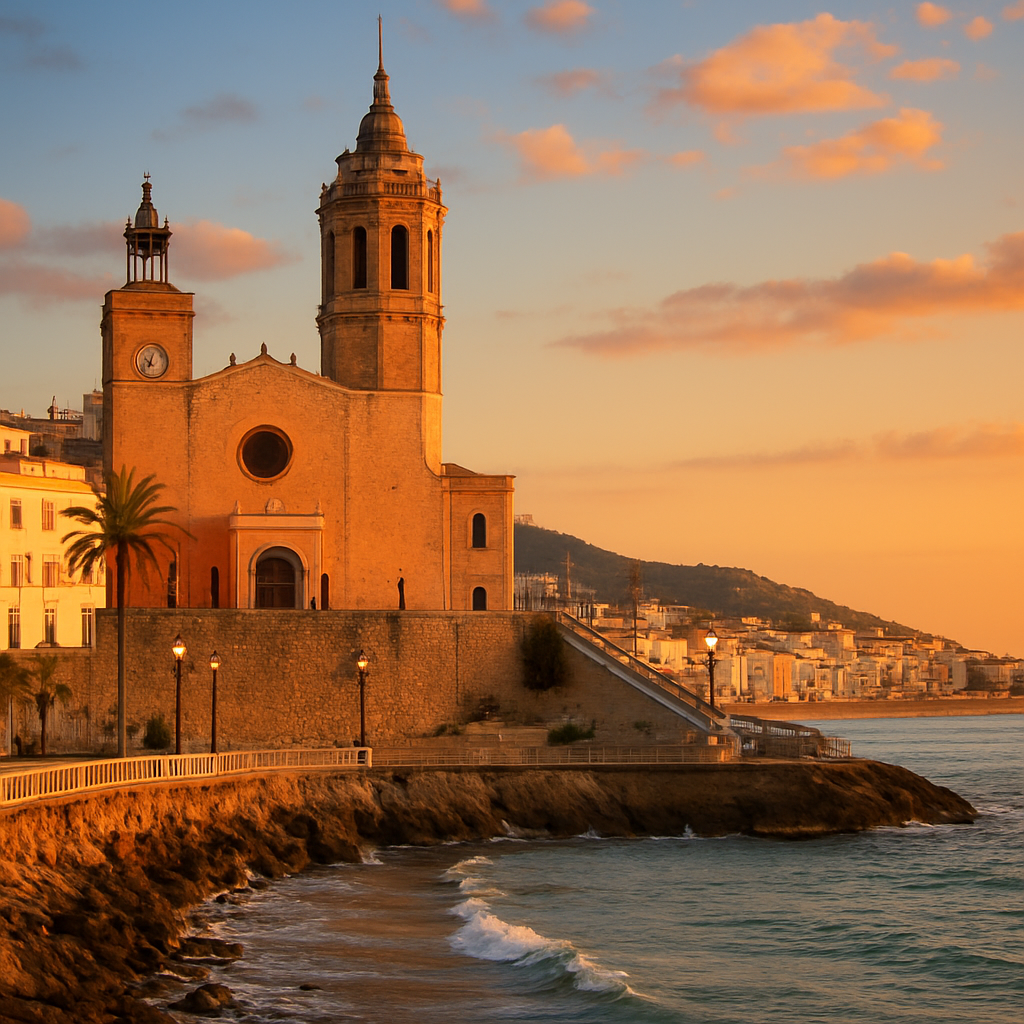
Sunset from the Sant Bartomeu Promontory
The Església de Sant Bartomeu i Santa Tecla sits on a rocky promontory between two beaches, and the crowd that gathers on its terrace at golden hour on a summer evening is watching the Mediterranean turn colors that shouldn't exist outside of retouched photography. It takes five minutes to walk up from the Old Town, costs nothing, and the light from that vantage point will be the thing you actually remember from this trip when the bar nights blur together. Go at least once. Go twice.
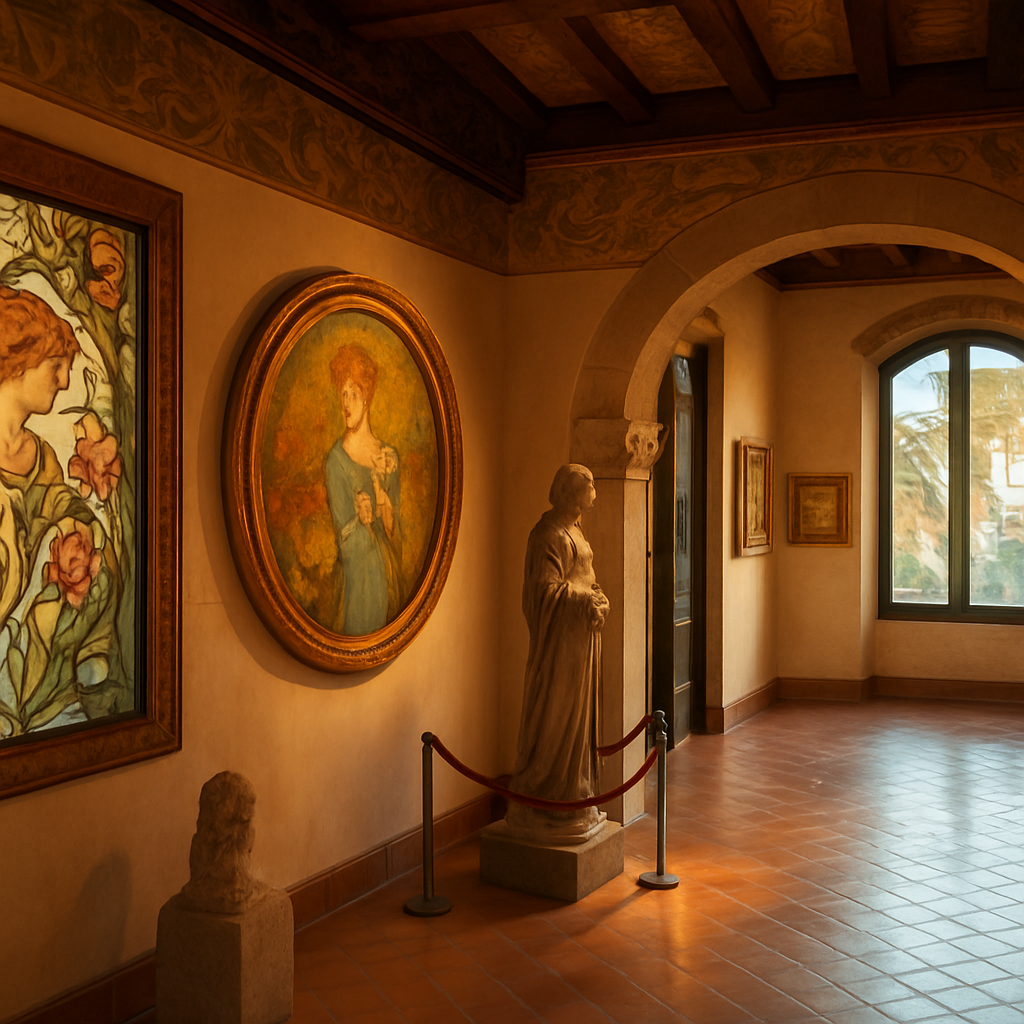
Museu Cau Ferrat
Santiago Rusiñol built this clifftop house in the 1890s, filled it with El Grecos and Picassos and his own modernista work, and essentially invented the concept of Sitges as an artistic and bohemian refuge — laying the cultural groundwork for everything the town became. The building itself, perched directly over the sea with wrought-iron balconies and ceramic-tiled walls, is as much the exhibit as the art inside it. Two blocks from the gay strip, an hour of your time, €10–15. Do not walk past it.
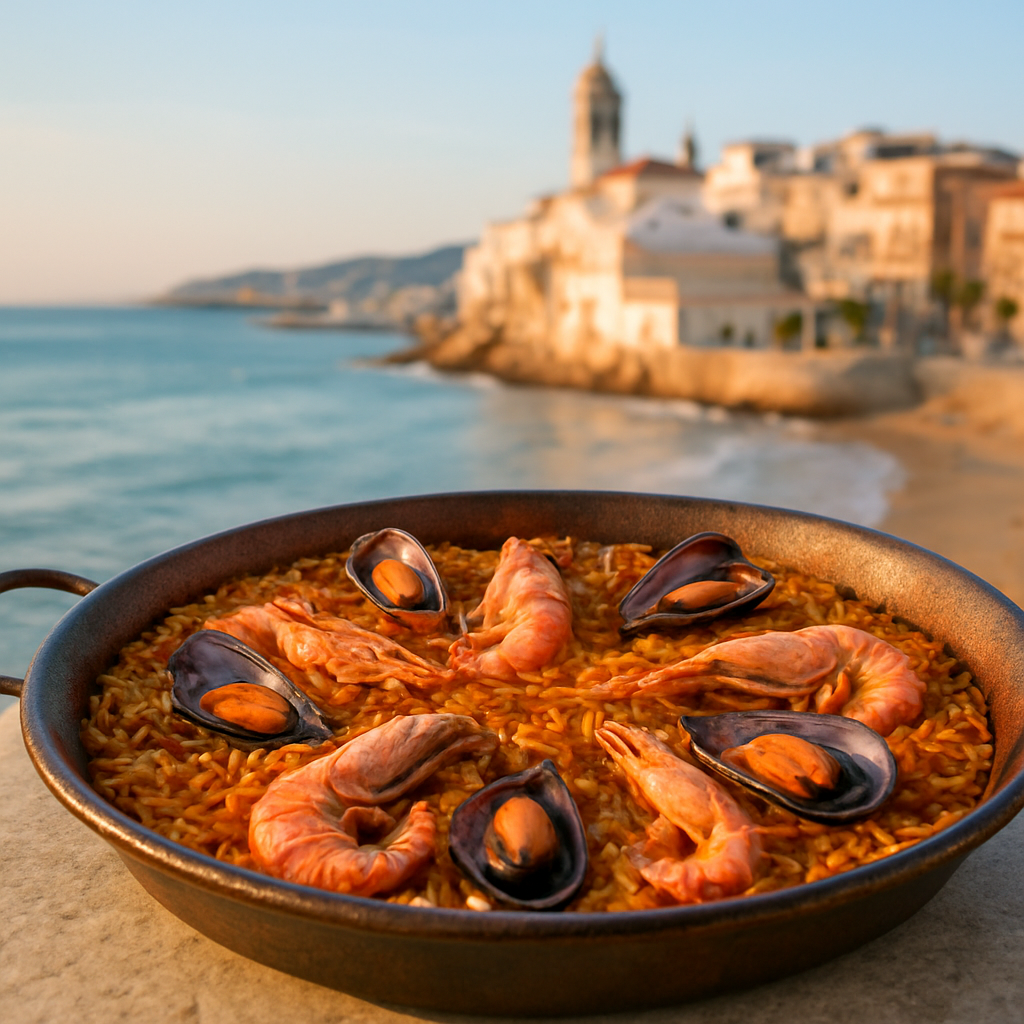
Fideuà and Long Lunch at La Nansa
Catalonia's answer to paella swaps the rice for short, toasted noodles cooked in a clay pan with seafood stock and whatever the boats brought in that morning. At La Nansa on Carrer de la Carreta, the fideuà is the kind of dish you'll be describing to people three months later — golden-crusted, briny, and worth the wait for a table in summer. Pair it with a glass of local white, add pa amb tomàquet to start, and commit to the Catalan long lunch. You have nowhere to be.
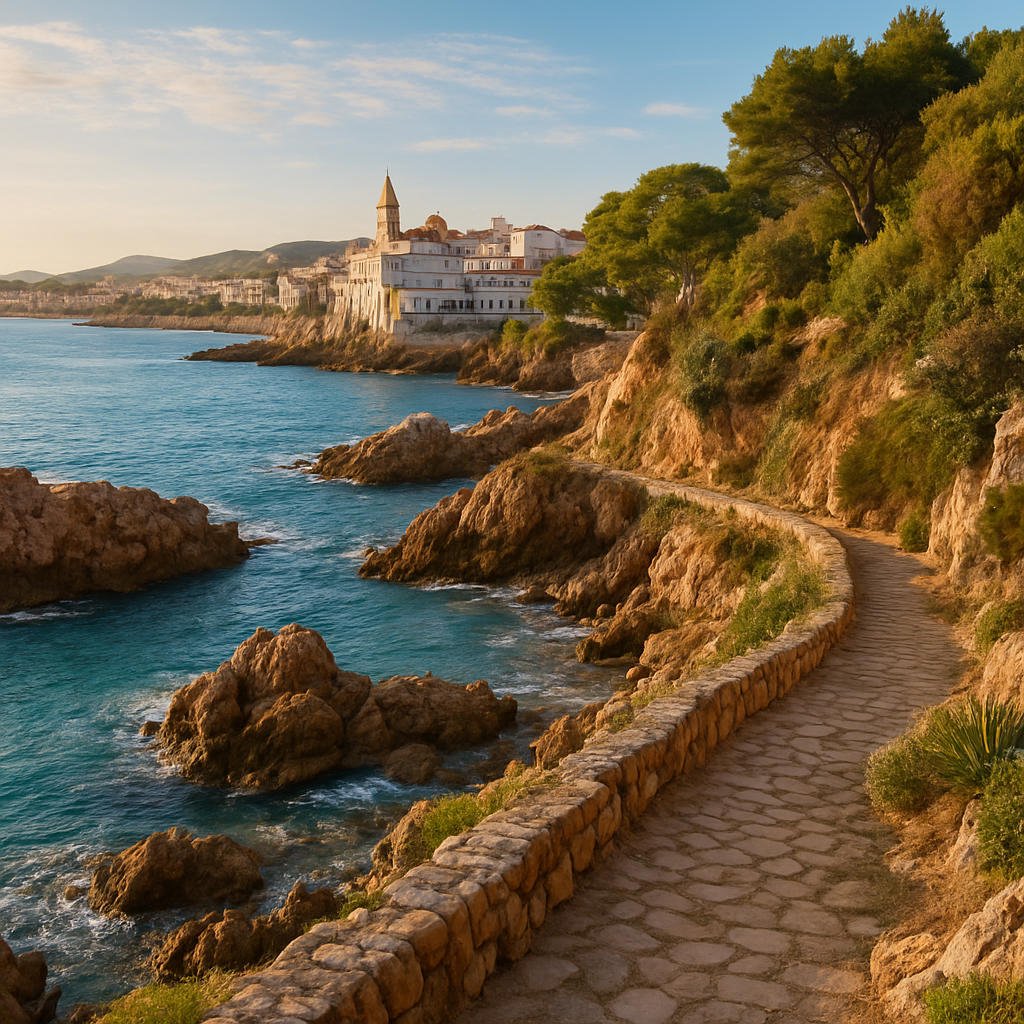
The Coastal Walk to Playa del Muerto
Start at the south end of the main beach, pass Playa del Balmins, and follow the rocky coastal path east until the crowds disappear and you reach Playa del Muerto — a secluded, clothing-optional cove backed by cliffs with water clear enough to see the bottom from the rocks above. The walk takes about 20 minutes, the reward is a Mediterranean beach that feels like a private discovery, and the way back is just as good. Bring water, wear shoes with grip, and leave the phone in airplane mode.
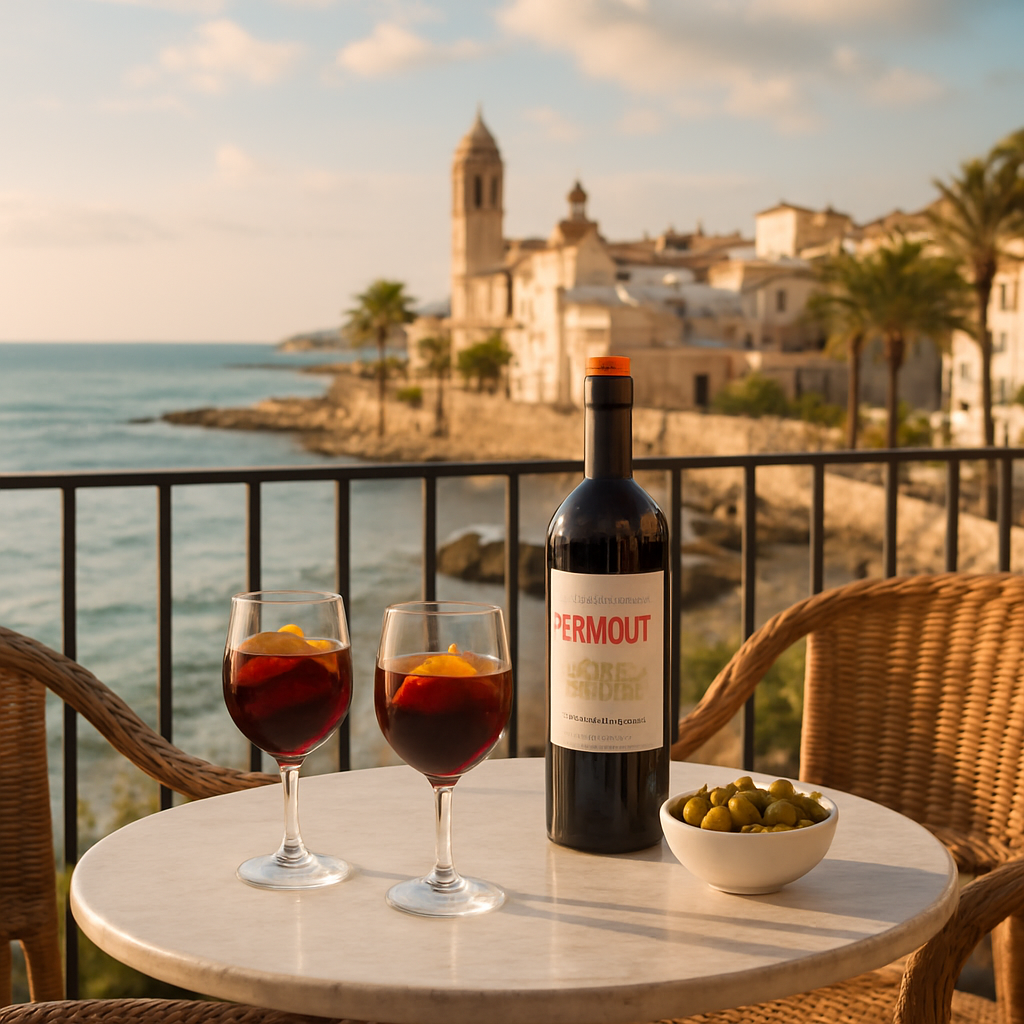
Vermut Hour on the Passeig de la Ribera
The pre-lunch vermut ritual is deeply embedded in Catalan culture, and in Sitges it's an institution that bridges the day crowd and the night crowd. Find a terrace along La Ribera around noon, order a vermut — sweet, herbal, served over ice with an olive and an orange slice — and a plate of olives or anchovies. Sit. Watch the promenade do its thing. This isn't a stop on the way to something else; this IS the thing. The pace of a Sitges afternoon starts here.
The places I actually send people to
The Sitges dates worth planning around
Advice that fits how you travel
Sitges is an exceptional solo destination, and the reason is structural: the entire LGBTQ+ scene is compressed into a few walkable blocks, which means you're never more than two minutes from a terrace full of people who are happy to talk to you. Claim a stool at the Parrots terrace at noon, order a caña, and the social machinery starts immediately. By the time you've had your second vermut, you'll have been adopted by someone's group. The gay beach at Playa de la Barra works the same way — the chiringuito crowd is genuinely sociable, and showing up alone is normal rather than notable. App culture is active here, particularly on Grindr and Scruff, and the grid in season is dense enough to be useful — most people you see on the apps are within a ten-minute walk.
Safety as a solo traveler is essentially a non-concern within the Old Town. The strip is populated until very late, the walks between venues are short and well-lit, and the crowd is overwhelmingly queer — you're among your people. Standard nightlife awareness applies (watch your drinks, don't flash cash), but there's nothing Sitges-specific to worry about. Budget-wise, solo travel here is remarkably efficient: a hostel or budget guesthouse runs €35–55 a night, lunch menú del día deals exist in the €10–15 range, and most bars on Sant Bonaventura have no cover charge. A very solid solo day in Sitges — beach, lunch, museum, aperitivo, dinner, bars — can land at €70–100 without deprivation.
If you're coming solo with the specific intention of meeting people, time your visit to an event: Sitges Pride in June has village-festival energy that's naturally social, Bear Week in late October is a phenomenon of community warmth, and Carnestoltes in February is a week of structured fun where talking to strangers is mandatory. Outside events, May and September deliver the best solo balance — enough people to have a scene, few enough that the terraces have breathing room and conversations happen at normal volume.
Sitges is arguably the most naturally romantic queer destination in Europe — not because it performs romance, but because the entire setup is just effortlessly conducive to it. You're in a whitewashed coastal town on the Mediterranean, the evening light turns the church promontory gold around 7pm, and nobody anywhere on the Passeig de la Ribera gives a second glance to two men or two women walking hand-in-hand at sunset. PDA comfort here is as high as it gets anywhere on the continent, full stop.
For a proper date night, book a table at El Pou — the candlelit stone dining room is exactly the setting the word "candlelit" was invented for — or pull up chairs on the Parrots terrace for vermut and people-watching before dinner, which is a Sitges tradition worth inheriting. For accommodation, the San Sebastian Playa Hotel's rooftop terrace was built for mornings with someone you actually like, and Hotel Romantic de Sitges has the kind of garden-patio intimacy that a 300-room property simply cannot manufacture. Mid-budget couples should look seriously at Meliá Sitges — pool, sea view, enough space to genuinely decompress together.
My honest recommendation for couples: come in May or September. The summer crowd thins to people who actively chose to be here, the beaches have real estate, and Sitges becomes a place for actual connection rather than spectacle. Spend a morning at Playa del Balmins, take a long slow lunch somewhere with pa amb tomàquet and a carafe of local white, walk up to Museu Cau Ferrat before it closes, and have dinner somewhere that takes reservations. That is a very, very good day.
Spain's legal framework for LGBTQ+ families is about as solid as it gets anywhere in the world — same-sex marriage, full adoption rights, and comprehensive anti-discrimination protections mean your family structure is recognized and protected from the moment you land at BCN. Sitges, specifically, has welcomed every configuration of family for long enough that it's become genuinely unremarkable to locals, which is exactly what you want when you're traveling with kids who just want to enjoy the beach without their parents scanning the room.
The town is very manageable with children. The Old Town streets are largely pedestrian, the main beaches are calm and shallow enough for younger swimmers, and Catalan restaurant culture is organically family-oriented — kids are expected at dinner tables, menus accommodate them without ceremony, and long communal lunches with children running between courses are just how things work here. Practical note: strollers will have opinions about some of the Old Town's older cobblestones, so pack a carrier for the narrower streets or stay on the main pedestrian routes. Most beachfront cafés along the Passeig Marítim are flat and stroller-accessible.
For day-trip ambitions, Barcelona is 40 minutes away by R2 Sud train and offers the kind of Gaudí-aquarium-Picasso Museum combination that holds children's attention in a way very few cities manage. Back in Sitges, the waterfront is low-key and beach-centered — days here have a natural pace that families tend to slot into easily. If you're staying more than two nights, a self-catering apartment beats a hotel room on almost every dimension: more space, lower per-person cost, and a kitchen for the mornings when someone small wakes up at 6am demanding breakfast before any café in town is open.
What Sitges actually costs
Flights, visas, and the first 30 minutes
Airport: You're flying into Barcelona–El Prat Josep Tarradellas Airport (BCN), one of southern Europe's major international hubs with direct connections from 180+ cities. Sitges sits 35km southwest of Barcelona — actually closer to the airport than central Barcelona is — which makes the transfer logistics genuinely simple.
Airport to Sitges: The RENFE R2 Sud train runs direct from Terminal 2 to Sitges in 40–50 minutes for €4–6 — this is the right move for most travelers. If you arrive at Terminal 1, a free airport shuttle connects to T2; add 15 minutes. Taxis run €60–80 for the 35–45 minute trip, and private transfers (€80–120) are worth considering if you're arriving late, traveling with a group, or have serious luggage. Pro tip: the train station in Sitges drops you a 10-minute walk from the entire gay strip — it's a genuinely easy arrival.
Major Routes: Paris CDG (1h 50m), Amsterdam (2h 05m), London Heathrow (2h 10m), New York JFK (8h 30m), Toronto (9h 00m), Sydney via stopover (22h+). European connections are particularly strong with short flight times from most major cities.
Visa Requirements: US, Canada, Australia: No visa required for stays up to 90 days under the Schengen Agreement. UK: No visa required for stays up to 90 days in any 180-day period — post-Brexit Schengen rules apply, so track your days if you're combining with other European travel. EU citizens: No visa required; freedom of movement applies throughout Spain.
Traven's seasonal breakdown
The questions everyone asks
Do I need to speak Spanish or Catalan?
Is it safe to hold hands in Sitges?
How much should I budget per day?
Is Sitges worth visiting outside of summer?
Can I do Sitges as a day trip from Barcelona?
Where exactly is the gay beach?
What's the best way to get from Barcelona airport to Sitges?
Screenshot this before you go
So should you actually go?
Go. Sitges is one of the easiest recommendations I make — a town where the legal framework is flawless, the cultural welcome is bone-deep, and the whole place is small enough that you'll feel like a local by day three. It's not trying to be a big-city gay capital; it's a Mediterranean beach town that happens to have been gay since before most of us were born. The scene is compact, the food is excellent, the beaches are gorgeous, and you will not spend a single second wondering if you're welcome. Couples, solo travelers, families — everyone fits here. Book the train from Barcelona, grab a terrace table on Passeig de la Ribera, and let the town do what it does best: absolutely nothing, beautifully.
Sources & Resources
Official links we reference when compiling this guide. Last verified 2026-03-15.