
Tenerife doesn't pick a personality — it runs three at once and dares you to keep up. Volcano above, Atlantic below, a fishnet tank handing out flyers somewhere in between.
It's 11:47pm on a Thursday outside CC Veronicas and a man in a fishnet tank is handing out flyers for a foam party three doors down while a group of German bears in their fifties debate, in earnest Spanish, which guachinche in La Orotava does the better papas arrugadas. Above them, the volcano. Below them, Atlantic surf you can hear when the bass at Lick drops out between songs. This is Tenerife in one frame: tacky and sublime, sunburnt and ancient, a four-block gay strip wedged between a UNESCO city and the highest peak in Spain. None of it should work together. All of it does.
I gave it a 9.1 on my Traven-Dex and I'd give it again. The legal floor is as solid as it gets in Europe — a flat 10 on Legal, marriage since 2005, the 2023 Ley Trans stacked on top of regional Canarian protections — and the Chill of 9.2 is what every island destination promises and almost none deliver. The wrinkle is that this isn't one place. It's two, maybe three, depending on how you count. The southern resort strip — Playa de las Américas, Costa Adeje, Los Cristianos — has been openly, unapologetically gay for forty years, and the four blocks around the Veronicas mall do more nightlife per square meter than most European capitals. Then twenty minutes uphill in the wrong direction is San Cristóbal de La Laguna, founded 1496, the colonial grid plan that templated half the Americas, where the bars around the cathedral fill with university kids who've never been to Veronicas and don't intend to start.
The food is the part that surprises people. Two Michelin stars at Martín Berasategui's M.B inside the Ritz-Carlton Abama. The Padrón brothers at El Rincón de Juan Carlos. Andrea Bernardi and Fernanda Fuentes — a couple, a kitchen, a Green Star — at NUB inside Bahía del Duque. Jonatan Armas doing one-star Japanese with Canarian product at Kazan in the capital. None of which is what you flew in expecting and all of which is sitting there waiting. Eat well, drink slowly, and budget at least one dinner where the menu doesn't have prices.
And then there's Carnaval. February, Santa Cruz, the second-largest carnival on earth after Rio, and the televised Gala Drag Queen at the Recinto Ferial — pyrotechnics, ten-foot platforms, full orchestras, and Canarian grandmothers on the couch debating, with theological seriousness, the merits of a tuck. There is nothing else like it in Spain. There is barely anything else like it anywhere. If you can plan a trip around one week of the year, plan it around that one.
The stuff your travel guide buries on page 47
Spain is, as of 2026, one of the most legally protected places on earth to be gay. Same-sex marriage has been on the books since 2005, joint adoption is fully recognized, and the 2023 Ley Trans allows self-ID gender recognition from age 16. The Canary Islands layer additional regional protections on top of that — comprehensive anti-discrimination law applies across employment, housing, healthcare, and public services. ILGA-Europe consistently ranks Spain in the global top 10 on its Rainbow Index, and you can read the federal-level work at FELGTBI+ or the government's own Dirección General LGTBI.
On the ground, Tenerife has two gay personalities and they barely speak to each other: the sunburnt, shot-glass chaos of CC Veronicas in the south, and the cortado-sipping, jazz-on-vinyl crowd up in La Laguna. Both are welcoming. Neither is the whole island. The southern resort strip — Playa de las Américas, Costa Adeje, Los Cristianos — has been an openly gay tourist destination for decades and operates accordingly. Santa Cruz is a working Spanish capital that happens to throw the campiest carnival on the continent. The rural villages in Anaga and Teno are older, Catholic, and rarely hostile but visibly more conservative.
Pro tip: the southern resorts and Santa Cruz are essentially different countries — a taxi between them is around an hour and €70+. If you're chasing nightlife at Veronicas, sleep in the south. For culture and Carnaval, sleep in Santa Cruz or La Laguna and don't try to bridge them daily. Pride Tenerife (Pride by the Sea) typically lands in late spring or early summer in Torviscas/Costa Adeje — not Santa Cruz — so book a hotel walking distance from Playa de Fañabé or you'll spend the weekend in cabs.
One more thing worth knowing: Algarabía, the island's main LGBTI+ association, runs out of Santa Cruz — not the tourist south — so most community events, talks, and support services happen up there, not where the package tourists are. Visa-wise, US, UK, EU, Canadian, and Australian passports typically get 90 days visa-free under Schengen rules; ETIAS pre-authorization is generally required from 2026 for non-EU travelers.
What it actually feels like on the ground
Holding hands on the southern paseos: A non-event. The promenade along Avenida de las Américas, the boardwalks of Costa Adeje, the strip around CC Veronicas — same-sex couples are visibly the norm, day and night. Same goes for the resort pool decks at any of the adults-only properties marketed to gay travelers.
Holding hands in Santa Cruz and Puerto de la Cruz: Comfortable. Santa Cruz is a cosmopolitan Spanish city, especially loose during Carnival season, and Puerto de la Cruz has carried a gay-friendly reputation since the '70s. PDA reads as ordinary in both old towns and along the seafront.
Rural villages and inland mountain towns: Different ecosystem. Holding hands in Anaga at 10pm on a Tuesday won't get you threatened, but it will get you stared at — older Catholic communities, smaller populations, fewer tourists. Not hostile. Just visible. Adjust your volume, not your identity.
Hotel check-in: Zero issues anywhere on the island, particularly at the LGBTQ+-marketed properties — Axel's Bear Hotel Maritim, Vanilla Garden, and the larger Costa Adeje resorts where same-sex couples request shared beds without anyone blinking.
Taxis: Use the official ranks at the airport and the resorts. Fixed rates are posted at TFS. Drivers are professional and the LGBTQ+ tourist economy is too central to mess with. Bolt and Cabify both operate.
Beaches: Playa de Troya in Costa Adeje has a long-established gay section at its southern end, walking distance from the Veronicas cluster. The unofficial gay/clothing-optional zone at Playa de la Tejita sits at the far end toward Montaña Roja — twenty minutes past the surf school at El Médano, with intentionally nothing there. Take water.
Late night around Veronicas: Watch out — drink-spiking complaints in the southern strip spike during high season. Locals at Bunkers and Bear Sí will tell you the same thing I will: keep your bottle in your hand, skip the random shot guys handing out flyers outside the mall, and don't take open drinks from strangers. Otherwise the strip is heavily policed and crowd-comfortable until dawn.
Trans travelers: The 2023 Ley Trans covers gender recognition and the Servicio Canario de la Salud handles trans healthcare in the public system. Algarabía in Santa Cruz is the first stop for navigating any of it, and they answer email faster than the phone. Resort areas, Santa Cruz, and La Laguna report welcoming experiences; the rural interior is less visible but not aggressive.
If something happens: The Policía Nacional station on Avenida de los Pueblos in Adeje takes LGBTQ+ incident reports and has officers trained through the Cabildo's diversity program — calmer than the local municipal booths. For HIV/sexual health support, Apoyo Positivo has Canarias services. Verbal harassment is genuinely rare; when it happens in the southern strip, it's typically drunk British stag-party noise, not local hostility.
The queer geography
Playa de las Américas & Costa Adeje (the south)
This is the sunburnt heart of Tenerife's tourist economy and, for forty years, its gay one. The southern strip runs along volcanic black-sand beaches and Atlantic surf, with high-rise resorts giving way to palm-lined paseos and the occasional Michelin-starred dining room tucked behind a gated lobby. The food range is wider than the package-tourism reputation suggests — Martín Berasategui's two-star M.B at the Ritz-Carlton Abama, the Padrón brothers' El Rincón de Juan Carlos, the Italian-Chilean-Canarian fusion of NUB at Bahía del Duque. The gay nightlife clusters — tightly — around the CC Centro Comercial Veronicas, four blocks of bars, drag stages, and cruise rooms that anchor the southern scene. The reliable circuit: warm up at Lick or G2 Bar, stumble through Tramps, end up at Bunkers when it's still dark, and crawl out for a chocolate con churros at Plaza del Camisón before your dignity does. Bear Sí is exactly what it says on the tin and one of the warmest rooms in the south. Playa de Troya's gay section sits a short walk away. For the official lay of the land, Turismo de Tenerife covers the resort towns in detail.
Santa Cruz de Tenerife
The capital is the island's actual city — a working port with leafy plazas, a Calatrava-designed concert hall (Auditorio de Tenerife Adán Martín) that looks like a wave caught mid-break, and the Herzog & de Meuron TEA Tenerife Espacio de las Artes programming queer film and photography year-round. Walk Calle de la Noria at dusk for the best tapas-bar density on the island, drift through Plaza del Príncipe, and eat at Kazan if you want to see what a Michelin-starred Japanese kitchen does with Canarian product. The community infrastructure lives here: Algarabía LGTBI+ Centre runs the island's serious organizing out of Santa Cruz, and El Galpón is the rare gay-oriented bar outside the southern resort circuit. Then there's Carnaval — the second-largest carnival on earth after Rio, with the televised Gala Drag Queen at the Recinto Ferial as its centerpiece. It's the single most ambitious drag production in Spain and the only night of the year when Canarian grandmothers will earnestly debate the merits of a tuck on live TV.
Puerto de la Cruz
The northern resort feels European in a way the south doesn't. Cooler, greener, mistier in the mornings, with steep streets dropping down to a black-sand seafront and the Plaza del Charco filling up with families and old men playing dominoes. The food is where the real reward is — modern Canarian at Jorge Bosch's La Bola, traditional tapas at Mesón Las Rejas and Tasca El Olivo, contemporary small plates at Tasca 61. The gay-friendly history here runs deep — Puerto's been welcoming European gay travelers since the '70s — and the contemporary scene is gentler and more mixed than the south. La Tasca de Cristian is the kind of bar where the welcome doesn't need a flag. The Hotel Botánico sits in 25,000 square meters of subtropical garden up the hill.
La Laguna
Twenty minutes uphill from Santa Cruz and a different planet. San Cristóbal de La Laguna is a UNESCO World Heritage site — the first unfortified Spanish colonial town, a 1496 grid plan that became the template for cities across the Americas — and the home of the oldest university in the Canaries. The casco histórico is pastel-painted, low-slung, walkable in an hour, and best at golden hour when the students fill the plazas and the cafés around the cathedral pour their last cortados. There's no formally gay venue here, but the bars around the university skew young, mixed, and unbothered. The community report is consistent: a quieter queer evening up here beats another sticky one at Veronicas, especially midweek. The Cabildo de Tenerife — Igualdad LGTBI office maintains regional diversity programming based out of the Santa Cruz–La Laguna corridor.
The experiences worth rearranging your itinerary for
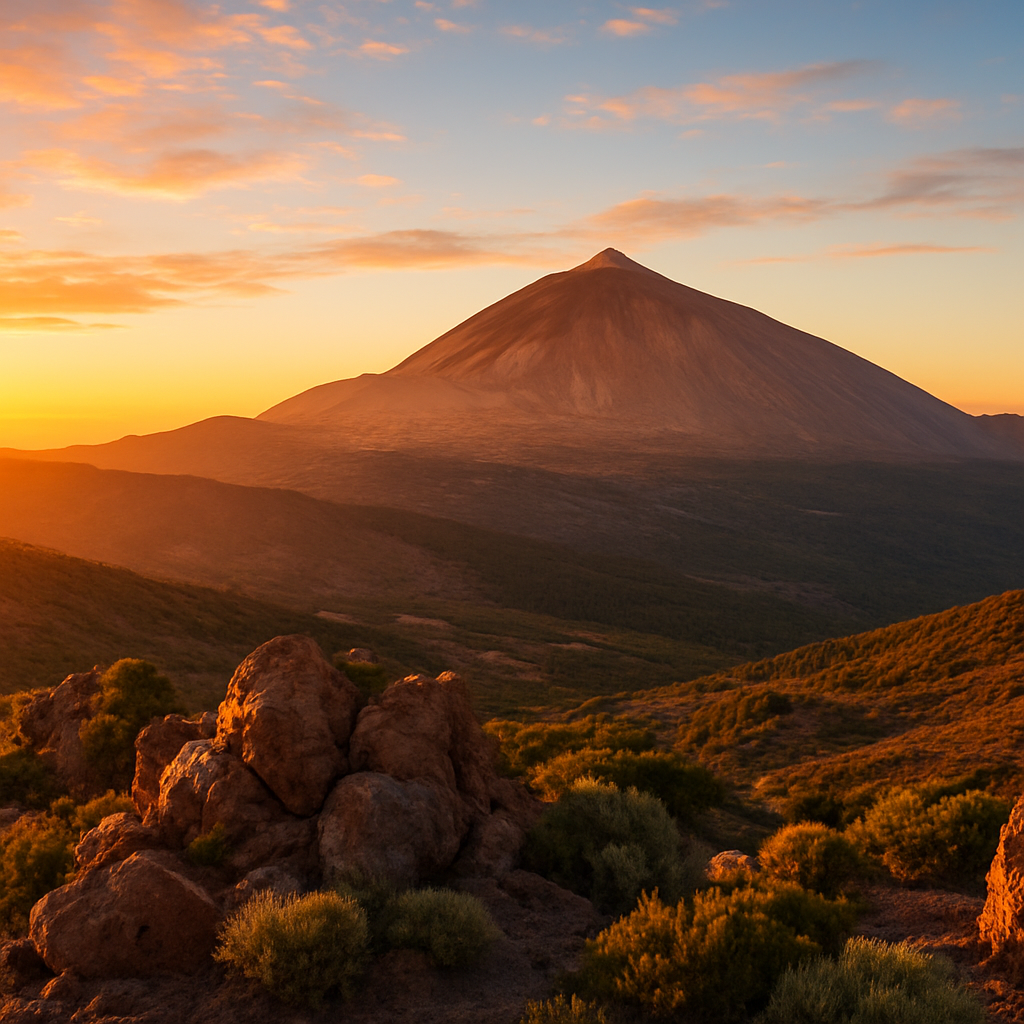
Sunrise on Mount Teide
Up at the cable car base before dawn, the air thinning, the lava fields turning red as the sun comes over the rim of the caldera. Mount Teide is 3,715 meters — the highest peak in Spain — and the cable car runs to within 200 meters of the summit. The final stretch to the crater needs a permit booked weeks ahead through the parks office. Most people skip it. Don't.
Pro tip: temperatures at the top can be 20 degrees colder than the coast, even in summer. Bring a real jacket and proper shoes — flip-flops at altitude is the rookie mistake every guide watches happen.
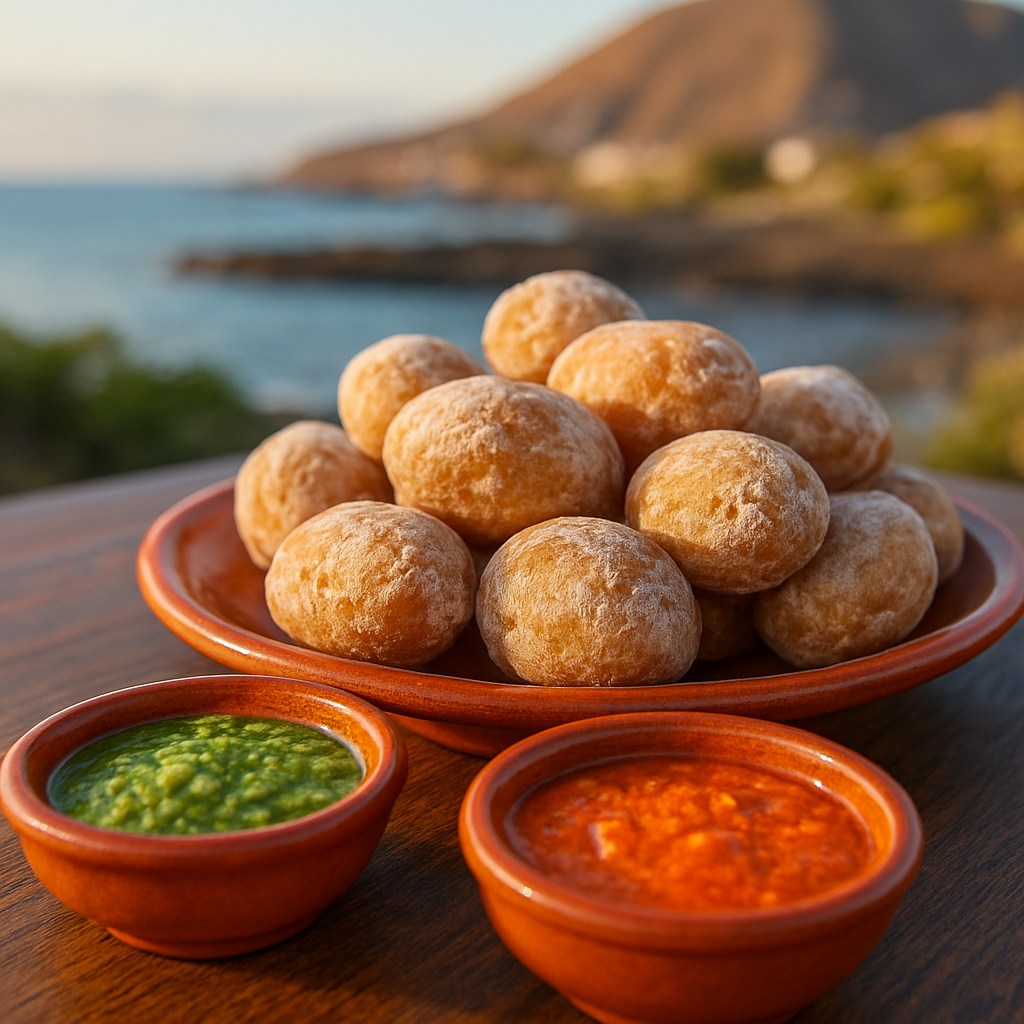
A Guachinche Dinner in the North
A guachinche is a family-run, harvest-season eatery attached to a winery — typically in the hills behind Puerto de la Cruz or La Orotava — serving cheap homemade Canarian food and house wine poured from a jug. Order papas arrugadas con mojo, queso asado, ropa vieja, and whatever the table next to you is having. The Spanish you speak doesn't matter.
Pro tip: cash only at the real ones, and the best ones don't have websites — ask the family running your hotel which one their cousin runs and go there.
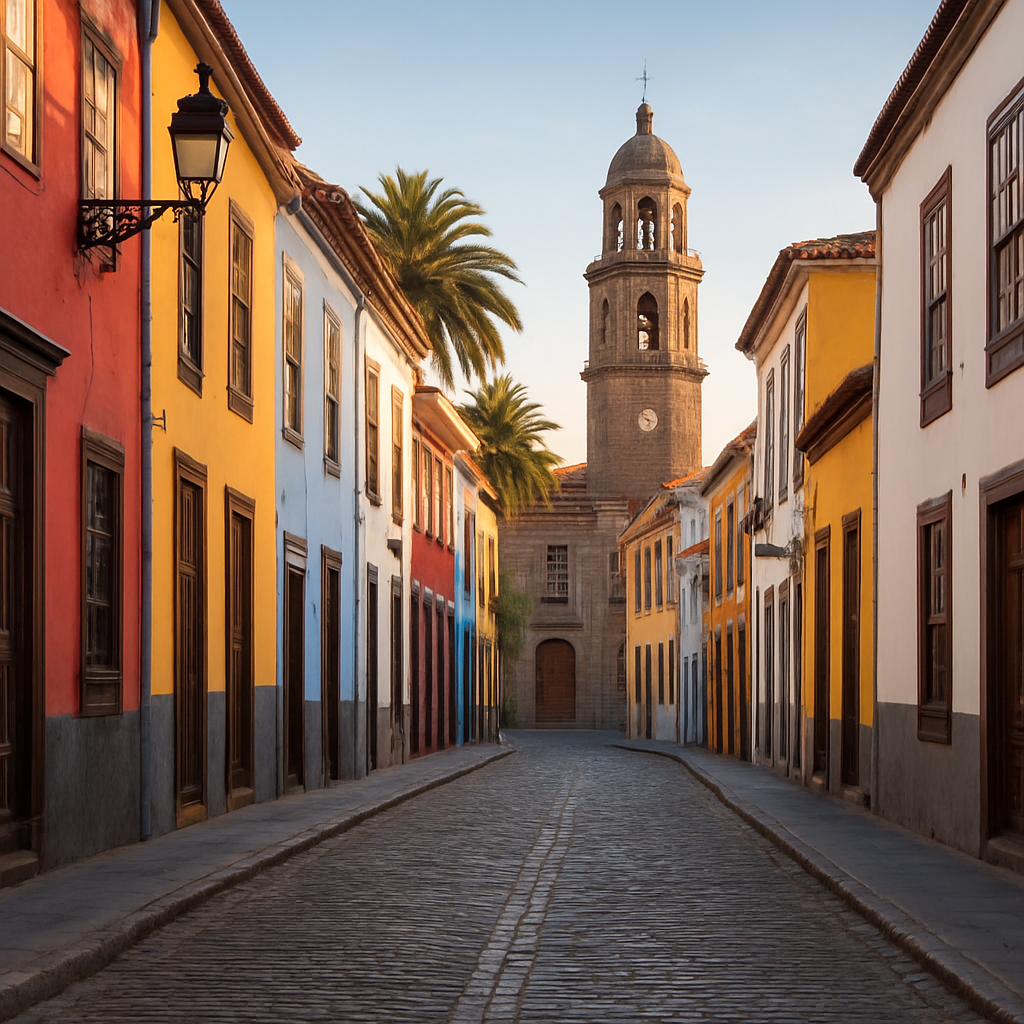
La Laguna at Golden Hour
San Cristóbal de La Laguna — UNESCO-listed since 1999, founded in 1496, the first unfortified Spanish colonial town and the template for cities across the Americas. Walk the casco histórico at golden hour, when the cathedral facade goes warm and the students from the university fill the plazas around Plaza del Adelantado.
The cortados at the cafés around the cathedral are some of the best on the island, and a quiet evening up here midweek beats another sticky one at Veronicas — ask any local under thirty.
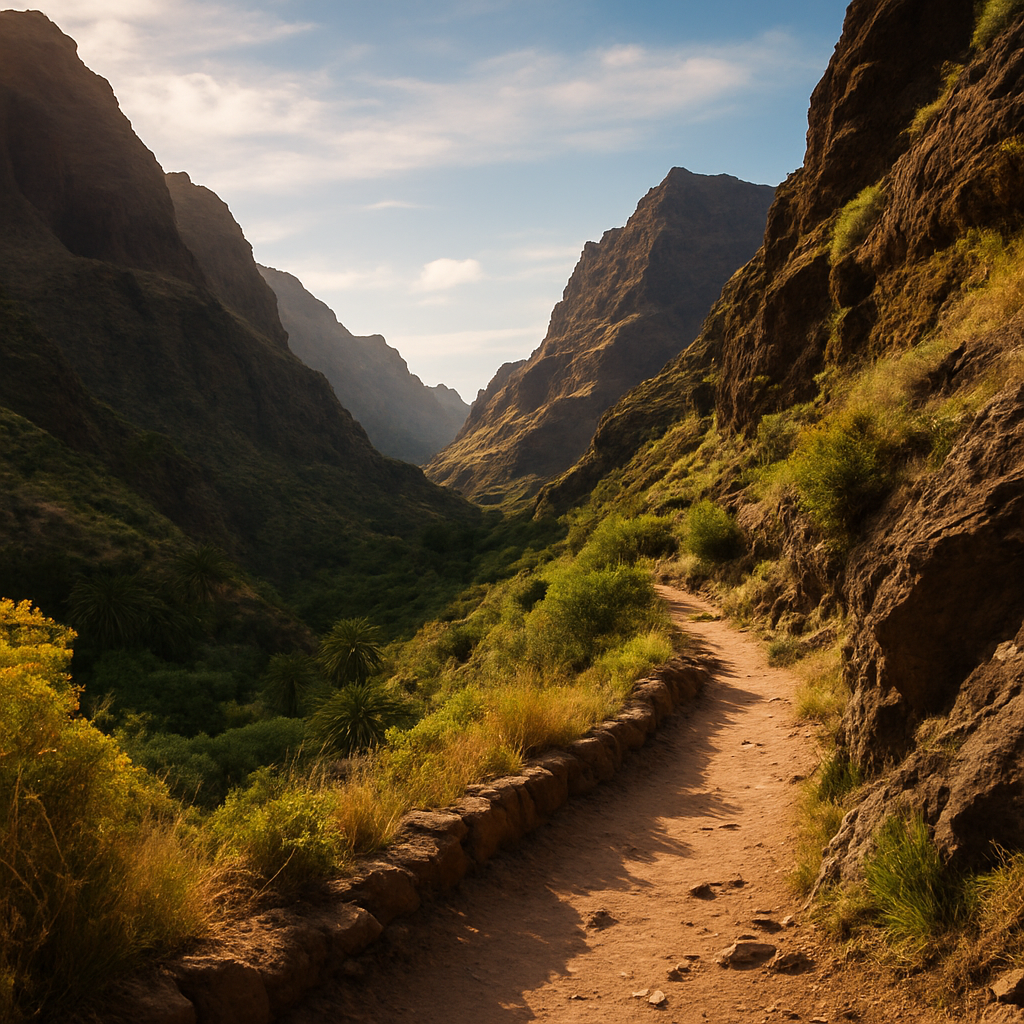
The Masca Gorge Hike
The trail descends from Masca village, perched at 650 meters in the Teno Rural Park, down a vertical canyon to the Atlantic. Roughly six kilometers, four hours, ending at a black-sand beach where a boat picks you up and ferries you back to Los Gigantes. The reopening after years of closure means permits are required and book out weeks ahead through the Cabildo.
Bring more water than you think you need, real shoes, and a sense of humor about your knees on the way down.
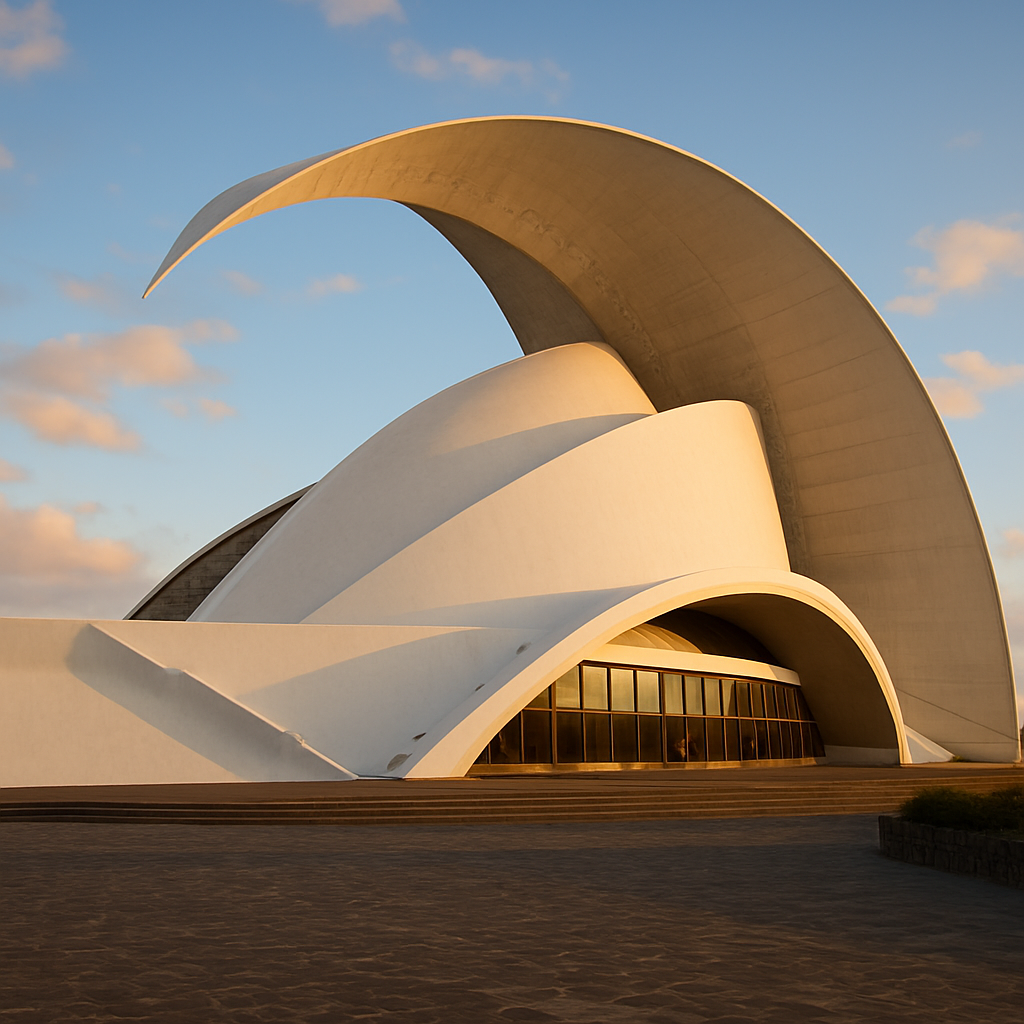
Auditorio de Tenerife at Sunset
Santiago Calatrava's 2003 concert hall on the Santa Cruz waterfront — a single curving white sail you can see from the cruise port and from half the city. Catch it at sunset when the building goes pink and the Atlantic does the same behind it.
Even if you don't book a performance, walk the perimeter and double back through Plaza de España to the TEA Tenerife Espacio de las Artes — Herzog & de Meuron, programming queer film and photography year-round. Two of the best contemporary buildings in Spain, ten minutes apart.
The places I actually send people to
Advice that fits how you travel
Solo travel here is easy in a way most island destinations aren't — the southern resort strip does most of the social work for you. The four-block CC Veronicas cluster is dense enough that you can walk into Lick alone at 11pm, end up at Bunkers by 2am, and have spoken to half the room without trying. The apps are busy in the south year-round and quieter but still active in Santa Cruz and Puerto de la Cruz. Bear travelers in particular have a built-in landing pad at Axel's Bear Hotel Maritim — staying there is the closest thing to walking into a pre-existing social circle.
Budget-wise, Tenerife is one of the better-value destinations in Western Europe. Solo budget runs approximately €55–85/day; moderate is €120–180; luxury starts around €280. The TITSA bus network covers the whole island cheaply if you skip the rental car — Bus 343 to Costa Adeje is about €3.95, Bus 111 to Santa Cruz around €9.85. A rental car (€25–50/day) is the move if you want Teide, Anaga, and Masca on your own clock.
Safety-wise, the southern strip is heavily policed and crowd-comfortable until dawn — but watch your drink. Drink-spiking complaints around Veronicas climb in high season; keep your bottle in your hand, skip the shot guys outside the mall, and you'll be fine. For a quieter solo night, the bars around Calle de la Noria and Plaza del Príncipe in Santa Cruz draw a mixed university crowd that doesn't care you flew in alone.
This is one of the easier islands in Europe to be on as a couple. Same-sex couples can hold hands openly along the Avenida de las Américas paseo, the Costa Adeje boardwalks, the seafront in Puerto de la Cruz, and the old town in Santa Cruz without it registering as anything other than a couple on holiday. Spain's marriage equality is on the books since 2005 and adoption is fully recognized as of 2026, so the legal floor under your relationship is as solid as it gets in Europe.
For the romantic-occasion trip, Royal Hideaway Corales in La Caleta is the address — adults-only, Leonardo Omar architecture, Michelin-starred San Hô and El Rincón de Juan Carlos within walking distance. For a kitchen-and-privacy week on the south coast, Vanilla Garden or Bohemia Suites in Costa Adeje skip the package-tourism polish entirely. North-coast couples should sleep at Hotel Botánico in Puerto de la Cruz — 25,000 square meters of subtropical garden and a town that's been welcoming gay couples since the '70s.
For the memory-maker dinner: M.B at the Ritz-Carlton Abama (two Michelin stars), NUB at Bahía del Duque (couple-run kitchen, one star plus a Green Star), or Kazan in Santa Cruz if you'd rather pair the meal with a Calatrava sunset at the Auditorio. Sunrise on Mount Teide needs to be booked weeks ahead through the parks office, but it's the kind of morning a relationship remembers.
LGBTQ+ families travel well here. Spain recognizes joint adoption and same-sex parents on equal legal footing as of 2026 — your family structure is fully recognized at hotel check-in, school pickup, and any healthcare interaction at the Servicio Canario de la Salud. The southern resort coast — Costa Adeje in particular — was built around family tourism, and the four- and five-star properties are practiced at hosting two-mom and two-dad families without anyone needing to ask twice.
For activity, the island over-delivers. Siam Park in Costa Adeje routinely tops global water park rankings; Loro Parque in Puerto de la Cruz is the day everyone remembers; the Teide cable car gets kids to within 200 meters of Spain's highest peak without a serious hike. Playa de las Teresitas outside Santa Cruz — golden sand imported from the Sahara, calm bay, lifeguards — is the family beach over the volcanic ones in the south. Skip the Masca Gorge with small kids; save it for teenage hikers and up.
Family budget runs approximately €160–240/day on the lower end and €320–480/day moderate. Practical logistics are easy: stroller access is good across resort towns, kid menus are universal, and the TITSA buses are stroller-friendly. A guachinche dinner up in the hills behind Puerto de la Cruz is the meal kids surprise you by loving — papas arrugadas con mojo, grilled meats, house wine for the parents, and a long table where nobody is rushed. The rural interior gets more conservative — older Catholic villages, smaller populations — but it reads as quiet curiosity, not hostility, and families with two parents of any combination move through it without incident.
What Tenerife actually costs
Flights, visas, and the first 30 minutes
Airport: Tenerife South Airport (TFS) is the gateway for the resort coast and the gay scene around CC Veronicas. Tenerife North (TFN) handles more inter-island and peninsular routes and lands you closer to Santa Cruz, La Laguna, and Puerto de la Cruz. If you're chasing the southern strip, fly into TFS — the transfer to Playa de las Américas is around twenty minutes. If you're sleeping in the capital or the north, TFN saves you a 90-minute drive.
Direct routes: TFS runs roughly 150 direct routes, heavy on the UK (London, Manchester, Birmingham, Glasgow), Germany (Frankfurt, Munich, Düsseldorf, Berlin), the Nordics (Stockholm, Copenhagen, Oslo, Helsinki), and the Spanish mainland (Madrid, Barcelona, Bilbao, Valencia). Flight times: London ~4.5 hours, Madrid ~3 hours, Frankfurt ~4.5 hours, Stockholm ~6 hours. From North America, you'll typically connect through Madrid or London — there are no direct US routes as of 2026.
Visas: As of 2026, US, UK, Canadian, and Australian passport holders are typically allowed up to 90 days visa-free under Schengen rules, with ETIAS pre-authorization generally required for non-EU travelers. EU citizens have freedom of movement and need no visa. Always confirm current entry requirements with your embassy before flying — Schengen rules and ETIAS rollout details have shifted more than once.
Airport to city: From TFS, a fixed-rate taxi to Playa de las Américas runs approximately €25–35 and takes about 20 minutes. The TITSA Bus 343 to Costa Adeje is around €3.95 and roughly 30 minutes; Bus 111 to Santa Cruz is approximately €9.85 and about 55 minutes, running hourly. Pre-booked private transfers are typically €40–70. Renting a car runs €25–50/day and is the move if you want to actually see the island — the volcanic interior, the Anaga and Teno parks, and the northern coast all reward driving.
Traven's seasonal breakdown
The questions everyone asks
Should I stay in the south or in Santa Cruz?
Is Playa de las Américas as bad as people say?
When is Pride and where does it actually happen?
Do I need a rental car?
Is it safe to hold hands?
Do I need to speak Spanish?
Is Tenerife better than Gran Canaria for gay travel?
Screenshot this before you go
So should you actually go?
Go. Tenerife isn't trying to be one thing and that's exactly why it works — the south delivers the gay nightlife and the beach week, the north delivers the food and the gardens, Santa Cruz delivers the culture and the carnival, and the volcano in the middle of all of it gives the whole island a center of gravity nothing else in the Canaries can match. Spain's legal floor is among the strongest on earth, the southern resort coast has been visibly, openly gay for forty years, and the worst thing that's likely to happen to you is a sunburn or a hangover. Pick your base — south for the bars, capital for Carnaval, Puerto for a quieter week — and don't try to bridge them daily. LGBTQ+ travelers will find one of the easier, warmer, more value-rich weeks in Western Europe waiting on the other side of the flight.
Sources & Resources
Official links we reference when compiling this guide. Last verified 2026-04-30.
- Algarabía Asociación LGTBI+ de Tenerife
- Apoyo Positivo (HIV/sexual health support, with Canarias services)
- Ayuntamiento de Santa Cruz de Tenerife — Igualdad
- Cabildo de Tenerife — Igualdad LGTBI
- Carnaval de Santa Cruz de Tenerife (official)
- FELGTBI+ (Spanish State LGBTI+ Federation)
- Gamá Colectivo LGBT+ de Canarias
- Ministerio de Igualdad — Dirección General LGTBI
- Servicio Canario de la Salud
- Turismo de Tenerife — Official Tourism Board