
In a town where the default flex is which Palace bar you stumbled out of at 2 a.m., who you're sleeping with barely registers as information.
St. Moritz is the rare destination where being gay is the least interesting thing about you — and I mean that as the highest possible compliment. In a resort where the baseline identity marker is your ski jacket brand and the default social currency is which hotel bar you walked out of at 1 a.m., nobody has bandwidth left to care who you're sharing a suite with. I gave it a 9.5 on Destination because the place itself is extraordinary — 1,856 meters of Alpine drama, a frozen lake that hosts horse racing in February, and a culinary scene anchored by a two-Michelin-star farmhouse in Champfèr that's held those stars for over twenty consecutive years. The legal framework is a perfect 10.0 — Ehe für alle passed by actual popular referendum, not just a parliamentary vote — and the on-the-ground reality matches the paperwork.
What St. Moritz won't give you is a scene in any recognizable sense. There's no gay district, no dedicated bar, no Pride float rolling down Via Serlas past the Cartier boutique. With approximately 5,000 permanent residents, the town runs on a different operating system entirely. The closest thing to a gay nightlife anchor is King's Club in the basement of Badrutt's Palace Hotel, where the fashion-and-arts crowd that's been filling that room since the 1970s has always included the gays — not as a category, just as people who showed up and never needed to explain themselves. The Cascade Bar upstairs is the warm-up act; Devil's Place at Hotel Waldhaus am See, with its Guinness-certified 2,400 bottles of Scotch, draws the literary and artistic set in a room that skews noticeably more mixed and relaxed than the Palace orbit.
The thing that caught me off guard is how the Engadin's own culture — Romansh-speaking, ancient, stubbornly distinct from the rest of Switzerland — creates a texture that pure luxury resorts don't have. The greeting is Allegra, not Grüezi, and locals at Hanselmann on Via Maistra — baking Engadiner Nusstorte since 1894 — will register instantly whether you've bothered to learn that. Eating pizzoccheri at Veltlinerkeller after a day on the Corviglia slopes, walking through Chesa Veglia's 1658 timber-beamed dining rooms, standing in front of the Alps Triptych at the Segantini Museum while the same mountains glow through the windows behind you — this is a place that operates on a completely different register from any other ski resort I've been to.
The honest trade-off is this: my Traven-Dex of 8.4 reflects a destination that's world-class in almost every dimension except community pulse. If you need dedicated gay spaces, a visible community, events designed for you — Zurich is 2.5 hours by Rhaetian Railway and has all of it. But if you want to exist as a gay person in a setting so cosmopolitan that your orientation genuinely doesn't register as information worth processing, while skiing World Cup terrain and eating at a level that most cities can't touch, St. Moritz delivers something no other mountain resort in Europe quite manages. The acceptance here isn't performative. It's structural — built into the international DNA of a place that's been hosting the world's most prominent and most private people since 1856.
The stuff your travel guide buries on page 47
Switzerland is about as good as it gets on paper. As of 2026, same-sex marriage is fully legal under the Ehe für alle law, which came into force in July 2022 after passing by popular referendum — not just a parliamentary vote, but an actual ballot-box mandate from Swiss voters. Same-sex couples have full adoption rights, and the Swiss Federal Department of Justice administers both marriage and adoption law with no distinction between same-sex and opposite-sex couples. Anti-discrimination protections are comprehensive, covering sexual orientation explicitly in criminal law since 2020. Gender identity law follows a self-ID model — trans travelers can change their legal gender marker via a simple civil registry declaration with no medical requirements.
There is no criminalization of any kind. Switzerland consistently ranks near the top of ILGA-Europe's rainbow index, and the legal framework is as solid as the country's banking system. If you need community resources or legal information while in the country, Pink Cross is the national organization for gay men and LOS (Lesbenorganisation Schweiz) serves as the national lesbian organization — both are headquartered in Bern, about three hours by train via Chur.
Now, the cultural reality. St. Moritz has roughly 5,000 permanent residents, so there are no dedicated LGBTQ+ bars, clubs, or community centers — full stop. Don't come looking for a Pride parade down Via Serlas. That's not the energy here. What you get instead is a resort town where 80% of the people around you are international visitors and nobody is paying attention to who you're sharing a gondola or a hotel suite with. The social scene runs through the same luxury hotels and mountain restaurants everyone else uses, with King's Club at Badrutt's Palace serving as the default après-ski epicenter for decades. "Tolerance" feels like the wrong word for St. Moritz — "irrelevance" is better, as in, your identity is delightfully irrelevant to everyone else on the Corviglia slopes.
One thing to pay attention to: the Rhaeto-Romansh culture of the Engadin is genuinely distinct from German-Swiss culture. The greeting is "Allegra," not "Grüezi," and locals at places like Hauser Café or Hanselmann on Via Serlas will clock immediately whether you are paying attention to that distinction. It matters.
PDA comfort: At the luxury hotels — Badrutt's Palace, the Kulm, the Carlton — you're in high-comfort territory. These are internationally staffed five-star properties trained for a global clientele, and same-sex couples are treated with full professionalism. Along Via Serlas and in the resort's restaurants, hand-holding and casual affection draw no attention whatsoever. On the ski slopes and lifts, it's a cosmopolitan European resort — no reported hostility, no issues. In the village outskirts, residential streets, and nearby communities like Pontresina and Celerina, the vibe shifts slightly more conservative — traditional alpine norms apply, and while you're legally protected and respected, overt displays are less common. Keep it relaxed and you'll be fine everywhere.
What it actually feels like on the ground
St. Moritz and the Engadin valley are among the safest environments for LGBTQ+ travelers in Europe. This is a place where your biggest risk is altitude sickness, not hostility. That said, let me walk through the specifics.
Holding hands: At the luxury hotels, along Via Serlas, in restaurants — zero issue. Same-sex couples holding hands are an unremarkable sight in a resort accustomed to hosting royalty, celebrities, and the global ultra-wealthy. Nobody is spending their vacation policing other people's love lives. In the residential outskirts and smaller surrounding villages, I'd dial it back slightly — not because of any documented incidents, but because conservative alpine social norms mean you'll simply see less PDA from anyone, regardless of orientation.
Hotel check-in: At Badrutt's Palace, the Kulm, the Carlton, and the Kempinski Grand Hotel des Bains, same-sex couples are a completely unremarkable sight and staff operates accordingly. Swiss hospitality law prohibits discrimination, and at this price point, properties are especially attuned to discretion and professionalism. Mid-range and budget properties — Hotel Steffani, Hotel Hauser, the Youth Hostel — operate under the same legal framework with no reported issues.
Taxis and transport: The Rhaetian Railway is the lifeline of the Engadin, and public transport is safe and professional. Taxi services in St. Moritz cater to an international luxury clientele — no concerns. PostBus drivers are government employees operating under Swiss federal non-discrimination law.
Slopes and outdoor spaces: The ski areas, hiking trails, and lake promenade are all public spaces with a predominantly international tourist base. No reported incidents for LGBTQ+ travelers on the Corviglia slopes, on Muottas Muragl, or along the Via Engiadina trail. Graubünden Tourism actively markets the region to international visitors and the outdoor infrastructure is universally accessible.
Late night: St. Moritz's nightlife is hotel-based — King's Club at Badrutt's Palace is the main after-dark venue, and it draws a fashion-forward, cosmopolitan crowd that skews welcoming regardless of orientation. The village itself is extremely safe after dark; this is a tiny Alpine resort, not a city. Walking back to your hotel at 2 a.m. is a non-event.
Trans travelers: Switzerland's 2022 self-ID law makes administrative logistics straightforward — gender marker changes require only a civil registry declaration, no medical documentation. At the luxury hotels, staff professionalism is high and you can expect respectful treatment. The resort has no dedicated trans-inclusive programming, but no incidents have been reported. For any ID discrepancies at hotels or transport, Swiss law is clearly on your side.
Verbal harassment: Vanishingly unlikely in the resort itself. Graubünden's rural setting doesn't translate into the hostility you might encounter in comparable Alpine destinations in neighboring countries. The international tourist base creates a buffer of cosmopolitan anonymity.
Health resources: If you need LGBTQ+-specific health services — HIV testing, STI screening, or counseling — the nearest comprehensive resource is Checkpoint Zürich, about a 2.5-hour train ride from St. Moritz Bahnhof. The Swiss AIDS Federation maintains a national directory of testing and health resources. For general health concerns, the Swiss Federal Office of Public Health provides LGBTQ+-inclusive health guidance and local medical facilities in St. Moritz are excellent, as you'd expect from a resort that caters to the world's wealthiest.
The queer geography
St. Moritz Dorf
This is the main event — the hilltop village core where the grand hotels cluster and Via Serlas unfurls its parade of Cartier, Louis Vuitton, and Bulgari storefronts like a cashmere-lined gauntlet. The architecture is a collision of Belle Époque grandeur and traditional Engadin sgraffito-decorated stone houses, all of it perched above the lake with views that are frankly obscene in their beauty. Start at Hanselmann, the 1894 Konditorei where Engadiner Nusstorte has been coming out of the oven for over 130 years, and let a coffee in their wood-paneled salon recalibrate your understanding of what a pastry shop can be.
The Dorf's energy depends entirely on season — winter brings the international set in full plumage, fur-trimmed and champagne-fueled, while summer is quieter, hikers in technical gear replacing the fashion crowd. Either way, the social gravity of St. Moritz pulls everything toward Badrutt's Palace Hotel, that absurd, magnificent pile overlooking the lake. After skiing, King's Club in the Palace basement is where the stylish, international crowd inevitably lands — it's the closest thing St. Moritz has to a gay nightlife anchor, with a clientele that skews fashion-forward and cosmopolitan regardless of orientation. The Cascade Bar upstairs and the Sunny Bar operate as the pre-club warm-up acts. Across the street, Chesa Veglia — a 1658 Engadin farmhouse that Badrutt's converted into three restaurants and a bar — is where you go when you want the atmosphere of centuries-old timber and plaster without surrendering to full nightclub energy.
Pro tip: the walk from the Dorf down to the lake is short but steep. In winter, the path can be icy — take your time or grab a taxi.
St. Moritz Bad
The lower village sits at lake level, quieter and more residential than the Dorf above. This is where the Engadine Museum preserves reconstructed Romansh room interiors and centuries of valley life — a reminder that this place existed as a living community long before anyone thought to strap skis on. The Hotel Waldhaus am See, a family-owned lakeside property operating since 1914, anchors the area with genuine character. Its bar, Devil's Place, houses over 2,400 bottles of Scotch whisky — Guinness-certified — and draws a literary, artistic crowd that tends to be more openly mixed and LGBTQ+-friendly than the flashier Palace set. It's the Engadin's closest approximation to a salon, and infinitely more relaxed.
The Bad district is also where you'll find the Youth Hostel, the only budget accommodation in town proper, and the lakeside promenade that connects to cross-country ski trails in winter and walking paths in summer. The Graubünden Tourism office has mapped out self-guided walks from Bad along the lake chain that are worth every step.
Pontresina
Six kilometers east and a quick PostBus ride away, Pontresina sits at 1,805 meters with a completely different personality — less glamour, more mountain village, and noticeably easier on the wallet. The architecture here is what the Engadin looked like before the luxury boom: painted-facade stone houses with flower boxes, narrow lanes, and a pace that rewards walking slowly. The village serves as the gateway to the car-free Roseg Valley, reachable by horse-drawn carriage or on foot — genuinely one of the most romantic excursions in the Alps, full stop.
LGBTQ+ travelers routinely base themselves in Pontresina for the practical savings — accommodation runs 30-40% less than equivalent rooms in St. Moritz — with full access to the same mountains and trails. The vibe is more traditional Swiss than the Dorf's international scene, but there are no reported issues for same-sex couples, and Switzerland's full legal protections apply throughout. Muottas Muragl, accessible by funicular from just outside Pontresina, offers the most dramatically romantic view in the Engadin: golden light washing over the lake chain, Piz Bernina filling the horizon, and a mountaintop restaurant where nobody is looking at anything except that view.
Zurich (Your LGBTQ+ Lifeline)
I'll be honest: if you want a genuine LGBTQ+ scene — dedicated bars, community centers, Pride events, nightlife with an actual gay crowd — the nearest city with all of that is Zurich, reachable by Rhaetian Railway in about 2.5 hours via Chur. Zürich's Kreis 4 and Kreis 5 neighborhoods have the clubs, community organizations, and energy you'd expect from a major European city. Pink Cross and LOS both have active presences there, and Zurich Pride in June is the country's largest LGBTQ+ gathering. The Rhaetian Railway journey itself is half the fun — scenic, punctual, and one of the great rail trips in Europe.
The experiences worth rearranging your itinerary for
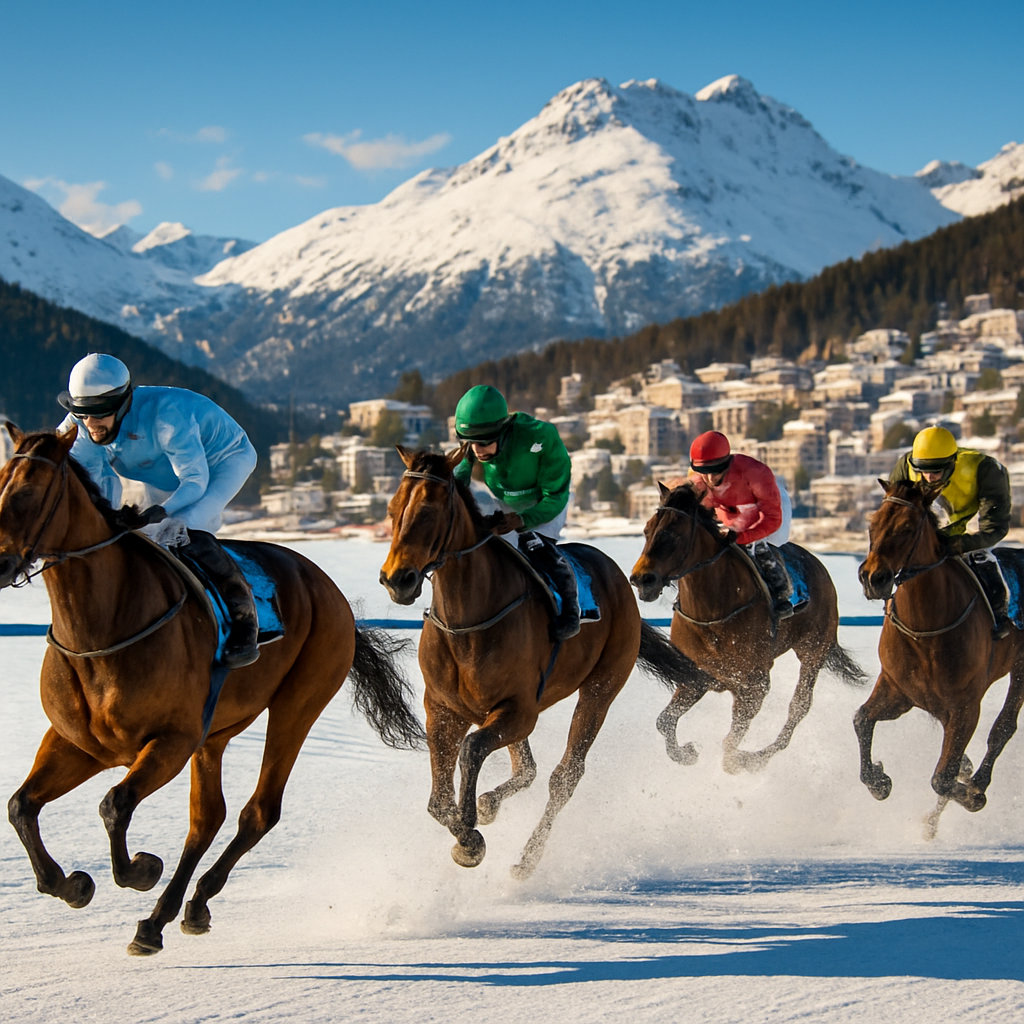
White Turf Horse Racing on the Frozen Lake
White Turf happens every February on the frozen surface of Lake St. Moritz — thoroughbred horses thundering across ice, champagne tents popping at the margins, and hats that defy structural engineering bobbing above a crowd that treats the event as equal parts sporting competition and fashion show. It's a full spectacle: the sound of hooves on packed snow, the crack of a starting pistol echoing off the mountains, fur-trimmed coats in every direction, and the Engadin peaks forming an absurd natural amphitheater behind it all.
Get there early, claim a spot near the rail, and don't pretend you're above the champagne tent — nobody is. The event draws one of the most glamorously international crowds the Alps can muster, and the atmosphere is genuinely electric. Three race Sundays in February; general admission gets you onto the frozen lake itself.
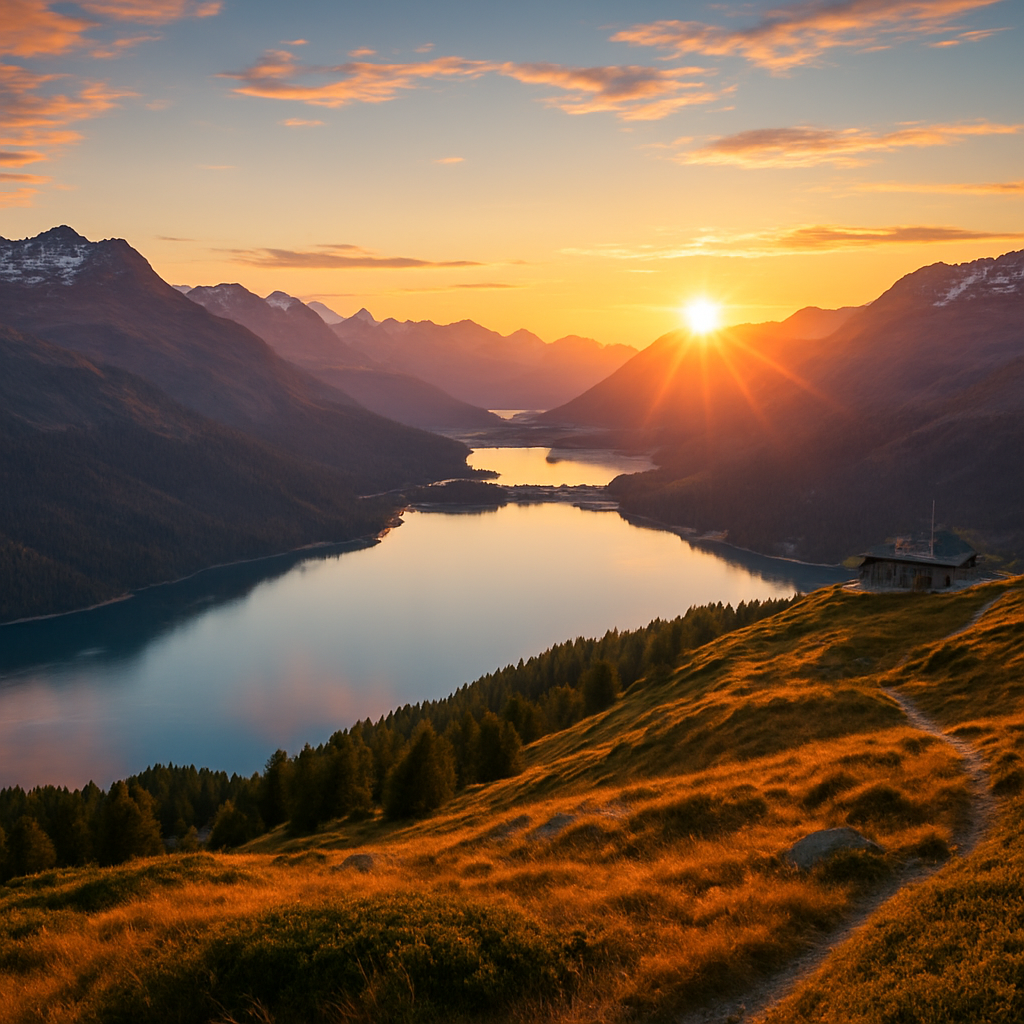
Muottas Muragl at Sunset
Take the funicular from just outside Pontresina up to Muottas Muragl at 2,456 meters and arrive about an hour before sunset. What you get is the single most dramatic panorama in the Engadin: the entire lake chain — Silvaplana, Champfèr, St. Moritz — laid out below you in a glacial ribbon, Piz Bernina filling the southern horizon, and golden light doing things to the snowfields that make your phone camera feel inadequate.
There's a mountaintop restaurant where you can eat while the sky turns pink, and the descent by funicular in the blue hour is its own small miracle. In winter, the same spot offers toboggan runs after dark — you can sled 4.2 kilometers back down by headlamp. Either season, this is the view you'll talk about when you get home.
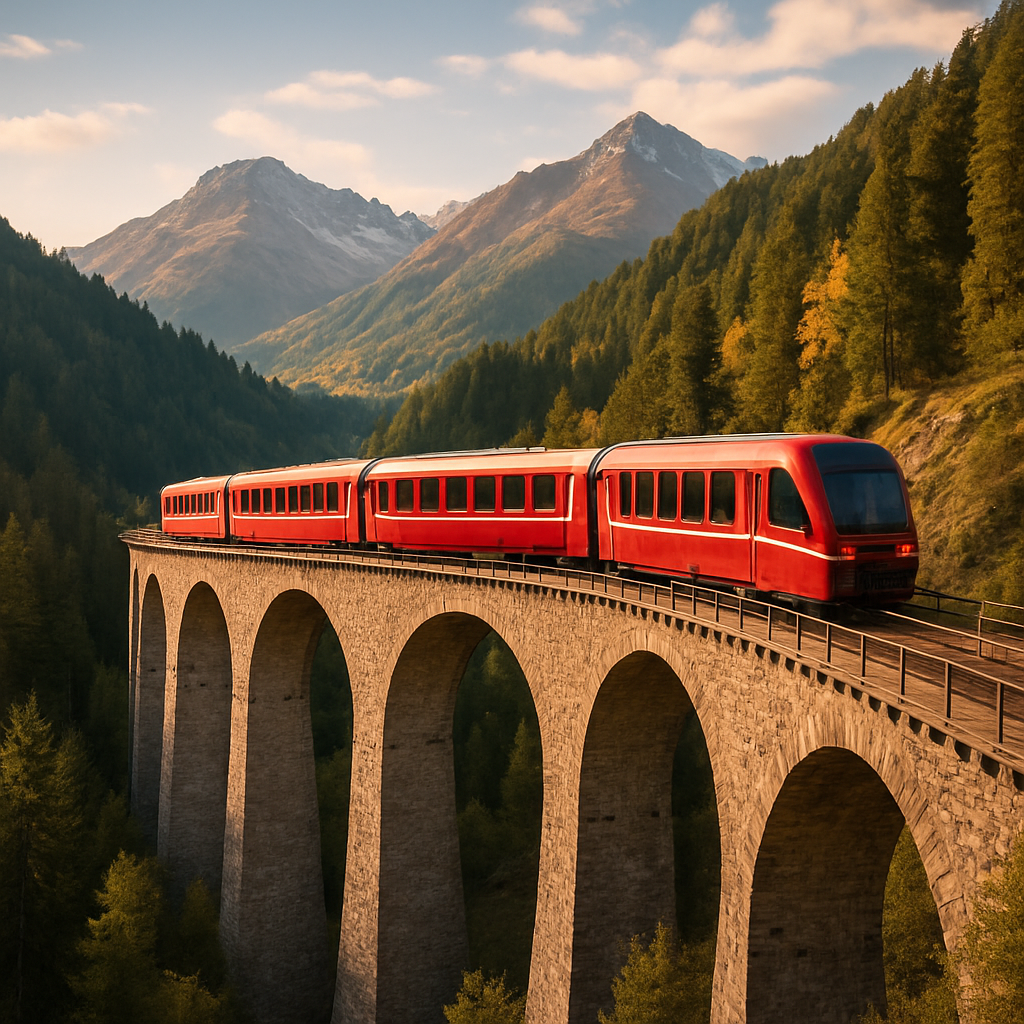
The Bernina Express to Poschiavo
The Bernina Express crosses the Bernina Pass at 2,253 meters — the highest transalpine crossing by non-rack railway in Europe — on a route so spectacular that UNESCO gave the whole thing World Heritage status in 2008. Board at St. Moritz Bahnhof, settle into the panoramic carriage, and watch the landscape transform: Engadin valley floor to high-alpine glaciers to the vertiginous Brusio spiral viaduct and down into the Italian-speaking Poschiavo valley, where the architecture, the food, and the light are completely different from anything above.
Stop in Poschiavo for lunch — the town's Italian-Swiss cuisine is its own reward — then take the return train through it all again in reversed afternoon light. Book the panoramic car and a seat on the right side heading south. The full run to Tirano, Italy takes about 2.5 hours; Poschiavo is roughly the midpoint.
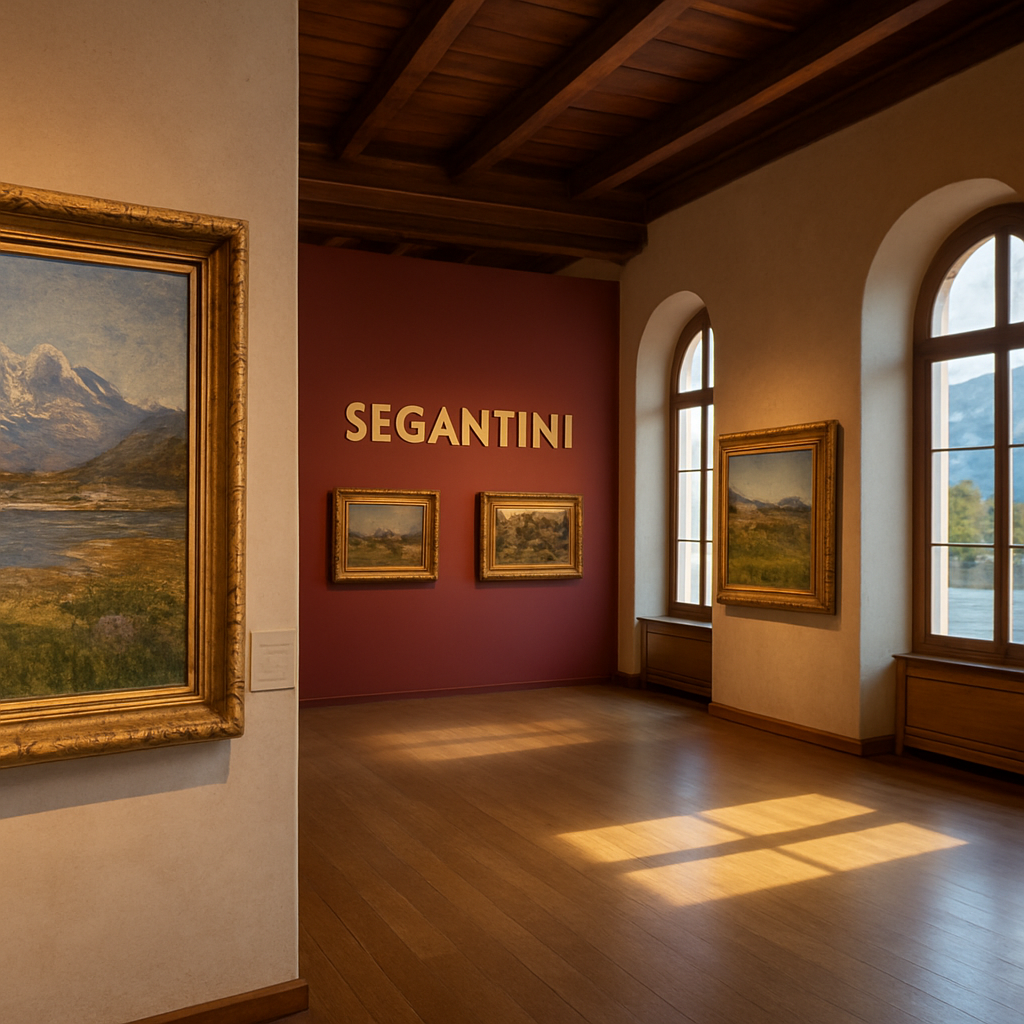
The Alps Triptych at the Segantini Museum
The Segantini Museum is a circular Jugendstil building opened in 1908, purpose-built to house the work of Giovanni Segantini — the Italian-Swiss Symbolist who spent his final years painting the Engadin with an intensity that borders on obsession. The museum holds the world's largest collection of his paintings, but the centerpiece is the Alps Triptych: three massive panels — Life, Nature, Death — that capture the Engadin's light and landscape at a scale and emotional depth that stops you cold.
Stand in front of them for five minutes. Then walk outside and see the same mountains Segantini was painting. The correspondence between the art and the view is uncanny and slightly unsettling. At CHF 15, this is one of the most rewarding museum visits in the Alps — small enough to absorb in an hour, powerful enough to reframe your entire stay.
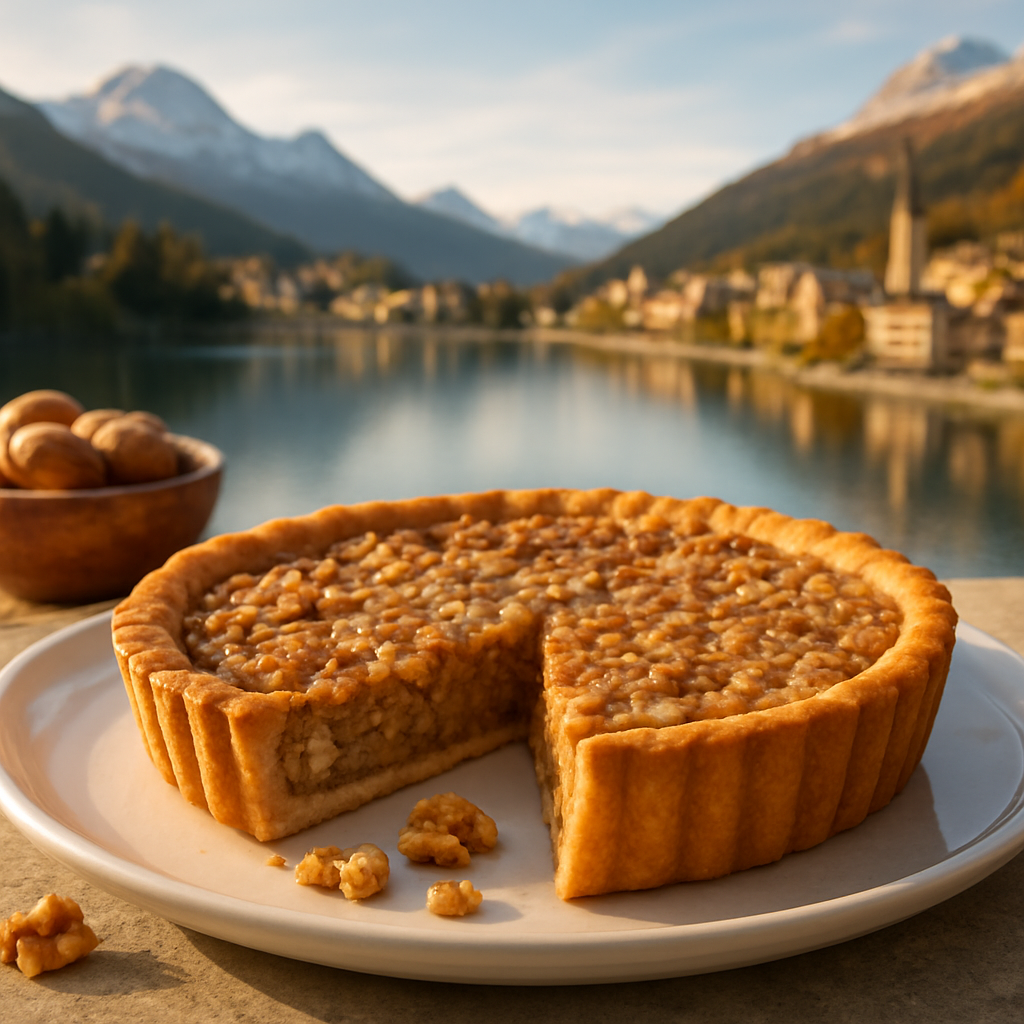
Engadiner Nusstorte at Hanselmann
Hanselmann has been baking on St. Moritz's main street since 1894, and the Engadiner Nusstorte — a caramelized walnut tart with a buttery shortcrust shell — remains the single edible thing you must eat in this town. The pastry has PDO protection, meaning it can only be made in the Engadin with specific methods, and Hanselmann's version is the reference standard: dense, sweet-savory, with a depth of caramel flavor that will ruin all future walnut tarts for you.
Order a slice with coffee in their wood-paneled salon — the old-world elegance of the room makes even a solo afternoon feel like a proper occasion. Then buy a whole tart to take home, because you will absolutely regret it if you don't. They ship, but the one you carry on the plane tastes better.
The places I actually send people to
Advice that fits how you travel
St. Moritz solo is a study in contrasts: during peak season (December–March, July–August), you're surrounded by one of the most international crowds in the Alps — royalty, fashion editors, finance people, all orbiting the same mountain — and the anonymity that creates is genuinely liberating. Nobody knows who you are, nobody cares, and walking into King's Club at Badrutt's Palace alone on a Thursday night is not the act of courage it might be elsewhere. The fashion-and-arts crowd that fills that basement has been inclusive since long before anyone was keeping track.
The apps — Grindr, Scruff — will show activity during peak season, but set expectations: this is a resort of approximately 5,000 permanent residents, not a city. The more reliable approach is the hotel bars — the Hotel Waldhaus am See bar draws a literary, artistic crowd that tends to be openly mixed; the Sunny Bar and Cascade Bar at Badrutt's Palace are the social warm-up acts before King's Club takes over downstairs. Pro tip: if you want genuine gay nightlife, the Rhaetian Railway to Zurich is 2.5 hours — Kreis 4 has exactly what you're looking for.
Budget-solo strategy: staying in Pontresina or Samedan cuts accommodation costs 30–40% against equivalent St. Moritz rooms, and the PostBus and Rhaetian Railway get you to the same slopes, the same restaurants, and the same King's Club in under 15 minutes. The savings add up fast in a town where cocktails run CHF 18–32 and central hotel beds start at CHF 150. Solo travelers should also know about the Youth Hostel in St. Moritz Bad — from CHF 40/night, Hostelling International-affiliated with a formal non-discrimination policy covering sexual orientation and gender identity — which puts you at lake level with cross-country ski trails out the door and Devil's Place a short walk away.
Same-sex couples in St. Moritz operate at a level of ease that's almost remarkable for a small Alpine resort — and it makes complete sense when you consider the clientele. At Badrutt's Palace, the Kulm, and the Carlton, same-sex couples checking in together are treated with exactly the same professionalism and discretion as everyone else, by staff trained for a globally diverse ultra-wealthy audience. Hand-holding along Via Serlas draws precisely zero attention from a crowd too busy evaluating ski kit and designer storefronts to notice yours.
For romance, the Engadin delivers at a scale that feels almost unfair. Book the funicular up to Muottas Muragl for sunset — arrive an hour before, find a table at the mountaintop restaurant, and let the entire lake chain and Piz Bernina do the work for you. In summer, a horse-drawn carriage through the car-free Roseg Valley from Pontresina is the kind of afternoon that recalibrates what a date can be. For the meal you'll talk about for years, Talvo by Dalsass in a 17th-century farmhouse in Champfèr — two Michelin stars held for over twenty consecutive years — is the only reservation you need to make before you arrive.
The Bernina Express to Poschiavo is one of the most romantic train journeys in Europe — a UNESCO World Heritage route crossing a 2,253-meter pass into a completely different cultural landscape, ideal for a full-day excursion. Book the panoramic car, get seats on the right side heading south, and take the full run to Tirano for lunch before returning in the afternoon light. For accommodation, the Carlton's direct lakefront position means waking up to the Engadin framed in your window — worth the CHF 480/night for a proper splurge stay. Base yourself in Pontresina the rest of the trip and save 30–40% while keeping the same mountains outside every morning.
As of 2026, Switzerland offers LGBTQ+ families full legal standing — same-sex marriage passed by popular referendum and has been in force since July 2022, with full joint adoption rights applying equally to same-sex couples under Swiss federal family law. At the resort level, luxury hotel staff at the five-stars operate without distinction based on family structure — LGBTQ+ families at Badrutt's Palace or the Kulm are treated with exactly the same professionalism extended to every other guest. The Swiss legal framework is comprehensive; the social environment at St. Moritz's internationally oriented hotels follows suit without hesitation.
Kid-friendly activities are genuinely excellent here. The Olympic Bob Run in Celerina — the world's only naturally iced bobsled track, in continuous operation since 1904 — offers public taxi bob rides December through February (from CHF 250/person; check age and weight minimums before booking, as operational restrictions apply). The Segantini Museum at CHF 15 captivates older kids and teens with the Alps Triptych, while the Corviglia funicular and the sheer spectacle of the slopes will keep younger ones occupied for hours. The Engadine Museum (CHF 12) covers the Romansh-speaking history of the valley in an approachable format well-suited for school-age visitors. In summer, accessible sections of the Via Engiadina trail along the valley floor are manageable for families — flat stretches, lake views throughout, no permits required.
Practically: the Rhaetian Railway is stroller-accessible and punctual — family-sized groups with ski equipment and pushchairs travel comfortably. The PostBus network connects every valley village, including Pontresina and Celerina, where family rooms run significantly cheaper than equivalent St. Moritz accommodations without sacrificing access to the same mountains and trails. Hotel Laudinella in the Dorf — approximately 220 rooms, multiple on-site restaurants — is one of the few central properties where a family won't feel financially exposed at every meal. Coop and Migros supermarkets in St. Moritz make grocery resupply and picnic provisioning a practical daily strategy, which matters considerably in a resort where even café snacks can feel like a financial event.
What St. Moritz actually costs
Flights, visas, and the first 30 minutes
Flying in: Your entry point is Zurich Airport (ZRH), one of Europe's most consistently well-connected hubs with approximately 200 direct international routes. From the US East Coast, direct transatlantic service runs roughly 8–9 hours; from the West Coast, count on 11–12 hours with a connection. The UK is a short 2-hour hop. Australia and New Zealand route through a Middle East or European hub — long-haul, but Zurich makes the connection painless. One note worth filing away: Kreis 4 and Kreis 5 in Zurich have a genuine gay scene — the kind St. Moritz elegantly doesn't bother with — and the city is worth at least a night on either end of your trip if that matters to you.
Visa and entry, as of 2026: Switzerland is a Schengen member. US, Canadian, and Australian passport holders typically need no visa for stays up to 90 days within any 180-day Schengen window. EU citizens have full Schengen free movement with no time restriction. UK passport holders generally need no visa for stays up to 90 days under the current post-Brexit arrangements. Requirements can shift — if you're traveling on any other passport or have a complicated travel history through the Schengen zone, verify with the Swiss embassy before you go.
Train — the right answer: Take the SBB intercity from Zurich Airport to Chur, then connect to the Rhaetian Railway's Albula line through to St. Moritz. Total: 3h 30m–3h 50m. Cost: CHF 75–90 in 2nd class, CHF 120–150 in 1st class. Book on sbb.ch. I'll be direct about this: the Albula route doesn't feel like transit — it crosses stone viaducts, spirals through mountain tunnels, and opens onto valley panoramas that are legitimately among the most spectacular railway views in Europe. UNESCO World Heritage status for a reason. Pay the upgrade, get a window seat, leave your phone in your bag.
Private transfer: Door-to-door from Zurich Airport in 2h 30m–3h, costing CHF 500–900 depending on vehicle class and season. Advance booking is essential in peak season (December–March, July–August). If you're arriving with a group, serious ski equipment, or staying somewhere the train doesn't serve conveniently, the math can work out. Otherwise, the train beats it in almost every way.
Car rental: The drive via the A3/A13 takes approximately 2h 30m in clear conditions — CHF 80–150/day plus fuel. Two things you need to know before you commit: winter tyres or chains are legally mandatory on mountain passes November through April, and parking in St. Moritz is both limited and expensive. Pro tip — if you're basing yourself in Pontresina or Celerina to save on accommodation costs, the PostBus network and Rhaetian Railway cover everything, and the car becomes more liability than asset. Leave it in Zurich.
Traven's seasonal breakdown
The questions everyone asks
Is St. Moritz safe for LGBTQ+ travelers?
Is there a gay scene in St. Moritz?
How expensive is St. Moritz, really?
Can I hold hands with my partner?
When should I visit?
Do I need a car?
What's the greeting — Grüezi or something else?
Screenshot this before you go
So should you actually go?
Go. St. Moritz won't throw you a parade, and it won't hand you a community on arrival — but it will treat you with the kind of genuine, structural indifference to your orientation that only comes from a place where discretion is a 170-year-old tradition and the clientele has always included us. The legal protections are airtight, the mountains are staggering, the food punches absurdly above what a town of 5,000 people should be able to produce, and the Bernina Express alone is worth the trip. Budget travelers: base yourselves in Pontresina, save 30–40%, and ride the PostBus in. Luxury travelers: you already know where you're staying. Everyone in between: the Rhaetian Railway journey from Zurich is one of the great rail experiences in Europe, and it delivers you to a resort where the only thing anyone cares about is whether you can keep up — on the slopes, in the bars, and at the table. You can. Go.
Sources & Resources
Official links we reference when compiling this guide. Last verified 2026-04-13.
- Graubünden Tourism – Official Regional Guide
- LOS – Lesbenorganisation Schweiz (National Lesbian Organization)
- Pink Cross Switzerland – National Gay Men's Organization
- Queer Amnesty Switzerland
- Swiss AIDS Federation
- Swiss Federal Department of Justice – Marriage Equality
- Swiss Federal Office of Public Health (LGBTQ+ Health Resources)