Bangkok is the city that makes every other Asian metropolis feel like it's playing it safe.
Bangkok doesn't ease you in. You step off the BTS at Chong Nonsi, walk three minutes south, and suddenly you're standing in the middle of Silom Soi 4 — a pedestrianized alley no wider than a bowling lane where drag queens in six-inch heels are collecting tips from German tourists, a Thai couple is sharing a bucket of Singha at a plastic table, and someone's tiny grandmother is selling grilled pork skewers from a cart she's probably been wheeling here since before DJ Station opened in 1999. Nobody's performing tolerance. Nobody's making a statement. It's just Tuesday.
That effortlessness is what separates Bangkok from almost every other major city I score. The scene here isn't an enclave you have to find — it's a permanent fixture of the city's geography, anchored to a specific stretch of Silom Road that has operated continuously and openly for decades. I gave it a 9.0 on Scene, and honestly, the only thing keeping it from higher is that the lesbian and queer women's nightlife remains frustratingly scattered compared to the concentrated gay male infrastructure. (Head to Ekkamai and Thonglor for that — Studio Lam is doing the work.) But the party is real, the community is real, and the politics are finally catching up — Thailand passed its Marriage Equality Act in 2024, the first country in Southeast Asia to do it, and the social temperature has shifted faster than anyone predicted.
Don't mistake the mai pen rai attitude for full equality, though. There's still a gap between visible celebration and legal protection — anti-discrimination coverage remains limited, gender identity law is nonexistent as of 2026, and trans women, particularly those working near Nana or Patpong, face a level of police attention that gay men simply don't. My Traven-Dex of 8.2 reflects a city that's genuinely fun, genuinely welcoming, and genuinely complicated — which is exactly why I keep going back.
If you only have one evening, a reader told me the smartest move in Bangkok: skip the clubs, grab a table at The Balcony on Soi 4 facing the street, order a bucket of beer, and just watch. Within an hour you'll understand the whole ecosystem — the locals and the expats mixing in a way that feels organic rather than staged, the energy building from relaxed conversation to full spectacle as midnight approaches, the motorcycle taxi guys negotiating fares at the soi entrance. You won't need a cover charge. You won't need a plan. Bangkok does the work for you.
The stuff your travel guide buries on page 47
Thailand passed a Marriage Equality Act in 2024, which took effect in January 2025 — making Thailand the first country in Southeast Asia to legalize same-sex marriage. Same-sex couples legally married in Thailand are entitled to the same rights as opposite-sex married couples, including inheritance and medical decision-making. This is a genuine milestone, not window dressing.
Civil unions were already available prior to full marriage equality, and adoption law remains in a transitional phase — LGBTQ+ families should consult local legal resources for current status on joint adoption. Anti-discrimination protections for sexual orientation and gender identity exist in limited form at the national level; workplace discrimination protections are not comprehensive, and enforcement is inconsistent.
Homosexuality has never been criminalized in Thailand. There is no law against same-sex relationships, and the government advisory level is Normal — standard travel precautions apply, nothing LGBTQ+-specific. Gender identity law requires medical criteria (including surgery documentation) for legal gender recognition, which places a significant burden on trans travelers seeking official document alignment.
Culturally, Thai society has a deep history of gender diversity through the kathoey tradition, and visible queerness is generally tolerated — even celebrated — in urban Bangkok. That said, Thai culture places enormous value on kreng jai (consideration for others) and public composure. Overt, performative PDA anywhere will read as culturally disrespectful, regardless of the genders involved. In the Silom gay district, same-sex affection is entirely normalized. In temple precincts and traditional neighborhoods, discretion is the respectful choice. Read the room — Bangkok is very good at rewarding that.
What it actually feels like on the ground
Holding hands: In Silom Soi 2 and Soi 4, absolutely fine — you'll be in good company. In Sukhumvit's international corridor, hand-holding is generally unremarked upon. Around temples, the Grand Palace, and more traditional neighborhoods, I'd skip it — not because you're unsafe, but because it's culturally considerate not to.
Hotel check-in: Bangkok's hotel industry, from budget guesthouses to five-star riverfront properties, is well-practiced with same-sex couples. I've never heard a credible report of an issue at any reputable property. You will be fine.
Taxis and Grab: Use Grab. Full stop. It removes the negotiation, the potential for being driven somewhere unexpected, and the language barrier. Metered taxis are generally fine too — if a driver is uncomfortable with you, they'll usually just be quiet. Incidents are rare. Grab is just easier.
Beaches and public spaces: Bangkok is an inland city, but for public parks like Lumphini, same-sex couples are generally untroubled. Chatuchak Weekend Market and major shopping centers are similarly neutral. You'll get curious looks occasionally, not hostility.
Late night: The Silom strip is your safest late-night territory — specifically designed for the gay scene, well-lit, busy, and staff-managed. Elsewhere, standard urban late-night awareness applies: stick to populated areas, use Grab, don't flash valuables.
Trans travelers: Bangkok has arguably the highest trans visibility of any major Asian city. Trans travelers — particularly trans women — often report feeling more socially comfortable here than in many Western cities. Practical considerations: documents may not match presentation, but Thai immigration and hospitality staff are generally experienced with this and pragmatic in their approach. Medical facilities for trans healthcare are widely available and internationally regarded.
Verbal harassment risk: Low. Bangkok locals are not confrontational by cultural default. You are far more likely to receive a smile than a slur, even in areas outside the gay district. Exercise normal urban awareness, and you'll be fine.
The queer geography
Silom — The Gay District
The queer heart of Bangkok sits on two short stretches of road off Silom: Soi 2 and Soi 4. Soi 4 is the louder one — bars spill onto the street, DJs start around 10pm, and by midnight it's shoulder-to-shoulder with a mix of Thai guys, expats, and travelers who found the address on their phones and never left. Balcony Bar is the classic open-air spot. DJ Station is the club if you want bass and a dancefloor. Telephone Pub is the old-school anchor. Soi 2 runs more circuit-party energy. The whole strip is walkable in under five minutes, which means you'll walk it about fifteen times in one night.
The Silom neighborhood itself extends beyond the gay strip into one of Bangkok's most interesting mixed zones — you're steps from Lumphini Park, a short walk from the river, and surrounded by some of the city's best Thai food at street level. It's also extremely well-connected by BTS Skytrain (Sala Daeng station).
Sukhumvit — International Comfort Zone
Bangkok's most cosmopolitan corridor runs east from Asok through Thonglor and Ekkamai. This is where international restaurants, rooftop bars, and boutique hotels cluster. It's not a gay district, but it's a tolerant, international-facing environment where queer travelers typically feel at ease. Thonglor specifically has become Bangkok's upmarket nightlife and dining zone — worth an evening.
Riverside / Charoen Krung
The old riverfront area along Charoen Krung has been transformed over the past decade into a genuinely cool creative district — galleries, independent bars, boutique hotels, and a far more local feel than Sukhumvit. It's not queer-specific, but it's Bangkok at its most atmospheric. The Mandarin Oriental sits at one end; ICONSIAM and the ferry piers anchor the whole stretch.
The experiences worth rearranging your itinerary for
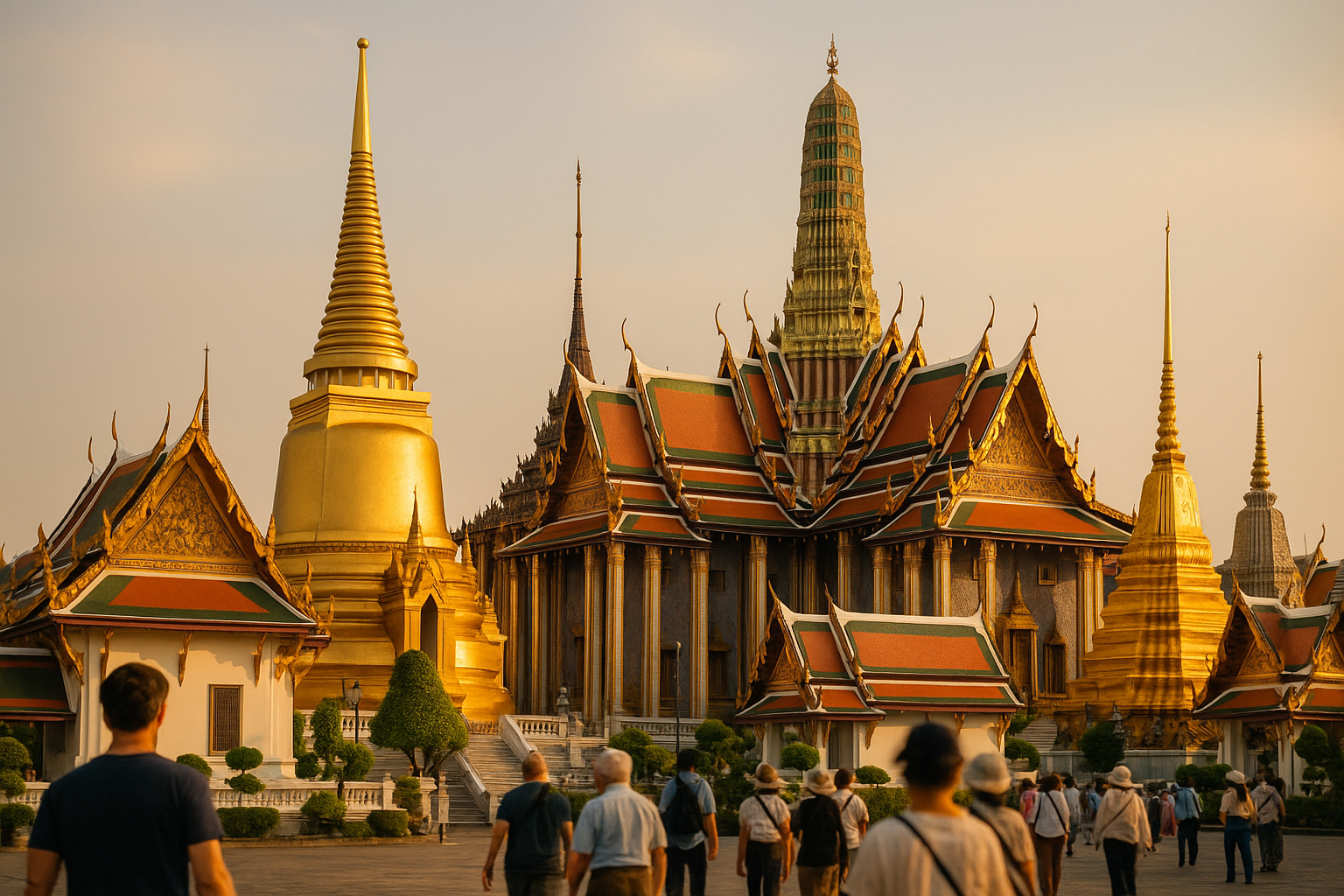
Wat Pho and the Grand Palace
Yes, every guidebook sends you here. They're right. The Grand Palace complex is genuinely staggering — intricate mirrored mosaic work, golden spires, and the sheer scale of Theravada Buddhist architecture at its most elaborate. Wat Pho next door houses the 46-meter reclining Buddha, which will stop you mid-sentence. Go early (8am) to beat the heat and the crowds, dress modestly (shoulders and knees covered), and take the Chao Phraya ferry to get there — the river approach is its own experience.
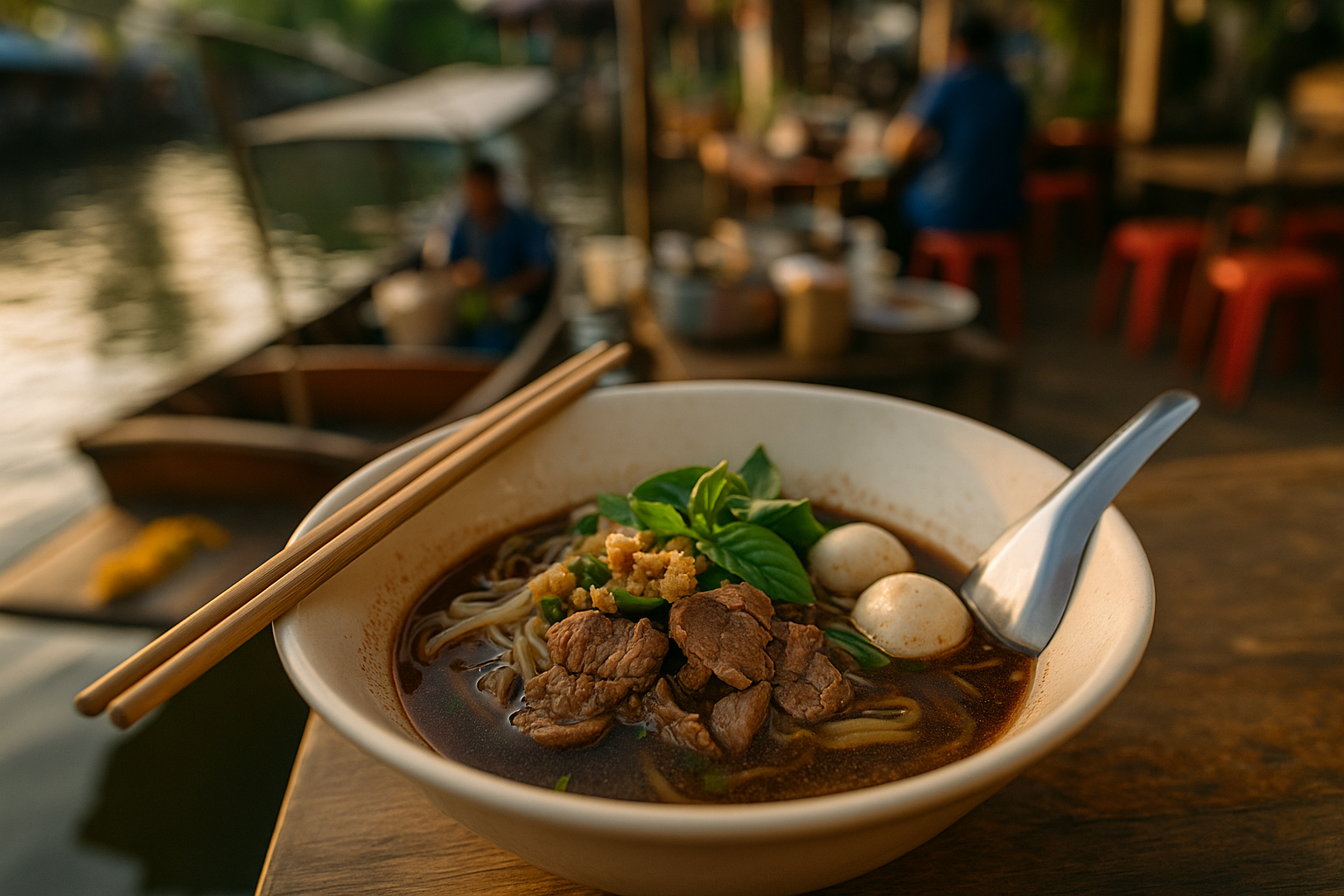
Boat Noodles at Victory Monument
The area around Victory Monument is ground zero for one of Bangkok's great eating rituals: tiny bowls of boat noodles, deeply spiced with blood broth, bean sprouts, and herbs, at about 50 baht each. You eat four or five. The noodle stalls cluster in the covered walkways near the monument — go for lunch between noon and 2pm when they're all operating. This is the meal that will have you trying to describe it to people for months afterward and failing.
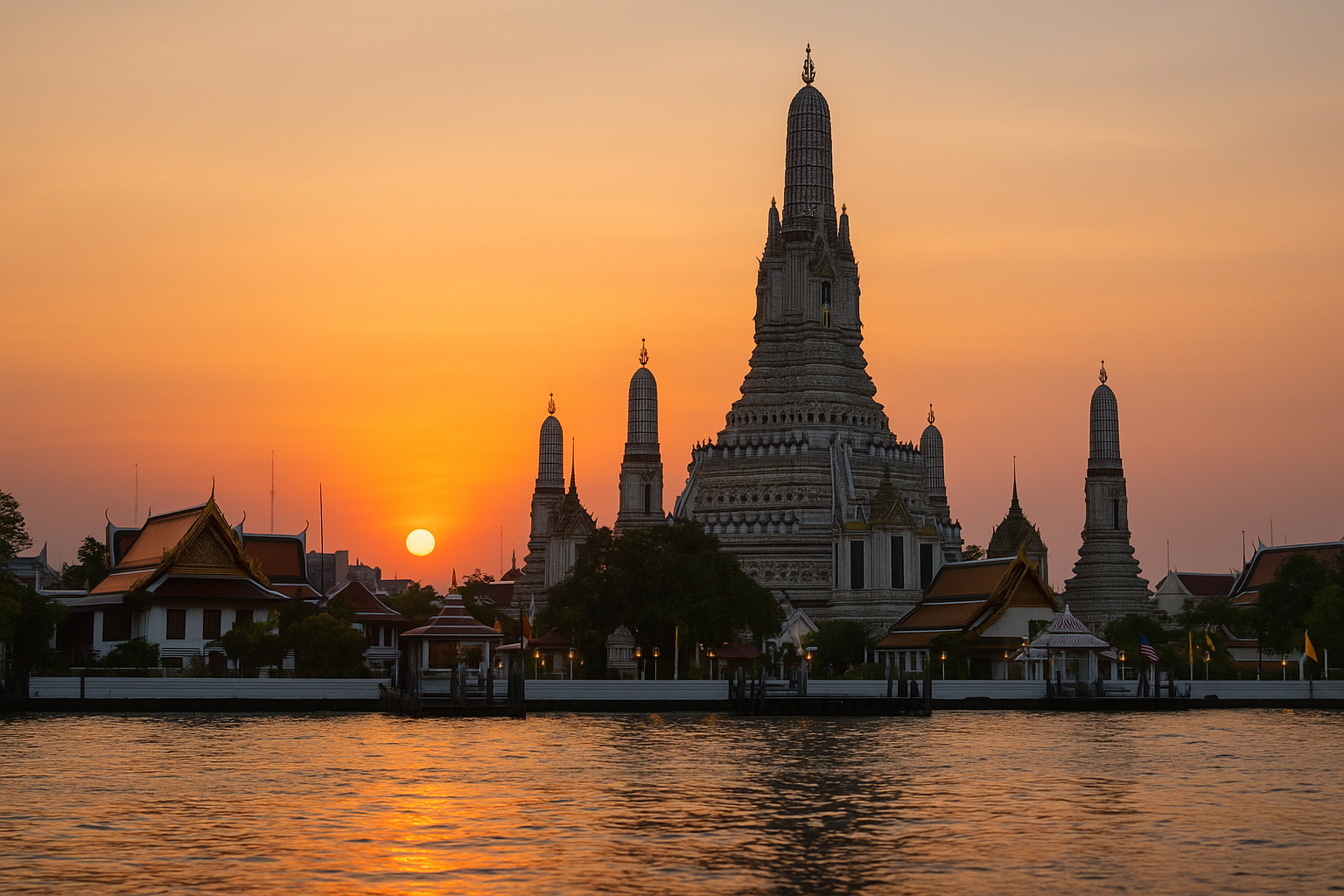
Chao Phraya River at Dusk
Get on the Chao Phraya Express Boat around 5:30pm heading southbound. As the sun drops, the light goes gold, the temples come into silhouette against the sky, and the whole city — which spends most of the day in roaring, traffic-jammed motion — becomes genuinely beautiful. The ferry costs about 15 baht. Then cross to Wat Arun's west bank at dusk and look back east. That's the view.
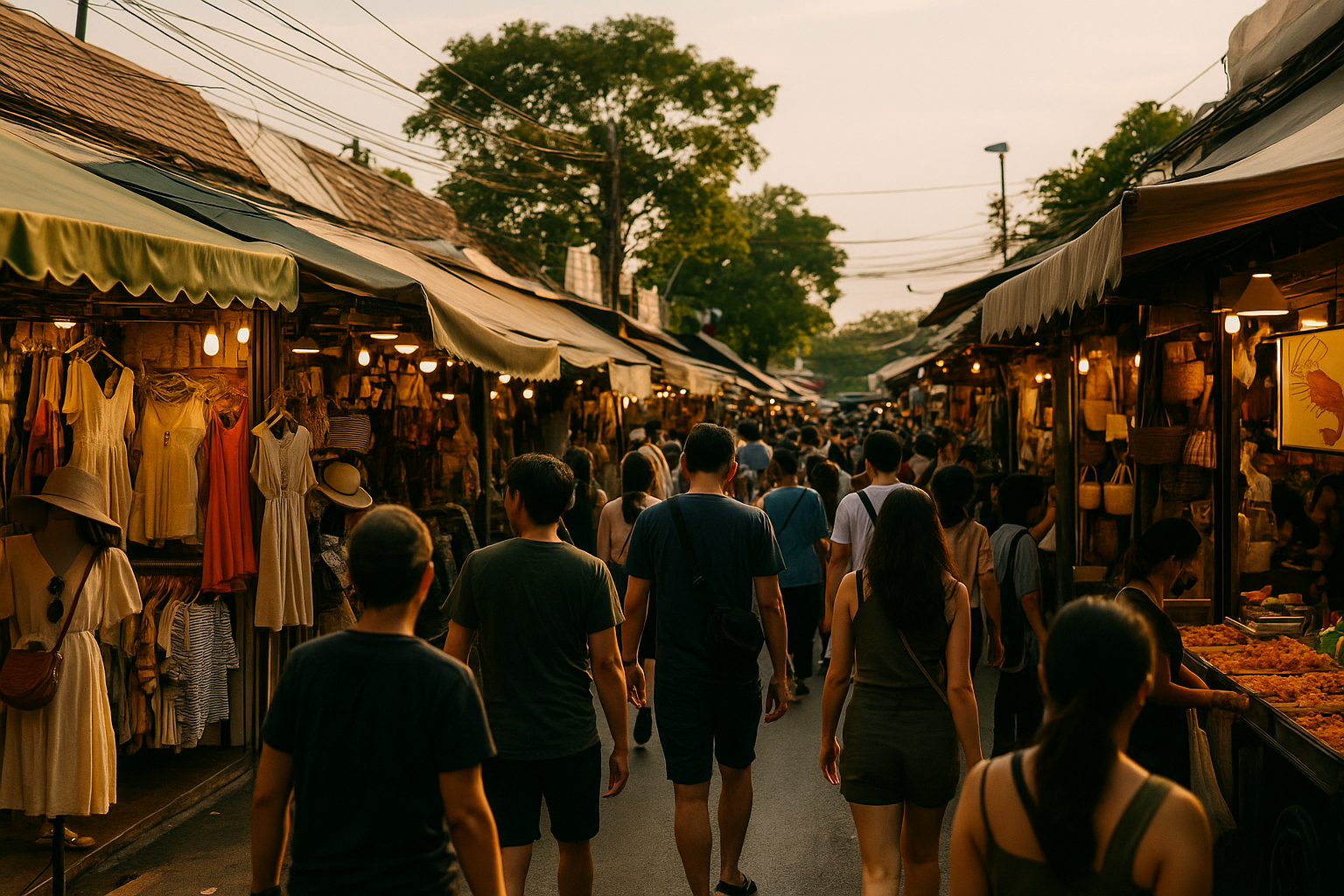
Chatuchak Weekend Market
Over 15,000 stalls across 35 acres on Saturday and Sunday. Vintage clothing, ceramics, live plants, Thai antiques, amulets, handmade leather goods, street food around every corner. Come at 9am before the heat becomes punishing, bring cash, and plan to lose at least three hours. There's a section in Zone C dedicated to art and design that's genuinely good — not the tourist-trap stuff. Take the BTS to Mo Chit and follow the crowd.
Nahm or Paste — Thai Fine Dining Done Right
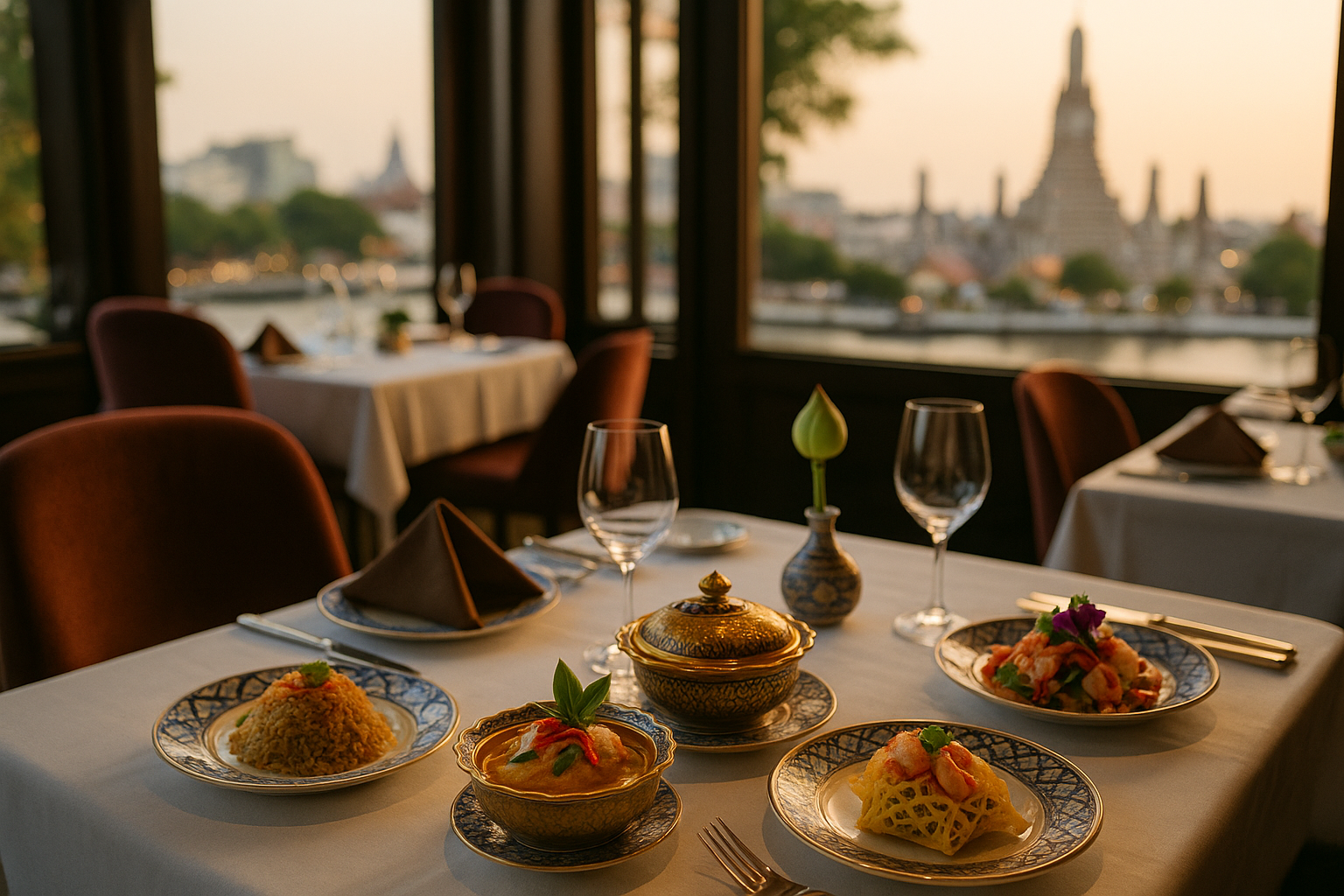
Bangkok has a Michelin-starred Thai food scene that justifies a flight on its own. Nahm (in the Como Metropolitan Hotel) is the landmark — chef David Thompson's obsessive historical Thai recipes produce dishes you won't encounter anywhere else. Paste in Lumphini is the choice for a more relaxed room with the same level of culinary ambition. Book a week ahead, order the tasting menu, and budget THB 1,500–2,500 per person. Worth every baht.
The places I actually send people to
Advice that fits how you travel
Bangkok is one of the best solo travel cities in the world, and that holds double for queer solo travelers. The app scene is active — Grindr and Scruff have strong Bangkok presences, and you'll find connections quickly in the Silom area. But honestly, you don't need apps here. Silom Soi 4 is specifically designed for exactly the kind of casual, open socialization that solo travelers thrive on. Sit at the Balcony Bar, order a beer, and you'll be in conversation within the hour.
Budget-wise, Bangkok is a solo traveler's dream — a clean guesthouse room runs THB 400–600/night, street food dinners cost THB 80–150, and the BTS/MRT network will get you around most of the city for under THB 150/day. You can do Bangkok well on very little, which means more budget for the one extravagant dinner or the hotel pool day you'll absolutely want.
For neighborhoods, I'd put a solo traveler in Sukhumvit (around Asok or Nana) for central access and easy BTS connections to Silom, or in the Riverside/Charoen Krung district if you want more character and fewer tourists. Both are safe for solo walking in the evenings. Trust Grab for any late-night transport — it removes the variables.
Bangkok rewards couples who are willing to move between different registers of the city. Start with a sunset ferry on the Chao Phraya. End the night on Silom Soi 4. In between, eat everything — the pad kra pao at a sidewalk table, the tasting menu at Nahm, the mango sticky rice from the cart outside your hotel. Bangkok's food is, among other things, extremely romantic when you're sharing it.
PDA comfort depends on where you are. In Silom, you're entirely free — it's the city's most openly queer environment and no one will blink. Elsewhere in Bangkok, hand-holding in commercial and entertainment areas is generally fine; save the full affection for your hotel and the gay district. This is more cultural etiquette than safety concern — the city is welcoming, and a little context-awareness goes a long way.
For accommodation, the Mandarin Oriental sets the gold standard for romance (river views, impeccable service, the pool). For boutique romance at a lower price point, the Riverside/Charoen Krung district has a growing collection of design hotels in repurposed shophouses that have a genuinely intimate feel. Book a room with a river view and you're already most of the way there.
Bangkok with kids is more manageable than the city's chaotic reputation suggests, particularly if you use the BTS Skytrain to avoid traffic. The city has legitimate family draws: the Dusit Zoo, Safari World (out of the city but worth the trip), the giant aquarium at Siam Paragon, the hands-on exhibits at the Museum of Contemporary Art, and the sheer spectacle of the temples. Kids who are old enough to walk through the Grand Palace complex tend to remember it permanently.
For LGBTQ+ families, Thailand's marriage equality law means legally married couples now have recognized parental rights, though the adoption framework is still evolving. In practice, Bangkok hotels, restaurants, and tourist attractions treat families matter-of-factly regardless of family structure. You're unlikely to encounter hostile reactions — Thai culture defaults to courtesy, and the tourist industry especially so.
Practically: strollers are manageable on the BTS but not on river ferries or in temple areas (lots of steps). Kid-friendly food is everywhere — khao man gai (chicken rice) and pad thai are usually safe bets for younger palates. Stay in Sukhumvit for easiest access to family-friendly malls, air-conditioned restaurants, and reliable supermarkets. Budget THB 3,000–5,000/day for a family traveling economically; more if you're doing organized tours or Safari World.
What Bangkok actually costs
Flights, visas, and the first 30 minutes
Airport: Bangkok is primarily served by Suvarnabhumi International Airport (BKK) for long-haul and most regional flights, and Don Mueang Airport (DMK) for low-cost carriers. Most international visitors arrive at Suvarnabhumi.
Direct routes: Bangkok is one of the most connected hubs in Asia — 180+ cities with direct service. From the US (Los Angeles, New York): approximately 17–20 hours direct or 14–16 hours with one stop. From London: approximately 11–12 hours direct. From Sydney: approximately 9–10 hours direct. From Singapore, Hong Kong, Tokyo: 3–5 hours. Airlines including Thai Airways, Emirates, Qatar Airways, Cathay Pacific, and EVA Air all serve Bangkok with strong frequency.
Visa requirements: Thailand offers visa-exempt entry for most Western nationalities. US, UK, EU (most nationals), Canadian, and Australian passport holders all receive 60 days visa-free as of the 2025 policy extension. No visa application required — just arrive. Confirm your specific nationality's status before travel as policies can be updated.
Airport to city: The Airport Rail Link (THB 45–145) is the fastest and most reliable option — 25 to 45 minutes to Phaya Thai or Makkasan stations, connecting directly to BTS and MRT networks. A metered taxi runs THB 250–400 plus expressway tolls (roughly THB 75) and takes 30–60 minutes depending on traffic. Grab is the easiest option at THB 300–500 fixed price — no negotiation, no meter anxiety. Public buses exist at THB 30–50 but take 60–90 minutes and aren't worth it for most travelers arriving with luggage.
Traven's seasonal breakdown
The questions everyone asks
Is Bangkok safe for LGBTQ+ travelers?
Is same-sex marriage legal in Thailand?
Is it safe to hold hands as a same-sex couple in Bangkok?
How much should I budget per day in Bangkok?
Do I need to speak Thai?
When is Bangkok Pride?
What's the best way to get around Bangkok?
Screenshot this before you go
So should you actually go?
Bangkok earns its place on the shortlist. It's a city that delivers on every front — extraordinary food, an established and genuinely fun queer scene centered on Silom, a cultural openness toward gender diversity that's embedded in Thai society rather than performed for tourists, and a price-to-experience ratio that makes most other major cities look embarrassing. The legal landscape has improved meaningfully with marriage equality, and on the ground, LGBTQ+ travelers typically feel comfortable, welcomed, and well-served. My Traven-Dex of 8 reflects a city that's genuinely excellent with a few honest caveats — anti-discrimination protections are still limited, and context-awareness matters, particularly around temple areas and traditional neighborhoods. But those caveats are manageable, not dealbreakers. Go. Take the late flight, arrive at midnight, eat something from a street cart before you even check in, and let the city do what it does best.
Sources & Resources
Official links we reference when compiling this guide. Last verified 2026-03-04.
- APCOM – Asia Pacific Coalition on Male Sexual Health
- SWING Thailand – Service Workers IN Group
- Bangkok Pride Foundation
- Thai Red Cross AIDS Research Centre (TRCARC)
- Rainbow Sky Association of Thailand (RSAT)
- Sisters Foundation Thailand – Transgender Health & Rights
- Mplus Foundation – MSM & Trans Health Services, Northern Thailand
- UNDP Thailand – LGBTI Inclusion Programme
- National Human Rights Commission of Thailand
- Thai Health Promotion Foundation