Manchester didn't ask for permission to build one of the best queer scenes in Europe — it just did it, and forty years later, it's still not done.
It's a Friday night on Canal Street and someone's dragged a speaker onto the terrace at Via. Three floors of people spilling out onto the pavement, the canal reflecting the neon bar signs back at you in wobbly lines, and a drag queen in full regalia is arguing with a bouncer about whether her headdress counts as a hat. Nobody's filming it. Nobody needs to. This is just what a regular Friday looks like when a city's been doing this for four decades straight.
Manchester's queer infrastructure isn't a marketing exercise — it's load-bearing. The Village survived police raids in the 1980s, the Haçienda era when queer and straight crowds mixed before anyone had a word for it, and the post-COVID rebuild that killed scenes in cities twice its size. Walk from Sackville Gardens, where the Alan Turing Memorial sits in bronze silence, down through the strip past New Union Hotel — one of the oldest continuously operating gay pubs in the city — and you can feel the institutional weight of a community that didn't just show up. It built the infrastructure, fought for the laws, and then stuck around to run the bars.
There's a reason my Traven-Dex score landed at 8.8. The legal framework is flawless — a perfect 10.0, full equality across the board — and the cultural reality actually matches it, which is rarer than you'd think. My Pulse score of 9.5 reflects a city where queer life isn't confined to one postcode: Chorlton has its own lesbian heartland energy, Ancoats is pulling the food-and-cocktails crowd away from the traditional strip, and the Northern Quarter runs drag brunches on streets where the Canal Street crowd would never have ventured a decade ago. The scene has expanded, not diluted.
And here's the thing about Manchester that catches people off guard: it's not London. It's not trying to be. The drinks cost half as much, the people talk to you like you already know each other, and The Molly House on Richmond Street — dim lighting, taxidermy, cocktails that taste like someone actually thought about them — is what cozy queer looks like when it's done right rather than curated for someone's grid. Someone wrote in to tell me not to sleep on Chorlton, and they were right — it's where the Canal Street crowd eventually migrates when they want a garden and a farmers market, and it's worth the tram ride on its own.
The stuff your travel guide buries on page 47
The legal picture: As of 2026, the UK offers full legal equality for LGBTQ+ people. Same-sex marriage has been legal in England and Wales since 2014. Joint adoption by same-sex couples is fully legal. Comprehensive anti-discrimination protections cover employment, housing, goods, and services under the Equality Act 2010. Gender identity recognition is available through self-identification pathways. There is no criminalization of same-sex conduct — none, zero, not since 1967 in England and Wales. My Legal score of 10.0 reflects a country where the law is genuinely on your side.
What the law means on the ground: Manchester is one of the most LGBTQ+-comfortable cities in the UK, and the UK is one of the most LGBTQ+-comfortable countries in Europe. This is a city with an LGBT Foundation headquartered in its gay village, a city council that funds Pride infrastructure, and Greater Manchester Police LGBT Liaison Officers who are, by community accounts, more responsive than the national average. The gap between law-on-paper and daily reality is unusually small here.
PDA comfort: On Canal Street and throughout The Village, same-sex PDA is completely normalised — holding hands, kissing, none of it registers. The Northern Quarter, Spinningfields, Salford Quays, and Deansgate are all high-comfort areas where PDA won't attract attention. Piccadilly Gardens — the main transport hub — gets busier and rowdier in the evenings, so exercise the same awareness you would at any major transit point. Some outer suburbs like Moss Side and Gorton are more traditional working-class areas where PDA is tolerated but may draw occasional glances — nothing systemic, nothing hostile, just a different energy.
Practical notes: Manchester rain is real, non-negotiable, and arrives without warning. The Canal Street terraces don't have magical weather protection, so pack a compact umbrella. Most Village clubs have a smart-casual door policy on weekends — nothing strict, but visible football shirts or heavily worn trainers will get you turned at Cruz 101 and the bigger venues. It's a licensing condition, not snobbery. And get the Metrolink app before you land — it connects you to Chorlton, Didsbury, and the airport, and paper tickets at tram stops are genuinely unreliable.
What it actually feels like on the ground
Holding hands: On Canal Street and throughout The Village, holding hands is a non-event. You'll see same-sex couples doing it constantly — it's one of the few places in the UK where it genuinely doesn't cross your mind. In the Northern Quarter, Spinningfields, and Ancoats, you'll find the same level of ease. In outer neighborhoods, you're unlikely to face hostility but may notice the occasional second glance. Use your usual instincts.
Hotel check-in: No issues anywhere in Manchester. Same-sex couples booking doubles is completely routine. The major chains (Kimpton, Radisson, Dakota) have group-level LGBTQ+ inclusion policies. Boutique hotels and B&Bs in the centre are uniformly fine. Even budget options like Hatters Hostel in the Northern Quarter have a long track record of welcoming LGBTQ+ guests.
Taxis and rideshares: Uber operates in Manchester and is generally comfortable. Licensed black cabs from ranks at Piccadilly and the Village are fine. The only time I'd suggest being aware is very late-night minicabs from unlicensed operators — this is a general safety issue, not an LGBTQ+ one, and it applies to everyone. Stick with licensed vehicles or the Uber app.
Late night: Canal Street itself feels genuinely safe — there's a consistent queer presence, staff who know their regulars, and good visibility even at 3am. The side streets between Princess Street and Bloom Street go quieter after 2am; stay aware of your surroundings the way you would anywhere at that hour. Piccadilly Gardens after midnight can get rowdy but it's general city-centre friction, not targeted harassment.
Trans travelers: Manchester has a visible and active trans community supported by organisations including The Proud Trust and Trans Manchester. Trans travelers generally report feeling safe in the city centre and The Village. The UK's broader political debate around gender recognition exists at a national level, but Manchester's on-the-ground culture skews strongly toward acceptance and inclusion. Village venues are accustomed to gender-diverse patrons.
Verbal harassment risk: Low in the city centre and The Village. Not zero — no city is zero — but Manchester's LGBTQ+ community has critical mass here, and that changes the dynamic. If you do experience a hate incident, LGBT Foundation runs a free helpline at 0345 3 30 30 30. They're Manchester-based, they actually pick up, and they know how to navigate Greater Manchester Police's hate crime reporting process.
Beaches / public spaces: Manchester is landlocked, so no beach dynamics to navigate. Parks and public spaces — Sackville Gardens, Heaton Park, Castlefield — are comfortable for LGBTQ+ visitors during daylight and into the evening. Standard urban awareness applies after dark in any park.
The queer geography
The Gay Village (Canal Street)
This is the centre of gravity. Canal Street runs along the Rochdale Canal from Sackville Street down to Princess Street, lined on both sides with bars, clubs, and restaurants. The street pedestrianises in summer, terraces extend toward the water, and the whole strip takes on a block-party energy that's been the engine of Manchester's queer scene since the 1980s. Sackville Gardens sits at the northern edge — home to the Alan Turing Memorial and the informal front door to everything. Key venues anchor the street: Via for multi-floor club energy, New Union Hotel for old-school pub drag, Cruz 101 for proper late-night dancing, and Bar Pop for pop-culture-themed pre-gaming. Off the main drag, Richmond Street and Bloom Street run parallel with their own distinct character — Richmond Tea Rooms does Alice in Wonderland-themed afternoon tea with drag cabaret, and Napoleon's on Bloom Street runs nightly drag shows with a full dinner option that's been campy and chaotic in the best possible way since before drag was fashionable. Queenies on Canal Street is one of the few remaining explicitly lesbian bars in the entire UK — if that matters to you (and it should), you'll find it here.
Northern Quarter
Immediately north of The Village, the Northern Quarter has evolved into Manchester's creative district and increasingly its queer overflow zone. Record shops, independent coffee roasters, drag brunches on weekends, and a handful of bars that are queer-friendly without being specifically queer-branded. Bundobust does Indian street food and craft beer in a space that's explicitly welcoming and has hosted LGBTQ+ community fundraisers. The NQ draws a younger, more gender-fluid crowd who may not feel entirely served by Canal Street's more traditional club scene. It's a ten-minute walk between the two — you don't have to choose.
Chorlton
Take the Metrolink southwest and you'll hit Chorlton — Manchester's historically strong lesbian community hub, full of independent coffee shops, zero attitude, and actual conversations. A reader told me not to sleep on it, and they were right: it's where the Canal Street crowd eventually migrates when they want a garden and a farmers market. The energy here is entirely different — neighbourly, settled, warm — and it's worth a tram ride as a deliberate day out, not just a residential footnote.
Ancoats
Ancoats sits just east of The Village and has become one of Manchester's most desirable postcodes. Converted mills house restaurants like Mana (Michelin star, tasting-menu-only) and Elnecot (modern British seasonal). The queer presence here is growing — it's where cocktail-bar energy meets industrial architecture, and several venues spill between Ancoats and the Village boundaries. For leather and bears, Eagles on the edge of this zone is properly old-school Manchester leather bar energy — dedicated bear nights weekly, no pretense, no VIP rope, drawing regulars from across the north.
Trans and Nonbinary Community Spaces
For trans and nonbinary community spaces, The Proud Trust runs drop-ins and social events out of their centre on Sidney Street. It's not nightlife — it's actual community infrastructure, and it's been holding space for young LGBTQ+ Mancs for over two decades.
The experiences worth rearranging your itinerary for
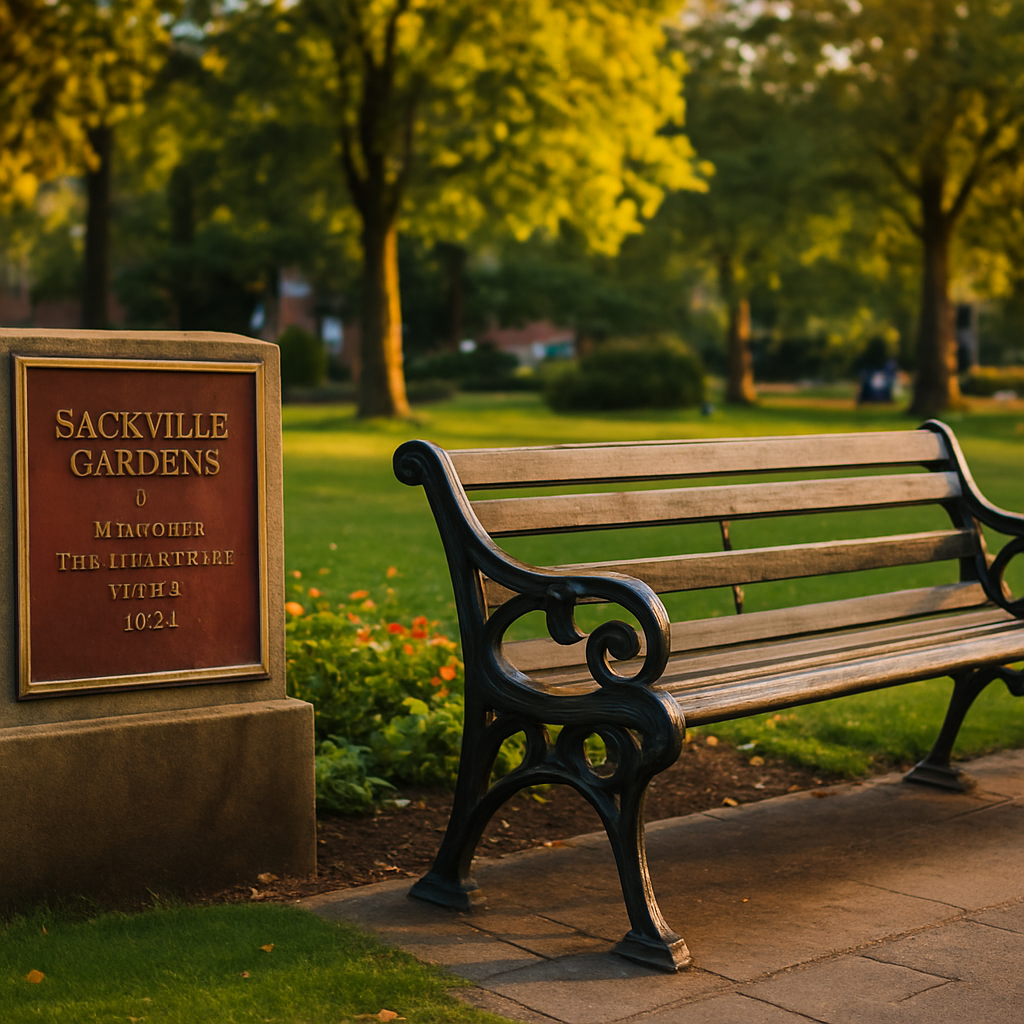
Sackville Gardens and the Alan Turing Memorial
Alan Turing's bronze figure sits on a park bench in the middle of the park that functions as The Village's front door. Sculpted by Glyn Hughes and unveiled in 2001, it commemorates both Turing's world-changing contributions to computing and his 1952 prosecution for homosexuality under UK law — a conviction that led to chemical castration and, in 2013, a posthumous royal pardon. At golden hour, when the light slants through the trees and the Canal Street terraces are just starting to fill, this is one of the few memorials that actually makes you feel something rather than just tick a box on a walking tour. It's free, it's always open, and it hits differently when you're standing there as someone the law once would have come for too.
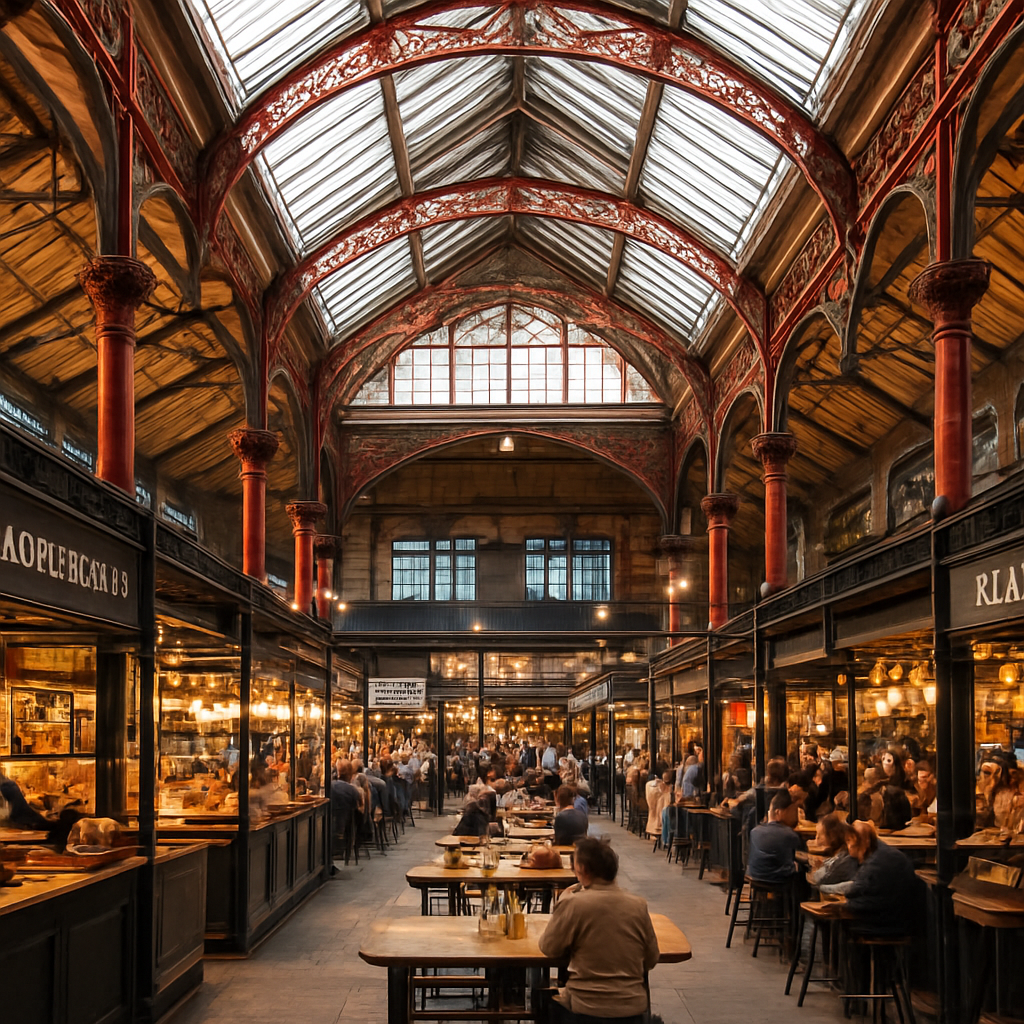
Mackie Mayor Food Hall
A restored Grade II listed Victorian meat market building from 1858 on Eagle Street in the Northern Quarter, reopened in 2017 as an independent food hall under a preserved iron-frame roof that makes the whole space feel like eating inside a cathedral that decided to relax. Multiple independent vendors operate under one roof — approximately 400 covers across the hall — and the format means everyone in your group can eat something different without splitting up. Go for lunch on a weekday when the light through the original structure is at its best and the queues haven't fully formed.
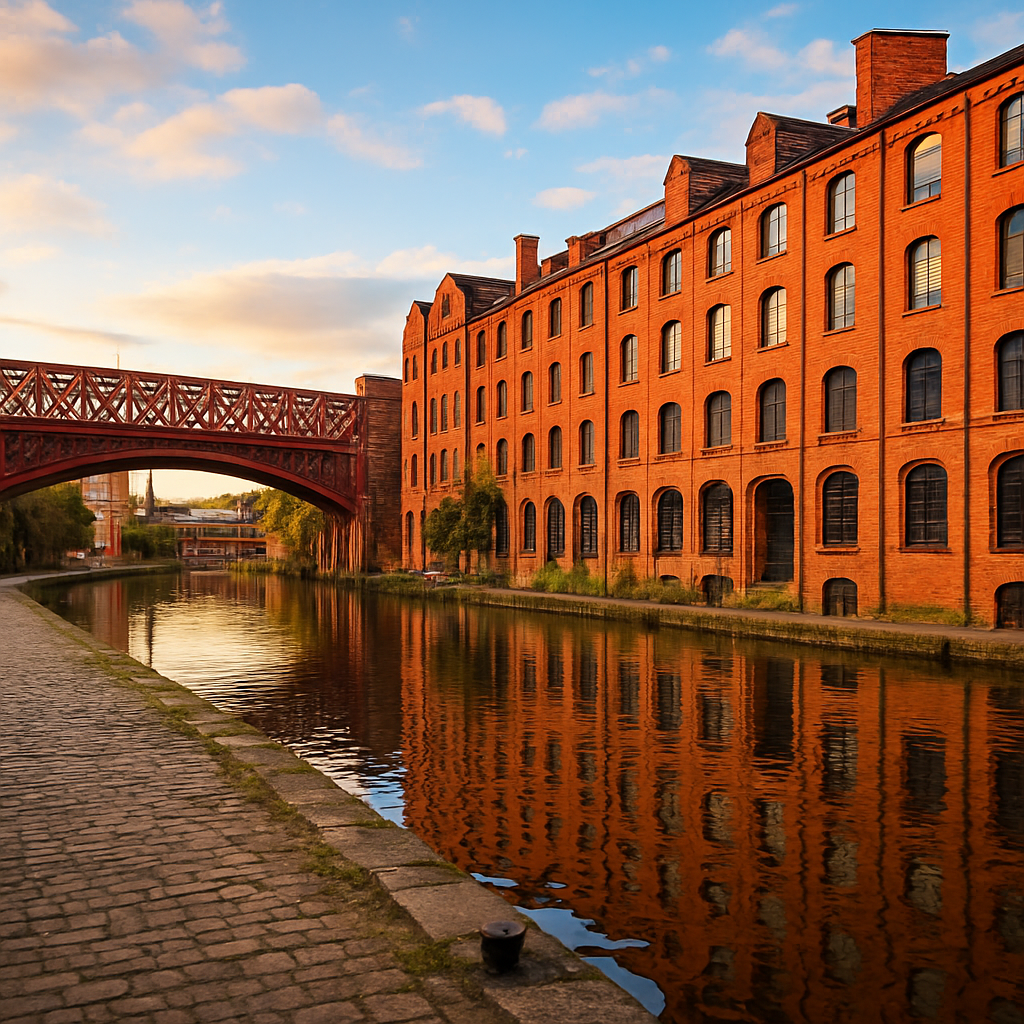
Manchester's Industrial Architecture Walk
Manchester was the world's first industrial city, and the bones are everywhere — you just have to know where to look. Start at Castlefield, where Roman fort ruins sit alongside Victorian canal warehouses. Walk east through Deansgate toward the Free Trade Hall (now The Edwardian Manchester hotel, but the Grade II* listed 1856 façade tells a story about political protest and concert history). Cross through Spinningfields to the People's History Museum, the UK's national museum of democracy, housed in a Grade II listed Edwardian pumping station. Then into Ancoats, where the cotton mills that powered the Industrial Revolution have been converted into restaurants and apartments. You'll cover two thousand years of the city in about ninety minutes on foot.
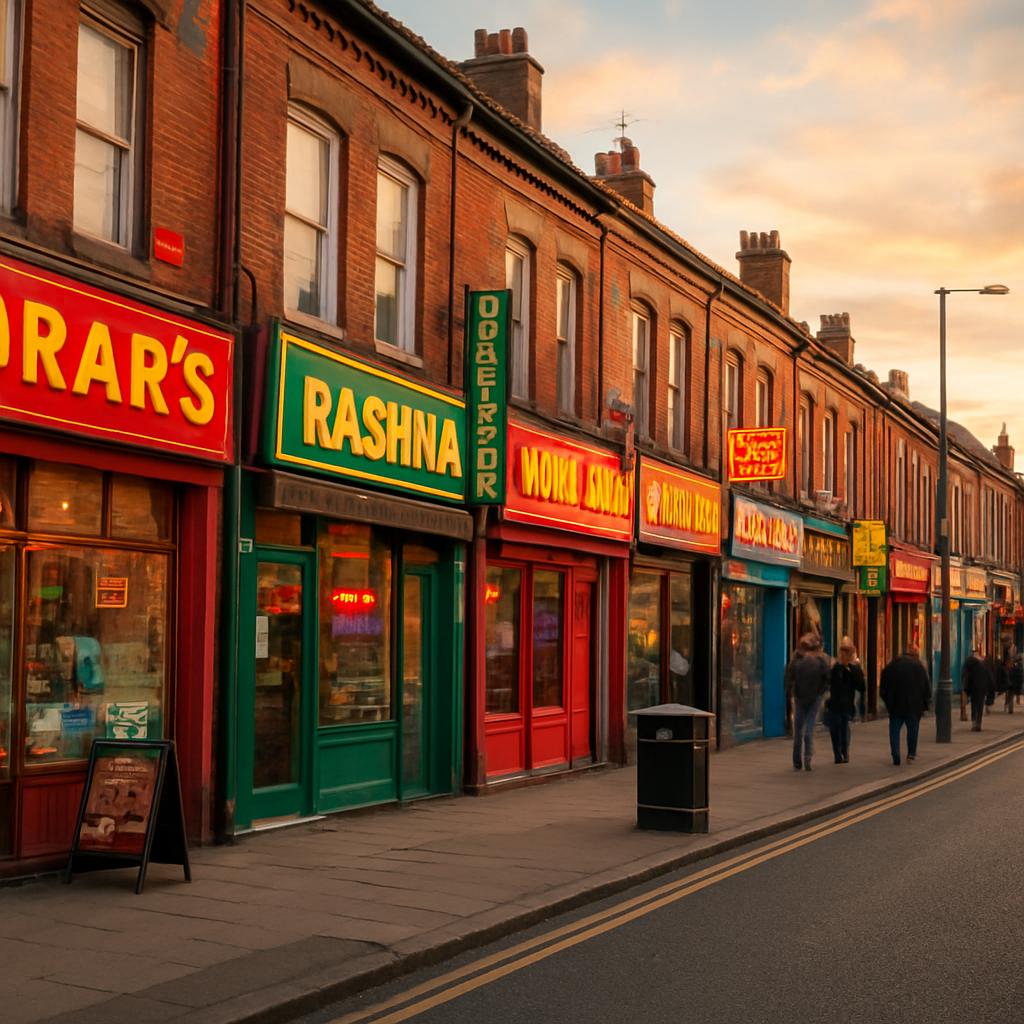
The Curry Mile in Rusholme
Wilmslow Road in Rusholme — universally known as the Curry Mile — is Manchester's famous strip of South Asian restaurants, and it's the classic pre-Village dinner destination that every Mancunian knows by name. The concentration of tandoori, Bangladeshi, Pakistani, and Indian kitchens is dense enough that the smell of cumin and charcoal greets you a block before you arrive. Don't overthink it: pick whichever place is busiest, order a lamb karahi and a garlic naan, and budget about £12–£18 for a meal that'll outperform most London restaurants at three times the price. Take the bus or tram — it's about 20 minutes south of the city centre.
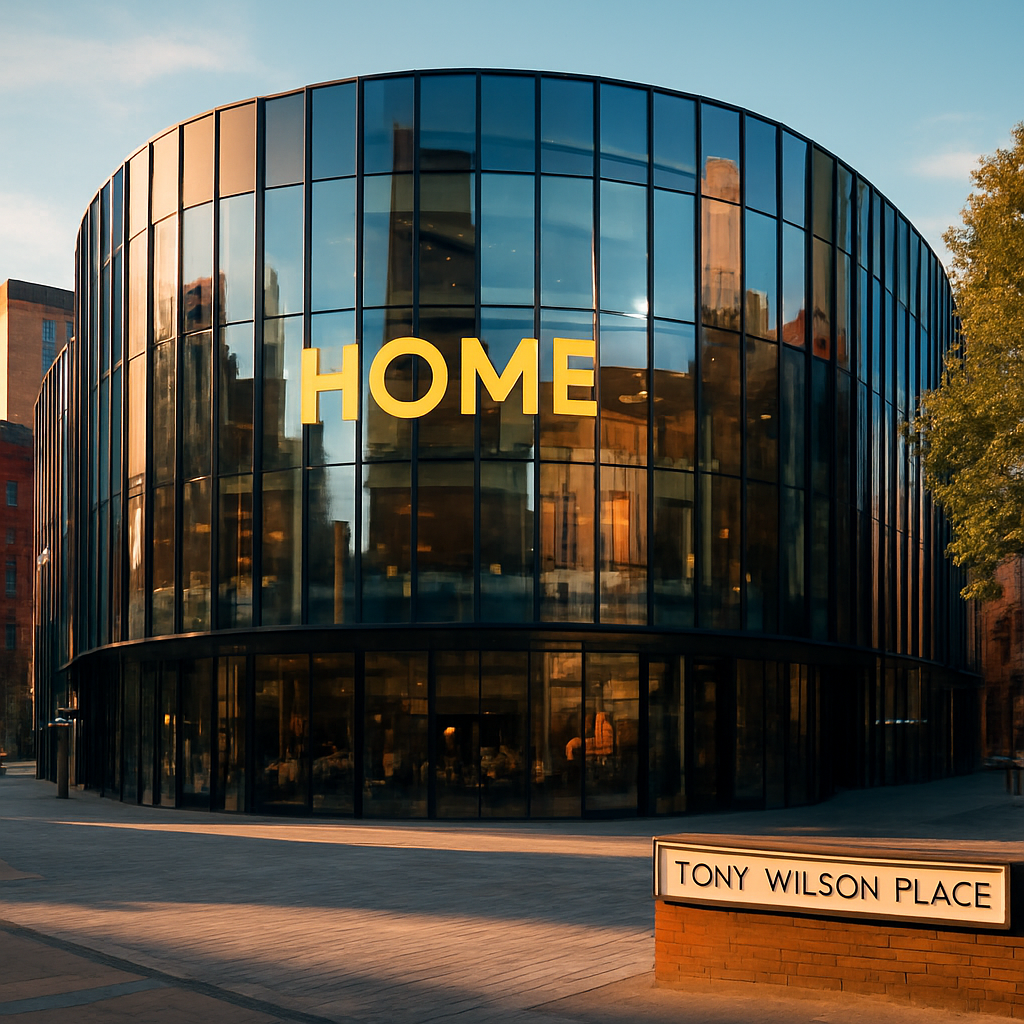
HOME Arts Centre
HOME on Tony Wilson Place is Manchester's multi-arts centre — five cinema screens, two theatres, gallery spaces, and a bar that actually serves decent wine. Opened in 2015, it's become a venue partner for Queer Contact and hosts regular LGBTQ+ film programming including screenings from the Manchester Lesbian and Gay Film Festival, but the year-round program is what earns its place here: independent cinema, international theatre, and exhibitions that rotate often enough to reward a second visit. Check the listings before you go — there's usually something worth rearranging dinner for.
The places I actually send people to
Advice that fits how you travel
Manchester is one of the easiest cities in the UK to travel solo, and the queer scene is a big part of that. The Village has a social architecture that practically manufactures conversations — the Canal Street terraces push strangers together in summer, the bar staff at places like New Union Hotel know how to include regulars and newcomers in the same breath, and the drag shows at venues like Via and Napoleon's create shared experiences that break the ice without you having to do the work. The app scene in Manchester is active: Grindr, Hinge, and Scruff all have dense user bases here, and the city is compact enough that meeting someone for a drink doesn't require a forty-minute commute.
Budget-wise, solo Manchester is genuinely manageable. Hatters Hostel in the Northern Quarter runs from approximately £20/night for a dorm bed, and the hostel's been reliably welcoming to queer travelers for over two decades. Free museums — the People's History Museum, the Manchester Central Library's LGBT+ Archive, the Museum of Science and Industry — can fill your daytime without spending a pound, and a day Metrolink pass keeps you mobile for £5–£8. Evening drinks in The Village start around £4–£5 for a pint, and the chip van near Canal Street at 4am costs less than a taxi home.
For neighborhood picks: the Northern Quarter is ideal for solo wandering during the day — record shops, independent cafes, Bundobust for counter-service lunch where solo dining is the format, not the exception. In the evening, start on Canal Street and let the strip pull you along — there's no wrong direction, no wrong door, and nobody's going to look twice at someone drinking alone. Pro tip: if you want a quieter solo afternoon, take the Metrolink to Chorlton and sit in one of the indie coffee shops. The energy is completely different — neighbourly, settled, zero pressure — and it recharges you for another Village night.
Manchester doesn't make you work for romance — the infrastructure is already there. Book a room at Hotel Gotham on King Street, three minutes from Canal Street and five from the Northern Quarter, and you've got everything within reach without touching a map. For something more theatrical, the Kimpton Clocktower on Oxford Road is a Victorian Gothic building that Kimpton operates with explicit LGBTQ+ inclusion credentials across its entire global estate — and the rooftop bar earns its keep.
For dinner, El Gato Negro on King Street does Spanish small plates in a candlelit multi-floor townhouse that manages to feel both easy and special. Hawksmoor Manchester on Deansgate is the serious date option — Victorian room, serious steaks, cocktails that someone actually designed — and the group's documented LGBTQ+ inclusion policies mean you won't spend the meal calculating whether to hold hands at the table. If a tasting menu is your love language, Mana in Ancoats holds a Michelin star and a Green Star for sustainability; book well in advance and clear the next morning.
Walk Sackville Gardens at golden hour — the Alan Turing Memorial sits at The Village's front door and lands differently when you're there with someone you care about. Then down Canal Street as it starts to fill up, drinks at Richmond Tea Rooms on Richmond Street (book ahead in summer — the drag cabaret fills fast), and let Manchester do the rest. PDA on Canal Street registers as completely unremarkable, which, in the best possible way, is exactly the point.
LGBTQ+ families are on firm legal ground in the UK — same-sex marriage, joint adoption, and comprehensive non-discrimination protections are all in place as of 2026. In practical terms, Manchester is one of the most comfortable UK cities for same-sex parents traveling with children. The Northern Quarter, Ancoats, and Spinningfields all have family-ready cafes and restaurants where nobody is going to double-take at your family structure. Mackie Mayor on Eagle Street is a reliable default: food hall format, multiple vendors, and relaxed enough that you won't spend the meal managing noise anxiety.
Manchester's free museum offer is genuinely excellent. The Museum of Science and Industry (MOSI) in Castlefield has interactive exhibits that absorb most ages for several hours, and the People's History Museum in Spinningfields is free admission and has included LGBTQ+ rights movement materials alongside labour and suffrage history in both permanent and temporary exhibitions. For a bigger outdoor day, Heaton Park in north Manchester is one of the largest municipal parks in Europe — tram museum, animal centre, and enough open space that children who've spent two days in galleries can just run. The Metrolink handles strollers without drama on most lines, and a family day travelcard keeps transport costs manageable.
If you're traveling with LGBTQ+ teenagers, it's worth knowing that The Proud Trust runs youth drop-ins and social events from their centre on Sidney Street — it's community infrastructure, not nightlife, and knowing it's there matters. For a day trip the whole family will remember, Chester by train (approximately 55 minutes from Piccadilly) delivers Roman walls, a walkable city centre, and a zoo ranked among the best in Europe. Straightforward, genuinely fun, entirely doable in a day.
What Manchester actually costs
Flights, visas, and the first 30 minutes
Manchester Airport (MAN) is the UK's largest airport outside London, with direct connections from over 200 cities worldwide. Transatlantic, European, and Middle Eastern routes all serve MAN direct, making it one of the most convenient entry points in the country.
Key routes: From New York (JFK), expect approximately 7h 30m. Toronto (YYZ) is roughly 8 hours. Dubai (DXB) connects in approximately 7h 15m. European hops are short: Amsterdam (AMS) is ~1h 45m, and Dublin (DUB) is around 1 hour. From Sydney (SYD), plan for approximately 22 hours with a connection.
Visa requirements (as of 2026): US, EU, Canadian, and Australian passport holders typically don't need a visa for stays up to 6 months, but an Electronic Travel Authorisation (ETA) is now generally required — the UK ETA scheme launched from 2025. UK passport holders need nothing; this is domestic travel. Entry requirements can change, so always check your government's official travel advisory before you book.
Getting into the city:
- Metrolink Tram — £4–£6, approximately 25 minutes direct to the city centre. Departs every 12 minutes from Terminal 1 and 2. Download the app before you land — paper tickets at stops can be unreliable, and the same tram line puts you within walking distance of Canal Street.
- Train (Northern/TPE) — £5–£9, approximately 20 minutes to Manchester Piccadilly. Slightly faster than the tram and runs very frequently.
- Taxi / Rideshare — £25–£40, approximately 30 minutes. Fixed-rate taxis available at the airport; Uber also operates in Manchester.
- National Express Coach — £5–£10, approximately 45 minutes. Budget option serving multiple stops across the city centre.
Traven's seasonal breakdown
The questions everyone asks
Is Manchester's Gay Village safe at night?
Do I need to speak English fluently?
How much should I budget per day?
Is it safe to hold hands in Manchester?
When is Manchester Pride?
Is there a lesbian-specific scene?
What's the weather like?
Screenshot this before you go
So should you actually go?
Manchester earned that 8.8, and it earned it the hard way — not by marketing, not by renovating, but by building a queer community infrastructure over four decades and refusing to let it go. The legal framework is flawless, the cultural reality matches it, and Canal Street at midnight is proof that a city can be both historically significant and genuinely, reliably fun. The food scene has caught up, the neighbourhoods beyond The Village are expanding the definition of queer Manchester, and the rain — honey, the rain is real, but it's never once stopped anyone from having one of the best nights of their life on that strip. Go. I mean that with no qualification.
Sources & Resources
Official links we reference when compiling this guide. Last verified 2026-03-10.
- LGBT Foundation
- Manchester Pride
- George House Trust (HIV & Sexual Health Support)
- The Proud Trust (LGBTQ+ Youth)
- Albert Kennedy Trust (LGBTQ+ Youth Homelessness)
- Galop (LGBT+ Anti-Violence Charity)
- Stonewall UK
- Terrence Higgins Trust
- Manchester City Council — Equality & Diversity
- Greater Manchester Police — Hate Crime Reporting