Atlanta doesn't have a gay neighborhood — it has a gay city, and the moment you step off the MARTA at Arts Center station, you feel every bit of it.
There's a particular energy you feel stepping off MARTA at Arts Center station on a Friday evening — the humid air hits you first, then the sound of someone's Bluetooth speaker bleeding out from the direction of Piedmont Park, then the unmistakable sight of people who are very clearly heading somewhere good and not in any rush to hide it. Atlanta's queer identity isn't a district you visit. It's a frequency the whole city runs on, from the polished patios of Blake's on the Park to the sticky floors at Mary's in East Atlanta Village, where the drag is weirder and the conversations are better. My Traven-Dex of 8.1 reflects something real: this is a city that has built queer infrastructure across racial lines and neighborhood boundaries in ways most American cities still haven't figured out.
Midtown's 10th Street strip has thinned out compared to its late-nineties heyday — a few closures left real gaps — but the community didn't evaporate. It redistributed. Cheshire Bridge Road still keeps its leather bars and adult shops operating in a different key than the brunch crowd at Joe's on Juniper. EAV anchors a grittier, artsy scene. Decatur quietly holds one of the highest concentrations of queer women in the South. And on a Saturday afternoon, the BeltLine's Eastside Trail between Old Fourth Ward and Ponce City Market functions as an open-air queer social club — dogs, bikes, lingering eye contact, and zero pretense. I gave it an 8.0 on Scene because it earns it across multiple ZIP codes, not just one strip of bars.
What makes Atlanta different from other Southern cities isn't just tolerance — it's ownership. The crowds at Jungle Atlanta on a Friday night, the silver-haired regulars at The Colonnade on a Sunday afternoon, the kids at Lost N Found Youth finding community where the state legislature won't provide it — this is a city where queerness is woven into the civic DNA, not bolted on as an afterthought. Georgia's state politics are a different conversation, and I don't sugarcoat that. But ITP — inside that I-285 loop — you're in a city that has decided who it is, and it decided a long time ago.
The stuff your travel guide buries on page 47
The legal landscape in Atlanta is strong at the federal and city level, but the gap between Atlanta and the state of Georgia is significant and worth understanding before you arrive. Same-sex marriage is fully recognized, adoption by same-sex couples is legal, and gender identity is recognized through self-identification. Georgia Equality tracks state-level legislation in real time — worth a bookmark.
Here's the honest complication: Georgia has no statewide non-discrimination protections covering sexual orientation or gender identity in employment, housing, or public accommodations. The City of Atlanta has its own non-discrimination ordinance that provides meaningful local coverage, but that protection evaporates the moment you cross the city line. The Supreme Court's 2020 Bostock v. Clayton County ruling — which originated in Georgia, for the record — provides federal employment protection. For anything beyond that, ACLU of Georgia and Lambda Legal's Southeast Regional Office are your resources if issues arise.
On gender identity: Atlanta has a relatively supportive trans community centered in Midtown with several trans-affirming healthcare providers, including Positive Impact Health Centers. That said, Georgia passed legislation in 2024 restricting gender-affirming care for minors, and the state legislative environment has grown more hostile. Trans travelers should carry identification consistent with their presented gender where possible and know that state-level policy is in active flux. Atlanta itself functions as a progressive sanctuary city with real community infrastructure in place.
On PDA: Midtown is as comfortable as it gets in the South — same-sex couples are everywhere and nobody blinks. Old Fourth Ward, Decatur, and the BeltLine corridor share that ease. Downtown Atlanta is generally fine near tourist sites but warrants situational awareness on quieter blocks. Buckhead is upscale and broadly safe but considerably more conservative in feel. Rural Georgia and outer suburbs beyond the I-285 loop are a different conversation — visible PDA can attract unwanted attention, and I'd exercise genuine caution there.
Scheduling note: Atlanta Pride runs every October at Piedmont Park — not June like most cities — and draws close to 300,000 people over the festival weekend. It's one of the largest Pride celebrations in the Southeast. Book Midtown accommodations at least three months out if you're attending; September availability evaporates fast. See Atlanta Pride Committee for dates and event lineup. And one more: the Cheshire Bridge Road strip — home to leather bars, adult shops, and longtime institutions like Heretic — is a genuinely different energy than Midtown proper, welcoming once you walk through the door, and worth knowing about.
What it actually feels like on the ground
Holding hands / public affection: In Midtown, Old Fourth Ward, Decatur, and on the BeltLine, you're fine — fully, unreservedly fine. These are spaces where same-sex affection is unremarkable and visible. Downtown near tourist sites is comfortable; quieter blocks warrant the same awareness you'd apply in any urban core. Outside the I-285 loop, read the room carefully.
Hotel check-in: At any major hotel in Midtown or Downtown, there will be zero issues. Atlanta's hospitality industry is well-trained and broadly progressive. Smaller independent properties outside the core may vary. If anything feels off, the City of Atlanta's non-discrimination ordinance covers public accommodations within city limits.
Taxis and rideshare: Uber and Lyft are widely used and generally comfortable. Occasional driver discomfort exists, as it does in any city — but nothing systematic enough to plan around. MARTA is the smarter choice for a Midtown night anyway: the Arts Center station drops you into the gay village for $2.50, no surge pricing, no parking drama.
Late night: Midtown is broadly safe and visibly queer-friendly after dark, but situational awareness matters — particularly around Ponce de Leon Avenue and the blocks east toward Old Fourth Ward. The BeltLine is well-trafficked during daylight and early evening; use judgment on less-lit stretches past midnight.
Cheshire Bridge Road and leather spaces: Heretic and the Atlanta Eagle on Ponce are tight-knit, community-oriented spaces that are largely self-policing around consent and conduct. Newcomers are welcomed but expected to read the room. If you're unsure about anything, ask a bartender — they're refreshingly direct and not precious about it.
Trans travelers: Midtown and Decatur are comfortable and affirming. Positive Impact Health Centers in Midtown provides trans-affirming healthcare without the sterile dread of a public health office. Georgia's state-level protections are limited and the political climate has tightened since 2024 — carry ID consistent with your presented gender where possible and know your federal rights under Bostock.
Verbal harassment risk: Low in Midtown, EAV, Old Fourth Ward, and Decatur. Possible but uncommon in Downtown. Elevated in rural areas and outer suburbs. Atlanta's queer community is large, visible, and accustomed to occupying space — you will not be the only out person on the block in any of the core neighborhoods.
LGBTQ+ youth in crisis: Midtown has a visible population of queer young people experiencing homelessness. If you encounter someone in need, Lost N Found Youth is the correct local resource — they specifically serve LGBTQ+ young people and are far more affirming than a generic city shelter. Point people there, not to the general system.
The queer geography
Midtown — The 10th Street Corridor
Atlanta's historic LGBTQ+ core runs along 10th Street and Piedmont Avenue toward the park, and it remains the city's queer gravitational center. Blake's on the Park is the flagship — sidewalk tables on the ground floor, second-floor views of Piedmont Park going golden in the evening, and a crowd that spans every age and subculture the Atlanta queer community produces. Joe's on Juniper is the neighborhood bar you go to when Blake's feels like a performance. Amsterdam Walk, the open-air shopping strip near 10th and Monroe, clusters LGBTQ+-friendly shops and cafes where the vibe is unmistakably gay neighborhood without any nightlife energy or cover charges — worth a slow afternoon wander. The scene has redistributed somewhat from its peak density, but the community infrastructure — bars, health services, advocacy organizations — is genuinely strong.
Cheshire Bridge Road
Where Atlanta keeps its leather bars, adult shops, and the nightlife that never appeared on any tourism brochure. Heretic is the anchor, drawing a neighborhood-regular crowd that's welcoming once you actually walk through the door. The Atlanta Eagle on Ponce operates in the same register — leather, fetish, community-oriented and self-policing. The Colonnade Restaurant on Cheshire Bridge has been feeding the gay community for decades, especially the post-church Sunday lunch crowd. Order the fried chicken. Don't argue about it.
East Atlanta Village (EAV)
South of Midtown, EAV is Atlanta's DIY, queer-forward answer to the polish of the 10th Street corridor. Mary's Bar is the anchor — a bar where people talk to each other rather than at each other, without a DJ at full volume making conversation impossible. The crowd skews younger, artier, and less concerned with being seen. If Midtown is the scene, EAV is the community. You need both.
Old Fourth Ward & The BeltLine
The BeltLine's Eastside Trail connecting Old Fourth Ward to Ponce City Market has become Atlanta's outdoor social scene — dogs, bikes, a lot of deliberate lingering, and a genuinely diverse queer crowd on weekend afternoons. Enter at the Ponce City Market end for maximum people-watching and easy access to food and drinks. The surrounding neighborhood, including the stretch toward Little Five Points, has strong LGBTQ+ residential presence and a queer-forward independent retail culture that makes it worth exploring on foot.
Decatur
Ten miles east of Atlanta by MARTA — under 20 minutes — Decatur is one of the most consistently LGBTQ+-welcoming communities in the South. It has a legendarily high queer women population, a walkable downtown of independent restaurants and bars, and Charis Books & More, an independent feminist and LGBTQ+ bookstore that functions as a de facto community hub with author events and programming most weekends. For lesbian and queer women travelers especially, Decatur isn't a side trip — it's a destination. The local shorthand: 'Decatur: it's greater.'
Sexual health resources: Positive Impact Health Centers in Midtown handles HIV testing, PrEP navigation, and sexual health services in an LGBTQ+-affirming environment that feels nothing like a public health office. AID Atlanta runs community testing events regularly — check their calendar for walk-in options.
The experiences worth rearranging your itinerary for
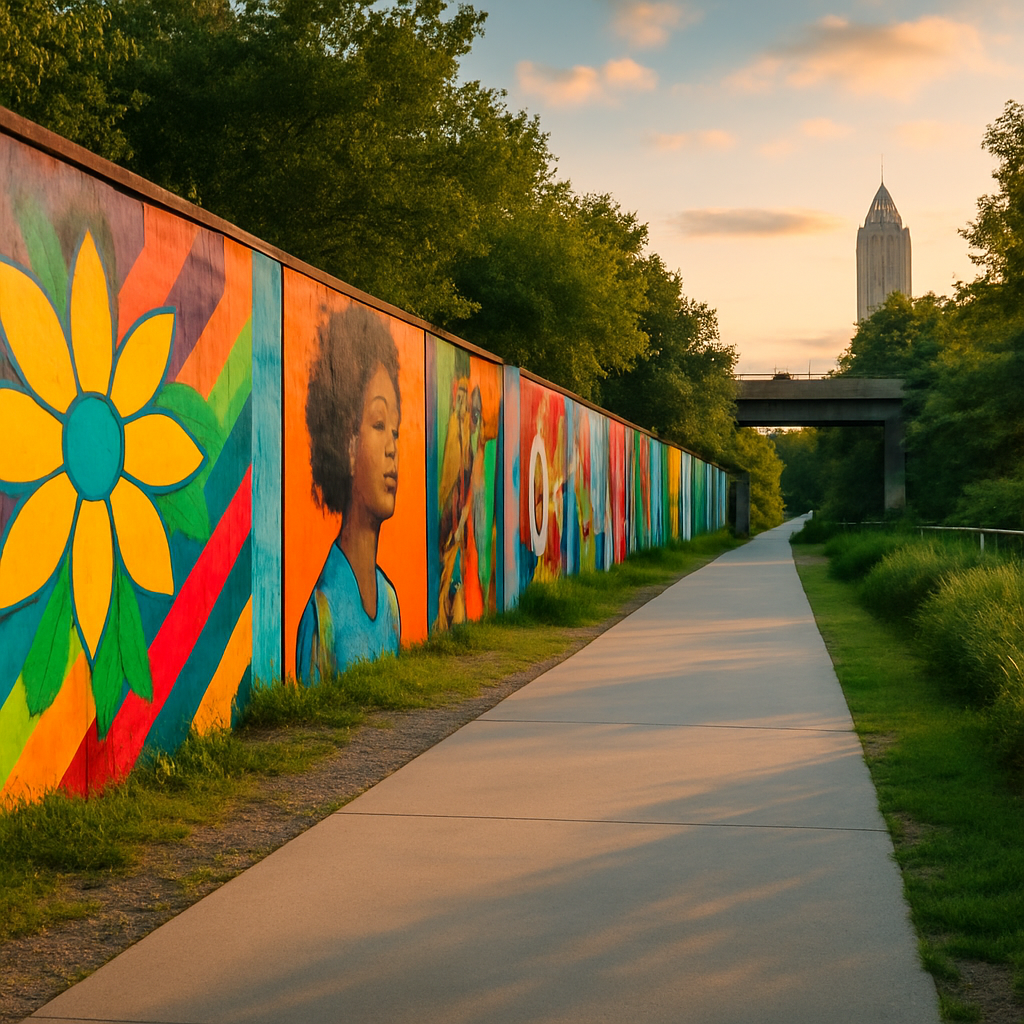
Atlanta BeltLine Eastside Trail
The BeltLine isn't a park — it's 22 miles of connective tissue running through the city's best neighborhoods, and the Eastside Trail between Old Fourth Ward and Ponce City Market is where Atlanta performs at its most alive. Street murals, restaurant patios spilling toward the path, cyclists and dogs and people who clearly have nowhere better to be on a Sunday afternoon. Enter at the Ponce City Market end, grab something from the food hall, then walk south toward Inman Park as the afternoon light drops. It's one of the best urban walks in the American South, and it costs nothing.
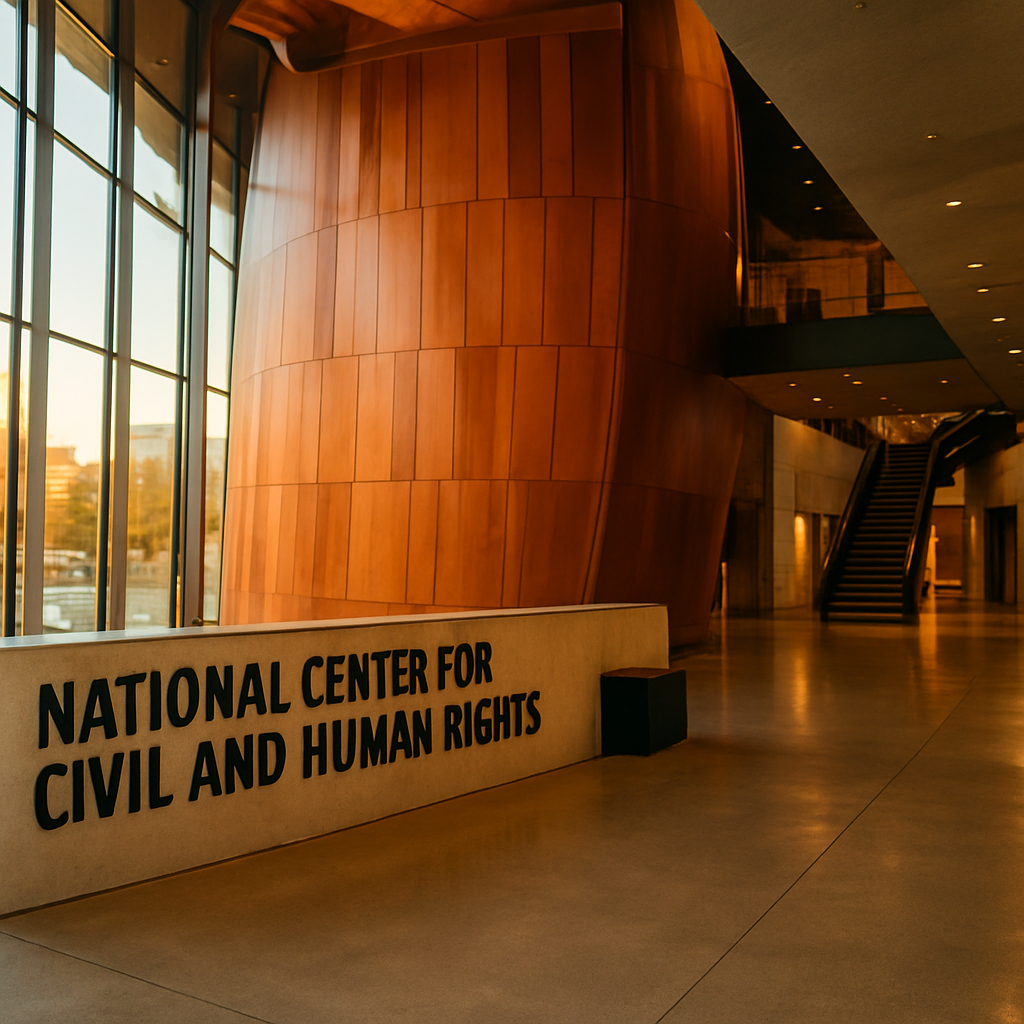
National Center for Civil and Human Rights
Most museums about civil rights make you feel like you're reading a textbook. This one — just steps from Centennial Olympic Park in Downtown — makes you feel like the subject is unfinished, because it is. The LGBTQ+ rights exhibits hit considerably harder than you expect, contextualizing queer history within the broader American civil rights movement in a way that is uniquely resonant in Atlanta specifically. The lunch-counter simulation alone will stop you in your tracks. Budget more time than you think you need. I mean that.

Sunday Lunch at The Colonnade
Before Midtown was the gay village, The Colonnade on Cheshire Bridge Road was already feeding Atlanta's gay community — and it still does, every Sunday, with a line of silver-haired regulars and their chosen families snaking out the door by noon. Classic Southern meat-and-three: fried chicken, collard greens, sweet tea, cornbread. The fact that this place still fills its dining room every single Sunday, at a steam table buffet, is one of the more genuinely moving things about Atlanta. It's a rite of passage. Order the chicken. Don't overthink it.
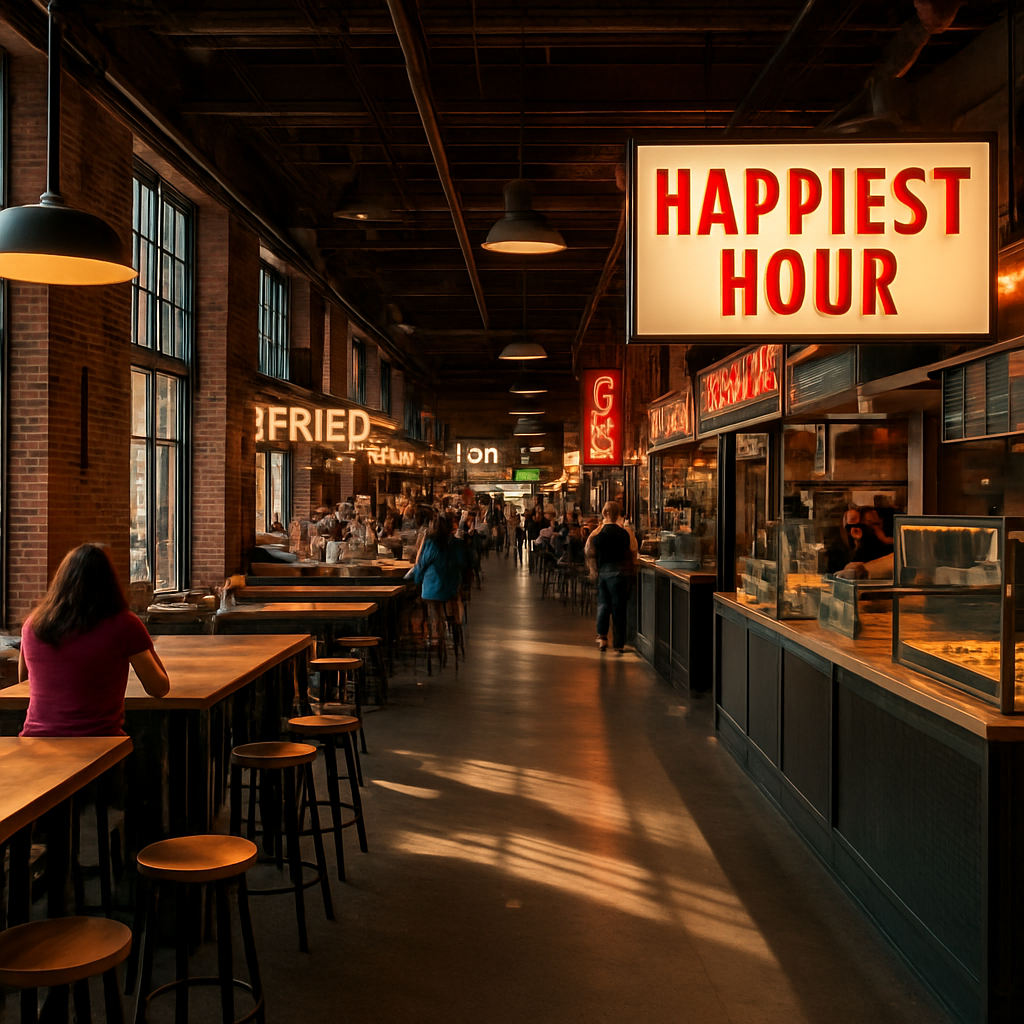
Ponce City Market
A converted 1926 Sears, Roebuck & Co. warehouse that now houses a food hall, boutique retail, rooftop mini-golf and amusements, and some of Atlanta's more interesting restaurant concepts. It sounds like a tourist trap and turns out to be genuinely excellent. The ground-floor food hall has real quality — no sad, overlit sandwich counters — and the rooftop Skyline Park has views worth the cover charge. It also anchors the best stretch of the BeltLine, so pair them into a single afternoon and you've done Atlanta right.
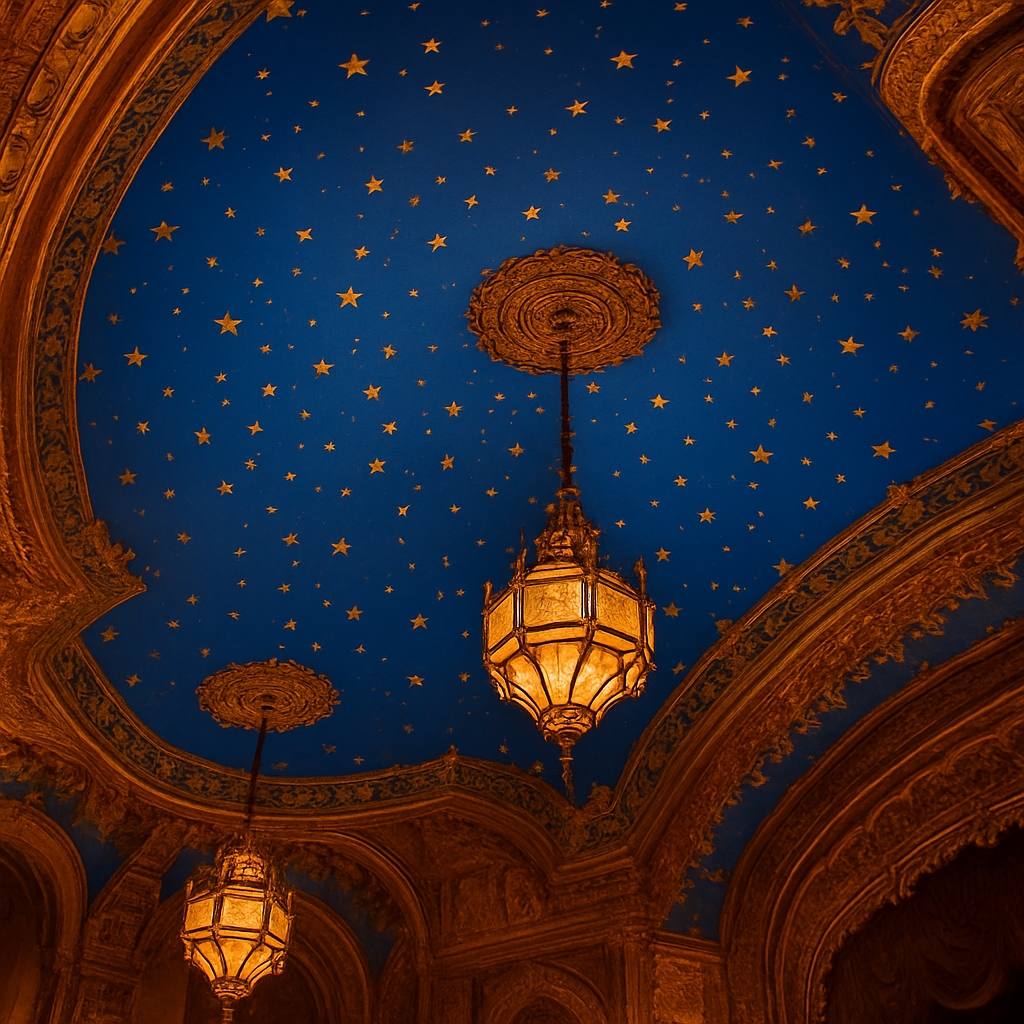
Fox Theatre
If you're anywhere near Atlanta when the Fox has a show worth seeing, go. This 1929 Moorish-Byzantine movie palace is one of the most extravagant interiors in America — the ceiling is a painted night sky with working star effects, the walls read as Egyptian palace meets Islamic architecture, and the whole thing holds together as magnificent rather than absurd. Tours run when shows aren't scheduled. If you can catch a Broadway touring production, a classic film screening, or a major concert here, it becomes the memory that defines the trip.
The places I actually send people to
Advice that fits how you travel
Atlanta is a genuinely good solo city if you know where to plant yourself. The Midtown bar strip on a Thursday or Friday night is one of the easier places in the South to walk into a conversation — Burkhart's Pub skews mixed-age and low-intimidation, and Blake's on the Park has enough sidewalk table people-watching to sustain an entire solo visit before you've decided to talk to anyone. The scene here is welcoming to new arrivals in a way that larger, more self-conscious cities sometimes aren't. Atlanta has been absorbing queer transplants from across the South for decades and has the ease to show for it.
App culture is active and well-used — Grindr, Scruff, and Lex all have healthy Atlanta presences. For solo travelers who want entry points with shared context, the Atlanta Pride Committee community calendar runs events year-round beyond the October festival, and Charis Books & More in Decatur hosts author readings and community programming most weekends that function as genuine conversation starters. For queer women, Decatur is consistently the easiest entry point to the community.
Budget-wise, solo travel in Atlanta goes further than in comparable American cities. MARTA's $2.50 flat fare gets you from the airport to Arts Center station — the heart of Midtown nightlife — without paying for rideshare or parking. A moderate solo budget of $180–$250/day covers a Midtown boutique hotel, sit-down meals, and a museum visit. If you're comfortable with a budget property and food hall meals, you can run a full day in Atlanta for $80–$110 and still have a genuinely excellent time.
Atlanta for couples is less about grand romantic gestures and more about a city that makes real space for you to be yourselves in public — which, in the South, still matters. Midtown is as comfortable as it gets: dinner at Mary Mac's Tea Room followed by a walk through Piedmont Park at dusk is a genuinely lovely evening that costs almost nothing. For something with more occasion, the rooftop at Hotel Clermont or the W's WET pool bar in summer deliver a louder, younger, more-of-a-scene energy that is still unmistakably good on the right night.
For the date that warrants getting dressed: Watershed on Peachtree in Buckhead is the dinner worth the cab fare. Chef Scott Peacock's Georgia-sourced menu becomes the reference point for all future shrimp and grits. Pair it with tickets to the Fox Theatre if the calendar cooperates — the 1929 Moorish-Byzantine interior is one of the more dramatically romantic settings in America, and it's the kind of place that makes an evening feel like an event rather than a night out.
PDA in Midtown, Old Fourth Ward, and Decatur is entirely comfortable — you won't be the only couple holding hands, and you will not get a second look. For couples who want a quieter day together, the BeltLine Eastside Trail on a weekend afternoon is the kind of aimless, sun-dappled walk that is genuinely good for relationships. Decatur is an easy half-day: coffee, bookstore, a long lunch, home by MARTA without a difficult moment. Moderate couple budgets run $300–$420/day including a solid hotel and restaurants for two; luxury options top out at $700–$1,100/day with the Loews or W and a Watershed-level dinner.
LGBTQ+ families in Atlanta will find meaningful legal footing: same-sex marriage is fully recognized, adoption by same-sex couples is legal, and the City of Atlanta's non-discrimination ordinance covers public accommodations within city limits. Georgia's statewide protections remain limited, but within Atlanta proper you'll encounter very few situations where your family structure creates a complication. Midtown, Old Fourth Ward, and Decatur are all broadly welcoming and have visible LGBTQ+ family presence — you won't be the only queer family at the park or the restaurant. PFLAG Atlanta runs family-oriented programming if you want to connect with local community during your visit.
For kid-focused activities, Atlanta punches above its weight. The Georgia Aquarium near Downtown is one of the largest in the world and genuinely spectacular for children of any age — budget $35–$40 per adult, less for kids. The National Center for Civil and Human Rights is appropriate for older children and teenagers and provides context that is uniquely powerful in this city. Piedmont Park and the BeltLine Eastside Trail are both stroller-friendly and wide enough to accommodate families comfortably — the trail is paved, well-trafficked, and connects directly to Ponce City Market's food hall, which has kid-friendly options alongside the more sophisticated restaurant concepts.
Practical logistics: Midtown hotels are the strongest base for family travel — you're close to parks, multiple food options at every price point, and MARTA access that eliminates parking headaches. Families often rent a car for Atlanta, and that's reasonable, but for the inner neighborhoods MARTA is genuinely faster on weekends when street parking in Midtown and Old Fourth Ward fills up by noon. A moderate family budget of $400–$580/day for a family of four covers a hotel suite or apartment, restaurant meals, and two paid attractions without strain.
What Atlanta actually costs
Flights, visas, and the first 30 minutes
Airport: Hartsfield-Jackson Atlanta International Airport (ATL) — the world's busiest passenger airport and one of the best-connected hubs in North America. If you're flying from anywhere in the continental US, there is almost certainly a nonstop.
Major routes: New York JFK: ~2h 15m | Los Angeles LAX: ~4h 30m | Chicago ORD: ~2h 00m | Toronto YYZ: ~2h 30m | London LHR: ~9h 00m. Direct service available from 150+ cities worldwide.
Visas: US citizens — domestic travel, no visa required. UK, EU, Canada, and Australia — ESTA required for US entry, 90-day visa-free under the Visa Waiver Program. Apply at usa.gov before departure; the $21 fee covers multiple trips for two years. Allow a few days for processing.
MARTA Rail (Red/Gold Line) — $2.50 | ~30 minutes | The smartest option for any traveler heading to Midtown. Take the train to Arts Center station and you land in the heart of the gay village, walkable to every bar on the strip. Runs frequently, reliably, and without surge pricing.
Rideshare (Uber/Lyft) — $25–$45 | 20–40 minutes | Designated pickup zone on the domestic terminal ground level. Add 10–15 minutes during peak hours — ATL has genuine traffic. Convenient for families with significant luggage.
Taxi — $30–$50 | 20–40 minutes | Flat rate zones available. A fine option, but MARTA beats it on price and often on speed.
Shared Shuttle — $15–$25 | 45–60 minutes | Hotel shuttle services available; advance booking strongly recommended. Best suited to travelers with heavy luggage and flexible timing.
Traven's seasonal breakdown
The questions everyone asks
Is Atlanta safe for LGBTQ+ travelers?
When is Atlanta Pride, and do I need to book ahead?
Do I need a car to get around Atlanta?
Does Georgia have LGBTQ+ anti-discrimination protections?
What's the best neighborhood to stay in?
How much should I budget per day in Atlanta?
Is Atlanta's queer scene racially diverse?
Screenshot this before you go
So should you actually go?
Go. Atlanta is the queer capital of the American South and it isn't close. The state-level politics are real and worth knowing about — Georgia has no statewide LGBTQ+ non-discrimination protections as of 2026, and that matters the second you leave the city limits. But inside Atlanta proper, you'll find a scene that's racially diverse, geographically spread across genuinely distinct neighborhoods, and rooted in decades of community-building that most cities twice its size can't match. Whether you're sipping a Sweetwater 420 on a Midtown patio, browsing the shelves at Charis Books in Decatur, or sweating through an October Pride weekend with 300,000 other people in Piedmont Park, this city gives you something you won't find anywhere else — a queer experience that feels organic, earned, and unapologetically Southern. I mean that as the highest compliment I know how to give.
Sources & Resources
Official links we reference when compiling this guide. Last verified 2026-03-05.
- Atlanta Pride Committee
- Georgia Equality
- Lost N Found Youth (LGBTQ+ Youth Services)
- AID Atlanta (HIV/AIDS Services & Testing)
- Positive Impact Health Centers
- ACLU of Georgia
- Lambda Legal (Southeast Regional Office)
- PFLAG Atlanta
- Charis Books & More (LGBTQ+ Bookstore, Decatur)
- National Center for Civil and Human Rights
- GLSEN Georgia Chapter