Boston doesn't ask for your approval — it already has the receipts, and they go back further than Stonewall.
Walk down Tremont Street on a Friday evening and you'll feel it immediately: Boston has this particular quality where history and right now exist in the same breath. The brick rowhouses lining the South End are painted in colors that say we live here, not we're being preserved. The smell of something good drifting out of a restaurant kitchen mingles with cold Atlantic air. People are dressed to go somewhere. This is not a city that sleeps by nine.
Massachusetts didn't just accept same-sex marriage — it pioneered it. That's not a footnote here; it's part of the city's actual identity. When you walk through Bay Village, past Club Café, past the bars that have held this community for decades, you're not visiting tolerance — you're walking through a place that fought for it, legislated it, and then got on with business. My Traven-Dex of 8.7 reflects a city that earns it on nearly every dimension I measure.
The food scene alone would justify the trip. The South End has quietly become one of the best restaurant neighborhoods on the East Coast — not because of trend-chasing, but because people here actually care what they're eating. Myers + Chang on a Wednesday night, the dining room loud and warm, dumpling wrappers glistening — that's the version of Boston I want you to experience first. Then walk it off through Beacon Hill, where the gas lamps are still lit and the sidewalks are still uneven brick that'll wreck your good shoes, and I promise you won't care even slightly.
The queer scene is real, if not enormous — I gave it an 8.2 on Scene, and the Bay Village and South End core punches well above its physical size. When you need to dial it all the way up, Provincetown is 90 minutes away by ferry. Boston is the kind of city where you feel at home before you've figured out which T line to take. That's not nothing. That's actually everything.
The stuff your travel guide buries on page 47
Massachusetts has some of the most comprehensive LGBTQ+ legal protections in the United States, and Boston is the beating heart of that framework. Same-sex marriage has been legal here since 2004 — the first state in the country to make it happen. Joint adoption by same-sex couples is fully legal, and anti-discrimination protections cover employment, housing, public accommodations, and education. Criminalization of any kind doesn't exist.
Gender identity and expression are explicitly protected under Massachusetts law. Gender marker changes are available via self-ID — no surgery requirement, no physician letter. Trans travelers will find Boston to be one of the more affirming cities in the United States, with visible community resources, affirming healthcare infrastructure, and legal protections that remain strong at the state level regardless of what's happening federally.
On that note: federal policy discussions around gender identity continue to evolve in early 2026, but Massachusetts state law operates as an independent and robust layer of protection. Those protections are not disappearing at the state level in any near-term scenario.
The cultural reality on the ground matches the legal framework almost perfectly. Boston is not a city where you need to do any mental calculation before reaching for your partner's hand. The South End and Bay Village are visibly and confidently queer spaces. Back Bay and Cambridge are cosmopolitan and thoroughly accepting. In more traditionally residential neighborhoods — Charlestown, parts of East Boston — PDA is generally fine, just less common in terms of ambient queer community presence. The one situational note: on Fenway Park game days, crowds around Kenmore Square get large and unpredictable. Not a danger zone, but less curated than the South End. Plan accordingly if you're in that area on a home-game night.
What it actually feels like on the ground
Holding hands: Do it. In the South End, Bay Village, Back Bay, and Cambridge, same-sex couples holding hands is completely unremarkable. Nobody looks. Nobody comments. In more residential neighborhoods like Charlestown or East Boston, it's still fine — you'll just feel less of the ambient queer community presence you get elsewhere in the city.
Hotel check-in: Not a concern anywhere in Boston. LGBTQ+ inclusive hospitality is standard practice in this market, and at properties like The Verb or any Kimpton, you'll actively feel welcomed from the first interaction at the desk.
Taxis and rideshare: Boston's rideshare drivers reflect the full diversity of a major international city. The overwhelming majority of rides are uneventful. If you get a weird vibe, rate accordingly, end the trip, and request a different car. Uber and Lyft are both widely available at all hours.
Beaches and public spaces: Boston Common, the Public Garden, and the Esplanade along the Charles River are all comfortable, open, and diverse. LGBTQ+ couples are visible throughout. At beaches further from the city, comfort levels vary by location — Provincetown's beaches exist in a category entirely of their own (see the day trip section).
Late night: Bay Village has a genuine concentration of queer bars and the safety profile of any well-trafficked urban entertainment district. Walk in pairs after 2am as you would in any major city. The T stops running around 12:30am, so budget for a rideshare home and have the app already open on your phone.
Trans travelers: Massachusetts state law covers most practical fronts — single-occupancy restroom access, non-discrimination in public accommodations, self-ID gender markers on legal documents. Boston's queer community spaces are explicitly trans-affirming, and the city has some of the best trans-affirming healthcare infrastructure in the country if you need it.
Verbal harassment risk: Low. Boston has reputations from previous decades that are largely outdated in the neighborhoods you'll spend your time. Occasional urban rudeness happens in any city; organized or targeted harassment in queer neighborhoods is rare. Locals are generally inclined to step in if something feels wrong.
The queer geography
South End & Bay Village
These two neighborhoods are the gravitational center of Boston's queer life, and they operate as one continuous zone even though they have distinct personalities. The South End is residential-chic: beautifully restored Victorian brownstones, exceptional restaurants on every block, and a long history as an LGBTQ+ enclave. It's the kind of neighborhood where the coffee shop knows your order by day three. Tremont Street is the main artery — walk it south from Copley Square and you'll understand immediately why people move here and stay for twenty years.
Bay Village is smaller and denser, tucked between the South End and the Theater District. This is where the bars live. Club Café has been the anchor since 1983. Trophy Room draws the sports crowd. The streets are narrow and old, and on a Friday night the whole area hums with a specific Boston queer energy that doesn't exist anywhere else.
Cambridge
Cross the Charles River and you're in a different city with the same values. Harvard Square and the surrounding blocks are deeply progressive, and the university culture creates a kind of permanent open-mindedness that makes it genuinely comfortable for LGBTQ+ travelers. It's less of a nightlife scene and more of a daytime and dinner destination — independent bookshops, excellent food, and the sense that ideas of every kind are welcome here.
Back Bay
Newbury Street and Boylston Street are cosmopolitan in the truest sense — shopping, dining, serious people-watching. It's not a queer neighborhood per se, but LGBTQ+ couples are completely unremarkable here. The Prudential Center area has solid hotels and easy subway access to both the South End and Bay Village when you're ready to switch gears.
Fenway
More than baseball. The neighborhood around Fenway Park is home to The Verb Hotel, the Isabella Stewart Gardner Museum, and a residential community that's been increasingly diverse and welcoming for years. Not a dedicated nightlife destination for queer travelers, but a genuinely good base with easy T connections to everywhere you'll want to go.
The experiences worth rearranging your itinerary for

Boston Common & the Public Garden
America's oldest public park sits in the middle of everything. The Public Garden next door has swan boats in spring and summer, and the little bridge over the lagoon is one of those views that makes people realize Boston is actually beautiful. Walk through on a warm morning before the city fully wakes up. The tulips in May are not subtle, and that's exactly the right call.
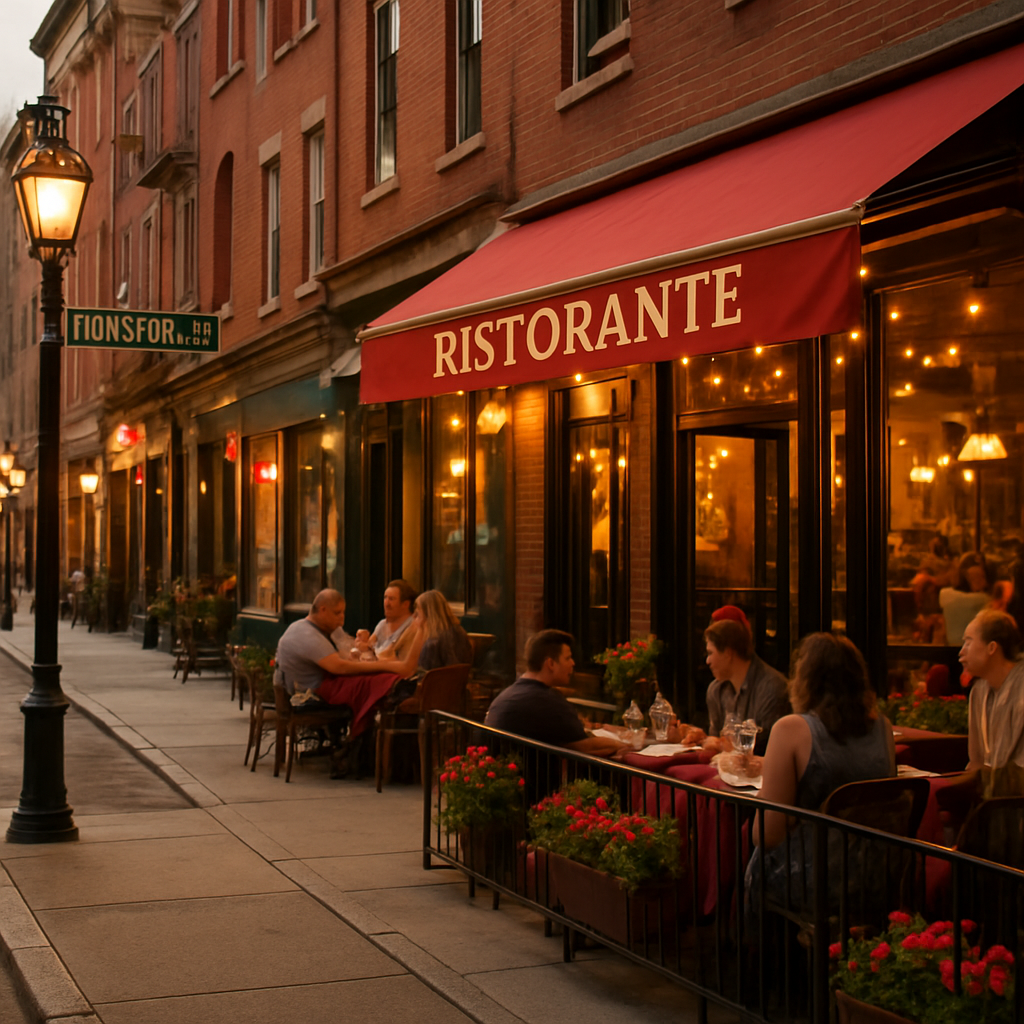
Dinner in the North End
Boston's Italian neighborhood packs more red-sauce excellence per square block than anywhere else in New England. Hanover Street on a Saturday evening is a full sensory experience — people eating outside, the smell of garlic and fresh bread drifting out of every doorway, cannoli boxes being carried in both directions. Get the pasta. Get the cannoli from Mike's Pastry. Don't argue with me about this.
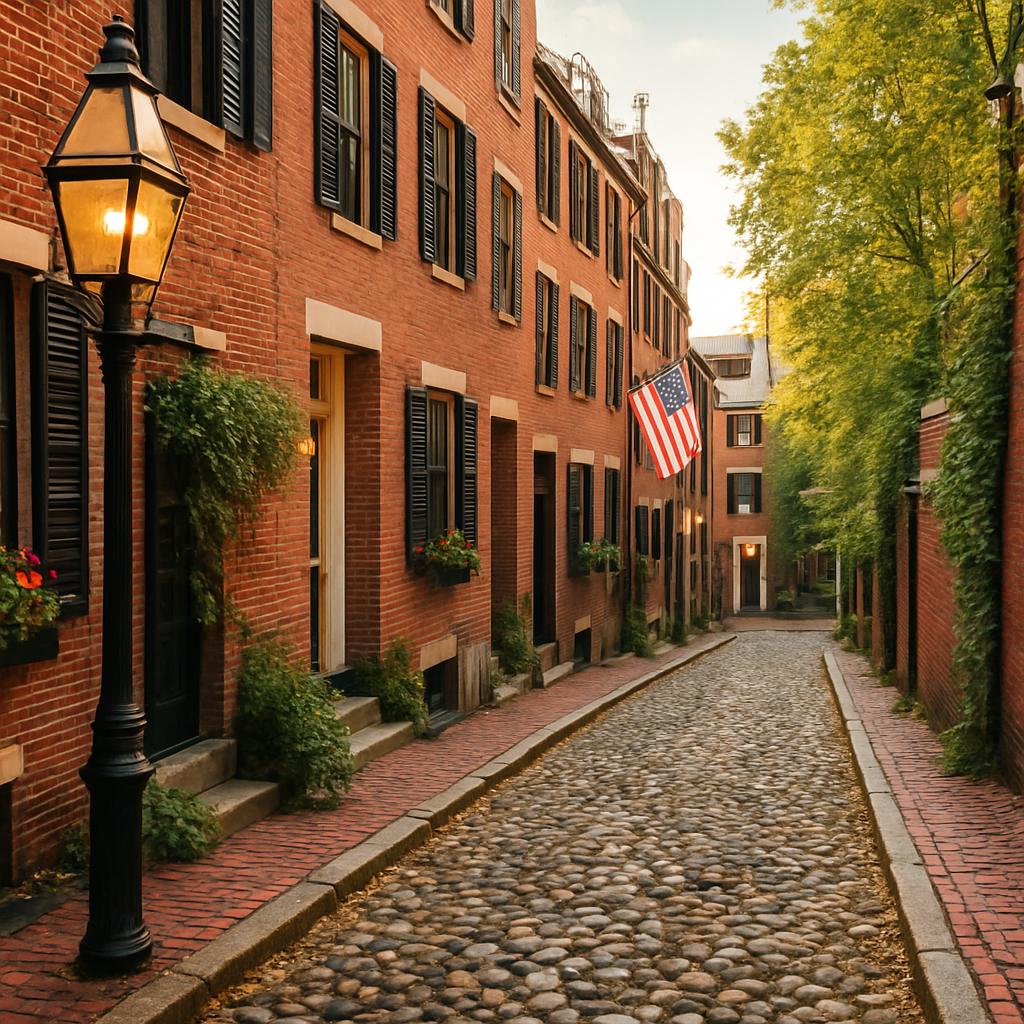
Beacon Hill at Golden Hour
Acorn Street is the most photographed street in Boston, and it earns every shot. Cobblestones, gas lamps, Federal-style brick rowhouses — it looks like someone built a perfect 19th-century movie set and forgot to tell the residents they were in it. Come at golden hour before the tour groups, then walk up to the Massachusetts State House gold dome to cap the whole thing off.
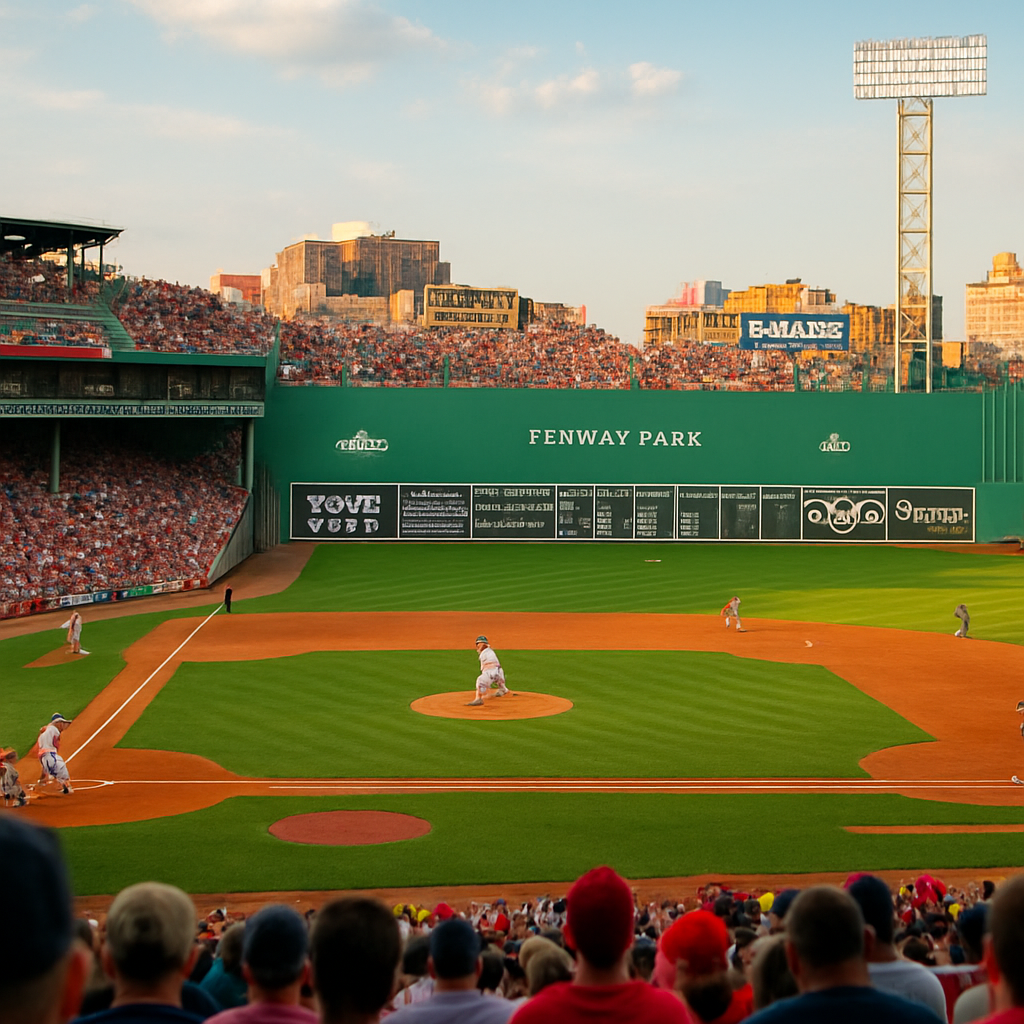
Fenway Park — Game or Tour
You don't have to care about baseball. You do have to see this ballpark. America's oldest major league stadium has a specific magic — the Green Monster looming in left field, seats pressed close to the grass, the smell of Fenway Franks on a summer evening. A game is the full experience. A behind-the-scenes tour works if the schedule doesn't cooperate. Either way, go.
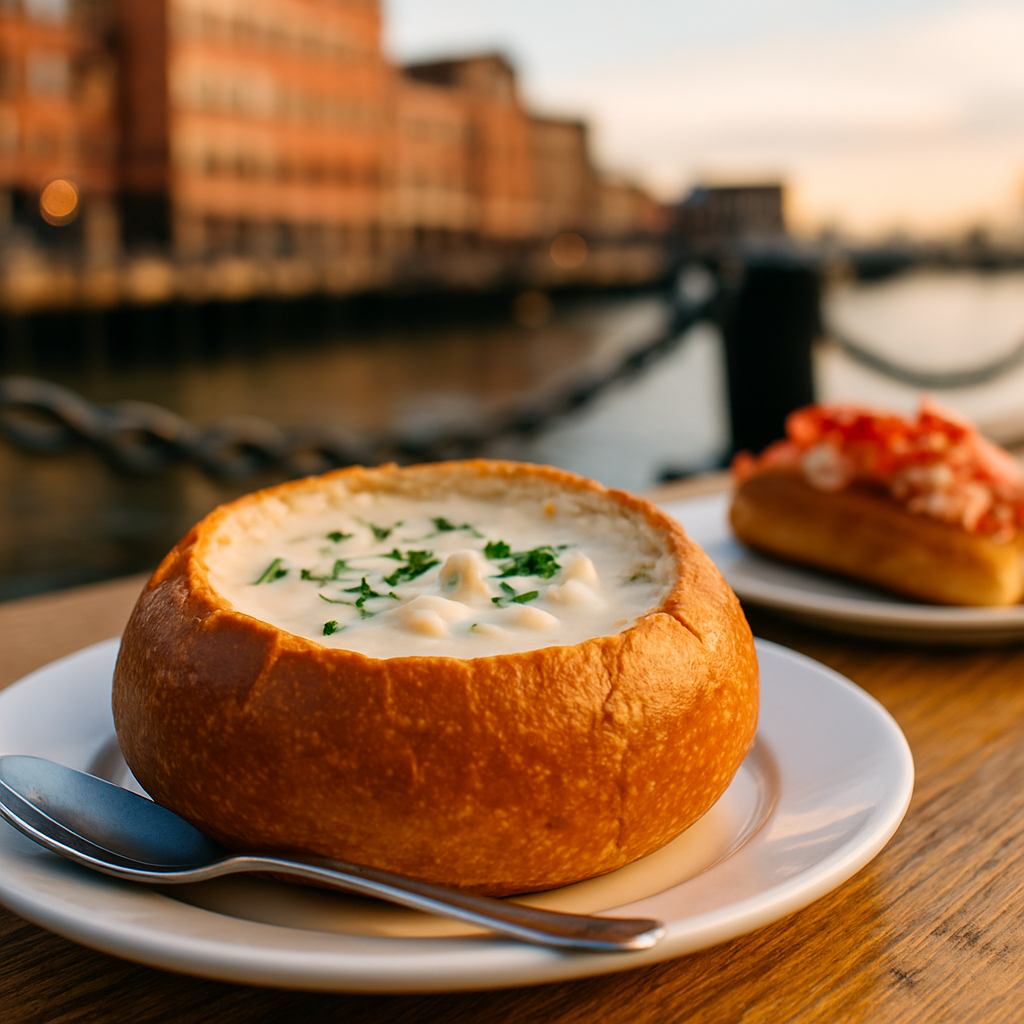
New England Clam Chowder
Non-negotiable. Order a bowl at Legal Sea Foods, get a bread bowl at Faneuil Hall, or find a counter by the harbor — it doesn't matter where, but you will have the chowder. Thick, cream-based, loaded with clams and potato. This is not a suggestion. This is Boston telling you something about itself, and you should listen.
The places I actually send people to
Advice that fits how you travel
Boston is an exceptionally good solo city. It's walkable, the MBTA gets you almost everywhere for $2.40, and the queer community here is the kind that actually talks to strangers — especially in Bay Village and the South End, where bar culture encourages conversation rather than performative detachment. Club Café on any weeknight is a reliable landing spot; the mix of lounge, restaurant, and bar means you can drift between modes depending on your energy level without committing to a scene.
App culture is active and functional. Grindr, Scruff, and Lex all have solid Boston usership, and the geography is compact enough that meetups are genuinely convenient rather than a transit ordeal. Meeting people organically at bars is also completely viable — Trophy Room is particularly good for this because the sports context gives everyone an easy conversational entry point.
Budget-wise, solo travelers have real options here. You can do Boston well on $120–$160 a day staying modest and riding the T. The Silver Line from the airport is free outbound, which is one of those small logistics wins that makes a solo trip feel like it's going your way from the first minute you land.
Boston is a genuinely excellent couples destination, and I don't say that about every city. There's real romance infrastructure here — the kind that doesn't require manufacturing. A walk through the Public Garden at dusk, dinner at Ostra, a nightcap in Bay Village: that's a complete evening that requires almost no planning beyond a single reservation. PDA comfort in the South End and Back Bay is as high as it gets anywhere in the United States; nobody is watching you, and the few people who notice a same-sex couple will almost certainly just smile and keep walking.
For a genuinely memorable date experience, the Isabella Stewart Gardner Museum on a weekday morning is quieter and more intimate than the weekend crowds allow. Then take the short walk to The Verb Hotel's pool bar for lunch — even if you're not staying there, the space is welcoming and the vibe is exactly right for a midday pause. The Provincetown ferry as a day trip is romantic in the uncomplicated way: harbor views, a beautiful destination, good food when you arrive.
On accommodation: the Kimpton Marlowe gives you the Charles River view and the evening wine hour, which is a better start to a couple's evening than it sounds. The Four Seasons One Dalton is the full luxury play if budget isn't the primary constraint. Both properties are unambiguously welcoming and won't make either of you feel like an afterthought.
LGBTQ+ families are legally recognized and practically welcomed in Massachusetts in ways that make the day-to-day travel experience noticeably easier than in most places. Joint adoption is fully legal, same-sex parents appear on school and medical forms without incident, and Boston's general concentration of academics and long-term residents means most interactions you'll have at museums, restaurants, hotels, and parks will be completely unremarkable. Nobody will make your family feel like an anomaly here.
On the logistics side: the T is manageable with a stroller on newer lines and stations, though some older stops require elevator planning — the MBTA website has accessibility maps. The Boston Children's Museum on the Waterfront is excellent and hands-on in the way that actually exhausts kids productively; at around $20–$22 per person, it pairs well with the New England Aquarium next door for a full harbor day. Boston Common has enough genuine open space that kids can actually run around, which after any amount of city walking you will appreciate deeply.
A note on Provincetown with kids: it's entirely family-appropriate — beaches, ice cream, whale watches, art galleries — and LGBTQ+ families are a completely normal part of the summer P-Town scene. The 90-minute ferry makes it a real day trip rather than an ordeal, and the National Seashore beaches are among the best in the Northeast. Book the ferry well in advance if you're traveling in July or August.
What Boston actually costs
Flights, visas, and the first 30 minutes
Airport: Boston Logan International Airport (BOS), located 3 miles from downtown across the inner harbor. Exceptionally well-connected for its size — direct service to over 100 cities worldwide.
Major direct routes: New York JFK: ~1h 10m | London Heathrow: ~7h | Los Angeles: ~6h | Chicago O'Hare: ~2h 15m | Toronto: ~1h 45m | Amsterdam: ~7h 30m
Visa requirements:
US citizens: Domestic travel — no visa, no passport required.
UK, EU, Australia: ESTA required under the Visa Waiver Program, valid for up to 90 days. Apply online before departure at travel.state.gov — it costs $21 and approval is usually quick, but don't leave it to the morning of your flight.
Canada: No visa required; a valid passport is strongly recommended.
Airport to city:
Silver Line SL1 Bus ($2.40, 20–30 min): Free from the airport outbound — the best value in Boston transit, full stop. Connects directly to South Station and the full subway network.
MBTA Blue Line Subway ($2.40, 25–35 min): A short shuttle bus connects the terminals to Airport station, then it's a direct ride downtown.
Taxi / Rideshare ($30–$50, 15–30 min): Uber and Lyft are widely available at the designated rideshare pickup areas. Travel time is traffic-dependent — budget extra time during rush hour.
Water Taxi ($15–$20, 10–15 min): Seasonal service to Rowes Wharf downtown. Scenic, fast, and genuinely enjoyable if you time it right — one of the better first impressions of a city I've had anywhere.
Traven's seasonal breakdown
The questions everyone asks
Is Boston safe for LGBTQ+ travelers?
Is it safe to hold hands or show affection publicly?
How do I get around Boston?
What's the best time of year to visit?
How much should I budget per day?
Is Provincetown worth the trip from Boston?
Do I need to speak another language?
Screenshot this before you go
So should you actually go?
Boston is the kind of city that rewards the traveler who shows up with curiosity rather than just a checklist. The history is real, the food is genuinely excellent, the queer infrastructure — legal and cultural — is among the strongest in the United States, and there's a specific street in the South End that will make you understand immediately why people move here and never leave. My Traven-Dex of 8.7 reflects a city earning it across almost every dimension I track. Add Provincetown to the itinerary and you've got one of the best LGBTQ+ travel experiences in North America, full stop. Go. I mean that without qualification.
Sources & Resources
Official links we reference when compiling this guide. Last verified 2026-03-05.