Chicago doesn't audition for your attention — it just hands you a drink on a rooftop and lets the skyline do the talking.
There's a moment on a warm Friday night when you step off the Red Line at Belmont and the noise hits you before your feet hit the sidewalk — laughter spilling out of Roscoe's, someone's Bluetooth speaker competing with the bass leaking from Hydrate, and the faint smell of charred Italian beef from a stand that has no business being that good at 11 p.m. That's Chicago's queer heartbeat, and it's been pumping since before most American cities even acknowledged they had one. I gave this city a 9.1 on my Traven-Dex, and honestly, the number almost feels clinical for a place this alive.
Boystown gets the headlines — those 18 rainbow steel pylons marching up Halsted between Belmont and Grace are as iconic as any landmark in the city — but Andersonville is where Chicago's queer scene actually breathes. Walk up Clark Street on a Saturday morning and you'll find yourself ducking into Women & Children First for a zine, then accidentally spending two hours at Tweet over eggs and someone else's brunch drama. It's the neighborhood that makes you consider moving here. And the Center on Halsted at 3656 N. Halsted isn't a photo op — locals use its gym, attend town halls, run support groups. This city built infrastructure for its queer community, not just a bar strip.
What catches people off guard is the depth. This isn't a city with a scene bolted on — Chicago has a perfect 10.0 on legal protections, and you feel that in the texture of daily life. Two dads with a stroller at Millennium Park don't get a second glance. A trans woman checking into a hotel downtown doesn't get a pause. The protections here aren't performative; Illinois codified them and Chicago enforces them. That foundation is what lets everything else — the nightlife, the food, the lakefront summers — feel genuinely relaxed instead of anxiously tolerant.
Berlin on Belmont is non-negotiable if you're here past midnight on a weekend — one of the last truly queer 24-hour clubs in the country that hasn't been sanitized into a brand experience. Go in with no expectations and low heels. And when you surface, blinking, at 5 a.m. to the smell of Lake Michigan and the first hint of sunrise over the skyline, you'll understand something about this city that no guide can quite explain: Chicago doesn't try to impress you. It just is what it is, and what it is happens to be extraordinary.
The stuff your travel guide buries on page 47
Legal Framework: Illinois is one of the most legally protective states in the country for LGBTQ+ people, full stop. Same-sex marriage has been legal since 2014, joint adoption is fully recognized, and the Illinois Human Rights Act provides comprehensive anti-discrimination coverage in employment, housing, and public accommodations — explicitly including gender identity and sexual orientation. Gender marker changes on state IDs and birth certificates are available through self-identification, no surgery required. Criminalization? None, obviously. My Legal score of 10.0 reflects reality, not optimism.
Key resources: Equality Illinois tracks state-level legislative developments. Lambda Legal's Chicago office handles legal advocacy if you ever need it. The City of Chicago Commission on Human Relations enforces the city's own anti-discrimination ordinances, which layer additional protections on top of state law. You are covered here.
On the ground: The gap between law and culture in Chicago is refreshingly small. This is a city where queer life is woven into the civic fabric — not just tolerated but actively supported by institutions, businesses, and the general population. National-level policy debates around trans rights continue at the federal level, but Illinois state protections remain robust and show no sign of weakening. You should be aware of the national conversation, but you should not be afraid of Chicago.
PDA comfort: In Boystown and Andersonville, same-sex PDA is the norm — holding hands, kissing, arms around each other, nobody blinks. River North, the Magnificent Mile, Wicker Park, Logan Square: all high comfort, broadly progressive, no issues. Hyde Park near the University of Chicago is generally accepting but exercise moderate awareness in surrounding blocks. Far South and West Side residential areas tend more conservative; same-sex PDA is less common there and situational awareness is worth having.
Pro tip: The Red Line's Belmont stop drops you right into the heart of Boystown — five-minute walk to everything on Halsted, which means you don't actually need a rideshare until you're heading to Andersonville or the trains thin out post-2 a.m. A CTA day pass is $5 and covers everything.
Chicago Pride Parade weekend in late June turns the entire Halsted strip into an absolute zoo — expect street closures, rooftop parties, and hotel prices that'll make you gasp. Book Lakeview or Andersonville accommodations months in advance if you're coming specifically for Pride. And know that Andersonville hosts its own more low-key celebration that many locals actually prefer.
Healthcare: Howard Brown Health operates several clinics around the city, and their Lakeview location near Boystown is the go-to for PrEP, STI testing, and trans-affirming primary care — no appointment needed for many walk-in services, and the staff genuinely knows their stuff.
What it actually feels like on the ground
Holding hands / PDA: In Boystown and Andersonville, holding hands and casual affection between same-sex couples is completely unremarkable — this is baseline normal here, not something anyone notices. In the Loop, River North, Wicker Park, and Logan Square, you'll be fine. In more residential areas on the Far South and West Sides, dial it back a notch and read the room. Overall, Chicago is one of the most PDA-comfortable cities in the country for LGBTQ+ couples.
Hotel check-in: Zero issues. Chicago hotels — from hostels to five-stars — are thoroughly accustomed to same-sex couples and LGBTQ+ guests. Illinois anti-discrimination law covers public accommodations explicitly, and the city enforces it. You won't get awkward questions, hesitation, or misgendering at any reputable property. If you do, the Commission on Human Relations is a real recourse.
Taxis and rideshare: No concerns. Chicago's rideshare drivers come from every background imaginable and are overwhelmingly professional. Uber and Lyft operate city-wide; CTA trains and buses are safe and well-used by the LGBTQ+ community. The El is comfortable for visibly queer travelers at all hours on major lines, though I'd recommend rideshare over late-night trains if you're in less-central areas past 1 a.m.
Beaches and public spaces: The lakefront is Chicago's great equalizer. Montrose Beach and Hollywood Beach (near Andersonville) both draw significant LGBTQ+ crowds in summer and are completely comfortable spaces. Millennium Park, Grant Park, Lincoln Park — all very safe, heavily trafficked, and welcoming. No issues.
Late night: Boystown and Andersonville are both very safe neighborhoods with high LGBTQ+ visibility. That said, late-night around the Belmont Red Line stop after bar close can attract some friction — stay aware, particularly if you're visibly gender-nonconforming, and the buddy system is still your friend at 3 a.m. This isn't about the neighborhood being dangerous; it's about 2 a.m. crowd dynamics being 2 a.m. crowd dynamics everywhere. Use rideshare if you're solo and it's very late.
Trans travelers: Chicago is one of the better cities in the US for trans travelers. Illinois law covers gender identity explicitly in anti-discrimination protections, self-ID gender marker changes are available, and the city's LGBTQ+ infrastructure — particularly Howard Brown Health — is deeply experienced with trans-affirming care. Boystown and Andersonville are both high-visibility, high-comfort zones. Be a bit more aware in less-central neighborhoods after dark, same as anyone would be.
Verbal harassment risk: Low in tourist areas and queer neighborhoods. Chicago is a big, diverse city and most people are focused on their own lives. Isolated incidents can occur anywhere — a drunk comment from a passing car, the occasional idiot on the El — but these are uncommon and don't represent the city's character. If something does happen, know that Equality Illinois and Lambda Legal both maintain active Chicago presence. The Broadway Youth Center on Broadway specifically serves LGBTQ+ youth and young adults with drop-in services and crisis support — a real resource, not just a listing.
The queer geography
Boystown / Northalsted (Lakeview)
This is the one. Chicago's historic gay neighborhood — officially Northalsted, universally called Boystown — runs along North Halsted Street roughly from Belmont to Addison in the Lakeview neighborhood. The 18 rainbow steel pylons installed in 1997 physically mark the district, and the Center on Halsted at 3656 N. Halsted anchors the community with a gym, youth programs, meeting spaces, and events. This is one of the oldest officially recognized gay neighborhoods in the United States, and the infrastructure shows it.
The strip is nightlife ground zero: Sidetrack for themed video nights, Roscoe's Tavern for a social mid-evening pint, Hydrate when you want to actually dance, Scarlet Bar and Progress Bar for the younger crowd, and the legendary Berlin on Belmont for the after-after-hours. Unabridged Bookstore on Broadway is one of the last great independent queer bookshops in the country — the LGBTQ+ section is enormous, the staff actually reads, and it feels like it exists to keep the community's memory intact. For leather and kink community, Cell Block on Halsted carries on Chicago's long leather bar tradition.
Andersonville
Head north on Clark Street and the energy shifts — Andersonville (locals say the 'Ville) is more residential, historically lesbian-identified, and carries a slightly calmer frequency than Boystown's bar-heavy circuit. Women & Children First bookstore is an institution. Tweet on Sheridan is the unofficial Sunday morning gathering place for the queer women's community — organic menu, eclectic decor, the kind of place where brunch turns into a three-hour conversation. Big Chicks in the Uptown overlap zone serves a mixed queer crowd with rotating art shows and dive-bar warmth that Boystown's more polished venues have mostly lost.
For lesbian nightlife specifically, The Closet on Broadway is the workhorse — open late, low-pretense, actual regulars. If you're looking for Black LGBTQ+ community specifically, Affinity Community Services is Chicago's anchor organization for Black queer and trans folks, and they'll point you toward events and spaces that don't always show up in the mainstream travel guides.
Wicker Park / Logan Square
Progressive, artsy, and LGBTQ+-integrated without being explicitly queer-branded — Wicker Park and Logan Square are the neighborhoods where queer Chicagoans live who want great restaurants, indie music venues, and a slightly different aesthetic than the Halsted strip. The energy is young, the coffee shops are serious, and nobody cares who you're holding hands with. Worth knowing about for daytime exploring and dinner, even if your nightlife home base stays in Lakeview.
The West Loop
Chicago's restaurant powerhouse. Randolph Street and Fulton Market have become one of the best dining corridors in the country — this is where you'll find Elske, Girl & the Goat, and a density of Michelin-starred kitchens that rivals any neighborhood in America. Not a queer neighborhood per se, but thoroughly welcoming and where you'll end up for at least one serious dinner.
The experiences worth rearranging your itinerary for
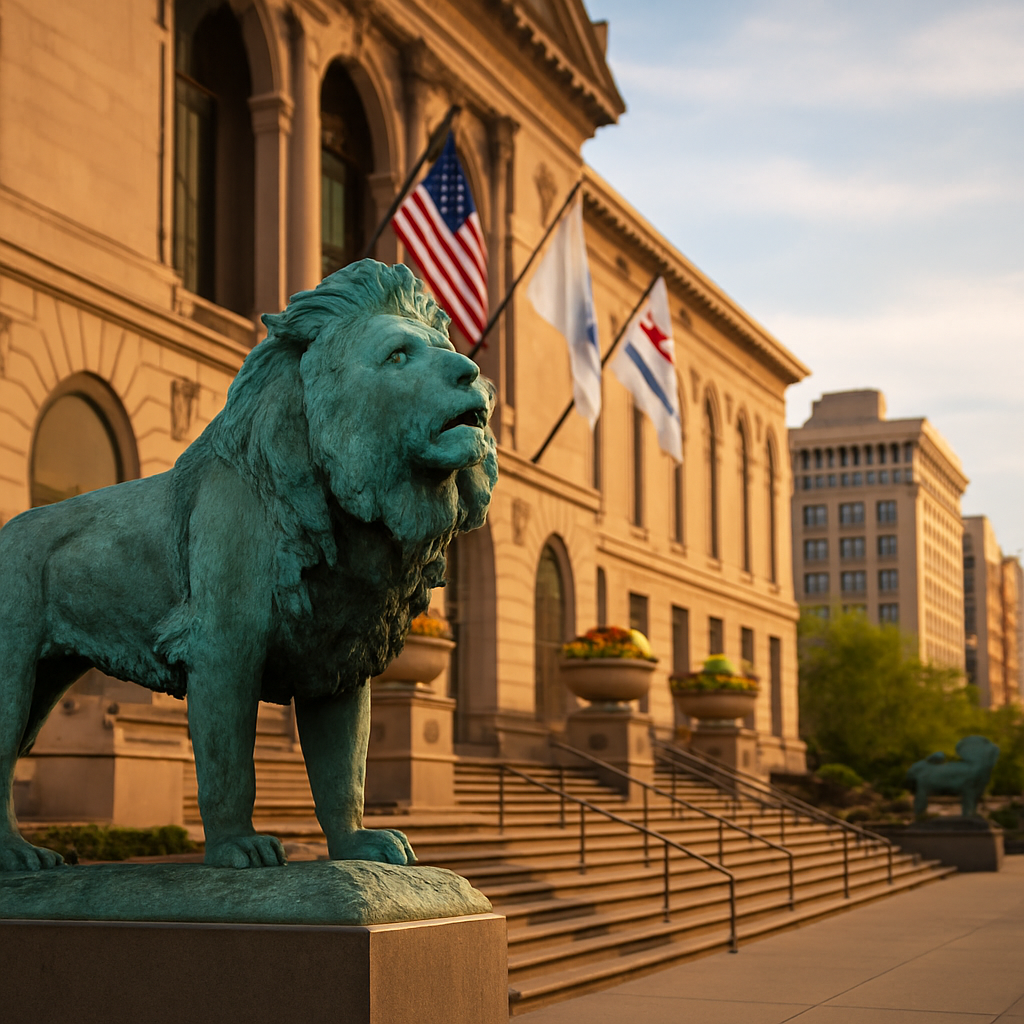
The Art Institute of Chicago
One of the greatest art museums on the planet, and I don't say that lightly. Seurat's A Sunday on La Grande Jatte is here. Grant Wood's American Gothic is here. The Modern Wing by Renzo Piano is the kind of architecture that changes how you feel about natural light. Budget at least half a day, wear comfortable shoes, and don't skip the Thorne Miniature Rooms — they're weirdly mesmerizing. The bronze lions out front have become a Chicago landmark in their own right; you'll understand when you see them.
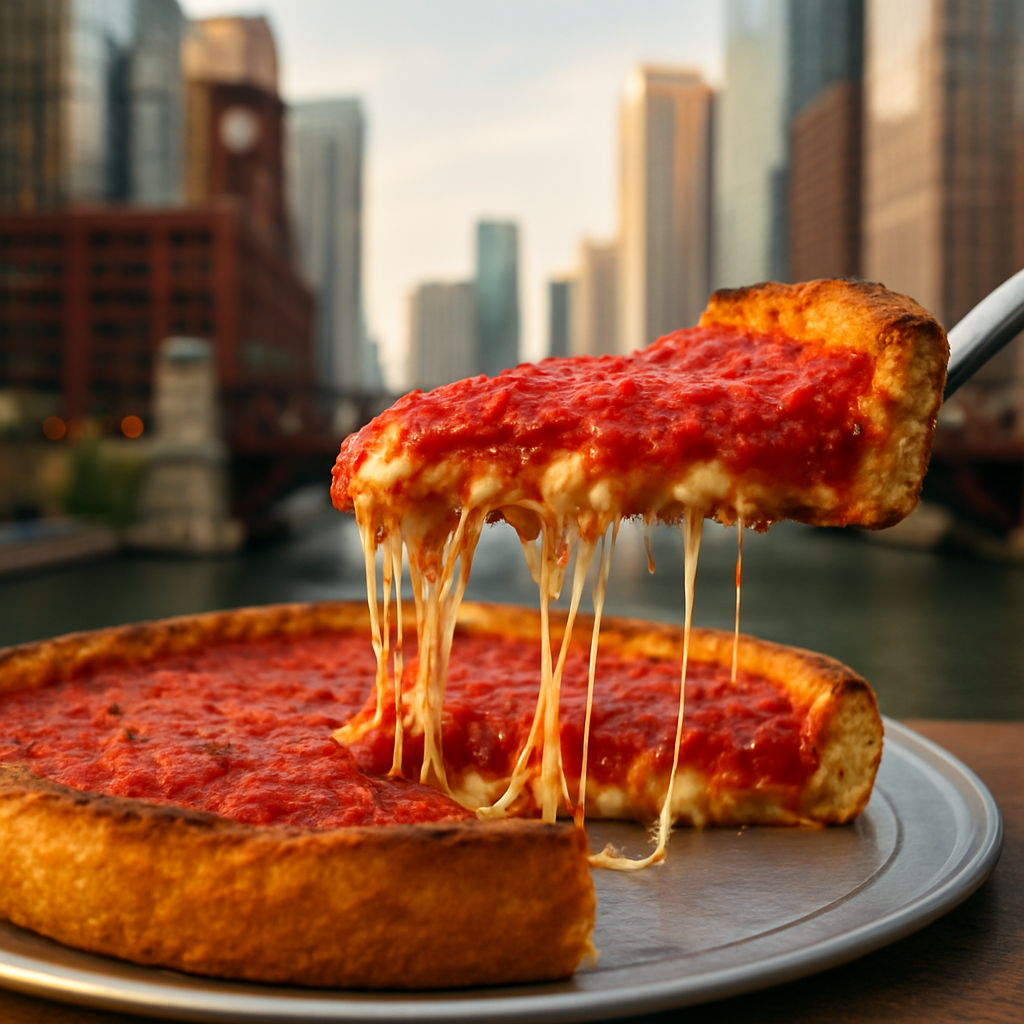
Deep Dish at the Source
I don't care where you stand on the deep-dish vs. thin-crust debate — you're eating both while you're here, and you're forming your own opinion. Lou Malnati's is the local's pick for deep dish (the Buttercrust at the Wacker Drive location is the order). For thin-crust tavern-style, Pat's Pizza on Lincoln Avenue is the move — cut in squares, eaten with your hands, argued about passionately by everyone in the room. Wash it down with a Goose Island 312 and accept that you're not going to the gym today.
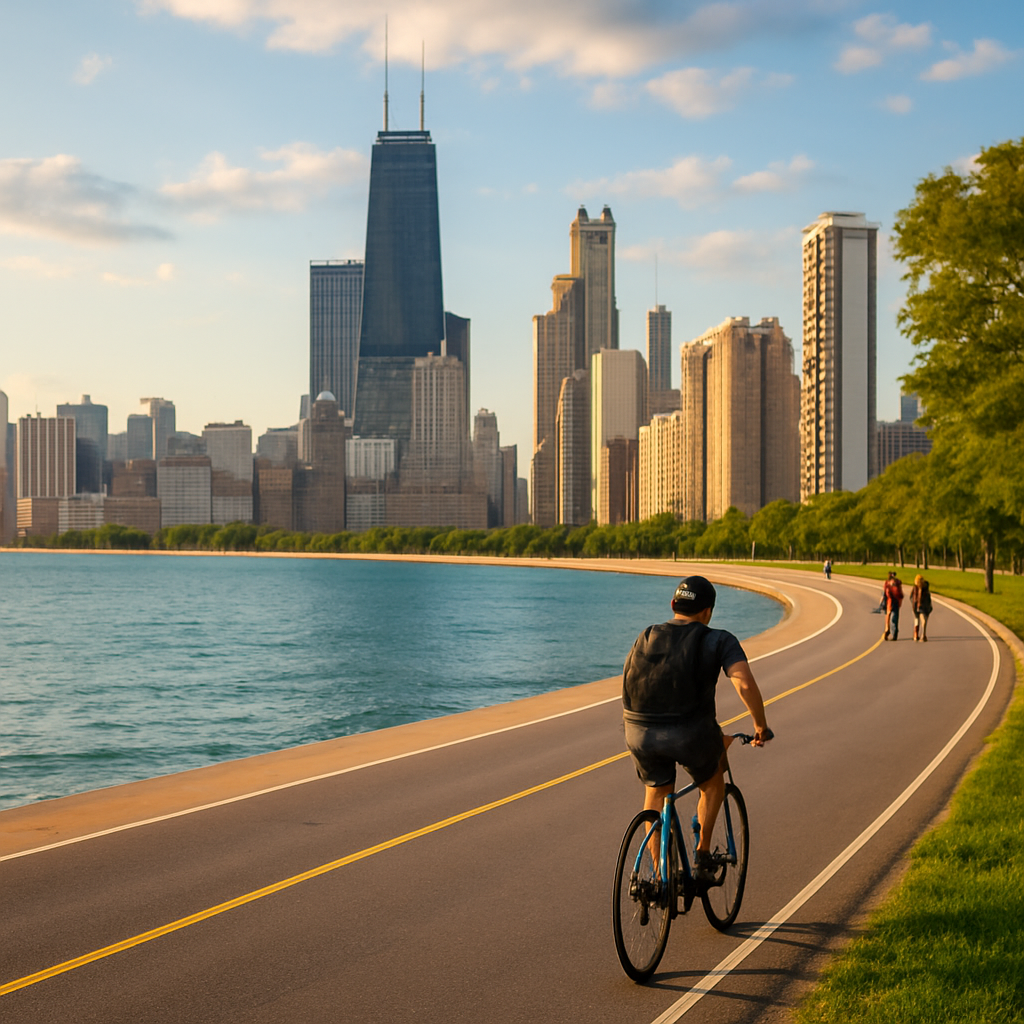
The Lakefront Trail by Bike
Eighteen miles of paved path hugging Lake Michigan from Ardmore to 71st Street, and on a clear summer day there is no better free activity in any American city. Rent a Divvy bike (Chicago's bike-share, stations everywhere, $1 to unlock plus $0.17/min) and ride from Navy Pier north through Lincoln Park to Montrose Harbor. The skyline view from North Avenue Beach — the city rising behind you, the lake impossibly blue in front — is the postcard shot, and it's better in person. Go in the morning before it gets crowded.
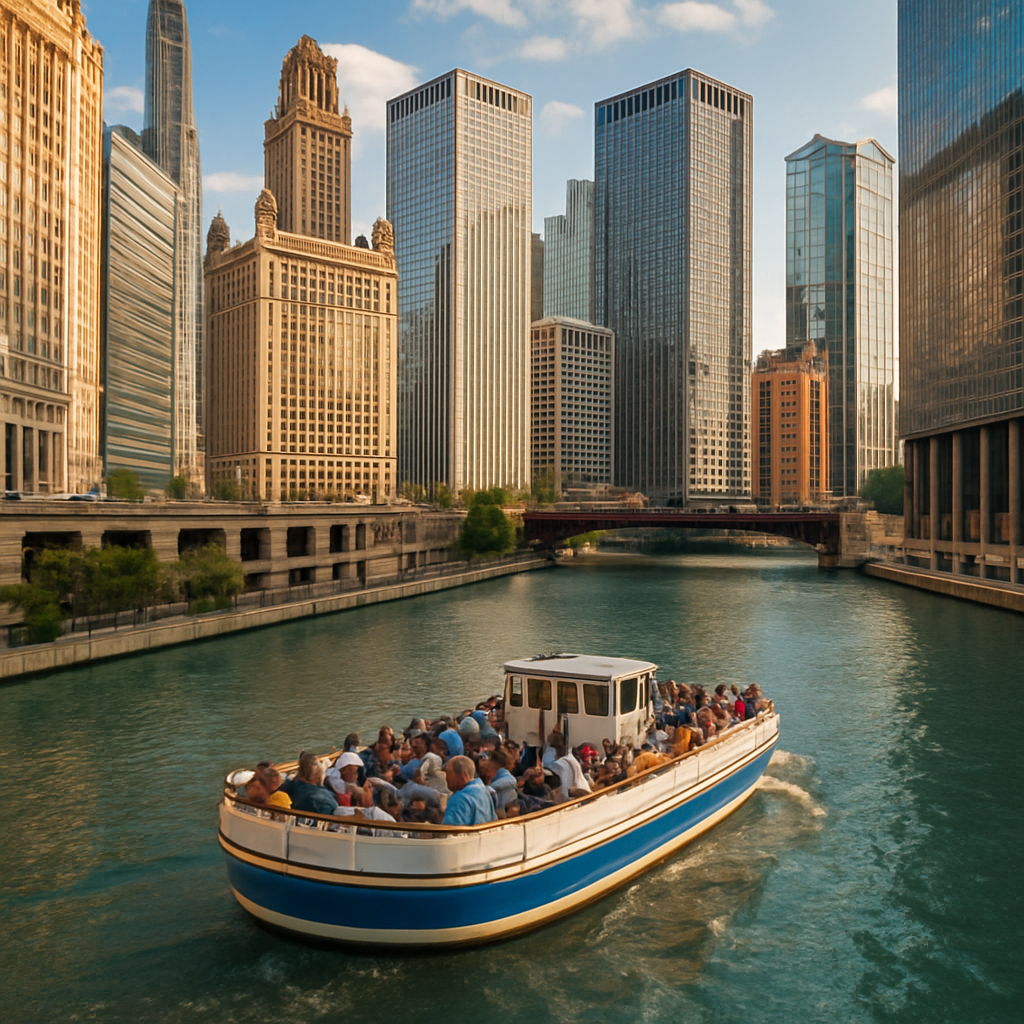
Architecture Boat Tour on the Chicago River
Chicago invented the skyscraper, and the best way to understand what that means is from the water. The Chicago Architecture Foundation Center River Cruise aboard Chicago's First Lady is the gold standard — 90 minutes, a docent who actually knows structural engineering, and a vantage point on the Wrigley Building, Marina City, and the Tribune Tower that you cannot get from the street. Book in advance during summer; this is the single most popular tourist activity in the city for a reason. Afternoon light is best for photos.
Pilsen Neighborhood Walk
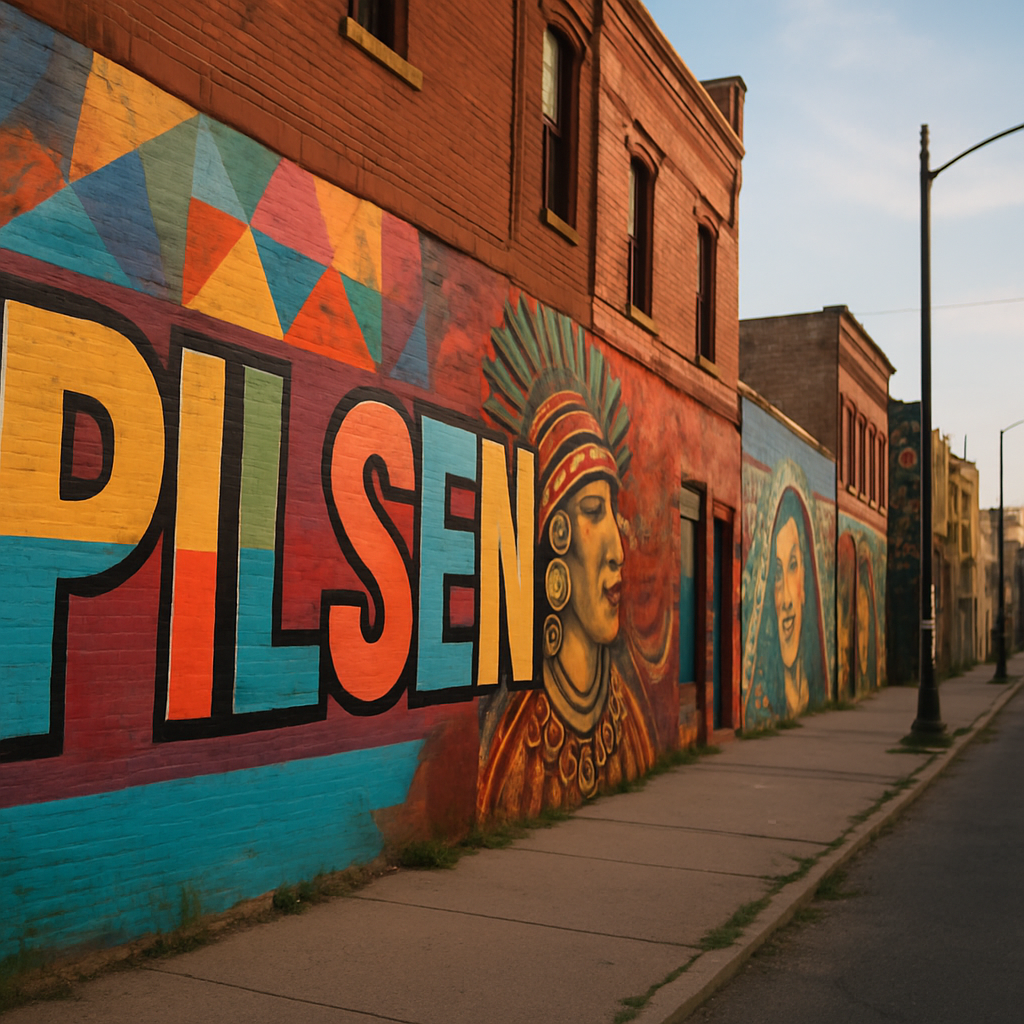
South of the Loop, Pilsen is Chicago's Mexican-American cultural heart — massive murals cover nearly every wall on 18th Street, the National Museum of Mexican Art is free and genuinely world-class, and the taquerias here will recalibrate your expectations for the rest of the trip. Start at the Halsted & 18th Street intersection, walk east, eat twice, and let the street art dictate your route. This is a neighborhood that rewards wandering without a plan.
The places I actually send people to
Advice that fits how you travel
Chicago is a phenomenal solo city, and a lot of that comes down to structure: the CTA gets you everywhere for $5 a day, the food scene ranges from $3 tacos in Pilsen to Michelin tasting menus in the West Loop, and the sheer density of free things to do — Millennium Park, the lakefront, neighborhood walking, gallery hopping — means you can have an incredible day without spending much at all. HI Chicago Hostel in the South Loop is my budget pick for solo travelers: social enough to meet people over coffee, private enough to disappear when you want to, and positioned right between the Art Institute and Grant Park.
The app culture in Boystown and broader Chicago is active and functional — Grindr, Scruff, Hinge, whatever you use, you'll get responses and people actually show up. But the bars are genuinely social here in a way that some cities have lost: Sidetrack's patio on a summer evening is a place where strangers talk to each other without needing a phone as an intermediary. Big Chicks in Uptown has that same open energy with a more mixed, artsy crowd. If you want to meet people IRL, sit at the bar, not at a table. Chicago rewards that.
Safety for solo travelers is good — the tourist areas, Boystown, Andersonville, the Loop, and the lakefront are all well-trafficked and comfortable. Use standard big-city awareness after dark: stick to lit streets, rideshare rather than walking solo at 3 a.m. through quiet residential stretches, and keep your phone aware near transit stations late at night. The Belmont Red Line stop after bar close can get a little hectic — grab an Uber if you're headed home solo at that hour. Otherwise, this city is yours. Go explore it.
Chicago is an absurdly good couples destination, and I'll say that without qualification. Where you stay sets the tone: The Langham Chicago on the river is the splurge answer — suites with skyline views, a world-class spa, and the kind of attentive service that makes a long weekend feel like a proper vacation. If you want to be embedded in the queer neighborhood itself, The Guesthouse Hotel in Andersonville puts you walking distance from the city's best queer-owned restaurants with a full kitchen suite for the inevitable late-night grocery run. Both choices are right; it just depends on what kind of romantic you are.
For date nights, make a reservation at Elske in the West Loop — the Michelin-starred Scandinavian tasting menu in that intimate room is one of the more reliably romantic meals in the city. If you want more neighborhood warmth, dinner at Big Jones in Andersonville followed by a summer evening on the Sidetrack patio on Halsted is the kind of night you'll describe to people for years. PDA is completely unremarkable in both Boystown and Andersonville — hold hands, be yourselves, nobody blinks. The city has an active Commission on Human Relations and anti-discrimination ordinances that mean business; you're genuinely protected here.
The lakefront is your free option and it's spectacular: rent bikes and ride the Lakefront Trail from Navy Pier north through Lakeview, stop for the view from Belmont Harbor, and you've had a full afternoon for the cost of a rental. For a splurge that punches above its price, book tickets to the Chicago Symphony Orchestra at Symphony Center or a production at Steppenwolf Theatre — this city's arts scene is seriously underrated by people who only think of Chicago as a food-and-nightlife destination, and a night at either venue will change your mind fast.
LGBTQ+ families are genuinely, visibly welcome in Chicago — not in the "we have a policy" sense but in the actual daily-life sense. Illinois law fully recognizes same-sex marriage and adoption, and the city's anti-discrimination ordinances are among the strongest in the country. Nobody at a hotel check-in, a museum ticket desk, or a restaurant is going to make your family feel like a curiosity. Equality Illinois maintains current information on state-level family protections if you want the legal detail before you travel. Bring your kids and don't think twice.
For activities: Millennium Park is an absolute must with children — the Cloud Gate sculpture (Chicagoans call it "The Bean," every single one of them) is endlessly entertaining for kids of any age, there's a splash pad in summer, and the Great Lawn hosts free concerts throughout the season. The Art Institute has a dedicated Ryan Education Center designed for younger visitors, and the Shedd Aquarium and Adler Planetarium on the Museum Campus are walking distance from each other, making for an easy full-day crawl without anyone having to get back in a car. Navy Pier has the Ferris wheel, the rides, and the kind of sensory overload that kids find thrilling and parents survive on coffee.
Practically speaking, Chicago is stroller-accessible in most tourist areas — the lakefront path, the Museum Campus, and Millennium Park are all wide and manageable. The CTA is fine off-peak; rideshare is easy if you're moving with car seats. Andersonville is the neighborhood I'd flag for families specifically: lower-key energy than Boystown on a Friday night, great casual restaurants, indie shops worth browsing, and a community feel that's comfortable for kids. Big Jones there does Sunday brunch that genuinely works for all ages, and the staff won't flinch at a table of five with a toddler.
What Chicago actually costs
Flights, visas, and the first 30 minutes
Airport: Chicago O'Hare International Airport (ORD) is one of the world's busiest airports, with direct service from 200+ cities globally. A secondary option, Chicago Midway (MDW) on the Southwest Side, handles primarily domestic and budget-carrier traffic — it's smaller, faster to navigate, and worth checking if your route and fare work out.
Major Routes: New York (JFK) — 2h 20m · Los Angeles (LAX) — 4h 10m · London (LHR) — 9h 00m · Toronto (YYZ) — 1h 30m · Mexico City (MEX) — 3h 45m · Sydney (SYD) — 19h 30m (typically with one connection).
Visa Requirements: US citizens — domestic travel, no visa required. UK nationals — ESTA required via the Visa Waiver Program; $21 USD, valid 2 years. EU nationals — ESTA required for most EU passport holders; $21 USD, same program. Canadian citizens — no visa, no ESTA required. Australian citizens — ESTA required; $21 USD, valid 2 years. Apply at the official CBP ESTA portal — don't pay a third-party site more than the $21 government fee.
Getting from O'Hare to the City:
CTA Blue Line (El Train) — $2.50 / ~45 min: Honestly the best option for most travelers. Runs 24 hours a day, 7 days a week, straight from the airport into downtown Chicago, arriving at Clark/Lake in the Loop. No traffic dependency, no surge pricing, completely reliable. This is the move.
Taxi / Rideshare (Uber/Lyft) — $35–$55 / 25–50 min: Rideshare pickup is at designated zones — follow airport signage and ignore anyone who approaches you in the terminal. Travel time is entirely traffic-dependent; budget the full 50 minutes during rush hour and don't be surprised.
Airport Express Bus (Coach USA) — $35–$55 / 60–90 min: Serves major downtown hotels directly; useful if you're staying somewhere without easy El access or traveling with significant luggage. Book in advance.
Rental Car — $40–$100/day: Multiple agencies on-site at O'Hare. Think carefully before committing to a car in Chicago — downtown parking runs $30–$50/day, traffic on the I-90/94 is aggressively unpredictable, and the CTA genuinely handles most of what you'll need in the city. A rental earns its keep only if you're planning day trips outside Chicago or spending significant time in neighborhoods the El doesn't serve well.
Traven's seasonal breakdown
The questions everyone asks
Is Chicago safe for LGBTQ+ travelers?
Do I need a car in Chicago?
When is Chicago Pride?
What's the difference between Boystown and Andersonville?
How much should I budget per day?
Is it safe to hold hands in Chicago?
How cold does it actually get in winter?
Screenshot this before you go
So should you actually go?
Go. Chicago earns my Traven-Dex score of 9.1 on substance, not charm — a perfect 10.0 on legal protections, one of the most established queer neighborhoods in the country, a food and architecture scene that rivals any city on Earth, and a lakefront summer that will make you angry you didn't come sooner. The winters are brutal and honest about it, but May through October this city is operating at a level that very few destinations can match. Whether you're here for a weekend on Halsted, a week eating your way through every neighborhood, or a Pride weekend that draws over a million people to the streets, Chicago doesn't just welcome you — it makes you feel like you've always been welcome. I mean that with no qualification.
Sources & Resources
Official links we reference when compiling this guide. Last verified 2026-03-06.
- Center on Halsted
- Howard Brown Health
- Equality Illinois
- Chicago Pride (Official Parade Organization)
- ACLU of Illinois
- Lambda Legal – Chicago Office
- Affinity Community Services
- Broadway Youth Center
- Chicago House (HIV/AIDS & LGBTQ+ Services)
- Illinois Safe Schools Alliance
- City of Chicago Commission on Human Relations
- Pride Action Tank