
Cincinnati doesn't audition. It pours you a mimosa you didn't order, hands you a three-way at 2am, and assumes you'll figure out the rest by Sunday.
It's a Sunday just before noon at Below Zero Lounge on Walnut Street, and the line for drag brunch is already wrapping toward the corner. Inside, a queen in a sequined caftan is working a room of about sixty people — couples in their thirties, a bachelorette table pretending they didn't end up here by accident, a knot of regulars who haven't moved off their stools since 2014. Someone hands me a mimosa I didn't order. By the second number, the bachelorette table is screaming. This is the Cincinnati most travelers don't expect — small enough that the same six people will recognize you by Sunday, warm enough that you'll let them.
This is the queer city that pretends it isn't one. The scene scatters between Over-the-Rhine, Northside, and across the river in Newport — and somehow the math still works. A 7.6 on Scene shouldn't add up to this much fun on paper, but Cincinnati keeps its best moments at street level: a brass band on a Vine Street corner, the smell of wood-fired pizza outside Rhinegeist, Findlay Market on a Saturday morning where the goetta stall has had the same family running it longer than your apartment building. The architecture does heavy lifting — OTR holds the country's highest concentration of Italianate rowhouses, all of it climbing toward Mount Auburn — but the city's real currency is the people who never bothered to leave.
The split is the thing to understand before you book. Ohio's statehouse runs red and noisy; Cincinnati's city council passed non-discrimination protections in 2006 and hasn't moved off them since. That's where my 9.0 on Legal lives — strong city-level floor, harder state-level ceiling. Cross the Roebling Bridge at sunset, which you should, and you're in Kentucky with a whole different rulebook. The trick to this town is staying inside the core: OTR for the bars, Northside for a slower Sunday, downtown for the bones. The further you drift from the river, the more the read of the room matters.
If your idea of a gay vacation is a 24-hour circuit party, this isn't it — I gave it a 7.8 overall and not one point of that is for spectacle. But if it's drag brunch before noon, a porter at Urban Artifact, a slow walk along Smale Riverfront Park as the bridge lights come up, and a three-way at Camp Washington Chili at 2am because the city raised everyone in your booth — you'll fall harder than the score suggests. Cincy doesn't audition. That's what I keep coming back for.
The stuff your travel guide buries on page 47
Cincinnati is a blue dot in a purple state, and the legal picture splits accordingly. As of 2026, marriage equality is settled federal law, joint and second-parent adoption are available to same-sex couples, and the city itself has had a non-discrimination ordinance covering sexual orientation and gender identity since 2006 — meaning you're protected within city limits in housing, employment, and public accommodations. Equality Ohio tracks the state-level fights in real time, and they're worth a bookmark before you go.
Here's the wrinkle: the metro straddles two states. Cincinnati sits in Ohio, but cross the Roebling Bridge and you're in Kentucky — Newport, Covington, Bellevue — a state with no statewide LGBTQ+ protections, though both river cities have their own local ordinances. Ohio state law also restricts gender-affirming care for minors and requires medical documentation for legal gender marker changes. The city is welcoming; the statehouse, less so. TransOhio is the resource for trans travelers who want to understand the on-the-ground reality versus the headlines.
For PDA: holding hands in Over-the-Rhine, Northside, Clifton, and along The Banks is unremarkable. Downtown and Walnut Hills, generally fine. Hyde Park and Mount Adams skew a little more conservative but tasteful affection rarely registers. In the outer suburbs and rural Hamilton County, dial it down — not because something will happen, but because Ohio is still Ohio.
Pro tip: Cincy Pride lands in late June with the parade route running through downtown to Sawyer Point. Book hotels in OTR or downtown early — everything within walking distance sells out by April. Cincinnati Pride publishes the full schedule each spring.
What it actually feels like on the ground
Holding hands and PDA: In OTR, Northside, Clifton, and The Banks, hand-holding is unremarkable. The crowd at Findlay Market on a Sunday morning won't blink. Across the river deeper into Kentucky or out in the suburbs, a quick read of the room is wise — same-sex couples report no real issues in Newport or Covington's MainStrasse, but the further you get from the river, the more discretion makes sense.
Hotel check-in: The major downtown and OTR properties — 21c, Kinley, Lytle Park, AC at The Banks — are corporate-trained and welcoming to same-sex couples without exception. The smaller boutiques across the river in Covington are genuinely friendly; one bed for two men is a non-event.
Taxis and rideshare: Uber and Lyft saturate the metro and are the default. The Cincinnati Bell Connector streetcar is free and loops OTR to The Banks — useful for bar-hopping without driving, but it stops running before the bars close, so budget for a rideshare home.
Late night: Walking from OTR up to Findlay Market on a Saturday morning is fine. Walking the same blocks alone at 2am is a different story. Northside and OTR are safe but city-safe — keep your wits about you after last call, and don't wander into the quieter side streets between Walnut Hills and Mount Auburn after dark.
Trans travelers: Cincinnati's city protections cover gender identity, and Heartland Trans Wellness Group is a strong local resource. Statewide, the climate is harder — restrictive bathroom legislation has been kicking around the Ohio statehouse, and trans travelers should be aware that protections are weaker outside the city core. TransOhio publishes current advisories and ID guidance.
Health and HIV care: Equitas Health on Reading Road handles PrEP, HIV care, and gender-affirming services on a sliding scale, and Caracole is the go-to for HIV+ travelers needing meds, referrals, or case management — both are used to out-of-towners. For broader public health questions, Hamilton County Public Health is the local authority.
Verbal harassment: Rare in the city core. The handful of community reports I've seen come from outer suburbs and the late-night Banks crowd around game nights, when sports-bar energy spills into the streets. Stay in the gay-friendly clusters and you'll have a quieter night than most American mid-sized cities.
The queer geography
Over-the-Rhine (OTR)
Over-the-Rhine is one of the largest, most intact urban historic districts in the United States — the highest concentration of Italianate architecture in the country, rowhouse after restored rowhouse climbing the slope from downtown toward Mount Auburn. The neighborhood centers on Findlay Market, Ohio's oldest continuously operated public market, established in 1852. Walk Vine Street on a Friday evening and you'll smell wood-fired pizza, hear a brass band on a corner, and pass three breweries before you've gone four blocks. The bar density is the real story: The Birdcage on Race Street, Below Zero Lounge, and Cabaret form the city's primary LGBTQ+ nightlife cluster, with Sunday drag brunch at Below Zero functioning as the most consistent queer social ritual in town.
Northside
Northside is Cincinnati's indie soul — Hamilton Avenue lined with vintage shops, vinyl stores, taquerias, and a string of bars where the cover band could be bluegrass or post-punk depending on the night. The Comet still pulls a mixed-and-queer crowd most nights for craft beer and burritos, and Northside Tavern and Bullfishes round out the strip. The annual Northside Fourth of July Parade is the unofficial Pride before Pride — locals call the bar scene around Hamilton Avenue Nasti, and that should tell you everything about the neighborhood's sense of humor. Cincinnati Pride publishes year-round community programming that often centers here.
The Banks & Downtown
The Banks is the riverfront entertainment district between the Reds and Bengals stadiums — wide promenades, the John A. Roebling Suspension Bridge framing every photo, and Smale Riverfront Park stretching east toward Sawyer Point. Downtown proper holds Fountain Square, the Contemporary Arts Center in its Zaha Hadid-designed building, and the bones of the city's fine dining scene. Pride after-parties spill into The Banks each June, and the corporate hotels here are the most reliably welcoming spots in the metro for same-sex couples. PFLAG Cincinnati hosts events here regularly.
Clifton / University Heights
Clifton wraps around the University of Cincinnati campus — Ludlow Avenue is the main artery, lined with indie bookstores, a handful of cafes, and The Esquire, the arthouse cinema that programs LGBTQ+ films year-round. The crowd skews young, academic, and politically left, which makes it one of the most casually accepting parts of the metro. Worth a half-day if you like college-town energy and good coffee. GLSEN Greater Cincinnati works closely with the universities up here.
Newport & Covington (Northern Kentucky)
Cross the Roebling Bridge on foot at sunset — the walk alone is worth the trip — and you land in Covington, where MainStrasse Village is a few cobblestone blocks of German heritage bars, brunch spots, and slowly multiplying queer-owned coffee shops. Newport, a few minutes east, holds The Yacht Club, the late-night gay dance floor where everyone ends up after 1am when the OTR bars close. NKY isn't a destination on its own, but it's a meaningful chapter of any Cincinnati weekend.
The experiences worth rearranging your itinerary for
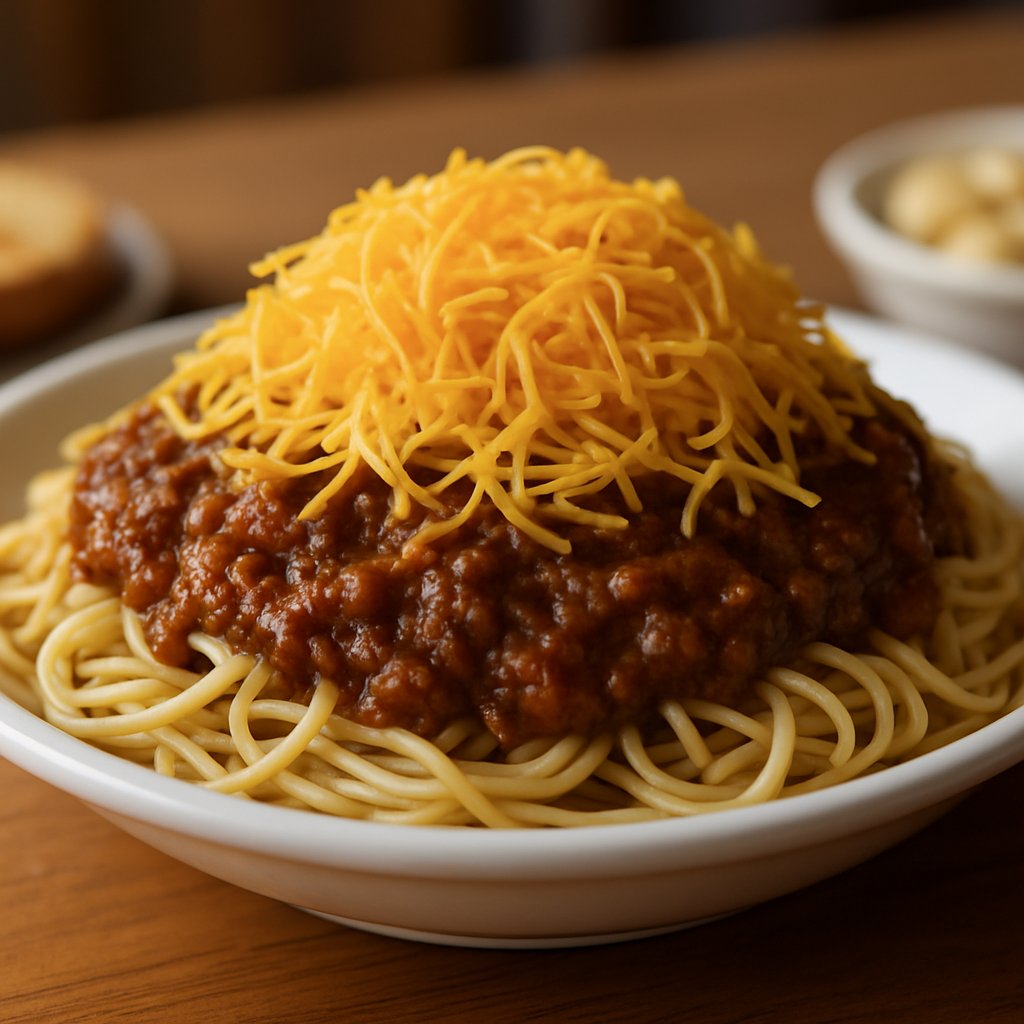
A Three-Way at Camp Washington Chili
Cincinnati chili is its own beast — thin, spiced with cinnamon and chocolate, ladled over spaghetti and buried under a snowdrift of shredded cheddar. That's a three-way, and you order it at Camp Washington Chili, the James Beard America's Classics winner that's been on the same corner since 1940. The diner runs nearly 24 hours; the right time to go is 2am, after the OTR bars close, when the booths fill with everyone the city raised. Don't ask questions about the name. Just eat.
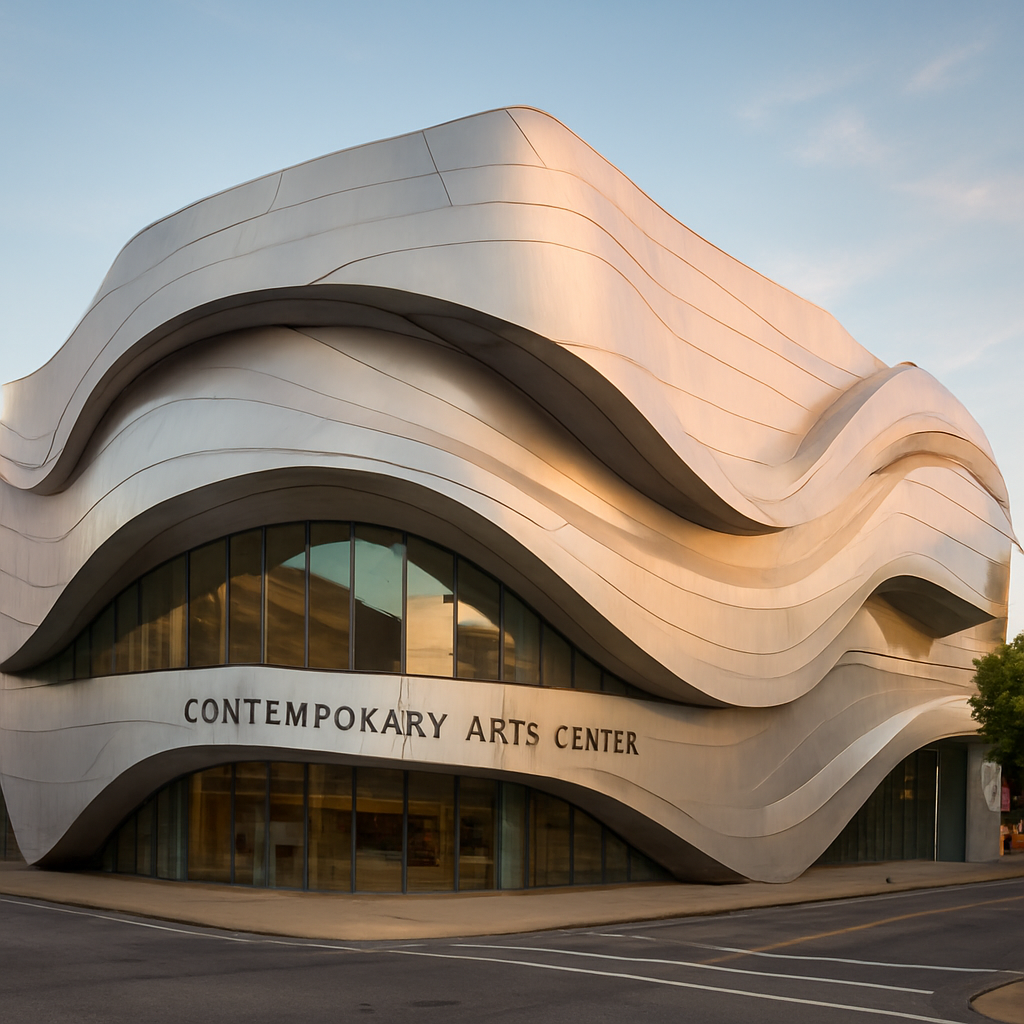
The Zaha Hadid Building at the Contemporary Arts Center
The Contemporary Arts Center downtown is housed in Zaha Hadid's first completed building in the United States — a stacked, cantilevered concrete puzzle that opened in 2003 and still looks like nothing else in the city. The CAC is also the site of the 1990 Robert Mapplethorpe obscenity trial, which ended in acquittal and helped redraw the line on artistic expression in America. The programming punches well above the city's weight; an hour minimum, two if the exhibit hits.
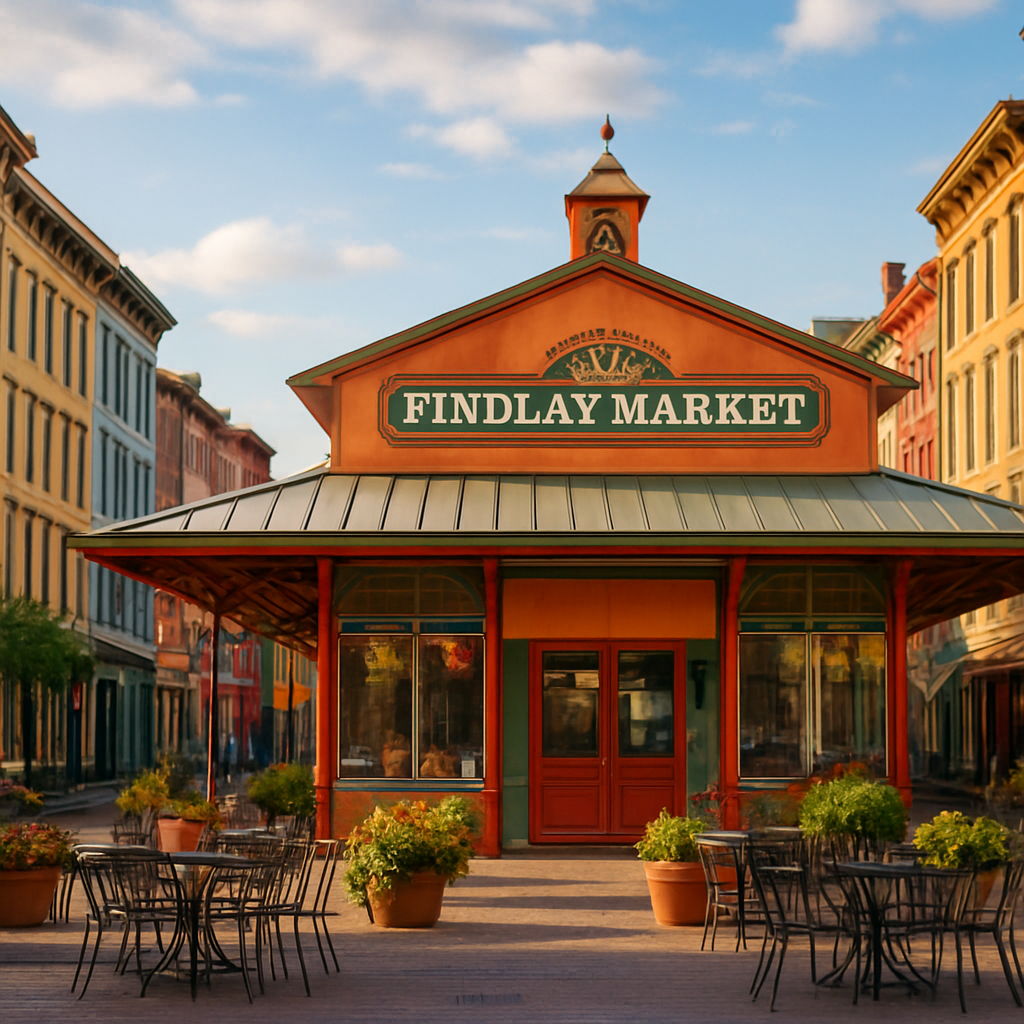
A Saturday Morning at Findlay Market
Findlay Market is Ohio's oldest continuously operated public market — 1852 and still going — and on a Saturday morning it's the closest thing OTR has to a town square. Pick up goetta, fresh bread, cheese from a vendor whose family has been there longer than your apartment building. The crowd skews creative, young, and family-of-choice in the best way. Eat as you walk. Take the long route home through the Italianate rowhouses.
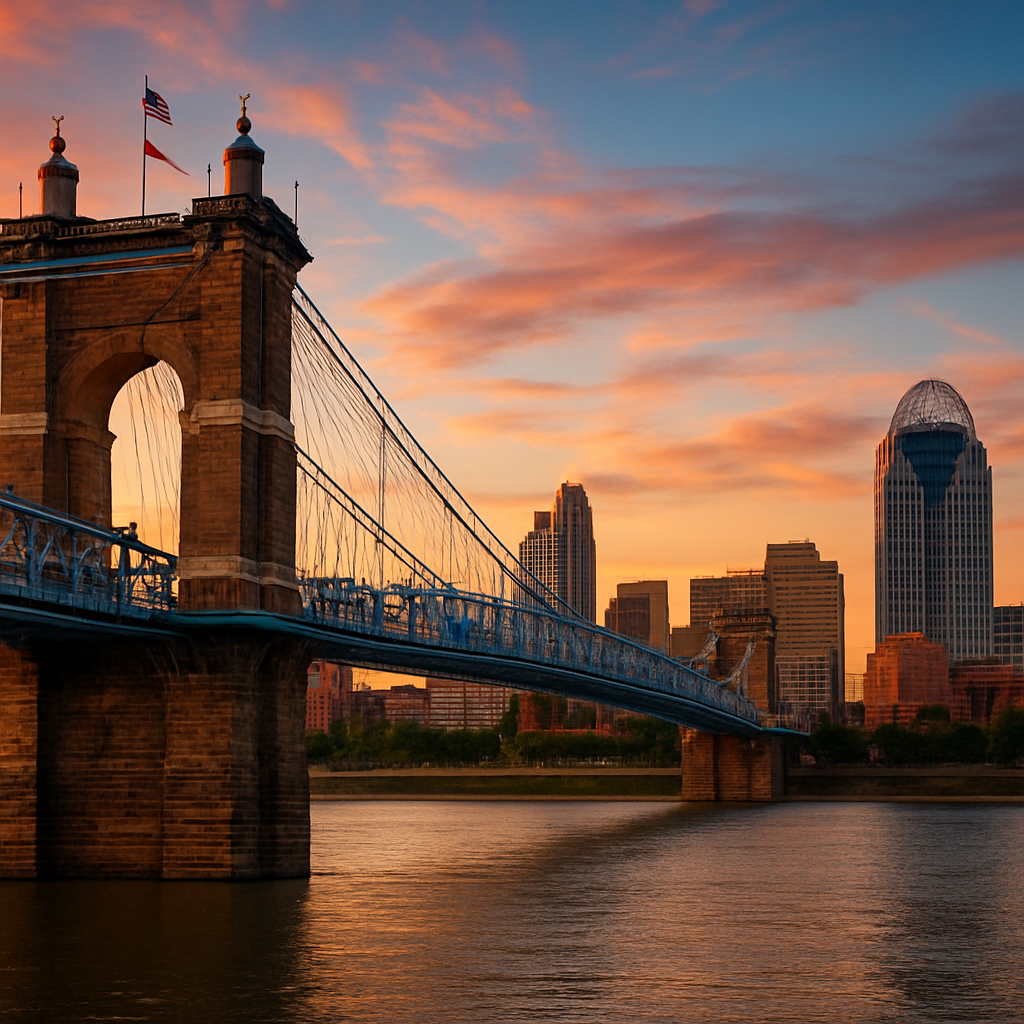
The Roebling Bridge Walk at Sunset
The John A. Roebling Suspension Bridge was the prototype for the Brooklyn Bridge — same designer, same blue paint, smaller scale — and the pedestrian crossing from Cincinnati to Covington at sunset is the city's quietly great free experience. Twenty minutes if you take it slow, with the river under you and the skyline behind. Land in MainStrasse Village for a drink, then walk back as the bridge lights come up.
A Show at Ensemble Theatre Cincinnati
Ensemble Theatre Cincinnati has been staging LGBTQ+ work in OTR since the 1980s and remains one of the most reliably queer-forward stages in the Midwest. The space is intimate, the programming is sharp, and the company has earned its reputation across decades rather than press cycles. Check the season schedule before you book your trip — landing on the right show is the best way to spend a Cincinnati evening that isn't a bar.
The places I actually send people to
Advice that fits how you travel
Solo in Cincinnati is easier than it looks on paper. The scene is small enough that two nights of bar-hopping in OTR will introduce you to half the regulars, and the same faces start to repeat by Sunday brunch — which, honestly, is the charm. Plant yourself at Below Zero Lounge for Sunday drag brunch before noon, then drift to The Birdcage or Cabaret next door when the night gets going. The Cincinnati Bell Connector streetcar is free and loops OTR to The Banks, so you can ditch the car for the core of the trip.
The apps work fine here, but the city rewards walking up to people. Northside is the easier solo neighborhood for a daytime — Hamilton Avenue's indie shops, a long lunch at The Comet, vinyl crate-digging, then settling in at Northside Yacht Club or Bullfishes before the OTR night picks up. Budget-wise, this is one of the better-value American cities for a gay weekend: $200–300 a day puts you in a moderate 3-star with cocktails and real meals, and a hostel-and-Bakersfield strategy gets you under $140.
One practical note: the streetcar stops running before the bars close, so factor in a rideshare home. Walking solo through OTR after last call is city-safe, not country-safe — keep your wits about you and don't drift into the quieter side blocks between Walnut Hills and Mount Auburn after dark. Pro tip: book Cincy Pride weekend in late June months ahead if you want a hotel within walking distance of Sawyer Point.
Cincinnati is a sneaky-romantic city, and same-sex couples will find the corporate-trained downtown and OTR hotels — 21c Museum Hotel, Kinley, The Lytle Park Hotel, AC at The Banks — welcoming without the awkward second-glance at check-in. One king bed for two men is a non-event. The Lytle Park rooftop at golden hour is one of those quietly great Cincinnati moments that no one outside the city knows to put on a list.
For the actual date nights: book Sotto for a first-anniversary kind of dinner — the subterranean stone-walled room beneath Boca does more work than most restaurants twice the price. Khora inside Kinley is the new-school answer if you want current rather than old guard. After dinner, walk the John A. Roebling Suspension Bridge to Covington at sunset — twenty slow minutes with the river under you and the skyline behind, and the bridge lights coming up as you land in MainStrasse Village for a nightcap. It's the city's best free experience and it costs you nothing but the walk back.
PDA-wise, holding hands in OTR, Northside, Clifton, and The Banks is unremarkable. Hyde Park and Mount Adams skew a little more conservative but tasteful affection rarely registers — the views from Mount Adams over the river are worth the trip up. Beyond the city core into outer suburbs and rural Hamilton County, dial it down a notch. Not because something will happen, but because Ohio is still Ohio and a quick read of the room costs nothing.
LGBTQ+ families travel well in Cincinnati. As of 2026, joint and second-parent adoption are available to same-sex couples under federal and Ohio law, the city's non-discrimination ordinance has covered sexual orientation and gender identity since 2006, and your family structure is recognized for everything that matters logistically — school enrollment, medical consent, hotel registries. Two moms or two dads checking in with kids at the downtown corporate properties or 21c is a non-event.
The kid-friendly itinerary writes itself. The Cincinnati Art Museum in Eden Park is free, sprawling, and built for slow afternoons with kids who need to wander. The National Underground Railroad Freedom Center on the riverfront is one of the more meaningful family museums in the country — Smithsonian-affiliated, and the programming explicitly connects abolitionist history to ongoing civil rights work, including LGBTQ+ rights. Findlay Market on a Saturday morning is the easiest win: goetta from one stall, fresh bread from another, the kind of family-of-choice crowd that makes everyone feel like they belong. Sleepy Bee Cafe in Oakley is the family brunch default — woman-owned, visible Pride support, gluten-free options that actually exist, and staff trained to behave like they mean the inclusion.
One state-level caveat worth knowing: Ohio restricts gender-affirming care for minors and requires medical documentation for legal gender marker changes, so families with trans kids should plan ahead and lean on TransOhio and PFLAG Cincinnati for current guidance before the trip. Pro tip: the Cincinnati Bell Connector streetcar is free, easy with strollers, and loops the kid-friendly downtown-to-OTR corridor without the parking hassle.
What Cincinnati actually costs
Flights, visas, and the first 30 minutes
Airport: Cincinnati/Northern Kentucky International Airport (CVG) is the regional gateway, sitting about 13 miles southwest of downtown across the river in Hebron, Kentucky. CVG runs roughly 50 direct routes — strong domestic coverage to the major US hubs (New York, Chicago, Atlanta, Dallas, LA, Denver), plus a handful of international links including Paris on Delta seasonally.
Visa requirements (as of 2026): US citizens travel domestically without a visa. Canadian citizens typically don't need a visa for stays up to six months. UK, EU, and Australian travelers generally need ESTA authorization under the Visa Waiver Program — apply online at least 72 hours before departure and expect approval to be valid for two years of multi-entry visits up to 90 days each. Always confirm current requirements with the US State Department before you book.
Airport to city: Rideshare via Uber or Lyft runs approximately $30-45 and takes 20-30 minutes — the default option, with curbside pickup at designated zones. Taxis from the airport stands run $35-50 at flat rates to downtown. The TANK Route 2X Airporter is the budget play at $2 for a 35-45 minute bus ride into downtown Cincinnati — slower, but it's the cheapest airport-to-city option I've seen in any major US metro. Rental cars from the on-site agencies run $40-80 a day and make sense if you're exploring greater Cincinnati, Northern Kentucky, or day-tripping to Columbus, Louisville, or Yellow Springs. Many downtown hotels offer free or paid shuttles in the $0-15 range, taking 25-35 minutes.
Pro tip: CVG sits on the Kentucky side of the river, so your airport Uber will technically cross state lines on the way into downtown Cincinnati. It adds nothing to the fare and exactly zero to the journey time, but it's a quirk that catches first-time visitors off guard.
Traven's seasonal breakdown
The questions everyone asks
Is Cincinnati safe for same-sex couples?
Where should I stay for the LGBTQ+ scene?
When is Cincinnati Pride?
Do I need a car?
How does Kentucky factor in?
Is Cincinnati safe for trans travelers?
How many days do I need?
Screenshot this before you go
So should you actually go?
Go. Cincinnati won't sell itself to you in the first hour — it's not that kind of town — but give it a long weekend with OTR as your base, a Sunday at Below Zero, and a sunset walk across the Roebling, and you'll understand why I scored it where I did. LGBTQ+ travelers will find a city that's small enough to feel like a community by Monday morning and protected enough at the city level to relax into it. Ohio is still Ohio, so keep the read of the room sharp once you leave the core, but inside the city itself this is one of the better-value gay weekends in the country right now. Two nights for the bars, three to four if you want it to land. Anything longer and you'll be improvising — which, in Cincy, is when it gets good.
Sources & Resources
Official links we reference when compiling this guide. Last verified 2026-05-12.