
Fire Island doesn't welcome you. It recognizes you. The freedom here isn't a policy — it's the architecture, the air, the ninety years of us refusing to leave.
The ferry from Sayville doesn't dock so much as deliver you into a different country. The engine cuts, the wake settles, and you step onto a wooden boardwalk where there are no cars, no traffic lights, no straight people pretending not to notice you, and no reason to be anyone other than exactly who you are. Cherry Grove has operated this way since the 1930s. The Pines since the 1960s. These aren't gay-friendly communities — they're gay communities, full stop, built and governed by us for the better part of a century. The air smells like salt, sunscreen, and the charcoal from whatever Cherry's on the Bay is grilling, and the only sound competing with the ocean is someone's Bluetooth speaker three porches down. I gave this place a 9.9 on Chill, and honestly, I'm not sure what the missing tenth of a point even looks like.
The dynamic between the two communities is Fire Island's great ongoing theater. Cherry Grove is the older sibling who showed up first, wore what they wanted, and never apologized — bohemian, drag-forward, gloriously unpolished. The Ice Palace has been running drag shows and dance nights since before Stonewall was a headline, and the Cherry Grove Community House and Theater, established in 1948, is one of the oldest LGBTQ+ community organizations in the country. Walk ten minutes through the Meat Rack — a wooded trail through the National Seashore that has been exactly what you think it's been since the 1950s — and you arrive in the Pines, where the architecture is mid-century modern, the skincare routines are non-negotiable, and Low Tea at the Blue Whale around 5 PM is less a happy hour and more a daily act of collective worship. Most people secretly love both communities. The Meat Rack between them is the great equalizer.
There's a reason my Traven-Dex score here is 9.1 — and it's not because the restaurants are world-class or the nightlife rivals Berlin. It's because Fire Island is proof of concept. Proof that when the gays build something from scratch and maintain it for nearly a hundred years, you get a place where freedom isn't aspirational, it's ambient. The Invasion of the Pines every July 4th — when Cherry Grove drag queens arrive by boat in full costume, a tradition born from defiance in 1976 — is one of the most joyful things I've ever witnessed at any destination, anywhere. The harbor fills, the costumes are magnificent, and there isn't a corporate logo in sight. This island runs on community, cocktails, and the unshakable conviction that we were here first.
The practical reality is that Fire Island is seasonal, expensive, and logistically specific — you're taking a train, then a ferry, then walking on boardwalks, and if you miss the last boat you're sleeping on Long Island and rethinking your life choices. The accommodation game requires planning months in advance. The grocery situation will make you question capitalism. But none of that matters once you're standing on the harbor boardwalk at golden hour, watching the boats come in, holding someone's hand without a single thought about who's watching — because nobody is watching, honey. They're all doing the same thing.
The stuff your travel guide buries on page 47
Let's start with the good news: as of 2026, New York State provides the full suite. Marriage equality, adoption rights for same-sex couples, comprehensive anti-discrimination protections covering employment, housing, and public accommodations, and self-ID gender marker changes on state documents. Criminalization? Never been an issue here. Lambda Legal maintains a detailed breakdown of New York's LGBTQ+ legal framework if you want the fine print, but the short version is: you have every legal protection the state can offer, and New York offers more than most.
Now, the cultural reality on Fire Island is something else entirely — and I mean that in the best possible way. Cherry Grove and the Pines aren't places where LGBTQ+ people are "tolerated" or "accepted." They're communities that were built by the gays, governed by the gays, and have operated that way for the better part of a century. The social norms were set by us. You're not a guest in someone else's space; you're home. The ACLU of New York has been a backstop for LGBTQ+ rights in the state for decades, but on Fire Island you'll rarely think about needing one.
There are no cars on Fire Island — I cannot stress this enough. Everything moves on foot along wooden boardwalks, or by wagon. Pack light, wear shoes you can walk in, and budget a wagon rental into your plans. Rolling a full-size suitcase down a boardwalk at midnight is a rite of passage nobody brags about. The ferry is your lifeline: check the schedule obsessively, because the last boat doesn't wait, and a 1 AM Uber to a mainland hotel will haunt your bank account.
House shares dominate summer accommodations in both Cherry Grove and the Pines. If you don't have a connection, start searching community Facebook groups or LGBTQ+ travel forums by January or February — by April, the good shares are spoken for. Hotel inventory exists but it's limited, seasonal, and books fast for peak weekends.
PDA comfort? In Cherry Grove and the Pines, same-sex affection isn't just comfortable — it's the norm. Holding hands, kissing, every expression of affection you'd want is the cultural default. You'll feel more conspicuous being straight here than anything else. Ocean Beach, Saltaire, and the other family communities are politically progressive and welcoming — think standard progressive-NYC-neighborhood comfort levels. The ferry crossings, especially the Sayville route to Cherry Grove, are themselves a social scene in peak season.
What it actually feels like on the ground
Holding hands / PDA: In Cherry Grove and the Pines, PDA between same-sex couples is completely unremarkable — it's how everyone behaves. I'm not hedging. These communities have been majority-LGBTQ+ for over 80 years, and the social norms reflect that. In Ocean Beach and the other family communities, casual PDA is fine. You're on Fire Island — the political temperature of every community on this barrier island skews progressive.
Hotel check-in: Every lodging property in Cherry Grove and the Pines caters to LGBTQ+ guests as its primary clientele. You won't encounter a single raised eyebrow. In Ocean Beach, hotels serve a mixed crowd, but same-sex couples checking in is routine. No issues to flag here.
Beaches and public spaces: Cherry Grove Beach and the adjacent Pines beach area — including the stretch locals know as the Low Tea beach — are open LGBTQ+ social spaces where you can be exactly who you are. Beaches within the Fire Island National Seashore outside the communities are public federal land and draw a more mixed crowd. You're still safe; the energy is just less specifically queer.
The Meat Rack at night: If you navigate the wooded trail between Cherry Grove and the Pines after dark — and people do — go with someone who knows it, bring a flashlight, and understand the terrain. It's both a historic cruising area and legitimately dark woodland with uneven ground. Twisted ankles are more common than anything threatening, but both are real possibilities. Exercise the same situational awareness you would in any unlit outdoor space.
Sun and alcohol — the actual hazards: I'm serious about this one. The combination of open-air drinking culture, reflective bay water, and minimal shade means people get dangerously dehydrated and sunburned by noon without realizing it. SPF 50 minimum, electrolytes, and actual food between Low Tea and High Tea. Gay Men's Health Crisis (GMHC) has historically provided health resources and outreach on Fire Island during peak season — it's worth checking their current programming.
Trans travelers: New York State provides among the strongest trans legal protections in the country, including self-ID gender marker changes and comprehensive anti-discrimination coverage. Cherry Grove in particular has a deeply embedded drag and gender-nonconforming culture stretching back decades — trans and non-binary travelers will find these communities among the most affirming anywhere. That said, if you're traveling through Long Island to reach the ferry terminals, the mainland suburbs are a different environment. You'll be fine, but the Fire Island bubble is distinctly more affirming than the transit route to get there.
Late night: There's no police presence within Cherry Grove or the Pines — both operate on a community self-governance model. Violent crime is essentially unheard of. The late-night risks are practical, not personal: missing the last ferry, dehydration, and navigating boardwalks after too many cocktails. Keep your phone charged — it's your flashlight, your ferry schedule, and your connection to whatever friend has a couch if things go sideways.
Emergency and health resources: For any health concerns, Housing Works and GMHC are the go-to LGBTQ+ health organizations in the broader New York area. Fire Island has limited on-island medical infrastructure — serious emergencies require water transport to the mainland.
The queer geography
Cherry Grove
Walk off the Sayville ferry and onto the Bay Walk — a wooden boardwalk lined with weathered guesthouses, flower boxes, and the kind of afternoon light that makes everything look like a film still — and you'll understand why people have been coming here since the 1930s. Cherry Grove is the older, louder, more bohemian of Fire Island's two gay communities. The architecture is ramshackle-charming: cottages stacked with decades of personality, porches where someone's always got a drink and a story. The smell at dusk is salt air, sunscreen, and whatever Cherry's on the Bay has on the grill.
The cultural heart is the Cherry Grove Community House and Theater — established in 1948, making it one of the oldest LGBTQ+ community organizations in the country. Their summer program of theatrical productions, drag shows, and community events is organized by locals who've been running this place with love and limited funding for decades. Check their schedule before you arrive. The Ice Palace, attached to the Cherry Grove Beach Hotel, is where late-night happens: drag performances, dance floors, the kind of sweaty euphoria that's been going on here since before Stonewall. The lineage shows in every sequin.
For food, Cherry's on the Bay has waterfront views across the Great South Bay and serves as the community's living room. Turbeville's handles the casual end. Both are pricey — this is an island with no roads and a captive audience — and both are worth it for the context of eating surrounded by a full gay community on the water.
Fire Island Pines
If Cherry Grove is the artist's studio, the Pines is the architect's showroom. Step off the ferry at the Pines Harbor and you're looking at a concentration of mid-century modern houses, manicured decks, and men who clearly have strong opinions about skincare. The harbor boardwalk — wooden planks connecting ferry dock to bars to restaurants to residences — is the social and commercial spine of the community. Everything you need is here, strung along the water.
Low Tea starts around 5 PM at the Blue Whale, and it's one of those daily rituals that defines a place: drink in hand, watching the boats come in, the beautiful chaos of everyone arriving sunburned from the beach. By 7 PM, High Tea ramps up the energy before the night officially begins at The Pavilion — the Pines' storied dance club, operating since the 1970s with a harbor-facing deck and circuit-caliber DJ programming. Sip-n-Twirl on the boardwalk handles pre-party cocktails with ease.
The Pines Arts Project brings genuine cultural weight to an island that could easily coast on party reputation alone — they host installations and events throughout the season that remind you this community has always had more going on than abs and aperol. Check their programming before you book.
The Meat Rack
The approximately 0.7-mile wooded trail connecting Cherry Grove and the Pines through the Fire Island National Seashore is one of those places that defies easy description. By day, it's a sandy, sunlit walk through scrub pine and holly — beautiful and slightly wild, the kind of landscape that reminds you how narrow and fragile this barrier island actually is. It's also the practical route between the two communities, so you'll be taking it regardless.
The Meat Rack has been documented as a site of outdoor gay cruising since at least the 1950s and is referenced in published histories and memoirs of LGBTQ+ life in America. That's part of its identity, and I'm not going to tiptoe around it. It's also just a really good walk through genuinely striking coastal woodland — go during golden hour for the full effect.
Ocean Beach
The largest and most commercially developed community on Fire Island, Ocean Beach is where you go when you want a grocery store, a proper restaurant strip, and a family-friendly beach without the curated intensity of the Grove or the Pines. Main Street is a compact commercial corridor — seafood restaurants, ice cream, a general store, bars with outdoor seating — and it's walkable end to end in ten minutes. Island Mermaid has deck seating over the Great South Bay and serves the kind of straightforward seafood that justifies the ferry ride. Rachel's Bakery is one of the few genuinely budget-friendly food options on this entire island.
Ocean Beach isn't a gay community in the way Cherry Grove and the Pines are — it's a mixed summer town. But it's on Fire Island, which means same-sex couples are welcomed without a second glance, and the political temperature of the place is firmly progressive. It's also the easiest entry point if you're visiting Fire Island for the first time and want to get oriented before heading to the LGBTQ+ communities via water taxi.
The experiences worth rearranging your itinerary for
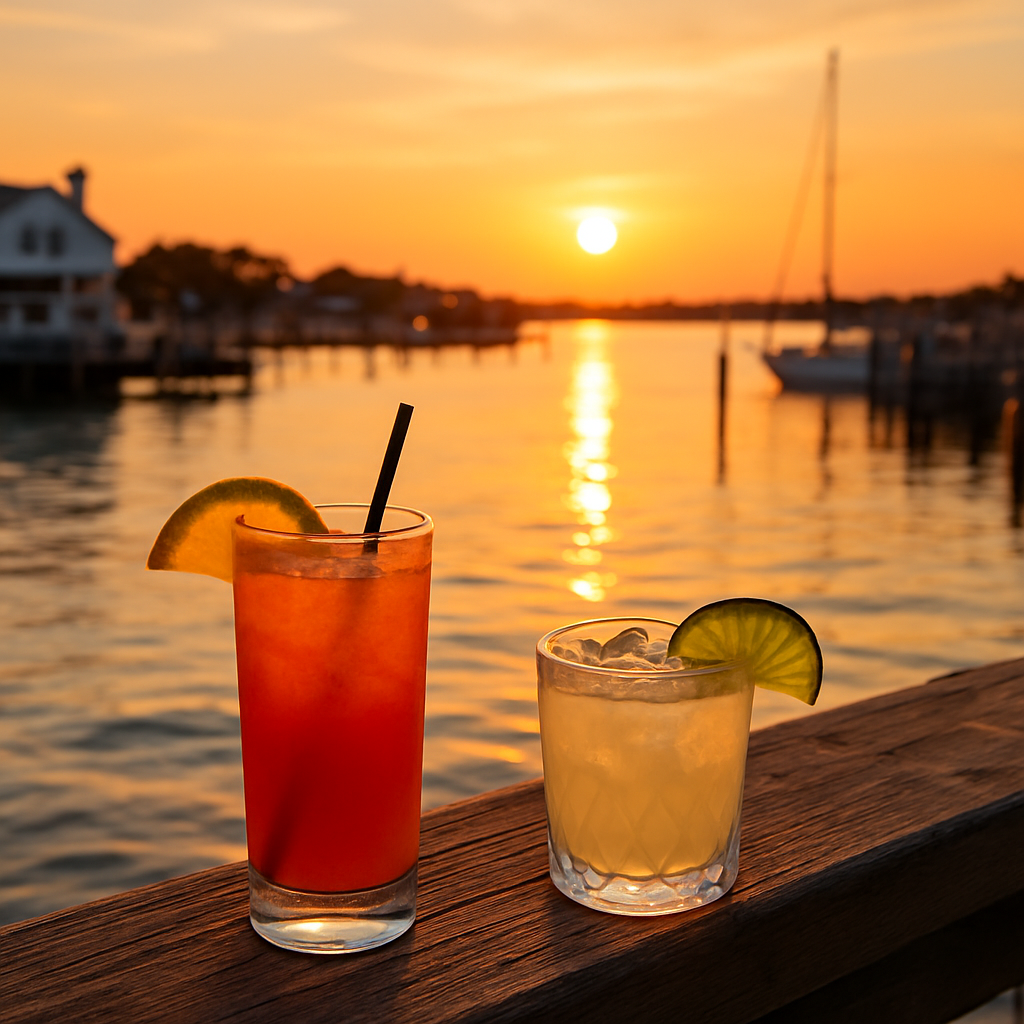
Low Tea at Pines Harbor
Show up at the Blue Whale around 5 PM, drink in hand, and let the afternoon find you. Low Tea is the daily social ritual that anchors Fire Island Pines — the ferry arrivals, the sunburned beach crowd filtering in, the golden hour light bouncing off the Great South Bay. It's people-watching elevated to cultural tradition. Nobody rushes. The boats come in. The conversations overlap. Someone's always overdressed and someone's barely dressed at all. There's nothing like it, and it delivers exactly what it promises every single time.
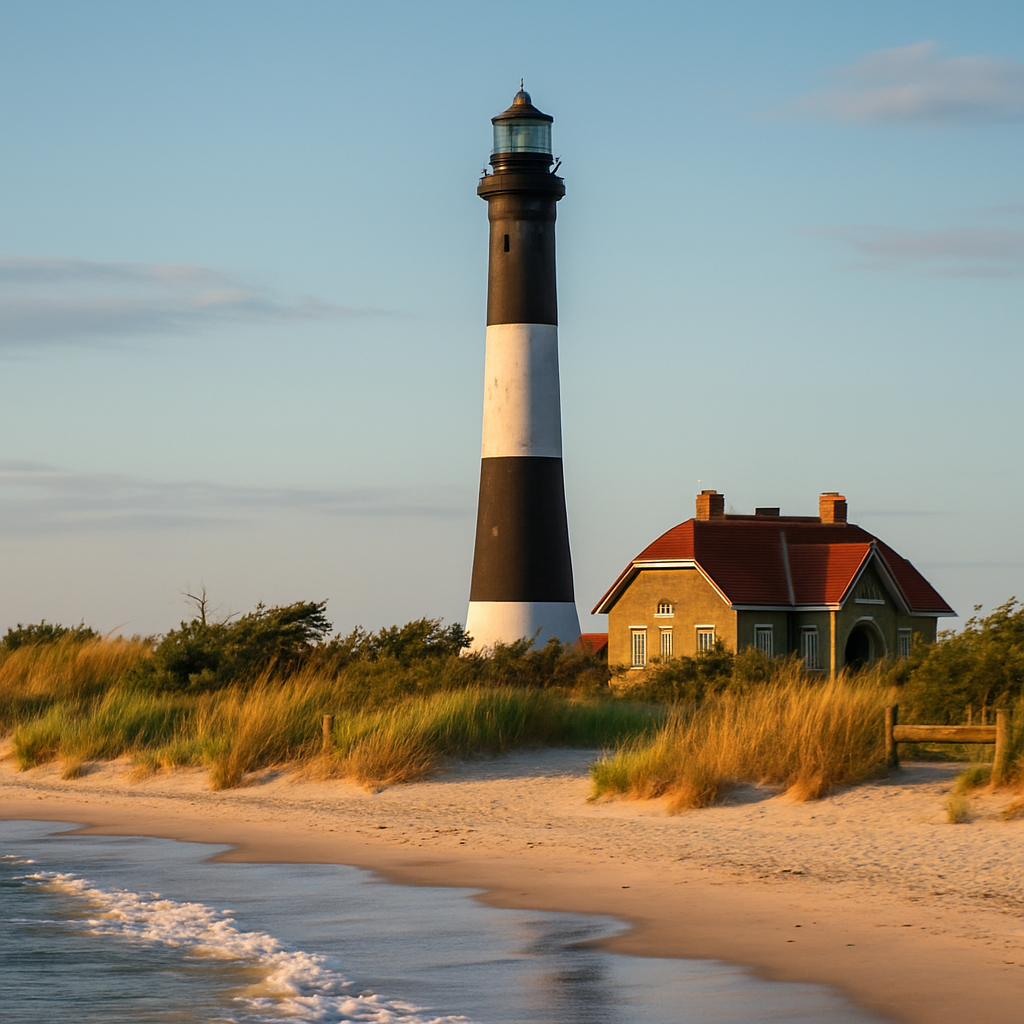
Hike to the Fire Island Lighthouse
The 168-foot brick lighthouse, built in 1858 and managed by the Fire Island Lighthouse Preservation Society, is visible from both Cherry Grove and the Pines — but walking to it is the real experience. The hike is longer than you'd expect through the Fire Island National Seashore, but standing at the base — or climbing the tower during seasonal open hours — you feel exactly how narrow and fragile this barrier island is. A strip of sand between the Atlantic and the Great South Bay, holding up entire communities by force of will and engineering. The perspective recalibrates everything.
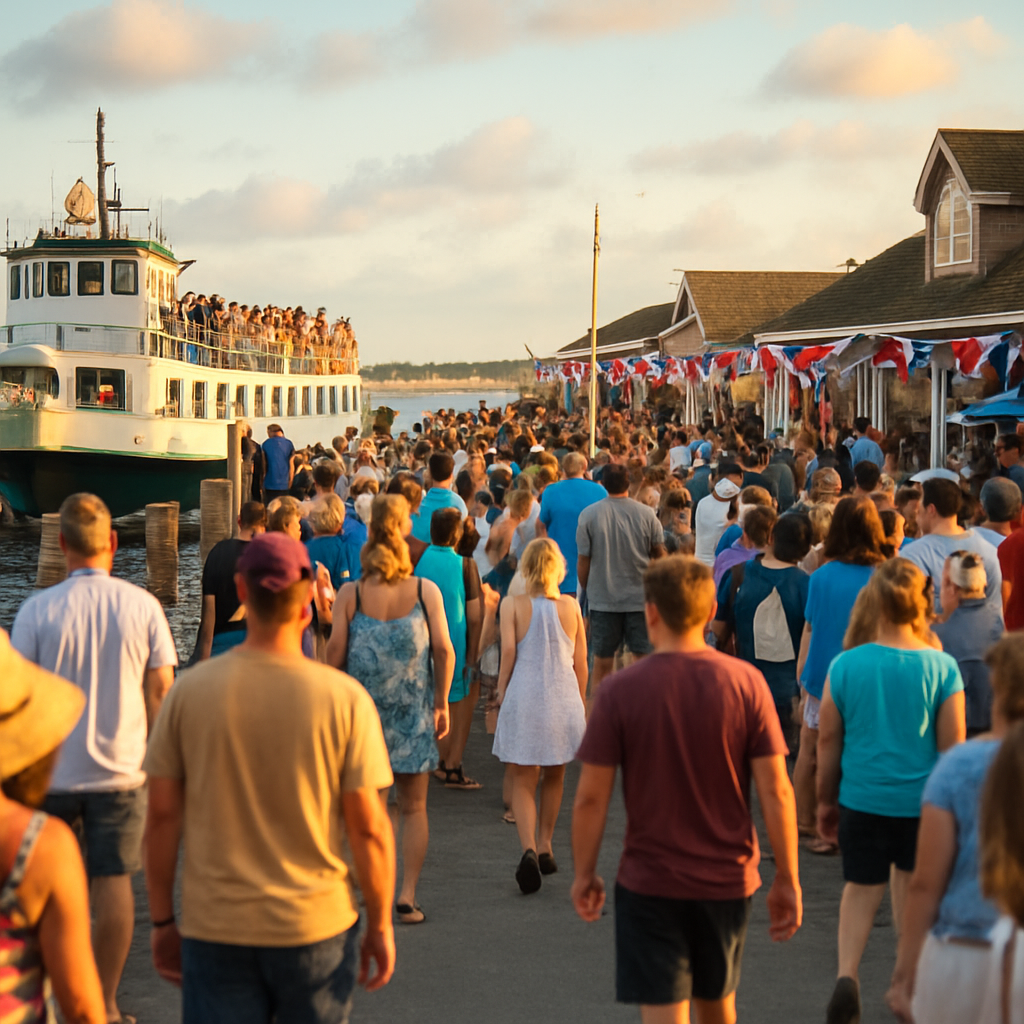
The Invasion of the Pines
Every July 4th weekend, drag queens from Cherry Grove board a ferry and "invade" Fire Island Pines harbor in full costume — a tradition born in 1976 when a Cherry Grove queen in drag was refused service at a Pines restaurant. What started as defiance became one of the most joyful acts of queer reclamation you'll ever witness. The harbor fills with spectators, the costumes are absurd and magnificent, and the energy is pure community pride without a corporate sponsor in sight. Block your calendar months in advance — accommodations for this weekend sell out by spring.
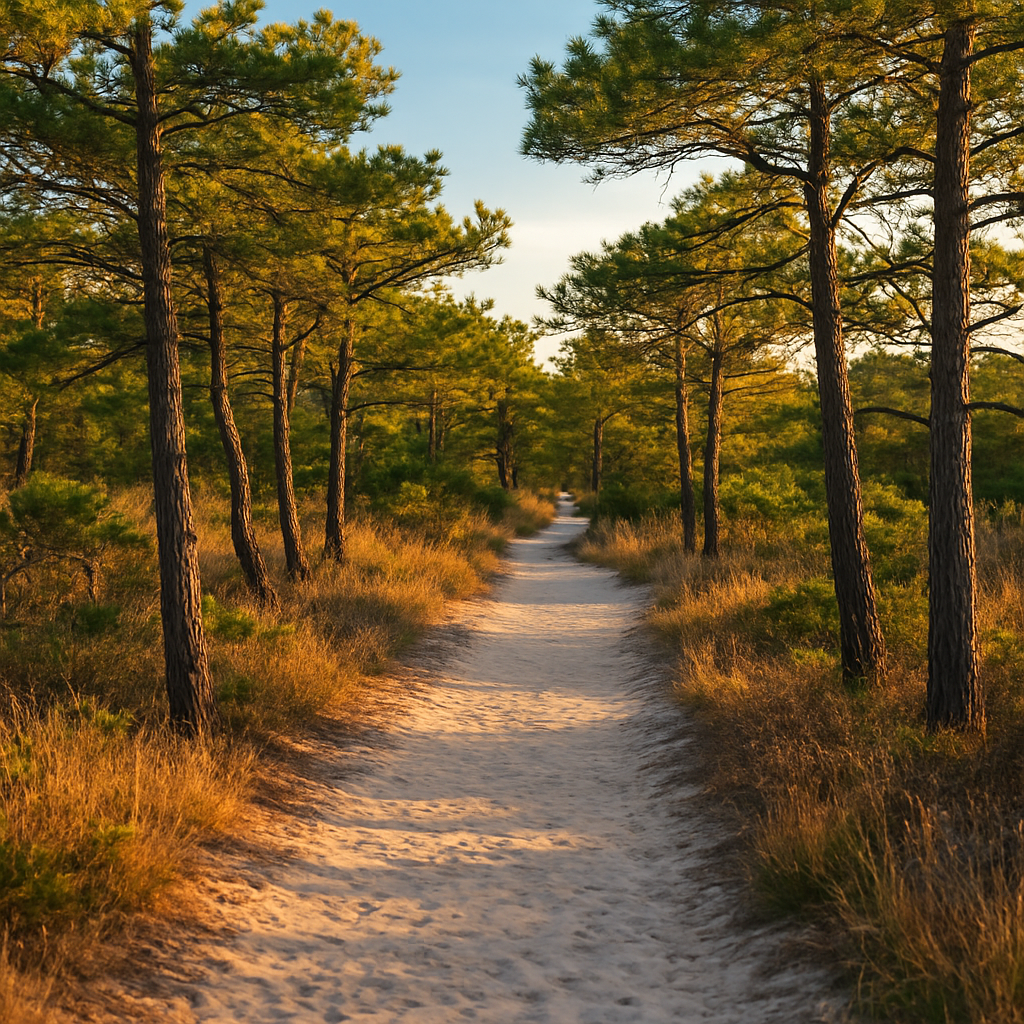
The Meat Rack at Golden Hour
Walk the 0.7-mile wooded trail between Cherry Grove and the Pines during late afternoon, when the light filters through scrub pine and holly and the sand path glows warm. Whatever you've heard about the Meat Rack after dark — and yes, it's all true — the daytime version is a genuinely striking coastal walk through Fire Island National Seashore that reminds you this is a wild barrier island, not a theme park. The landscape is raw, slightly overgrown, and beautiful in the way that undeveloped shoreline always is. You'll take this trail regardless, because it's the only walking route between the two communities. Do it at golden hour the first time.
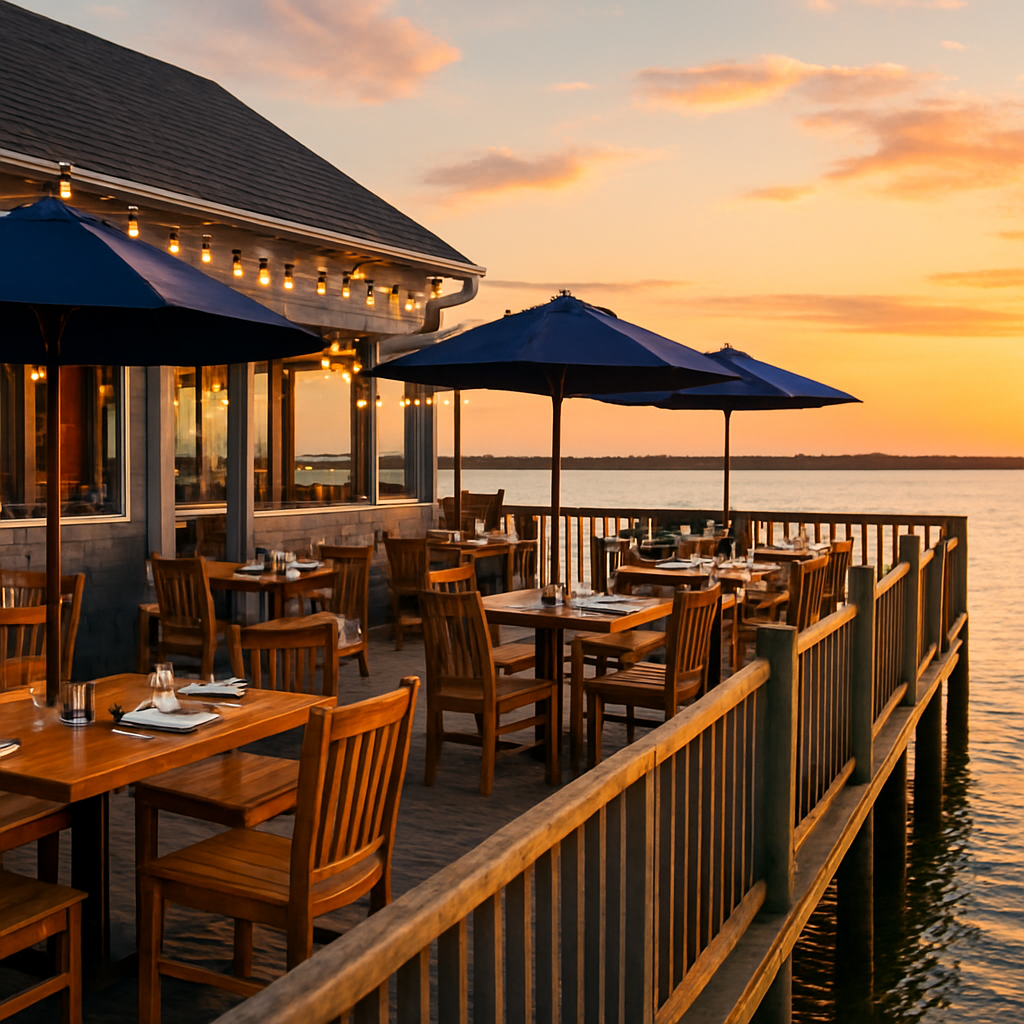
Sunset Seafood on the Bay in Ocean Beach
Grab a deck table at Island Mermaid as the sun drops over the Great South Bay and order whatever came off the boat that morning. Ocean Beach is the island's most accessible community — Main Street has actual shops, a grocery store, and a stretch of restaurants that serve straightforward seafood without the island attitude. The deck view at sunset, with the bay turning copper and the ferry cutting a wake in the middle distance, is one of those quiet Fire Island moments that doesn't make it into the party photos but stays with you longer. Pair it with a cold glass of something local and let the island slow you down.
The places I actually send people to
Advice that fits how you travel
Fire Island solo is one of the great unstructured social setups in the world for gay men — the daily rituals do all the work for you. Low Tea at the Blue Whale starts around 5 PM, and within thirty minutes of arriving you're standing next to strangers who are becoming familiar faces at a pace that doesn't happen anywhere else. The Pines harbor boardwalk, High Tea at The Pavilion, the ferry crossing from Sayville — every piece of the infrastructure pulls people into the same rhythm by afternoon. You don't need a house-share connection or a single person's number to feel embedded by day two. Show up, order a drink, and let the place operate on you.
The apps are active during season — Grindr and Scruff work exactly as advertised — but they're almost secondary to the physical reality of a community this concentrated and this small. After two days in Cherry Grove or the Pines, faces are familiar. By day three, you've been invited to something. The best solo entry point is the Pines for its structured social calendar and Tea Dance ritual; Cherry Grove rewards you with looser, more bohemian energy and a scene that skews slightly more mixed and artsy. Most solo travelers do both communities in the same trip — the water taxi between them runs $10 and takes ten minutes, or you walk the Meat Rack trail and feel like you've earned the second drink.
Budget solo is doable but requires lead time. The Botel at Fire Island Pines puts you inside the LGBTQ+ community for from $120/night — harbor-side, steps from the dock, the most accessible option that doesn't require a house-share connection. Ocean Beach Inn at from $110/night is cheaper still, with water taxi access to both communities. Pro tip: Rachel's Bakery in Ocean Beach is one of the few genuinely affordable breakfast options on this island — fuel up there before ferrying over to the Pines and you'll arrive with money still in your account. Solo travelers should also factor transportation carefully: the AirTrain to Jamaica plus LIRR to Sayville or Bay Shore plus ferry runs $25–$40 per person round-trip and is the obvious move from JFK.
The specific pleasure of Fire Island for same-sex couples is the complete absence of any calibration requirement. You hold hands on the boardwalk. You share a table at Cherry's on the Bay as the sun drops over the Great South Bay. You check into your guesthouse without any version of a second glance — because Cherry Grove and the Pines are communities built entirely by and for people like you, operating that way for over 80 years. That freedom changes the texture of a vacation in ways that are genuinely difficult to describe until you've spent three days somewhere it exists without condition.
The romantic infrastructure earns its reputation. My recommendation for the archetypal Fire Island couples afternoon: arrive at The Pines Harbor in time for Low Tea at the Blue Whale around 5 PM, stay as the harbor light turns gold and the ferry brings in the last wave of arrivals, then let High Tea at The Pavilion carry you into the evening without an agenda. For a proper dinner, the deck at Island Mermaid in Ocean Beach with the bay at sunset is one of the quieter pleasures on the island — it doesn't appear in the party photos, but it stays with you longer than most things that do. Cherry Grove couples: don't miss a late night at the Ice Palace, where the drag performances carry a lineage that stretches back to before Stonewall and feels like it.
For accommodation, couples in the Pines should look at Madison Fire Island Pines (from $300/night) for boutique proximity to everything that matters on the harbor, or The Botel (from $120/night) if budget is the governing variable — the location is essentially the same, the thread count is not. Cherry Grove couples wanting the full historical experience: Cherry Grove Beach Hotel (from $200/night) puts you oceanfront with the Ice Palace downstairs, which is either very convenient or slightly dangerous depending on your relationship with impulse decisions. Book peak weekends — July 4th Invasion weekend, Morning Party in August — in January. That is not a rhetorical flourish. The good rooms are gone by spring.
LGBTQ+ families visiting Fire Island have a cleaner choice than most destinations: the family-oriented communities — Ocean Beach, Saltaire, Dunewood — and the explicitly LGBTQ+-specific ones in Cherry Grove and the Pines. Both are worth knowing, but for families with kids, Ocean Beach is the practical anchor. There's a grocery store, a walkable Main Street restaurant strip, kid-friendly Atlantic beaches, and year-round ferry service from Bay Shore. Clegg's Hotel and Ocean Beach Inn give you lodging in the middle of it. Saltaire and Dunewood are quieter residential communities with excellent beaches and a politically progressive crowd that registers LGBTQ+ families as completely routine — which, on Fire Island, they are.
As of 2026, New York State provides full legal recognition for LGBTQ+ families across the board — marriage equality, adoption rights for same-sex couples, and comprehensive anti-discrimination protections covering housing, employment, and public accommodations. Two-parent families of any configuration are legally recognized without caveat. On the ground, the family communities on Fire Island are welcoming in the way that progressive Long Island summer towns are welcoming: genuinely, without performance, and without making you feel like an ambassador for anything. Two dads with a kid in a wagon on Main Street in Ocean Beach is a Tuesday.
Practical logistics are the real preparation here. There are no cars anywhere on Fire Island — the wooden boardwalk infrastructure that makes the island charming also makes standard strollers impractical. Rent a wagon at the ferry terminal or in Ocean Beach (roughly $20–$30/day) — this is the island's universal cargo solution, and your kids will want to ride in it, which solves the walking problem entirely. Ferries from Bay Shore to Ocean Beach run approximately 30 minutes and are a genuine experience for kids who've never been on a boat with nowhere to be. Bring sunscreen, snacks, and any specialty items from the mainland — Ocean Beach has a grocery store, but island pricing will remind you that you're at the end of a supply chain. Budget families should pencil in around $460–$560/day for a family of four at the modest end, with food costs dropping meaningfully if you're self-catering from that grocery store rather than eating every meal out.
What Fire Island actually costs
Flights, visas, and the first 30 minutes
Getting to Fire Island is a journey in itself — and I mean that as a compliment. There are no cars on the island, no bridges connecting you to the mainland, and no way in except by boat. That friction is the point. The moment you step off the ferry and onto a wooden boardwalk, the city falls off your shoulders.
From JFK: Take the AirTrain to Jamaica Station, then the Long Island Rail Road (LIRR) to Bay Shore or Sayville. From Bay Shore, ferries run to Cherry Grove and Fire Island Pines; from Sayville, the ferry serves Cherry Grove and the Pines directly. Total journey: roughly 1 hour 45 minutes to 2 hours 15 minutes, and the cost runs $25–$40 per person including the ferry. This is the standard route and the one most people take.
Smarter option if routing allows: Long Island MacArthur Airport (ISP) is only 8 miles from the Bay Shore ferry terminal. If you can get a flight into ISP, a $10–$15 taxi to the terminal plus the ferry puts you on the island faster and cheaper than JFK. Limited flight options, but worth checking.
Driving: You can drive to the mainland ferry terminals — Bay Shore or Sayville — but your car stays there. Terminal parking runs $15–$25/day. Rideshare to the terminal plus the ferry will run $80–$130 plus the crossing. If you want door-to-dock private service, water taxis run from south shore marinas at $250–$400 total.
Visa requirements as of 2026: US citizens need no documentation beyond a valid ID. Most international travelers enter the US under the Visa Waiver Program (ESTA) — this applies to UK, Australian, and most EU nationals. Apply at esta.cbp.dhs.gov before travel; the fee is $21 and authorization is typically valid for two years. Canadian citizens are generally exempt from ESTA but typically need a valid passport for US entry. Non-VWP nationals will need to apply for a US visa in advance — check the US Embassy in your country for current processing times.
Pro tip: Check the ferry schedule before you do anything else. Bay Shore ferries are operated by Fire Island Ferries; Sayville ferries run via Sayville Ferry Service. Both publish seasonal schedules online. Missing the last boat is a Fire Island rite of passage that nobody talks about proudly — a 1 AM rideshare to a mainland hotel will remind you why the schedule exists.
Traven's seasonal breakdown
The questions everyone asks
How do I actually get to Fire Island?
Is it safe to hold hands and show affection?
Do I need a house share, or can I book a hotel?
How much should I budget per day?
Can I visit Fire Island outside of summer?
What's the difference between Cherry Grove and the Pines?
Is Fire Island welcoming for LGBTQ+ families with kids?
Screenshot this before you go
So should you actually go?
Go. Fire Island isn't a vacation — it's a pilgrimage to one of the few places on earth where LGBTQ+ people have been the majority for nearly a century, and the result is a freedom so complete it recalibrates what you thought was possible. Yes, the season is short. Yes, the logistics require effort. Yes, your wallet will notice. But stepping off that ferry into a car-free, boardwalk-connected community where the social norms were set by us — where the gays aren't welcomed because the gays built the whole thing — is an experience no other destination on earth replicates. Cherry Grove for the soul, the Pines for the spectacle, and the trail between them for everything in between. Plan early, pack light, check the ferry schedule, and let yourself exhale for the first time in a long time.
Sources & Resources
Official links we reference when compiling this guide. Last verified 2026-03-17.