
Houston doesn't zone, doesn't apologize, and doesn't slow down — it just hands you a frozen drink on a Pacific Street patio at 3pm and lets you figure out the rest.
It's a Sunday afternoon on the patio at JR's, somewhere past 3pm, and the frozen drink in your hand is sweating faster than you are. The crowd has been there since two — that's the rule on Pacific Street — and a guy in a tank top is explaining to a couple visiting from Chicago why Westheimer is the only street in America where a leather bar, a James Beard winner, and a 24-hour kolache shop can sit on the same block. He's right. The Bayou City doesn't care about urban planning, and that turns out to be one of the best things about it.
Houston is the fourth-largest city in the country, one of the most demographically diverse, and home to a gay neighborhood that's been doing this since the 1970s. Montrose isn't a marketing campaign — it's a flat, oak-shaded patchwork of bungalows and bars and free museums (the Menil Collection, the Rothko Chapel, the Contemporary Arts Museum) where same-sex couples hold hands on Westheimer without anyone clocking it. I gave it an 8.0 on Scene because between JR's, South Beach, Numbers, the Ripcord, Pearl Bar on Washington Avenue, and an actual LGBTQ+ country-western dancehall called Neon Boots, this city has more functioning queer infrastructure than places twice its coastal cachet.
The reason my Traven-Dex landed at 6.9 and not higher is the state. As of 2026, Texas has spent several years passing some of the most aggressive anti-trans legislation in the country, and Houston's own HERO ordinance was repealed by voters back in 2015. That gap — between what's happening in Austin and what's actually enforced inside the Loop — is the asterisk on every trip here. The community response has been remarkable: organizing, mutual aid, and the kind of defiant Friday-night joy that makes Montrose feel more alive than most American gayborhoods on a good night. But you should know what you're walking into, especially if you're trans or non-binary.
What you'll remember isn't the politics. It's a mole flight at Xochi. The bats flying out from under the Waugh Drive Bridge over Buffalo Bayou at sunset. Hugo Ortega's Sunday brunch on Westheimer after twenty-plus years of him cooking in the gay village. A 2am kolache after last call at South Beach. Houston doesn't have New York's coastal swagger or LA's polish, and it has zero interest in pretending otherwise. It invented its own rules, and if you give it a weekend, you'll understand why so many of the gays who land in H-Town never leave.
The stuff your travel guide buries on page 47
Same-sex marriage is legal nationwide and federally protected under the Respect for Marriage Act, and joint adoption by same-sex couples is recognized in Texas. As of 2026, that's where the good news on paper largely ends. Texas has no statewide employment or housing nondiscrimination protections covering sexual orientation or gender identity, and Houston's local HERO ordinance was repealed by voters back in 2015. Federal employment protections under Bostock still apply, but the gap between Houston's lived reality and the state's posture is wide.
For trans and non-binary travelers, the legal picture is harder. Texas has passed sweeping anti-trans legislation since 2021 — SB 14 banning gender-affirming care for minors, restrictions on restroom access in some public buildings, and an attorney general's office that has been openly hostile to gender marker changes. None of this directly criminalizes adult travelers, but it shapes the climate. A reader wrote in to point out that Houston has city-level nondiscrimination protections for municipal employees and that Harris County officials have pushed back on certain state-level restrictions — worth knowing the distinction between what's happening in Austin and what's actually enforced inside the Loop. For current legislative tracking and rights guidance, Equality Texas is the authoritative source, and Transgender Education Network of Texas is the one I'd bookmark before any trip.
Culturally, Houston is the fourth-largest city in the country and one of the most demographically diverse in America — that matters. Montrose, Midtown, and The Heights are essentially gay-normal: PDA there is unremarkable. Outside the Loop — Katy, Pearland, Sugar Land, The Woodlands — read the room. The city is enormous and a rideshare is non-negotiable; everything in Montrose is walkable once you're there, but 'there' is about 20 minutes from most downtown hotels.
Pro tip: June Pride in Houston is massive and punishingly hot — surface-of-the-sun hot. Locals start hydrating three days in advance.
What it actually feels like on the ground
Holding hands and PDA: On Westheimer through Montrose, in Midtown, and across the Museum District, same-sex couples can hold hands without a second glance. A community member put it well: the blocks around JR's and South Beach on weekend nights are busy, well-lit, and have steady foot traffic until well past 2am. Once you cross Loop 610 into the outer suburbs, dial it back — what registers as nothing on Westheimer can pull stares in Katy or Pasadena.
Hotel check-in: Same-sex couples should expect zero friction at any of the major downtown, Museum District, or Galleria properties. Hyatt and Marriott both score 100 on the HRC Corporate Equality Index and train staff accordingly. I've never heard a complaint at the front desk in Houston — and I'd hear about it.
Taxis and rideshares: Uber and Lyft are how this city moves. Rides are typically uneventful. Book your ride home before last call at 2am — parking near the Pacific Street bar cluster is limited, and the late-night walk to a far-flung car is where most problems occur. Surge pricing is real but cheaper than the alternative.
Beaches and outdoor spaces: Buffalo Bayou Park and Hermann Park are generally relaxed during the day with a mixed crowd. Galveston beaches an hour south are tolerant rather than celebratory — fine for couples, slightly more discretion useful at the family-heavy stretches.
Late night: Pacific Street and the Westheimer corridor are the most queer-normalized blocks in the city after dark — stick to those clusters, walk in groups, and you're in good shape. Avoid wandering into adjacent industrial blocks alone.
Trans travelers: The state's legal climate is openly hostile, but at street level Montrose and Midtown are comparatively welcoming, and the Montrose Center remains one of the best-resourced LGBTQ+ community spaces in the South. For affirming healthcare including PrEP, HIV services, and trans care, Legacy Community Health has multiple Houston locations on sliding-scale fees and doesn't require insurance — their Montrose-area clinic is the most community-embedded option. Bathroom access in private businesses inside the Loop is generally a non-issue; in state and government buildings, the rules have shifted, so know your route.
Verbal harassment: Inside the Loop, low-level and rare. Outside it, possible but typically not escalating. The relationship between HPD and the community was badly damaged by the 1983 Montrose bar raids and has improved unevenly since; the department now maintains an LGBTQ+ Advisory Board, but if you have an incident and want non-police support, Lone Star Legal Aid is a free legal services option.
The queer geography
Montrose
Montrose is the gravitational center of any queer trip to Houston — a flat, walkable, oak-shaded patchwork of bungalows, mid-century apartment buildings, and one of the most aggressively unzoned commercial strips in America. Westheimer Road cuts through it, and locals say 'meet me on Westheimer' the way New Yorkers say 'the Village.' A taqueria, a tattoo shop, a James Beard winner, and a leather bar can occupy the same block — and frequently do. The neighborhood houses the Menil Collection (free, and one of the best small museums in the country), the Rothko Chapel, the Contemporary Arts Museum Houston, and the Brazos Bookstore, all within a short walk of each other.
The LGBTQ+ scene clusters along Pacific Street just off Westheimer — JR's, South Beach, and Meteor are all within stumbling distance, which is essentially the whole point. The Montrose Center on Dunlavy has been anchoring the community since 1978 and runs drop-in groups and events open to visitors. Pro tip: Sunday Funday on JR's patio is serious infrastructure — show up before 2pm if you want a spot at the rail.
Midtown
Just east of Montrose, Midtown is where the energy spills over — a denser, younger, more recently built bar and restaurant strip running roughly along Bagby and Travis Streets. This is where Pride Houston stages its annual June parade (info at Pride Houston), drawing hundreds of thousands of people in heat that ought to be illegal. Day-to-day, it's brunch crowds, rooftop happy hours, and a steady stream of mid-twenties professionals. The Breakfast Klub on Travis is a Houston institution — order the wings and waffles and accept the line.
The Heights
North of downtown, The Heights is a turn-of-the-century streetcar suburb with Victorian bungalows, restored craftsman homes, and one of the best independent restaurant scenes in the city — Coltivare's kitchen garden on a spring evening is a genuinely lovely thing. The Second Saturday art market on 19th Street is the kind of neighborhood event you stumble into and stay at for three hours. Not a queer-coded neighborhood per se, but a substantial LGBTQ+ residential population and a relaxed, broadly welcoming feel make it an easy place to spend a day.
Museum District
South of Montrose around Hermann Park, the Museum District packs roughly 19 institutions into a walkable cluster — the Museum of Fine Arts Houston, the Holocaust Museum Houston, the Health Museum, and the Children's Museum among them. The architecture skews modernist, the live oaks are enormous, and on a March or November weekend it's one of the best urban walks in Texas. The neighborhood backs up to Montrose, so you can spend a morning at MFAH and be on a Westheimer patio by 2pm without ever getting in a car.
Washington Avenue Corridor
West of downtown, the Washington Avenue Corridor is Houston's primary straight-leaning bar strip, but it's also home to Pearl Bar — the city's dedicated lesbian bar and genuinely excellent, with strong drinks and a patio that makes everything better. Don't treat it as a secondary option. For affirming healthcare while you're in town, Legacy Community Health has clinics scattered across these inner neighborhoods and is the resource I'd point any queer traveler toward.
The experiences worth rearranging your itinerary for
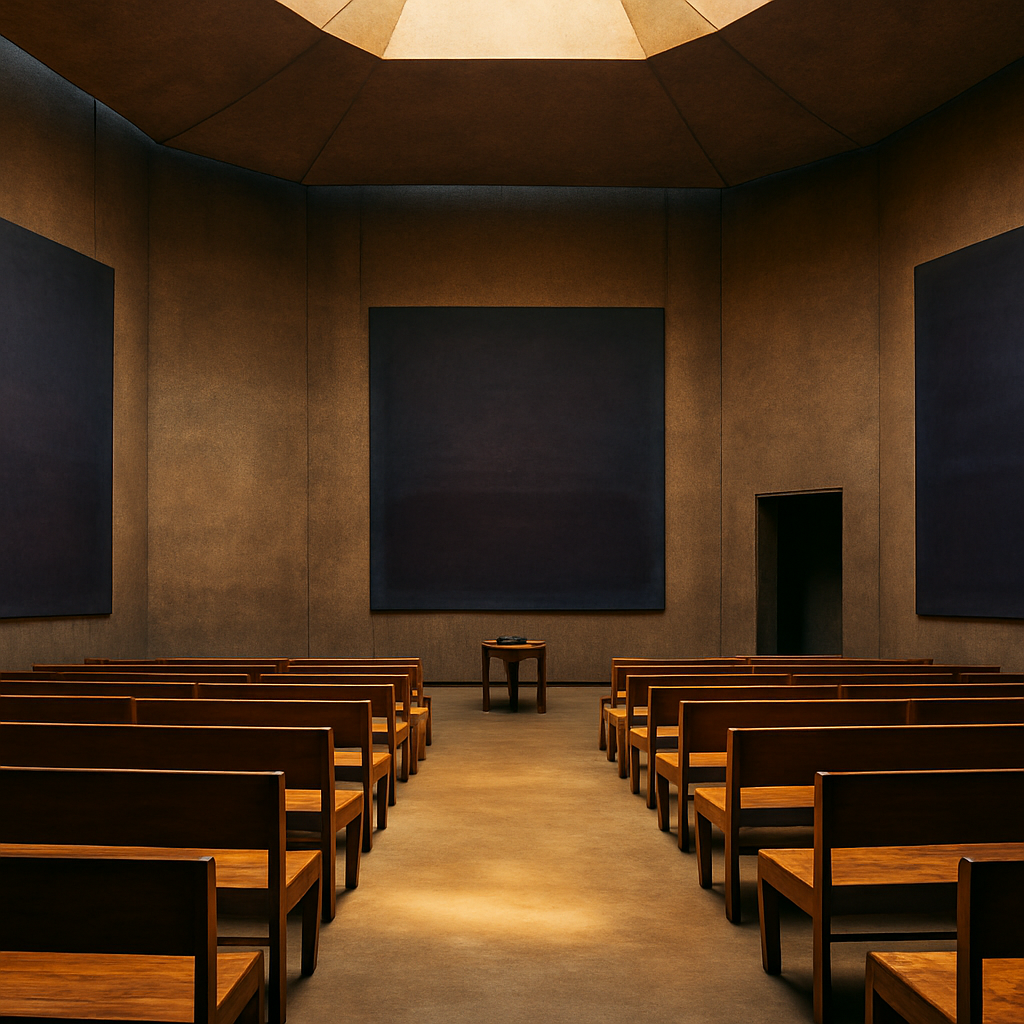
The Menil Collection and Rothko Chapel
Spend a slow morning on the Menil campus — 17,000 works in a Renzo Piano building, all free, all yours. Walk the few blocks to the Rothko Chapel next, fourteen Rothkos in a nondenominational room that quiets a city this loud. Go before 11am, before the heat hardens and the tour groups roll in, and bring nothing but yourself.
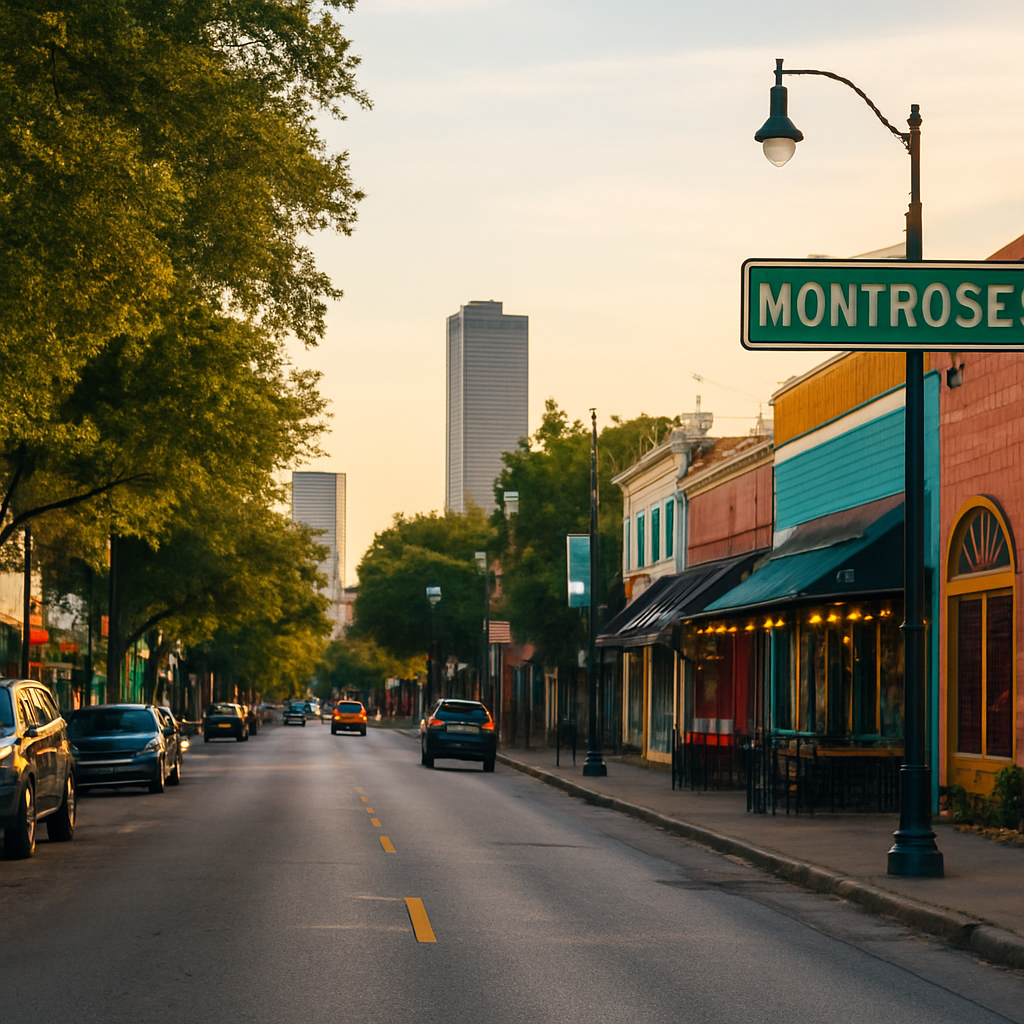
A Walk Down Westheimer
Westheimer Road through Montrose is the most aggressively unzoned commercial strip in America, and that's the appeal. A taqueria, a tattoo shop, a James Beard winner, a vintage store, and a leather bar can — and do — sit on the same block. Start at Brazos Bookstore, walk east, eat what looks good, stop at whatever bar has the door propped open. This is how locals spend a Saturday.
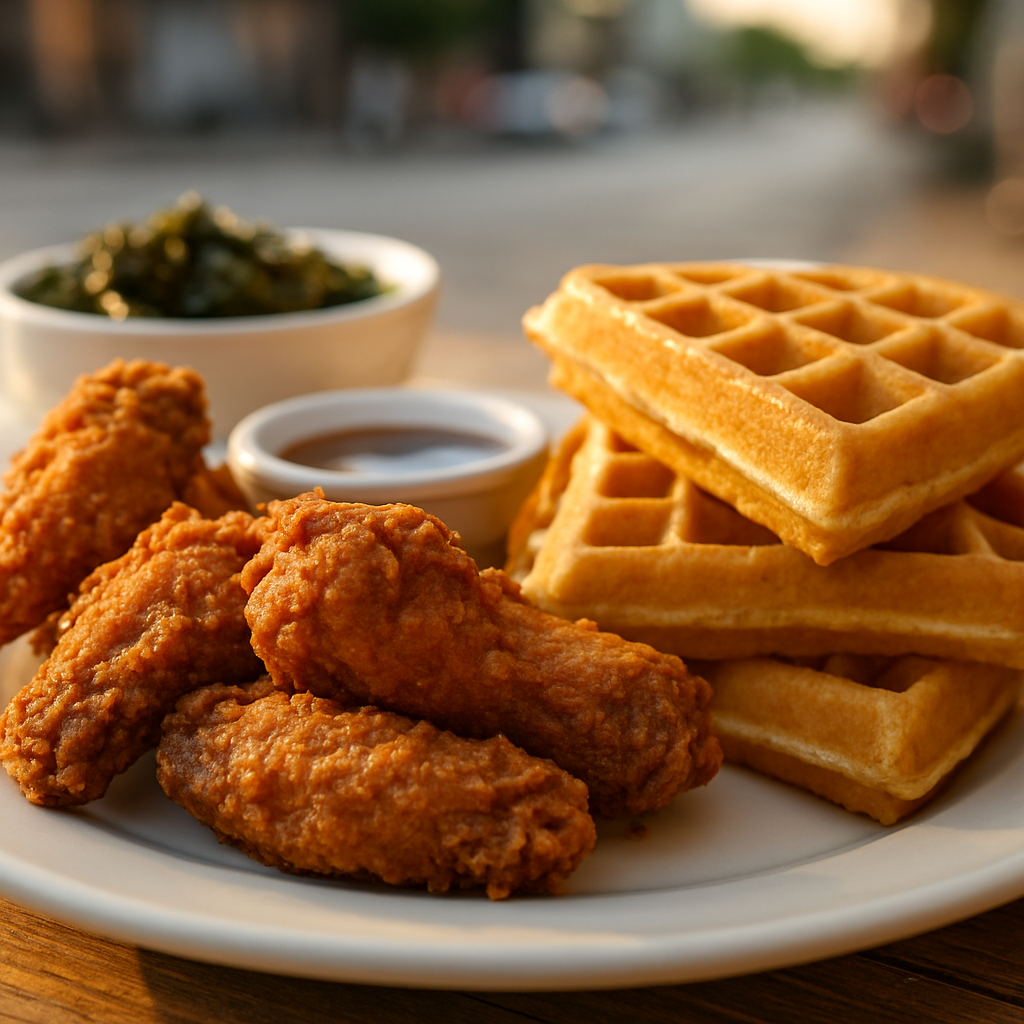
Wings and Waffles at The Breakfast Klub
Marcus Davis opened the doors in 2001 and the line still wraps around the building most weekend mornings. Wings and waffles is the order — yes, together — and the queue is part of the deal. Show up before 10am, accept the wait, and watch one of the most genuine cross-sections of Houston walk through the door while you eat.
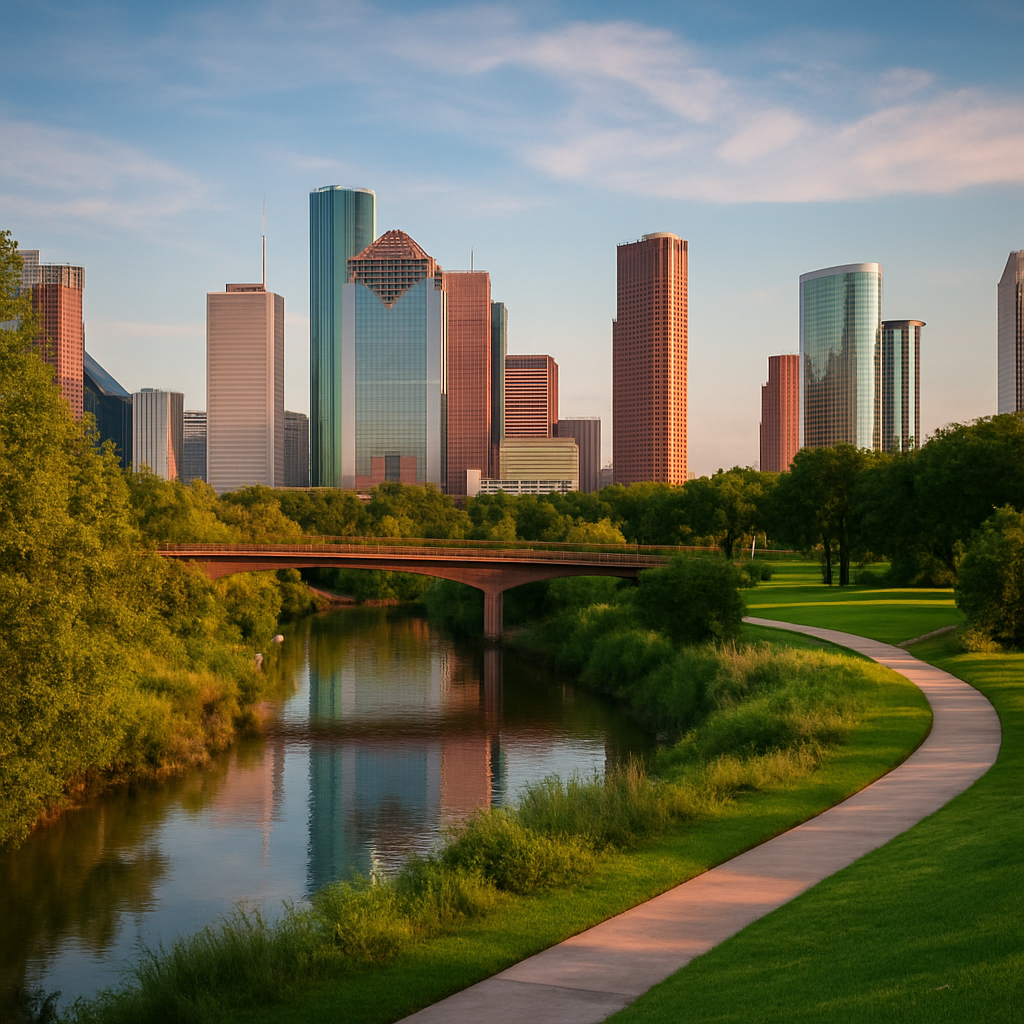
Buffalo Bayou Park at Golden Hour
Buffalo Bayou Park runs along the northern edge of Montrose and gives you the only proper Houston skyline view that doesn't involve a parking garage. Walk or bike the trail late afternoon, watch the bats fly out from under the Waugh Drive Bridge at sunset (yes, really), and grab a drink in Montrose afterward. Pro tip: skip this one in July and August — the heat will end you.
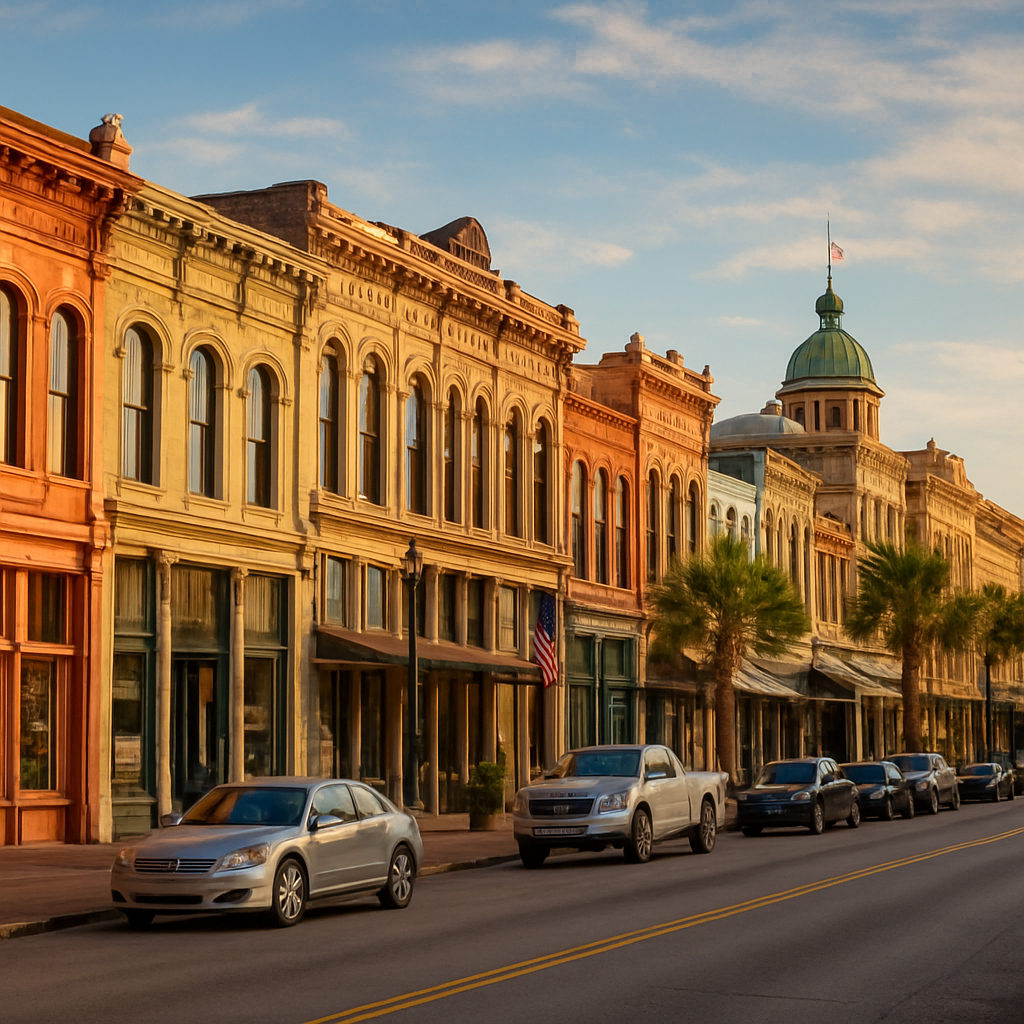
Galveston Day Trip
Fifty miles south, an hour in light traffic — Galveston's Strand District is full of Victorian commercial architecture, the seawall is good for a long aimless walk, and the Gulf is right there. The beach isn't the Caribbean, but it's the closest saltwater you've got, and a day trip resets the entire tempo of a Houston visit.
The places I actually send people to
Advice that fits how you travel
Houston rewards solo travelers who actually want to meet people — and in Montrose, that's not hard. The JR's patio on a Sunday afternoon is essentially a standing invitation: show up, find a spot at the rail, order something frozen, and within an hour you'll have three opinions on where to eat dinner. The apps run well here — Grindr and Scruff both have active user bases, and the city is large enough that you're not exhausting the pool by Tuesday — but the organic energy of the bar strip means you don't need to live on your phone to connect. There's a warmth to the Pacific Street crowd that a lot of big cities don't bother manufacturing.
Budget-wise, solo travelers have a real advantage. The Houston International Hostel in the Museum District puts you half a mile from Montrose for $28 a night — there's no cheaper way to sleep this close to the scene. Food is enormous and affordable: a full Tex-Mex meal on Westheimer runs $15–$20, wings and waffles at The Breakfast Klub are under $15, and a kolache at a 24-hour shop at 2am costs under $3. The Menil Collection and the Contemporary Arts Museum Houston are both free. You can have a legitimately full day in this city for $40 outside your accommodation without trying hard.
One practical note: book your rideshare home before last call at 2am. Parking near the Pacific Street bar cluster is limited, and the late-night walk to a far-flung car is where most problems occur. Stay on lit streets in the bar corridor and you'll be fine. The Montrose Center runs social events and drop-in programs open to visitors — worth checking their calendar if you want to connect somewhere beyond the bar scene.
Same-sex couples in Houston have it better than the state headlines might suggest — inside Montrose and Midtown, PDA is fully normalized. You'll feel it immediately on Westheimer: rainbow crosswalks, hands held without a second look, a neighborhood that's been doing this comfortably since the 1970s. For accommodation, Hotel ZaZa in the Museum District is the call — boutique, independently owned, pool deck worth your afternoon, and Montrose half a mile away on foot. It's the best balance of style, price, and proximity in the city.
For a proper date night, Uchi on Westheimer is the move: James Beard-winning contemporary Japanese in the heart of the gay village, a room that reads quietly celebratory, and a sake list that rewards knowing what you're doing. If you want something more romantic and lower-key, Backstreet Café's garden patio on South Shepherd has been one of Houston's loveliest outdoor tables for over forty years — order the bistro menu and stay through the second bottle. For a morning together that costs nothing, the Rothko Chapel followed by a slow walk through the Menil campus is the kind of experience that lands differently with someone beside you.
Practical note for same-sex couples: Montrose and Midtown give you full comfort, but Houston is enormous. The outer suburbs — Katy, Sugar Land, The Woodlands — are conservative residential territory where basic discretion is worth applying. You won't encounter trouble in the city core, and the neighborhoods you'll most want to spend time in together are already completely at ease with you.
As of 2026, same-sex adoption is legally recognized in Texas, and LGBTQ+ families visiting Houston should encounter no issues with that status inside the city. The Museum District is where family Houston lives: the Houston Zoo inside Hermann Park, the Children's Museum, the Museum of Natural Science, and the Museum of Fine Arts Houston are all within a walkable cluster, and the scale here is human — it doesn't overwhelm the way bigger urban museum corridors can. The live oak canopy through Hermann Park alone makes a slow afternoon feel worth the trip.
The Menil Collection is free and genuinely navigable with kids — the galleries aren't crowded or cavernous, and the wide lawns outside double as natural breathing room. For meals, Lucille's in the Museum District serves American and Southern cooking that children and adults eat happily, with staff who make a family feel easy rather than stressful. The Breakfast Klub in Midtown is another reliable stop: wings and waffles, a buzzy community-restaurant energy, and portions built for sharing. Pro tip: arrive before 10am on weekends or accept the wait, which is honestly fine when there's plenty to watch while you're in line.
Practically, Houston is a car city — plan rideshares between neighborhoods and don't underestimate the distances. Strollers work fine in every museum and most restaurants. LGBTQ+ families with younger children will find the daytime cultural corridor genuinely welcoming; the Montrose bar strip does its own thing after dark, which is just good scheduling awareness rather than any real concern. For teenagers who want to connect with peers locally, Montrose Grace Place runs programming specifically for LGBTQ+ young people and their families — worth bookmarking before you arrive. And Legacy Community Health has family-care locations across the inner Loop with sliding-scale fees if anyone needs affirming healthcare during your visit.
What Houston actually costs
Flights, visas, and the first 30 minutes
Airport: Houston's main gateway is George Bush Intercontinental Airport (IAH), about 25 miles north of downtown and one of the better-connected airports in the country — United Airlines uses it as a major hub, which means nonstop options from most large US cities and a solid international network covering Latin America, Europe, and beyond. Approximately 160 direct routes in and out. For shorter domestic hauls, William P. Hobby Airport (HOU) handles Southwest-heavy traffic about 7 miles southeast of downtown and sits considerably closer to Montrose if your airline flies it.
Entry requirements: US citizens need no documentation beyond their boarding pass. As of 2026, Australian, Canadian, UK, and most EU passport holders typically qualify for the Visa Waiver Program and generally need an ESTA authorization before departure — apply through the official US Customs and Border Protection portal, it costs $21, and allow at least 72 hours. It's not a visa, it's an electronic authorization, and airlines won't let you board without it. If your passport is from outside the Visa Waiver Program, check with your nearest US embassy or consulate well before your travel dates.
Getting from IAH to the city: Count on 35–50 minutes in normal traffic. In Houston traffic, normal is a loose concept.
- Uber / Lyft — $35–$55, 35–50 min. The standard move and the most popular option. Surge pricing is real during major events — pre-book if you're landing on an Astros or Texans game day.
- Taxi — $65–$80, 35–50 min. Metered flat-rate zones with rush-hour surcharges. More predictable on price; useful on an expense account when you don't want to negotiate with surge pricing.
- Metro Bus 102 — $1.25, 60–90 min. Direct to the downtown transit center. Genuinely that cheap. Limited luggage space, not ideal late at night or with a full suitcase, but the math is the math.
Pro tip: if you're staying in Montrose or the Museum District rather than downtown, add another 10–15 minutes to all of the above. The city is enormous in ways that don't reveal themselves until you're in a rideshare watching the meter climb.
Traven's seasonal breakdown
The questions everyone asks
Is Houston safe for same-sex couples?
Do I need a car in Houston?
Where should I stay if I want to be near the gay scene?
When is the worst time to visit Houston?
Is it safe for trans travelers in Houston?
How much should I budget per day?
When is Houston Pride and is it worth planning around?
Screenshot this before you go
So should you actually go?
Go — with eyes open. Inside the Loop, Houston gives you a fully functional gay neighborhood with nearly fifty years of community work behind it, world-class food at every price point, and a Sunday Funday culture on the Pacific Street patios that earns the trip on its own. Outside the Loop, and statewide as of 2026, the legal climate is hostile in ways that matter — particularly for trans travelers, who deserve a clear-eyed read of where Texas actually stands before they book. None of that erases what's been built in Montrose; if anything, it makes the place feel more earned. Come for the food, the free museums, and the patios. Stay because the Bayou City is unselfconsciously itself in a way most American cities aren't anymore — and LGBTQ+ travelers who show up willing to meet it on its terms tend to leave already planning the next trip.
Sources & Resources
Official links we reference when compiling this guide. Last verified 2026-04-29.
- Equality Texas
- Legacy Community Health (LGBTQ+-affirming healthcare)
- Lone Star Legal Aid (free legal services, LGBTQ+ inclusive)
- Montrose Center (Houston LGBTQ+ Community Center)
- Montrose Grace Place (LGBTQ+ youth services)
- Pride Houston
- Texas Civil Rights Project (LGBTQ+ legal advocacy)
- Transgender Education Network of Texas (TENT)