
Kissimmee doesn't build a district — it builds a highway, hands you a plate of <em>lechón</em> at midnight on the 192, and trusts you to find the rest. Florida does subtext better than it thinks it does.
Kissimmee is a theme park suburb that accidentally became one of the most interesting LGBTQ+ destinations in the American South — not because it built a gay district or hung flags on lampposts, but because 150,000 people in red shirts show up every June and a majority-Puerto Rican community quietly made this corridor more welcoming than the state legislature ever intended. That tension — between Florida's political reality and Kissimmee's ground-level warmth — is the whole story here, and it's worth understanding before you book.
The 192 corridor is not going to seduce you with architecture or charm. It's strip malls and neon and pancake houses stretching from the Disney gates into the heart of Osceola County. But walk into El Tenampa for regional Mexican that has nothing to do with the tourist bubble, or sit lakefront at the Columbia Restaurant in Celebration while someone prepares a salad that's been on menus since 1905, and you start to understand what this place actually is beneath the highway sprawl. Kissimmee's identity is Latino, bilingual, and family-first — and that familia energy extends to the community in ways I didn't expect. My Traven-Dex of 6.9 reflects a city where the welcome is real but the infrastructure is uneven, and I think that's honest.
The scene here lives in Orlando — that's 25 minutes north on I-4, where Parliament House has been holding it down on Orange Blossom Trail since 1975. Kissimmee locals claim it as their own, and they should. I gave it a 7.8 on Scene because the Central Florida LGBTQ+ ecosystem is genuinely robust — it just doesn't live within Kissimmee's city limits. What does live here is Gay Days at Walt Disney World, an annual first-week-of-June gathering that started in 1991 and now draws an estimated 150,000+ attendees. Inside those Disney gates, same-sex couples are normal and normalized year-round. Outside them, you're navigating Florida — and the difference between the resort zones and the rural stretches of Osceola County is something you'll feel in your gut before anyone has to explain it.
The honest pitch is this: Kissimmee is a base camp, not a destination in the traditional sense. You're here for the parks, for Gay Days, for the affordability of the 192 corridor, and for the access to Orlando's actual gay infrastructure a short drive north. But if you look past the highway and into downtown — Kissimmee Lakefront Park at sunset, Toho Taproom on Monument Avenue, the slow revitalization of Broadway Avenue — there's a real town underneath, with a community that's more diverse and more welcoming than the Florida headlines would ever let you believe. It's not perfect. It's not tidy. But it's more interesting than it gets credit for.
The stuff your travel guide buries on page 47
Here's the legal picture: as of 2026, same-sex marriage, civil unions, and joint adoption are all legal in Florida — federal law ensures that. Anti-discrimination protections, though, are limited. Florida has no statewide law explicitly banning discrimination based on sexual orientation or gender identity in housing or public accommodations. Some municipalities and counties have local ordinances, but Osceola County's protections are patchy. Equality Florida maintains the most current breakdown of what's protected where — bookmark them before you travel, because Florida law shifts frequently and their guidance is genuinely authoritative.
Gender identity law in Florida requires medical documentation for legal gender marker changes. More critically, the state has enacted a wave of legislation restricting gender-affirming care, particularly for minors, and imposing bathroom-use requirements tied to sex assigned at birth. Trans travelers should research current statutes before arriving — what's on the books today may not be what's on the books next month. Florida Legal Services offers LGBTQ+-specific legal aid if you need it.
Now, the cultural reality on the ground. Florida's state-level politics make headlines, but Kissimmee's demographics tell a different story. Osceola County is majority Hispanic — heavily Puerto Rican — and reliably blue in local elections. The day-to-day street energy is considerably more welcoming than the state capitol would suggest. That said, the more rural pockets of Osceola County lean conservative, and conspicuous same-sex affection outside tourist zones and downtown may draw attention you didn't ask for.
The theme park resort zones — Walt Disney World, Universal, the I-Drive corridor — operate as their own cultural ecosystem. Disney in particular has a documented history of LGBTQ+ employee benefits, an internal PRIDE network, and a consistent track record on the HRC Corporate Equality Index. Inside those gates, same-sex couples are normal and normalized. Outside them, you're in Florida, and the usual read-the-room awareness applies.
Pro tip: If you're planning around Gay Days in early June, book your US-192 hotel a full year in advance. The Rosen Inn International is the traditional headquarters hotel and sells out first. Plan like you're going to Coachella, not a spontaneous theme park trip.
For LGBTQ+ young people or families relocating to the area, ALSO Youth serves Osceola County directly and is genuinely community-embedded — they're a smart first call if you need to plug into local networks.
What it actually feels like on the ground
Holding hands — theme parks and resort zones. At Walt Disney World, Universal Orlando, and the I-Drive corridor, same-sex couples holding hands is common and unremarkable. Disney parks during Gay Days in June are wall-to-wall red shirts and open affection. Year-round, cast members and staff are trained, and the environment is actively welcoming. You won't get a second glance.
Holding hands — downtown Kissimmee and the 192. Downtown Kissimmee around Broadway Avenue and the Lakefront is relaxed and increasingly comfortable — same-sex couples strolling the waterfront don't generate second looks. The US-192 tourist strip is similarly unfazed; it has seen absolutely everything. Outside these zones, in the more residential and rural stretches of Osceola County, exercise judgment. You're unlikely to face confrontation, but you may draw stares.
Hotel check-in. Major chain hotels on the 192 corridor and around the parks — Marriott, IHG, Wyndham, Disney-managed properties — all operate under corporate LGBTQ+ non-discrimination policies. Requesting a king bed as a same-sex couple is routine. Smaller independent motels on the budget end of the 192 are generally fine, but the warmth of the welcome varies with the individual at the desk.
Rideshares and taxis. Uber and Lyft drivers in Central Florida are overwhelmingly professional and used to the tourist trade. No significant community reports of issues for same-sex couples. If you're driving back from Orlando nightlife on OBT late at night, stay alert — it's a long commercial strip with variable lighting and heavy traffic. A rideshare from the Parliament House back to a 192 hotel is the significantly smarter call after midnight.
Trans travelers. I need to be direct here. Florida's active anti-trans legislation — bathroom restrictions, limits on gender-affirming care, documentation requirements — creates real legal and social risk. The major theme park zones are more insulated; Disney and Universal staff are trained and generally welcoming. But outside resort property, you're subject to state law. Carry documentation. Research current statutes before travel. Equality Florida maintains the most current guidance, and Planned Parenthood Southwest & Central Florida can assist with healthcare access if needed.
Verbal harassment. Rare in tourist zones and downtown. The theme park corridor is built to process millions of diverse visitors a year — staff intervention is quick if anything occurs. Rural and exurban Osceola County carries a slightly higher risk of verbal commentary, particularly for visibly gender-nonconforming travelers. Trust your instincts.
Late night. Kissimmee itself is not a late-night town. After 11pm, the 192 gets quiet. If you're out late, you're almost certainly in Orlando — and the drive or rideshare back is straightforward. The Pulse Interim Memorial in Orlando, about 25 minutes from central Kissimmee, is a meaningful and often quietly emotional visit. It is not a tourist attraction; it is a community site, and it deserves to be approached as one.
Pro tip: Keep Florida Legal Services bookmarked on your phone. If you encounter any legal issue related to your identity during your stay, they offer LGBTQ+-specific aid and can advise quickly.
The queer geography
The US-192 Corridor (Irlo Bronson Memorial Highway)
This is the main artery of Kissimmee's tourist life — a long, sprawling commercial strip running from the Walt Disney World gates eastward through the heart of Osceola County. It's not pretty in the traditional sense. It's strip malls, neon-lit motels, pancake houses, and chain restaurants punctuated by the occasional independent gem. But the 192 is where Kissimmee actually happens. During Gay Days in early June, this strip transforms: every hotel lobby, pool deck, and parking lot becomes part of an unofficial Pride gathering that draws over 150,000 people. The rest of the year, the corridor serves Kissimmee's large Puerto Rican and Latino communities, and the food reflects it — lechón asado, mofongo, and family-run Mexican spots like El Tenampa that serve real regional cuisine, not tourist Tex-Mex.
Old Town sits right on the 192 — a retro-Americana entertainment complex that's been operating since 1986. It has a campy charm that LGBTQ+ visitors tend to enjoy first ironically and then genuinely. Saturday night classic car cruises draw a mixed, relaxed crowd, and the overall energy is considerably more fun than the concept sounds on paper.
Downtown Kissimmee & the Lakefront
Downtown Kissimmee is undergoing a slow, interesting transformation. Broadway Avenue and the surrounding blocks have a growing independent bar and restaurant corridor — Toho Taproom on Monument Avenue pours craft beer to a mixed local crowd in what feels like a neighborhood that's finding its identity. The architecture is low-rise Florida vernacular, nothing dramatic, but the street energy is genuine. This isn't a tourist zone; it's where people who live here actually eat and drink.
The real draw is Kissimmee Lakefront Park on Lake Tohopekaliga — a mile of waterfront with an amphitheater, marina, splash pad, and walking paths. At sunset, it's quietly lovely. The park has hosted community events organized by Osceola County LGBTQ+ organizations, and the space has a reliable, welcoming vibe. The lakefront bar and grill offers outdoor seating with water views and a diverse local clientele that includes Kissimmee's significant Caribbean and Latino communities.
Celebration
Celebration is strange, and I mean that as a compliment. A master-planned town developed by The Walt Disney Company and completed in 1996, it looks like a movie set of an idealized small-town America — white picket fences, a lakefront town center, pedestrian promenades, architecture that references Southern coastal traditions without actually being old. It's a place you have to see to believe. The town center has genuine dining worth your time: the Columbia Restaurant — an outpost of Florida's oldest restaurant, founded 1905 in Tampa's Ybor City — serves the original 1905 Salad tableside and excellent Cuban-Spanish cuisine on the lake.
What's quietly notable is that Celebration has attracted a disproportionately high number of LGBTQ+ residents and families over the years, partly attributed to Disney's longstanding inclusion policies drawing a particular kind of community. It's not a gay neighborhood in any conventional sense — there are no bars or rainbow crosswalks — but it's a place where LGBTQ+ families are simply part of the fabric, and that matters.
Orlando's Mills 50 District & Orange Blossom Trail (Day Trip)
I'll be straightforward: for dedicated LGBTQ+ nightlife, you're driving to Orlando. It's 25 minutes north on I-4, and it's worth it. The Mills 50 District — centered on the intersection of Mills Avenue and Colonial Drive — is Orlando's primary LGBTQ+ residential and commercial neighborhood. It's also one of Orlando's best food neighborhoods, period. Vietnamese phở joints, pan-Asian bakeries, indie coffee shops, and a growing craft cocktail scene cluster along a walkable stretch of storefronts. The district hosts Come Out With Pride every October at nearby Lake Eola Park — one of the Southeast's largest Pride festivals, and very much the celebration that Kissimmee residents claim as their own.
South on Orange Blossom Trail, the Parliament House has been the spiritual home of Central Florida's queer nightlife since 1975. It bundles multiple bar rooms, a resort pool, drag theater, and an outdoor stage on one property — venue-hopping at 1am is entirely optional because everything's right there. Kissimmee locals claim it as theirs despite the Orlando address, and honestly, they're not wrong. If you're staying on the 192, you will make that drive, and you will not regret it.
Pro tip: Check the calendar at GLSEN Central Florida and the Compass GLBT Community Center before your trip — their events draw from across Central Florida, including a healthy Kissimmee contingent, and are a smart way to connect beyond the tourist bubble.
The experiences worth rearranging your itinerary for
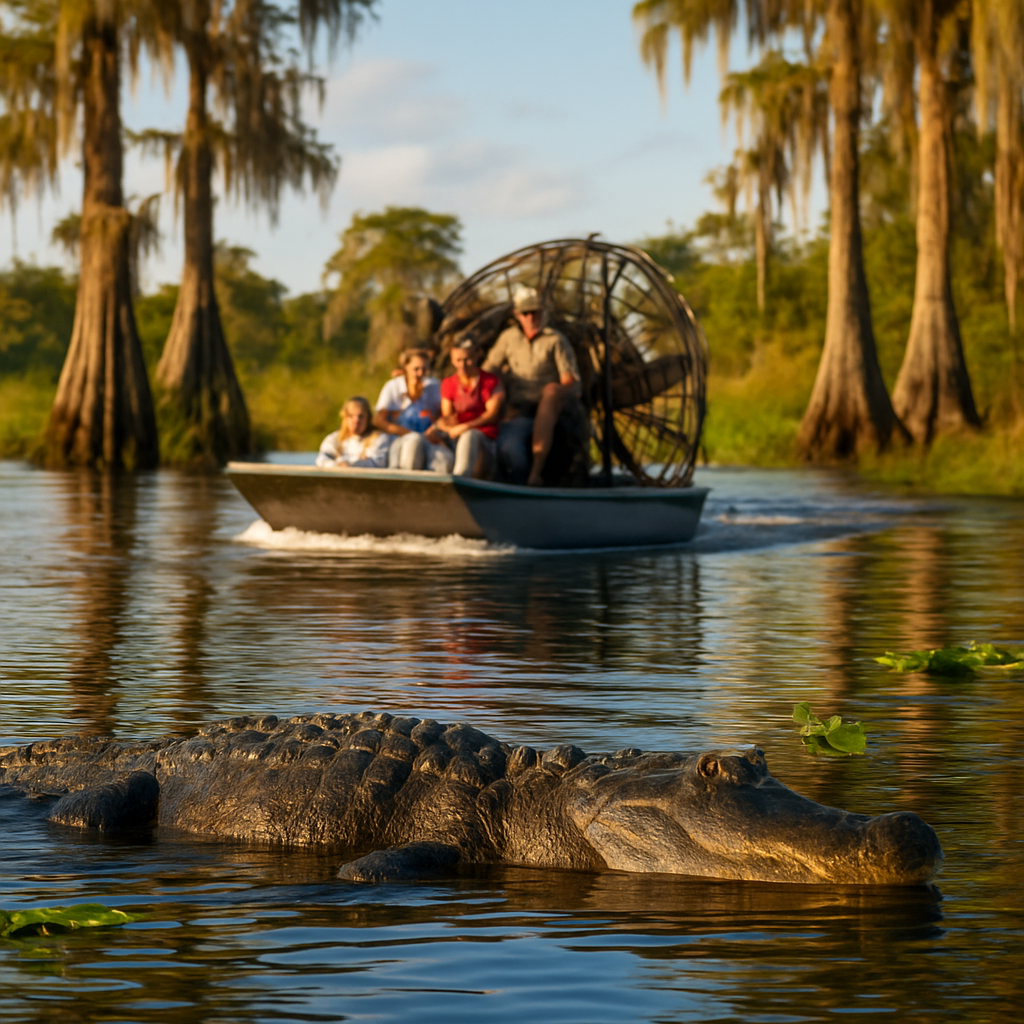
Airboat Through the Real Florida on Lake Tohopekaliga
Kissimmee sits on Lake Tohopekaliga — locals call it Lake Toho — and an airboat tour is the fastest way to remember that Central Florida isn't just parking lots and monorails. Boggy Creek Airboat Adventures has been running tours since 1994, skimming across open water and marsh where alligators sun themselves on cypress logs and roseate spoonbills flash pink against the tree line. The noise is tremendous, the wind is warm, and the Florida you see from the water bears almost no resemblance to the Florida you see from US-192. Go in the morning before the heat builds. Private boats are available if you want the guide to yourself.
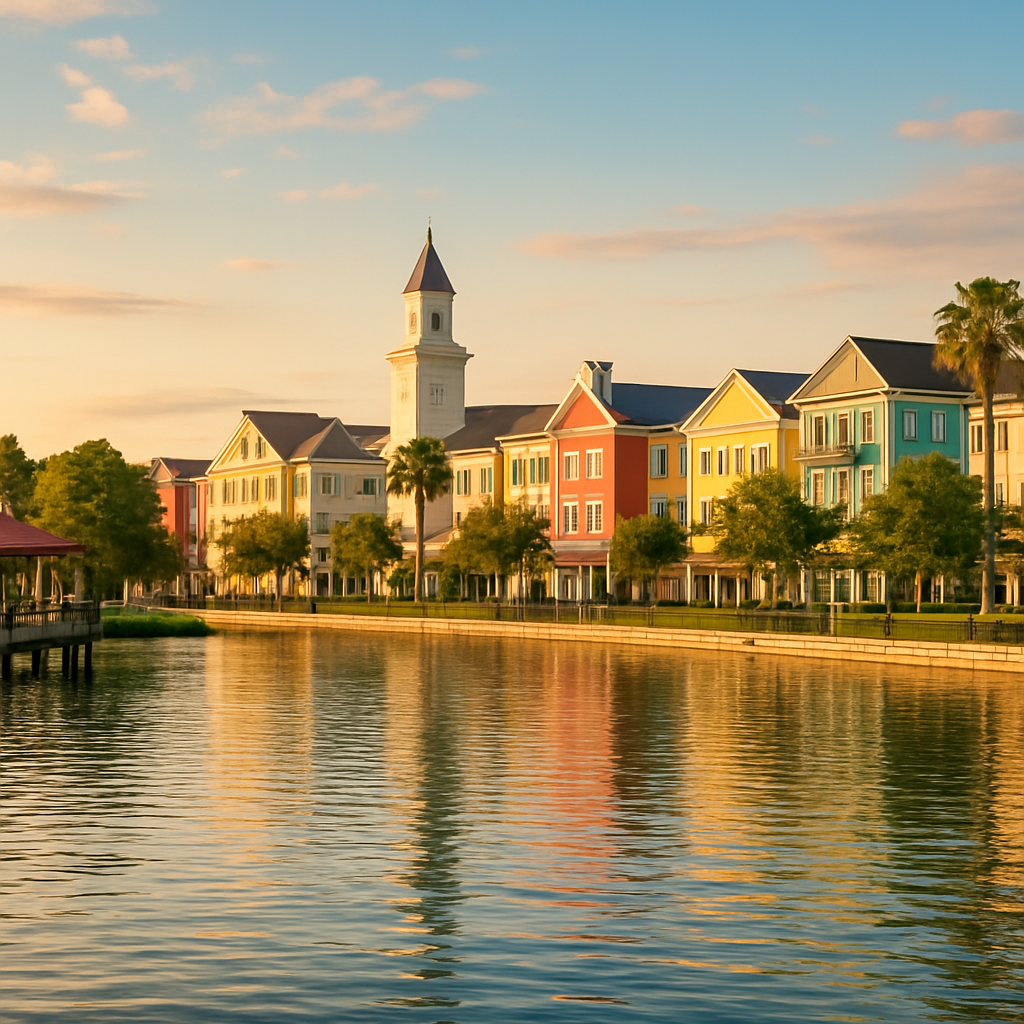
Walk Celebration's Lakefront Town Center
Disney built an entire town in 1996 and somehow it turned into a real place. Celebration's town center is a pedestrian lakefront promenade with genuine restaurants — the Columbia Restaurant serves the original 1905 Salad tableside, a dish that's been on menus in Tampa since Teddy Roosevelt was president — independent shops, and architecture that references Southern coastal traditions with unsettling perfection. It's part Truman Show, part genuinely lovely small town, and the cognitive dissonance is the whole point. Walk the lake loop at dusk when the light goes golden and the egrets are fishing. It's free, it's quiet, and it's unlike anything else in Central Florida.
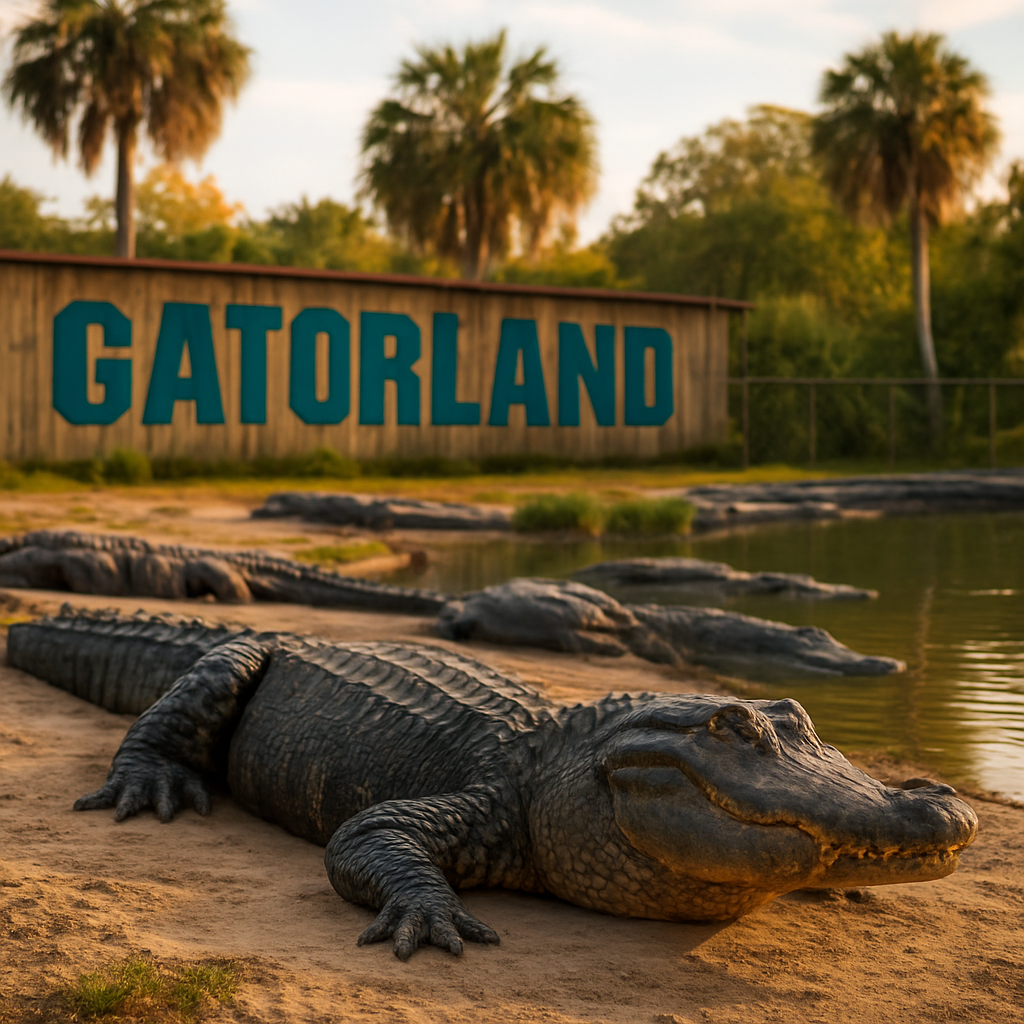
Spend a Morning at Gatorland
Gatorland has been here since 1949 — a quarter century before Walt Disney World opened — and it's still family-owned, still weird, and still magnificent. Over 2,000 alligators and crocodiles live on a property that's both a wildlife theme park and a legitimate nature preserve, designated as a Florida Heritage Site and listed on the National Register of Historic Places. The zip-line over the breeding marsh is genuinely thrilling, and the educational shows are old-school Florida roadside attraction at its best. It costs a fraction of a theme park ticket, takes half a day, and gives you a sense of what this landscape meant before the highways arrived.
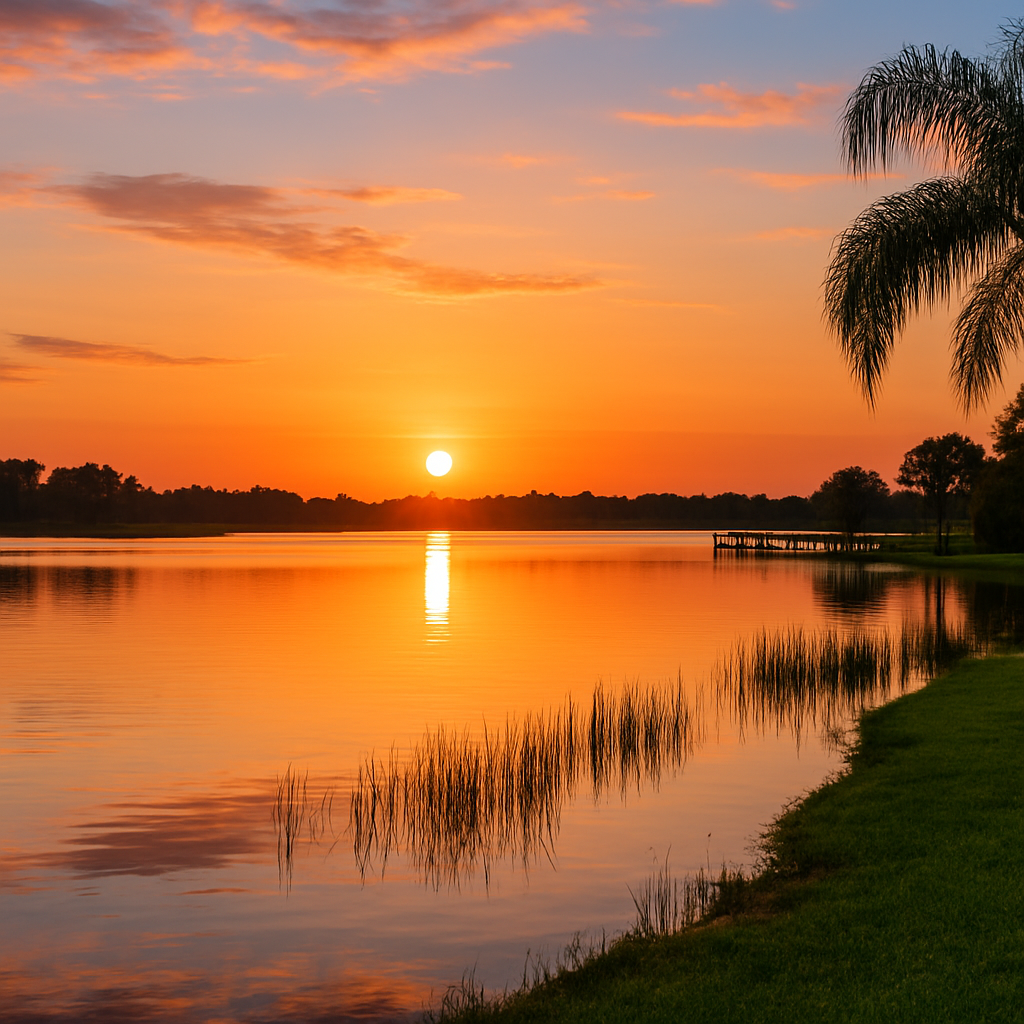
Sunset at Kissimmee Lakefront Park
A mile of public waterfront on Lake Toho, with walking paths, an amphitheater, a splash pad for kids, and a marina. It costs nothing. At sunset, the lake turns copper and the sky does things that remind you why people moved to Florida before air conditioning existed. Grab a drink at the lakefront bar and grill, find a bench facing the water, and watch the egrets come in. This isn't a produced experience — it's just a beautiful public park in a town that doesn't always get credit for having one. Weekend evenings bring a diverse local crowd that reflects Kissimmee's actual demographics: families, fishermen, Caribbean and Latino communities, and everyone in between.
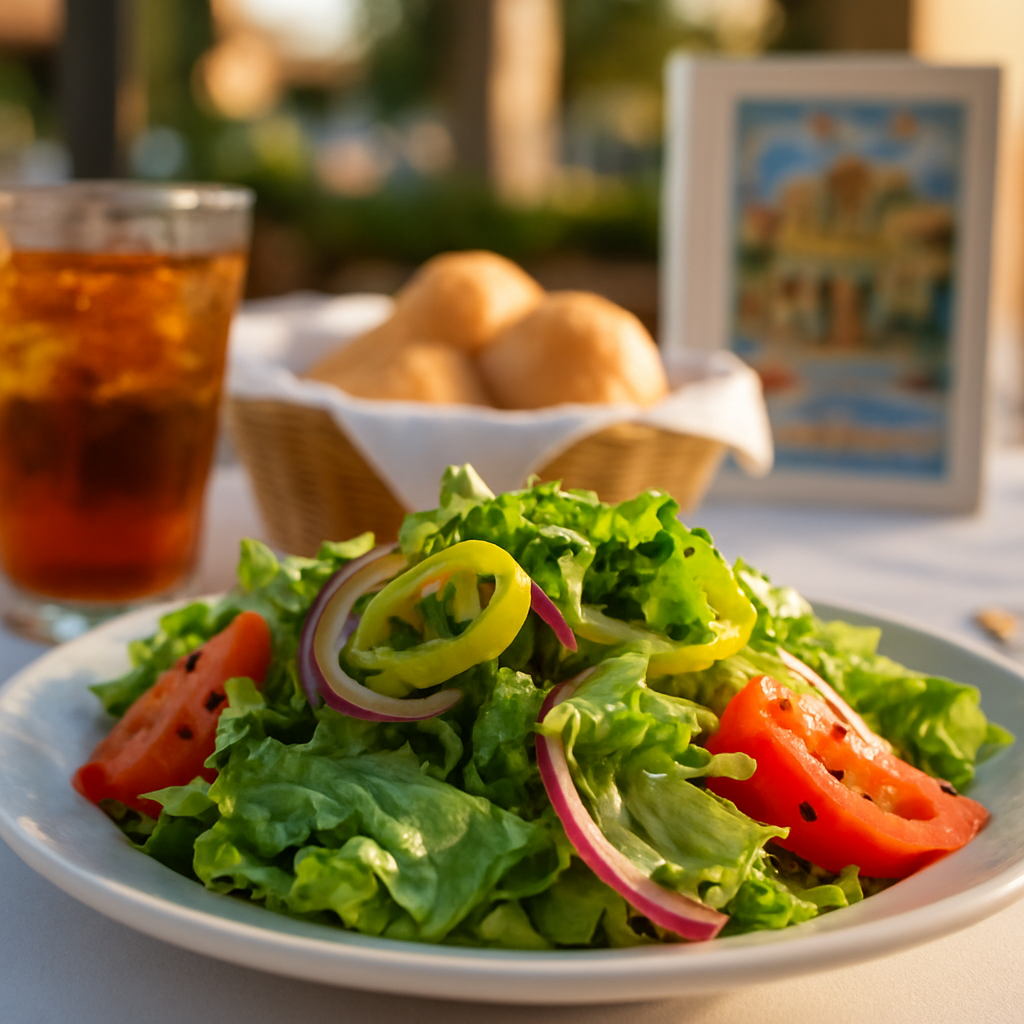
The 1905 Salad at Columbia Restaurant
The Columbia Restaurant was founded in Tampa's Ybor City in 1905, making it the oldest restaurant in Florida. The Celebration outpost serves the same menu, including the signature 1905 Salad — prepared tableside with romaine, Swiss cheese, Julienne ham, olives, and a garlic vinaigrette that hasn't changed in over a century. It sounds simple. It is simple. It's also one of the most satisfying things you'll eat in Central Florida. Order it alongside the Cuban black beans and a plate of deviled crab, and you've got a meal that connects you to a Florida culinary tradition that has nothing to do with character dining or all-you-can-eat buffets.
The places I actually send people to
Advice that fits how you travel
Solo travel in Kissimmee is a different proposition than solo travel in most cities — this is not a walkable destination where you stumble into conversations at a corner café, and the infrastructure assumes you arrived with a group. That's the honest truth, and it's worth knowing before you book. The upside: solo travelers save meaningfully on accommodation on the budget 192 corridor, and the theme parks are genuinely solo-friendly. A solo day at Walt Disney World with no group consensus to manage — eat where you want, ride what you want, leave when you're done — is not a bad deal at all.
For meeting people, the apps work well here. The I-4 corridor has a dense enough gay population, especially during high season and Gay Days week in early June, that Grindr and Scruff are reliably active. But the real social infrastructure is in Orlando. The Mills 50 District, about 25 minutes north on I-4, has an actual bar scene where solo travelers land easily. Parliament House on Orange Blossom Trail is genuinely solo-friendly — the property sprawls across multiple bar rooms and outdoor spaces, and arriving alone is completely unremarkable. Take a rideshare from the 192 and don't plan to drive back. On the community side, check the calendar at GLSEN Central Florida before your trip — their events pull from across the region, including a healthy Kissimmee contingent, and are a smart way to connect beyond the tourist bubble.
Budget-conscious solo travelers do reasonably well here outside of park admission costs, which are what they are. The 192 has motel options starting around $70/night, fast-casual dining is everywhere, and the genuinely worthwhile free things — the Kissimmee Lakefront at sunset, walking Celebration's town center, a morning at Gatorland — cost nothing or next to it. Pro tip: if you're solo for Gay Days week, book your hotel now. The 192 fills a full year in advance, and a solo traveler competing for a single room faces the same inventory crunch as every group of eight.
Same-sex couples are genuinely comfortable throughout the theme park resort zones and the tourist infrastructure of the 192 corridor. At Walt Disney World, Universal Orlando, and the I-Drive area, holding hands and being affectionate is common, unremarkable, and actively welcomed — Disney's consistent standing on the HRC Corporate Equality Index and its internal PRIDE employee network reflect something real about the on-the-ground experience, not just marketing copy. Requesting a king room as a same-sex couple at any major chain hotel on the corridor is routine. No awkward check-in stories here. For downtown Kissimmee around Broadway Avenue and the lakefront, the vibe is relaxed and comfortable. Venture into the more rural and residential pockets of Osceola County and the usual read-the-room awareness applies — it's unlikely to be confrontational, but you'll feel the shift.
For romance specifically, Celebration is where I'd send couples first. Walk the lakefront town center at dusk, book a table at the Columbia Restaurant for the 1905 Salad prepared tableside and a full Cuban-Spanish dinner on the lake, then settle into the Celebration Hotel's independent boutique lakefront property. It's the most genuinely romantic evening available within Kissimmee, and it doesn't require fighting theme park crowds. Kissimmee Lakefront Park at sunset — copper light on Lake Tohopekaliga, egrets low over the water — costs nothing and earns the same memory. For something more active, a private airboat tour through Lake Toho's marshlands is an unusual date: loud, thrilling, and guaranteed to become a story you tell later.
On accommodation, same-sex couples have solid options across the price spectrum. The Wyndham Grand Bonnet Creek, adjacent to Walt Disney World, gives you the proximity without full on-property pricing. The Celebration Hotel gives you boutique character and a walkable town center that the highway resorts simply can't replicate. If the budget is there and you want true privacy, a villa at Reunion Resort with a private pool is the move — especially if Gay Days week is the reason you're here and you want a home base that doesn't involve navigating a packed motel corridor at 2am.
LGBTQ+ families are on solid legal ground in Florida as of 2026 — federal law guarantees same-sex marriage and joint adoption rights, and those protections hold regardless of what's happening at the state capitol. The practical reality at the theme parks is actively welcoming: Walt Disney World and Universal have both trained staff on inclusive family recognition, and character meet-and-greets, dining reservations, and resort check-ins handle two-mom or two-dad families without hesitation. Disney's presence has genuinely shaped the local culture. Celebration, the master-planned community the Walt Disney Company developed in 1996, has attracted a disproportionate number of LGBTQ+ families over the years — a fact noted in multiple LGBTQ+ publications — and that demographic reality has made Osceola County more normalized around LGBTQ+ family life than the state's legislative headlines would suggest.
For kid-friendly activities beyond the parks: Boggy Creek Airboat Adventures is a genuine hit for children — alligators, herons, and a flat-out airboat ride across open water on Lake Toho will hold attention for a solid two hours. Gatorland offers a half-day of wildlife education and zip-lines that works for most ages, costs a fraction of a park ticket, and connects kids to an Old Florida that predates every rollercoaster in the corridor. Kissimmee Lakefront Park has a splash pad, a marina, and a flat mile of walking path alongside the lake — it's free, stroller-friendly, and the weekend crowd is a natural cross-section of Kissimmee's diverse, family-oriented community. The Columbia Restaurant in Celebration is a practical family dinner that actually delivers — the tableside 1905 Salad is theater kids enjoy, and the menu has enough range to handle most preferences.
A note on families with trans children specifically: Florida's active anti-trans legislation affects minors in ways that go beyond the resort zones. Equality Florida maintains the most current guidance on what's legally in effect and what's been challenged — read their resources before traveling, not after. For LGBTQ+ families considering longer stays or relocation, ALSO Youth serves LGBTQ+ young people and their families directly across Osceola County and is community-embedded enough to be a genuinely useful first call. The welcome at the theme parks is real. The state-level picture is more complicated, and you deserve accurate information about both.
What Kissimmee actually costs
Flights, visas, and the first 30 minutes
Airport: You're flying into MCO — Orlando International Airport — one of the busiest airports in the United States, with approximately 150 direct routes connecting it to major domestic hubs and international gateways. Delta, Southwest, United, American, and JetBlue all run heavy service here. From the UK and EU, direct transatlantic options typically operate out of London Heathrow, Manchester, and select European hubs, with flight times running roughly 9–10 hours. From the US East Coast, you're looking at 2–3 hours. From the West Coast, figure 5–6 hours. From Australia, expect a connection through LAX or another gateway city.
Visa requirements (as of 2026): US travelers need nothing beyond a valid ID for domestic travel. UK, EU, Canadian, and Australian passport holders typically qualify for the Visa Waiver Program — which means you'll generally need to apply for an ESTA (Electronic System for Travel Authorization) before departure. Apply at esta.cbp.dhs.gov; it's typically approved within minutes and costs $21 USD. The ESTA generally covers stays of up to 90 days. If you hold a passport from a country not covered by the Visa Waiver Program, a valid US visa is required — check the US Embassy in your country for current requirements.
Getting from MCO to Kissimmee: A rental car is by far the most practical option — Kissimmee's entire infrastructure assumes you're driving, and nearly every attraction, hotel, and restaurant on the 192 requires wheels. Budget $40–$80 per day depending on vehicle size and season. Rideshare via Uber or Lyft runs $35–$50 for the 25–40 minute trip and works well for one-way arrivals if you're settling into a resort that has its own transport. Mears Connect operates shared shuttles for $16–$26 one-way — slower (45–75 minutes with stops) but convenient if you're landing at Disney-adjacent properties. Taxis from the MCO stand run flat-rate at approximately $55–$75 for the 30–45 minute ride. Pro tip: If you're arriving during Gay Days week (first week of June), rideshare surge pricing at MCO can be brutal — book a shuttle in advance or rent a car outright.
Traven's seasonal breakdown
The questions everyone asks
Is Kissimmee safe for same-sex couples?
Where's the gay nightlife?
Do I need a rental car?
What is Gay Days and when does it happen?
How much should I budget per day?
Is Florida safe for trans travelers right now?
When's the best time to visit?
Screenshot this before you go
So should you actually go?
Kissimmee earns a visit if you're coming for the parks, for Gay Days, or for a base that puts you within striking distance of Orlando's gay scene without Orlando's hotel prices. It is not, on its own, a gay destination — and I won't pretend otherwise. But the welcome at Disney and Universal is genuine and documented, the Latino community here gives the corridor a warmth and cultural texture that most American tourist towns lack entirely, and the 25-minute drive to Parliament House and the Mills 50 District connects you to one of the South's most established LGBTQ+ ecosystems. For trans travelers, I need to be direct: research Florida's current statutes before you go, because the state-level picture is actively hostile in ways the resort zones can insulate you from but not erase. For everyone else, Kissimmee is an honest, affordable, occasionally surprising place that rewards you for looking past the strip malls — just don't expect it to be something it isn't. Come with clear eyes and a rental car, and you'll have a better time than the address suggests.
Sources & Resources
Official links we reference when compiling this guide. Last verified 2026-03-17.