
Laguna stopped trying to be a scene about a decade ago and got very good at being a place — nine miles of coastline, a margarita on the cliff at Las Brisas, and the kind of sunset that ends the argument.
Laguna Beach in 2026 is the rare gay coastal town that has stopped trying to be a scene and gotten very good at being a place. There's no Boystown here, no Warm Sands, no all-LGBTQ+ city council — and the locals stopped apologizing for that about a decade ago. What you get instead is nine miles of California coastline, a hundred-year-old artists' colony with bohemian bones that run deeper than the OC's politics, and the kind of long-dinner-and-sunset rhythm that rewards the traveler who isn't trying to close down a club at 2 AM.
The Boom Boom Room ghost still hovers over every conversation about gay Laguna — the Coast Inn closed in 2007 and the redevelopment saga has dragged on for nearly two decades, and locals will tell you about it within ten minutes of meeting. But the community didn't disappear when the doors closed; it just spread out. Main Street Bar in South Laguna kept the drag and karaoke nights going. West Street Beach still has the rainbow umbrellas on the south end where they've been for fifty years. Sunday afternoons at Mozambique's rooftop Shebeen still pull the tea-dance crowd. And the Rooftop Lounge atop the 1929 La Casa del Camino is where, on any given evening, a quiet majority of the cocktails are being ordered by gay men in linen — not a gay bar, but the unofficial sunset gathering spot, and that counts.
There's a reason I gave it a 9.4 on Destination — this coastline is the most romantic real estate in Southern California and the cliff patio at Las Brisas at golden hour closes the case in one margarita. My Chill score of 9.2 is doing the rest of the work: California's full equality framework as of 2026, marriage and adoption and self-ID gender markers, sanctuary protections for gender-affirming care, and a town that's been walking the talk since the artists arrived in the 1910s. Hand-holding on Forest Avenue at noon is a non-event. Same-sex couples checking into one bed is a non-conversation.
Treat Laguna like Provincetown's quieter cousin who became a painter — the one who stopped going to the parties and started taking the long walk on the bluff at sunset. Pair it with a few nights in WeHo or Palm Springs if you need a dance floor. Come here to hold a hand, watch a Vermeer come alive at the Pageant of the Masters, and find the AIDS memorial bench on the Heisler Park bluff where the names are still being added. Bring a flower.
The stuff your travel guide buries on page 47
California is about as good as it gets for LGBTQ+ travelers in the United States, and Laguna Beach sits inside that protection with both feet on the ground. As of 2026, marriage equality, joint adoption, and comprehensive anti-discrimination protections in employment, housing, and public accommodations are all in force. Gender markers on state IDs operate on self-ID — no court order, no medical letter. California is also a designated sanctuary state for gender-affirming care, which matters more than ever given the federal weather.
The on-the-ground reality in Laguna tracks the law. This has been an artists' colony for over a century, which is the entire reason it's gay-friendly in otherwise conservative south Orange County — the bohemian streak runs deep and the city council has been broadly supportive for decades. Hand-holding on Forest Avenue at noon is a non-event. The vibe shifts the moment you cross inland into San Juan Capistrano or Mission Viejo, so plan accordingly if you're driving away from the coast.
One thing to set expectations on: there is no full-time gay bar in town anymore. The Boom Boom Room closed with the Coast Inn in 2007, and the redevelopment has dragged on for nearly two decades. Locals will tell you about it within ten minutes of meeting. If you need a proper dance floor, you're driving to Long Beach or DTLA — accept this before you book the trip and you'll have a great time. For broader policy context, Equality California tracks state-level legislation and the ACLU of Southern California covers civil rights litigation across the region.
Pro tip: parking in summer is genuinely brutal. Use the free trolley — it runs PCH and the canyon — or stay somewhere walkable to Forest Avenue. Driving to West Street Beach on a July Saturday is a bad personal choice. The official Visit Laguna Beach page has current trolley schedules.
What it actually feels like on the ground
Holding hands and PDA in the village: Inside Laguna proper — Main Beach, Heisler Park, Forest Avenue, the downtown stretch — same-sex couples can hold hands without thinking about it. This is one of the safest small towns in California for visibly queer couples, and locals are used to it.
West Street Beach: The historic gay beach in South Laguna is fine. Bring water, wear shoes you can grip the cliff stairs in, and don't try the rocks at low tide after a margarita lunch. There are no lifeguards on the south end after 6 PM, so don't push your luck swimming alone at dusk.
Hotel check-in: No issues at any hotel listed in this guide. Same-sex couples checking in to one bed is a non-conversation across Laguna's hotel scene, from the boutique inns downtown to the resorts in South Laguna.
Driving inland: The further you get from the coast, the more politically mixed Orange County becomes. PDA in Newport Beach or Dana Point is generally fine but less normalized than in Laguna. Inland — San Juan Capistrano, Mission Viejo, the 5-corridor towns — read the room before you reach for a hand. Nothing acutely dangerous, just different energy.
Trans travelers: California has among the strongest trans protections in the U.S. as of 2026 — self-ID for gender markers, sanctuary protections for gender-affirming care, comprehensive anti-discrimination coverage. Laguna itself is broadly affirming, though you'll notice less visible trans community than in West Hollywood or Palm Springs. LGBTQ Center OC in Santa Ana is the regional hub for support and resources.
Late-night and getting home: Last call is 2 AM, and most of Laguna empties out well before that. Rideshares are reliable downtown but can be slow in South Laguna — book early on summer weekends.
Health and PrEP: Radiant Health Centers up in Irvine handles HIV care and PrEP for most of Orange County and is the queer-competent option. For anything urgent, Mission Hospital in Mission Viejo is the closest ER and is reliably affirming. The OC Health Care Agency lists county clinics and STI testing sites.
The queer geography
Downtown Village & Forest Avenue
The walkable heart of Laguna — three blocks of galleries, cafés, jewelry stores, and ice cream shops between PCH and the bluff. The Greeter, the bronze statue of Eiler Larsen at Forest and PCH, is the unofficial mascot and a reasonable meet-up point. Zinc Cafe off Ocean Avenue has been pouring cortados since 1990 and is the closest thing Laguna has to a daytime queer scene now that the bars are gone — the locals quietly check each other out over avocado toast. The Laguna Art Museum, founded in 1918, anchors the north end and focuses on California artists, many of them queer figures who shaped the colony's identity.
Heisler Park
The bluff-top park stretching north from Main Beach is the best free thing in town. Landscaped paths, public art, benches positioned for sunset, and stairways down to a string of small coves. The AIDS memorial bench sits on the bluff just north of Main Beach — small, easy to miss, and worth the walk. The names are still being added. Bring a flower. Las Brisas on the cliff above has been a Laguna landmark since 1938 and the patio at golden hour is exactly what you came for.
South Laguna & West Street Beach
South of downtown, PCH gets quieter and more residential. This is where many LGBTQ+ locals own homes and walk to Aliso Beach. The reason to come south is West Street Beach — the historically gay beach tucked between Victoria and Aliso, recognizable by the rainbow umbrellas on the south end. Take the stairs down at West Street off PCH, walk south, and you'll see them before you see anyone you know. Main Street Bar on South Coast Highway became the primary LGBTQ+ gathering spot after the Boom Boom Room closed and still hosts drag and karaoke nights. Mozambique nearby has a rooftop Shebeen lounge that has historically run gay-friendly Sunday programming.
Laguna Canyon & the Festival Grounds
Inland from PCH, Laguna Canyon Road climbs through eucalyptus toward the 405. The Festival of Arts grounds and the scrappier Sawdust Art Festival across the road run all summer and have been quiet queer-artist havens since the 1930s. The Pageant of the Masters at the Irvine Bowl — volunteers freezing inside recreated paintings as living tableaux — is camp in the most sincere possible sense, and the gay audience has been showing up since FDR was president. Laguna Beach Pride 365 programs year-round events rather than one big parade — check the calendar before you come, especially in June and around World AIDS Day in December. The broader regional resource is LGBTQ Center OC in Santa Ana.
Top of the World
Locals call it TOW. A residential hilltop neighborhood reached by a winding climb up Park Avenue, with panoramic views from Catalina to Saddleback Mountain. There's nothing to do up there except look — which is the whole point at sunset. Pack a bottle of something and a sweater for after dark.
The experiences worth rearranging your itinerary for
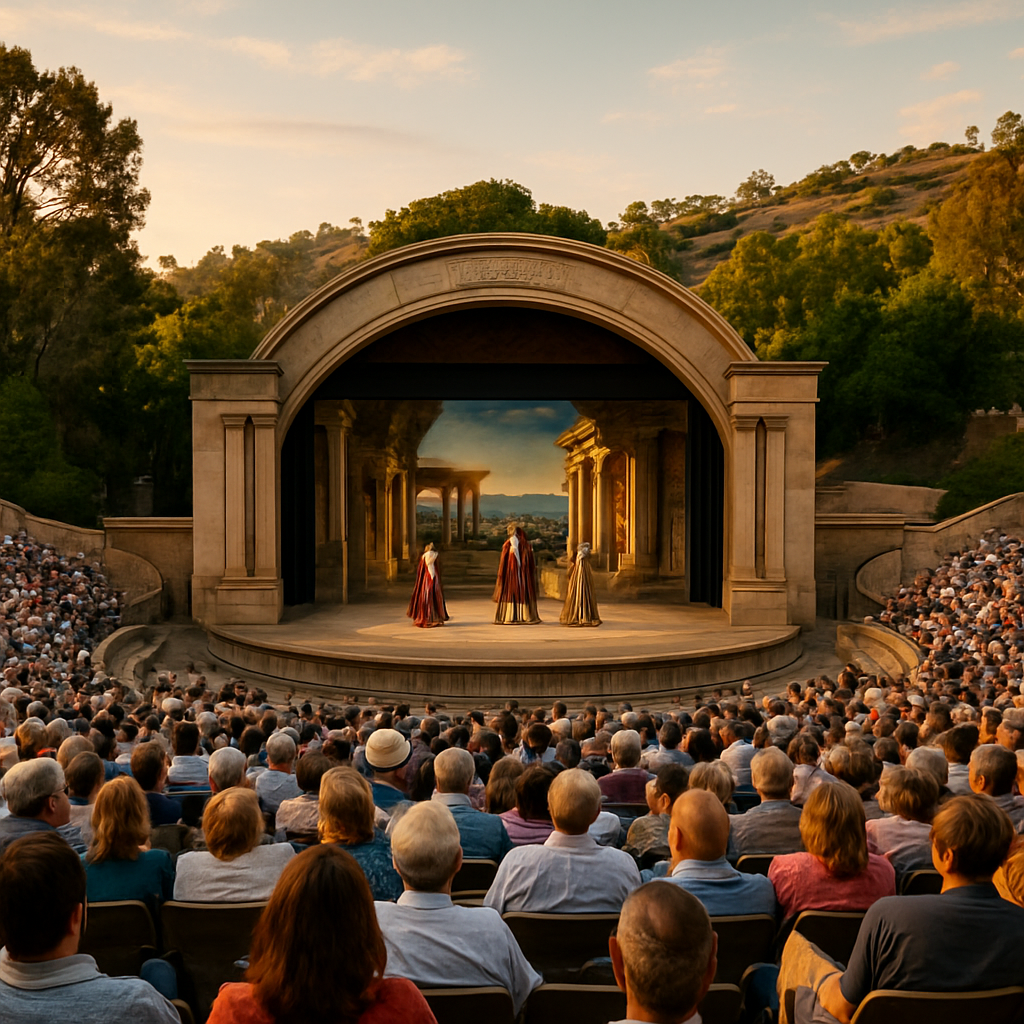
Pageant of the Masters at the Irvine Bowl
Every July and August since 1933, costumed performers stand motionless inside recreated famous paintings for ninety minutes at the open-air Irvine Bowl in Laguna Canyon. It is exactly as strange as it sounds, and somehow exactly as transcendent. Get the cheap seats and a glass of wine, let your eyes adjust to the dark, and watch a Vermeer come alive forty feet in front of you.
Pro tip: the Festival of Arts grounds open hours before the show — wander the juried gallery, eat dinner on-site, then walk over to the bowl. The whole canyon glows at dusk.
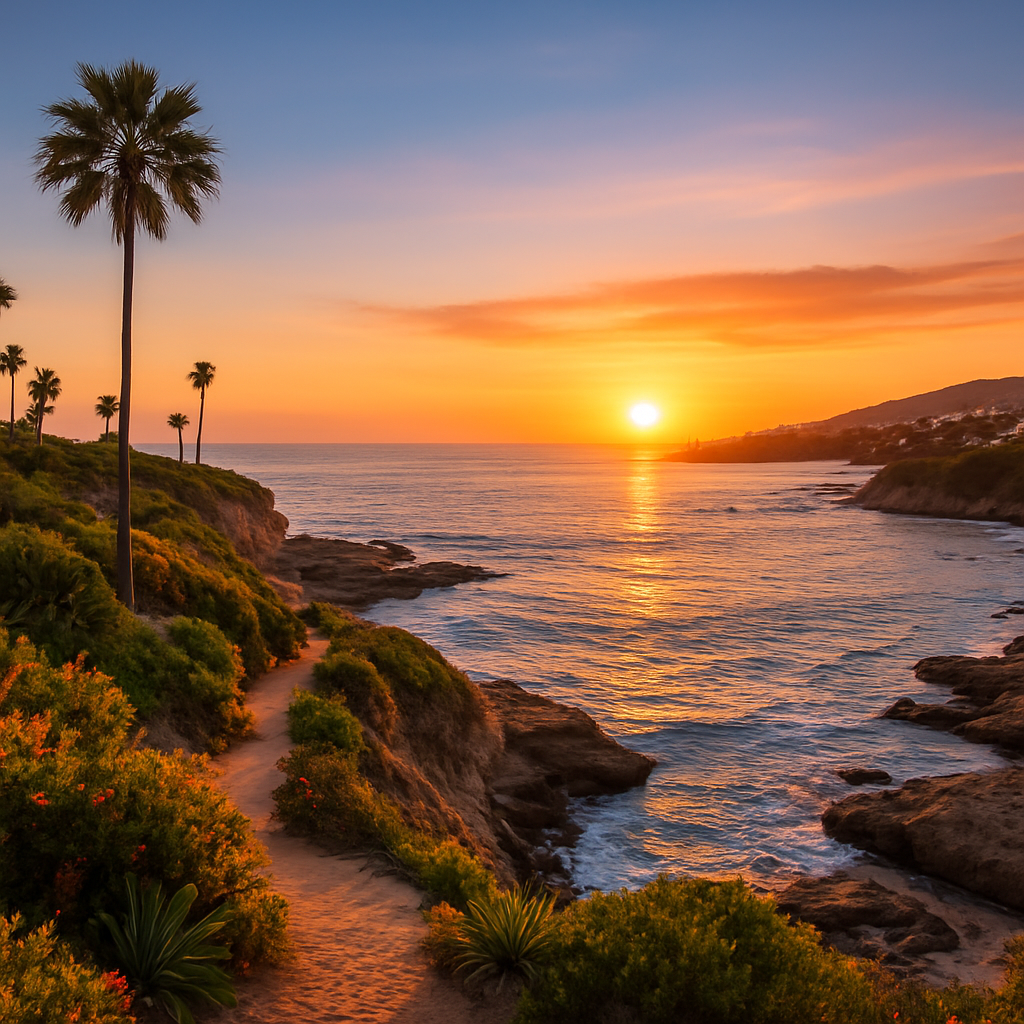
The Heisler Park Bluff Walk at Golden Hour
Start at Main Beach and walk north along the bluff — landscaped paths, public sculpture, benches positioned exactly where you'd want them, and stairways down to a string of small coves. The full walk takes about thirty minutes if you stop for the views, which you will. The AIDS memorial bench sits on the bluff just north of Main Beach, small and easy to miss. Bring a flower.
End at Las Brisas on the cliff above for a margarita on the patio — the site has been a Laguna landmark since 1938 and the sun does the rest.
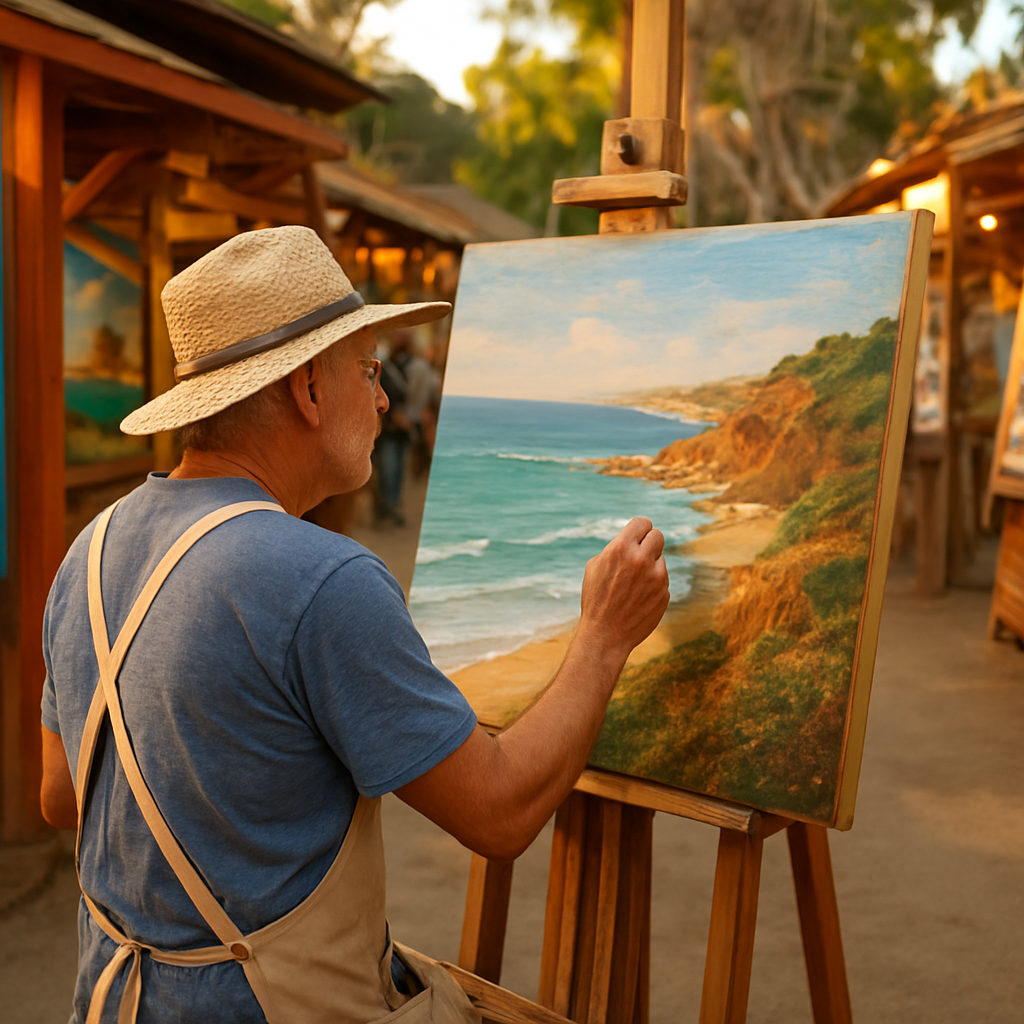
Sawdust Art Festival
Across Laguna Canyon Road from the Festival of Arts is the scrappier, more interesting twin — a sawdust-floored craft festival running every summer since 1965, where actual working artists hand-sell what they make. Glassblowers, jewelers, ceramicists, painters. Less polished than the Festival across the street, which is the whole appeal.
Go on a weeknight when the crowds thin out. Find the glassblower with the rainbow paperweights. You'll leave with a souvenir that didn't come from a gift shop, and that's worth the trip.
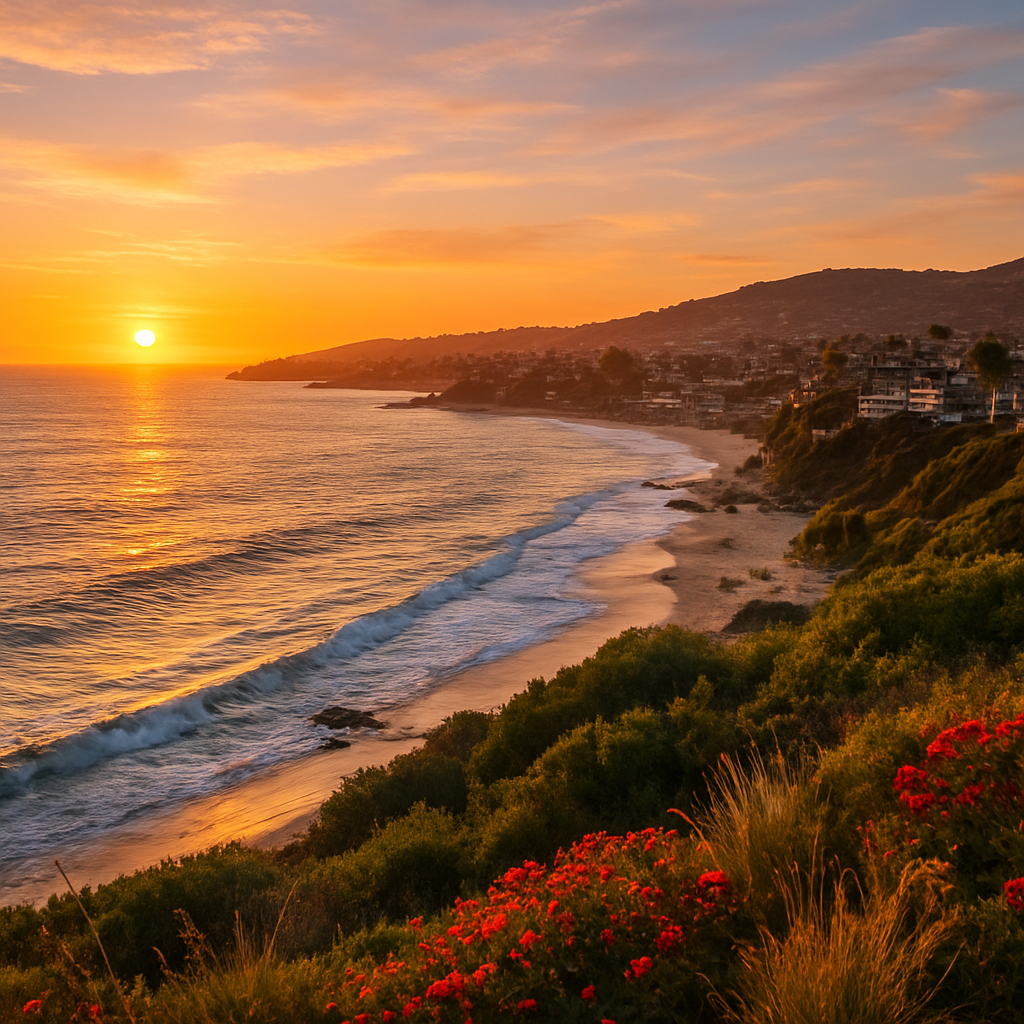
Sunset from Top of the World
Locals call it TOW. A residential hilltop reached by a winding climb up Park Avenue, with panoramic views from Catalina Island all the way to Saddleback Mountain. There is genuinely nothing to do up there except look at the view, which is the entire point.
Pack a bottle of something cold, a sweater for after dark, and arrive thirty minutes before sunset. The stars come out fast once the sun drops. This is the free move that out-prices half the rooftop bars in town.
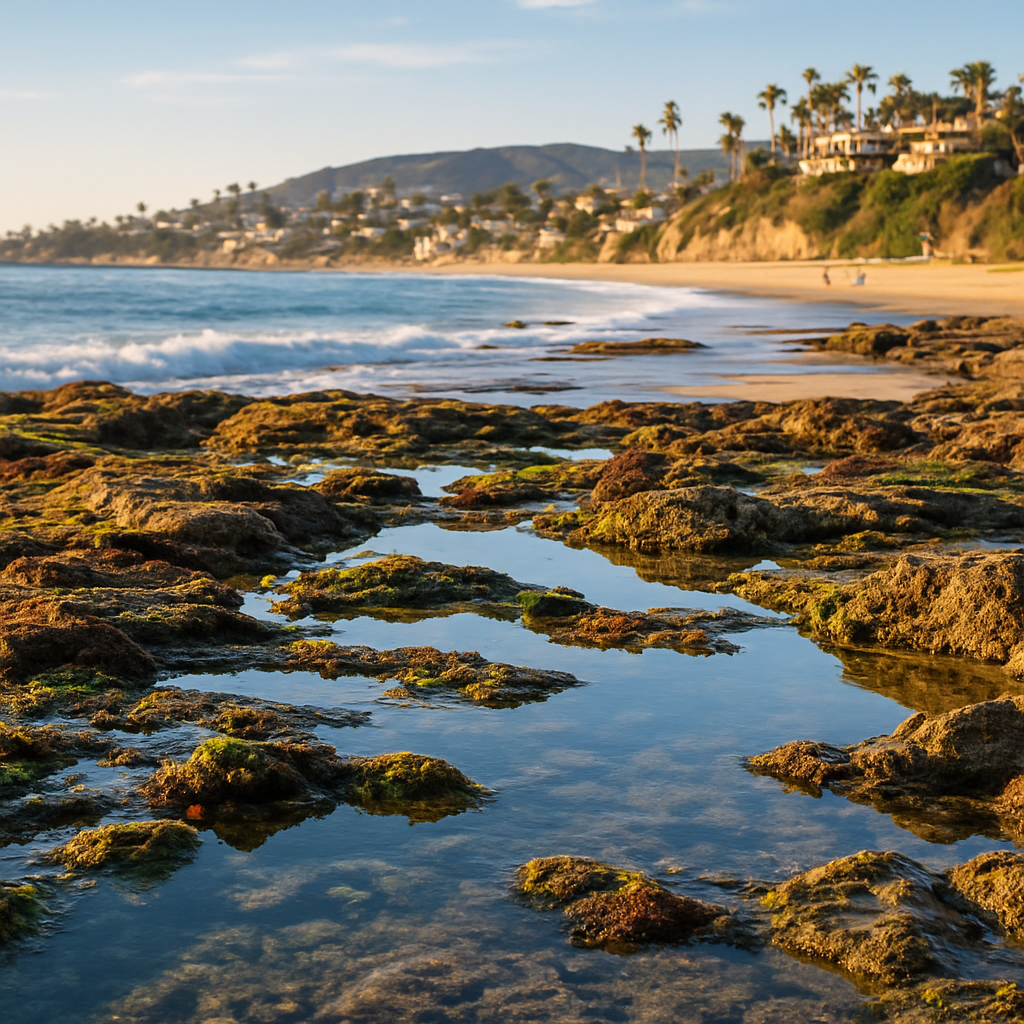
Main Beach Tide Pools & Boardwalk
The boardwalk at the foot of Broadway is the de facto town square — basketball courts, volleyball nets, lifeguard tower, and at low tide a string of tide pools that genuinely surprise people who think they know Southern California beaches. Anemones, hermit crabs, the occasional small octopus if you're patient and quiet.
Time your visit to a morning low tide — the app will tell you when — and bring water shoes. After, walk three blocks to Zinc Cafe off Ocean Avenue for a cortado in the courtyard. That's a perfect Laguna morning.
The places I actually send people to
Advice that fits how you travel
Laguna is one of the easier solo trips in Southern California — small enough to walk, safe enough to wander after dark, and built around a coastline that does most of the heavy lifting. You don't need a wingman to enjoy a sunset on the Heisler Park bluff or a cortado at Zinc Cafe, and the locals are friendly in a way that small art towns tend to be when they've spent a hundred years welcoming weirdos.
Set expectations on nightlife. The apps are active but the dating pool skews thirty-five and up, and the volume is what you'd expect in a town of 23,000 — Grindr in Laguna is more 'who's at Main Street Bar tonight' than 'who can be here in twelve minutes.' If you want a bigger pool, drive an hour to West Hollywood or run down to Hillcrest in San Diego. For meeting people in person, the Rooftop Lounge atop La Casa del Camino at golden hour is the closest thing to a daily gathering, and Sunday afternoons at Mozambique still pull a friendly crowd.
Budget-wise, solo travel here lands at roughly $185–$240/day on the lower end and $340–$460/day at the moderate tier — the splurge is the room, not the meals, and you can offset by booking inland and walking the trolley back to the village. Stay in Downtown Laguna if you want everything walkable, or Hotel Joaquin in North Laguna if you'd rather check in, disappear for three days, and come out reset. Pro tip: book the bungalow seats at the bar at Watermarc — eating alone in front of an open kitchen is genuinely one of the better solo dinners in town.
This is what Laguna is built for. Same-sex couples can hold hands on Forest Avenue at noon without anyone glancing twice, hotel check-ins are a non-conversation across every property in this guide, and the entire town is essentially a series of romantic set pieces strung along nine miles of coastline. The Heisler Park bluff walk at golden hour, dinner on the cliff patio at Las Brisas, a nightcap at the Rooftop Lounge — that's a first night that closes the case on why I gave Laguna a 9.4 on Destination.
For the splurge, the Montage in South Laguna runs same-sex weddings without blinking, and the bluff lawn at sunset is genuinely a ceremony in itself — Studio downstairs holds Forbes Five-Star and AAA Five-Diamond and is the once-a-trip dinner. If the Montage isn't in the budget, Casa Laguna Hotel & Spa is the move — a 1920s Mission Revival hillside property with terraced gardens where you can disappear for a long weekend and not see a soul you don't want to. Hotel Joaquin is the design-forward pick if you want it to feel like someone's extremely tasteful beach house.
For the actual itinerary: Day 1 is Heisler Park sunset, dinner at The Cliff, nightcap at the Rooftop. Day 2 is West Street Beach in the morning, lunch at Zinc in the courtyard, Pageant of the Masters at the Irvine Bowl after dark. Add a Sunday brunch at the Inn at Laguna Beach with Main Beach in the windows and you've got a weekend that does the work of a week. Pro tip: book Las Brisas's patio for 6 PM in summer — the table turns are real and the golden-hour seating is the entire reason to come.
California recognizes LGBTQ+ families fully under the law as of 2026 — joint adoption, second-parent adoption, accurate birth certificates, the works — and Laguna in practice tracks the law. Two moms or two dads pushing a stroller along the Main Beach boardwalk is so unremarkable it doesn't register, and the elementary schools have been quietly inclusive for decades. The arts-colony bones of this town mean the cultural baseline is broadly progressive, even sitting inside otherwise conservative south Orange County.
For kids, Laguna is genuinely one of the best beach towns in California — Main Beach has lifeguards, sand volleyball, basketball courts, and a tide pool system at low tide that genuinely surprises people. Bring water shoes and download a tide app; an hour of poking around for hermit crabs and anemones is free and beats most paid attractions. The Pacific Marine Mammal Center up in Laguna Canyon does rescue and rehab and is a wonderful low-key morning. Whale watching charters out of Dana Point harbor — fifteen minutes south — run year-round, with gray whale migration peaking in February.
Family-friendly stays: the Surf & Sand Resort puts every room oceanfront and has Splashes restaurant on the sand for low-stakes dinners with kids; The Ranch at Laguna Beach up in Aliso Canyon trades beach access for canyon quiet, a pool, and the only golf course in town. Budgets run $420–$580/day on the lower end and roughly $780–$1,150/day at the moderate tier. Pro tip: the Visit Laguna Beach trolley is free, runs both PCH and the canyon, and is the difference between a great family day and a parking meltdown — use it instead of trying to drive between Main Beach and West Street on a summer Saturday.
What Laguna Beach actually costs
Flights, visas, and the first 30 minutes
Airport: John Wayne Airport (SNA) in Santa Ana is the closest gateway, roughly 30–45 minutes north of Laguna Beach via the I-405 and SR-133. Approximately 30 direct routes serve SNA from across the U.S. and Canada, with frequent service from San Francisco, Seattle, Denver, Phoenix, Dallas, Chicago, and New York. If SNA doesn't work for your dates, LAX is about 60 miles north and Long Beach (LGB) is about 35 miles up the coast — both viable with a rental car.
Visa requirements (as of 2026): U.S. travelers don't need anything beyond a valid ID for domestic flights. Canadians typically enter visa-free for up to 180 days. Travelers from the UK, EU, and Australia generally need an approved ESTA under the Visa Waiver Program for stays up to 90 days — apply at least 72 hours before departure through the official U.S. CBP site. Entry rules can shift, so verify current requirements before booking.
Getting from SNA to Laguna: A rental car is the move — Laguna and the broader PCH corridor really do require wheels for full exploration, and rates typically run $55–$120/day. Taxis from SNA run $55–$75 and take 30–45 minutes via I-405 and SR-133. Rideshare (Uber/Lyft) is generally cheaper at $40–$65 with designated pickup at the airport, though weekend surge pricing is common. Shared shuttles like Karmel or Prime Time run $35–$50 and take 45–60 minutes — book in advance. The OCTA Bus Route 1 is the budget option at $2.00, but it requires a transfer and takes nearly two hours, which is rough with luggage.
Pro tip: once you're in town, the Visit Laguna Beach trolley is free and runs PCH plus the canyon — use it. Parking in the village in summer is genuinely brutal, and the trolley connects everything from Main Beach to South Laguna.
Traven's seasonal breakdown
The questions everyone asks
Is Laguna Beach safe for same-sex couples?
Is there a gay bar in Laguna Beach?
When is Pride in Laguna Beach?
Do I need a car in Laguna Beach?
What's the best time of year to visit?
Where is the gay beach?
How does Laguna compare to Palm Springs or West Hollywood?
Screenshot this before you go
So should you actually go?
Go. If you want a gay coastal trip in California that's about long lunches, golden-hour patios, and the kind of safety where holding a hand is a non-event, Laguna is the answer — my Traven-Dex of 8.8 isn't an accident, and the 10.0 on Legal floor is the foundation everything else sits on. Just understand what this trip is and isn't before you book: it's nine miles of coastline, a century of artist-colony bones, and a community that survived the loss of its anchor bar by spreading out across the village. It is not a club town. Pair it with two nights in WeHo or Palm Springs if you need the dance floor, stay walkable to Forest Avenue, ride the free trolley, and find the AIDS memorial bench on the Heisler Park bluff. Bring a flower.
Sources & Resources
Official links we reference when compiling this guide. Last verified 2026-05-04.