
Las Vegas doesn't sleep, doesn't close, and doesn't pretend to be anywhere but itself — and at 4am on Paradise Road, it's still pouring.
It's a Tuesday at 11pm on Paradise Road and Freezone is half-full with regulars who all know each other's drink order, while half a mile west the Bellagio fountains are doing their thing for tourists who have no idea this bar exists. That's Las Vegas in one frame. The city you came for is on the Strip; the city the gays actually live in is a half-mile east on a low-rise commercial corridor that has been here, quietly, since before most of those resorts had their current names. Walk the four blocks of The Fruit Loop between Harmon and Tropicana on a weeknight and you'll find Piranha, The Buffalo, Entourage, and Freezone within a five-minute stroll — a real, walkable district that doesn't show up in any in-flight magazine.
Vegas earned a Traven-Dex of 8.6 from me because the gap between its reputation and its reality cuts in the city's favor. The Strip is what it is — Bellagio fountains, Venetian canals, a tasting menu inside The Cosmopolitan at é by José Andrés that seats roughly eight people and runs an avant-garde dinner that justifies the airfare on its own. But the actual scene is older, weirder, and considerably more interesting than the marketing suggests. Nevada has no mandatory bar closing time. Piranha is legitimately still going at 4am. There's a sanctioned gay rodeo at South Point Arena every year. There's a country-western gay bar with two-step lessons in Spring Valley. None of that is on the billboard at the airport.
What I gave it a 9.5 on Scene for is the density. Most American cities have a gay bar; Vegas has a corridor of them, plus a leather anchor, plus a bear bar, plus a downtown tavern reportedly running since the 1970s in Snick's Place. What I gave it a 7.5 on Destination for is the Strip overhead — the city does demand a certain tolerance for spectacle, and the heat in July and August is genuinely punishing. But the Strip resorts (MGM, Caesars) carry HRC-perfect Corporate Equality Index scores and the welcome is operational, not decorative. Front desks have had this training. One-bed requests get processed without comment. The state-level legal architecture is the strongest you'll find in America as of 2026.
Then there's the 18b Arts District south of downtown, where younger queer Las Vegans are building something that doesn't look like a tourist destination, which in this city is basically revolutionary. First Friday turns the whole neighborhood into a street party once a month. Esther's Kitchen earned a James Beard semifinalist nod out of a converted commercial space. The Spring Mountain dining corridor west of the Strip runs Beard-nominated kitchens at a fraction of resort markup. Vegas is in the middle of one of its better reinventions, and the gays are right in the middle of it. Show up. Skip July. Stay near Paradise Road. The rest takes care of itself.
The stuff your travel guide buries on page 47
Nevada is one of the strongest LGBTQ+ rights states in the country, and as of 2026 that's not just paper. Marriage equality is settled, joint and second-parent adoption are legal, and the state's anti-discrimination law covers employment, housing, and public accommodations on both sexual orientation and gender identity. Self-ID gender marker changes on Nevada IDs and birth certificates have been law since 2021 (AB 139). For the legal architecture, my Traven-Dex score of 10.0 isn't generous — it's accurate.
What you should know: Nevada's protections operate independently of federal policy, and that distinction matters in 2026. Federal executive actions since January 2025 have created friction around gender markers on federal documents and access to some federally operated spaces, but the state-level framework Las Vegas runs on is fully intact and enforceable. Lambda Legal tracks the federal-state interplay if you want the latest before you fly, and the Human Rights Campaign maintains a current state equality scorecard.
A reader wrote in with the right framing: greater Clark County is measurably more progressive than rural Nevada, which can feel like an entirely different state. You're not going to rural Nevada — you're going to a tourist economy that lives or dies on hospitality. The Strip resorts have HRC-perfect Corporate Equality Index scores, sponsor Pride, and have actively courted LGBTQ+ travelers for years. Pro tip: Las Vegas Pride runs in October, not June — a deliberate dodge of the desert summer that lands you in genuinely pleasant weather with thinner crowds. See Las Vegas Pride for dates and the parade route.
One more thing about pace: Nevada has no mandatory bar closing time. Piranha and 8½ Ultra Lounge are legitimately still going at 4am on a Saturday. That's part of the appeal — and part of why pacing yourself in the heat is a real concern, not a punchline.
What it actually feels like on the ground
Holding hands and PDA: On the Strip and along Paradise Road, same-sex couples can hold hands, kiss, and be visibly affectionate without incident — Vegas is professionally blasé about nearly everything. Fremont Street and the 18b Arts District are equally relaxed. In suburban areas like Henderson, Summerlin, and North Las Vegas you're in ordinary American suburb territory: legally protected, generally fine, but standard situational awareness applies.
Hotel check-in: Strip resorts are non-issues for same-sex couples — staff are trained, the corporate parents (MGM, Caesars) score 100% on the HRC Corporate Equality Index, and one-bed requests get processed without comment. Off-Strip independent properties have been equally professional in my experience, with no reported friction at the Paradise Road corridor hotels.
Taxis and rideshare: Both are fine. Rideshare between Paradise Road and the Strip runs about $6–8 and is genuinely faster than walking in the heat. The Deuce double-decker bus is the budget option for daytime sightseeing — slow but reliable. Late-night venue hopping, take the Uber.
Late night around the Fruit Loop: A reader told me The Fruit Loop along Paradise Road is extremely safe — well-lit, busy even on weeknights, blocks from major hotels. That tracks with what I've seen. Late-night walks between venues warrant ordinary urban awareness; the neighborhood itself doesn't feel precarious.
Trans travelers: Nevada's self-ID law and comprehensive anti-discrimination protections cover you at the state level. Hospitality and entertainment industry staff in Las Vegas are broadly trans-inclusive. The friction point as of 2026 is federal: federal ID recognition and federal facility access have been affected by 2025 executive actions, so research the specifics for your situation before flying — particularly if you're connecting through TSA with a gender marker that doesn't match your federal documents.
Health and sexual health: HIV testing and PrEP navigation are accessible through The Center on Maryland Parkway and Aid for AIDS of Nevada (AFAN) — both organizations are queer-competent and operate on sliding-scale fees. The Southern Nevada Health District (SNHD) handles broader sexual health services. Cost isn't a reason to skip it.
Verbal harassment risk: Low across the tourist corridor and the Fruit Loop. Reports are infrequent and tend to come from drunk-tourist incidents rather than locals — typical of any major destination. Pro tip: hotel security at major Strip properties responds quickly and competently if anything escalates.
The queer geography
Paradise Road & The Fruit Loop
Run parallel to the Strip and you hit Paradise Road, a low-rise commercial corridor where Las Vegas's actual gay scene has lived for decades. The Fruit Loop — the walkable cluster between Harmon and Tropicana — is the heart of it: Piranha Nightclub, Freezone, The Buffalo, Entourage, all within a few blocks of each other. Freezone has been here since the early 1990s and pulls a more mixed local crowd than Piranha next door — less circuit energy, more neighborhood-bar regulars who can actually tell you where the real city is. The Center on Maryland Parkway anchors the community infrastructure a few blocks east — check their programming calendar before you arrive; they run mixers and events that are open to visitors and a far better introduction to local life than another hour at a slot machine.
The Strip
Las Vegas Boulevard does what it does — Bellagio fountains, the canals at the Venetian, the volcano at Mirage if it's still erupting by the time you read this. Mid-Strip is where the food gets serious: é by José Andrés at The Cosmopolitan seats eight people at a time and runs a tasting menu that justifies a Vegas trip on its own. Drag brunch on the Strip is a different species than most cities — performers here are often touring professionals between major gigs, and production values are not casual. The major resorts (MGM, Caesars) carry HRC-perfect equality scores and actively court LGBTQ+ travelers; Pride packages are real marketing now, not afterthought. Las Vegas Pride publishes a route and event guide every October.
18b Arts District
South of downtown along South Main Street, the 18b Arts District is where younger queer Las Vegans are building something that doesn't look like a tourist destination — which in this city is basically revolutionary. Galleries, vintage shops, indie coffee, the Burlesque Hall of Fame, and Esther's Kitchen doing James Beard-recognized handmade pasta out of a converted commercial space. First Friday turns the whole district into a street party once a month. The crowd skews creative, young, and untroubled by who's holding hands with whom.
Fremont East & Downtown
Old Las Vegas. The neon canopy of the Fremont Street Experience is the tourist version; the real downtown is Fremont East — dive bars, the Neon Museum, VegeNation for plant-based all-day dining, PublicUs for coffee and a communal table. Snick's Place, reportedly one of the oldest continuously operating gay bars in Las Vegas with roots in the 1970s, sits in this neighborhood and operates as a no-frills tavern for the local residential community — it's the opposite of Piranha and intentionally so. Aid for AIDS of Nevada (AFAN) has historically anchored advocacy work out of the downtown area; their calendar of community events and fundraisers is worth a look if you're in town for any length of time.
The experiences worth rearranging your itinerary for
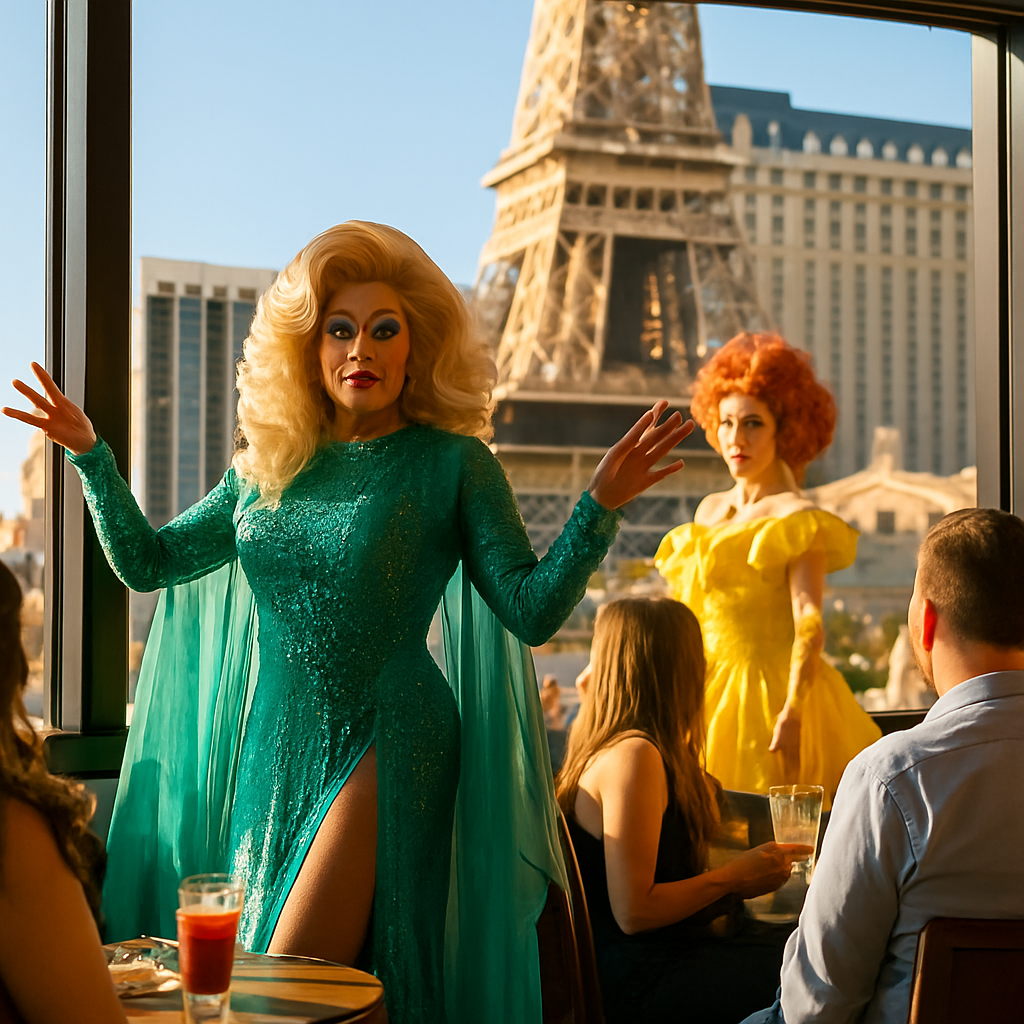
Drag Brunch on the Strip
Drag brunch in Vegas is a different species than most cities — performers here are often touring professionals between major gigs, and production values are legitimately not casual. Bottomless mimosas, full-band numbers, choreography that would headline anywhere else, all before noon. Whether you book it at a Strip resort or a Fruit Loop bar, budget for a second round because you will not want to leave mid-set.
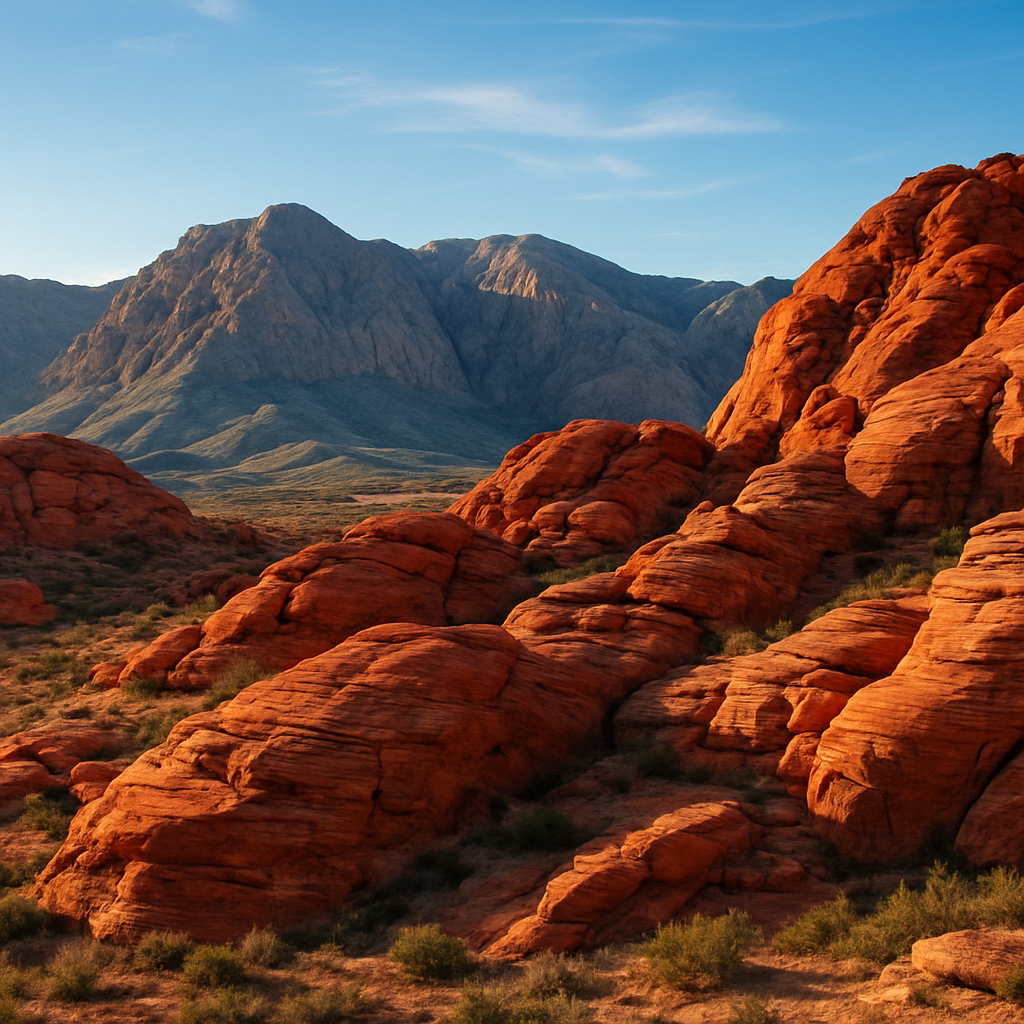
The Red Rock Canyon Scenic Drive
Seventeen miles west of the Strip and you're inside a 13-mile one-way loop through red sandstone formations rising over 3,000 feet. Pull over at Calico Hills early, hike one of the shorter trails before the heat lands, and watch the rock change color as the sun moves. It is the cleanest possible antidote to forty-eight hours of casino air, and you can be back at the pool by lunch.
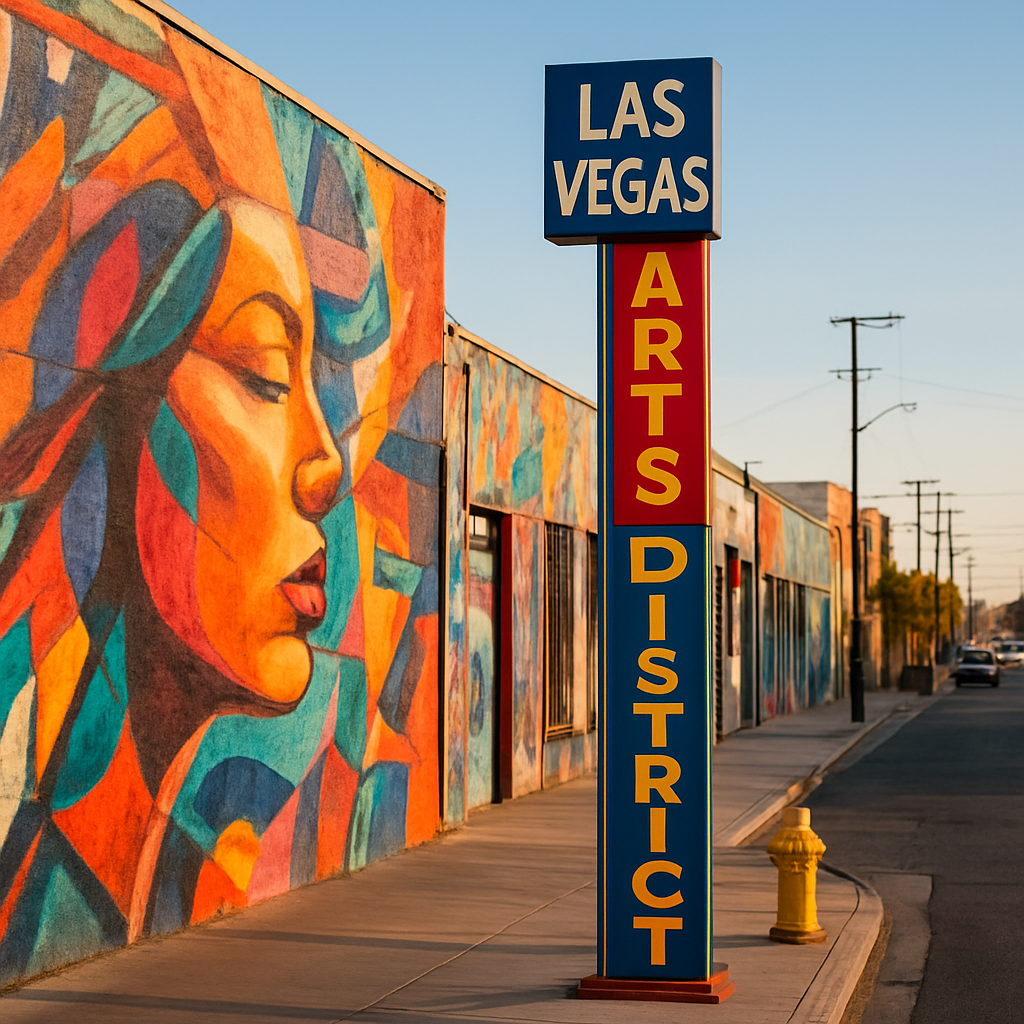
First Friday in the 18b Arts District
The first Friday of every month, the 18b Arts District south of downtown turns into a street party — gallery openings, live music, food trucks, and a few thousand locals who actually live in this city. It's the night when Vegas stops performing and shows up as itself. Walk South Main and Casino Center, duck into whichever gallery has a line, and finish the night at Esther's Kitchen if you booked ahead.
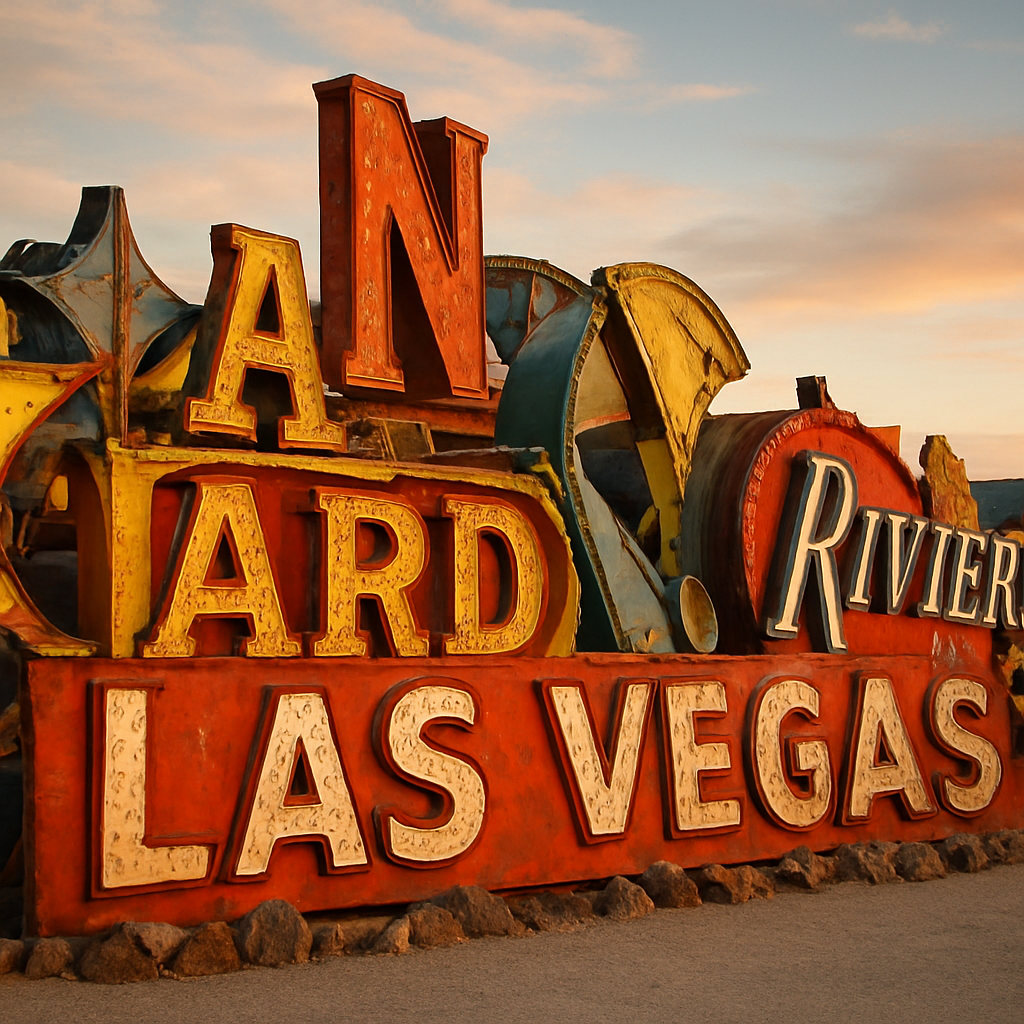
The Neon Museum at Night
Two acres of retired neon signs from a century of Las Vegas — over 200 of them — arranged in an outdoor Boneyard that you walk through on a guided tour. Book the after-dark slot, when restored signs are relit and the rest sit in shadow like a graveyard for the city's previous lives. It is the most honest, most beautiful museum in Vegas, and the only one that bothered to keep the history.
A Dinner Crawl Down Spring Mountain Road
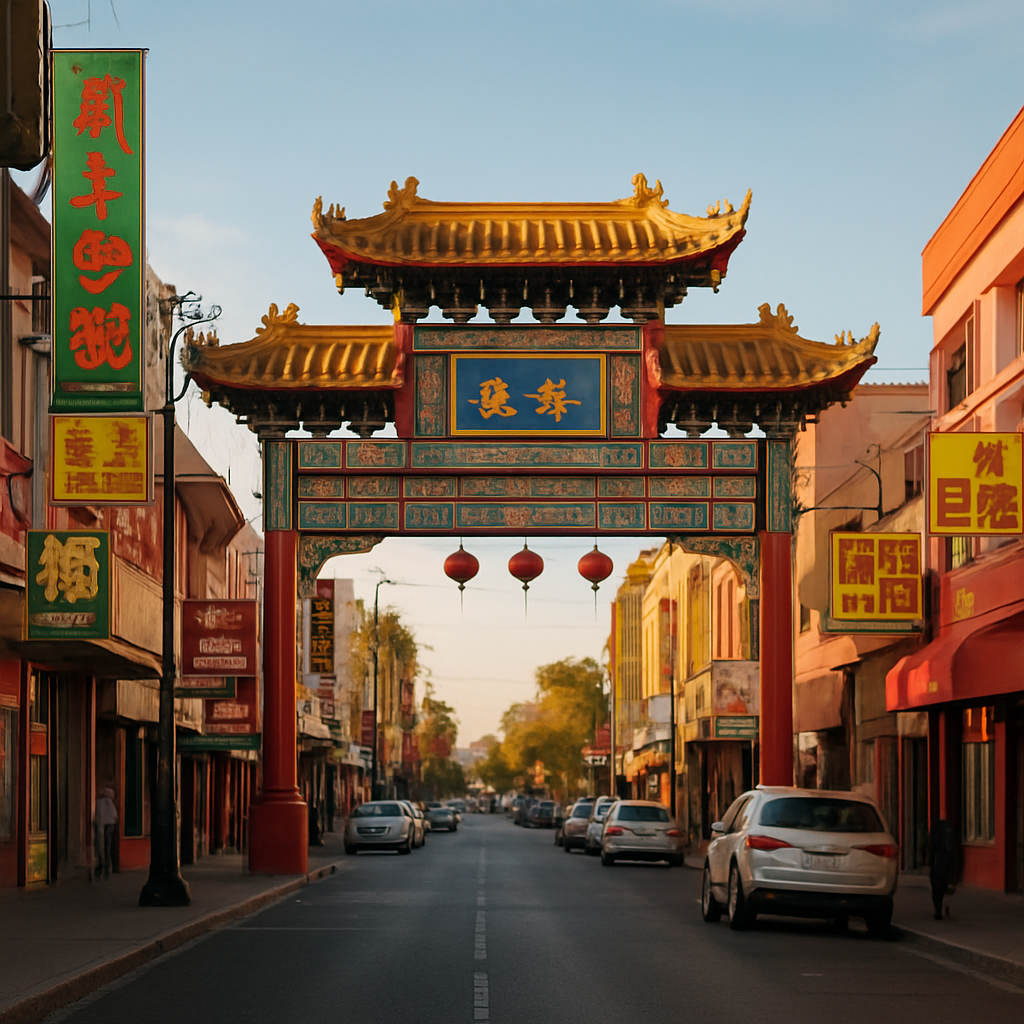
The Spring Mountain corridor west of the Strip is the most underrated dining stretch in the western United States — a few miles of strip-mall storefronts running James Beard-recognized kitchens, regional Chinese, Korean barbecue, Thai, Vietnamese, and Japanese at a level that makes the Strip's celebrity-chef rooms look performative. Start at Sparrow + Wolf, finish wherever the line is shortest, and accept that you'll need three trips to do it properly.
The places I actually send people to
Advice that fits how you travel
Vegas rewards solo travelers in a structural way most cities don't: half the city is already traveling alone and everyone is in the mood to talk to a stranger. On Paradise Road, the Fruit Loop bar format is genuinely conversational — Freezone and Entourage are neighborhood bars where the regulars will tell you where to eat and where not to bother, not dance floors where you stand alone watching the crowd. Show up mid-week, sit at the bar, and let the place do its work. If you're here on a weekend, Piranha Nightclub is reliably full and the layout gives you something to do with your hands while the room figures itself out.
The apps are extremely active here — Las Vegas has one of the more saturated app environments in the country because there are always thousands of visitors in town alongside the locals, and both groups are often in the same frame of mind. Pro tip: set your distance filter wide enough to include the Strip corridor and you'll have more options than you'll know what to do with. For daytime solo hours, the 18b Arts District is the move — PublicUs is built for solo coffee and working, and First Friday turns the whole neighborhood into a street party you can wander into alone without it being awkward. Check The Center's event calendar before you arrive; their community mixers are open to visitors and a far better way to meet locals than another hour at a slot machine.
Budgeting solo here is more flexible than the city's reputation suggests. Stay near Paradise Road — Ellis Island Hotel Casino & Brewery starts around $30/night and puts you a block from the scene, while Alexis Park prices around $80/night with substantially more room to recover in. Skip the headline nightclubs on peak nights (cover charges stack up fast) and redirect that money to one good dinner: the Spring Mountain Road dining corridor runs James Beard-nominated kitchens at a fraction of the Strip markup, and you'll feel the difference. A moderate solo budget runs $235–380/day — that covers accommodation, the occasional show, and the kind of meal you'll text someone about in the morning.
Same-sex couples will find the Strip and the Fruit Loop equally relaxed for affection — no strategy required, no reading the room. For a genuinely memorable evening, book the after-dark tour at the Neon Museum downtown: walking through two acres of restored and retired neon signs as the desert sky goes dark is the kind of experience that has staying power long after the trip ends. Follow it with dinner — Esther's Kitchen in the Arts District for handmade pasta and wood-fired plates, or the Spring Mountain corridor if you want to turn dinner into an evening-long crawl through one of the most underrated dining stretches in the western United States.
For the splurge, é by José Andrés at The Cosmopolitan of Las Vegas seats roughly eight people per tasting — the most intimate restaurant experience on the Strip, and worth the advance booking logistics on a trip with the right person. On accommodation: Vdara Hotel & Spa at CityCenter is the call for couples who want the Strip's address with a genuinely quiet room (non-gaming, non-smoking, all-suite — about as peaceful as this city gets); Virgin Hotels Las Vegas on Paradise Road puts you five minutes on foot from the Fruit Loop bars; The Cosmopolitan mid-Strip covers the best food-to-room ratio of any hotel in the city.
A day trip together resets everything a Vegas weekend stacks up. Red Rock Canyon National Conservation Area is 17 miles west — drive the scenic loop before the heat lands, pull over at Calico Hills, hike something short, and you're back at the pool by noon. For a longer day, Valley of Fire State Park is 55 miles northeast, and the red Aztec sandstone photographs in a way that makes everything else you've shot on the trip look modest. Come back, shower, and let the city handle the rest of the evening — that's the rhythm this place was built for.
As of 2026, Nevada gives LGBTQ+ families one of the clearest legal frameworks in the country: marriage settled, joint and second-parent adoption legal, and comprehensive anti-discrimination protections covering employment, housing, and public accommodations on both sexual orientation and gender identity. The major Strip resorts — MGM Resorts, Caesars Entertainment — carry HRC-perfect Corporate Equality Index scores and have formal non-discrimination policies at the company level. What that means on the ground is straightforward: you are a family checking in, and the front desk has had this training.
The activities picture for families has improved genuinely over the past decade, and the landscape surrounding the city does a lot of heavy lifting. Red Rock Canyon is 17 miles west — the shorter trails are doable with older kids, and the 13-mile scenic drive works for any age; those red formations hold attention in a way a casino lobby does not. The Neon Museum downtown is a crowd-pleaser across age groups — the outdoor Boneyard format keeps things moving, and kids respond to giant retired neon signs with an enthusiasm adults consistently underestimate. Drag brunch is increasingly accessible at family-forward Strip venues; call ahead to confirm show content and age guidance, as productions vary.
Practically: the Strip sidewalks are wide and stroller-friendly, though they run longer than they look on a map — a 20-minute walk at 95°F is a different thing with a five-year-old than it is solo, so build in midday pool time and plan outdoor sightseeing for morning. Major resort pools are generally family-accessible; confirm any adults-only restrictions before booking. The family budget runs $220–340/day at the budget tier and $500–815/day at a moderate level — Vegas pricing is elastic, and booking on a Tuesday in January versus a Friday in October can move your room rate by more than 60 percent. The October Pride timing is counterintuitively excellent for families: weather is ideal, tourist crowds are manageable, and kids old enough to ask questions about what they're seeing will find good answers.
What Las Vegas actually costs
Flights, visas, and the first 30 minutes
Airport: You fly into Harry Reid International Airport (LAS), and with approximately 130 nonstop routes it is one of the most-connected airports in the country. Every major U.S. city has a direct flight here. International service from the UK, Canada, Mexico, and parts of Europe runs direct as well — if you can't get a nonstop to Las Vegas, you're not trying.
Visa requirements (as of 2026): U.S. citizens need nothing — domestic travel. International visitors from the UK, Canada, Australia, and most EU nationalities can typically enter on an ESTA ($21) rather than a B-2 visa; apply online before departure, as it's valid for two years once approved. Some EU nationalities fall outside the Visa Waiver Program and will generally require a B-2 visa — confirm your country's status with U.S. Customs and Border Protection well before booking. Pro tip: apply for your ESTA at least 72 hours out. Same-day approvals happen, but don't build your trip around one.
Getting to the Strip: Rideshare (Uber/Lyft) is the move for most arrivals — $15–30, 15–25 minutes, pickup from designated lots at Terminal 1 and Terminal 3. Taxis run $25–40 from curbside at both terminals and take roughly the same time if traffic cooperates. The RTC Bus Route 109 runs 24/7 for $6, connecting to the Strip and the Downtown Transit Center in 35–50 minutes — slow, but perfectly functional for a daytime arrival with a carry-on. Many Strip properties offer complimentary or low-cost shuttles ($0–12); confirm before you land and you might save yourself the trouble of the rideshare queue entirely.
Traven's seasonal breakdown
The questions everyone asks
Is Las Vegas safe for LGBTQ+ travelers?
Where's the gay neighborhood?
When is Las Vegas Pride?
How much should I budget per day?
Do I need a car?
Are the Strip resorts actually LGBTQ+ welcoming or is it marketing?
What about trans travelers in 2026?
Screenshot this before you go
So should you actually go?
Go. Las Vegas earns its Traven-Dex of 8.6 the honest way — full state-level legal protections, a real walkable gay district on Paradise Road, a Strip that has actually done the work on inclusion, and a desert sitting 17 miles outside the city limits that resets everything by noon. Time it for October if you can — that's when Pride lands and the weather finally turns human — or anywhere from March through May if you can't. Skip July and August unless your entire itinerary is pool-side. Stay on or near Paradise Road if the scene is why you came, eat off-Strip at least once, drive out to Red Rock before the heat lands, and let Nevada's no-closing-time policy decide how the rest of your night goes. LGBTQ+ travelers will find one of the most operationally welcoming American cities here, and the city itself is in the middle of an interesting reinvention that's worth seeing in motion.
Sources & Resources
Official links we reference when compiling this guide. Last verified 2026-04-29.
- Aid for AIDS of Nevada (AFAN)
- Clark County Government
- Human Rights Campaign
- Lambda Legal
- Las Vegas Pride
- Nevada Health Centers — LGBTQ+ Affirming Primary Care
- Planned Parenthood of Nevada
- Southern Nevada Health District — Sexual Health Services
- The Center — Gay & Lesbian Community Center of Southern Nevada