Every queer city in the world is standing on shoulders that started here — and the original is still undefeated.
The first thing that hits you in New York isn't a smell or a sound — it's the speed. Everyone is going somewhere with absolute conviction, and within two blocks of stepping off the subway, you're doing it too. This city rewires your internal clock. You'll eat dinner at 10 PM, walk into a bar at midnight, and somehow find yourself arguing about Sondheim with a stranger in a basement piano bar at 2 AM on a Tuesday, wondering how that happened and when you can do it again.
I gave this city my Traven-Dex score of 9.6, and honestly, the only reason it's not higher is that perfection is a concept I don't believe in — and New York would agree with me on that. This is a city that has earned every ounce of its reputation through decades of queer people building, fighting, and refusing to disappear. Walk down Christopher Street past the Stonewall Inn and into Christopher Park, and you're standing on the ground where modern LGBTQ+ rights were born. That's not a metaphor. That's just Tuesday in the West Village. A 9.8 on Scene doesn't capture what it actually feels like to step into Marie's Crisis Cafe on a Friday night and hear forty strangers nail the harmonies on "Don't Rain on My Parade" — but it tries.
What makes New York different from every other high-scoring city on my list is the sheer density of queer life. It's not one neighborhood, one strip, one weekend event. It's Hell's Kitchen bars spilling onto Ninth Avenue on a warm night. It's the drag performers reinventing themselves in Bushwick warehouses. It's two dads pushing a stroller through Park Slope without a single turned head. It's a full LGBTQ+ art museum in SoHo — the Leslie-Lohman Museum of Art, the only one of its kind in the world — that you can walk into for free. The queer infrastructure here isn't decorative. It's load-bearing.
And the thing nobody tells you until you arrive: New York is kind. Not polite — kind. There's a difference. A New Yorker will cut you off mid-sentence, but they'll also walk three blocks out of their way to make sure you find the right subway entrance. Queer travelers feel that energy immediately. You're not tolerated here. You're just... here. Same as everyone else. Moving fast, eating well, staying out too late, and texting your friends back home that you might never leave.
The stuff your travel guide buries on page 47
Legal Framework: New York State recognizes same-sex marriage fully, with all associated spousal rights including adoption, hospital visitation, and inheritance. Comprehensive anti-discrimination protections cover employment, housing, and public accommodations under the Sexual Orientation Non-Discrimination Act (SONDA) and the Gender Expression Non-Discrimination Act (GENDA). NYC's own Human Rights Law goes even further and is considered one of the most expansive municipal civil rights frameworks in the country. There is no criminalization of any kind. The legal status label here is Full Equality, and it's earned.
Gender Identity: New York State offers self-identification for gender markers on state-issued IDs — no medical documentation required. NYC municipal law explicitly protects gender identity and expression in all contexts, and the city has among the strongest trans anti-discrimination provisions in the United States. Trans travelers are broadly welcomed, especially in Manhattan and Brooklyn.
Cultural Reality: The laws match the ground-level experience, with one caveat: New York is enormous and culturally diverse. In Manhattan, Brooklyn, and most of Queens, being openly LGBTQ+ is entirely unremarkable. The city has a dedicated Mayor's Office for LGBTQ+ Affairs and an active Anti-Violence Project with a 24-hour bilingual hotline (212-714-1141). You're in a city that does not just tolerate queerness — it has institutionalized protections for it.
PDA Comfort: In the West Village, Chelsea, and Hell's Kitchen, same-sex PDA is completely normalized — holding hands, kissing, nobody notices, nobody cares. Midtown and tourist-heavy areas are broadly comfortable, though the sheer density of people means an occasional stare from an out-of-towner isn't impossible. In parts of the outer boroughs — sections of Staten Island, the Bronx, and less-central Queens — exercise the kind of situational awareness you'd use in any unfamiliar neighborhood. Overall, this is one of the most PDA-comfortable cities on the planet for queer couples.
What it actually feels like on the ground
Holding Hands: In the West Village, Chelsea, Hell's Kitchen, Park Slope, and Bushwick, same-sex hand-holding is as common as coffee cups. You'll see it constantly. In Midtown tourist zones, totally fine. On outer-borough streets you don't know well, use your judgment — not because danger is likely, but because block-to-block culture varies in a city this large.
Hotel Check-In: A complete non-issue across every price tier in the city. Hotels in New York process same-sex couples and gender-diverse travelers routinely. No one is blinking at your booking, your ID, or your partner. This extends to hostels, boutique properties, and major chains equally.
Taxis and Rideshares: NYC cabs and rideshare drivers are overwhelmingly professional and uninterested in your personal life. The city licenses over 50,000 for-hire vehicles with a diverse driver corps. I've never received a report of orientation-based issues in a taxi here. Pro tip: the 1 train running through the West Village and Chelsea functions as a de facto queer express line — the Christopher St-Sheridan Sq and 14th St stops put you right in the action.
Late Night: NYC nightlife starts late — bars fill up around 11 PM, clubs don't hit stride until 1 AM. The subway runs 24/7, but frequency drops after midnight. Check the MTA app for your next train rather than waiting on a platform. Rideshare surge pricing gets aggressive at weekend bar-closing hours (around 4 AM). Empty subway platforms very late at night warrant the same basic awareness you'd use in any major city — stay near other riders, keep your phone handy. If you ever experience anti-LGBTQ+ harassment, the Anti-Violence Project runs a 24-hour hotline at 212-714-1141.
Beaches and Public Spaces: Central Park, the Hudson River waterfront, Prospect Park in Brooklyn — all completely comfortable for LGBTQ+ visitors. The Piers along the West Village and Chelsea waterfront (especially Pier 45 and Pier 46) have been queer gathering spaces for decades and remain so. Fire Island beaches are clothing-optional in sections, and the entire community is LGBTQ+-centric by design.
Trans Travelers: Manhattan and Brooklyn are broadly excellent for trans travelers, with strong legal protections and widespread cultural familiarity. Restroom access follows NYC's legal standard — use the facility consistent with your gender identity, full stop. Trans-specific healthcare resources are accessible through NYC Health's LGBTQ+ services. In less-central outer-borough neighborhoods, vigilance is advisable — not because of legal exposure, but because cultural attitudes can vary block by block.
Verbal Harassment Risk: Low in Manhattan and central Brooklyn. Not zero — this is a city of 8.3 million people and not every one of them is evolved — but incidents are uncommon and the social norm overwhelmingly sides with you. If something does happen in a public space, bystanders in New York are more likely to intervene than in most cities. You are not alone here.
The queer geography
Hell's Kitchen
If you want the densest concentration of gay nightlife in Manhattan right now, this is it. Ninth and Tenth Avenues between 42nd and 52nd Streets are packed with LGBTQ+ bars, restaurants, and cafes so close together you can bar-hop on foot without ever swiping a MetroCard. Industry Bar is the flagship — multiple floors, go-go dancers, consistent energy every night of the week. Flaming Saddles Saloon brings country-bar chaos. Hardware Bar delivers a neighborhood hangout feel. The crowd skews younger and male but the energy is open. The A/C/E trains at 42nd St-Port Authority station put you ten minutes from downtown.
West Village / Greenwich Village
This is where it started. Christopher Street and the Stonewall Inn are the spiritual home of the modern LGBTQ+ rights movement, and walking this stretch for the first time can be genuinely emotional — especially if you grew up somewhere without any visible queer community. Christopher Park holds the George Segal Gay Liberation sculptures, and the entire site is now the Stonewall National Monument. Beyond the monument, you'll find Cubbyhole — one of the last standing dedicated lesbian bars in the country, tiny, packed, dripping in decorations — and Marie's Crisis Cafe, the underground piano bar where strangers belt show tunes together until closing. Julius' Bar, a block from Stonewall, claims the title of NYC's oldest gay bar. The 1 train at Christopher St-Sheridan Sq drops you right here.
Chelsea
Chelsea is more of a daytime gay neighborhood now — brunch spots, the galleries along Tenth Avenue, the High Line overhead, and gyms that double as social scenes. Cookshop anchors the brunch ritual. The Eagle NYC and Gym Bar hold down the nightlife that remains. But the honest move is to spend your afternoons in Chelsea and your nights in Hell's Kitchen to the north. The Standard, High Line straddles this zone perfectly.
Brooklyn: Bushwick, Park Slope & Beyond
Bushwick is where the queer arts and nightlife scene lives its wildest life — DIY performance spaces, drag shows in converted warehouses, parties that don't start until most of Manhattan is asleep. Take the L train from 14th Street and cross the river. Park Slope, a few miles south, is a different energy entirely — tree-lined brownstone blocks, stroller-heavy sidewalks, and one of the most established lesbian and queer family communities in the country. Jackson Heights in Queens is also worth knowing: a diverse neighborhood with a visible LGBTQ+ Latino community and its own annual Queens Pride parade.
Other Neighborhoods Worth Knowing
Nolita and SoHo are worth a visit for the Leslie-Lohman Museum of Art — the only dedicated LGBTQ+ art museum in the world, free to enter. The Center (the NYC LGBT Community Center) on West 13th Street hosts free events and meetups almost every night and is worth a stop even if you're just passing through. And the Meatpacking District, wedged between Chelsea and the West Village, still draws a mixed queer-and-everyone crowd to its clubs and rooftop bars.
The experiences worth rearranging your itinerary for
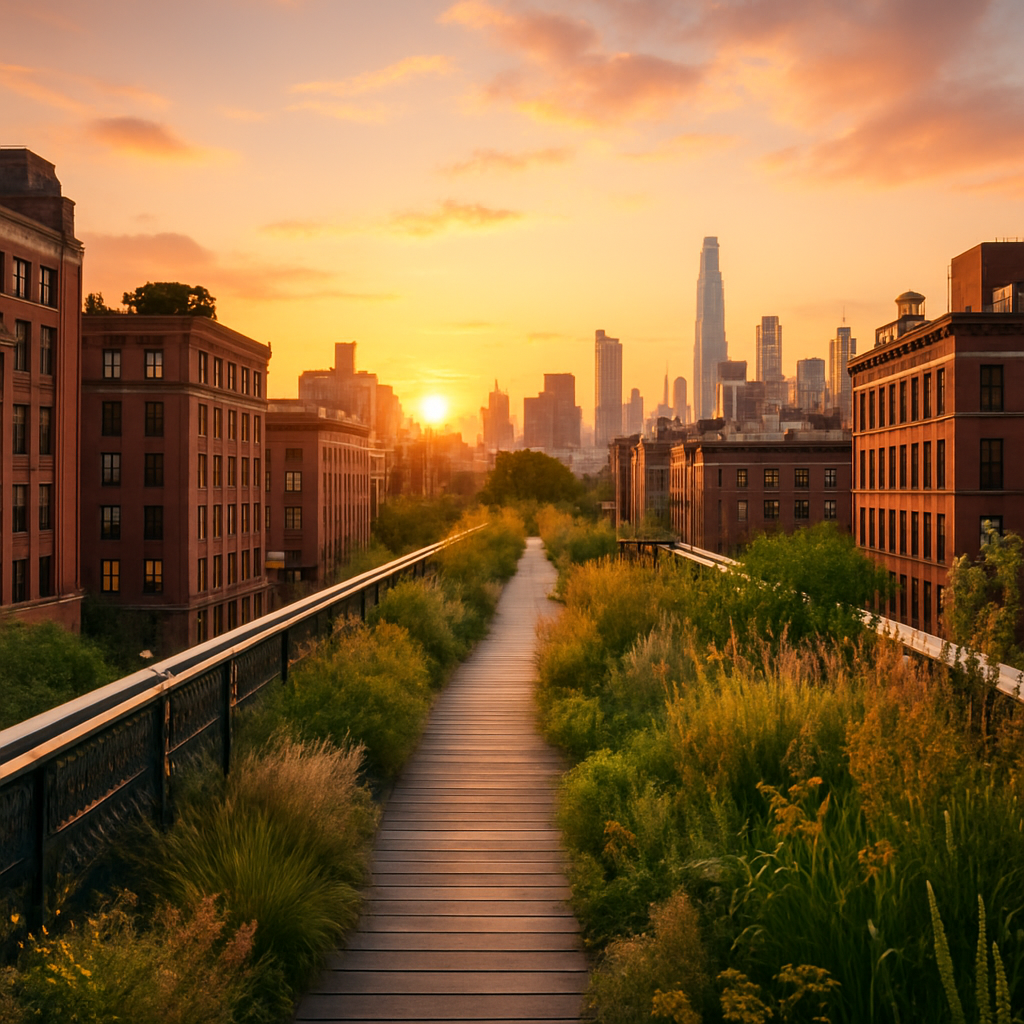
The High Line at Sunset
An elevated park built on abandoned freight rail tracks running from the Meatpacking District through Chelsea — and one of the most architecturally inventive public spaces built anywhere in the last 20 years. Walk it northbound starting around 6 PM when the light hits the Hudson and the city goes gold. The plantings change with the seasons, the art installations rotate, and the views of the West Side skyline are the kind of thing you stop walking for. Free, obviously.

A Dollar Slice and a Chopped Cheese
I'm not going to tell you to eat at a celebrity chef restaurant — you can find those yourself. What I am going to tell you is that a $1.50 slice of New York pizza folded in half at a counter joint (Joe's Pizza on Carmine Street in the Village is the standard) and a chopped cheese from a bodega in Harlem or Hell's Kitchen at 2 AM are two of the most essential food experiences this city offers. They cost almost nothing and they taste like the actual city. Do not skip this.

Central Park in the Morning
Central Park before 9 AM is a completely different place than Central Park at noon. The runners are out, the dogs are off-leash, the Bethesda Fountain is empty enough to sit and actually look at it, and the Ramble — 38 acres of deliberately wild woodland in the middle of Manhattan — is genuinely peaceful. Walk in from the West Side at 72nd Street, cut through the Ramble, emerge at the Bethesda Terrace, and keep going south through the Mall. It'll take about an hour and it costs nothing.

The Metropolitan Museum of Art
The Met is not a museum you 'do' in an afternoon — it's a museum you surrender to for three hours and then come back. The Temple of Dendur alone is worth the trip. The rooftop garden (open seasonally) has one of the best views in the city. And the admission policy is pay-what-you-wish for New York State residents and set-price for visitors, which still runs cheaper than most comparable institutions in Europe. Go on a weekday morning if you want to actually see the art instead of the backs of other people's heads.

The Staten Island Ferry at Dusk
A completely free, 25-minute ride across New York Harbor with the Statue of Liberty on one side and the lower Manhattan skyline on the other. No ticket, no reservation, just walk on at Whitehall Terminal in Lower Manhattan. Time it for dusk and you'll get the skyline lit up on the return trip. It's the best free thing in the city and it's not particularly close.
The places I actually send people to
Advice that fits how you travel
New York might be the best solo travel city in the world, and that's before you factor in the queer dimension. The city is designed around individuals in motion — eating alone at a bar is normal, drinking alone at a bar is normal, walking into a museum alone and spending two hours with a single painting is normal. Nobody is looking at you sideways for being a party of one. The subway system connects every neighborhood on this list, the MetroCard or OMNY tap-to-pay gets you everywhere for $2.90 a ride, and the density means you are never more than a few blocks from something interesting.
For meeting people, the app culture here is aggressive and efficient — Grindr, Scruff, Hinge, whatever you use, the grid will be full within seconds of arrival. But the bars are honestly more fun. Industry Bar in Hell's Kitchen is built for socializing. Pieces Bar in the Village has drag shows where audience interaction is half the point. Club Cumming in the East Village draws a mixed, creative crowd that's remarkably easy to talk to. And Marie's Crisis Cafe — the underground piano bar — might be the single easiest place in America for a solo traveler to end up in conversation with strangers, because you're literally singing together within five minutes of walking in. The cash-only bar is worth knowing about in advance.
Safety-wise, solo queer travelers are in excellent shape here. Stay aware on subway platforms late at night, don't flash your phone in empty train cars, and trust your instincts if a block feels off — hail a cab or pull up a rideshare. But the baseline safety level for solo LGBTQ+ travelers in Manhattan and central Brooklyn is genuinely high. Budget-wise, a solo traveler can do New York on $110–$160/day with a hostel, deli food, and a MetroCard, which makes it more accessible than its reputation suggests. The free stuff alone — Central Park, the Staten Island Ferry, the Stonewall National Monument, the Leslie-Lohman Museum — could fill several days.
New York is one of the most romantically charged cities on earth for same-sex couples, and I mean that without any asterisks. West Village at dusk — when the brick townhouses catch the last light and the streets narrow into something almost European — is the kind of evening you'll be describing to friends for years. Walk Christopher Street together, stop into the Stonewall Inn for a drink with actual historical weight behind it, then drift south to the Piers at Pier 45 for the sunset over the Hudson. That's a free evening and one of the best dates this city has to offer.
For dinner, Cookshop in Chelsea is my go-to for couples who want atmosphere without the performance — warm lighting, excellent seasonal cooking, and a room that feels celebratory without trying too hard. If you want to stretch the budget, New York's top-tier restaurants accommodate same-sex couples with total ease; this is not a city where you will feel like an anomaly at a nice table. Afterwards, The Standard High Line's rooftop situation is exactly the kind of place that turns a night out into something you actually remember.
On accommodation, The Jane Hotel is genuinely romantic if you want character over square footage and a West Village address that puts you steps from everything. If the budget runs to The Standard, you get Hudson River views from the bed and a position between Chelsea and the Meatpacking District that's hard to beat. Either way, same-sex couples will find NYC hotel staff comprehensively indifferent to who you're sharing a room with — in the best possible sense. This is one of the easiest cities on the planet to just be a couple.
New York is an exceptional city for LGBTQ+ families across every dimension — legal, cultural, and logistical. New York State recognizes same-sex marriage fully, adoption rights are firmly established, and the NYC Commission on Human Rights enforces some of the most expansive anti-discrimination protections in the country. You will not be the only queer family at the Museum of Natural History. You will not get a second glance at Central Park. The playgrounds in Park Slope and the West Village are full of kids with two moms, two dads, and every configuration in between, and the city does not notice.
The free and cheap options in New York are genuinely spectacular. The Staten Island Ferry is free and delivers stunning harbor views and a close-up of the Statue of Liberty — start there. Central Park is vast, stroller-friendly, and dotted with excellent playgrounds. Kids under 44 inches tall ride the subway for free with a paying adult, which makes getting around the city manageable on a real-world budget. The American Museum of Natural History and the Brooklyn Museum both have strong family programming, and the Metropolitan Museum of Art operates pay-what-you-wish admission — which means you decide what it's worth.
For older kids and teenagers, the Stonewall National Monument on Christopher Street is a genuinely powerful place to visit together — the National Park Service site includes interpretive history that puts the space in context. The Leslie-Lohman Museum of Art in SoHo is the only dedicated LGBTQ+ art museum in the world and it's free to enter, which is remarkable. Logistics note: NYC rideshare apps offer car seat options worth checking if you're traveling with small children, and most high-traffic tourist areas are stroller-navigable, though the subway requires some platform-to-street maneuvering on older lines.
What New York actually costs
Flights, visas, and the first 30 minutes
Airport: John F. Kennedy International Airport (JFK) is the primary international gateway, with 300+ cities served via direct routes. LaGuardia (LGA) handles many domestic connections and sits closer to Midtown; Newark Liberty (EWR) in New Jersey is a strong alternative, particularly for transatlantic routes.
Major Routes: London Heathrow to JFK runs roughly 7 hours direct. Paris CDG is about 7h 30m. Los Angeles is 5h 30m. Toronto — essentially a commute at 1h 30m. Sydney clocks around 20 hours with a connection. Chicago O'Hare is a quick 2h 30m hop.
Visa Requirements: US citizens — domestic travel, no paperwork needed. UK, EU, Canadian, and Australian passport holders all require an ESTA (Electronic System for Travel Authorization) for stays up to 90 days. Apply via the official CBP website before you fly — it's a $21 fee, takes minutes to complete, but must be secured before boarding. Most other nationalities will need a B-2 visitor visa; check the US Embassy in your country for current processing times.
Getting Into the City from JFK: The most affordable option is the AirTrain + Subway — connect at Howard Beach or Jamaica station and ride into Manhattan for $10–$13 total, roughly 50–70 minutes depending on your destination. The Long Island Rail Road (LIRR) is faster at 30–40 minutes to Penn Station/Midtown, costing $15–$20. Taxis run a flat rate of $52 from JFK to Manhattan (tolls and tip not included); Uber and Lyft typically land at $45–$75 depending on traffic and surge. The NYC Airporter express bus ($20–$25) drops at major Midtown hotels in 60–90 minutes and is a solid option if you're carrying heavy luggage and your hotel is on the route.
Traven's seasonal breakdown
The questions everyone asks
Is New York actually safe for LGBTQ+ travelers?
Where's the best neighborhood to stay if I want to be near gay nightlife?
How much should I budget per day?
Do I need to speak English?
When is NYC Pride?
Is the subway safe at night?
Can I do Fire Island as a day trip?
Screenshot this before you go
So should you actually go?
Go. I say that with zero qualification and complete conviction. New York City is the single most complete destination for LGBTQ+ travelers on the planet — full legal equality, a scene that spans five boroughs and a hundred years of queer history, and a cultural energy that makes every other city feel like it's running on half power. It's expensive, it's loud, it's occasionally rude to your face, and it will make you feel more alive than anywhere you've ever been. This is the one, honey.