
Oakland doesn't perform. It just walks the Lake Merritt loop at sunset and dares San Francisco to keep up.
Oakland is what San Francisco's queer scene looks like once it stops performing for tourists and starts living in a house with a porch. The Town has one of the highest per-capita LGBTQ+ populations in the country — particularly for queer women, trans, and nonbinary folks — and unlike the Castro across the bay, it doesn't bottle that into a single rainbow-painted block. The scene is dispersed by design: Uptown for nightlife, Temescal for daylight, Lakeshore for the community center and the Sunday loop, Rockridge and Piedmont Avenue for the two-mom-two-dad school pickup line. That's a feature, not a bug.
I gave Oakland a 9.2 on Chill, and walking the 3.4-mile Lake Merritt loop on a Sunday afternoon is the easiest way to understand why. Same-sex couples on the path, trans runners doing laps, queer parents pushing strollers, the rowing club gliding across the lagoon — the city's queerness reads as a daily texture, not a weekend production. Holding hands here is so unremarkable it's practically the dress code. That's the version of safety that actually matters: not the score on paper, but the second you don't have to take to wonder whether anyone's watching.
The nightlife earns its 8.4. The Port Bar on a Friday is the de facto queer town square — get there before 10 or get in line. The White Horse at the Oakland-Berkeley border has been pouring continuously since 1933 and is widely cited as one of the oldest LGBTQ+ bars in the country, and you can feel every dyke and leather daddy who ever danced there in the floorboards. Around them: Club BNB, Fluid510, and Friends and Family doing the work of holding down hip-hop, drag, and Latin nights for Black and Brown queer scenes that don't get this kind of programming in most American cities.
What Oakland trades for the dispersed scene is convenience — you'll need a transit plan or a bike, not just walking shoes — and the property crime is real (read the Safety section about the cars; I'm not kidding). But my Traven-Dex of 8.8 isn't a sympathy score. It's a city where the food at Pizzaiolo, Brown Sugar Kitchen, and Commis punches above its weight, where the legal infrastructure (NCLR up the road, Transgender Law Center headquartered right here) is as locked-in as it gets in the U.S. as of 2026, and where the queer everyday life is so casually embedded that the bar for a good time is correspondingly higher. Oakland will spoil you for cities that have to try.
The stuff your travel guide buries on page 47
California, as of 2026, is about as locked-in as LGBTQ+ legal protection gets in the United States. Marriage equality, joint adoption, comprehensive anti-discrimination law covering employment, housing, and public accommodations, and self-ID for gender markers on state documents — all of it is on the books and actively defended. The state is a sanctuary jurisdiction for gender-affirming care, which means trans travelers from less friendly states can access medical care here without their home state's restrictions following them. The National Center for Lesbian Rights is headquartered in San Francisco and the Transgender Law Center is headquartered right here in Oakland — that should tell you something about the legal infrastructure on the ground.
Oakland itself goes further than the state floor. The city has a Department of Race & Equity baked into its government, and one of the highest per-capita LGBTQ+ populations of any U.S. city — particularly for queer women, trans, and nonbinary residents. The Town, as locals call it, is gayer than it gets credit for, and that visibility shapes everything from city policy to how a barista responds when your partner orders for you.
Pro tip: Oakland doesn't have a single concentrated gay village like the Castro. The scene is woven through Uptown, Temescal, Lakeshore, and Rockridge, which means you'll want a transit plan or a bike, not just walking shoes. PDA is comfortable across all the central neighborhoods — Lake Merritt, Grand Lake, Temescal, Piedmont Avenue, Rockridge, Uptown, and Downtown all sit at high comfort. Holding hands on the Lake Merritt loop on a Sunday afternoon is so common it's practically the dress code.
One more thing: the weather isn't San Francisco's weather. Oakland gets actual sun and warmth, especially in the flatlands. Pack a lighter layer than you would for the city across the bay.
What it actually feels like on the ground
Holding hands and PDA: Comfortable across the central neighborhoods — Lake Merritt, Grand Lake, Temescal, Piedmont Avenue, Rockridge, Uptown, and Downtown. Same-sex couples are part of the visual landscape here, especially around the lake on weekends. In West Oakland and Deep East Oakland, attitudes are generally accepting but the neighborhoods are quieter and you'll want standard urban awareness, particularly after dark.
Hotel check-in: Non-issue across the board. The major brands listed in this guide — Hyatt, Marriott, Fairmont — all carry corporate non-discrimination policies, and Oakland's independent boutiques are operating in a city where queerness is not a novelty.
Property crime — read this part: Car break-ins are the real Oakland safety issue, and they happen daily. Leave nothing visible in a parked car, ever — not a tote bag, not a phone charger, not a sweater on the seat. The hotspots are around Lake Merritt, along Telegraph, and near Jack London Square. The Alameda County Public Health resources cover the broader public-health side; on personal safety, your bigger threat to a great night out is a smashed window, not anything aimed at you specifically.
Late night and getting around: Walking Uptown on a Friday night feels fine — the bar district is active and visible. Walking West Oakland or the industrial stretches near the Coliseum after midnight does not. Trust the BART map; the safer corridors track pretty closely with the station lines. BART's last train back from San Francisco's Embarcadero to 12th St Oakland is around midnight on weekdays, slightly later on weekends — miss it and you're looking at a $40 Lyft.
Trans and gender-nonconforming travelers: Oakland is one of the easiest U.S. cities for trans visibility. Self-ID is law, gender-affirming care is protected, and you'll get less of a second look here than almost anywhere in the country. Lyon-Martin Community Health Services is a long-running Bay Area resource for trans and queer healthcare, and the Pacific Center for Human Growth in neighboring Berkeley runs support and crisis resources. Incidents of harassment can occur in any urban environment, but the baseline here is genuinely calmer than most of the country.
Verbal harassment risk: Low across the central neighborhoods. The cultural texture is that visible queerness is so embedded that it doesn't read as performance or provocation — it just reads as Tuesday.
The queer geography
Uptown
Uptown is Oakland's nightlife spine, anchored by the restored Fox Theater and the Art Deco Paramount Theatre — two of the most beautiful 1920s and '30s movie palaces left standing on the West Coast. Telegraph and Broadway between roughly 17th and 24th streets cluster bars, music venues, and restaurants in a way that's walkable and street-active most nights of the week. First Fridays turns the whole corridor into a months-long art crawl that spills onto the sidewalks.
This is also where the city's queer nightlife concentrates. The Port Bar is the closest thing Oakland has to a flagship — Friday and Saturday it's packed, with go-go nights and a patio that becomes the de facto queer town square; get there before 10 or you'll be in line. Club BNB, Fluid510, and Friends and Family round out the corridor with hip-hop nights, drag programming, and a particular following among Black and Brown queer scenes.
Temescal
Temescal runs along Telegraph in North Oakland and is one of the best eating neighborhoods in the East Bay. Pizzaiolo, open since 2005, helped launch Oakland's modern dining scene; Burma Superstar and Cholita Linda draw lines for tea leaf salad and Baja fish tacos respectively. Temescal Alley is a tucked-away strip of independent makers — leather, ceramics, vintage, barbershops — that feels like a small village inside the bigger neighborhood.
Temescal has been a hub of Oakland's lesbian and broader queer community for decades, and it shows in the density of women-owned and queer-owned businesses along the strip. The White Horse sits at the Oakland-Berkeley border and has been operating since 1933, making it one of the oldest continuously operating LGBTQ+ bars in the country. Resources like Lavender Seniors of the East Bay reflect the deep generational roots here.
Lake Merritt and Lakeshore
Lake Merritt is the geographic and emotional center of Oakland — a tidal lagoon designated as the country's first official wildlife refuge in 1870, ringed by a 3.4-mile path that's the city's living room. Walk it once at dusk when the necklace of lights comes on around the perimeter and you'll understand the local affection. The Grand Lake Theatre on the north side is a vintage marquee landmark; Lakeshore Avenue is a walkable strip of cafés, bookstores, and a co-op grocery that's become a low-key hub for queer Oaklanders.
Sunday afternoons here are queerer than any bar — the loop is essentially a parade of dykes on bikes, queer parents pushing strollers, and trans runners doing laps. The Oakland LGBTQ Community Center on Lakeshore is the move for HIV testing, name-change clinics, support groups, and the most current event calendar in town.
Rockridge and Piedmont Avenue
Rockridge stretches along College Avenue and feels like a small commercial main street that happens to be in the middle of a city — leafy, walkable, anchored by the Rockridge BART station and bookended by independent bookstores, the Market Hall food hall, and long-running restaurants like Wood Tavern. Piedmont Avenue a few blocks south runs a similar register: indie shops, the Fenton's ice cream institution that's been there since 1894, and a quietly residential rhythm.
Both neighborhoods are home to a sizeable population of long-settled LGBTQ+ households — the kind of place where the school pickup line includes plenty of two-mom and two-dad families and nobody clocks it as worth mentioning.
Old Oakland and Jack London Square
Old Oakland is the city's historic Victorian commercial core — handsomely restored brick buildings between Broadway and Washington, with Miss Ollie's Caribbean kitchen, Café Eternity, and the Friday farmers' market filling out the streets. Jack London Square sits on the waterfront a few blocks south, named for the writer who drank at Heinold's First and Last Chance Saloon — a tilted-floor 1883 wooden bar that survived the 1906 earthquake and is still pouring. The ferry terminal here connects to San Francisco and Alameda, which makes Jack London a useful base for day-tripping across the bay.
The experiences worth rearranging your itinerary for
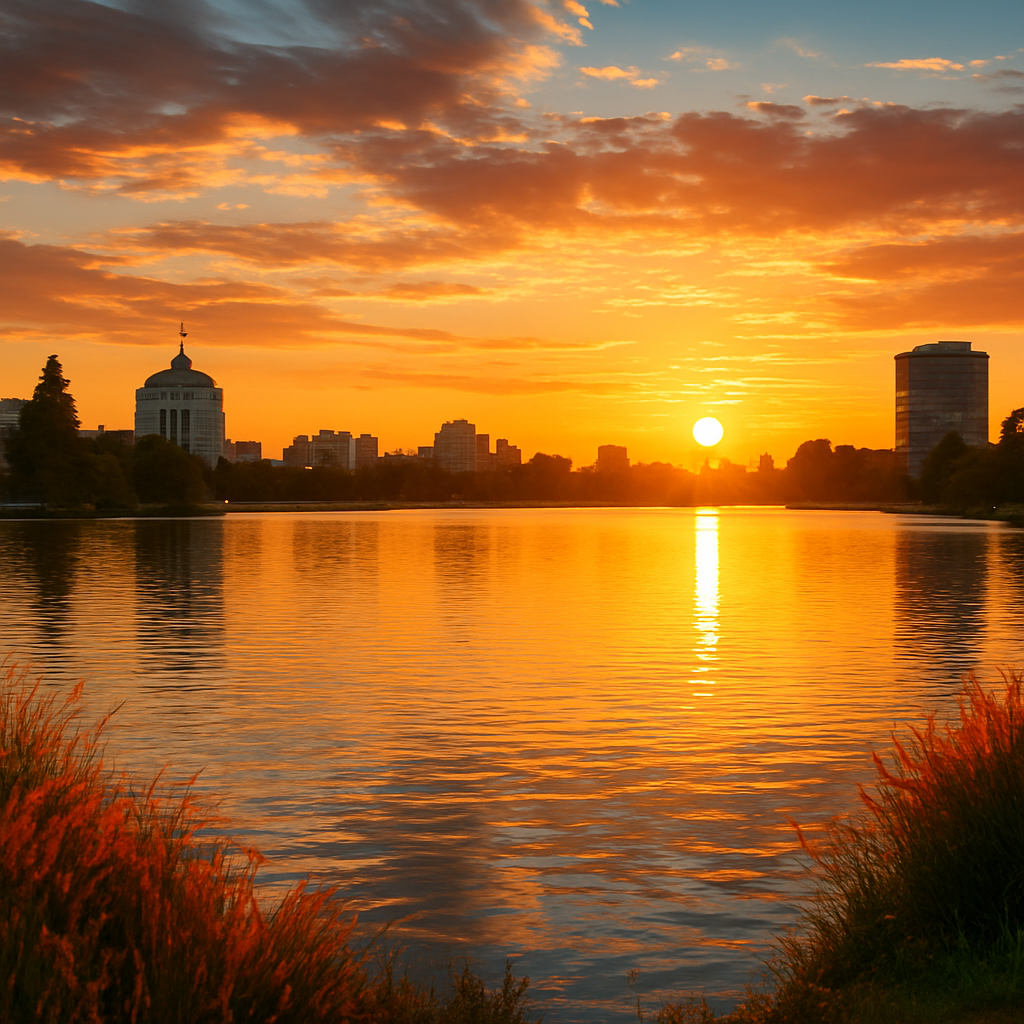
Walk the Lake Merritt Loop at Dusk
Lake Merritt is a tidal lagoon in the geographic center of Oakland, designated the country's first official wildlife refuge in 1870, with a 3.4-mile path that functions as the city's collective living room. Time the walk for the hour the necklace of perimeter lights comes on — usually right around sunset — and you'll get the local shorthand for why this lake is the most defended piece of public space in the East Bay.
Bring a coffee, walk the full loop, watch the rowing club glide across the water, and let the city introduce itself slowly. It's free, it's low-effort, and it's the move that makes everything else about Oakland make sense.
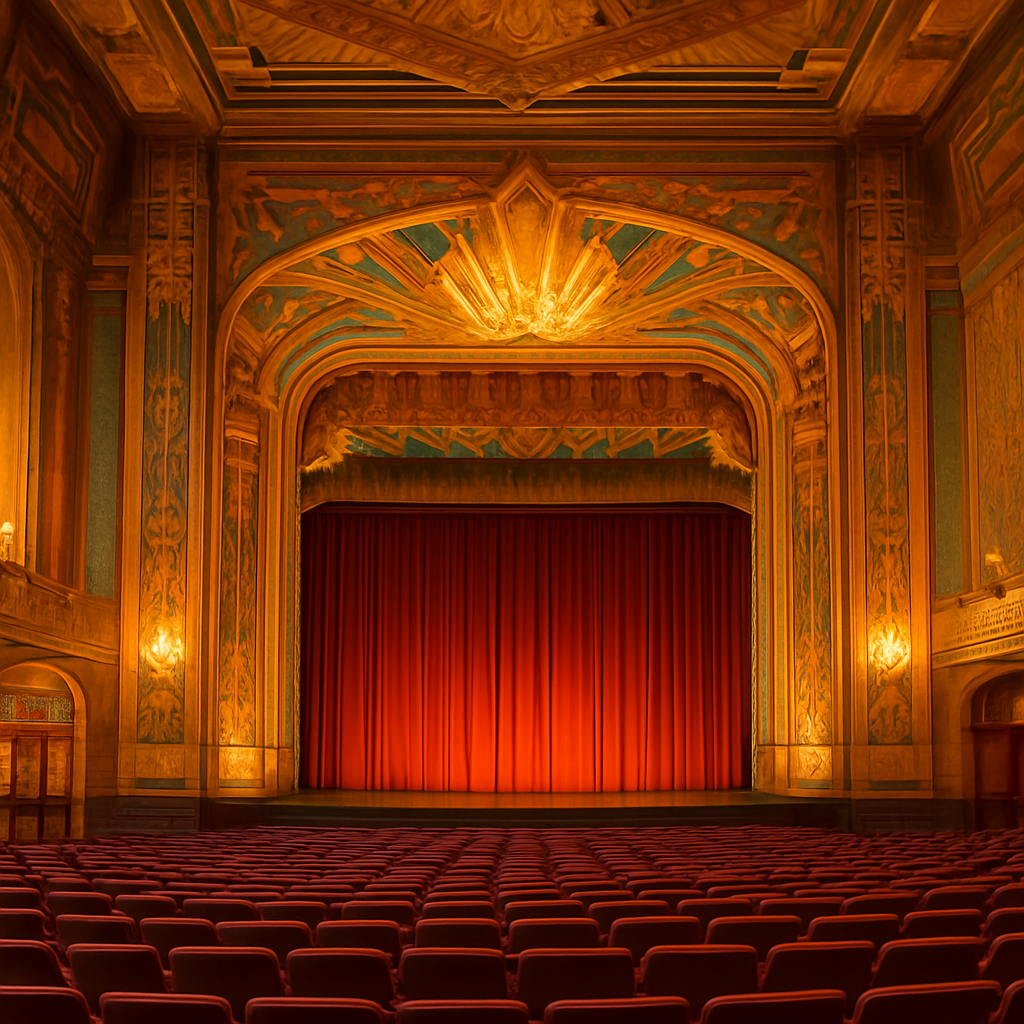
Catch a Show at the Paramount or Fox
The Paramount Theatre opened in 1931, designed by Timothy Pflueger and named a National Historic Landmark in 1977; the restored Fox Theater three blocks away handles more contemporary touring acts. Both are gorgeously restored Art Deco palaces, and walking into either of them is a gasp moment — gilded ceilings, geometric balconies, the kind of room that makes you understand why people once dressed up to see a movie.
The bookings span the Oakland Symphony, touring drag tours, indie reunions, and big-name pop. Buy the ticket for whatever's playing the night you're in town. The room itself is half the show.
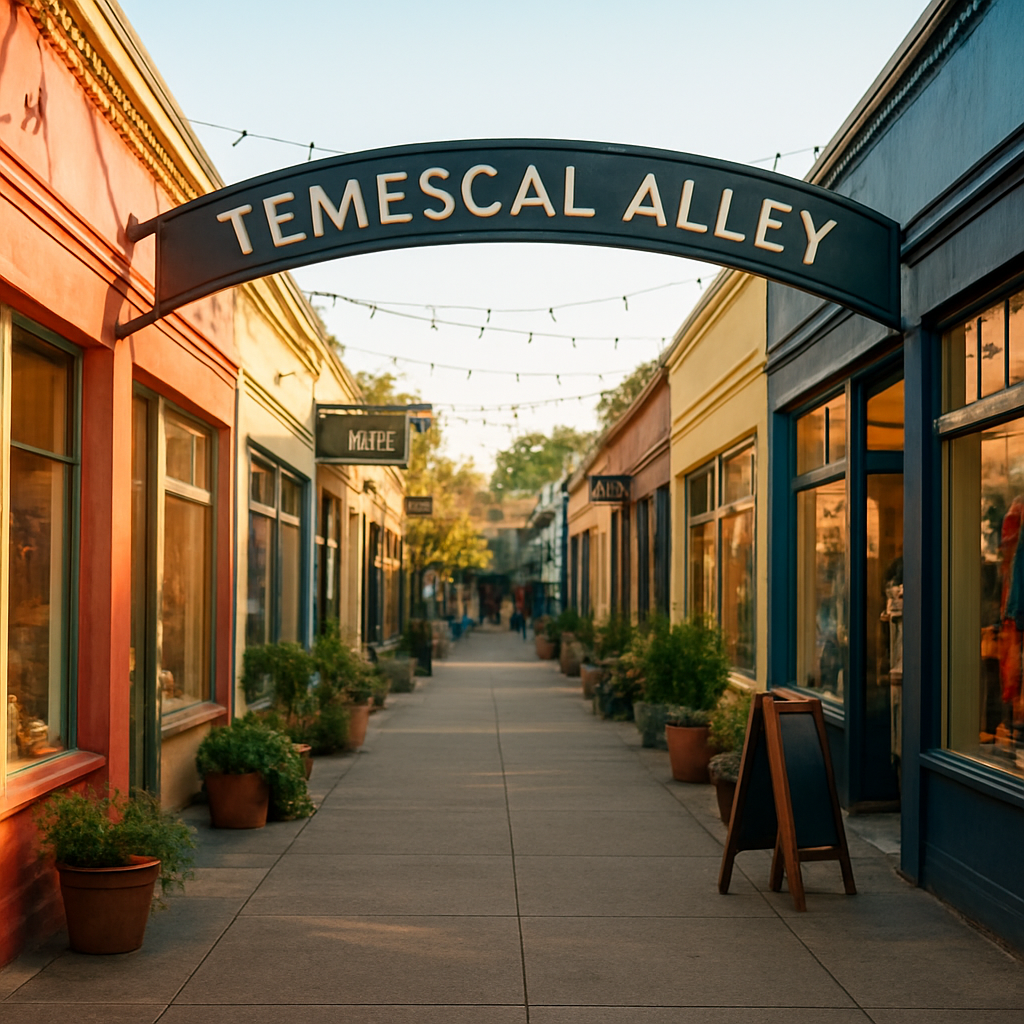
Wander Temescal Alley
Temescal Alley is a tucked-away strip of independent makers off Telegraph in North Oakland — leather goods, ceramics, vintage clothing, a barbershop, a bakery, an ice cream shop where the line is reliably down the block. The whole alley feels like a small village inside the bigger neighborhood, and you can knock out an afternoon here without trying.
Pair it with a slow walk down Telegraph itself for bookstores, cafés, and the rest of Temescal's eating options. Pizzaiolo, Burma Superstar, and Cholita Linda are all within a few blocks. Pro tip: come hungry.
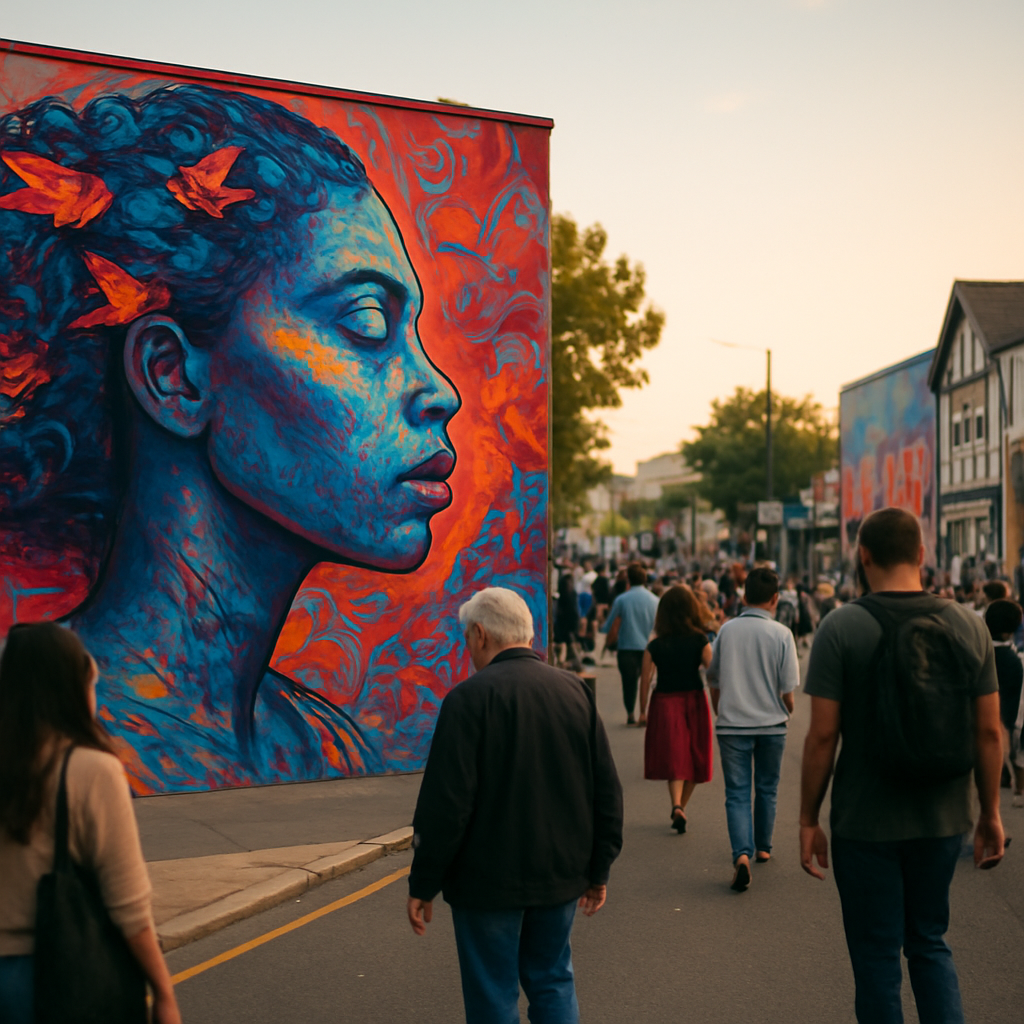
First Fridays in Uptown
The first Friday of every month, Telegraph Avenue between roughly 17th and 27th turns into a months-long street art crawl that spills out of the galleries onto the sidewalks. Food trucks line up, DJs play out of doorways, and the queer-friendly bookings turn the corridor into a block party that's genuinely on display rather than curated for a press release.
It's free, it's loud, and it's the most honest snapshot of Uptown's energy you'll get on a single night. Start at Cafe Van Kleef, drift north, and let the night route itself.
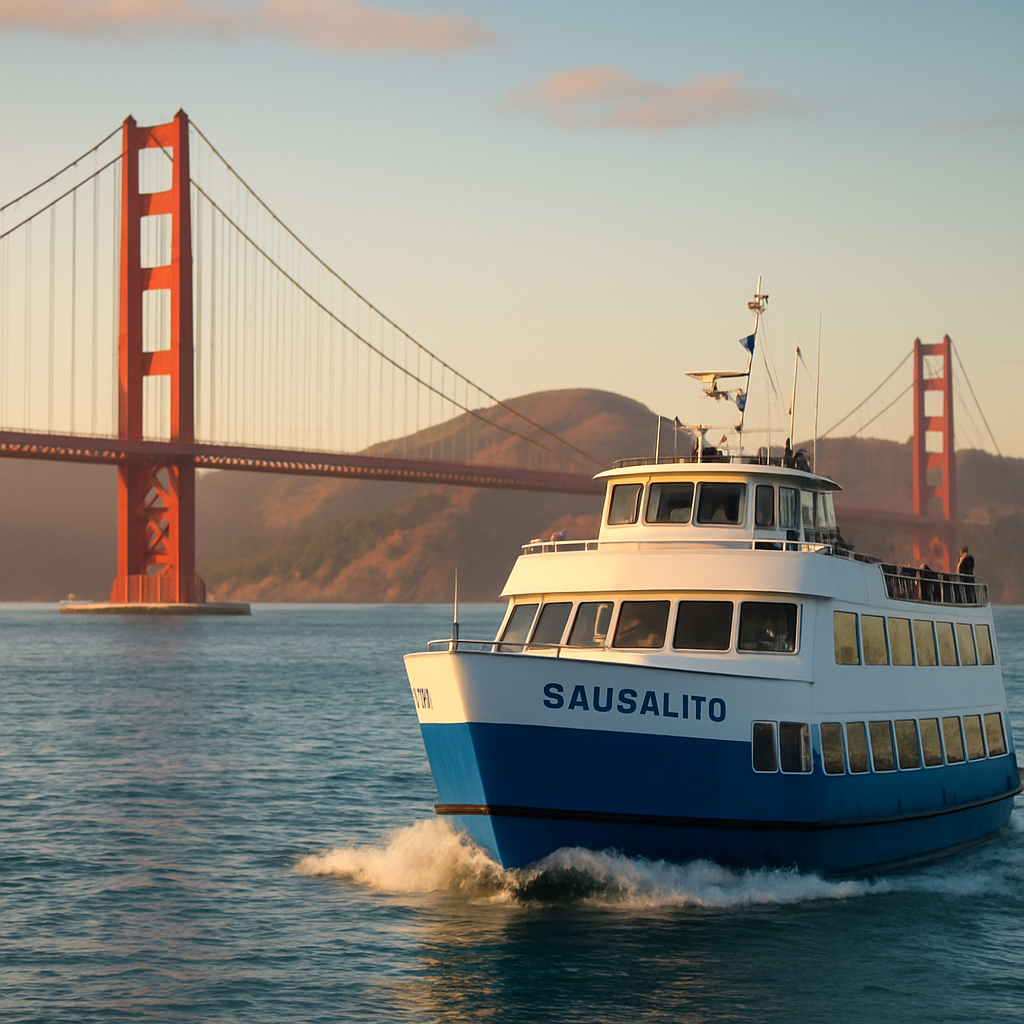
Ferry to Sausalito for the Day
Take BART to the Embarcadero, walk to the Ferry Building, and catch the boat to Sausalito — about thirty minutes across the bay, with the best skyline-and-Golden-Gate view you'll get without a helicopter. Sausalito itself is a small Marin County waterfront town with a famous houseboat community, hillside Mediterranean architecture, and a Bridgeway promenade that's made for slow walking.
Lunch on the water, browse the galleries, ferry back as the light turns. This is a day trip that's almost entirely about the ride, and the ride absolutely earns it.
The places I actually send people to
Advice that fits how you travel
Oakland is a great solo city, especially if you're traveling on the gayer end of the spectrum. The scene is woven through neighborhoods rather than concentrated in one strip, which sounds like a hassle until you realize it means you're never trapped in one bar's whole personality. Stay somewhere like the Moxy Oakland Downtown or Inn at Temescal, where the public spaces and the neighborhood do half the social work for you, and you're already ahead.
The apps work fine — Grindr is dense in Uptown and Temescal, Lex has a real lesbian and trans-masc presence here in a way it doesn't in most cities, and the rotating party calendar matters more than any single fixed venue. Friday and Saturday, walk into The Port Bar before 10pm and you'll have a conversation by your second drink. Sunday afternoon, take a coffee around the Lake Merritt loop and you'll meet someone. That's not a guarantee, that's just how the loop works.
Budget-wise, solo Oakland is doable on $110-160 a day at the low end and $240-340 in the comfortable middle. BART covers most of what you need and the bar prices are gentler than San Francisco's by a noticeable margin. Pro tip: tip in cash where you can — service workers here are organized, scrappy, and underpaid in a brutally expensive region, and a $5 bill at Port buys you better service all night.
Oakland is one of the easiest U.S. cities for same-sex couples to just exist in without thinking about it. Holding hands on the Lake Merritt loop, sharing a kiss on the patio at Drake's Dealership, checking into the Claremont Club & Spa on a Friday afternoon — none of it earns a second look. PDA is comfortable across all the central neighborhoods, and the visual landscape genuinely includes you rather than tolerating you.
For a romantic weekend, my move is the Waterfront Hotel in Jack London Square — Joie de Vivre boutique on the estuary, with marina views at breakfast and the ferry to San Francisco a few steps away. Dinner at Commis on Piedmont Avenue is the city's only Michelin star and worth the production for an anniversary. For a less formal night, Shakewell on Lakeshore is openly queer-owned by Top Chef alums Jen Biesty and Tim Nugent — order the paella, share a bottle, walk it off around the lake afterward.
If you want a full romantic arc: walk Temescal Alley in the late afternoon, dinner at Pizzaiolo, drinks at Friends and Family on the back patio, then end the night with the necklace lights of Lake Merritt at midnight. The city is built for slow couples weekends — leafy neighborhoods like Rockridge and Piedmont Avenue make it especially comfortable to wander without a fixed plan.
California, as of 2026, recognizes LGBTQ+ families fully — joint adoption, second-parent adoption, accurate birth certificates, and comprehensive anti-discrimination protections in schools and public services. Oakland goes further than the state floor in practice. The school pickup line in Rockridge or Piedmont Avenue includes plenty of two-mom and two-dad families and nobody clocks it as worth mentioning. That baseline shapes everything from how a pediatrician's office handles your intake forms to how a barista responds when your kid calls both of you Mama.
For things to actually do with kids: Children's Fairyland on the north side of Lake Merritt has been an Oakland institution since 1950, the Oakland Museum has a kid-friendly science wing and terraced gardens that work for stroller days, and Fenton's on Piedmont Avenue (since 1894) is the ice cream stop of record. Homeroom in Temescal — women-owned, mac-and-cheese-everything — is one of the rare restaurants that's genuinely kid-comfortable and good enough that the parents aren't suffering.
Logistically, BART is stroller-friendly with elevators at most stations, and the central neighborhoods are walkable enough that you can mostly skip the rental car. Family budgets land around $280-400 a day at the budget end and $520-720 in the moderate range — comparable to most major U.S. cities, with the upside that your money buys you a city where your family is treated as ordinary, not exceptional.
What Oakland actually costs
Flights, visas, and the first 30 minutes
Airport: Oakland International Airport (OAK) sits about 12 miles south of downtown Oakland and handles roughly 60 direct routes, mostly domestic with a handful of Mexico and Canada connections. SFO across the bay is the bigger international hub — if you're flying from Europe, Asia, or Australia, you'll likely land at SFO and take BART or a rideshare across to Oakland in 30-45 minutes.
Visas (as of 2026): U.S. travelers need nothing — domestic flight, walk on. Canadians typically don't need a visa for stays under six months. UK, EU, and Australian travelers generally need ESTA authorization under the Visa Waiver Program, good for stays up to 90 days. Apply online at least 72 hours before departure; approval usually comes through in minutes but don't cut it close.
Airport to city: The smartest move is the AirTrain from OAK to Coliseum BART, then the BART line straight into downtown Oakland — about 25-30 minutes for $10.20, runs frequently, and drops you within walking distance of most Uptown and Downtown hotels. Rideshare runs $25-45 in 20-35 minutes depending on traffic and surge; taxis are flat-metered around $40-55. The AC Transit Bus 73 is the budget option at $2.50 but takes 45-60 minutes and runs less frequently late at night.
Pro tip: If you're staying in Uptown, Temescal, or anywhere along the BART line, skip the rental car. Parking in Oakland is a hassle, car break-ins are a real thing, and BART plus rideshare will cover everything you need. Save the rental for a day trip to wine country.
Traven's seasonal breakdown
The questions everyone asks
Should I stay in Oakland or San Francisco?
Is it safe to hold hands in Oakland?
Where is Oakland's gay neighborhood?
Do I need a car in Oakland?
When is Oakland Pride?
How safe is Oakland for trans travelers?
How much should I budget per day?
Screenshot this before you go
So should you actually go?
Go. Oakland is one of the most genuinely livable LGBTQ+ cities in the United States, and it's earning its 8.8 on my Traven-Dex with a scene that's dispersed instead of concentrated, a Sunday afternoon at Lake Merritt that does more to sell the city than any nightclub, and a food and bar list that holds up against any peer. Plan a transit map, lock your car, get to The Port Bar before 10, and time the trip around Oakland Pride in early September if you want the version of this city that hasn't been swallowed by sponsorship. You'll leave wondering why anyone stays on the other side of the bridge.
Sources & Resources
Official links we reference when compiling this guide. Last verified 2026-05-04.
- Alameda County Public Health — LGBTQ Health
- City of Oakland — Department of Race & Equity
- Lavender Seniors of the East Bay
- Lyon-Martin Community Health Services
- National Center for Lesbian Rights
- Oakland LGBTQ Community Center
- Pacific Center for Human Growth (Berkeley)
- Transgender Law Center (Oakland HQ)