
Raleigh doesn't oversell itself. It just feeds you at Poole's, walks you twelve minutes to a Sunday drag show, and trusts you to figure the rest out.
Raleigh is the queer South's quietly competent middle child — not as loud as Atlanta, not as hipster as Durham, but the kind of city where the brunch at Garland and the after-hours at Ruby Deluxe will absolutely ruin you for whatever city you flew in from. The downtown core is small enough to walk, smart enough to feed you well, and self-aware enough to not oversell itself. That's rarer than it sounds.
Walk three blocks off the State Capitol's Confederate-energy lawn and you'll find the LGBT Center of Raleigh on Hargett Street — one of the most organized, scrappy community hubs in the Southeast. That tension between the official city and the actual city is the whole story here. North Carolina at the state level is a complicated political animal, and the HB2 hangover still lingers in how the city talks about itself. But Raleigh, the city, has been doing the work — Wake County non-discrimination protections, a real Pride on Fayetteville Street, and chefs like Ashley Christensen and Vanvisa Nolintha building queer-led restaurant empires that the food press takes seriously.
The unofficial Triangle rule: live in Raleigh for the jobs and the porches, drink in Durham for the lesbians and the drag, and never admit out loud which city does brunch better. Legends on a Sunday has been the region's drag institution since 1991, Ruby Deluxe runs the queer downtown calendar, and the food at Bida Manda and Poole's Diner does the kind of work that makes you reschedule a flight. The scene is small. The talent is not.
I gave it a 7.4 overall, which feels honest — Raleigh isn't trying to be Atlanta, and the city is better for it. The legal score of 8.5 reflects how hard the city core has fought to stay protective even as the state legislature has not. What you get in exchange for the lower decibel level is a place where you can have a long dinner, walk to a drag show, and end the night on a back patio talking to someone who knows your friend's friend. That's not a consolation prize. That's a city.
The stuff your travel guide buries on page 47
Here's the legal lay of the land in Raleigh, as of 2026: marriage equality is settled federal law, joint and second-parent adoption are available to same-sex couples, and Wake County has explicit non-discrimination protections covering employment, housing, and public accommodations. North Carolina state law, however, is messier — anti-discrimination protections at the state level are limited, and gender marker changes on state IDs typically require medical documentation. The state preempts local ordinances in some areas, which means the protections you have in downtown Raleigh don't always travel with you to a rural Wake County exurb.
The HB2 hangover is real. North Carolina repealed most of the 2016 'bathroom bill' in 2017, but the state still has limits on local LGBTQ+ ordinances — Raleigh and Wake County are explicitly protective, but cross into a rural county and the vibe changes fast. For up-to-date guidance on what's enforceable where, Equality NC is the in-state authority, and the ACLU of North Carolina tracks active litigation and legislative threats.
On the ground, Raleigh itself is a progressive enclave. Out! Raleigh Pride happens in late June on Fayetteville Street and it's free, walkable, and shockingly stroller-heavy by 2 p.m. — the after-parties at Ruby Deluxe and Flex are where the actual chaos lives. PDA reads as completely normal in the downtown core, Glenwood South, Five Points, and around NC State; comfort thins out as you push into the outer suburbs.
Pro tip: Uber and Lyft work fine downtown, but GoRaleigh buses essentially stop running by 11 p.m. — if you're bar-hopping Glenwood South to the Warehouse District, just walk it, it's twelve minutes. For broader Southern legal context, the Campaign for Southern Equality is a useful resource if you're planning a Triangle trip with stops outside the urban cores.
What it actually feels like on the ground
Holding hands and PDA: Downtown around Fayetteville Street and Moore Square, visible affection reads as a non-event — locals confirm it. Same goes for Glenwood South, the Warehouse District, Five Points, and the NC State corridor. Past the I-440 beltline, comfort drops measurably. It's not hostile; it's just less queer, and your read on the room should adjust accordingly.
Hotel check-in: Same-sex couples checking into downtown and Triangle-area hotels — the Marriott properties, Heights House, Longleaf, Origin, the Umstead — should expect a non-event. Boutique inns and corporate brands here generally hold the line on inclusion.
Nightlife and Glenwood South after dark: Watch out for this one. Glenwood South gets a frat-bro overflow on Saturday nights from 11 p.m. on — if that's not your scene, do dinner at Stanbury, drinks at Watts & Ward, then duck over to Ruby Deluxe before midnight. The Warehouse District around Flex and Legends is its own ecosystem and feels insulated, but the walk between zones is short and well-lit. Stick to main streets after 1 a.m.
Trans travelers: Wake County is one of the most affirming pockets in the state, with trans-affirming healthcare providers and community resources clustered around downtown and NC State. Bring documentation if you're driving through eastern North Carolina — the political climate at gas-station-and-truck-stop level is a different country. Time Out Youth serves the broader Carolinas if you're traveling with younger family members who need support resources.
Verbal harassment risk: Low in the urban core, particularly inside the I-440 beltline. Incidents are not statistically common in the city's queer-clustered zones, though state-level political tensions occasionally spill into local discourse. Pro tip: if something does happen, the LGBT Center of Raleigh on Hargett Street is the first call for community support and reporting guidance.
Health resources: Raleigh has solid, low-stigma HIV care. Alliance of AIDS Services Carolina handles testing, PrEP navigation, and treatment, and Wake County Human Services runs public health programs that are unambiguously inclusive.
The queer geography
Glenwood South
Raleigh's main nightlife strip runs along Glenwood Avenue, a walkable corridor of brick warehouses, beer halls, and converted storefronts that fills up Thursday through Saturday. The Raleigh Beer Garden alone has a Guinness record for taps and a rooftop that pulls a mixed crowd until late. This is the historic center of the city's gay nightlife — Flex and Legends both anchor the adjacent Warehouse District, and the corridor between them is a twelve-minute walk past late-night pizza and slightly suspect mechanical bulls.
Warehouse District
Just west of downtown, the Warehouse District is exactly what the name promises: red-brick industrial bones now housing breweries, art spaces, and the city's two longest-running gay institutions. Crank Arm Brewing and Trophy Brewing pull a beard-and-flannel daytime crowd; by 10 p.m. it shifts. Legends Nightclub on Hargett Street has been Raleigh's drag institution since 1991, and the Sunday show is still where every visiting queen pays their dues — get there by 9:30 or you're standing. Flex Nightclub down the block carries the dance-floor-and-karaoke load the rest of the week.
Downtown / Fayetteville Street
The pedestrian-friendly stretch of Fayetteville Street runs from the State Capitol down to the convention center, and it's where Raleigh's civic life happens — markets, food trucks, Out! Raleigh Pride. Don't let the State Capitol's Confederate energy fool you; walk three blocks to the LGBT Center of Raleigh on Hargett Street and you'll find one of the most organized, scrappy community hubs in the Southeast. Ruby Deluxe on South Wilmington is the queer beating heart of downtown — drag bingo on Tuesdays, dance floor on Saturdays, and a back patio that always knows somebody you went to college with.
Boylan Heights & Five Points
Boylan Heights is a leafy historic district west of downtown with the most photographed skyline view in the city — the Boylan Bridge overlook is the unofficial sunset spot. Bungalows, magnolias, a steady creative crowd. Five Points, just north of downtown, runs on indie coffee shops, Quail Ridge Books-adjacent literary energy, and a long-established residential community. For lower-key hangs, hit Boxcar Bar + Arcade on West Davie or grab coffee at Boulted Bread — the crowd skews thirty-something, sober-curious, and very much in the group chat.
Oakwood & Mordecai
East of downtown, Oakwood is a Victorian historic district where rainbow flags fly off porches that have been standing since the 1880s. It's quietly been an LGBTQ+ residential pocket for decades. Adjacent Mordecai and the Person Street corridor have evolved into a serious food destination — Crawford and Son, Stanbury, Standard Foods — without losing the residential calm. The walking is flat, the trees are old, and the dinners are excellent. For policy and advocacy context across the state, Equality NC is headquartered nearby and worth knowing about.
The experiences worth rearranging your itinerary for
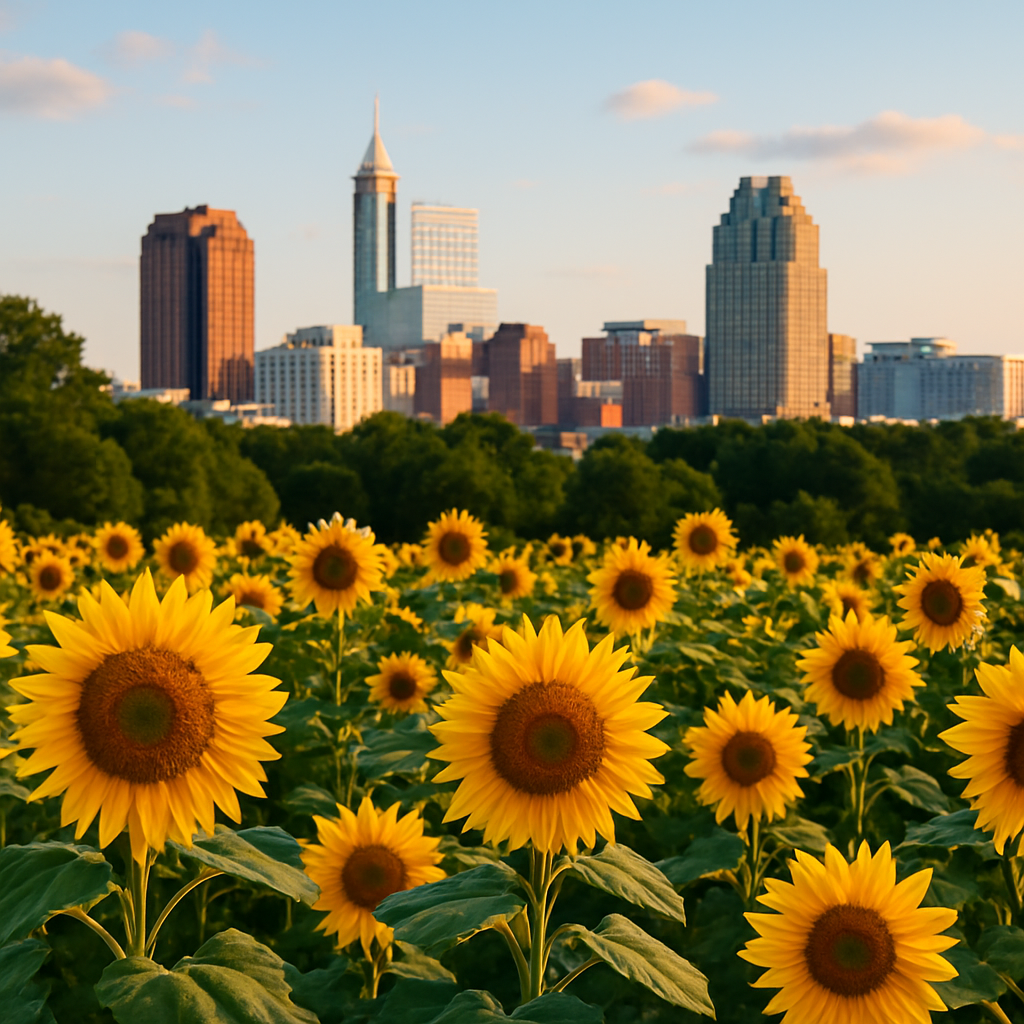
Dorothea Dix Park at Golden Hour
The 308-acre former hospital campus has the best skyline view in the city, full stop. Walk up the rise from the parking lot toward the chapel ruins around 7 p.m. in summer and you'll see what every Raleigh transplant means when they say they fell in love here. The sunflower field in late July is the photograph everyone takes; the rest of the year it's all rolling green and downtown towers in the distance.
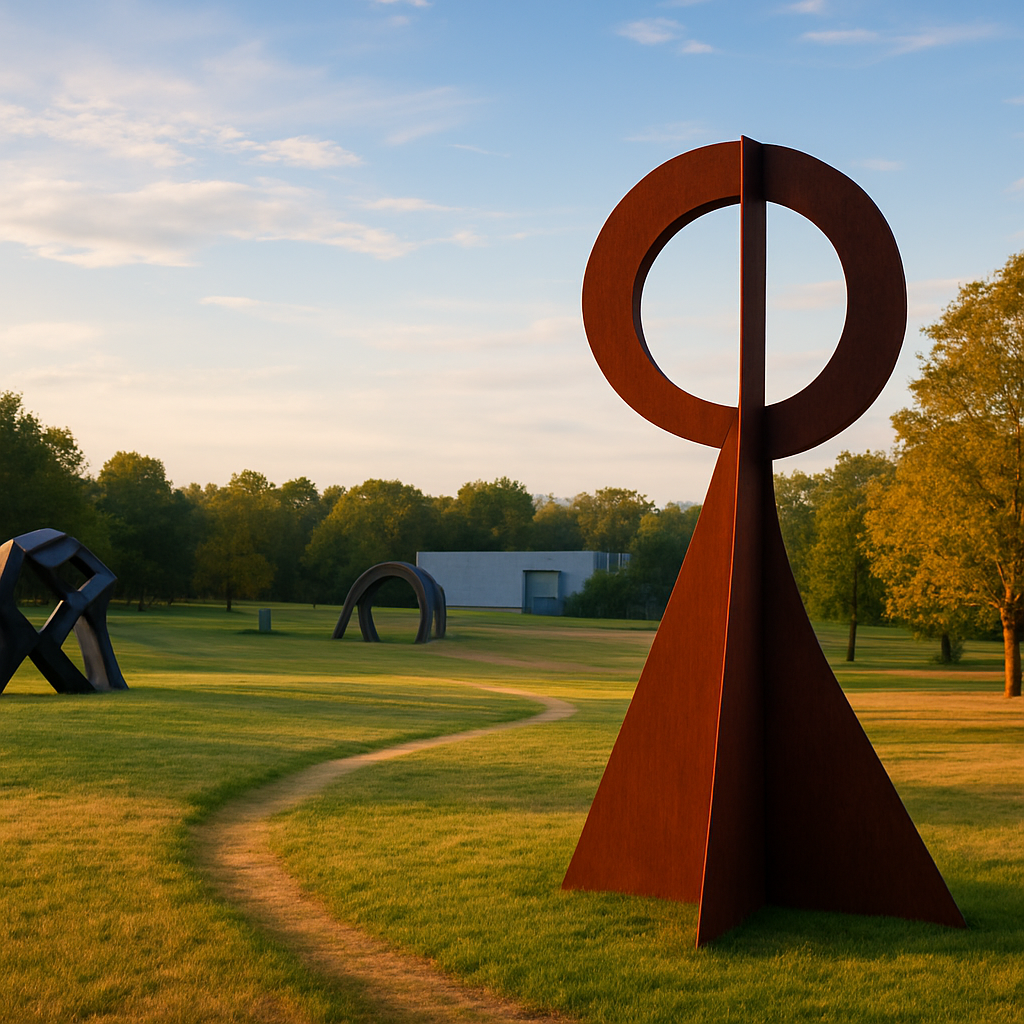
NC Museum of Art and the Outdoor Park
A free state museum with a real Rodin collection, anchored to a 164-acre Park threaded with outdoor sculpture and trails. The summer outdoor film series at the amphitheater is the move — bring a blanket and a bottle of wine and settle in. The indoor galleries handle a Saturday afternoon; the Park handles the rest of the day.
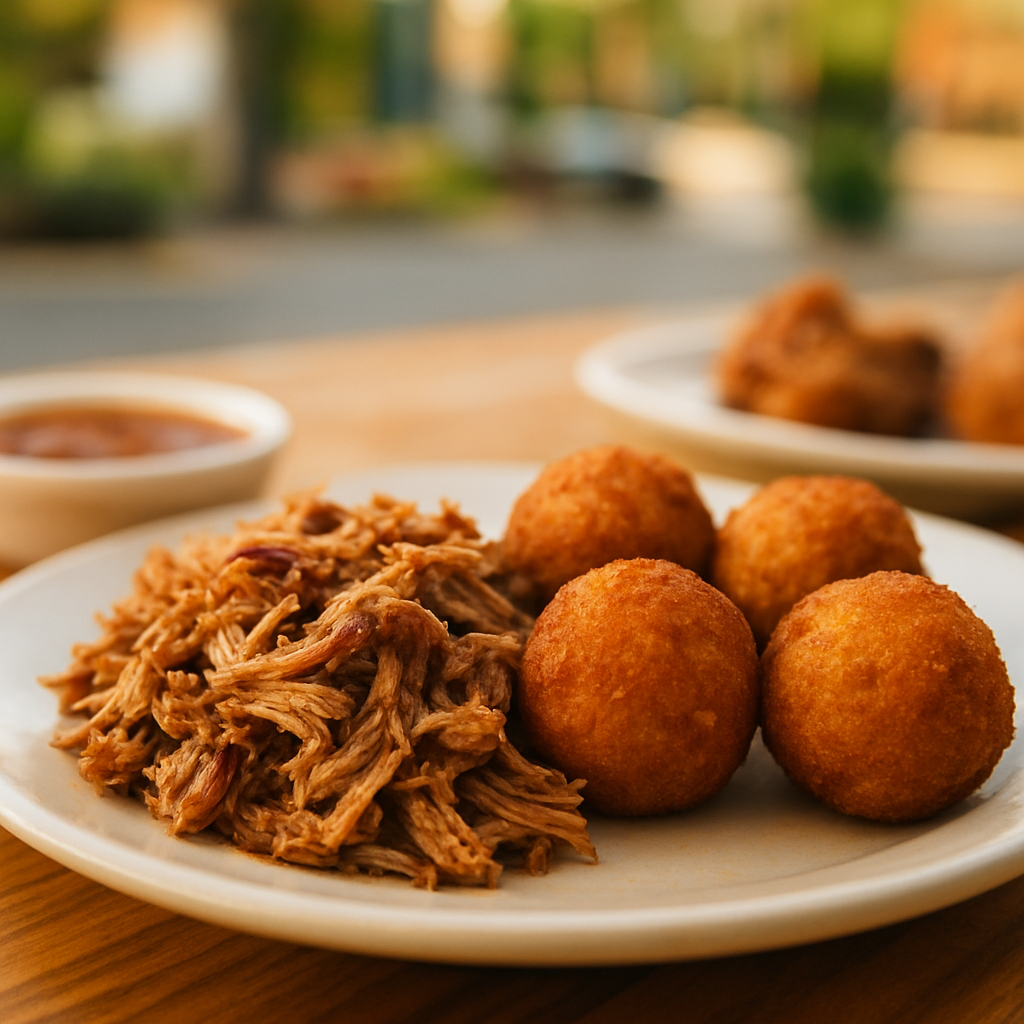
Eastern Carolina BBQ at Clyde Cooper's
Whole-hog, vinegar-and-pepper-sauced pork on Davie Street — no tomato, no debate. Clyde Cooper's has been doing this since 1938 and the room hasn't changed and shouldn't. Order the BBQ tray with hush puppies and slaw, get a Cheerwine, and let someone in line argue you out of western-style if they want to lose.
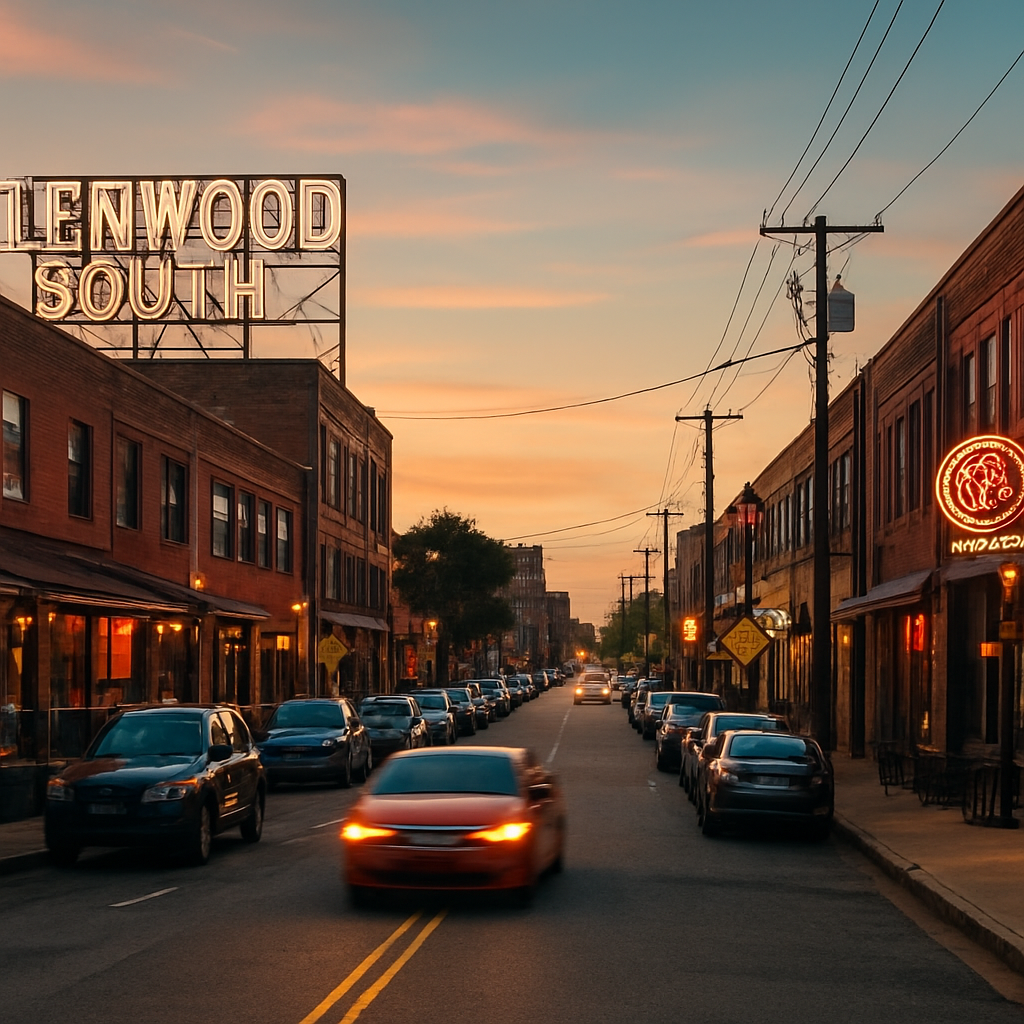
A Night Walk from Glenwood South to the Warehouse District
The twelve-minute walk from Glenwood Avenue down to Hargett Street is the best way to read this city's nightlife in one go — beer halls, late-night pizza, the Raleigh Beer Garden's rooftop, then the slow tilt into industrial brick where the dance floors live. Do it on a Friday around 9:30. The streets are well-lit, the energy shifts every block, and you'll know what kind of night you want by the time you arrive.
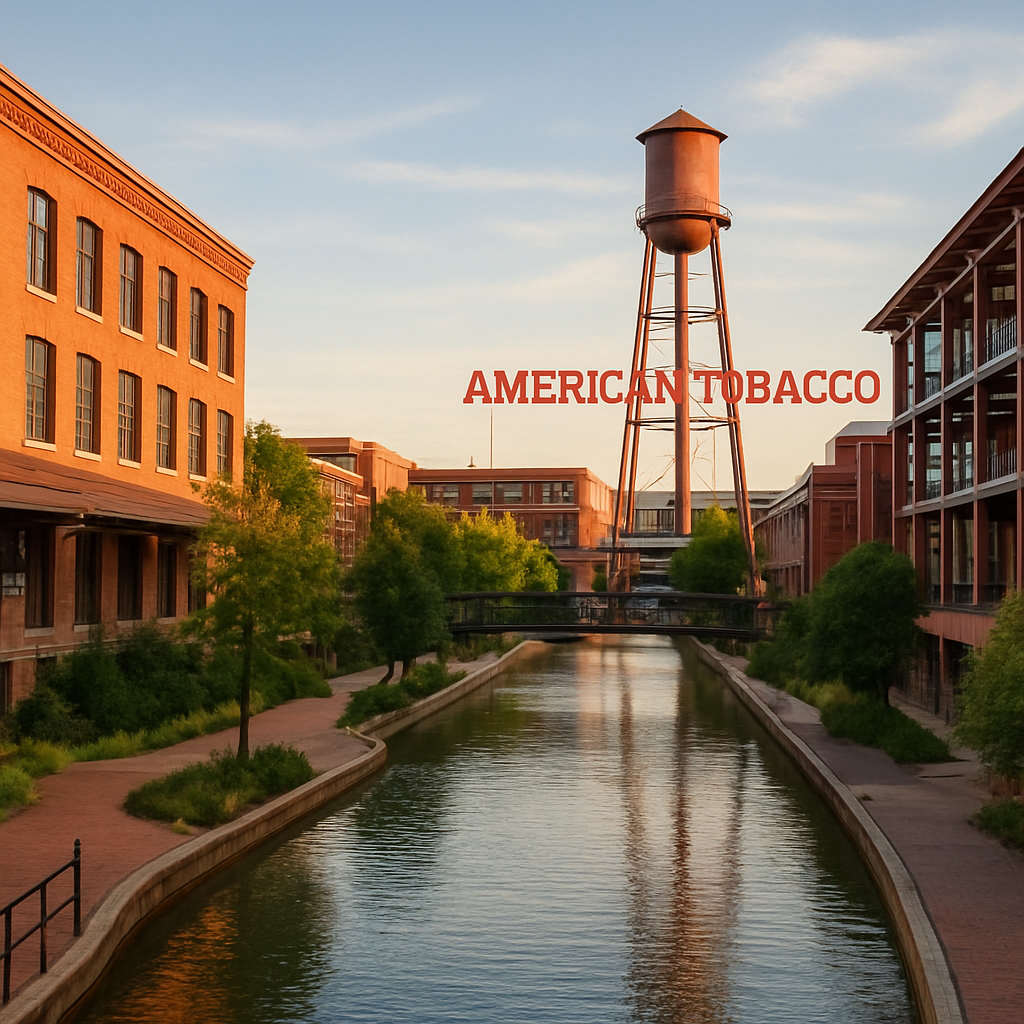
A Day in Durham
Twenty-five minutes northwest on I-40 and you're in the Triangle's coolest downtown — the American Tobacco Historic District, Duke's campus, and a food scene that's been outpacing Raleigh for years. Lunch at Mateo, walk the campus, coffee at Cocoa Cinnamon. It's the day trip every Raleigh local will tell you to take, even the ones who'd rather not admit it.
The places I actually send people to
Advice that fits how you travel
Solo in Raleigh works better than the city's reputation suggests. The downtown core is small enough that you can walk from a coffee at Lucettegrace to a cocktail at Watts & Ward to a drag show at Ruby Deluxe without ever needing a car, and the bartenders here actually talk to you — Southern hospitality isn't a tourism slogan in this city, it's a working default. The apps run thinner than they would in Atlanta or DC, but the in-person scene picks up the slack on Friday and Saturday.
For a solo base, I'd land at Longleaf — the price is right, you're walking distance to Glenwood South, and the on-site lounge is a soft landing if you don't feel like going out. Start your nights at Crank Arm Brewing for a low-key beer, then drift to Ruby Deluxe by 10 — drag bingo on Tuesdays is the easiest way to make friends, and the back patio is a conversation magnet. Legends on a Sunday is the move if you want to see the Triangle's drag culture at full strength.
Budget-wise, this city is genuinely friendly to a solo traveler — typically $95–145 a day on a budget tier and around $200–280 moderate. Free admission at the NC Museum of Art and the NC Museum of Natural Sciences buys you most of a Saturday for the cost of lunch. Pro tip: if you're solo and unsure whether to stay in for the night, the LGBT Center of Raleigh calendar is the best read on what's actually happening in the community that week.
Raleigh punches above its weight as a couples city. Same-sex couples can hold hands across the entire downtown core, Glenwood South, Five Points, and the NC State corridor without it registering as anything — observationally, visible affection in those zones reads as completely normal. PDA comfort thins as you push past the I-440 beltline; in the outer suburbs (Wake Forest, Garner, Knightdale), discretion is generally the move. Marriage is settled federal law as of 2026, and downtown hotels — the boutique inns and the Marriott properties — are uniformly welcoming to same-sex couples on check-in.
For a romantic weekend, I'd book Heights House in Boylan Heights — nine rooms in an 1870s mansion, a ten-minute walk to the Boylan Bridge skyline view at golden hour, and the kind of quiet that makes a long breakfast feel like the point of the trip. Dinner at Crawford and Son or Stanbury in Mordecai is the move when you want the food to do the work; Death & Taxes is the special-occasion answer downtown. Brunch the next morning at Garland — Cheetie Kumar's James Beard-winning Indian-Asian room — is what I'd call the dressy-gays move, and the room rewards it.
For the daytime, Dorothea Dix Park at golden hour is the move — 308 acres of former hospital grounds with the best skyline view in the city and a sunflower field in late July that has photographed every Triangle couple at least once. Cap the night at Foundation on Fayetteville Street for a North Carolina rye, dim and quiet enough for a real conversation. Couples typically run $310–430/day moderate, around $650–950 luxury — the value-to-romance ratio here is genuinely strong.
LGBTQ+ families do well in Raleigh, with appropriate caveats. As of 2026, joint and second-parent adoption are available to same-sex couples, marriage equality is federal law, and Wake County has explicit non-discrimination protections covering employment, housing, and public accommodations. State-level protections are more limited, and gender marker changes on state IDs typically require medical documentation — but inside the city itself, two-mom and two-dad families read as unremarkable in the downtown core, Five Points, and the NC State area. Pullen Park and Dorothea Dix Park are observationally welcoming to LGBTQ+ families with kids of any age.
For a family base, the Residence Inn Downtown is my pick — Marriott's CEI 100 rating, kitchenettes for picky eaters, and walking distance to Fayetteville Street. The Mayton in downtown Cary is the quieter alternative if you want suburban calm and a 20-minute drive into the action. Both handle same-sex parents on check-in without a blink.
The free-museum economy here is a gift: the NC Museum of Natural Sciences on Jones Street is the largest in the Southeast and the rainy-Saturday answer with younger kids, and the NC Museum of Art's 164-acre outdoor Park is genuinely worth a half-day with a picnic from Standard Foods. Marbles Kids Museum downtown handles toddlers; Pullen Park's carousel and pedal boats handle elementary-age. Family budgets typically run $245–355/day on the lower end and $485–685 moderate. Pro tip: Out! Raleigh Pride in late June is shockingly stroller-heavy by 2 p.m. — bring the kids during daylight, and if you need family-specific support resources, Equality NC is the in-state authority worth bookmarking.
What Raleigh actually costs
Flights, visas, and the first 30 minutes
Airport: Raleigh-Durham International (RDU) sits about 15 miles northwest of downtown Raleigh and serves as the main gateway to the Triangle. As of 2026, RDU offers approximately 60 nonstop routes, with frequent service to East Coast hubs (NYC, DC, Boston, Atlanta, Miami), Midwest connections (Chicago, Detroit, Minneapolis), and West Coast routes (LAX, SFO, Seattle). International nonstops typically include London, Paris (seasonal), Toronto, and Cancún.
Visa requirements (as of 2026): US travelers need no visa — this is a domestic trip. Canadian visitors typically don't require a visa for stays up to 6 months. UK, EU, and Australian travelers generally need an approved ESTA for visa-free entry up to 90 days. Apply at least 72 hours before departure — same-day approvals happen, but don't bet your trip on it.
Airport to downtown: Rideshare (Uber/Lyft) is the easiest move at $25–40 and 20–30 minutes, depending on traffic. Taxis run $30–45 from the curbside stand. The GoTriangle Route 100 bus runs to downtown for $3 in 45–60 minutes — cheap, but limited frequency means it's a daylight-hours-only proposition for most travelers.
Pro tip: If you're planning to bounce between Raleigh, Durham, and Chapel Hill — and you should — a rental car at $40–80/day is the play. The Triangle is built for driving, transit between cities is sparse, and the parking situation downtown is genuinely manageable. Some downtown hotels also run shuttles in the free–$15 range; ask when you book.
Traven's seasonal breakdown
The questions everyone asks
Is Raleigh actually a good LGBTQ+ destination, or am I better off going to Durham?
Is it safe to hold hands with my partner in Raleigh?
When is Out! Raleigh Pride and is it worth planning around?
Do I need a car to get around Raleigh?
What's the deal with HB2 — is North Carolina still hostile to trans travelers?
Where should I eat if I want to support LGBTQ+ chefs and owners?
How much should I budget per day?
Screenshot this before you go
So should you actually go?
Yes, with a strategy. Raleigh rewards travelers who base downtown, walk Glenwood South to the Warehouse District for the nightlife, eat across the Christensen and Nolintha empires, and day-trip to Durham for the deeper queer scene. The legal climate at the state level is more complicated than the city itself, so as of 2026, LGBTQ+ travelers should know the protections are strongest inside Wake County and thinner past the I-440 beltline. But the food, the museums, the porches, and the Sunday-night drag at Legends are a genuinely strong package for a long weekend. Come for four nights, build in a Durham day, and you'll leave understanding why the Triangle has a quiet but real claim on the queer South.
Sources & Resources
Official links we reference when compiling this guide. Last verified 2026-05-04.