
San Diego is what happens when a city stops trying to be the loudest thing in the room and just becomes the place you don't want to leave.
San Diego does something that bigger, louder cities can't pull off — it makes you slow down without boring you. The light here is different. Not the aggressive, bleached-white sun of Miami or the dramatic golden hour of L.A., but something softer, warmer, like the whole city is running through a filter that makes everything look better than it has any right to. You'll notice it first walking through Hillcrest on a weekday afternoon: guys holding hands outside Baja Betty's, someone reading on a patio at Crest Café, the smell of corn tortillas drifting from a taco truck on University Avenue, and absolutely nobody performing anything for anyone. This city isn't trying to impress you. It already knows what it is.
There's a reason my Traven-Dex score here is 9.1, and most of it comes down to something you can't quantify: the gap between legal protection and lived experience is almost nonexistent. A lot of cities score well on paper. San Diego scores well on the ground. Hillcrest isn't a gay district that exists primarily as a nightlife zone you visit and leave — people live here, raise dogs here, argue about parking here. The scene skews local in the best way. You'll find fewer circuit-party tourists and more regulars who've been coming to Rich's or The Brass Rail for fifteen years. That loyalty gives the neighborhood a weight that weekend-only destinations can't replicate.
And the city beyond the gay district is genuinely excellent. Paddle a kayak through sea caves at La Jolla Cove while harbor seals watch you like you're mildly interesting. Eat a $3 fish taco from a truck that has no business being that good. Watch the sunset from the end of the Ocean Beach pier and feel the Pacific wind pick up as the sky turns colors that would look fake in a photograph. Walk through Balboa Park the next morning — 1,200 acres of Spanish Colonial Revival architecture and botanical gardens that sit right against Hillcrest's eastern edge like the city planned the proximity as a gift. I gave it an 8.8 on Destination, and honestly, the weather alone almost carried that number before I factored in the food, the coastline, and a park system that most cities would kill for.
Don't sleep on North Park as a base — it's ten minutes on foot from the heart of Hillcrest and your money goes considerably further on accommodation, while the neighborhood's own coffee shops, vinyl stores, and craft breweries on 30th Street keep you occupied during daylight hours. The queer residential presence is growing there, and it feels less like a separate neighborhood than like the LGBTQ+ district is expanding rather than contracting. In a country where that story usually runs the other direction, San Diego is quietly doing something worth paying attention to.
The stuff your travel guide buries on page 47
California, as of 2026, offers full legal equality for LGBTQ+ residents and visitors. Same-sex marriage has been legal nationwide since 2015, and California was among the first states to legalize it at the state level. Joint and second-parent adoption is fully legal. The state's comprehensive anti-discrimination protections cover employment, housing, and public accommodations — and San Diego's municipal ordinances mirror and extend those protections through the City of San Diego Human Relations Commission.
Gender identity law in California operates on a self-ID basis. You can update gender markers on state-issued identification without surgical requirements, and non-binary gender markers ("X") are available on California IDs and driver's licenses. Insurance-covered gender-affirming healthcare is mandated under state law. If you need legal assistance while visiting, the Legal Aid Society of San Diego can point you in the right direction.
The cultural reality matches the legal framework here more closely than in most American cities. San Diego's LGBTQ+ community has been visible and organized since the 1970s, and Hillcrest has functioned as the city's gay neighborhood for over four decades. This isn't a city where protections exist on paper but feel theoretical on the ground — you'll see same-sex couples walking hand-in-hand on University Avenue on any given Tuesday afternoon without anyone looking twice.
A few practical notes worth knowing: San Diego Pride happens in July, not June — a deliberate scheduling choice the city made years ago, so plan accordingly. The parade runs along University Avenue through Hillcrest on Saturday, and the two-day festival in Balboa Park draws upward of 200,000 people. And the weather is slightly more complicated than "always sunny" — San Diego's coastal June Gloom is real, and mornings can be chilly and grey even in summer. Pack a light layer for evening, especially if you're at an outdoor event or walking the Balboa Park grounds.
Pro tip: parking in Hillcrest is genuinely annoying on weekend nights. Street parking along Fifth Avenue and University Ave disappears fast after 9pm, and circling becomes a competitive sport. Take a rideshare or walk from North Park — it's a ten-minute stroll and you'll save yourself the headache.
What it actually feels like on the ground
Holding hands: In Hillcrest, North Park, Ocean Beach, and Balboa Park — completely unremarkable. Same-sex couples are visibly present and PDA is normalized. In the Gaslamp Quarter downtown, you'll generally feel comfortable, though late-night weekend crowds skew young, loud, and occasionally unpredictable the way any bar district does. In La Jolla, PDA is low-key for everyone — affluent, quiet, and nobody's making a scene about anything. East County areas like El Cajon or Santee are more conservative — no legal risk, but the queer visibility drops meaningfully, so read the room.
Hotel check-in: Zero issues anywhere in San Diego proper. This is California — front desk staff at every price tier from the HI hostel to the Hotel del Coronado will check in same-sex couples without blinking. If you're booking under two names, it's routine.
Taxis and rideshares: Standard and uneventful. San Diego's rideshare network is reliable and drivers are accustomed to pickups and drop-offs in Hillcrest. No reports of issues with same-sex couples in rideshares.
Beaches and public spaces: Ocean Beach has genuine bohemian energy and same-sex couples are common on the sand and boardwalk. Mission Beach and Pacific Beach are busy tourist beaches with a younger, more heteronormative crowd — you'll be fine, but you'll notice you're less visible. Black's Beach (the unofficial nude beach below Torrey Pines) has a historically gay section at the north end, though it's not formally designated.
Late night: Hillcrest itself is about as safe as gay neighborhoods get in the US — visible, well-lit, and genuinely community-patrolled by its own residents. The rainbow crosswalks at University and Normal Street are a landmark, not a novelty. Standard urban awareness applies when walking between neighborhoods late at night, particularly if you're heading east from Hillcrest toward less-trafficked residential streets.
Trans travelers: California's legal protections for trans individuals are among the strongest in the country, and San Diego has multiple trans-affirming healthcare providers centered in Hillcrest. Family Health Centers of San Diego offers LGBTQ+-competent providers with sliding-scale fees for everything from PrEP to gender-affirming care. Restroom access follows California law — use the facility matching your gender identity. That said, trans women of color may experience different levels of street harassment than white gay men, particularly outside the core urban neighborhoods. Be aware of that disparity.
If you need support: The LGBT Community Center San Diego on University Avenue is a genuine resource, not just a talking point. If you need healthcare referrals, legal information, or just a place to ground yourself, they're staffed and accessible for most drop-in services without an appointment. Someone wrote in to say The Center connected them to the right referral within 24 hours — no judgment, no paperwork theater.
San Diego's broader context: The city has a notably large active-duty and veteran military population, and the politics of the wider region are more mixed than Hillcrest suggests. Once you're past University Heights heading east or toward East County, the queer visibility drops. You're not in danger, but you're not in Hillcrest anymore either. Stay aware if you're venturing far from the urban core.
The queer geography
Hillcrest
This is the heart of it. Hillcrest has been San Diego's gay neighborhood since the 1970s, and unlike some cities where the gay district has gentrified into a memory, this one is still very much alive and lived-in. Walk University Avenue — locals call it The Ave — and you'll pass taco shops, vintage stores, a genuinely good LGBTQ+ bookstore (Obelisk), and the kind of coffee spots where the barista remembers your order by your second visit. The architecture is modest California bungalow and mid-century commercial — nothing that'll make an architecture magazine, but the scale is human and walkable in a way that matters.
The Fifth Ave Strip clusters several of the city's most iconic gay bars within stumbling distance of each other. The Brass Rail is one of San Diego's oldest continuously operating gay bars — a proper neighborhood dive that predates most of the establishments around it. Flicks runs campy classics and reality TV on its screens with a crowd that takes their viewing seriously — cheap drinks, cozy room, the right call on a Tuesday. Rich's is the main dance club anchor and books legitimate touring DJs alongside themed weekly nights — Thursday is historically the night locals consider the real one, before weekend energy changes the room. And Gossip Grill on University Avenue remains one of the few dedicated lesbian bars still operating in California — unpretentious, genuinely fun, and consistently packed on weekends. Go early on a Friday if you want a seat at the bar.
The rainbow crosswalks at Normal Street and University mark the symbolic center. San Diego Pride's parade route runs right through here every July, and the LGBT Community Center — one of the oldest in the country, founded in 1972 — anchors the neighborhood's civic life on University Ave.
North Park
If Hillcrest is the established heart, North Park is where the energy is expanding. Ten minutes on foot east of Hillcrest, the neighborhood runs along 30th Street and University Avenue with a density of craft breweries, independent record shops, and the kind of small-plate restaurants where the chef is also the owner and also the person who answers the phone. The street art is good here — not curated-mural-district good, but organic and constantly changing.
The food scene is worth the walk alone. Fig Tree Café on 30th Street does a plant-forward brunch that draws a weekend line. The taco trucks along University are some of the best in the city. And Bar Pink is the indie bar that hosts queer community events, drag nights, and live music in a room that feels like your coolest friend's living room if your coolest friend had a liquor license. North Park's queer residential presence is growing, and the neighborhood feels like an extension of Hillcrest rather than a separate zone — younger, artier, and your accommodation dollar goes considerably further.
Balboa Park
Balboa Park is 1,200 acres of gardens, museums, and walking trails immediately adjacent to Hillcrest — and the morning-after walk through the park is one of San Diego's great simple pleasures. The Spanish Colonial Revival architecture from the 1915 and 1935 expositions is genuinely stunning, with tiled domes and arched colonnades that photograph beautifully in that Southern California light. The botanical garden is free. Several museums offer free admission on rotating days.
The park is also where San Diego Pride's festival takes over every July, and it functions year-round as a gathering space for the community. Lambda Archives of San Diego, nearby in University Heights, documents the city's queer history back to the 1940s — genuinely worth an hour even if you're not a history person, and the staff will actually talk to you about the collection.
Ocean Beach
Ocean Beach — locals say OB — is the neighborhood that San Diego kept weird while the rest of the coast gentrified. The main drag, Newport Avenue, dead-ends at a municipal pier and is lined with surf shops, antique stores, and the kind of restaurants that still have handwritten menus. The beach itself is dog-friendly (rare in San Diego) and the sunsets from the pier are the ones you'll actually remember. The vibe is bohemian, countercultural, and relaxed in a way that has nothing to do with marketing — same-sex couples are common on the beach and boardwalk and nobody's keeping score.
Bankers Hill
Directly south of Hillcrest and overlooking Balboa Park, Bankers Hill is the quieter, slightly more polished neighbor. The Spruce Street Suspension Bridge is a hidden pedestrian bridge over a canyon that feels like it belongs in a different city entirely. Cucina Urbana does Italian-American food with a wine shop attached, and the views from the park-facing streets at dusk — silhouettes of palms against that ridiculous California sky — are worth walking for. Many LGBTQ+ residents have settled here for the Balboa Park proximity and the slightly lower noise level than Hillcrest's bar corridor, while still being a five-minute walk from The Ave.
The experiences worth rearranging your itinerary for
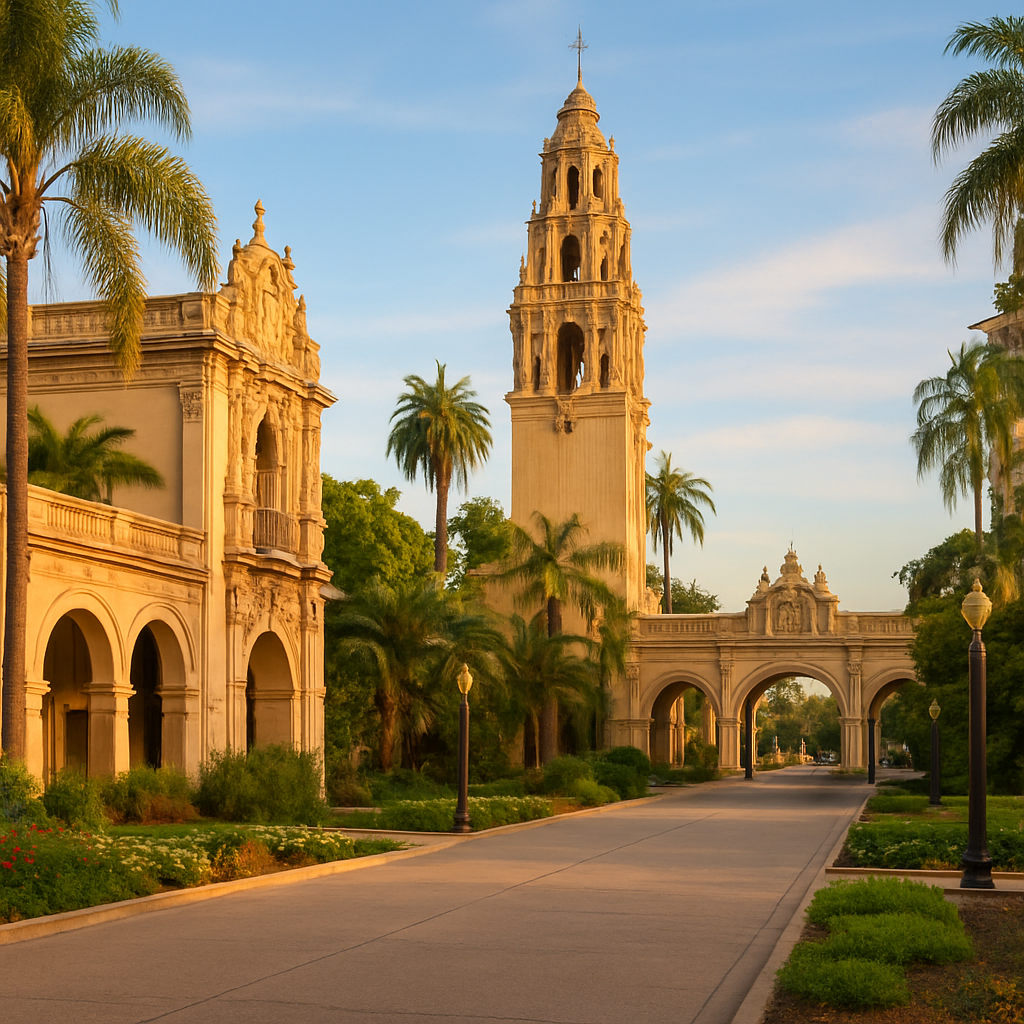
Balboa Park's Museums and Gardens
Balboa Park is 1,200 acres of Spanish Colonial Revival architecture, botanical gardens, and over a dozen museums — and most visitors don't give it nearly enough time. The buildings from the 1915 and 1935 expositions feature tiled domes and arched colonnades that photograph beautifully in that Southern California light, and the Botanical Building with its reflecting pool is one of the most photographed spots in the city for good reason.
Several museums offer free admission on rotating days — check the schedule before you go. The San Diego Museum of Art and the Museum of Us (formerly the Museum of Man) are standouts. But honestly, the park itself is the attraction: walking the El Prado promenade at golden hour, with street musicians playing under the arches and the smell of eucalyptus drifting through, is one of those San Diego moments that costs nothing and stays with you.
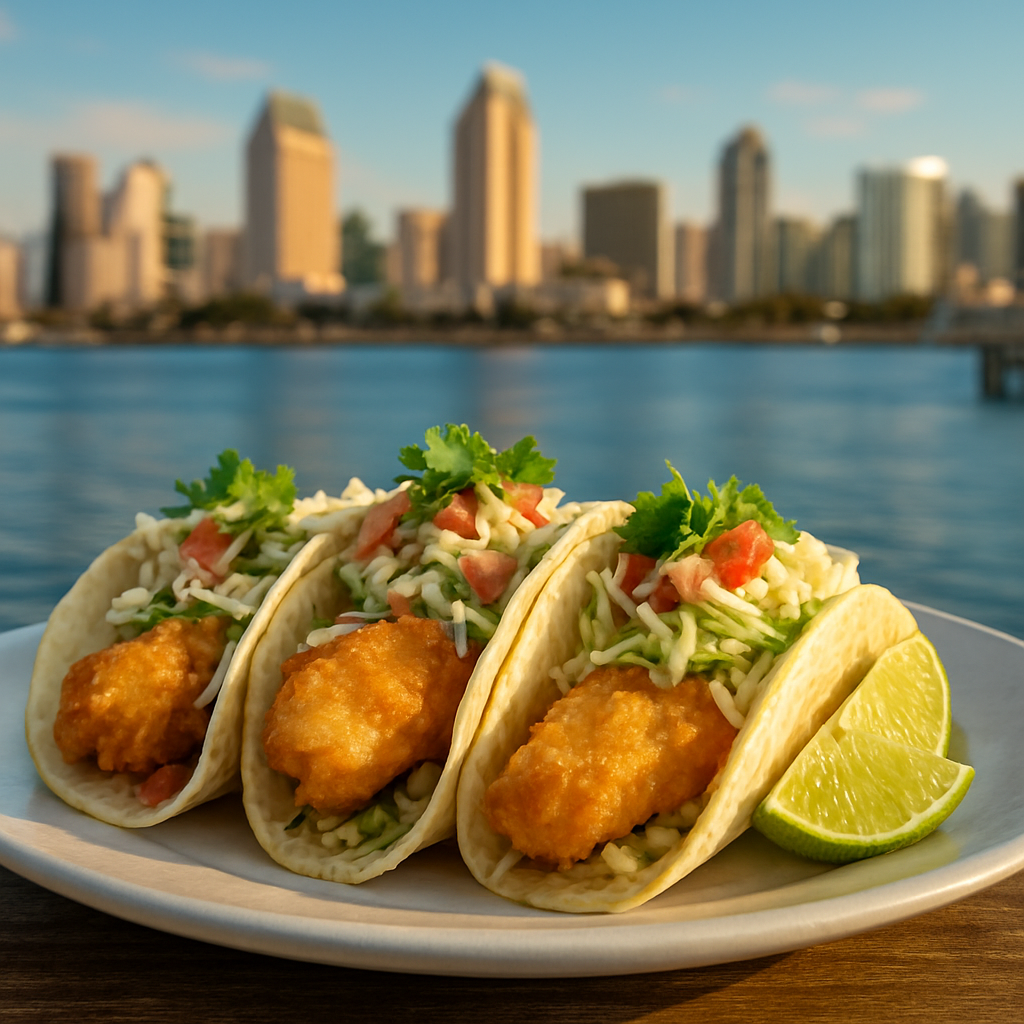
A Proper San Diego Fish Taco Crawl
San Diego's fish taco is non-negotiable eating — crispy beer-battered or grilled, with shredded cabbage, crema, and a squeeze of lime, served on a corn tortilla that has no business being this good for $3. The debate over who does it best is a civic sport, and the correct answer is that you need to try at least three before you're qualified to have an opinion.
Start at a taco truck on University Avenue — the ones parked near Hillcrest and North Park serve some of the best in the city. Work your way to Ocean Beach where the surf-adjacent taco shops serve them with a view. And if you make it down to the border, Tijuana's fish tacos are the original — San Diego borrowed the tradition and made it its own, but crossing south for the source is worth the trip.
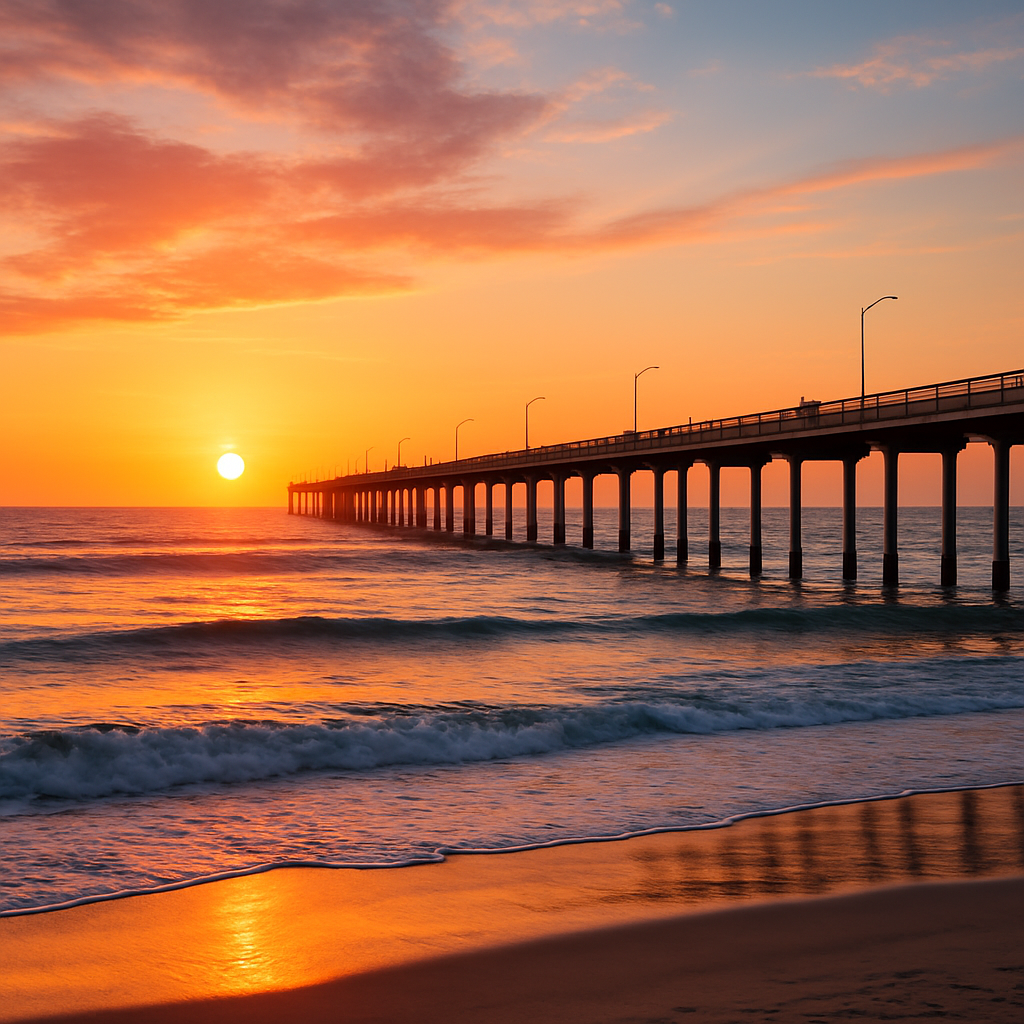
Sunset from Ocean Beach Pier
The municipal pier at the end of Newport Avenue in Ocean Beach is the longest concrete pier on the West Coast, and the sunset from the end of it is the one you'll actually remember from this trip. The sky does things over the Pacific that feel specifically engineered for the moment — reds and purples layered over the water while surfers catch the last sets below you and the pier fishermen reel in their lines.
Get there thirty minutes before sunset and walk the full length. The OB boardwalk behind you is dog-friendly and lined with the kind of surf shops and used bookstores that remind you San Diego kept this pocket weird on purpose. Bring a light jacket — the ocean breeze picks up as the sun drops, and you'll want to stay longer than you planned.

USS Midway Museum on the Waterfront
The USS Midway is a decommissioned aircraft carrier permanently docked on San Diego's waterfront — and walking its flight deck, standing next to restored fighter jets with the harbor breeze hitting you and the downtown skyline behind, is genuinely thrilling regardless of your feelings about military history. The audio tour is narrated by former crew members, and their stories make the scale of the ship feel human.
Below deck, the berthing compartments, engine rooms, and galley give you a visceral sense of what life was like for the 4,500 crew members who lived aboard. Budget about two hours — more if you're fascinated by aviation. The flight simulators are a separate ticket and worth it if you've got kids or just want to feel your stomach drop. The museum sits on Navy Pier at the foot of downtown, walkable from the Gaslamp Quarter.
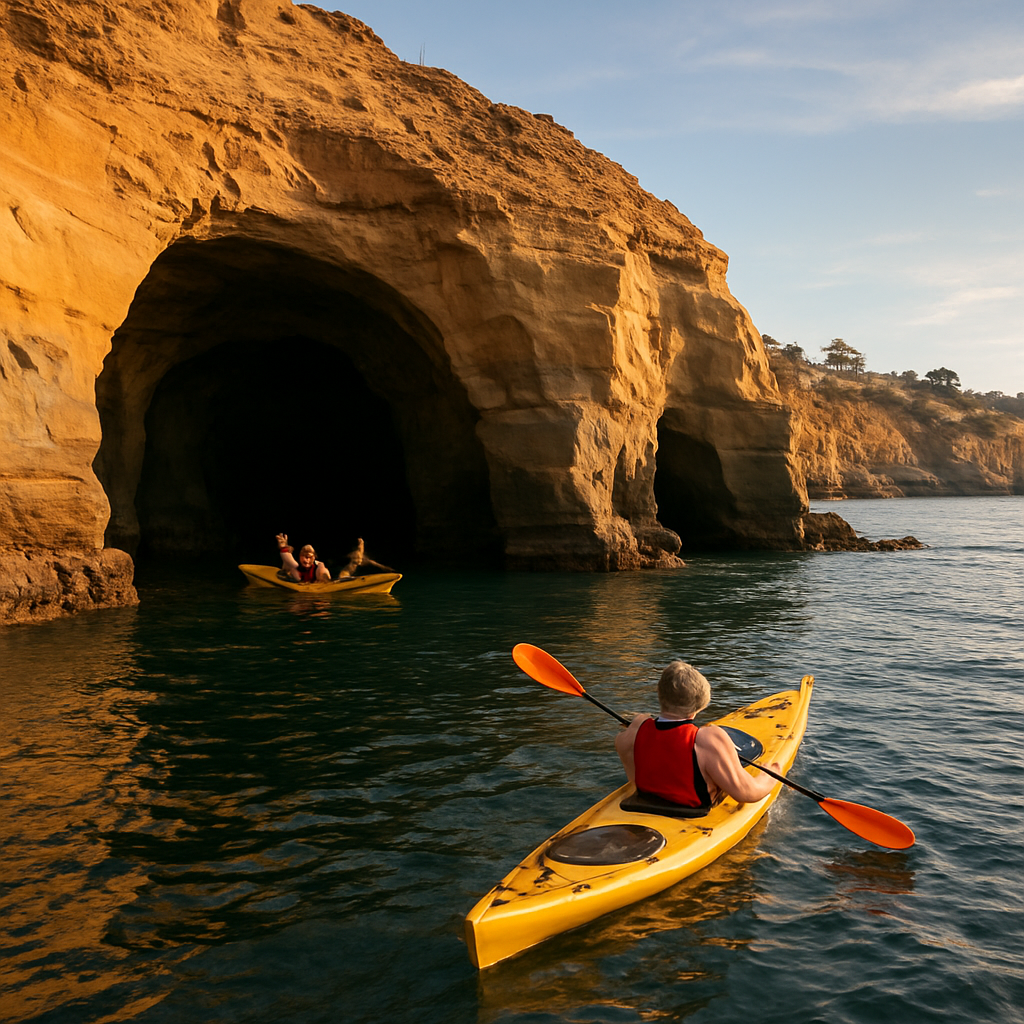
Kayaking the Sea Caves at La Jolla Cove
La Jolla Cove is where the cliffs meet the Pacific and the water turns that impossible turquoise that doesn't look real in photographs — and then you get there and it's somehow even more vivid in person. The sea caves along the cove are accessible by kayak, and paddling into them while harbor seals sun themselves on the rocks beside you is the kind of experience that makes you briefly reconsider your entire life and where you live.
Guided kayak tours run approximately $50–$80 per person and launch from La Jolla Shores beach, a short paddle north to the caves. Morning launches tend to have calmer water. If kayaking isn't your thing, the Sunny Jim Cave is accessible by a staircase tunnel from the top of the cliff — 145 steps down into a sea cave that was originally hand-carved in 1902. Either way, La Jolla is about 20 minutes north of downtown and worth every minute of the drive.
The places I actually send people to
Advice that fits how you travel
San Diego is one of the easier American cities to do alone — and I mean that structurally, not just as encouragement. The concentration of gay bars within a few walkable blocks of Hillcrest's University Avenue means you can cover real ground in a single night without coordinating transportation or convincing anyone to share a rideshare. The apps are active here and skew toward locals rather than tourists, which means the conversations you have are more likely to turn into actual plans than vague suggestions. If you prefer in-person serendipity, Flicks on University Ave is the right call on a weeknight: a gay video bar where solo visitors don't feel like they're standing there waiting for something to happen, because the crowd's already comfortable with strangers.
Budget-wise, solo travel here can be remarkably lean. The MTS trolley day pass runs $5–$10 and connects you from the airport to downtown without a second thought. The beaches are free. Several Balboa Park museums rotate free admission days. Hostel accommodation at HI San Diego in the Gaslamp Quarter starts around $40/night. A solo day in San Diego — beach in the morning, Balboa Park in the afternoon, tacos from a University Avenue truck, a few rounds at The Brass Rail — can come in well under $100 without feeling like you're rationing yourself. For a mid-range base, North Park gives you better accommodation value than Hillcrest proper and puts you ten minutes on foot from everything on The Ave, while the neighborhood's own coffee shops, vinyl stores, and craft breweries keep you occupied during daylight hours.
For solo travelers who want to actually plug into the community rather than just observe it, The LGBT Community Center San Diego on University Avenue runs a genuine events calendar — not just support services, but programming that connects you with locals. That's harder to manufacture than any bar scene, and it's free. The short version: San Diego's gay scene skews local in the best way. You'll find fewer circuit tourists and more regulars who've been coming to the same spots for fifteen years. For a solo traveler willing to go back twice to the same bar, that loyalty creates an opening.
San Diego earns its reputation as a romantic city with almost unfair ease — the light alone does half the work. Dinner at Cucina Urbana in Bankers Hill is the kind of date night that feels designed for couples who want to spend their money on the wine rather than the markup: you pick your bottle at retail from the attached wine shop and drink it at your table for a fraction of what you'd pay anywhere else. Follow it with a walk through Balboa Park as the evening cools down and the Spanish Colonial Revival buildings go golden in the last light, and you'll understand why this city has the effect it does on people. For same-sex couples, PDA comfort across Hillcrest, North Park, Ocean Beach, and Balboa Park is genuinely high — you're not visible as a couple in any remarkable way in these neighborhoods. You're just a couple.
On the accommodation front, the Hotel del Coronado on Coronado Island is the classic splurge: a National Historic Landmark opened in 1888, with a beachfront that photographs beautifully and sunsets from the terrace that you'll be talking about five years from now. Hilton's corporate LGBTQ+ inclusion policies apply portfolio-wide. For a more central option that keeps you close to the scene, the Kimpton Solamar's rooftop pool (FLOAT) is legitimately romantic on a summer evening, and Kimpton's IGLTA membership means the welcome is institutional. For couples who want to wake up in the neighborhood rather than commute to it, the Inn at the Park in Hillcrest puts you steps from The Ave at a rate that leaves real budget for dinner and drinks.
The unmissable couples experience is kayaking the sea caves at La Jolla Cove. The water turns that impossible turquoise and you paddle through while harbor seals watch from the rocks — guided tours run approximately $50–$80 per person, book a morning departure for calmer water, and plan to be disoriented by how beautiful it actually is. And if you want a day trip that escalates the romance, San Diego to Palm Springs is two hours northeast — arguably the best two-destination pairing in Southern California, combining the coast with the desert and two completely different LGBTQ+ scenes. Do both. You won't regret it.
California, as of 2026, offers full legal recognition for all LGBTQ+ family structures — same-sex adoption is legal, both parents are recognized on birth certificates, and nothing about your family's legal standing changes when you cross into the state. San Diego's municipal ordinances reinforce those protections locally. Practically speaking: you won't be the only LGBTQ+ family at the San Diego Zoo, and staff there won't register it as anything worth noticing. The city has enough visible same-sex family presence — particularly in Hillcrest and North Park — that LGBTQ+ families with kids move through the spaces that matter most without feeling conspicuous.
The attractions here are legitimately excellent across ages. The San Diego Zoo is one of the best in the world — budget a full day, arrive when it opens, wear comfortable shoes because the terrain is hilly, and give it more time than you think you need. The USS Midway Museum on the downtown waterfront has audio narrated by actual crew members who served aboard, which is the kind of thing that holds a ten-year-old's attention in a way many museums don't. For beach days, Coronado Beach and Ocean Beach are both dog-friendly and have calmer, wider water than Mission or Pacific Beach; the Coronado Ferry ($5 each way from Broadway Pier) is a small adventure kids genuinely enjoy for its own sake. Balboa Park's botanical gardens and free-rotation museum days make for a low-cost, high-value afternoon that doesn't require a car once you're there.
Practical logistics: San Diego with kids works considerably better with a rental car than on transit alone, especially if you're combining the Zoo, beach days, and Coronado in the same trip. Parking is the cost center — build it into your daily estimate honestly and it won't surprise you. Strollers are manageable across most of the city, though Hillcrest's bar corridor gets genuinely crowded on weekend evenings and isn't ideal after 8pm for the youngest travelers. Family Health Centers of San Diego offers LGBTQ+-competent pediatric and family care on a sliding-scale basis — worth knowing before you need it rather than searching for it in a pinch. And if your family wants to connect with other LGBTQ+ families while you're here, The LGBT Community Center runs youth and family programming that's open to visitors.
What San Diego actually costs
Flights, visas, and the first 30 minutes
San Diego International Airport (SAN) sits remarkably close to downtown — three miles from the Gaslamp Quarter and about five from Hillcrest. With approximately 90 direct routes serving the airport, you can get here nonstop from most major US hubs and a solid list of international cities. It's one of the easier American airport experiences: single commercial terminal complex, short walks, and a city connection that takes minutes rather than the standard hour of suburban airport suffering.
Visa requirements (as of 2026): US citizens need no visa — valid government-issued ID is sufficient for domestic travel. Travelers from the UK, Australia, and most EU countries typically qualify for the Visa Waiver Program and will generally need an ESTA authorization ($21, valid for two years). Canadian travelers can typically enter under the Visa Waiver Program with a valid Canadian passport, or use an ESTA. If your country isn't on the VWP list, check with the US Embassy before booking — entry requirements can shift.
Getting from SAN to the city:
- MTS Trolley (Blue Line) — $2.50, 15–20 min: The most economical option by a wide margin. Runs directly from the airport to downtown Santa Fe Depot. Grab a day pass if you're planning to use transit. Pro tip: confirm the Blue Line schedule before a red-eye landing — late-night frequency drops.
- Rideshare (Uber/Lyft) — $15–$28, 10–15 min: Pickup from the designated Terminal 2 zone. Surge pricing kicks in during peak hours and event days; check the estimate before you commit. For Hillcrest, this usually runs $18–$25 depending on timing.
- Taxi — $22–$35, 10–15 min: Fixed-rate zones are available to select downtown destinations; metered otherwise. Reliable but offers no price advantage over rideshare.
- Rental car — $45–$90/day, 10 min: An off-airport shuttle gets you to the rental facility. Worth knowing: parking in Hillcrest and downtown San Diego is genuinely expensive and space is limited. If your itinerary is mostly urban — Hillcrest, North Park, downtown, beach neighborhoods — a rental car will cost you more in daily parking fees than you'll save on rideshares. Rent one only if you're planning day trips to La Jolla, Coronado, or outside the city.
Traven's seasonal breakdown
The questions everyone asks
Is it safe to hold hands in San Diego?
When is San Diego Pride?
How much should I budget per day?
Do I need a car in San Diego?
What's the deal with June Gloom?
Where's the best neighborhood to stay for nightlife?
Can I do a day trip to Tijuana?
Screenshot this before you go
So should you actually go?
Go. San Diego is one of the most complete LGBTQ+ travel experiences in the United States — full legal equality, a gay neighborhood that's still genuinely alive and community-driven, world-class natural beauty, and a food scene that punches well above its weight class. It doesn't have the frantic energy of West Hollywood or the scale of New York, and that's precisely the point. This is a city where you can hold your partner's hand on a Tuesday afternoon in Hillcrest and nobody notices, kayak through sea caves on Wednesday, eat James Beard-caliber desserts on Thursday, and spend Friday night at a dance club where the regulars remember your face from last time. My Traven-Dex of 9.1 reflects a city that earns it across every category — and the 10.0 Legal score means you're not trading safety for sunshine. You're getting both. Honey, just go.
Sources & Resources
Official links we reference when compiling this guide. Last verified 2026-03-17.
- ACLU of San Diego & Imperial Counties
- Christie's Place (Women & Families Living with HIV)
- City of San Diego — Human Relations Commission
- Family Health Centers of San Diego (LGBTQ+ Care)
- Lambda Archives of San Diego
- Legal Aid Society of San Diego
- Mama's Kitchen San Diego
- Planned Parenthood Pacific Southwest
- San Diego County HHSA — HIV, STD & Hepatitis Branch
- San Diego Pride
- San Diego Youth Services (LGBTQ+ Programs)
- The LGBT Community Center San Diego