San Francisco didn't invent queer liberation, but it gave it a zip code — and then made the zip code fabulous.
There's a barstool at Twin Peaks Tavern — the original glass-front gay bar, "The Ol' Glass Coffin" to anyone who's earned the right to call it that — where you can sit at 4pm on a Tuesday and watch Castro Street do what it's been doing since 1972: exist, loudly, without permission. The bartenders remember everything. The light comes through those plate-glass windows like it has a point to make. And you realize, in a way that doesn't happen anywhere else, that this neighborhood isn't performing for you. It just is.
San Francisco's queer DNA isn't confined to one street or one zip code — that's the rookie mistake. Yes, The Castro is the pilgrimage, the spiritual center, the place where Harvey Milk Plaza and Pink Triangle Park sit within a block of each other and the weight of that proximity will catch you off guard. But walk twenty minutes south and Valencia Street in The Mission has been quietly building a deeply rooted lesbian and non-binary community for decades while the boys were doing their thing up the hill. Head to SoMa and the energy shifts again — grittier, darker, leather-forward, with Oasis doing the heavy lifting for queer nightlife programming that has real production value behind it. Then there's Polk Gulch, the city's original gay neighborhood from the '60s, now gentrified but still holding onto a handful of legacy bars with the kind of scrappy energy that doesn't exist on Instagram. Every neighborhood is a different frequency of the same signal.
I gave this city a 9.3 on my Traven-Dex, and honestly the only thing keeping it from higher is the cost of being here — San Francisco will charge you $18 for a cocktail and $6 for a drip coffee and look you dead in the eye while doing it. But what you get for that money is a city where my Pulse score hit 9.8, because there is something queer happening every single night of the week, in every corner of this seven-by-seven-mile peninsula, and nobody is asking you to tone it down. Dolores Park on a sunny Saturday — blankets, day-drinking, drag queens holding court on the "gay beach" slope — is the closest thing I've found to a queer public commons that actually functions as one.
Don't make the mistake of treating SF like a museum of what queer life used to be. The history is staggering — the Compton's Cafeteria riot, Harvey Milk, the AIDS crisis, the Sisters of Perpetual Indulgence — but this city is not resting on it. Someone wrote in to tell me that the SF LGBT Center on Market Street has programming almost every night of the week, and they weren't exaggerating. Check sfcenter.org before you land. This isn't a city you visit. It's a city you plug into.
The stuff your travel guide buries on page 47
San Francisco sits inside California, and California has some of the most comprehensive LGBTQ+ legal protections in the world. Same-sex marriage is fully legal — federally since 2015, and California has been leading the charge long before that. Adoption rights are completely equal. Anti-discrimination protections cover employment, housing, public accommodations, education, and credit with no carve-outs or exceptions for LGBTQ+ status.
Gender identity law operates on a self-identification basis. You can update California state ID documents without surgical requirements or a physician's sign-off. The state has explicit bans on conversion therapy for minors and robust trans-inclusive healthcare access across the public and private sectors. The Tenderloin neighborhood carries a particularly significant trans history — the 1966 Compton's Cafeteria riot happened here, three years before Stonewall.
The cultural reality mirrors the legal framework, and then some. San Francisco has been a queer refuge city since the 1950s, when the Mattachine Society established one of its earliest chapters here. In practice, this means the city's institutions — police, hospitals, hotels, restaurants — are overwhelmingly trained and genuinely accustomed to LGBTQ+ guests. You're not going to encounter front-desk awkwardness when you check in as a same-sex couple. It simply isn't a thing here. The city's queer community is visible, politically organized, and has been shaping local policy for decades.
One note worth flagging: the federal policy landscape in the US can shift independently of California law. For the latest on federal-level protections — particularly for travel documents and federal healthcare programs — Lambda Legal and ILGA USA are the most current sources. California's state-level protections remain strong, but staying informed is always the right call. Separately: general urban safety awareness applies in the Tenderloin, not because of any LGBTQ+-specific risk, but because of street-level activity unrelated to identity. The rest of the safety picture in SF is exceptionally good.
PDA comfort by area: The Castro and Noe Valley/Duboce Triangle are as close to a zero-concern zone as any city on earth — rainbow crosswalks, flags on every other building, and same-sex couples holding hands on every block throughout the day and evening. SoMa is equally comfortable, particularly around its leather and nightlife venues. The Mission District runs high on comfort with minor street-awareness warranted after midnight. Union Square, Fisherman's Wharf, and the Embarcadero are tourist-heavy zones where PDA is generally easy. The Tenderloin merits standard urban caution after dark, though its trans community presence is deep and historically essential.
What it actually feels like on the ground
Holding hands / same-sex PDA: In the Castro, SoMa, and Noe Valley, this is completely unremarkable — you'll be one of dozens of couples doing exactly that on any given block. Anywhere else in San Francisco, you're in one of the most socially progressive urban environments in the United States. Reactions range from zero to actively warm. There is no neighborhood in the city where same-sex PDA presents a meaningful risk of harassment.
Hotel check-in: Non-issue citywide, full stop. Every major hotel chain and virtually every independent property in SF has LGBTQ+ inclusivity embedded in its culture, not just its policy handbook. Parker Guest House in the Castro is gay-owned. The St. Regis will not blink. Nobody is blinking anywhere.
Taxis and rideshares: Uber and Lyft dominate the market here; both have anti-discrimination policies and SF's driver pool is cosmopolitan and well-accustomed to all manner of passengers. Traditional taxis are fine too. There's no documented pattern of driver hostility toward LGBTQ+ passengers in this city.
Beaches and public spaces: Baker Beach, Ocean Beach, Dolores Park on a sunny Sunday — all LGBTQ+-comfortable without reservation. Dolores Park in particular functions as a de facto queer public gathering space, especially on weekends. No concerns anywhere on the public-spaces front.
Late night: The Castro runs late on weekends. SoMa's leather and club circuit operates until 2am and later with permits. Standard late-night urban awareness applies — stay in well-lit areas, use rideshare rather than walking alone in less-populated blocks after 2am — but this is general city common sense, not LGBTQ+-specific risk management.
Trans travelers: You are in one of the most trans-affirming cities on the planet. San Francisco has trans-inclusive city services, shelters, and healthcare infrastructure at the municipal level. California's self-ID law is among the most accessible in the country for document changes. The trans community here is visible, organized, and politically established. The Tenderloin's trans history alone — going back to 1966 — makes SF a city of particular resonance. You will find your people.
Verbal harassment risk: Low citywide, negligible in the Castro and SoMa. Isolated incidents can happen in any large city, but organized or targeted anti-LGBTQ+ harassment is genuinely rare in San Francisco. If something does occur, SF has clear reporting channels through SFPD's Community Engagement Division and the city's Human Rights Commission.
The queer geography
The Castro
The Castro is the gravitational center — the neighborhood every other queer district in the world has been compared to, borrowed from, or tried to replicate. Centered on Castro Street between Market and 19th, it's a functioning daily neighborhood that also happens to be a pilgrimage site. The rainbow crosswalks, the massive flag at Harvey Milk Plaza, the Castro Theatre's Spanish Colonial Revival facade — these are the landmarks, but the actual experience is just being there on a weekday afternoon when the city's queer population is going about its life.
The bar scene runs from the civilized — Twin Peaks Tavern, open since 1972 with floor-to-ceiling windows watching Castro Street — to the energetic (Beaux Bar on Market for go-go dancers and a crowd that arrived after the bars closed in their home city) to the classic-comfortable (Midnight Sun for curated music videos and cocktails without having to shout). Hi Tops runs sports on every screen. Moby Dick still feels like 1985 in the best way. The Castro Crawl between 18th and Market is a legitimate local tradition and it never ends where you planned.
The GLBT Historical Society Museum is on 18th Street. Strut is at 470 Castro. Pink Triangle Park at 17th and Market — a small, quietly devastating memorial to LGBTQ+ Holocaust victims — is easy to walk past without noticing and worth a deliberate ten minutes. This neighborhood has institutional depth, not just a party strip.
SoMa (South of Market)
SoMa is a different chapter — grittier, leather-forward in a way the Castro hasn't been for years. Folsom Street is the axis: Powerhouse, the Eagle, the bars that make the Folsom Street Fair in late September feel like a natural extension of existing culture rather than an event dropped into a neutral space. This is where the bear and leather communities anchor, and where Oasis SF has established itself as the city's most ambitious queer nightlife venue — full production drag, burlesque, themed programming with a real stage. Thursday through Saturday, Oasis is where you go when you want a show and not just a bar stool.
For leather and kink gear, the SoMa cluster along Folsom and 9th stocks everything from harnesses to bespoke custom work. Mr. S Leather has been the serious buyer's destination for decades and their staff actually know what they're talking about.
The Mission
The Mission is where Valencia Street runs south through a largely Latinx neighborhood that has housed a vital lesbian and queer women's community for decades. The Bearded Lady anchors the queer dive-bar end; bookshops, murals, and taqueria-dense blocks fill in the rest. The energy here is less branded, more neighborhood-feel, worth two hours of wandering even if you don't stop anywhere specific.
The Mission connects directly to Dolores Park at 18th and Dolores — the city's outdoor living room. The uphill slope toward Castro fills on any sunny weekend with blankets, queer families, and the particular organized chaos of San Francisco at leisure. Pick up snacks from Bi-Rite Market two blocks away on 18th Street. Get there before noon for a decent spot on the hill.
Polk Gulch
Polk Gulch was San Francisco's original gay neighborhood in the 1960s and 70s, before the Castro took the crown. It's gentrified now — scrappier in vibe, with a handful of legacy queer bars and a less polished scene that some locals genuinely prefer. If you've done everything in the Castro and want to feel SF's queer history at a layer below the tourist surface, Polk Street is worth a few hours.
The Tenderloin
The Tenderloin is rough around the edges and not for everyone, but it carries specific queer history that matters: the 1966 Compton's Cafeteria riot here predated Stonewall as an organized act of trans resistance. Aunt Charlie's Lounge on Turk Street runs Hot Boxxx Girls drag shows Friday and Saturday nights — underground San Francisco drag in a room the size of a large living room. Apply street smarts, take a rideshare, go for the show.
The SF LGBT Center at Market and Octavia is a genuine community hub with events, art shows, meeting space, and programming almost every day. Check the events calendar before you arrive — you'll find something worth attending on almost any night.
The experiences worth rearranging your itinerary for

Walk the Golden Gate Bridge
Cross it on foot — not from a bus window and not from a photo pit on the Marin side. Actually walk the 1.7 miles across. The wind will be significant, the views will be absurd, and the Bay looks completely different from every angle. Start from the Welcome Center on the San Francisco side and walk north toward Marin. The bridge is international orange, not red, and in fog it disappears in sections like it's being erased in real time. Allow 90 minutes round trip and bring a layer.
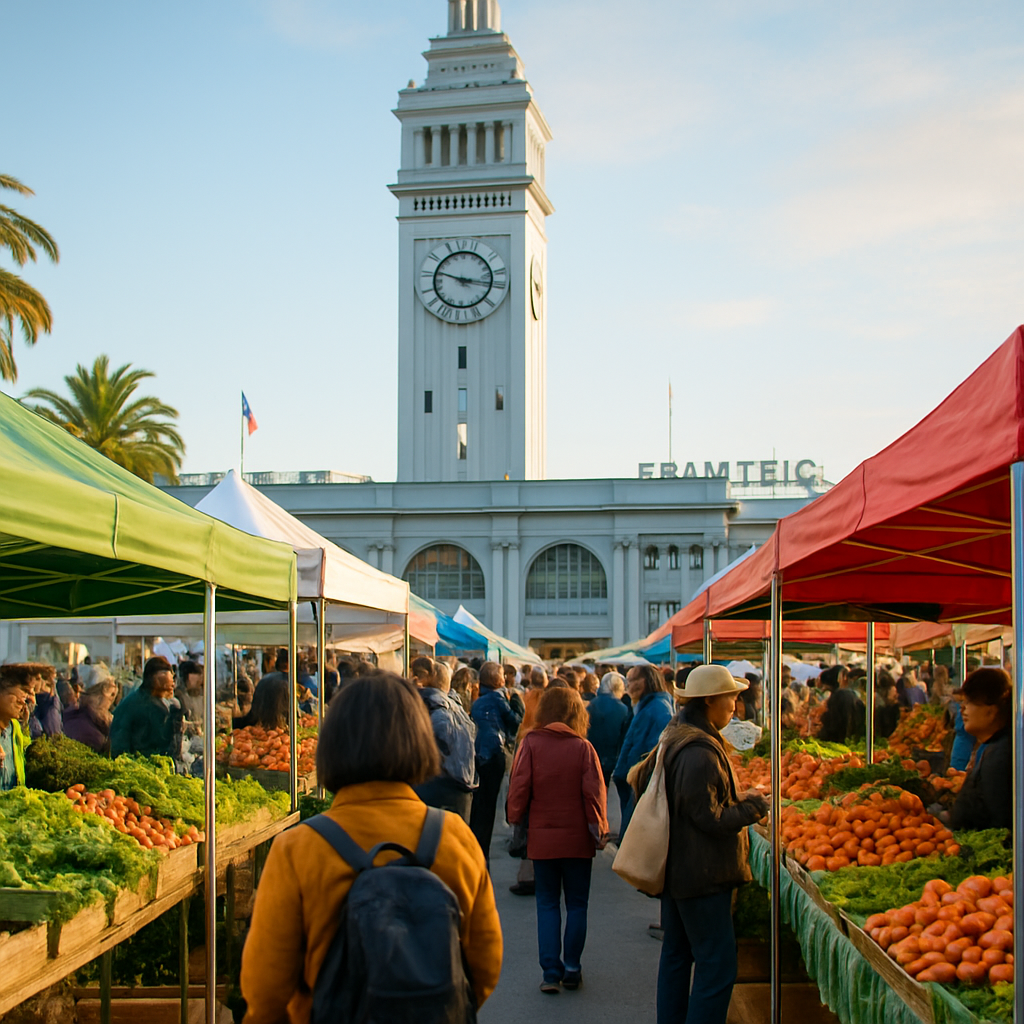
Saturday Morning at the Ferry Building
The Ferry Building on the Embarcadero is a Saturday farmers market and a weekday food hall, and both versions are worth your time. On Saturday mornings the outdoor market runs along the waterfront with Northern California produce, farmhouse cheese, sourdough, and oysters that were in the bay yesterday. Inside: Acme Bread, Blue Bottle Coffee, Cowgirl Creamery. Go hungry. Go Saturday. Go before noon before the crowds make it genuinely unpleasant.
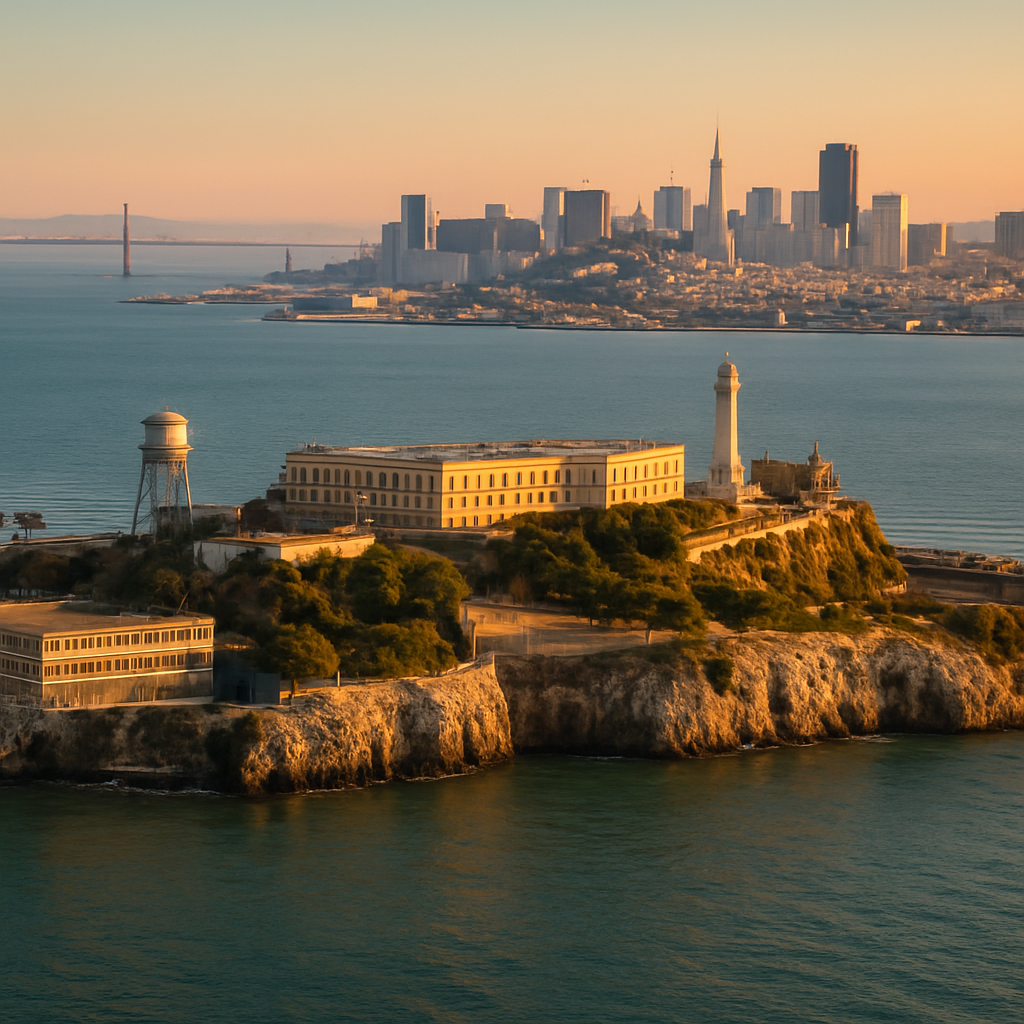
Alcatraz Island
Book the ferry before you arrive in San Francisco — tickets sell out weeks in advance and there's no same-day walk-up option worth counting on. The audio tour narrated by former guards and inmates is one of the best museum audio experiences I've encountered anywhere in the world, and the views of the city from the island are worth the trip alone. If you can get a night tour ticket, do it. The island at dusk is something else entirely.

Marin Headlands
Cross the Golden Gate Bridge by car or bike and you're in the Marin Headlands — preserved coastal wilderness that frames the bridge from the north. The view back toward the city from Battery Spencer, an abandoned World War II gun battery, is the Golden Gate photograph you've seen everywhere and it never stops being breathtaking. Take the Conzelman Road loop, stop at Point Bonita Lighthouse if it's open, and watch the fog roll in over the bridge from above. This is the version of San Francisco most visitors miss entirely.

North Beach and City Lights Bookstore
North Beach is the old Italian neighborhood that also became the birthplace of the Beat Generation — the two things coexist with minimal friction on a block that smells like espresso and fresh pasta. City Lights Bookstore at Columbus and Broadway is a landmark that still functions as an excellent indie bookshop worth several hours and some money. Caffe Trieste on Vallejo has been serving espresso since 1956 and looks it. Walk up to Coit Tower afterward for the WPA murals and the view over the Bay.
The places I actually send people to
Advice that fits how you travel
San Francisco is arguably the easiest city in the world to be a solo queer traveler. The bar culture here is still genuinely social — people talk to strangers, and a solo stool at almost any Castro bar is an invitation to conversation, not a sign of something wrong. Twin Peaks Tavern at 4pm, Moby Dick on any given weeknight, Harvey's on 18th — these are places where the bartender knows the regulars and the regulars know you'll be welcomed. App culture (Grindr, Scruff, Her) is vigorous, but the in-person scene is strong enough that it never feels mandatory.
Budget-wise, solo SF is manageable if you're strategic. A hostel dorm or basic room runs $50–$70/night; the taqueria-and-food-truck circuit covers most meals for under $20; the BART and Muni day pass handles all your transit for $10–$15. The neighborhoods themselves are the attraction — the Castro, Mission, SoMa, North Beach — and walking between them costs nothing. The SF LGBT Center runs free and low-cost events that are worth attending and are a natural place to meet people when you're arriving alone.
Pick up the Bay Area Reporter — free at any Castro bar or café, or check ebar.com — the week you arrive. It'll orient you to what's actually happening that no algorithm will surface for you. Solo travelers who arrive with a specific itinerary have a fundamentally different trip than those who wait to see what happens.
San Francisco is romantic in the specific way that cities with dramatic geography and excellent food tend to be — you can walk from a foggy overlook on Twin Peaks to a three-course dinner in 20 minutes, and neither experience feels incongruous. The Castro is the obvious base for couples, and Parker Guest House in particular has the kind of Edwardian-garden-and-evening-wine energy that makes a trip feel intentional rather than accidental. For something more extravagant, The St. Regis in SoMa delivers the full luxury experience — butler service, Remède Spa, Michelin-calibrated dining — and positions you close to both the waterfront and SoMa nightlife.
For date nights: Nopa is the gold standard — California-organic cuisine until 1am in a converted bank, the kind of meal where the restaurant is part of the experience. Starbelly at 18th and Castro is less formal but more atmospheric for people-watching over wood-fired dishes and good wine. PDA is completely unrestricted throughout every neighborhood you'll spend time in — the Castro is probably the most comfortable place on earth to be openly in love with whoever you're with, and that's not hyperbole.
For the day trip that earns its designation: drive north to Guerneville in the Russian River Valley, 90 minutes up Highway 116. Redwood groves, world-class pinot noir, a town that has been an LGBTQ+ resort retreat for decades. Take River Road for the scenic approach. Stop at a winery. Get back before dark. It quietly becomes the thing couples talk about most from the trip.
San Francisco is one of the most LGBTQ+-family-friendly cities in the world, and that's demographic reality, not a marketing claim. Noe Valley, just south of the Castro, has one of the highest LGBTQ+ family concentrations of any urban neighborhood in the country — strollers are unremarkable, same-sex couples with children are unremarkable, and the public school system has specific LGBTQ+ family resources. California fully recognizes same-sex adoptive and birth parents on all legal documentation, so your family structure is solid from the moment you land at SFO.
For kid-specific activities: the Exploratorium at Pier 15 is a hands-on science museum that genuinely justifies its own trip — excellent for ages 5 through 15, not watered-down, and big enough to fill a full day. Golden Gate Park contains the California Academy of Sciences (natural history, aquarium, and planetarium under one roof), the Conservatory of Flowers, and enough open lawn for any child under 12 to run themselves flat. The Alcatraz bay cruise works well for families with kids roughly 8 and up. Budget $80–$120 per day for activities at the moderate family level.
Practically: San Francisco is stroller-accessible in the flatter neighborhoods — the Castro's main strip, Mission, Fisherman's Wharf, and the Embarcadero — but the hills in Cole Valley, Nob Hill, and upper Castro will test you. Muni and BART are stroller-friendly; rideshare fills the gaps. Starbelly in the Castro has a heated patio that works well for families with younger children — community atmosphere without being an adults-only space. Kid menus exist at most casual restaurants across the city.
What San Francisco actually costs
Flights, visas, and the first 30 minutes
Airport: San Francisco International Airport (SFO) offers direct service from 150+ cities worldwide. Major routes: New York JFK (~5h 30m), London Heathrow (~10h 30m), Tokyo Narita (~10h), Los Angeles (~1h 20m), Chicago O'Hare (~4h 30m), Sydney (~15h).
Visa requirements: US citizens — domestic travel, no visa needed. UK, EU, Canadian, and Australian passport holders require an ESTA (Electronic System for Travel Authorization), approximately $21, valid for two years and multiple entries. Apply through the official CBP website before you travel — not through third-party fee-charging intermediaries.
BART (Bay Area Rapid Transit): $10–$12 / ~30 minutes. The correct answer for most travelers. Trains run directly from SFO's International Terminal to downtown SF, the Mission District, and beyond. Castro-bound travelers exit at Castro Station or 16th Street Mission. Most cost-effective option and avoids traffic entirely.
Rideshare (Uber/Lyft): $35–$60 / 25–45 minutes. Traffic-dependent — allow extra time during peak hours. Surge pricing is common on weekend evenings. Pick up from the designated rideshare zone on the departures level. For groups of three or more, this starts to make more financial sense over BART.
SamTrans Express Bus: $5 / ~45 minutes. The budget option. Limited luggage space, slower than BART, fine if you're traveling light and not in a hurry.
Private Car or Limo: $80–$150 / 25–45 minutes. Door-to-door, book in advance. Worth it if you're arriving late, carrying significant luggage, or starting at a five-star property where the arrival matters.
Traven's seasonal breakdown
The questions everyone asks
Is it safe to be openly LGBTQ+ in San Francisco?
When exactly is SF Pride?
What's the best neighborhood to stay in?
Do I need a car in San Francisco?
What's the Folsom Street Fair and should I go?
How much should I budget per day?
Is the Castro still the center of queer San Francisco?
Screenshot this before you go
So should you actually go?
Go. I mean that with no qualification. San Francisco is the city where the queer world as we know it was substantially invented, argued over, mourned, rebuilt, and celebrated — and it's still doing all of those things simultaneously on any given Tuesday. The Castro is a living neighborhood, not a theme park. The scene ranges from classic dive bars to full-production nightlife. The food is genuinely excellent. The legal and cultural protections are as comprehensive as you'll find anywhere in the United States. My Traven-Dex of 9.7 reflects a place where the LGBTQ+ traveler experience isn't just accommodated — it's authored. Book it, aim for September or October if the calendar allows, and give yourself at least four days to actually get below the surface of it.
Sources & Resources
Official links we reference when compiling this guide. Last verified 2026-03-05.
- SF LGBT Center
- San Francisco AIDS Foundation
- GLBT Historical Society
- San Francisco Pride (SF Pride)
- Horizons Foundation (LGBTQ+ Philanthropy)
- Lyric (LGBTQ+ Youth Center)
- St. James Infirmary (Sex Worker Health)
- SF Human Rights Commission
- Folsom Street Events
- Bay Area Reporter (B.A.R.)
- AIDS Legal Referral Panel (ALRP)
- Positive Resource Center