
Seattle isn't the parade float. It's the after-party — quieter, weirder, and still pouring drinks long after the other city has gone home.
It's a Sunday afternoon in Cal Anderson Park and the scene writes itself: dogs off-leash, someone's bluetooth speaker playing Charli xcx, two guys sharing a blanket and a bottle of rosé they definitely grabbed from the wine shop on Pike. Nobody's performing acceptance here — it's just how the neighborhood breathes. Capitol Hill has been Seattle's gay heart for decades, and in 2026 it still feels like the real thing, not a museum of what queer culture used to look like before the condos arrived. Yes, there are condos. But the bars are still open, the energy is still specific, and the guy at the coffee shop still has better tattoos than you.
Seattle doesn't announce itself the way some cities do. It's not the parade float, it's the after-party — quieter, weirder, more interesting once you actually sit down. There's a reason my Traven-Dex score sits at 9.1: this city has full legal equality, a scene that runs deep rather than flashy, and a cultural progressivism that feels embedded in the civic DNA rather than performative. Walk the Pike/Pine corridor on a Friday night and you'll move from The Wildrose — one of the last lesbian bars in America, open since 1984 — to a craft cocktail spot to a converted gas station dive bar with a fire pit, all within a few blocks. I gave it an 8.5 on Scene, and that number reflects depth over spectacle.
What surprised me most was how the rest of the city keeps up with the Hill. Fremont has that unshowered-genius energy, Ballard is doing its own thing with breweries and oyster bars, and the waterfront is mid-transformation into something genuinely worth your afternoon. The food scene punches absurdly hard for a city that most people associate with fish and coffee — the Ethiopian food in the Central District, the pho on Jackson, the oysters everywhere. You'll eat better here than you expect to, and you'll spend less doing it than in San Francisco.
The weather caveat is real: Seattle earns its grey reputation from October through April, and if you come in February you'll understand why everyone here owns four rain jackets. But June through September? The city transforms. Long golden evenings, mountains visible in every direction, and a population that goes collectively feral with outdoor energy after nine months of drizzle. Time it right and you get one of the best summer cities in America — with a scene that never had to try too hard because it was never pretending.
The stuff your travel guide buries on page 47
The legal picture is as good as it gets. Marriage equality, adoption rights, comprehensive anti-discrimination protections covering sexual orientation and gender identity in employment, housing, and public accommodations — Washington State has the full package, and has had it longer than most. My Legal score of 8.5 reflects a state that doesn't just tolerate queer people but has actively legislated protections into every relevant area of law. Gender marker changes operate on a self-ID basis, no surgical requirements. Gender-affirming care is legally protected for both residents and out-of-state visitors under Washington's shield laws.
The cultural reality matches the paper. Seattle is one of the most genuinely accepting cities in the United States. This isn't a place where legal protections exist on paper while the culture lags behind — the culture here drove the legislation, and it shows. LGBTQ+ people are visible, integrated, and unremarkable across the city, not just on Capitol Hill. Same-sex couples, trans individuals, and queer families exist openly and comfortably in virtually every neighborhood inside the city limits. The outer suburbs (Auburn, Federal Way) have slightly more conservative pockets, but even there, overt hostility is rare.
Seattle Pride in June is massive and runs the last Sunday of the month, but locals will tell you that Trans Pride Seattle — organized by Gender Justice League and held separately in late June — is the event that actually moves people. It's smaller, more intentional, and infinitely more powerful. If your trip overlaps, go.
PDA comfort is high across the board. Capitol Hill is essentially a PDA-free zone in terms of worry — same-sex affection is completely normalized and highly visible. Downtown, Pike Place Market, South Lake Union, Fremont, and Wallingford are all comfortable without thought. Beacon Hill and Rainier Valley are accepting with slightly less visible queer presence. Only in the furthest-flung suburbs would I suggest mild discretion, and even that's more about conservative pocket caution than genuine risk.
One practical note: Gay City Health Project on Capitol Hill offers free and low-cost STI testing, PrEP navigation, and HIV services with genuinely warm staff — walk-ins are often welcome, but check their site before you show up.
What it actually feels like on the ground
Holding hands: Completely comfortable throughout Seattle proper. On Capitol Hill, same-sex couples holding hands is so common it registers as background noise. Downtown, South Lake Union, Fremont — all fine. You'd need to venture well into the outer suburbs before this would even warrant a thought, and even there, the realistic risk is a glance, not a confrontation.
Hotel check-in: Zero issues anywhere. Seattle hotels are accustomed to same-sex couples, and the major chains and boutique properties in the city actively welcome LGBTQ+ guests. Kimpton properties are long-standing allies, but honestly, you won't encounter problems at any reputable hotel in the metro area.
Taxis and rideshare: No concerns. Seattle's rideshare drivers are drawn from one of the most liberal metro areas in the country. If you're heading to Capitol Hill, your driver already knows what neighborhood they're driving to, and nobody cares.
Public spaces and parks: Cal Anderson Park is the queer community's unofficial backyard — you'll see couples, friend groups, and community events on any sunny day. Volunteer Park, Kerry Park, the waterfront — all entirely comfortable. Seattle's public spaces are genuinely inclusive.
Late night: Capitol Hill proper is as safe as queer neighborhoods get in America — standard urban awareness on side streets late at night applies, but the Pike/Pine Corridor stays populated and well-lit through closing time. The bar crawl between Queer Bar, Pony, and Purr is a short, well-trafficked walk.
Trans travelers: Washington State has some of the strongest transgender protections in the country, and Seattle is the best place within it. Capitol Hill is particularly affirming, with numerous trans-inclusive venues and active community organizations including Gender Justice League and Lavender Rights Project. Restroom access follows gender identity, not assigned sex, under state law.
Verbal harassment: Rare within Seattle city limits. Not impossible — no city is immune — but the cultural norms here actively discourage it and bystanders are more likely to intervene than look away. If something does go sideways, Lavender Rights Project specifically centers Black LGBTQ+ Seattleites but serves the broader community and has real legal muscle behind them.
Law enforcement: The Seattle Police Department has a dedicated LGBTQ+ Liaison program. The relationship between the queer community and SPD is complicated post-CHOP/CHAZ — locals will have opinions, and it's worth listening rather than assuming. For community-based support, the Seattle LGBT Community Center can point you toward resources.
The queer geography
Capitol Hill
This is it. Seattle's queer epicenter, full stop. Capitol Hill has been the heart of LGBTQ+ life in the Pacific Northwest for decades, and unlike some gay neighborhoods that are gentrifying into memory, this one is still very much alive and loudly itself. The Pike/Pine Corridor — the stretch of Pike and Pine Streets between roughly 10th and 15th Ave — is where the density hits hardest: Queer Bar, Pony, Purr, and CC Cocktails are all within stumbling distance of each other on what locals call The Block.
Broadway is the neighborhood's commercial spine, lined with queer-owned businesses, cafés, and the Broadway Dance Steps — a series of bronze footprints embedded in the sidewalk celebrating queer culture with foxtrot, tango, and mambo steps that are easy to miss if you're not looking down. Cal Anderson Park sits at the neighborhood's center and functions as the community's green living room, especially in summer. Rainbow crosswalks mark the intersections. The Lambert House LGBTQ+ youth center is on 15th Ave. This isn't decorative — it's infrastructure.
For leather and bear culture, The Cuff Complex on Madison Street is the anchor — it's been a fixture for decades and draws a loyal, warm crowd. The Eagle a few blocks away runs harder-edged nights and hosts regular kink events that the Cuff crowd often migrates to after last call. Timber! is the bear bar with a laid-back Pacific Northwest aesthetic that welcomes beyond just the bear community. And Kremwerk — tucked in a basement under the Timbre Room — is the queer underground electronic venue that doesn't advertise because it doesn't need to. Check their Instagram for events; the website calendar is always slightly behind.
Julia's on Broadway does a drag brunch that has become a Capitol Hill institution — lines form early on weekends, the Bloody Marys are aggressive, and the performances are professional-grade. Reserve ahead or accept your fate. Neighbors Nightclub is the big dance club if you want volume and movement. R Place does the multi-floor thing with different vibes on each level. The diversity of options here is genuinely impressive — this is a scene that serves every corner of the community without forcing everyone into the same room.
Fremont
North of Capitol Hill, Fremont is Seattle's self-declared "Center of the Universe" and lives up to it with quirky public art (including a full-size concrete troll under a bridge), the beloved Fremont Sunday Market, and a quietly progressive community that's always been welcoming without making it the headline. It's where you go when you want a slower day with good coffee, weird statues, and a neighborhood that treats everyone like they already belong.
South Lake Union / Denny Triangle
The tech-centric neighborhoods directly south and west of Capitol Hill are newer in personality — Amazon's campus dominates the skyline — but the population skews young, liberal, and entirely unbothered by queerness. The restaurant and bar scene here is growing fast, and it's a comfortable, practical base if you want proximity to Capitol Hill without the noise.
The experiences worth rearranging your itinerary for
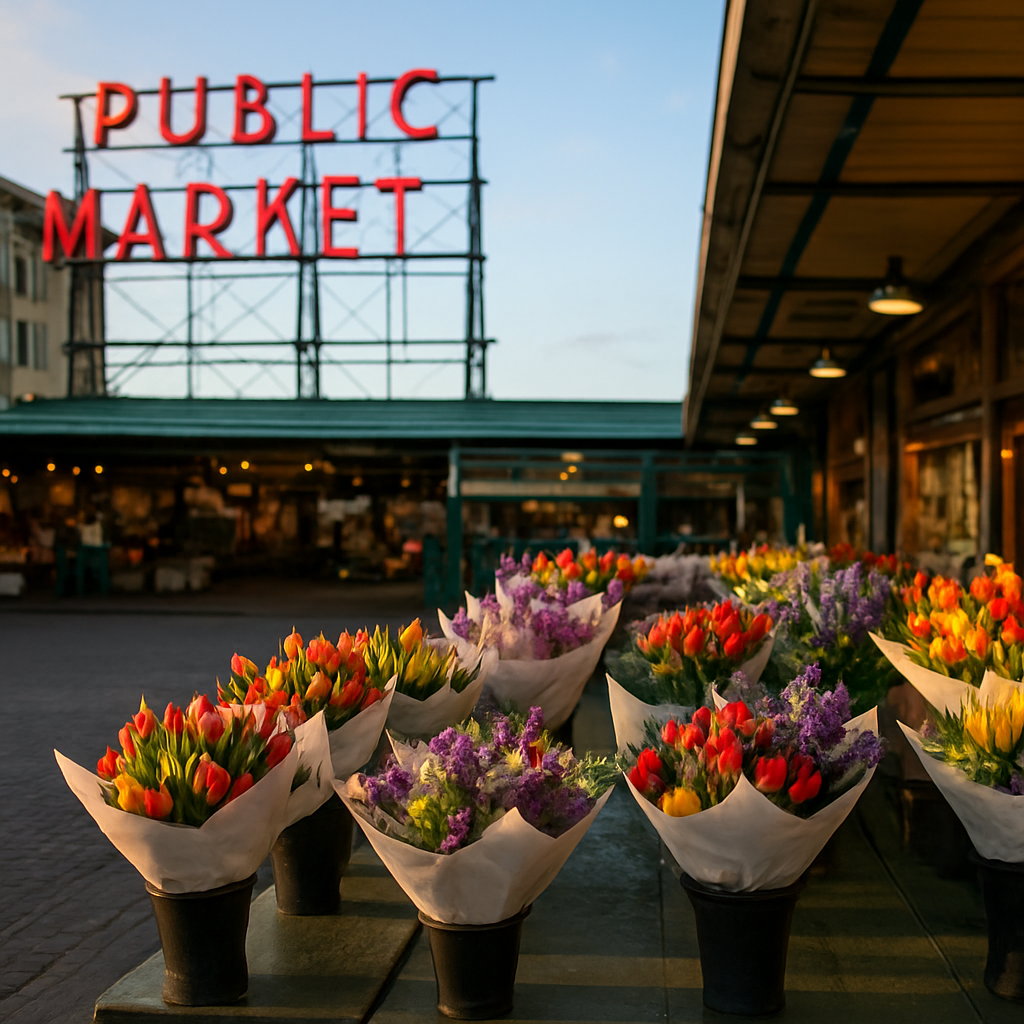
Pike Place Market Before 9am
Everyone tells you to go to Pike Place Market, and they're right, but they forget to tell you to go early. Before 9am the flower vendors are stacking dahlias, the fishmongers are setting up the throws, and the crowd is thin enough that you can actually smell the place — brine, roasting coffee, fresh pastry, and the salt air off Elliott Bay. Grab a coffee from the original Starbucks if you need the photo, then walk to the back stalls where the small-batch producers actually work. The market at 11am is a tourist attraction. The market at 8am is a working kitchen.
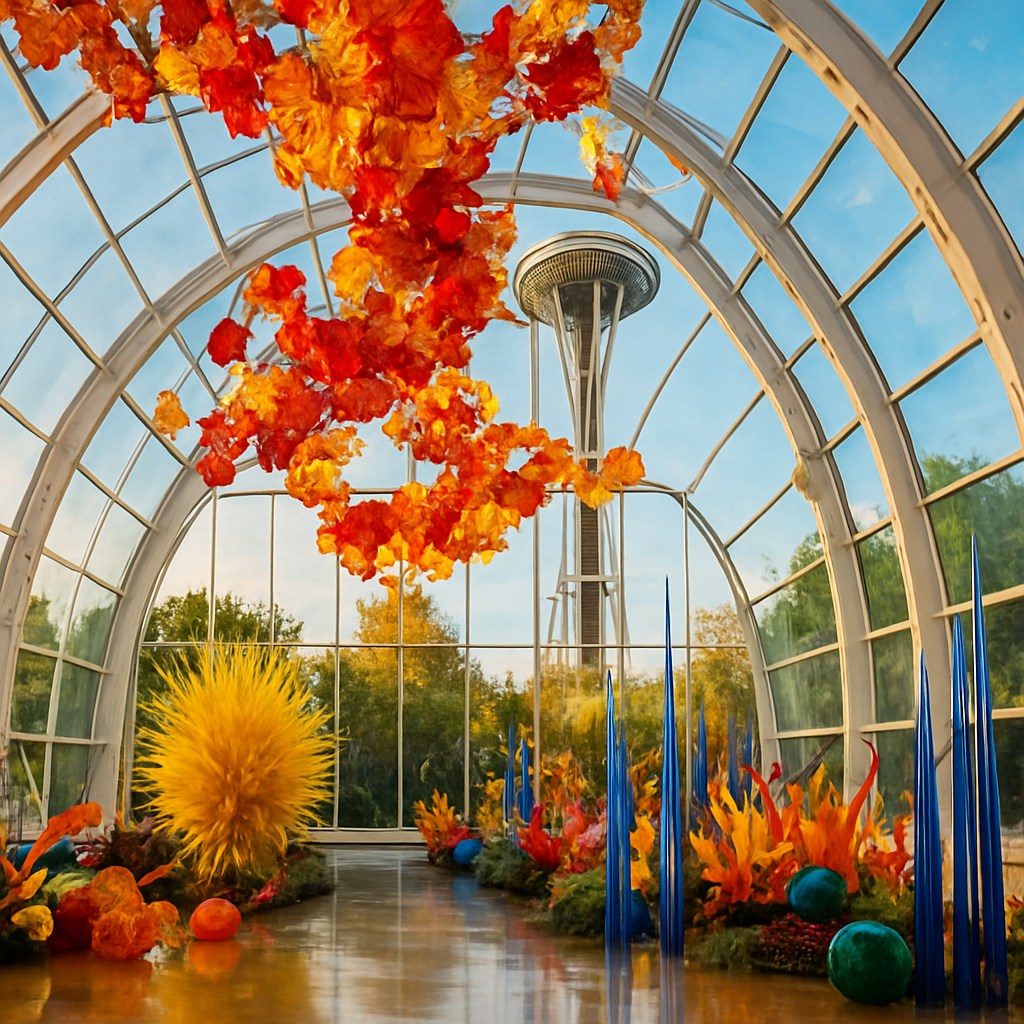
Chihuly Garden and Glass
Dale Chihuly's permanent exhibition at Seattle Center is one of those rare art experiences where you don't need to know anything about art to have your breath taken. The glasshouse — a 40-foot-tall greenhouse filled with a suspended red and amber sculpture — is the showpiece, but the outdoor garden installations, backlit against the Space Needle at dusk, are what you'll remember. Go in late afternoon and stay through sunset if you can.
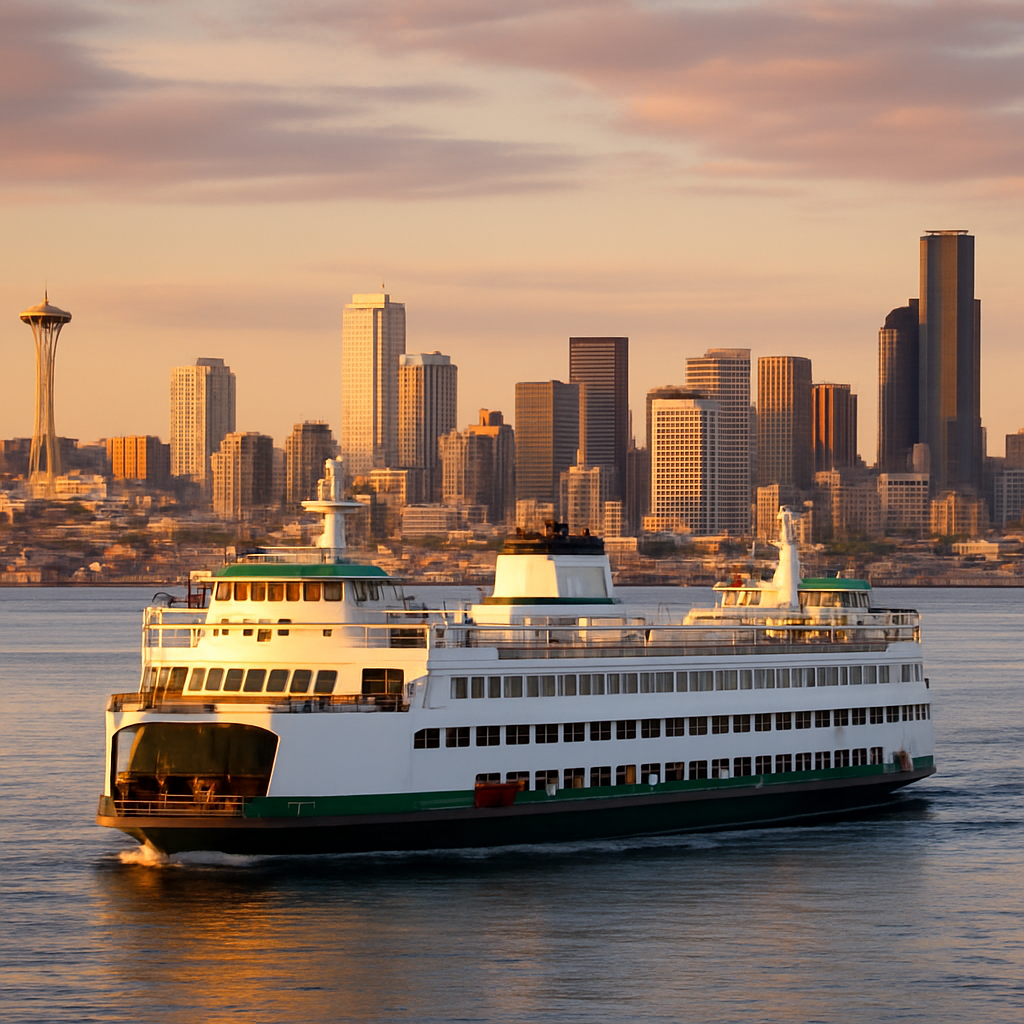
Ferry Across Elliott Bay
The Bainbridge Island ferry from the downtown terminal costs about $9 and gives you 35 minutes of open-water views of the Seattle skyline, the Olympics, and Mount Rainier on a clear day. You don't even need a plan for the other side — walk off, wander the town, eat lunch, and come back. The return trip at sunset with the city lights coming up is the kind of free spectacle that makes you resent every $40 observation deck you've ever paid for.
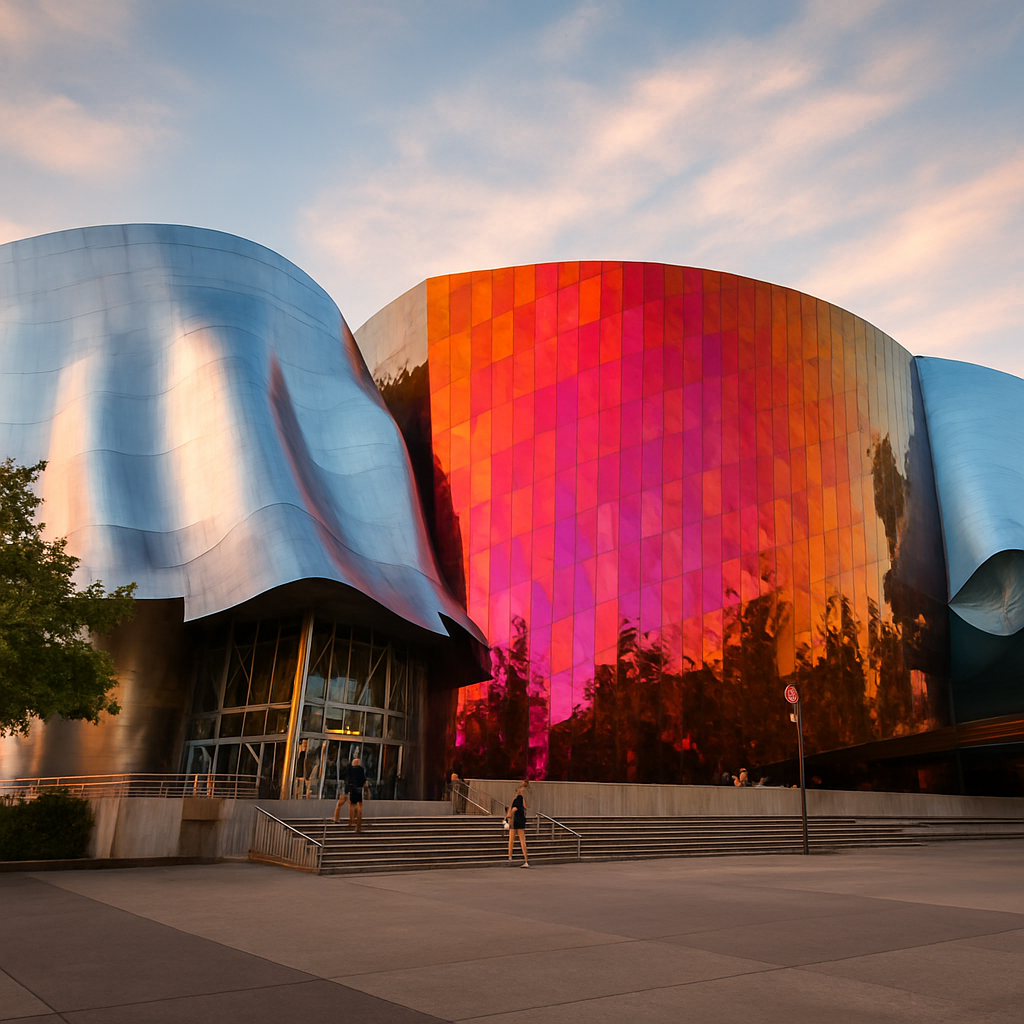
Museum of Pop Culture (MoPOP)
Frank Gehry designed the building, which looks like a smashed electric guitar from above and somehow works from every angle. Inside, the collections run from Jimi Hendrix memorabilia to science fiction to indie game design — it's a museum for people who get genuinely excited about culture without needing it to be serious. The Sound Lab, where you can play instruments in soundproofed rooms, is worth the visit alone if you've ever wanted to badly play drums without consequences.
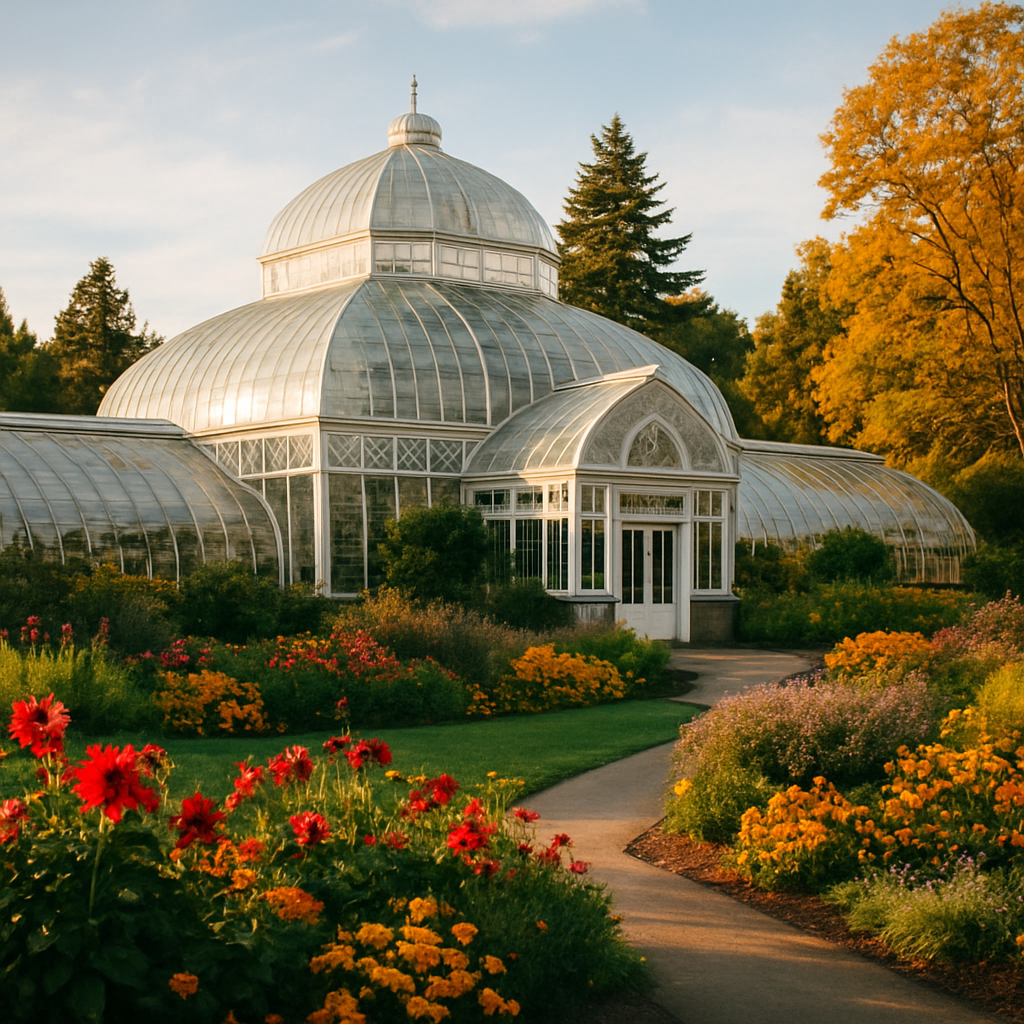
Volunteer Park on a Clear Morning
The conservatory is beautiful — tropical plants behind Victorian glass in the middle of Capitol Hill — and the Seattle Asian Art Museum sits at the park's edge. But what makes Volunteer Park worth your morning is the view from the water tower: the Olympics to the west, the Cascades to the east, and the quiet understanding that you're standing in the heart of one of America's historically queer neighborhoods, looking out at some of the most dramatic geography on the continent. Sunday before the crowds is when this place hits different.
The places I actually send people to
Advice that fits how you travel
Seattle is an outstanding solo city, and Capitol Hill specifically is one of the easiest queer neighborhoods in the country to walk into alone and leave with plans. The bar culture here skews social without being aggressive — Queer Bar on a weeknight is low-pressure and genuinely mixed, Pony rewards regulars but doesn't freeze out newcomers, and Timber! has the kind of laid-back energy where striking up a conversation with a stranger feels natural rather than desperate. Apps are active — Grindr, Scruff, and Lex all have strong user bases in the metro — but you genuinely don't need them to meet people here.
The neighborhood's walkability is a solo traveler's best asset. The Pike/Pine Corridor packs bars, restaurants, coffee shops, and bookstores into a few blocks, and Cal Anderson Park is the kind of space where sitting alone with a book doesn't feel lonely — it feels like participation. For daytime, Pike Place Market, the waterfront, and the Bainbridge Island ferry are all excellent solo experiences that don't require a companion to enjoy. Pro tip: Seattle's queer scene skews late — don't show up to Neighbors before midnight expecting a crowd, and know that Kremwerk often doesn't peak until 1am. Eat early, rest, lean into it.
Budget-wise, solo travel in Seattle is manageable. The Link Light Rail handles most transport needs for $3.75 a ride, hostels and budget rooms start around $40–$60 a night, and Capitol Hill's food truck and casual dining scene means you can eat well for $25–$35 a day without touching a white tablecloth. A moderate solo budget of $180–$250 per day gets you a boutique hotel, sit-down meals, and entry to the Space Needle without stress.
Seattle is one of the easier American cities to do romance in — the scenery does roughly half the work for you. A clear evening on the waterfront watching the sun drop behind the Olympics over Elliott Bay is so effortlessly cinematic it borders on unfair. For a proper date night, book Stateside on Capitol Hill in advance — the Vietnamese-French fusion menu and inventive cocktails make for the kind of dinner that keeps getting extended by one more round.
PDA is a non-issue across the city, and Capitol Hill specifically treats same-sex affection as completely unremarkable. Walk Broadway hand in hand, stop at a café, spend a sunny afternoon in Cal Anderson Park — nobody bats an eye. For something quieter and genuinely romantic, the walk up to Volunteer Park on a clear morning, with the conservatory and the Seattle Asian Art Museum as your backdrop, is one of the city's underrated pleasures that the crowds haven't fully claimed yet.
For accommodation, couples with budget to spend have an obvious answer: the Four Seasons Seattle's Elliott Bay-view rooms are the kind of experience you'll reference for years. Mid-range, the Kimpton Hotel Monaco's eclectic, inclusive atmosphere hits a great sweet spot — they welcome you and it shows in ways that go beyond a card left on the pillow. And if you want to be in the thick of it, Hotel Gemini on Capitol Hill puts you steps from every bar, restaurant, and late-night impulse the neighborhood has to offer.
Seattle is genuinely excellent for LGBTQ+ families, both legally and culturally. Washington State's protections cover parenting rights, adoption, and gender-affirming care — including for out-of-state visitors under Washington's shield laws — and the city's general culture ranks among the most openly accepting in the country. Capitol Hill is where the community visibly lives, but family-friendly attractions are spread across the entire city, so your itinerary won't be constrained by where the queer scene concentrates.
Seattle Center is your family headquarters: the Space Needle for the views, the Museum of Pop Culture (MoPOP) for the kids who think they're too cool for regular museums, and the Chihuly Garden and Glass for the adults who won't admit they're equally excited. The Woodland Park Zoo and the Seattle Aquarium are both excellent, stroller-accessible, and easily reached on the Link Light Rail — kids under five ride free, and the system is clean and runs on time. Pike Place Market is loud and sensory-rich and worth a morning regardless of the ages in your group.
Day trips are family-friendly too. The Washington State Ferry to Whidbey Island is an adventure in itself — kids love the crossing, the island towns are welcoming, and LGBTQ+ families draw no unusual attention in a community known for its progressive arts culture. Back in the city, Capitol Hill and the neighborhoods around it have enough casual, kid-tolerant dining that you won't be negotiating with a seven-year-old over who gets the tasting menu at the end of a long day.
What Seattle actually costs
Flights, visas, and the first 30 minutes
Airport: Seattle-Tacoma International Airport (SEA) is a major hub with direct service from 90+ cities worldwide. From New York (JFK): ~5h 30m. From Los Angeles (LAX): ~2h 45m. From London (LHR): ~9h 30m. From Tokyo (NRT): ~9h 45m. From Chicago (ORD): ~4h 15m. From Vancouver (YVR): ~45 minutes — the shortest international hop you'll ever take.
Visa requirements: US citizens — domestic travel, no visa required. UK, EU, Canadian, and Australian citizens all need an ESTA (Electronic System for Travel Authorization) under the Visa Waiver Program, valid for up to 90 days. Apply before you fly — it costs $21 and takes about ten minutes at the official CBP site. Don't leave it for the airport.
Getting from SEA to the city: The Link Light Rail is the smart move — $3.75 gets you to Westlake Center downtown in about 40 minutes and sidesteps Seattle traffic entirely. Rideshare (Uber/Lyft) runs $35–$55 depending on traffic, with a designated pickup area at the terminal. Taxis are available at flat rates of $45–$65 from the taxi stands. Hotel and regional shuttles range from $4–$25. Pro tip: during afternoon rush hour, the Light Rail wins every single time — don't let a rideshare app talk you into sitting in I-5 traffic when the train runs right to Capitol Hill.
Traven's seasonal breakdown
The questions everyone asks
Is Capitol Hill safe to walk around at night?
Does it really rain all the time?
Do I need a car?
Is Seattle expensive?
When is Seattle Pride?
Is Seattle welcoming for trans travelers?
What's the best way to get from the airport to Capitol Hill?
Screenshot this before you go
So should you actually go?
Go. Seattle is one of those cities that doesn't need to sell you on its progressive credentials because it's too busy actually living them. A perfect 10.0 on legal protections, a scene with real history and real bars still standing, a food culture that quietly competes with any coastal city, and a summer that will make you rethink your entire relocation strategy. It's not the loudest city on the circuit, and that's exactly the point. The gays here built something durable — not a brand, a neighborhood. Whether you come for Pride weekend in June or a rainy long weekend in November with nothing but coffee shops and bookstores on the agenda, you'll feel it. I don't hedge on this one.
Sources & Resources
Official links we reference when compiling this guide. Last verified 2026-03-15.
- Gay City Health Project
- Gay City Wellness Center
- Gay City: Seattle's LGBTQ Center
- Gender Justice League
- Gender Justice League
- King County HIV/AIDS Program
- Lambert House LGBTQ Youth Center
- Lambert House LGBTQ+ Youth Center
- Lavender Rights Project
- Lavender Rights Project
- PFLAG Seattle
- PFLAG Seattle
- Pride Foundation
- Pride Foundation
- Seattle & King County Public Health – LGBTQ Health
- Seattle LGBT Community Center
- Seattle Pride (Pride Northwest)
- Seattle Pride (Pride Northwest)
- Washington State Human Rights Commission
- Washington State Human Rights Commission