
St. Pete doesn't argue with Florida. It just keeps repainting the crosswalks at Central and 25th every time someone tells it not to.
St. Pete is the queerest small city in Florida, and unlike most of the state right now, it isn't apologizing for it. The city sits inside a state legislating in the opposite direction, and its response has been to dig in — rainbow crosswalks at Central and 25th that volunteers repainted within 48 hours the last time the state tried to ban them, a municipal non-discrimination ordinance with actual teeth, and a Grand Central District that runs uninterrupted from 16th to 31st like one continuous thesis statement. That's not a coincidence. That's a town that decided who it was and stopped taking suggestions.
The geography helps. Central Avenue is the spine, the SunRunner trolley runs it every fifteen minutes until midnight on weekends, and the whole gay village is a five-block walk from Punky's to Enigma with stops at Cocktail, Sauce Box, and Trophy Fish in between. Day starts at Bodega with a Cuban sandwich Tampa Bay will fight you about (it has salami, get over it), drifts through the Dalí Museum on a Thursday after 5pm when admission drops, and ends on the museum steps watching the sun fall into Tampa Bay. I gave it a 8.7 on Pulse for a reason — the city is alive in the right places at the right hours.
What earns the 8.2 overall on my Traven-Dex isn't just the scene, though. It's Gulfport on a Tuesday night, fifteen minutes southwest, where the softball league owns the patio at Georgie's Alibi and Tuesday is genuinely better than Saturday almost anywhere else. It's the snowbird couples in their 60s on Beach Drive who have been together since before any of this was legal. It's Sunken Gardens in the morning before the heat. It's the bartenders at Enigma remembering your order on night two — not a metaphor, a verifiable fact. The city is small enough to feel lived-in and large enough to keep surprising you.
The asterisk is real and you should hear it from me directly: as of 2026, Florida state law restricts gender-affirming care, bathroom access in state buildings, and ID changes, and those laws override the city ordinance for trans visitors. St. Pete the city is one of the most trans-supportive places in the Southeast. Florida the state is not. Both things are true at once, and pretending otherwise would do you a disservice. Plan around it, read the Equality Florida advisory if it applies, and then come anyway — because this town is stubborn about who it is, and that stubbornness is exactly what makes it worth the trip.
The stuff your travel guide buries on page 47
Here's the split-screen reality of St. Pete: the city is one of the most explicitly welcoming municipalities in the Southeast, sitting inside a state that has spent the last few years legislating in the opposite direction. As of 2026, same-sex marriage is legal nationwide, joint adoption is recognized, and St. Petersburg maintains its own non-discrimination ordinance covering sexual orientation and gender identity in employment, housing, and public accommodation. Pinellas County backs it up at the county level. A reader wrote in to remind me that local enforcement is real — if something happens, you can file with the city's Office of Community Affairs and they actually respond.
State law is the asterisk. Florida's 2023 SB 254 and related legislation restrict gender-affirming care, bathroom access in state-owned buildings, and ID changes — and those laws override city ordinances on bathrooms, healthcare, and IDs. Equality Florida and HRC have maintained travel advisories for the state since 2023, and they're worth reading before you book. For trans travelers specifically, the social climate in St. Pete is one of the most supportive in the region; the legal climate at the state level is not. Both things are true at once.
Pro tip: St. Pete Pride is the last weekend in June and the city genuinely shuts down for it — book hotels by March or you'll be commuting from Clearwater. The TransPride march in November is smaller, more political, and arguably the more meaningful event if you want to meet organizers and not just spectators. Hurricane season runs June through November, and the locals are unbothered until they aren't — if a named storm enters the Gulf, listen to the bartenders, not the weather app. They've done this before.
For deeper legal questions, ACLU of Florida tracks active litigation and Bay Area Legal Services handles civil matters locally. Visa-wise, US travelers move freely; UK, EU, AU, and CA visitors will typically need ESTA under the Visa Waiver Program, and Canadians generally don't need a visa for stays under six months.
What it actually feels like on the ground
Holding hands on Central Avenue: Between 9th and 31st Streets, this is genuinely a non-event, day or night, including at 2am after Enigma empties out. The rainbow crosswalks at 25th aren't decoration — they're a statement the city has actively defended. North of 38th Avenue or out toward the interstate, read the room. It's not hostile, it's just not the same crowd.
Hotel check-in: Downtown and beach hotels are routine for same-sex couples. The Vinoy, the Don CeSar, the Hollander, the Birchwood — none of them blink. The Old Northeast B&Bs like Dickens House are explicitly LGBTQ+-owned and operated.
Taxis and rideshare: Uber and Lyft dominate, and the SunRunner BRT runs Central Avenue from downtown to St. Pete Beach every 15 minutes until midnight on weekends — $2.25, exact change or app. It's the single best transit decision the city has ever made and the easiest way to bar-hop without a car.
Beaches and public spaces: St. Pete Beach and Pass-a-Grille are tourist-friendly and comfortable, though crowds skew more mixed than downtown. PDA at Pass-a-Grille at sunset has never been a problem in my experience. The Gulf is the Gulf — the water doesn't care who you are.
Late night: Grand Central District is well-lit, walkable, and busy until 2am on weekends. Pride weekend is heavily policed in a way that mostly feels like crowd management, not surveillance — the St. Petersburg Police Department has a designated LGBTQ+ liaison. That said, drive carefully crossing into Pasco County — different jurisdiction, different vibes.
Trans travelers: Socially, St. Pete is one of the most trans-supportive cities in the Southeast — there's a real community here, dedicated services, and visible representation. Legally, Florida state law restricts bathroom access in state buildings, gender-affirming care, and ID changes. The disconnect is real and worth planning around. Metro Inclusive Health on 3rd Avenue North does walk-in PrEP, PEP, and STI testing on a sliding scale and will not flinch at anything — they've got an after-hours line for Sundays. Empath Health handles HIV and broader LGBTQ+ services across Pinellas County.
Verbal harassment risk: Low in the downtown core and Grand Central. Occasional in suburban strip-mall territory and rural Pinellas edges. Standard Florida caution applies outside the city limits — not panic, just awareness. Pinellas County Health Department can route you to additional resources if you need them.
The queer geography
Grand Central District
This is the spine — a walkable stretch of Central Avenue running roughly from 16th to 31st Street, lined with low-slung historic storefronts, brewery patios, taco shops, vintage stores, and the kind of independent businesses that survived because the rents stayed sane longer than they should have. The Rainbow Crosswalks at Central and 25th were installed in 2019 and successfully defended after the state's 2023 attempt to ban them — volunteers repainted them within 48 hours. This is the LGBTQ+ commercial heart of the city, where Enigma, Cocktail, Punky's, Sauce Box, and Hamburger Mary's sit within a five-block radius. Drag brunch at Hamburger Mary's on Sunday at 1pm sells out by Thursday — book ahead. St Pete Pride runs the parade route right through here every June.
EDGE District
One zip-code zone east of Grand Central, EDGE is the arts-and-nightlife pocket between roughly 9th and 16th Street. Industrial-feeling, slightly grittier, and home to Green Bench Brewing's sprawling beer garden, the Iberian Rooster, and a rotating cast of pop-ups. It's where you go when you want a craft pint outside under string lights without crossing the bridge. Visit St. Pete/Clearwater's LGBTQ+ travel page tracks the current programming.
Old Northeast & Historic Kenwood
Two of St. Pete's prettiest residential neighborhoods, both with brick streets, hexagonal hexblock paving, and the oak-canopied bungalow architecture that gives the city its visual signature. Old Northeast sits just north of downtown — quiet, family-coded, and home to Dickens House, the longstanding LGBTQ+-owned B&B in a 1912 Craftsman. Kenwood, just north of Central Avenue, has the highest rainbow-flag-per-block ratio in the city and a strong queer homeowner community that anchors a lot of the city's organizing.
Downtown Waterfront & Central Arts District
Beach Drive curves along Tampa Bay past the Dalí Museum, the Museum of Fine Arts, the Vinoy, and a string of waterfront restaurants and rooftop bars. The Florida Holocaust Museum, The Studio@620, and Tombolo Books — the queer-owned indie bookstore that hosts trans author readings and banned-book Q&As — are all walkable from here. Sunset over the bay from the Dalí steps is the most romantic free thing in the city.
Gulfport
Fifteen minutes southwest of downtown, Gulfport is its own incorporated city — a tiny waterfront town on Boca Ciega Bay with a single arts-and-restaurants strip along Beach Boulevard, a historic 1930s casino ballroom, and a long-established LGBTQ+ residential population. Take the trolley, eat at Stella's, end up at Georgie's Alibi where the local softball league reliably owns the patio after 6pm. Tuesday nights here are better than Saturday nights almost anywhere else. The City of St. Petersburg tourism resources cover the broader region.
The experiences worth rearranging your itinerary for

Dalí Museum, Then Sunset on the Bay
The Dalí Museum sounds like a tourist trap and is decisively not — more than 2,400 works, the largest collection outside Europe, housed in a Yann Weymouth building wrapped around a geodesic glass Enigma. Go on a Thursday after 5pm when admission drops, then walk out the front doors and down the steps to the waterfront. Sunset over Tampa Bay from the Dalí lawn is the most romantic free thing in this city, and you'll have just paid less for the museum than you'd pay for a cocktail.
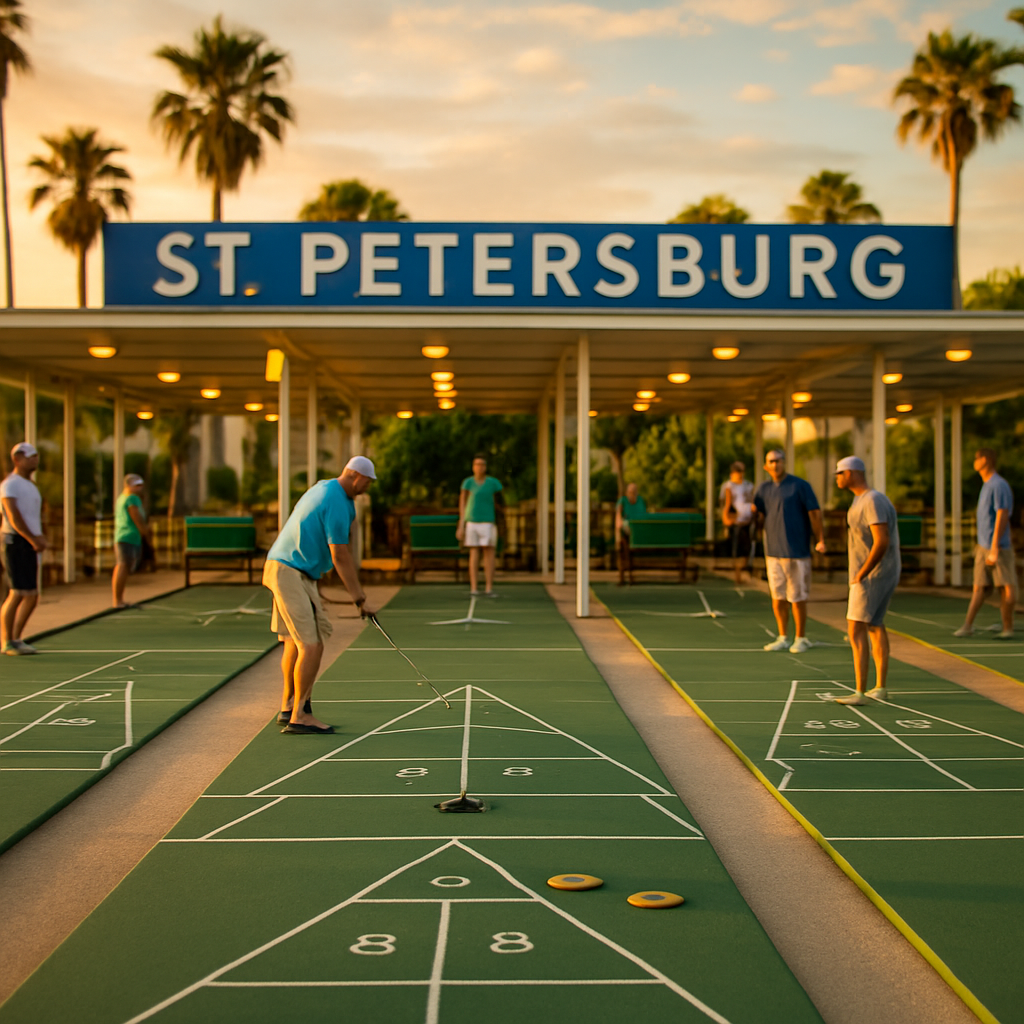
Friday Night Shuffle at the Shuffleboard Club
The St. Pete Shuffleboard Club is the oldest and largest shuffleboard club in the world, founded in 1924, and on Friday nights it opens to the public for free, BYOB shuffleboard under string lights. The crowd is the queerest mixed group in the city — old-timers, transplants, twenty-somethings on date three. Yes, it's actual shuffleboard. No, you don't need to know how. Someone will teach you within four minutes, and you'll end up staying for three games longer than you planned.
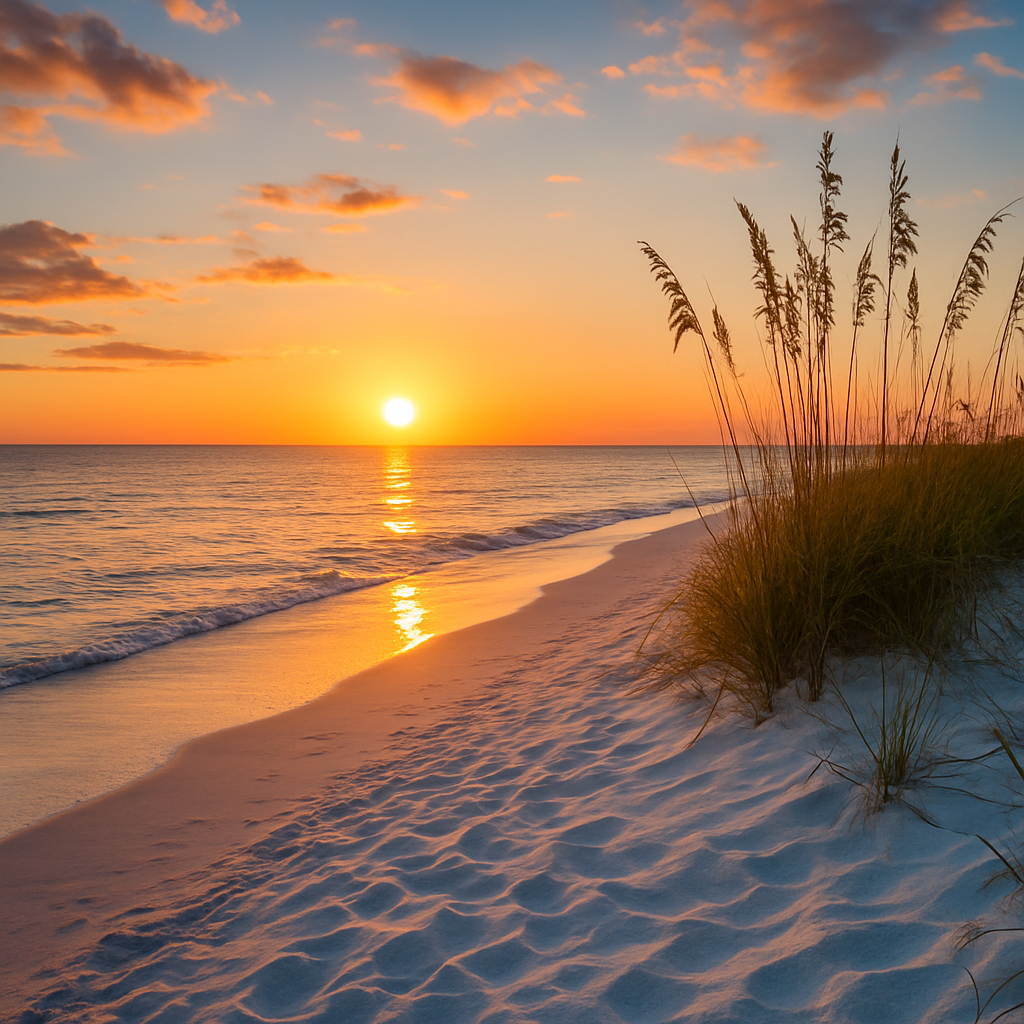
A Slow Day at Pass-a-Grille
Pass-a-Grille is the historic beach district at the southern tip of St. Pete Beach — settled in the late 1800s, on the National Register, and the only stretch of white-sand Gulf coastline within an hour that hasn't been swallowed by condos. Walk the cottage streets, eat at the Hurricane, swim, do nothing for a long time. End the day on the sand with the Don CeSar pinking up behind you. Drive carefully back over the bridge — the Gulf will have made you slower than you remember being.
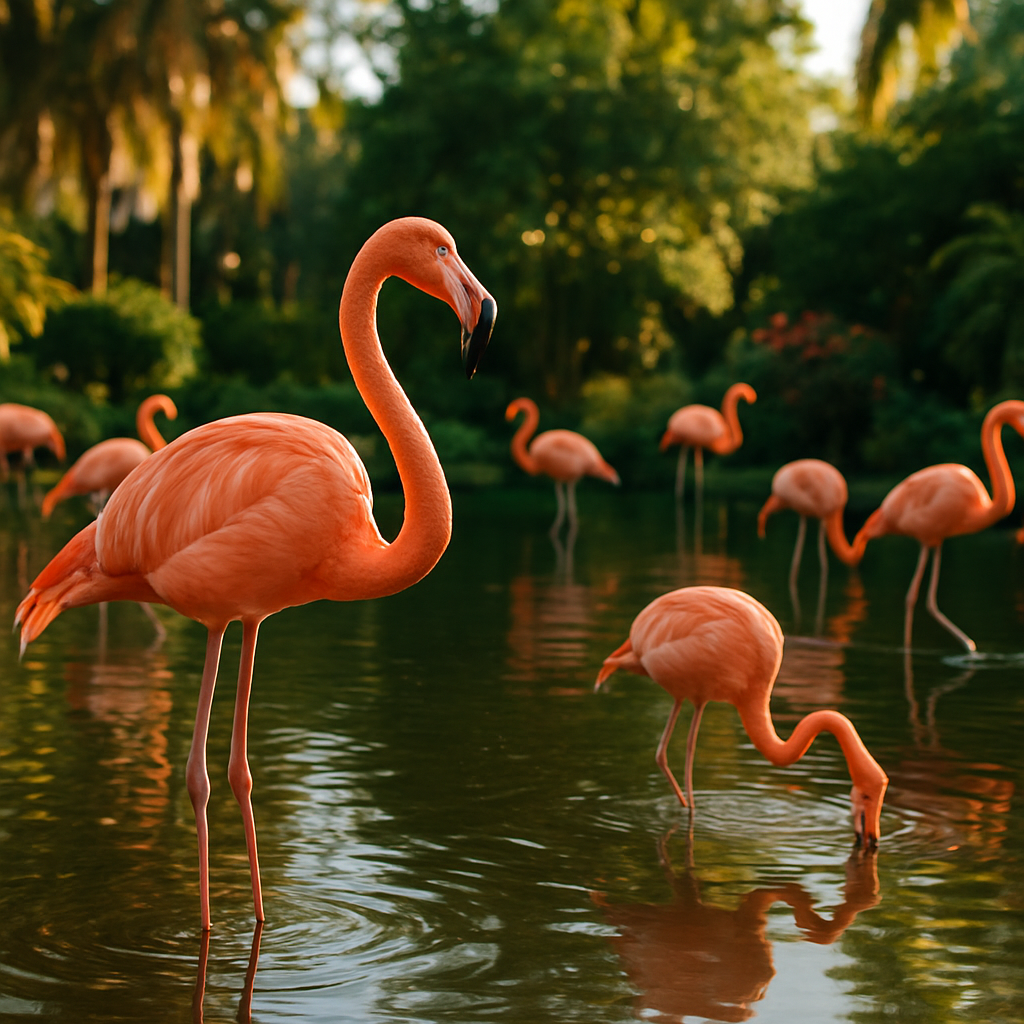
Morning at Sunken Gardens
Four acres, 50,000 tropical plants, a flock of pink flamingos doing flamingo things, and a fence around the whole thing keeping the city out. Sunken Gardens opened to the public in 1935 — one of the oldest roadside attractions in Florida, on the National Register, city-owned since 1999. Go in the morning before the heat sets in. It's not a long visit, but it's the kind of stop that resets the day.
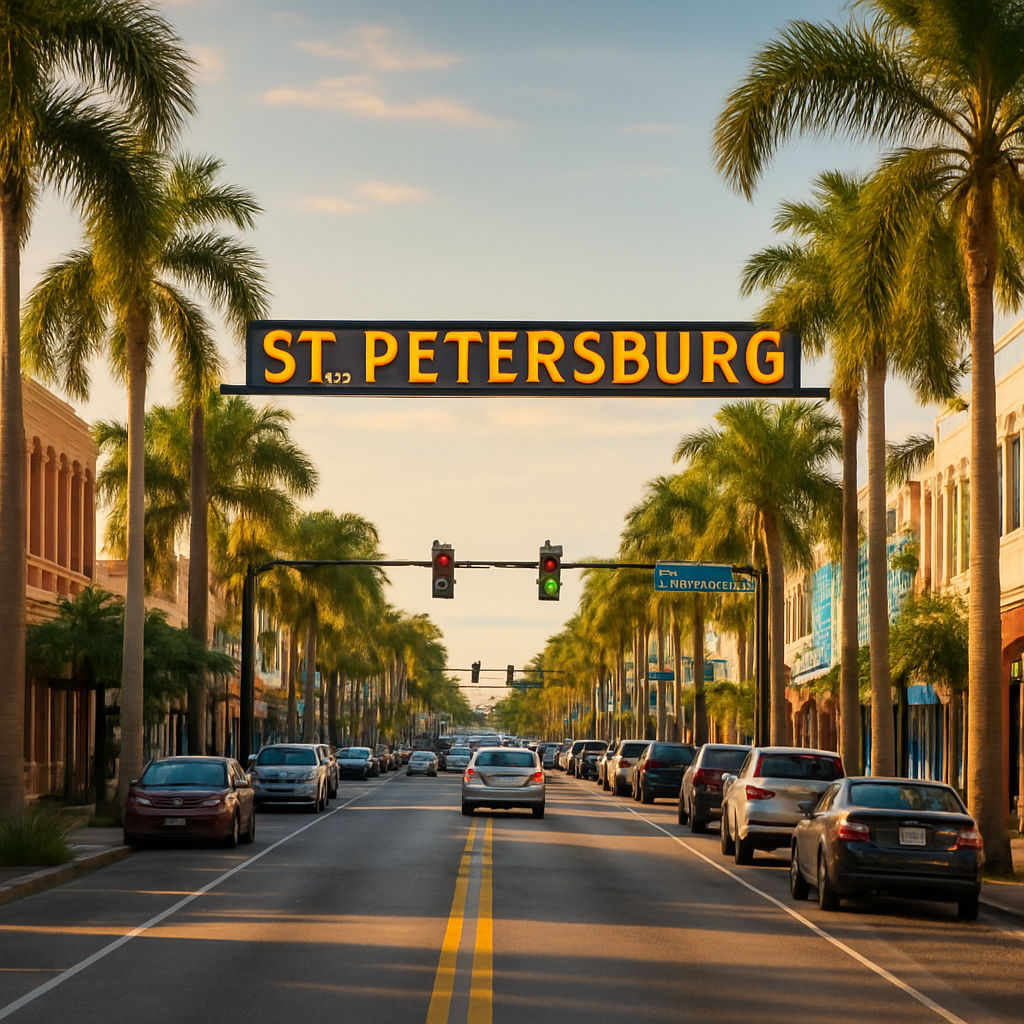
The Central Avenue Trolley Crawl
The SunRunner BRT runs Central Avenue from downtown to the beach every fifteen minutes until midnight on weekends, $2.25 each way. Start at Green Bench Brewing's beer garden in the EDGE District, ride two stops to a Cuban sandwich at Bodega, walk Grand Central from the rainbow crosswalks to Trophy Fish, and end up wherever the night ends up. Don't drive. Parking on Central is a blood sport, and the trolley is the single best transit decision the city has ever made.
The places I actually send people to
Advice that fits how you travel
St. Pete is one of the easier American cities to land in alone. The Grand Central District is walkable end to end, the SunRunner trolley solves the rest, and the bars on Central are the kind where the bartender remembers your order on night two — over-tip the first round and watch the rest of your trip get noticeably warmer. Punky's is the come-as-you-are afternoon stop where solo travelers actually meet people; Enigma after 11pm is the late-night gravity well where everybody ends up regardless of who they walked in with.
App culture is active and slightly more relaxed than Miami — Grindr's busy, Sniffies has a real footprint, and Friday Night Shuffle at the St. Pete Shuffleboard Club is the queerest mixed-crowd event in the city and a genuinely better way to meet people than swiping. Free, BYOB, and someone will teach you the rules within four minutes.
Budget-wise, solo moderate runs about $220–340/day and goes far here — historic boutique hotels like The Avalon from $160/night put you walkable to everything. Stay downtown or in the EDGE District; you'll never need a car. Safety in the core is a non-event — just don't drive Central at night because parking is a blood sport, and standard Florida caution applies once you're outside the city limits.
This is one of the more genuinely romantic mid-size American cities, and same-sex couples are routine here in a way that still isn't true everywhere in the Southeast. PDA in the Grand Central District between 9th and 31st is fully welcomed day and night — the rainbow crosswalks at 25th aren't decoration, they're a statement the city has actively defended. Beach Drive, the Old Northeast, and Pass-a-Grille at sunset all read comfortable. Tyrone strip-mall territory and rural Pinellas edges, less so — read the room.
For the date itself: book The Birchwood on Beach Drive for the most romantic small hotel in the city — eighteen rooms, a 1920s building, and the Canopy rooftop bar that's the closest thing St. Pete has to a date-night ritual. Dinner at The Library in the Old Northeast is the night when you want food to be the entire conversation; Bella Brava on the Beach Drive patio is the night that ends in a walk through Straub Park instead of asking for the check. The Dalí Museum on a Thursday after 5pm — discounted admission, then walk down the steps for sunset over Tampa Bay — is still the most romantic free thing in the city.
For check-in, the Vinoy, the Don CeSar, the Hollander, and the Birchwood all handle same-sex couples without blinking. The Old Northeast B&Bs like Dickens House are explicitly LGBTQ+-owned. Couples moderate runs around $340–490/day, which gets you historic-boutique-hotel territory and dinner with wine — generous by big-city standards. Skip August and September; the heat and hurricane risk will make every romantic plan negotiable.
Same-sex marriage and joint adoption are legal nationwide as of 2026, and the City of St. Petersburg backs that up with a municipal non-discrimination ordinance covering employment, housing, and public accommodation — Pinellas County reinforces it at the county level. LGBTQ+ families are a visible, established part of the city, particularly in Historic Kenwood and the Old Northeast where the rainbow-flag-per-block ratio is highest. Two moms with a stroller on Beach Drive is the most ordinary thing in the world here.
For the kids: Sunken Gardens in the morning before the heat is the city's quietest hour — four acres, 50,000 tropical plants, and a flock of flamingos that does not disappoint. The Dalí Museum works for older kids who can handle a little surrealism; the MFA is the steadier bet for younger ones. Pass-a-Grille is the white-sand beach without the condo-tower density, and a slow afternoon there is the day everyone remembers. The Hurricane on the beachfront is the family-friendly lunch with grouper sandwiches that don't punish you on price.
The state-level asterisk is real and worth naming: Florida's 2023 SB 254 and related legislation restrict gender-affirming care, bathroom access in state-owned buildings, and ID changes for trans family members, and those state laws override city ordinances on bathrooms, healthcare, and IDs. Equality Florida and HRC have maintained travel advisories since 2023 — read them before you book if a trans kid or trans parent is part of your trip. Family moderate runs about $520–780/day, and the SunRunner trolley with a stroller is genuinely easy.
What St. Petersburg actually costs
Flights, visas, and the first 30 minutes
Airport: Tampa International (TPA) is the primary gateway, about 25 minutes northeast of downtown St. Pete across the Howard Frankland Bridge. TPA runs roughly 80 direct routes domestically and to the Caribbean, Mexico, and a handful of European cities — it's consistently rated one of the easier mid-size airports in the country to fly through. Pro tip: if Allegiant flies from your city, check St. Pete-Clearwater (PIE) instead. It's 15 minutes from Central Avenue, the cab line is approximately nine people long, ever, and you skip the Tampa rideshare surcharge entirely.
Visas (as of 2026): US travelers move freely — domestic flight, no documentation beyond a Real ID. UK, EU, and AU visitors typically need ESTA approval under the Visa Waiver Program, applied for online at least 72 hours before departure. Canadian visitors generally don't need a visa for stays under six months but should carry a valid passport. Always check current State Department requirements before booking — entry rules can shift.
From TPA to St. Pete: Taxis run a flat-rate $45–60 in 30–40 minutes. Uber and Lyft typically come in around $35–55 for the same trip, with surge pricing during peak hours. SuperShuttle and shared vans run $25–35 if you pre-book and don't mind multiple stops (45–60 minutes). A rental car is $45–90/day and worth it if you're planning to roam the Gulf beaches — driving here is genuinely easy. The PSTA Bus 300X is the budget play at $2.25, but it's 60–75 minutes with limited stops and not the move with luggage.
Once you're here: The SunRunner BRT trolley runs Central Avenue from downtown to St. Pete Beach every 15 minutes until midnight on weekends, $2.25 each way. It's the single best transit decision the city has ever made and the easiest way to bar-hop the Grand Central District without parking. Do not, under any circumstances, drive on Central Avenue at night — parking is a blood sport.
Traven's seasonal breakdown
The questions everyone asks
Is St. Pete actually safe for LGBTQ+ travelers given Florida's politics?
Where should I stay if I want to be in the middle of the gay scene?
Do I need a car?
When is St. Pete Pride and how big is it?
Is St. Pete trans-friendly?
What's the best beach near the city?
How much should I budget per day?
Screenshot this before you go
So should you actually go?
Go. St. Pete is the rare American city where the gay scene isn't a footnote or a memory — it's the spine of the place, walkable from Punky's to Enigma in five blocks and from downtown to the Gulf on a $2.25 trolley. Yes, the state-level politics are rough as of 2026, and trans travelers should plan around the disconnect between the welcoming city and the hostile state. But the municipality has chosen its side and keeps choosing it, the bartenders remember your face, the sunset over Tampa Bay from the Dalí steps is free, and Pass-a-Grille at golden hour will reset whatever you came in carrying. Book by March if Pride is the trip, skip August and September, and tip the first round heavy. LGBTQ+ travelers who want a small city that fights for them — this is the one in Florida that does.
Sources & Resources
Official links we reference when compiling this guide. Last verified 2026-05-03.