
Tucson doesn't perform for you. It hands you a mesquite-grilled plate, points at a saguaro sunset, and trusts you to figure out the rest.
Tucson is the queerest place in Arizona that nobody outside the Southwest is talking about, and that's exactly how it likes it. This is what happens when a Sonoran food capital, a state university, and a desert art colony share one group chat — a city where a Tuesday night drag show at IBT's ends with everyone eating Sonoran hot dogs at El Güero Canelo at 1 a.m., and where the rainbow flag and the Virgen de Guadalupe candle sit on the same windowsill without anyone blinking. There's a reason I gave it an 8.2 overall in my Traven-Dex. The legal framework is rock-solid — comprehensive city protections, federal marriage and adoption equality, Pima County squarely affirming. The catch is the state legislature an hour and a half north in Phoenix, which has a different relationship with all of that.
The city itself moves in a constellation, not a strip. Fourth Avenue is the bohemian spine — half a mile of independent bookstores, vintage shops, and the bar that's been holding the community together since the '90s. Two blocks south, Hotel Congress on Congress Street books the most interesting calendar in town from a building that's been on the National Register since the Dillinger gang got pinched in its lobby in 1934. South of downtown, Barrio Viejo turns into 19th-century adobe rowhouses painted in saturated greens and pinks, with El Tiradito burning candles around the clock — the only U.S. shrine dedicated to a sinner, which feels about right for this city.
The food is the other reason to come, and Tucson takes it seriously enough that UNESCO designated it a City of Gastronomy back in 2015. El Charro Café has been family-run since 1922 and claims to have invented the chimichanga. Cafe Poca Cosa brings a chalkboard menu to your table and writes contemporary Mexican on it twice a day. BATA opened in 2019 and immediately turned up on Esquire's best-new-restaurant list. Mesquite-grilled everything, prickly-pear beer at Borderlands, chiltepin in your espresso at Exo Roast Co. — this is a city cooking from its own desert, and the restaurant scene is disproportionately queer-staffed in a way that becomes obvious within your first dinner.
Time it right and you'll catch a fall here that is genuinely one of the Southwest's great open secrets. Tucson Pride at Reid Park in late September has been running since 1977 — one of the oldest in the region — and the tone is more family-and-dog-and-elder than circuit-kid. The All Souls Procession the first weekend of November sends two miles of costumed mourners through downtown to an urn-burning, and queer Tucson turns out in force, often in heels. Pair it with a day in Bisbee ninety miles southeast — Arizona's other queer haven — and you've built the closest thing the Southwest has to a Provincetown-and-Boston combo.
The stuff your travel guide buries on page 47
Arizona is a study in split-screen politics, and Tucson is the bluer half of that screen. As of 2026, marriage equality, joint adoption, and comprehensive nondiscrimination protections are all on the books federally and locally — Tucson's city ordinance has covered sexual orientation and gender identity for years, and Pima County's posture is squarely affirming. The legal floor here earned a 9.5 on Legal in my Traven-Dex, and that's not me being generous.
The catch is the state above the city. Arizona restricts gender-affirming care for minors and still requires surgery for gender-marker changes on birth certificates as of 2026 — the kind of legislation that doesn't touch most travelers but matters enormously if you're trans or traveling with a trans kid. Equality Arizona and the ACLU of Arizona track the legislative calendar in real time, and they're who I'd check before booking if any of that applies to you.
Pro tip: Arizona state politics and Tucson politics are not the same animal. The city has a longstanding non-discrimination ordinance and a visibly LGBTQ+ presence on the city council; the state legislature does not love either of those things. Plan around the heat, not around the queerness — from June through early September, anything outdoors before sunset is a bad idea, which is why Pride here happens in the fall.
PDA reads as comfortable in central neighborhoods. Fourth Avenue, Congress Street, the University of Arizona corridor, and Sam Hughes are non-events for same-sex couples holding hands. The Catalina Foothills resorts are welcoming and trained, though fellow guests skew older and mixed. South Tucson and the outer suburbs are friendlier than their reputation suggests, but you'll feel the temperature shift the further you get from downtown.
What it actually feels like on the ground
Holding hands and PDA: On Fourth Avenue, Congress Street, or anywhere in Sam Hughes, it's a non-event. Holding hands at a gas station on the way to Tombstone is a different calculation — Tucson is a blue dot in a red county in a redder state, and the surrounding desert towns vary. Inside the city limits, you're fine.
Hotel check-in: The downtown and Foothills resorts in this guide are all owned by chains (Marriott, Loews, Wyndham) that score 100 on the HRC Corporate Equality Index, and the independents — Hotel Congress, Catalina Park Inn, Arizona Inn — have decades of LGBTQ+ guests on the books. No one is going to side-eye a king bed request.
Taxis and rideshare: Uber and Lyft are the default and they're fine. Sun Tran buses and the Sun Link streetcar are safe through the central corridor — the streetcar runs from U of A through Fourth Avenue, downtown, and across to Mercado San Agustín, which is conveniently the entire useful map for a queer weekend.
Late night: Downtown and Fourth Avenue are walkable until last call. The stretch between IBT's, Club Congress, and the Hotel Congress lobby is genuinely well-trafficked. Pony Express and Woody's are further out — grab a rideshare back rather than walking unfamiliar mid-town streets at 2 a.m.
Trans travelers: Tucson is among Arizona's most affirming cities — the Southern Arizona Gender Alliance is active, and U of A's LGBTQ Affairs office will quietly help even non-students in a pinch. Arizona's legal landscape shifts year to year, so the ACLU of Arizona keeps the most current guidance. ID checks at bars and the airport are routine and uneventful in town.
If something goes sideways: The Southern Arizona AIDS Foundation (SAAF) and El Rio Health's LGBTQ+ services are the two phone numbers locals actually trust — both run sliding-scale care and case managers who don't make you explain yourself twice. Pima County Health handles sexual health resources county-wide.
Verbal harassment: Generally low in central Tucson. The further you drift toward the outer suburbs and unincorporated county, the more you're back in standard rural-Arizona awareness mode — not hostile, just less curated.
The queer geography
Tucson doesn't have a gay village in the strip-of-bars sense. What it has is a constellation — a queer-friendly café here, a long-running bar two blocks over, a streetcar line that connects most of it. Here's how it actually maps.
Fourth Avenue & West University
Fourth Avenue is Tucson's bohemian spine — a half-mile of independent bookstores, vintage shops, tattoo parlors, and the bars that have been holding down the alternative scene since the '70s. The biannual Fourth Avenue Street Fair has run since 1970, and the streetcar dumps you right onto it. Antigone Books, the long-running feminist and queer-leaning indie, anchors the daytime browse, and Time Market a few blocks west does the wood-fired pizza and espresso the U of A faculty lives on. The LGBTQ+ layer is direct: IBT's is the closest thing the city has to a do-it-all gay bar — patio, drag, karaoke, Sunday beer bust — and Woody's up Oracle Road is the rowdier cousin. Check Tucson Pride for fall event programming that spills out from here.
Downtown & Congress Street
The historic core has been quietly remade over the last decade — adobe storefronts now house cocktail bars, the streetcar runs the spine, and Hotel Congress (1919, on the National Register, where the Dillinger gang got pinched in 1934) still books the most interesting calendar in town. Club Congress isn't a gay bar, but its DJ nights are reliably mixed-and-queer in a way most cities have lost — check the calendar before you fly in. Cafe Poca Cosa has been doing the chalkboard-menu Mexican thing since 1986 and is still the dinner reservation worth keeping. BATA, the wood-fired Sonoran spot, made the national best-new-restaurant lists for a reason.
Armory Park & Barrio Viejo
Just south of downtown, the streets soften into 19th-century adobe rowhouses painted in saturated greens, blues, and pinks. Barrio Viejo is one of the oldest neighborhoods in Tucson and still one of the most photographed — El Tiradito, the only U.S. shrine dedicated to a sinner, sits in the middle of it, candles burning around the clock. Armory Park next door holds the small, volunteer-run Tucson LGBTQ Museum, one of very few queer history museums in the American Southwest, and 5 Points Market & Restaurant for the morning biscuit. Owls Club handles the cocktail program in a restored historic building.
Sam Hughes & the University Corridor
Leafy, mid-century, walkable to U of A — Sam Hughes is the neighborhood Tucson's professors and grad students settle into, and it's the one with the backyard pool parties that move the social scene as much as any bar does. U of A's LGBTQ Affairs office and Pride Alliance anchor the youth scene, and the Arizona Inn — pink adobe casitas, gardens, opened 1930 by Arizona's first congresswoman — is the grown-up stay nearby. Tito & Pep in Midtown handles the mesquite-fired Sonoran tasting menu when you want a real dinner.
Catalina Foothills
North of town, the desert tilts up into the Catalinas and the city gives way to luxury resorts tucked between saguaros. Hacienda del Sol (1929, hosted Spencer Tracy and Hepburn) and Loews Ventana Canyon (Tom Fazio golf, an 80-foot waterfall on property) are the marquee stays. This isn't where the scene lives, but it's where same-sex couples come for the spa weekend and the saguaro sunset, and the staff will treat you exactly the way the brochure promises. For statewide policy context before you book, Equality Arizona is the bookmark.
The experiences worth rearranging your itinerary for
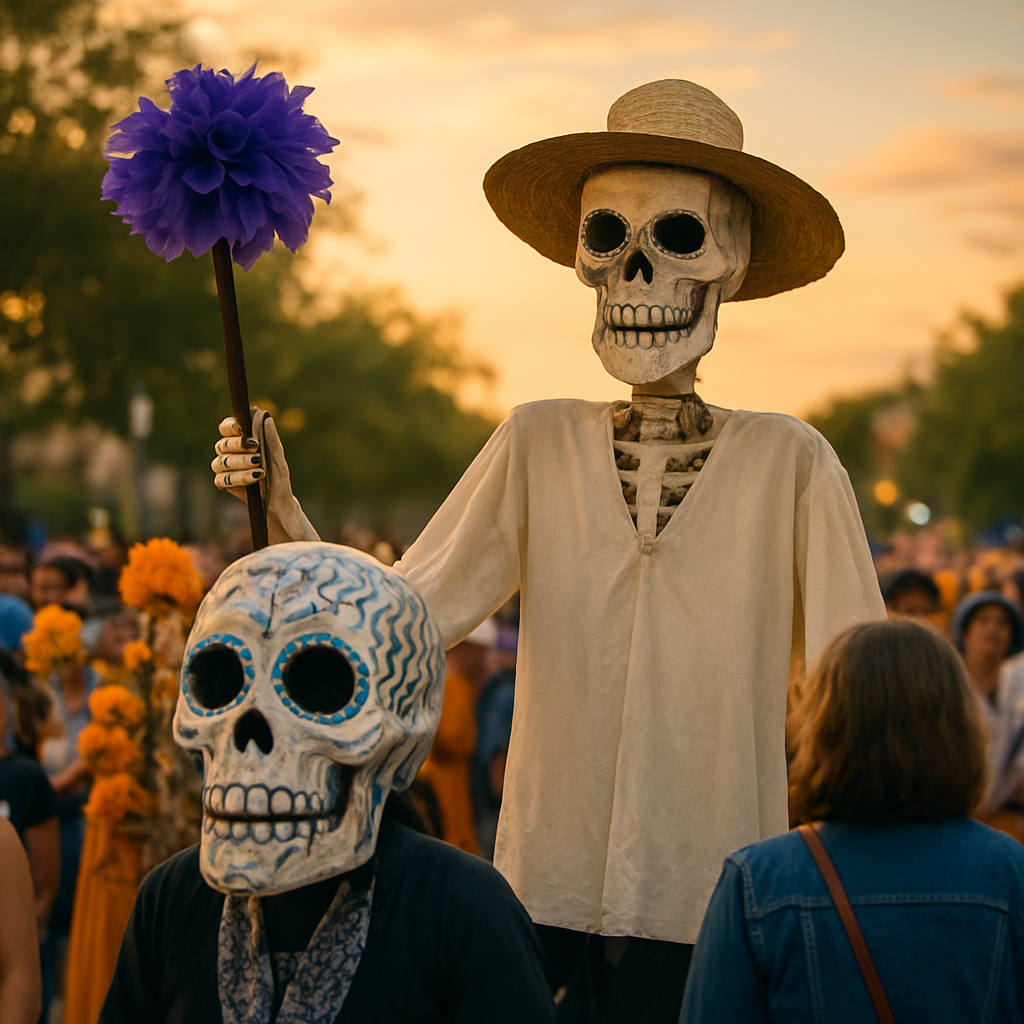
Walk the All Souls Procession
The first weekend of November, two miles of costumed mourners walk through downtown Tucson to a giant urn-burning that ends the night. It's rooted in Día de los Muertos and built entirely by the community — no parade permits, no corporate float sponsors, just a genuinely strange and beautiful ritual the city has been refining since 1990.
Queer Tucson turns out in force, often in heels. Bring layers, water, and a candle if you've lost someone — the Procession will hold whatever you bring it.
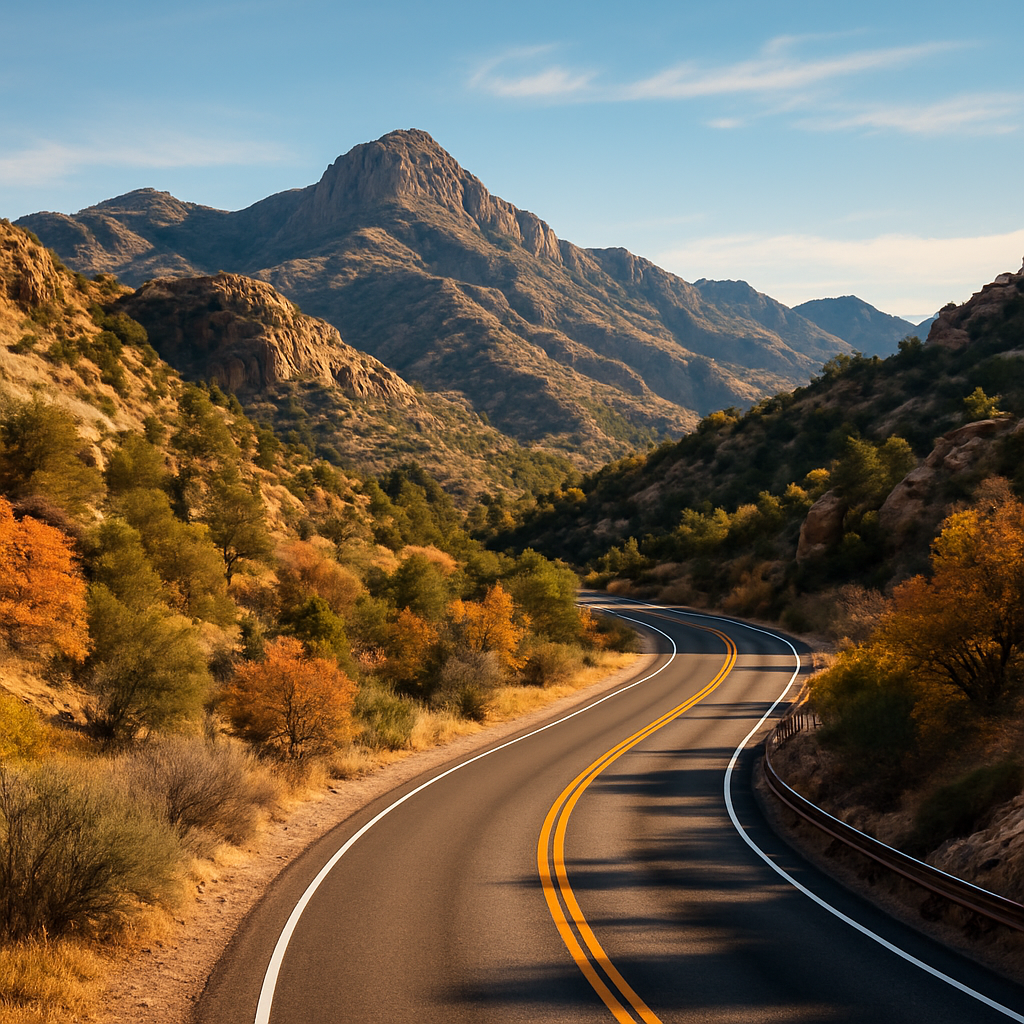
Drive the Mt. Lemmon Sky Island Highway
Tucson sits in saguaro desert; an hour up the Catalina Highway sits a pine forest at 9,000 feet. The drive climbs through five distinct ecosystems — the rough biological equivalent of driving from Mexico to Canada — and ends in Summerhaven, where the Cookie Cabin sells dinner-plate-sized cookies that have no business being that good.
It's the cheapest, easiest, most disorienting day trip in southern Arizona. Pack a sweater. You'll need it.
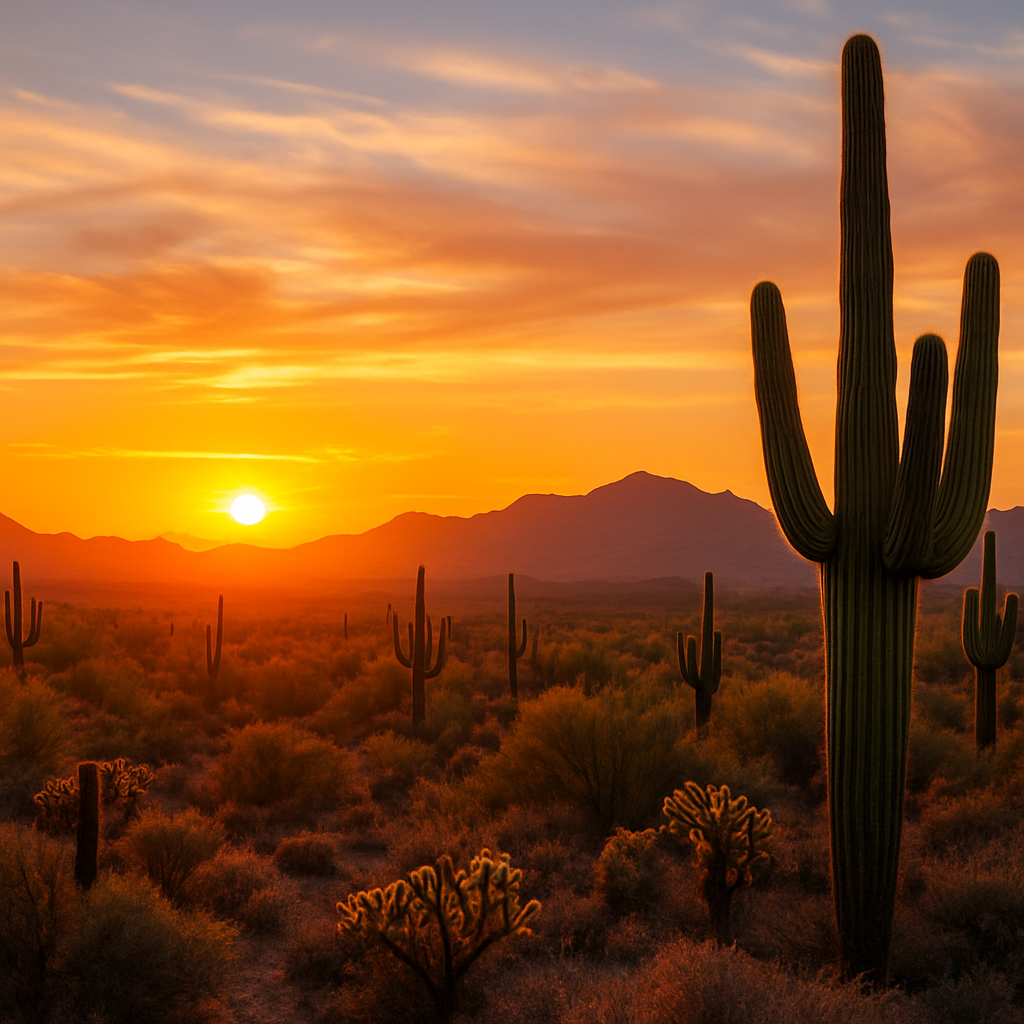
Sunset in Saguaro National Park
The west district at golden hour, ideally — the Tucson Mountains turn the color of a struck match and the saguaros throw silhouettes you'll be photographing on your phone for the entire flight home. Bajada Loop Drive is the easy one if you're not hiking.
Pro tip: bring more water than you think you need, leave before full dark unless you're prepared to navigate the unlit park road, and don't touch the cholla. It will find you.
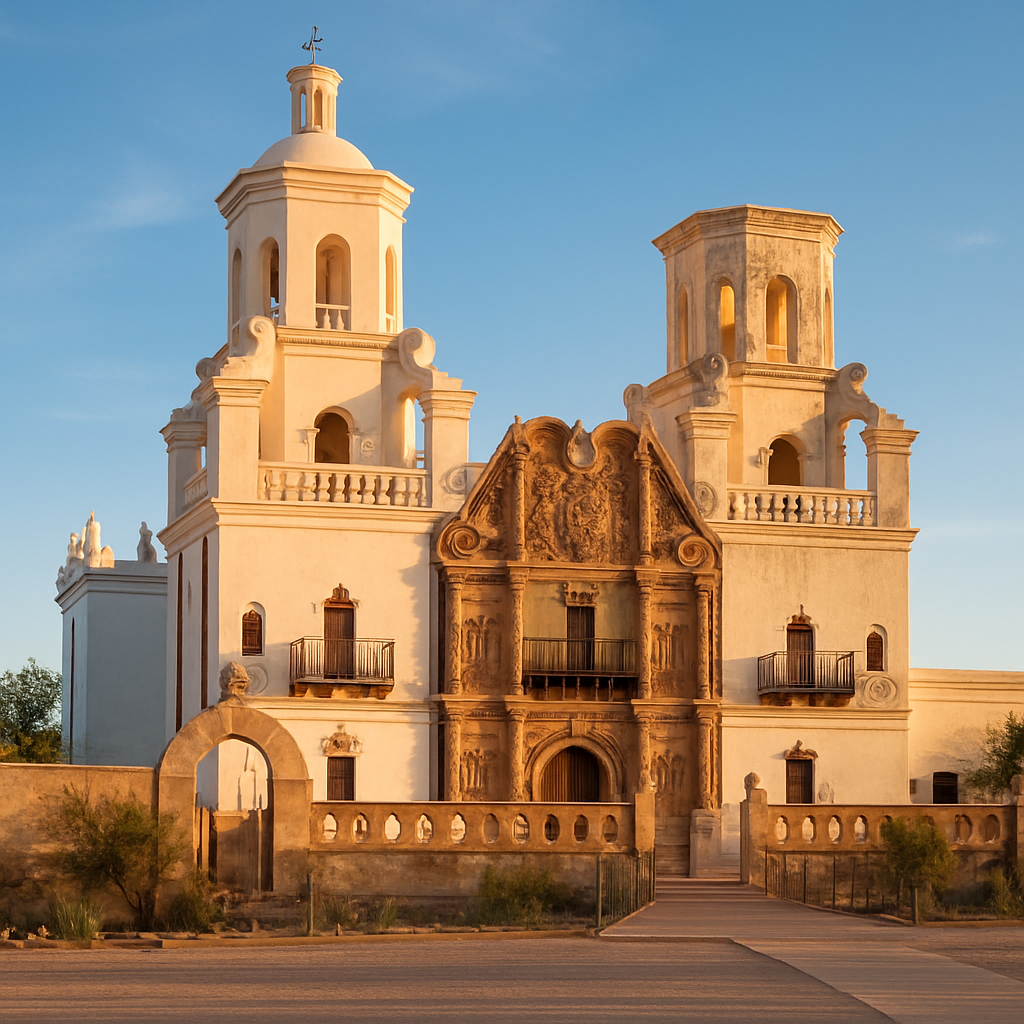
Stand Inside Mission San Xavier del Bac
Ten miles south of Tucson on the Tohono O'odham Nation, the white domes of San Xavier rise out of the desert like a hallucination. Founded by Eusebio Kino in 1692 and finished in 1797, it's a National Historic Landmark and the finest surviving Spanish Colonial church in the United States — the interior is painted floor-to-ceiling in restored frescoes.
Go in the morning when the white facade is at its sharpest against the blue. It's still an active parish, so dress like you mean it.
A Day in Bisbee
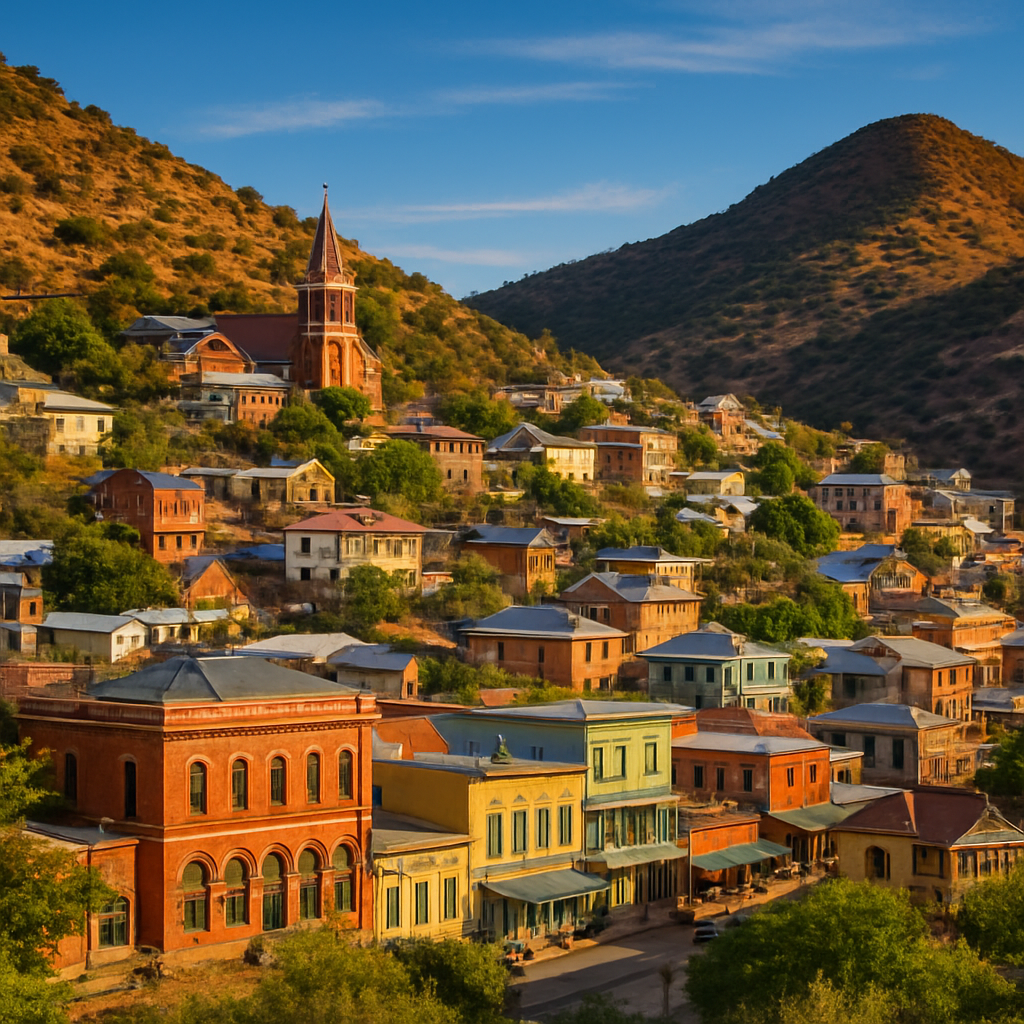
Ninety miles southeast, Bisbee is a former copper-mining town that reinvented itself as an arts colony in the '70s and has been quietly Arizona's other queer haven ever since. Victorian houses cling to canyon walls, the staircases between streets are public, and the bookstores and bars are disproportionately good for a town this size.
Eat at Cafe Roka if you can get a reservation, walk the Brewery Gulch stretch, and stop into the Copper Queen for a drink in the lobby. It pairs perfectly with an afternoon at the small, volunteer-run Tucson LGBTQ Museum the next day.
The places I actually send people to
Advice that fits how you travel
Tucson is one of the easiest American cities to land in alone. The downtown grid is walkable, the Sun Link streetcar runs from U of A through Fourth Avenue to Mercado San Agustín — which is conveniently the entire useful map for a queer weekend — and you can build a three-day trip without renting a car if you're not chasing Saguaro sunsets. Solo travelers slot in fastest at Hotel Congress: the lobby bar is its own social ecosystem, Club Congress books drag and DJ nights downstairs, and you don't have to leave the building to make a friend.
The apps work, but Tucson's social currency is in-person. IBT's on a Saturday or the Sunday beer bust is the easiest soft landing — it's the closest thing the city has to a do-it-all gay bar, and the regulars will clock a new face within an hour. Pony Express in midtown is the locals' bar with locals' prices when you want a Wednesday-night neighborhood vibe instead of a scene. Exo Roast Co. and Time Market handle the daytime laptop-and-coffee circuit, and you'll see the same queer faces rotating through both.
Budget-wise, solo travel here is genuinely affordable as of 2026 — moderate days run $200–300 with a boutique hotel or B&B, and the budget tier ($95–140) gets you a Hotel Congress night plus a real meal. Stick to Fourth Avenue, downtown, Sam Hughes, and the U of A corridor and you'll find solo travel here approximately as comfortable as it gets in the American Southwest. Pro tip: the streetcar shuts down before last call, so build the rideshare back to the hotel into your night.
Tucson does romance in two distinct registers, and same-sex couples get treated like guests in both of them. The downtown register is Hotel Congress or the AC Hotel for walkable nights — drinks at the rooftop, dinner at BATA or Cafe Poca Cosa, a cocktail at Tough Luck Club tucked under Reilly's, last call at IBT's. The Foothills register is the slow weekend — Hacienda del Sol on 34 acres in the Catalinas, or Loews Ventana Canyon with its 80-foot waterfall and Tom Fazio golf. Both Loews and Marriott score 100 on the HRC Corporate Equality Index, and Hacienda's wedding pages lead with same-sex couples without making it a thing.
PDA reads as a non-event in central neighborhoods. Fourth Avenue, Congress Street, Sam Hughes, and the U of A corridor are comfortable for hand-holding day or night as of 2026. Foothills resorts are welcoming and staff-trained, though fellow guests skew older and mixed — generally relaxed, occasionally observed. The most romantic move I know in this city is sunset at the west district of Saguaro National Park, then dinner back in town at Tito & Pep, where chef John Martinez's mesquite-fired Sonoran cooking is the most interesting thing happening on a plate in southern Arizona.
Pro tip for proposers and anniversary couples: book Hacienda del Sol or the Arizona Inn — pink adobe casitas, gardens, opened in 1930 by Arizona's first congresswoman, and on the National Register of Historic Places ever since. Both have been folding same-sex couples into the routine for longer than most cities have had nondiscrimination laws. Pair Tucson with a Bisbee overnight and you've built the closest thing the Southwest has to a Provincetown-and-Boston combo.
LGBTQ+ families are fully recognized under federal and Tucson law as of 2026 — marriage equality, joint adoption, and comprehensive nondiscrimination protections cover two-mom and two-dad households without asterisks. The city's ordinance covers sexual orientation and gender identity, and Pima County's posture is squarely affirming. Where to be careful: Arizona state law restricts gender-affirming care for minors and still requires surgery for gender-marker changes on birth certificates, so families with trans kids should check Equality Arizona and the ACLU of Arizona for the current legislative landscape before booking. one•n•ten runs LGBTQ+ youth programming statewide if your teen wants to plug in while you're here.
Logistically, Tucson is built for kids. The Arizona-Sonora Desert Museum — 98 acres of hybrid zoo, botanical garden, and natural history museum — is the easiest day of your trip and approximately the best museum in the American Southwest for a curious eight-year-old. Pair it with the west district of Saguaro National Park, drive the Mt. Lemmon Sky Island Highway from saguaro desert to pine forest in an hour (the Cookie Cabin in Summerhaven sells dinner-plate-sized cookies), and you've filled three days. El Charro Café does kid menus in a 1922 stone-house dining room that feels like a field trip, and 5 Points Market in Armory Park handles the all-day-breakfast situation when you need it.
Stay in the Foothills for pool-and-space — Loews Ventana Canyon and the Tucson Foothills Marriott both run kid programming and won't blink at two dads checking in. For a downtown base with strollers, the AC Hotel is newer and elevator-friendly. Pro tip: skip June through early September unless you're committed to indoor everything. The desert in summer hits triple digits by 10 a.m., and a kid melting at Saguaro is a memory nobody wants. October through April is the family window.
What Tucson actually costs
Flights, visas, and the first 30 minutes
Airport: Tucson International Airport (TUS) sits about 8 miles south of downtown — small, walkable terminal, and you'll be in a rideshare within 15 minutes of pulling your bag off the carousel. As of 2026, TUS handles approximately 20 nonstop routes, with reliable direct service from Dallas, Denver, Chicago, Atlanta, Seattle, Los Angeles, Phoenix, Salt Lake City, and Minneapolis. For most international travelers, you'll connect through one of those hubs.
Visas (as of 2026): US citizens need no documentation for domestic travel. Canadian travelers typically don't need a visa for stays up to 180 days. UK, EU, and Australian travelers generally enter under the Visa Waiver Program with an approved ESTA — typically valid for stays up to 90 days. Apply for ESTA at least 72 hours before departure; it usually clears within minutes but don't cut it close.
Airport to city: Rideshare (Uber/Lyft) runs $20–30 to downtown or Fourth Avenue and takes 15–20 minutes — the easiest call by a mile. A taxi runs $30–40 with flat-rate zones available; tip 15–20%. Sun Tran Bus Route 25 is the budget option at $1.75, but you'll transfer at Laos Transit Center for downtown and the whole thing takes 45–55 minutes. Many Foothills resorts run complimentary or low-cost shuttles ($0–15) — worth asking when you book.
Pro tip: If you're planning to spend any real time at Saguaro National Park, the Arizona-Sonora Desert Museum, or out in Bisbee, rent a car. Tucson's central corridor is walkable and the Sun Link streetcar covers downtown through the U of A, but the desert experiences that make this trip are not transit-accessible. Rentals run $40–80/day at the airport.
Traven's seasonal breakdown
The questions everyone asks
Is Tucson safe for same-sex couples to hold hands in public?
When is Tucson Pride and what should I expect?
Do I need a rental car in Tucson?
What's the deal with Arizona state law versus Tucson city law for trans travelers?
When should I avoid visiting because of the heat?
Where should I stay for the easiest queer weekend?
Is Bisbee worth the drive from Tucson?
Screenshot this before you go
So should you actually go?
Go. Tucson is one of the most underrated LGBTQ+ destinations in the American Southwest as of 2026, and the only reason it isn't more famous is that it doesn't market itself the way Palm Springs or Phoenix do — which is part of the appeal. The legal floor is solid, the food is exceptional, the desert will rearrange your brain, and the queer scene is small but genuine and easy to walk into on day one. Time it for October through April, base yourself downtown or on Fourth Avenue, rent a car for a Saguaro sunset and a Bisbee overnight, and you'll leave wondering why you didn't come sooner. If you're trans or traveling with a trans kid, do the homework on Arizona state law before you book — Tucson the city has your back, but the state legislature is a different conversation. For everyone else, this is an easy yes.
Sources & Resources
Official links we reference when compiling this guide. Last verified 2026-05-04.