
Da Nang doesn't audition for your weekend. It just hands you a bowl of bún chả cá at midnight and a sunrise on My Khe and trusts you to figure out the rest.
It's 7am on My Khe Beach and the sand belongs to grandmothers in conical hats doing tai chi, fishermen pulling in the morning's catch, and a scattered handful of Western couples — some of them holding hands, none of them performing. The South China Sea is doing the work the city built itself around. Behind you, six square blocks of An Thượng are still asleep. By 8am, the espresso machines at 43 Factory Coffee Roaster will start hissing, the laptop crowd will roll in, and the day will tilt toward the rhythm Da Nang has quietly perfected — beach, café, lunch, beach, sunset, dinner, rooftop, repeat.
This is what I gave a 6.3 to, and the number is honest because the math is honest. Vietnam decriminalized same-sex relationships long ago and as of 2026 still hasn't gotten around to marriage equality, anti-discrimination law, or implementing the gender recognition framework it passed in 2015. That's where the 4.5 on Legal comes from, and you should know it before you book. But on the ground — in the only places you'll actually spend your time — the city is something else. An Thượng doesn't have a gay bar because it doesn't need one; the whole grid functions as the closest thing to a queer-adjacent neighborhood Central Vietnam has, where the staff at every third café will know your boyfriend's coffee order by day three.
If Saigon is the queer capital of Vietnam and Hanoi is the queer intellectual, Da Nang is the queer beach weekend. Nobody's making a statement here. Everyone's just here for the seafood and the sunrise swim. The city earns an 8.4 on Destination because the raw material is staggering — the Cầu Rồng breathing fire on Saturday nights, the cave temples inside the Marble Mountains, the Cham sculptures at the museum that the École française d'Extrême-Orient founded in 1915, the dawn ride up Sơn Trà to the Lady Buddha when the only company is the red-shanked douc langurs. Then drive thirty minutes south to Hội An and watch the lanterns come on. The trip writes itself.
What knocks the score down — beyond the legal framework — is the pulse. There's no parade here, no scene in the Berlin or Bangkok sense, and VietPride happens in the other two cities most years. So bring your expectations calibrated. Come for the beach, the food, the architecture, the slowness, the privacy of an all-villa wellness resort with a pool at your door. Come because Vietnam is having a moment and Da Nang is where the moment slows down enough to actually taste it. Just don't come looking for a circuit weekend — that flight lands in Saigon.
The stuff your travel guide buries on page 47
Vietnam decriminalized same-sex relationships long ago — there's no law against being gay here, and there hasn't been in modern memory. But as of 2026, there's also no marriage equality, no civil union framework, and no anti-discrimination protections covering sexual orientation or gender identity. The 2015 law that was supposed to recognize legal gender changes still has no implementing legislation, which means trans travelers can't update ID documents in practice. Equaldex's Vietnam overview tracks the full picture if you want the legal weeds.
What that translates to on the ground is a city that's neither hostile nor formally welcoming — it's mostly just busy with its own life. A reader wrote in to confirm what I've seen myself: same-sex couples checking into hotels almost never get questioned, especially in An Thượng homestays where Western guests are the norm. The conservative crowd in Hải Châu may stare at PDA between any couple, gay or straight, but stares are the ceiling, not the floor.
Bring cash for night-market vendors and small bars; cards work at hotels and bigger restaurants but the seafood shacks on Vo Nguyen Giap will wave you off if you flash a Visa. Pro tip: October through December is monsoon season — the city floods, the beach goes brown, and even the Cầu Rồng (Dragon Bridge) fire show gets cancelled. Come March through August or accept your wet fate.
For deeper context on the local advocacy landscape, the ICS Center is the country's longest-running LGBTQ+ rights NGO, and iSEE publishes the most rigorous research on community attitudes year over year. Worth a scroll before you fly in.
What it actually feels like on the ground
Holding hands and PDA: In An Thượng, same-sex couples generally don't get a second look — the neighborhood is built around international guests and the staff have seen everything. On the My Khe Beach resort strip, hand-holding is fine and unremarkable. In Hải Châu downtown and around the Cầu Rồng riverfront on weekend family nights, scale it back — not because anyone will yell, but because PDA between any couple is uncommon and you'll just become the show.
Hotel check-in: Same-sex couples checking into one bed is a non-event at the international resorts on Non Nuoc and My Khe, the Hilton, the Hyatt, and the An Thượng homestays. A reader told me they've checked into a dozen Da Nang properties as a couple over three years and never once been questioned or rebooked into twins. Smaller family-run places downtown may default to twin beds out of habit — a polite request fixes it.
Taxis and getting around: Use Grab — fixed fare, English app, no negotiating. Vinasun and Mai Linh are the trustworthy metered cab brands; insist on the meter. The bigger safety issue here isn't being gay — it's the motorbikes. Use Grab Bike at night, wear the helmet they give you, and don't argue about the strap.
Trans travelers: Vietnam's 2015 gender recognition law remains effectively unimplemented as of 2026, so legal gender markers can't be updated in practice. Trans travelers in Da Nang generally report curiosity rather than hostility, but gendered ID checks at hotels and the airport can create friction. Carry documentation, expect questions, and lean toward the international hotel brands where staff training is more consistent.
Verbal harassment risk: Low across all the areas tourists actually spend time in. Vietnamese male friends already touch each other casually — arms around shoulders, hands on knees — so two foreign men together often reads as ambiguous rather than provocative.
Health and emergencies: Family Hospital on Nguyen Huu Tho has English-speaking doctors and is the default for expats. Hoan My Da Nang is the larger backup. For sexual health, Glink runs a discreet, queer-competent clinic network you can book online before you arrive — and UNAIDS Vietnam maintains current PrEP and testing resource lists.
Late night: An Thượng and the My Khe strip stay relatively safe well past midnight — well-lit, full of expats and tourists, Grab cars circling constantly. Hai Chau quiets down earlier; if you're walking back from a rooftop bar after 1am, just call a car.
The queer geography
Da Nang doesn't have a gay neighborhood in the Chueca-or-Castro sense. What it has is An Thượng, an expat pocket where international guests have been the default for fifteen years, and a downtown across the river where the city goes about its actual business. Treat the Cầu Rồng as the connector — most of what you'll do happens within ten minutes of either side of it.
An Thượng
This is the six-square-block grid behind My Khe Beach where most of your trip will happen whether you plan it that way or not. The streets are named An Thượng 1 through An Thượng 36 with no romance attached, but inside that grid you've got Italian wood-fired pizza at Limoncello, Japanese-owned Burger Bros doing the Mỹ Khê double, Bà Mua serving Michelin-listed Central Vietnamese specialties, and design-forward coffee at 43 Factory Coffee Roaster that wouldn't be out of place in Brooklyn. The pace is slow — laptops in cafés by day, beers on plastic stools by sunset, late dinners that drift into rooftop drinks. There's no dedicated gay bar, but TOP Bar on An Thượng 4 has a back patio that turns into a community gathering spot on Friday nights, and the scene runs on Grindr, Blued, and word-of-mouth meetups at Esco Beach Bar on weekends.
Hải Châu (Downtown / Han River)
Cross the river west and the city changes character — taller buildings, denser traffic, the Cầu Rồng arching toward Sơn Trà, and the Helio Night Market firing up after dark. This is where the food belongs to Da Nang, not to the international guest. Bún Chả Cá 109 serves the city's signature fish-cake noodle soup until late, Bánh Xèo Bà Dưỡng has been the reference version of bánh xèo for decades down a narrow alley, and Madame Lân spreads Central Vietnamese cuisine across a colonial-yellow building on Bach Dang with Han River views. The rooftop scene lives here too: Sky36 on the 36th floor of the Novotel pours sunset cocktails over the Dragon Bridge, and Brilliant Top Bar gives you a front-row seat to the 9pm fire-and-water show on Saturdays and Sundays. PDA reads more conservative here — keep things low-key and you'll have no issues.
Sơn Trà Peninsula
Drive ten minutes north of My Khe and the city falls away into 4,400 hectares of protected forest, twisting coastal roads, and the 67-meter Lady Buddha at Linh Ứng Pagoda watching over the bay. Pro tip: take the dawn motorbike up Sơn Trà to Lady Buddha before the tour buses arrive — monkeys, ocean, no one else, and the most romantic 6am in Vietnam. The InterContinental's private beach is up here too if you're spending the money. It's not a scene neighborhood — it's the escape from the scene neighborhoods, which is half of why same-sex couples end up here for an afternoon at least once.
Hội An (30 minutes south)
Not technically Da Nang, but you're going. The lantern-lit UNESCO old town along the Thu Bon River is unfairly photogenic — Japanese covered bridge, Chinese assembly halls, tailors who'll have a suit ready in 24 hours, and silk lanterns turning the whole grid amber after sunset. A reader told me the family-run homestays are routinely warm to same-sex couples, and travel guides like Nomadic Boys and Travel Gay have been quietly recommending Hội An as a relaxed welcoming base for years. Pair it with two nights of Da Nang for the right balance of beach and history.
For Pride timing and community connections, VietPride publishes the national event calendar — the big parades happen in Hanoi and Saigon, not Da Nang, so plan accordingly. The Visit Da Nang official tourism site is the cleanest source for current festival dates, ferry schedules, and Marble Mountains opening hours.
The experiences worth rearranging your itinerary for
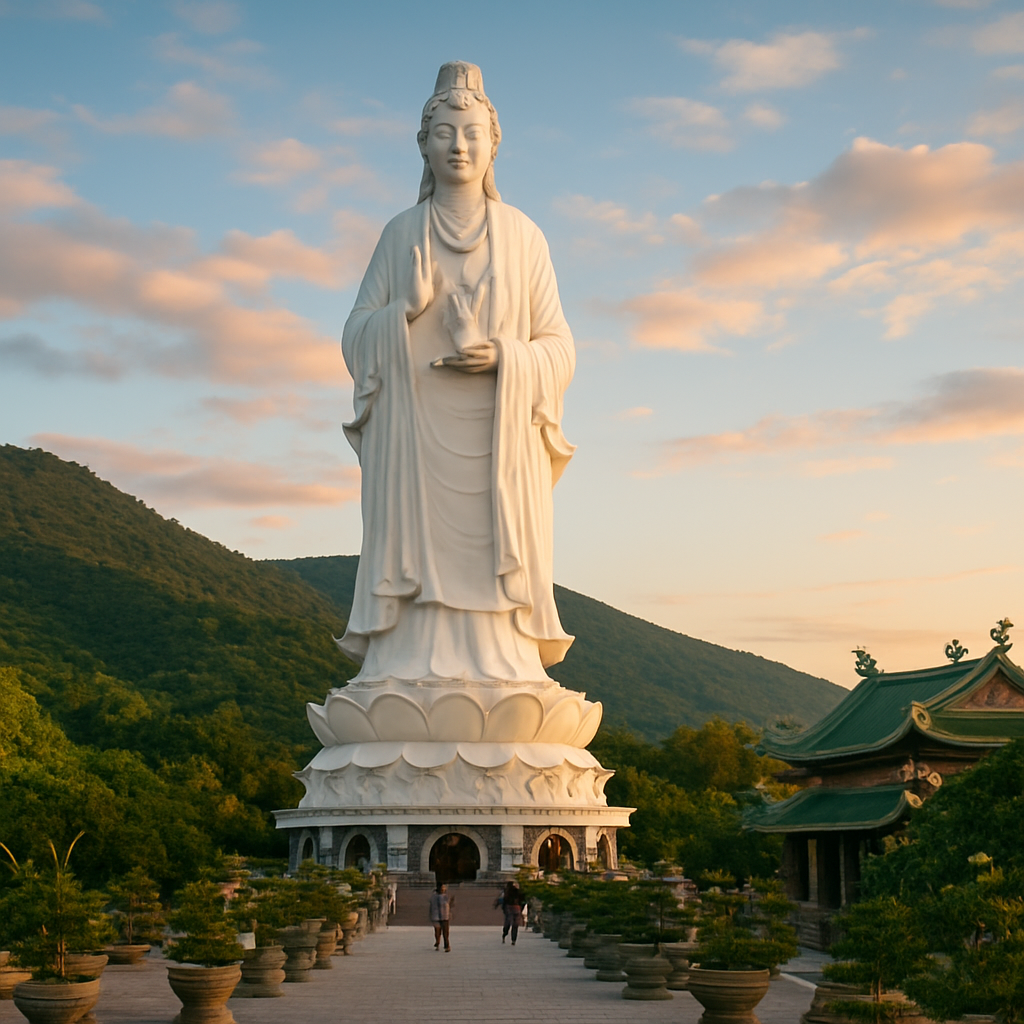
Dawn on Sơn Trà to the Lady Buddha
Rent a scooter or book a Grab Bike for 5:30am and ride the coastal road up the Sơn Trà Peninsula while the city is still asleep. The 67-meter Lady Buddha at Linh Ứng Pagoda watches over the bay from the headland, and at sunrise you'll have the courtyards mostly to yourself — red-shanked douc langurs in the trees, fishing boats below, the air still cool enough to feel like a gift. By 9am the tour buses arrive and the spell breaks. Go early, or don't bother.
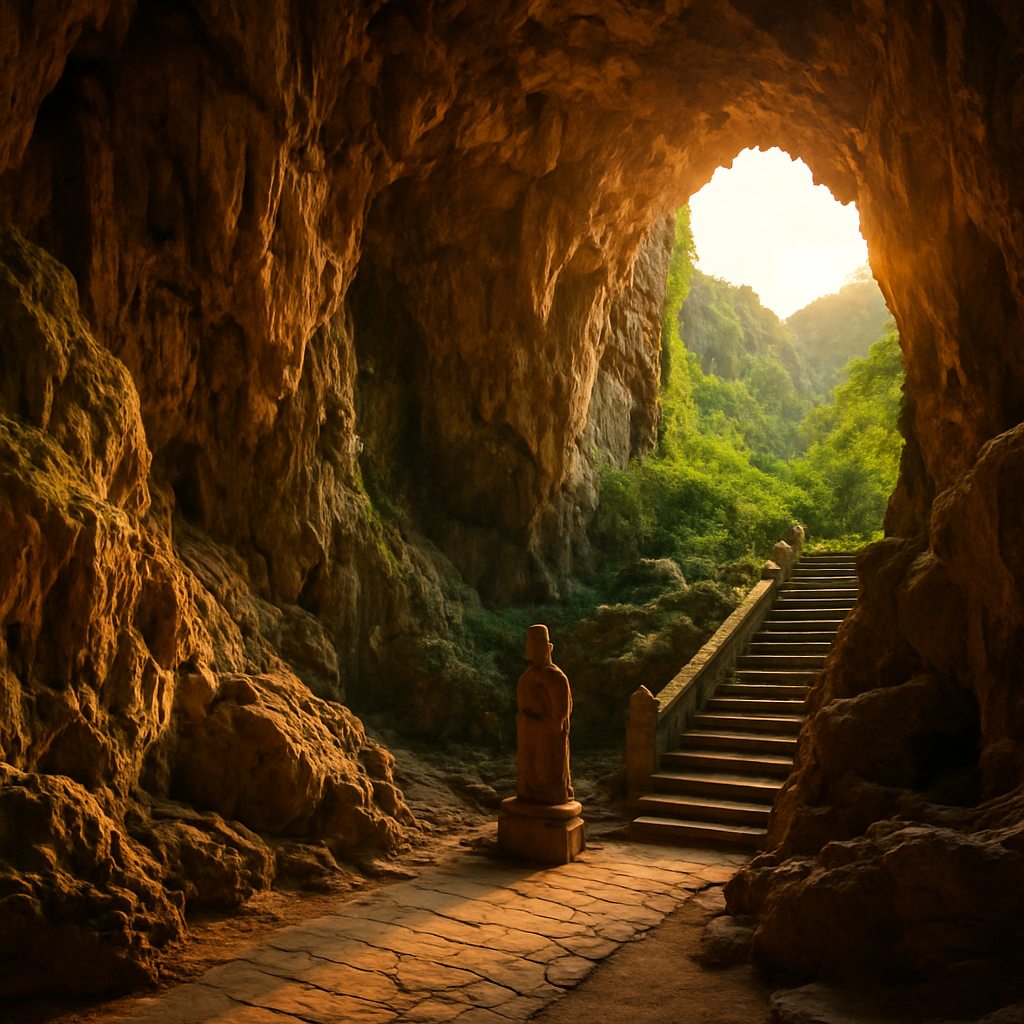
The Cave Temples of the Marble Mountains
Five limestone karst peaks named after the five elements, and inside Thuy Son — the largest — you'll find the Huyen Khong Cave, a vaulted Buddhist sanctuary lit by shafts of sunlight cutting through holes in the rock ceiling. Pilgrims have been climbing these stairs for centuries; the smoke from incense holds in the air long after the chanting stops. Take the elevator up if the heat or the steps are not for you, and bring water — once you're inside the cave system, the temperature drops and you'll want to stay.
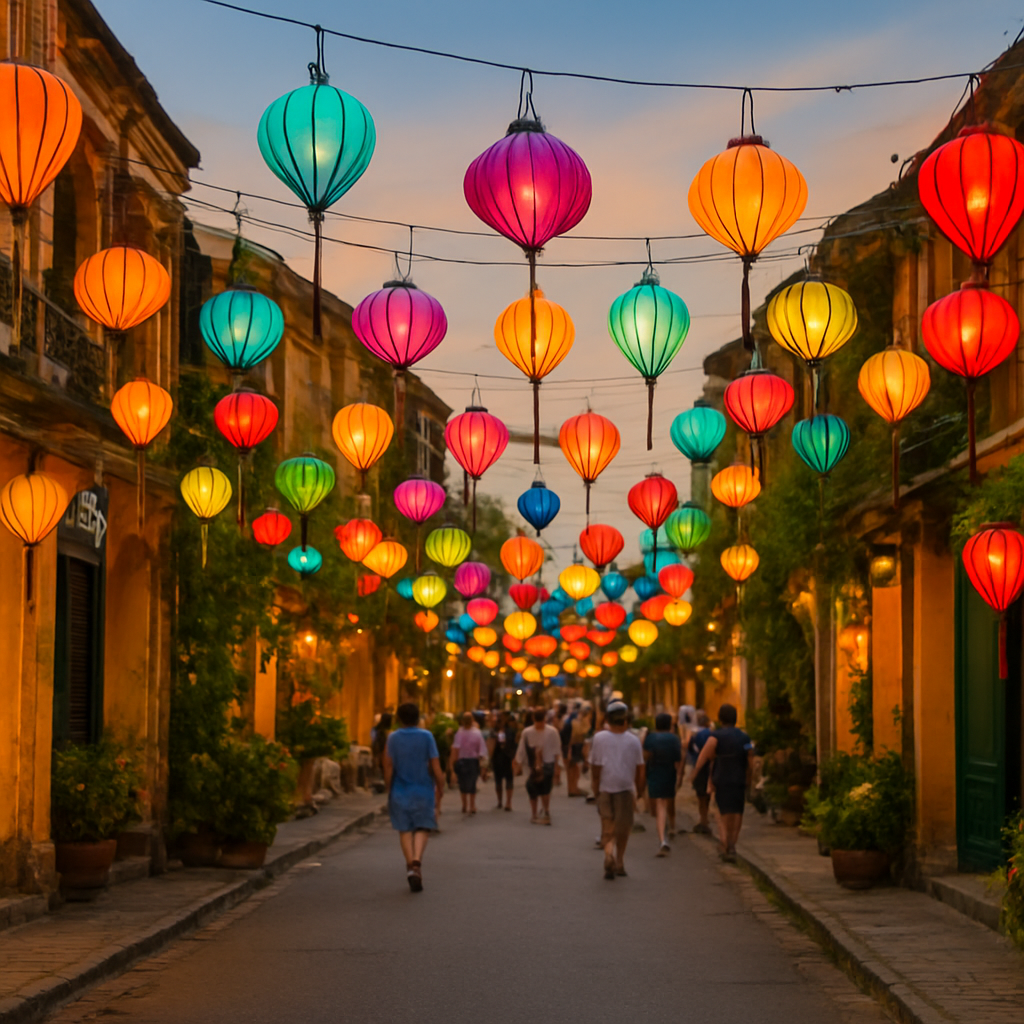
Hội An After the Lanterns Come On
Drive 30 minutes south as the sun starts to drop and walk the pedestrianized old town along the Thu Bon River as the silk lanterns kick on overhead. The Japanese Covered Bridge has been there since the 1500s, the Chinese assembly halls smell like sandalwood, and a tailor on Lê Lợi can have a linen suit ready by tomorrow afternoon. Eat cao lầu at a streetside table, drop a paper boat with a candle into the river, and stay long enough to walk back through the empty streets at midnight.
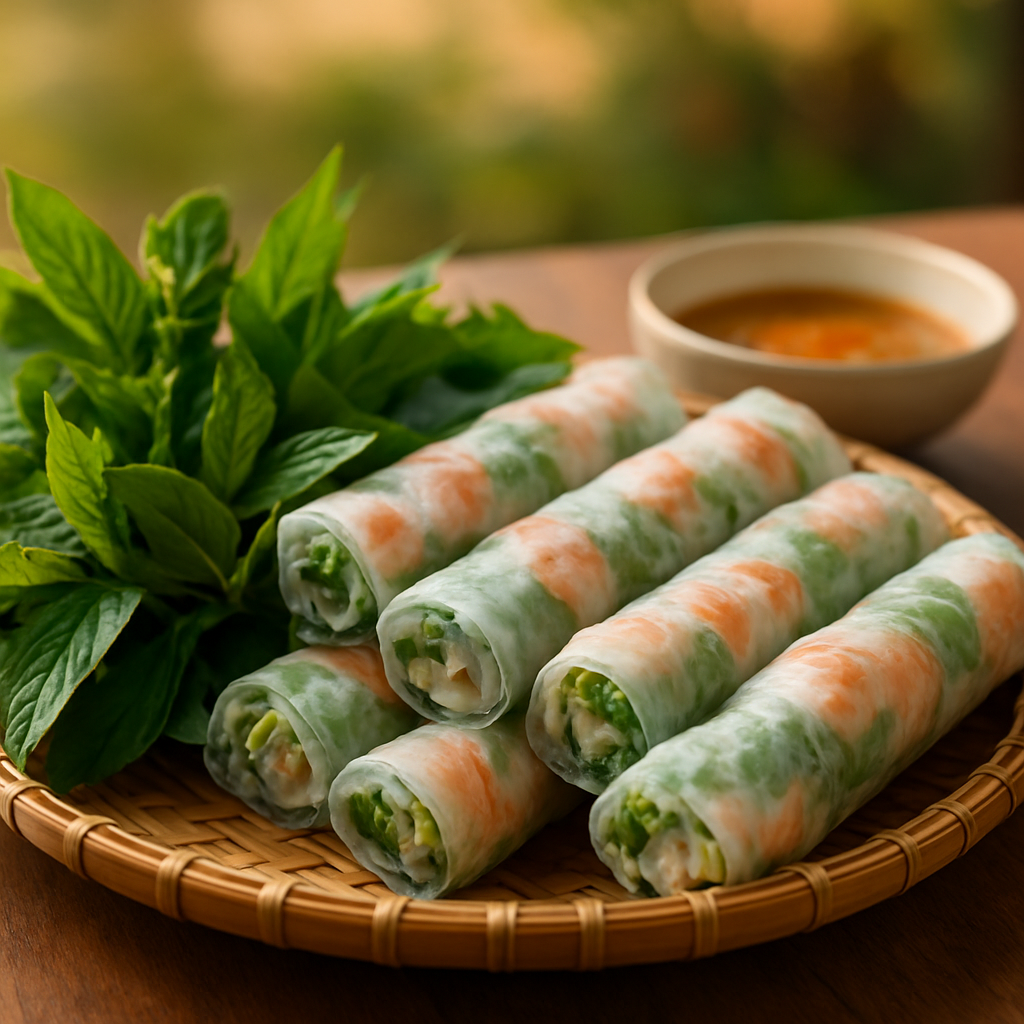
Bê Thui at Cầu Mống
Twenty-five minutes south of the city, a cluster of family-run restaurants in Cầu Mống serve one specialty: bê thui, slow-roasted veal sliced impossibly thin, wrapped in rice paper with green banana, starfruit, fresh herbs, and a fermented anchovy sauce that runs down your wrist no matter how careful you are. Order the full set, eat with your hands, don't wear a shirt you love, and pair it with a bottle of cold beer. This is the meal you'll be telling people about a year from now.
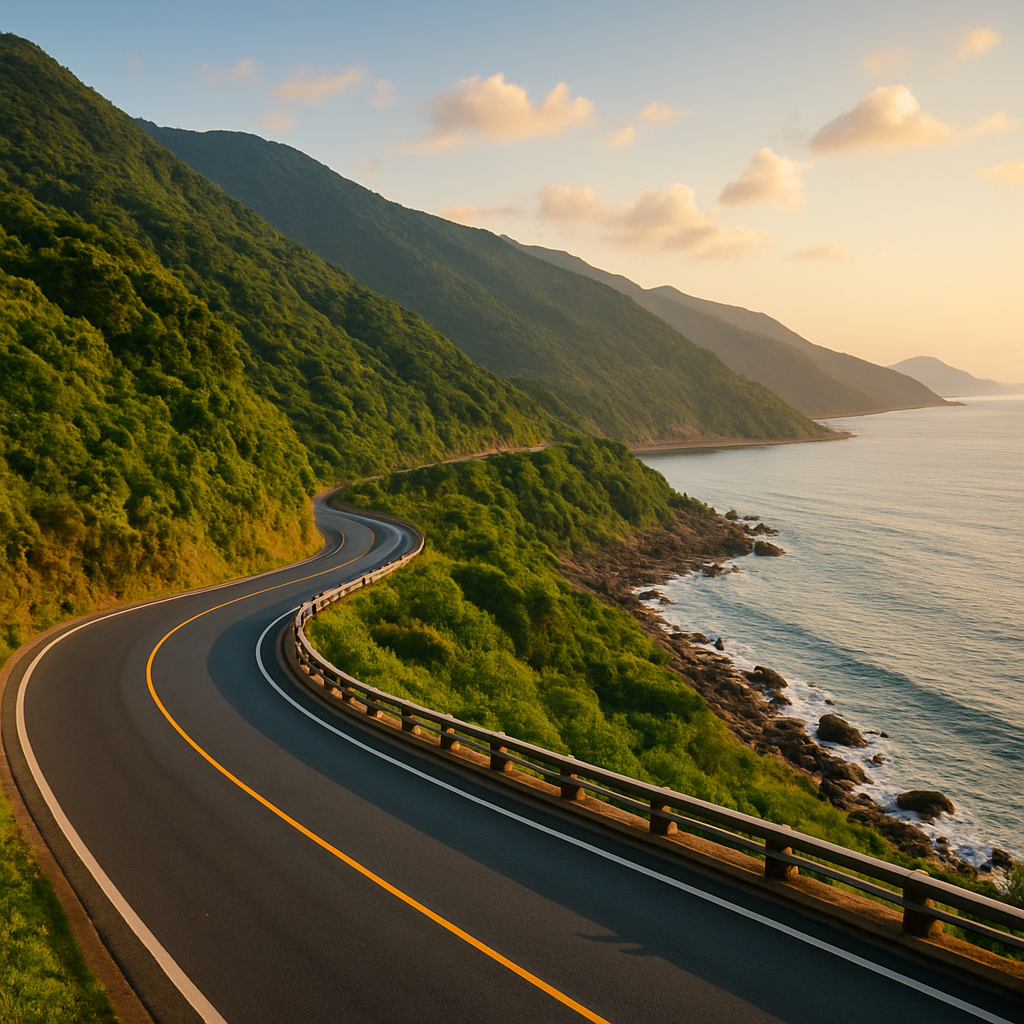
Drive the Hải Vân Pass
The 21-kilometer mountain road that climbs north out of Da Nang toward Huế clings to the side of the Trường Sơn range with the South China Sea dropping away on one side. Top Gear once called it one of the great coastal drives in the world and they were not exaggerating — there are pull-offs at the summit where you can see the entire arc of Lăng Cô Bay below. Hire a driver if you don't want to ride a motorbike, but do not skip the stop at the old French bunkers at the top.
The places I actually send people to
Advice that fits how you travel
Solo travel in Da Nang is easier than the score sheet suggests. An Thượng is built around the international guest — six square blocks of cafés, craft beer bars, and homestays where you can disappear into a laptop at 43 Factory Coffee Roaster by day and end up on the back patio at TOP Bar by night. The digital nomad crowd churns over fast and skews welcoming, which means meeting people takes nothing more than ordering a second drink and looking up from your phone.
The scene runs on Grindr and Blued — there's no dedicated gay bar in the city, so the apps do the connective work that a Chueca or a Castro would do elsewhere. Weekend gatherings at Esco Beach Bar are the closest thing to a regular meetup. Be specific in your profile about what you're looking for — Vietnamese app culture is more direct than the Western default, and the conversations move faster.
Pro tip: stay in An Thượng, not on the Non Nuoc resort strip. The resorts are gorgeous, but they isolate you from the city — and a solo trip in Da Nang only works if you can walk out your door and be in a café within three minutes. Use Grab for everything after dark, carry cash for the night-market shacks on Vo Nguyen Giap, and budget around 3,200,000 VND a day at the moderate tier — about $130 — for a stay that includes a beach hotel, real meals, and rooftop drinks at Sky36 when the mood lands.
This is where Da Nang earns its keep. The all-villa wellness properties on Non Nuoc Beach — TIA Wellness Resort with private pools at every door, Naman Retreat with the Vo Trong Nghia bamboo work — are couples math at its most underrated. Two daily spa treatments included, your own pool, and the kind of privacy that means you don't share a sun lounger with anyone. Same-sex couples are routinely booked into one bed at the international resorts, the Hilton, the Hyatt, and the An Thượng homestays without comment. A reader told me they've checked into a dozen Da Nang properties as a couple over three years and never once been rebooked into twins.
For dates, the city quietly delivers. Nén Danang is Michelin-starred and books a month out — chef Summer Le's tasting menu is the anniversary-trip move. La Maison 1888 at the InterContinental on the Sơn Trà Peninsula is the splurge after the splurge: Bill Bensley designed the dining room, the Pierre Gagnaire-era profile still echoes, and IHG's corporate non-discrimination policy means nobody at the door is doing math about your reservation. For a quieter date, Simple Man in An Thượng is the speakeasy where you can actually hear each other.
PDA reads zone by zone — comfortable in An Thượng, fine on the My Khe resort strip, more conservative in Hải Châu downtown and around the Cầu Rồng on weekend family nights. Hand-holding is generally fine; scale anything more back in the conservative pockets, not because anyone will yell, but because PDA between any couple is uncommon there. Don't miss the dawn motorbike up Sơn Trà to Lady Buddha — monkeys, ocean, no one else, and the most romantic 6am in Vietnam.
Vietnam, as of 2026, doesn't recognize same-sex marriage, civil union, or joint adoption — meaning LGBTQ+ families traveling with kids are operating outside any local legal framework for family structure. Carry documentation: your home-country marriage certificate, both parents' names on each child's passport if possible, and any custody or adoption paperwork that establishes the relationship. Hotel staff at the international resorts won't blink, but border officers and medical providers occasionally will, and paper resolves it faster than conversation.
On the ground, the city is genuinely kid-friendly. My Khe Beach has gentle surf, a developed promenade, and the kind of sunrise crowd that includes families everywhere. The Marble Mountains have an elevator on Thuy Son so the climb isn't a barrier, the Cham Sculpture Museum is a one-hour visit that holds older kids' attention, and Bà Nà Hills with the Golden Bridge and the cable car is unapologetically themed in a way that lands well with anyone under twelve. The Hyatt Regency on Non Nuoc and the Sheraton Grand have kids' programming, family suites, and pools deep enough to actually swim in.
The cultural read is observational rather than declarative — Vietnamese family culture is intensely visible, intergenerational, and curious about other families more than judgmental. Two dads or two moms with kids will draw looks, especially in Hải Châu, but reports from LGBTQ+ families consistently describe the looks as curious rather than hostile. Pair Da Nang with two nights in Hội An for a slower base where the family-run homestays have been routinely warm to same-sex couples for years. Budget around 7,500,000 VND a day at the moderate tier — roughly $300 — for a family of four with a beach hotel, restaurant meals, and the major day trips.
What Da Nang actually costs
Flights, visas, and the first 30 minutes
Airport: Da Nang International Airport (DAD) sits roughly 3 kilometers west of downtown — one of the shortest airport-to-city runs in Southeast Asia. Approximately 30 direct international routes connect Da Nang to regional hubs including Seoul (Incheon), Singapore, Bangkok, Kuala Lumpur, Taipei, Tokyo, and Hong Kong, plus heavy domestic service from Hanoi and Ho Chi Minh City. From North America or Europe, you'll typically connect through one of those Asian hubs.
Visas (as of 2026): UK and most EU nationals are typically granted visa-free entry for 45 days. US, Canadian, and Australian travelers generally need an e-visa, which covers up to 90 days and is available as single or multiple entry through Vietnam's official immigration portal. Apply online at least a week before you fly — turnaround is usually three business days but don't cut it close. Print your approval letter; some airline check-in desks still ask to see it.
Airport to city: A metered taxi with Vinasun or Mai Linh runs approximately 120,000–180,000 VND and takes 10–15 minutes — insist on the meter, every time. Grab car is fixed-fare at 100,000–150,000 VND and easier in English. Grab Bike is the cheap option at 40,000–70,000 VND if you've got light luggage, and a helmet comes with the ride. Many resorts in My Khe and Non Nuoc offer hotel shuttles ranging from complimentary to about 200,000 VND, which is worth booking ahead if you're landing late.
Pro tip: Pull cash from an ATM in the arrivals hall before you leave the airport — the rates are fair and you'll need VND for the night-market vendors, the seafood shacks on Vo Nguyen Giap, and any motorbike taxi that doesn't run on Grab.
Traven's seasonal breakdown
The questions everyone asks
Is Da Nang safe for same-sex couples?
Does Da Nang have a gay neighborhood or gay bars?
Do I need a visa for Vietnam?
When should I go to Da Nang?
How do I get around Da Nang?
Is there Pride in Da Nang?
How much should I budget per day?
Screenshot this before you go
So should you actually go?
Da Nang is a yes, with eyes open. As of 2026, you're traveling somewhere that's neither hostile nor formally welcoming — the legal framework is thin, but the day-to-day reality in An Thượng and on the My Khe resort strip is genuinely easy for same-sex couples, and a 6.3 on my Traven-Dex reflects the gap between the two. Come in March through May, stay in An Thượng, build the trip around the beach, the food, and a couple of nights in Hội An, and you'll get one of the most under-recommended weeks in Southeast Asia. Just calibrate your expectations: Da Nang is the recovery beach to Saigon's scene, not a destination for nightlife or visible Pride. For LGBTQ+ travelers who want the seafood, the sunrise swim, and the privacy of a villa with a pool at the door, this city quietly delivers — and that's the trip worth taking.
Sources & Resources
Official links we reference when compiling this guide. Last verified 2026-05-03.
- Da Nang Family Hospital (international-friendly care)
- Equaldex - Vietnam LGBTQ+ rights overview
- Hoan My Da Nang Hospital
- ICS Center (Vietnam LGBT rights NGO)
- iSEE - Institute for Studies of Society, Economy and Environment
- U.S. Consulate General Ho Chi Minh City (covers central VN)
- UNAIDS Vietnam
- VietPride
- Visit Da Nang Official