
Hanoi doesn't perform for you. It hands you a plastic stool, a cold bia hơi, and a scooter horn at three feet, then waits to see if you can keep up.
Hanoi makes you earn it. Not in the suffering-for-art way — in the slow, layered way that good cities make you earn them. The first afternoon, you're going to hate the scooters and love the bia hơi and stand on the wrong corner of Tạ Hiện wondering why your tab somehow tripled. By day three, you'll be walking Hoàn Kiếm Lake at dusk like you live there, ducking into Phở Gia Truyền for a bowl that costs less than your hotel coffee, and arguing with yourself about whether Bánh Mì 25 or the place around the corner does it better. The city doesn't perform for you. It just keeps moving, and at some point you catch up.
The gay scene is small. I want to be honest about that — it's part of why my Traven-Dex lands at 6.5 instead of higher. There's no village, no strip, no boulevard. There's GC Bar on Bao Khanh, which has been the city's anchor for years, and there's a drift of cocktail bars and cafés where the community shows up without announcing itself. Tadioto on a Tuesday at 11pm. Manzi Art Space on a Friday opening night. The brunch crowd along the Tây Hồ promenade on a Sunday morning, dogs in tow, iced coconut coffee in hand. The work of finding it is part of the point.
Vietnam is, legally, decriminalized but unrecognized — no marriage, no civil union, no anti-discrimination law as of 2026, which is why I gave it a 4.5 on Legal. The reality on the ground runs warmer than the paperwork suggests, particularly in central Hoàn Kiếm and the Tây Hồ expat zone, where hand-holding draws minimal attention and hotel check-in is a non-event. Trans travelers should expect more friction than gay men. The city is curious rather than hostile, but curious can still feel like a lot of eye contact.
What earns the high marks — Destination at 8.6, and rightly — is the food, the architecture, and the proximity to some of the most photographed landscapes in Southeast Asia. Hibana by Koki is the best omakase in the country. Gia is rewriting what Vietnamese fine dining can mean. Ninety-five kilometers south, sampans drift through the limestone caves of Tràng An; a hundred and sixty-five kilometers east, sunrise breaks over the karsts of Ha Long Bay. You don't come to Hanoi for the scene. You come for the city, and the scene is the quiet bonus you collect along the way.
The stuff your travel guide buries on page 47
Here's the short version, as of 2026: same-sex relationships are legal in Vietnam, but they are also legally invisible. There's no marriage, no civil union, no adoption rights for same-sex couples, and no anti-discrimination law on the books. Vietnam decriminalized homosexuality long ago and has quietly become one of Southeast Asia's more tolerant climates — but tolerance and legal recognition are not the same thing, and Hanoi will not let you forget that distinction.
On gender identity, Vietnam passed a 2015 law recognizing the right to change legal gender, but the implementing legislation has been stalled for over a decade. As of 2026, legal recognition typically still requires surgery and a psychological assessment — a framework most international human rights groups consider out of step with current standards. The Equaldex Vietnam tracker is the cleanest place to check the current state of the law before you fly.
Public dissent is restricted under Vietnamese law, and that includes Pride-as-political-demonstration. Which is why VietPride in Hanoi looks the way it does — a bicycle rally around Hoàn Kiếm Lake, film screenings at the Goethe-Institut, panels, and an after-party somewhere in Long Biên that you'll only find if someone in the community sends you the address. Not a parade. Not a boulevard takeover. A gathering. The organizers — primarily ICS Center and iSEE — have built something genuinely Vietnamese rather than importing a Western template.
On the ground, attitudes generally skew younger-and-curious in the city center, older-and-quieter in the traditional quarters. Hand-holding is fine in most of Hoàn Kiếm and the Tây Hồ expat zone. Kissing in public — gay or straight — reads as awkward to older Hanoians anywhere, and especially around Ba Đình's ceremonial spaces. A reader wrote in to make the point bluntly: hand-holding is fine, full-on kissing in front of the Temple of Literature will get you stares from grandmothers, and they will win. Save it for the hotel.
Pro tip: the slang word bê đê — derived from the French pédé — has a complicated reclamation arc among locals. You'll hear it. Don't use it as a visitor. Let the community decide what to do with their own language.
What it actually feels like on the ground
Hanoi is, generally, one of the easier capitals in Southeast Asia for LGBTQ+ travelers — but "easier" is a relative claim, and the practical picture is neighborhood-specific. Here's how it actually plays out.
Holding hands and PDA: In the Old Quarter (Hoàn Kiếm) and around Tây Hồ, hand-holding draws minimal attention from younger locals and the international crowd. Around Ba Đình's government and ceremonial sites, in temples, and in markets, keep affection minimal — that's the standard for any couple, not just same-sex ones. Inside known LGBTQ+ venues like GC Bar, expression is open and welcomed.
Hotel check-in: Same-sex couples typically have no problem booking double rooms at international chains and most boutique properties in Hoàn Kiếm and Tây Hồ. Trans travelers should expect a polite but real ID check at registration — Vietnam's hotel system requires passport scanning, and gendered ID mismatches can produce awkward pauses rather than refusals. Larger Western-branded properties tend to handle this most smoothly.
Taxis and ride-hail: Use Grab for everything after dark. A reader put it well: Hanoi taxi meters get creative with foreigners, and Grab drivers couldn't care less which bar you're heading to. The fixed fare is the safety feature.
Late night and the Tạ Hiện strip: The bigger late-night risks for queer travelers in central Hanoi are scooter traffic and inflated bar tabs near Tạ Hiện, not harassment. Confirm prices before the second round of bia hơi. Police presence around Hoàn Kiếm Lake on weekends is about traffic and tourist scams — nobody is checking your relationship status.
Trans travelers: Hanoi reports as curious rather than hostile, though the city is more conservative than Saigon. Expect occasional staring and the occasional misgendering, particularly outside the Tây Hồ expat zone. Healthcare access has improved meaningfully in recent years; UNAIDS Vietnam tracks the current landscape, and a community report I trust says Glink and Lighthouse both run discreet, English-friendly sexual health services. PrEP is available and affordable, and the staff have heard every question a tourist could ask.
Verbal harassment: Rare in central Hanoi. More likely in the form of curiosity than hostility — especially toward visibly trans women. If something does go sideways, SCDI works in the community development and harm-reduction space, and ICS Center is the closest thing Vietnam has to a national LGBTQ+ first responder.
Watch out for: the area around Ba Đình after dark is dim and underwhelming for nightlife — head back toward Hoàn Kiếm or Tây Hồ. And if you're walking near the lake at 11pm with a flashing camera around your neck, you are the target of every motorbike scam in the Old Quarter, regardless of who you came with.
The queer geography
Hanoi doesn't have a gay village. It has a gay vibe that drifts between Hoàn Kiếm cocktail bars and Tây Hồ cafés depending on the night. Stop hunting for a strip and start collecting addresses — that's how locals do it. Here are the neighborhoods worth your time.
Hoàn Kiếm & the Old Quarter (Phố Cổ)
This is the historic spine of the city — a 13th-century street grid where each lane (Hàng) was once named for the guild that worked it. The architecture is the show: French-colonial facades stacked on top of pre-colonial tube houses, shutters cracked open over balconies that almost touch across the lane. Walk it in the late afternoon when the light goes amber and the bia hơi stools come out onto every corner. Eat phở at Phở Gia Truyền, bánh mì at Bánh Mì 25, and end up at the lake — Hoàn Kiếm Lake on a weekend night, with the walking street closed to traffic and families and couples and skateboarders all moving around the water, is one of the great free urban experiences in Asia.
The LGBTQ+ layer here is small but real: GC Bar on Bao Khanh has been the city's most reliable gay anchor for years — smoky, kitschy, refusing to die. Polite & Co. sits on the same alley for cocktails, and Tadioto in the French Quarter has functioned as a literary-and-arts salon for the city's progressive crowd since 2008. Pro tip: cash is still king at most of these — hit an ATM in Hoàn Kiếm before the night starts, not after.
Tây Hồ (West Lake)
The expat district, and Hanoi's most relaxed corner. West Lake itself is genuinely huge — you can rent a bike and lose an afternoon riding the perimeter, stopping at the Trấn Quốc Pagoda on its little causeway and the cluster of cafés along the western edge. The food drifts international here: third-wave coffee, brunch culture, wood-fired pizza, weekend yoga, dog walkers in matching activewear. Sunday morning along the promenade is the closest Hanoi gets to a queer brunch scene.
This is where many longer-term LGBTQ+ residents — bilingual locals and foreigners alike — actually live. Hanoi Rock City in Tây Hồ hosts the city's most adventurous music programming, and queer DJs from Saigon regularly headline; it's a Grab ride out, but the lineup is the argument. The community-organized event calendar is best tracked through VietPride's social channels.
Ba Đình & Trúc Bạch
Ba Đình is the ceremonial city — wide boulevards, the Ho Chi Minh Mausoleum, embassies, the Presidential Palace, generals' villas behind iron gates. It's not where you go drinking; it's where you go to walk in the morning and understand the official version of Hanoi. The Temple of Literature sits on its southern edge — Vietnam's first national university, founded in 1070, with 82 stone stelae mounted on tortoises that earned a UNESCO Memory of the World listing. Go early, before the tour buses.
Just north, the Trúc Bạch causeway between the two lakes is where this district softens. Standing Bar serves the largest Vietnamese craft beer list in the city with a rooftop view over the water, and Manzi Art Space tucked off Phan Huy Ích is where the art-school crowd gathers — exhibition openings on Friday nights pull a beautifully androgynous crowd that then migrates to Tadioto for whisky. Queer Forever! screenings often land at Manzi or Heritage Space when the festival runs in late September.
Hai Bà Trưng & Đống Đa
Younger, denser, more residential. This is where Hanoi feels like a working city rather than a tourist set: scooter traffic that never stops, food carts on every block, the kind of neighborhood cafés where the regulars actually live in the building above. Bún Chả Hương Liên — the place Bourdain ate with Obama in 2016 — sits in Hai Bà Trưng, and the "Combo Obama" remains on the menu. Around Đống Đa, near the Temple of Literature, you'll find Gia and Tầm Vị, two of the city's most interesting modern Vietnamese kitchens.
The community presence here is more diffuse than in Hoàn Kiếm — fewer bars, more cafés. A reader pointed out that for lesbian and queer women specifically, there's no permanent venue but pop-up nights are advertised on the Hà Nội Queer Facebook group, and the iSEE calendar is worth a scroll. The Lighthouse Cafe near Hoàn Kiếm — a daytime hub run by an LGBTQ+ social enterprise — bridges these neighborhoods: coffee in the morning, community workshops most evenings, and zero attitude.
The experiences worth rearranging your itinerary for
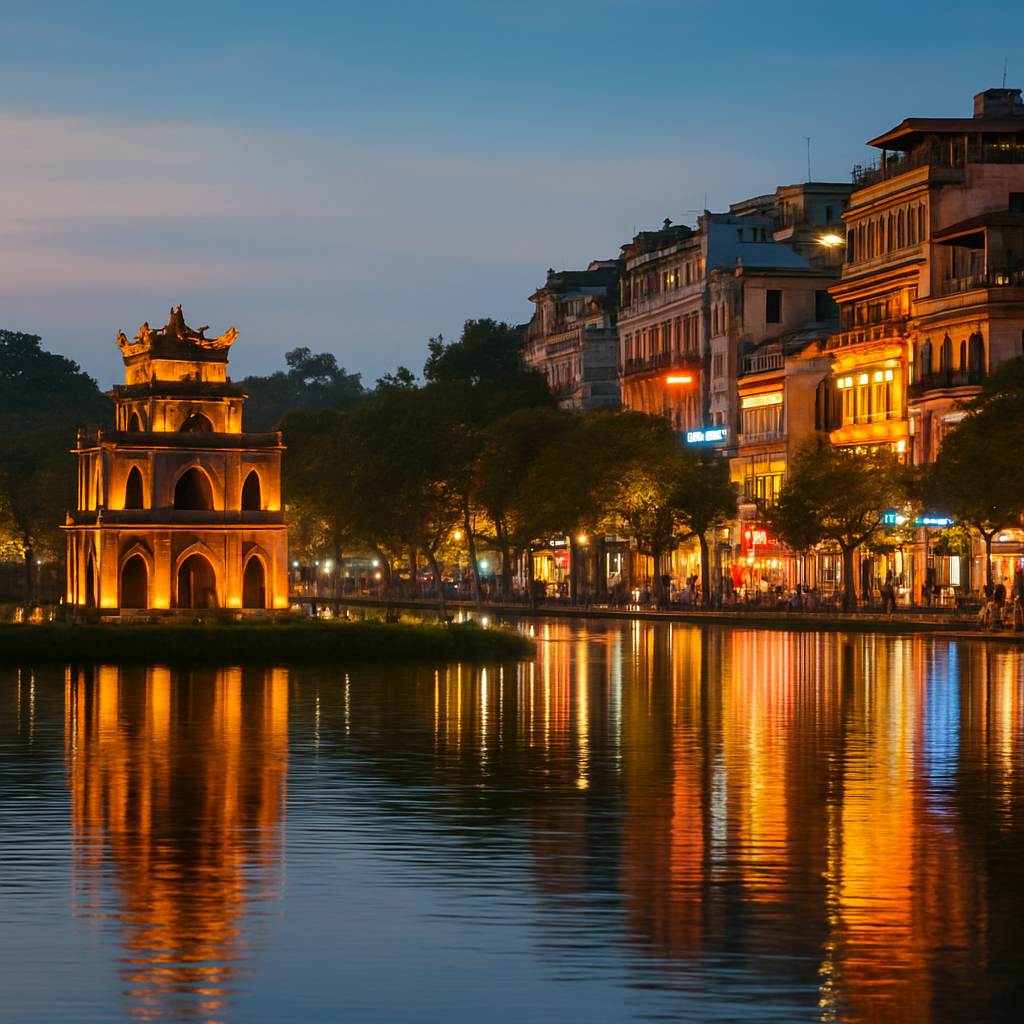
The Old Quarter Walking Street Around Hoàn Kiếm Lake
Friday night through Sunday, the streets ringing Hoàn Kiếm Lake close to traffic and the city pours out: families with kids on plastic stools, teenagers practicing K-pop choreography in cleared corners, grandfathers playing Chinese chess at folding tables, couples eating sunflower seeds on benches. Walk a slow loop at dusk, then cut into the Old Quarter for bia hơi on Tạ Hiện. Sunday morning at the West Lake promenade gives you the same energy at half-volume — couples walking dogs, gym friends in matching activewear, iced coconut coffee in hand. Bourdain would have approved.
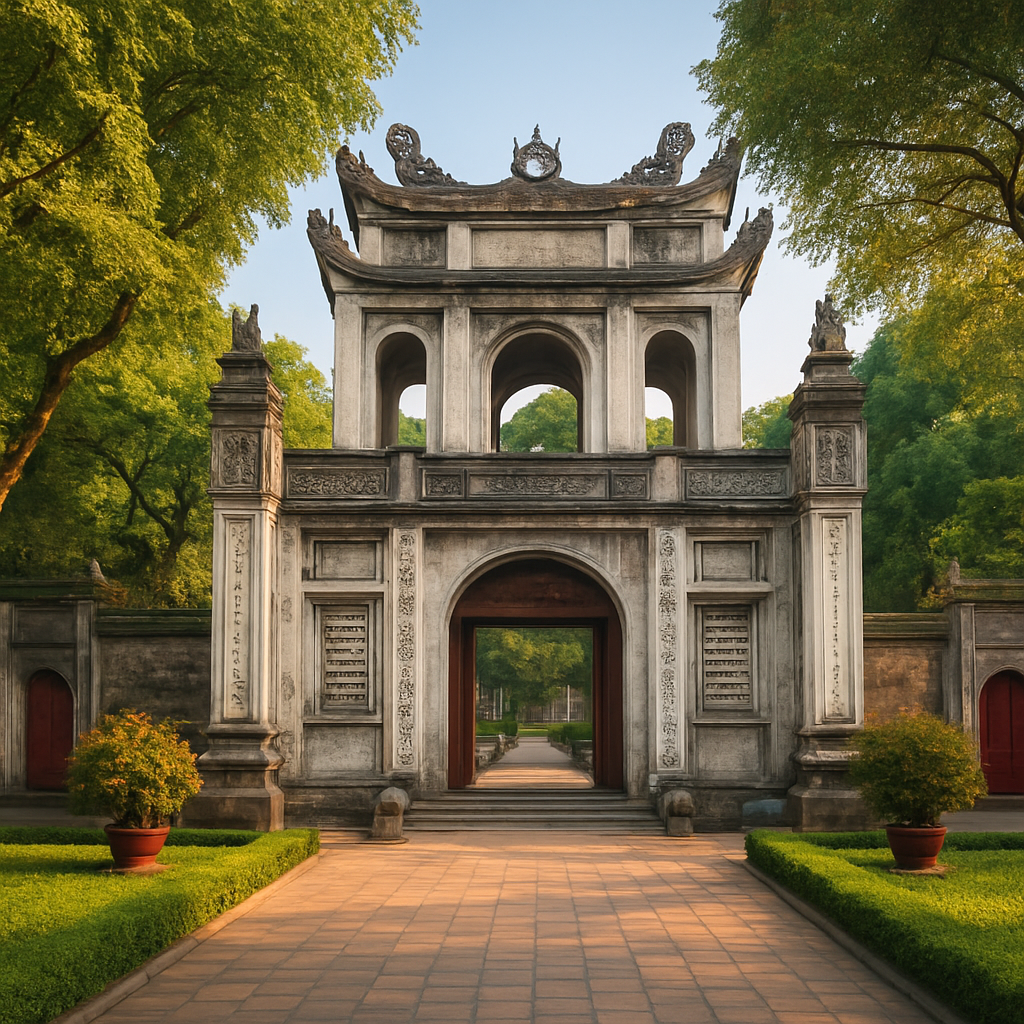
Sunrise at the Temple of Literature
Vietnam's first national university, founded in 1070, and a quieter monument than its scale suggests if you arrive at opening — eighty-two UNESCO-inscribed stone stelae mounted on stone tortoises, courtyards laid out in a sequence designed to slow you down, and locals lighting incense in the back hall before any tour buses arrive. Pair it with breakfast at Gia or Tầm Vị nearby in Đống Đa. Pro tip: the ticket booth opens at 8am sharp and the crowd density triples by 9:30.

An Overnight Cruise Through Ha Long Bay
Approximately 1,600 limestone karsts rising out of the Gulf of Tonkin — and the difference between the day-trip and the overnight cruise is the difference between a postcard and a memory. Sleep on the boat, wake up at 6am to the karsts in fog, kayak into a sea cave before the rest of the bay's traffic catches up. About 165 km east of Hanoi, three to four hours by road; reputable operators include Bhaya, Paradise, and Heritage. Watch out for the bottom-tier cruises sold on Tạ Hiện — you get what you pay for.
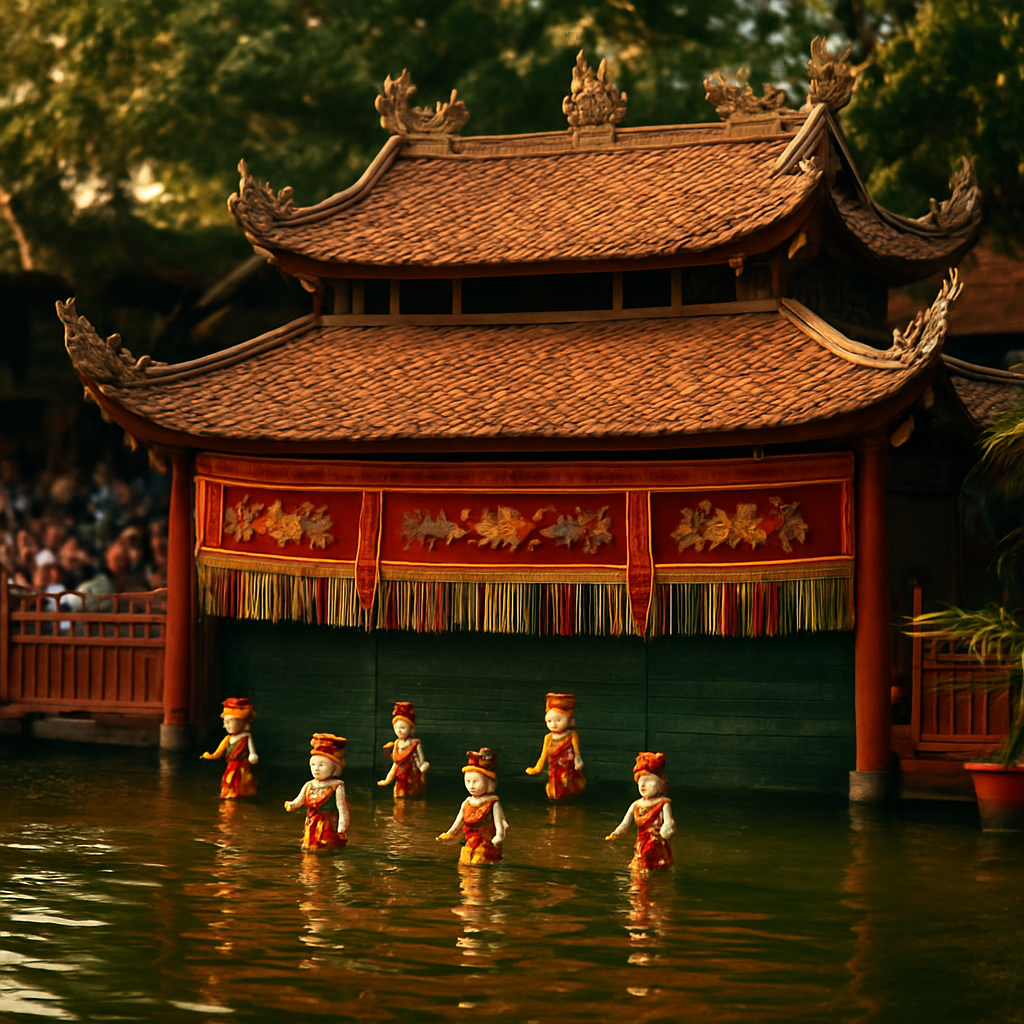
An Evening of Water Puppetry
An 11th-century Red River Delta art form where lacquered wooden puppets are worked over a waist-deep water stage by puppeteers hidden behind a bamboo screen — battles, harvests, dragons, fishermen — accompanied by a live traditional Vietnamese ensemble. The Thang Long Theatre near Hoàn Kiếm Lake has been performing daily since 1969 and has toured forty-plus countries. Tickets are 100,000–200,000 VND and the show is fifty minutes; the front rows get splashed, which is part of the deal.

A Sampan Through Ninh Binh's Karst Caves
About 95 km south of Hanoi, the Tràng An Landscape Complex is the dry-land answer to Ha Long Bay — same limestone karst geology, but routed by river through a series of low caves you navigate in a small wooden sampan rowed by a local woman, often with her feet. The 10th-century imperial capital at Hoa Lư sits in the same valley; Kong: Skull Island filmed here in 2017 for reasons that become obvious within ten minutes of the boat ride. A long but doable day from Hanoi.
The places I actually send people to
Advice that fits how you travel
Hanoi is one of the easier solo trips in Southeast Asia, and it skews even easier if you're a gay man with a phone full of apps and a willingness to follow a café into a conversation. The city is walkable in chunks — base yourself in Hoàn Kiếm and you can do a full week without ever needing more than Grab and your own two feet. The budget math is generous: a moderate solo day runs roughly 2,400,000–3,800,000 VND (~$95–150), and that's with real meals and a decent room.
Meeting people takes a little more patience than Bangkok or Saigon. The bar scene is small — GC Bar on Bao Khanh is the reliable anchor, Polite & Co. sits down the same alley for a quieter cocktail, and Tadioto in the French Quarter is where the literary-and-arts crowd lands on weeknights. A reader put it well: younger queer Hanoians treat Tinder and Blued as the actual venue — match first, then move the date to a café in Tây Hồ. The scene is small enough that everyone's already met everyone twice, which means you're the new arrival, which works in your favor.
Safety-wise, central Hanoi is generally low-risk for solo LGBTQ+ travelers, particularly in Hoàn Kiếm and Tây Hồ. The bigger threats are scooter traffic and the inflating bar tabs near Tạ Hiện — confirm prices before round two of bia hơi. Pro tip: hit an ATM in Hoàn Kiếm before the night starts. Most welcoming small venues are still cash-only, and you do not want to be the foreigner negotiating with a card reader at 1am.
Hanoi rewards same-sex couples who don't need a parade to feel welcome. Hand-holding is generally fine across Hoàn Kiếm, the Old Quarter, and Tây Hồ — observational, not declarative. Older locals in temples, markets, and around Ba Đình's ceremonial spaces tend to read any public kissing — gay or straight — as awkward, so save the bigger affection for the room. As of 2026, Vietnam doesn't recognize same-sex marriage or civil union, but international hotel chains and most boutique properties in Hoàn Kiếm and Tây Hồ typically have no problem booking double rooms for same-sex couples.
For a first night in: book a rooftop table at Cầu Gỗ overlooking Hoàn Kiếm Lake, then walk the weekend pedestrian street as it winds around the water at dusk. For a bigger anniversary moment, the eight-seat omakase at Hibana by Koki inside the Capella Hanoi is the best Michelin-starred meal in the city, and the room reads gay-luxury without needing to announce it — Bill Bensley designed the property and he's family. Gia in Đống Đa, run by chef Sam Tran, is the modern Vietnamese tasting menu I'd cross town for. Daytime romance lives in Tây Hồ: rent bikes, lap the lake, stop at the Trấn Quốc Pagoda, and end with iced coconut coffee at any Cộng Cà Phê branch.
For where to sleep, the choices sort by mood. The Sofitel Legend Metropole is the historic move — opened in 1901, hosted Graham Greene and Charlie Chaplin, and Accor's inclusion policies show up in the staff training. Capella Hanoi is the design-fantasy splurge. InterContinental Westlake, built on stilts over West Lake with the Sunset Bar earning its name, is for the couple who wants Hanoi at half-volume. Pro tip: book the Hôtel de l'Opera if you want mid-luxury MGallery polish at a third of the Capella rate, and ask for a room facing the Opera House.
Here's the candid version, as of 2026: Vietnamese law doesn't recognize same-sex marriage, civil union, or joint adoption by same-sex couples, and there's no anti-discrimination protection on the books. LGBTQ+ families traveling with kids should know they're traveling as individuals under Vietnamese law, not as a legally recognized family unit. Bring documentation — birth certificates, custody paperwork, marriage certificates from your home country — for any kid not on your passport. Hotel registration requires passport scanning for everyone, and clarity at check-in keeps things smooth.
That said, Hanoi is generally a curious-rather-than-hostile city for visibly LGBTQ+ families, and the practical experience for most is warmer than the legal framework suggests. Kids are universally adored in Vietnamese public life, and that goodwill extends to two-mom and two-dad families in the central districts and Tây Hồ. The city is rich in family-friendly cultural anchors: the Thang Long Water Puppet Theatre (50 minutes, mesmerizing for kids and adults), the Vietnamese Women's Museum (consistently top-ranked, with rotating exhibitions that have included gender-identity programming), and the Temple of Literature if you arrive at opening before the tour buses. The weekend walking street around Hoàn Kiếm Lake is the closest thing Hanoi has to a public square — kids on plastic stools, families everywhere, the whole city moving at child-pace.
Logistically, a moderate family day runs roughly 5,500,000–8,500,000 VND (~$220–340) for accommodation, food, and activities. Tây Hồ is the easier neighborhood to base in if you're traveling with strollers — fewer scooters on sidewalks, more international cafés with kid menus, and the InterContinental Westlake handles families with two parents of any gender configuration smoothly. Watch out for the Old Quarter sidewalks, which are essentially scooter parking lots — strollers struggle, baby carriers win. For a half-day with kids old enough to throw clay, Bát Tràng is 13 km southeast and runs hands-on pottery workshops.
What Hanoi actually costs
Flights, visas, and the first 30 minutes
Airport: Noi Bai International Airport (HAN) is the gateway, sitting roughly 30 km north of the city center across the Nhật Tân Bridge. It's a modern two-terminal operation — Terminal 2 handles all international arrivals — and Hanoi is well-connected with approximately 40 direct international routes.
Getting in: Major direct connections include Singapore, Bangkok, Hong Kong, Seoul, Tokyo, Taipei, Kuala Lumpur, Dubai, Doha, Frankfurt, Paris, and Sydney. From the U.S., most routings come via Seoul (ICN), Tokyo (NRT/HND), or Taipei (TPE), with one-stop journeys typically running 18–22 hours total. From the U.K. and Western Europe, expect a one-stop via the Gulf or Asia (Doha, Dubai, Singapore) of roughly 14–17 hours, with Vietnam Airlines and Bamboo Airways occasionally operating direct seasonal service from Frankfurt and London.
Visa requirements (as of 2026): Generally straightforward for most Western passports, but verify before you fly through the official Vietnam National Immigration Portal. U.S. passport holders typically need an e-visa (90 days, single or multiple entry) — about $25 standard, processed in approximately 3 business days. U.K. passport holders are typically visa-free for 45 days, with an e-visa available for stays up to 90 days. EU passport holders from France, Germany, Italy, and Spain are generally visa-free for 45 days; other EU nationals typically need an e-visa. Canadian and Australian passport holders typically need an e-visa for stays up to 90 days. Pro tip: print your e-visa approval — Vietnamese border officers want paper, not a phone screen.
Airport to city: Several options, all reasonable. Grab is the easiest call — fixed fare of approximately 280,000–380,000 VND, English-friendly app, 40–55 minutes depending on traffic. Airport Taxi (metered) from the official Noi Bai Taxi or Airport Taxi counters runs 350,000–450,000 VND; avoid the touts working the arrivals hall and only use the marked counters. Hotel shuttles or pre-booked private transfers run 500,000–900,000 VND with English-speaking drivers — worth it after a long-haul flight. Public Bus 86 (Express) goes direct to Hanoi Railway Station via the Old Quarter for 45,000 VND in 55–75 minutes (operates roughly 5am–10:30pm). Vietnam Airlines/Jetstar minibus shuttles drop near the city center for 40,000–50,000 VND in 60–80 minutes.
Traven's seasonal breakdown
The questions everyone asks
Is Hanoi safe for LGBTQ+ travelers?
Can same-sex couples hold hands in public?
Will hotels book a double room for same-sex couples?
Do I need a visa to visit Hanoi?
When is the best time to visit Hanoi?
Where should I stay as an LGBTQ+ traveler?
Is there a Pride event in Hanoi?
Screenshot this before you go
So should you actually go?
Go — but go knowing what you're coming for. Hanoi isn't going to throw you a Pride parade or hand you a gay village on arrival. What it offers is one of the great food cities in Asia, a 13th-century street grid you can lose yourself in for days, sampans and karsts a short ride out, and a small but genuine community that has built something real on its own terms. As of 2026 the legal framework is still unfinished and the practical welcome runs warmest in Hoàn Kiếm and Tây Hồ; same-sex couples will be fine, trans travelers should plan for more friction, and everyone benefits from base-camping where the cocktail bars and the phở counters overlap. Time it to October or November for the weather, September if you can catch VietPride. This one rewards patience, and patience is a fair price.
Sources & Resources
Official links we reference when compiling this guide. Last verified 2026-05-03.
- Embassy of the United States in Vietnam — LGBTQ+ Traveler Information
- Equaldex — Vietnam LGBTQ+ Rights Tracker
- Hanoi Queer Film Week (Queer Forever!)
- ICS Center — Vietnam LGBTQ+ Rights Organization
- iSEE — Institute for Studies of Society, Economy and Environment
- SCDI — Center for Supporting Community Development Initiatives
- UNAIDS Vietnam
- VietPride